Bay tree yellow leaves are most often caused by waterlogged roots, cold wind or frost damage, a hungry or pot-bound plant in old compost, or a sap-feeding pest called bay sucker. A few old leaves yellowing and dropping is normal. Check the soil moisture and drainage first, then look closely at the pattern of yellowing and the undersides of the leaves before changing anything.
Bay laurel (Laurus nobilis) is a tough evergreen shrub often grown in pots by the door or on the patio. It rarely dies suddenly, but it does show stress through its leaves. This guide covers the nine most common causes, how to tell them apart, and a practical recovery plan.
Key Takeaways
- Bay trees shed a small number of older leaves naturally, so a few yellow leaves is not a problem.
- Wet, poorly drained compost is the most common cause of widespread yellowing, especially in pots over winter.
- Bay is hardy to around -5°C (23°F), but frost and cold winter winds damage the leaves. Plants in pots are more vulnerable than plants in the ground.
- Leaves with thickened, curled, pale yellow edges in summer usually mean bay sucker, which rarely harms the plant’s overall health.
- Brown bumps and sticky residue on stems point to scale insects.
- Container bays need feeding in spring and summer and fresh compost every couple of years.
- Yellow leaves will not turn green again. Healthy new growth at the shoot tips is the sign of recovery.
Quick Answer: Why Does a Bay Tree Have Yellow Leaves?
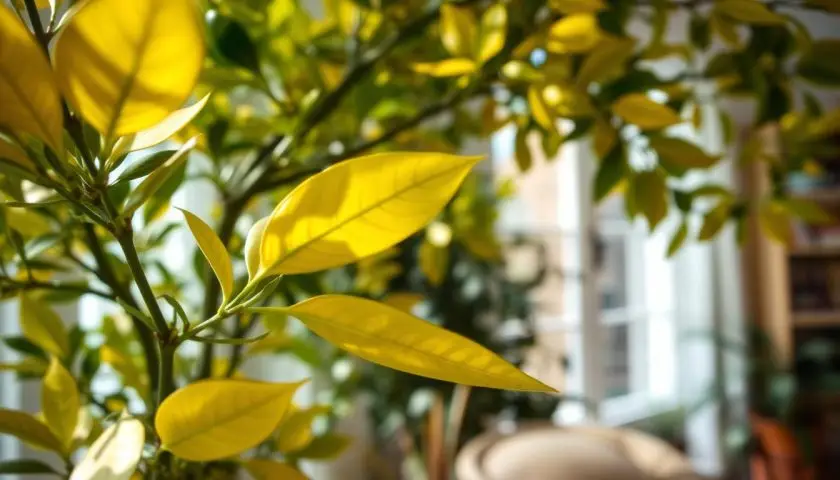
Most yellowing comes from the roots or the weather. Soggy compost starves roots of oxygen. Long dry spells, cold winds, and frost stress the leaves. A bay that has sat in the same pot for years may simply be hungry.
Check these first:
- Soil moisture: Push a finger 5–7 cm (2–3 inches) into the compost. Is it soggy, bone-dry, or evenly moist?
- Drainage: Does water run freely out of the pot, or does it pool?
- Recent weather: Has there been a frost, cold wind, heatwave, or long rainy spell?
- Leaf pattern: Are only a few old inner leaves yellow, or is it widespread? Are leaf edges thick and curled?
- Pests: Look under the leaves and along the stems for bumps, stickiness, or curled margins.
Act quickly if you see: widespread yellowing on new growth, soft or blackened stems, a sour smell from the compost, or rapid leaf drop. These usually point to root damage.
Is It Normal? Check the Variety First
Two situations are not problems at all:
- Normal leaf shedding: Bay trees drop a small number of their oldest leaves through the year, often from inside the canopy where light is limited.
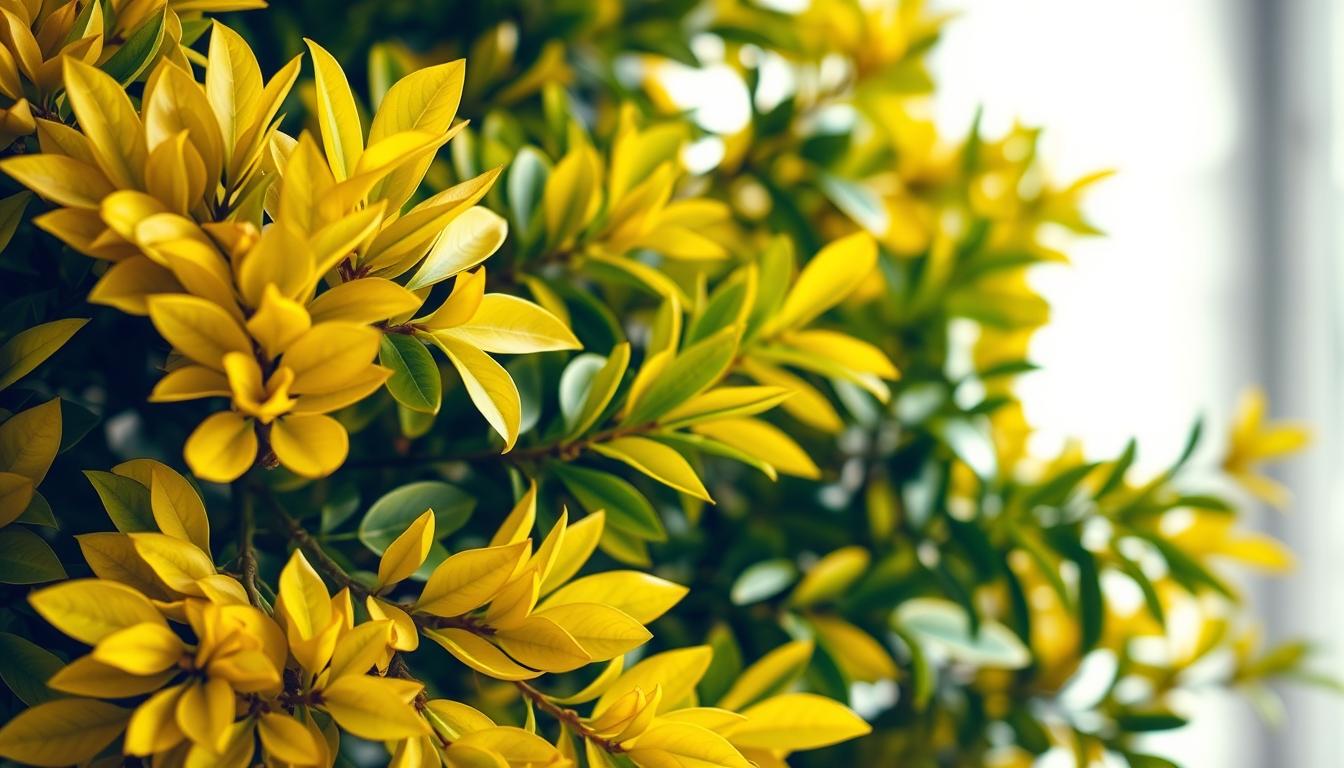
- Golden bay: Laurus nobilis ‘Aurea’ naturally has golden-yellow leaves, brightest in winter and spring. If your bay has been yellow all over since you bought it and is otherwise healthy, check the plant label.
How to Diagnose Bay Tree Yellow Leaves
| Symptom Pattern | Most Likely Cause | First Action |
|---|---|---|
| Widespread yellowing, wet compost, sour smell | Waterlogging or root rot (Cause 1) | Stop watering; check drainage and roots |
| Yellow, dry, curled leaves; compost pulling from pot sides | Underwatering (Cause 2) | Soak the root ball thoroughly |
| Thin, pale growth; sparse inner canopy | Too little light (Cause 3) | Move to a brighter spot |
| Older leaves pale yellow; slow growth in an old pot | Hungry or pot-bound plant (Cause 4) | Feed and repot in spring |
| Yellow and brown patches after frost or cold wind | Cold damage (Cause 5) | Shelter the plant; wait before pruning |
| Older leaves drop after repotting or moving | Transplant stress (Cause 6) | Keep conditions steady |
| Thick, curled, pale yellow leaf edges in summer | Bay sucker (Cause 7) | Usually tolerate; remove worst leaves |
| Brown bumps, sticky leaves, black sooty film | Scale insects (Cause 8) | Remove scale and clean leaves |
| A few old inner leaves yellowing | Natural aging (Cause 9) | No action needed |
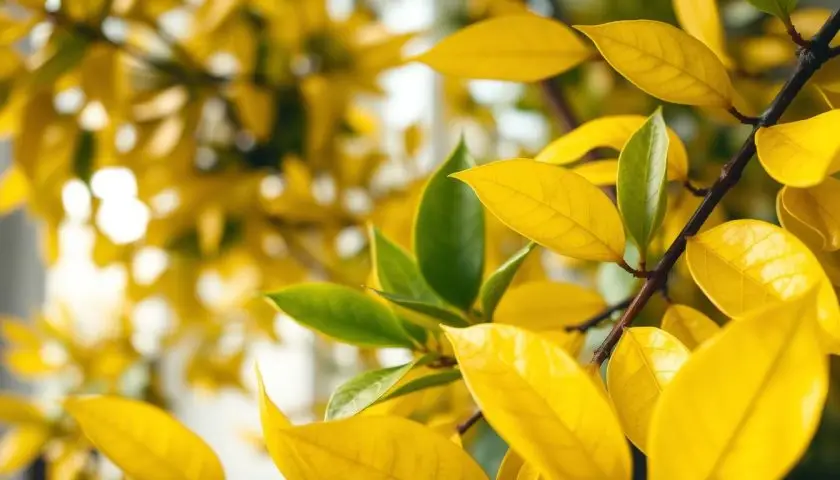
9 Causes of Bay Tree Yellow Leaves and How to Fix Them
1. Overwatering, Poor Drainage, and Root Rot
Bay trees need well-drained soil. In pots, waterlogged compost is the most common reason for yellowing, especially in winter when the plant uses little water and rain keeps topping the pot up. Roots sitting in wet compost run short of oxygen and can rot.
Signs: widespread yellowing, leaves dropping, compost that stays wet for days, water pooling in the saucer, a sour smell, and dark, soft roots.
Fix:
- Stop watering until the top few centimetres feel dry.
- Make sure the drainage holes are clear and raise the pot on pot feet so it never sits in water.
- Empty saucers after rain and watering.
- If yellowing keeps spreading, check the roots in spring. Trim soft, dark roots with clean secateurs and repot into fresh, free-draining compost (for example, loam-based compost with added grit).
Learn more in our root rot guide and yellow leaves on plants.
2. Underwatering and Dry Compost
Container bays can dry out quickly in summer heat and wind, especially in small pots. Dry roots lead to yellowing, curling, and crispy leaves.
Signs: compost shrinking away from the pot sides, a very light pot, and dry, curled leaves.
Fix: Stand the pot in a bucket of water for about 30 minutes so the whole root ball rehydrates, then let it drain fully. After that, water moderately whenever the top few centimetres are dry. That may mean several times a week in hot weather and very little in winter. Check the compost rather than watering by the calendar. See our complete watering guide.
3. Too Little Light
Bay grows best in a sheltered spot in full sun or partial shade. In deep shade, or when kept indoors in a dim room, it produces thin, pale growth and drops inner leaves.
Fix: Move it to a brighter position outdoors, or to the brightest window if it must stay indoors over winter. Make the change over a week or so if it is going from shade into strong summer sun, to avoid scorched leaves.
4. Hungry, Pot-Bound Plant or Nutrient Deficiency
Bays in containers gradually use up the nutrients in their compost. A plant that has been in the same pot for years often turns pale yellow, starting with the older leaves.
- Nitrogen shortage: older leaves turn evenly pale green to yellow first.
- Iron or magnesium shortage: leaves yellow between green veins. Iron shortage usually shows on young leaves first, magnesium on older leaves.
Fix: Feed container bays with a balanced liquid or slow-release fertilizer in spring and summer, following the label. Repot every couple of years in spring into a slightly larger pot with fresh compost, or replace the top few centimetres of compost if the pot is already large. Do not feed a plant with waterlogged or damaged roots. Fix drainage first. See fertilizing indoor vs outdoor plants and how to repot a plant.
5. Cold, Frost, and Winter Wind
Bay can tolerate temperatures down to about -5°C (23°F), but frost and cold, drying winter winds can damage the foliage, causing yellow and brown patches. Plants in pots are less hardy than plants in the ground, because their roots are more exposed to freezing.
Fix:
- Move pots to a sheltered spot against a house wall in winter.
- Wrap the pot in hessian or bubble wrap during hard frosts, and use horticultural fleece over the foliage on very cold nights.
- Raise pots on feet so they do not sit in icy water.
- Wait until spring to prune frost-damaged growth. You will see clearly what has survived once new shoots start.
For more cold-weather planning, see outdoor plants that survive British winters.
6. Transplant Stress or Root Damage
Repotting, planting out, or moving a bay to a very different spot can cause some older leaves to yellow and drop while the roots settle.
Fix: Keep watering steady but not soggy, avoid moving the plant again, and wait about a month before feeding. A few lost leaves that then stop is normal. Yellowing that keeps spreading, or soft stems, point to root problems (see Cause 1).
7. Bay Sucker
Bay sucker (Lauritrioza alacris) is a small sap-sucking insect specific to bay. Its young nymphs feed on new leaves from late spring through summer.
Signs: leaf edges that thicken, curl downward, and turn pale yellow, often on only one half of the leaf. Later the damaged areas may turn brown. You may find small greyish-white nymphs with waxy secretions inside the curled edges.
Fix: The RHS notes that bay sucker affects how the plant looks but does not usually reduce its vigour, so control is often unnecessary. Pick off the worst-affected leaves on small plants if you wish. Avoid spraying edible bay unless the product label specifically allows use on edible herbs.
8. Scale Insects and Sooty Mould
Soft scale and horse chestnut scale commonly feed on bay. They weaken the plant and cause yellowing.
Signs: small, flat, brown or white-edged bumps along stems and the undersides of leaves, sticky honeydew on leaves, and a black, sooty mould growing on that stickiness.
Fix:
- Scrape off scale with a fingernail, soft brush, or damp cloth.
- Wipe honeydew and sooty mould off the leaves with warm, soapy water, then rinse.
- Prune out heavily infested shoots.
- If needed, use a plant oil or fatty acid treatment approved for edible plants, timed for when young scale are active (usually summer). Always follow the label, including any wait before harvesting leaves.
Aphids and spider mites occasionally appear too, especially on indoor bays. Check leaf undersides and new shoots. If you find white, waxy patches you cannot identify, see white spots on plant leaves.
9. Natural Aging
Every evergreen replaces its leaves over time. Bay sheds a small number of its oldest leaves, usually inside the canopy, while new shoots at the tips stay green.
Fix: Pull off fully yellow leaves by hand and continue normal care. Investigate further only if yellowing spreads quickly, affects new growth, or comes with spots, stickiness, or soft stems.
Step-by-Step Plan to Fix Bay Tree Yellow Leaves
- Read the pattern. Use the diagnosis table above. Note whether yellowing is on old or new leaves, all over or in patches, and whether edges are curled.
- Fix water and drainage first. Water only when the top few centimetres are dry. Raise pots on feet and empty saucers.
- Adjust position. Give the plant a sheltered spot in sun or partial shade, away from cold winds. Move it gradually.
- Treat pests only once identified. Clean off scale by hand and tolerate light bay sucker damage. Use only products labelled for edible plants.
- Feed and repot when the roots are healthy. Spring is the best time for repotting and starting a feeding routine.
- Prune lightly and wait. Remove only dead or badly damaged shoots, then judge recovery by fresh green growth over the following weeks.
For a general rescue routine, read our plant rescue plan.
Bay Tree Care That Prevents Yellow Leaves
| Care Factor | What Bay Needs | Avoid |
|---|---|---|
| Position | Sheltered spot in full sun or partial shade | Deep shade; exposed, windy corners in winter |
| Soil | Well-drained compost; loam-based with grit suits pots | Heavy, waterlogged soil |
| Water | Moderate; when the top few centimetres are dry | Fixed schedules; standing water in saucers |
| Feeding | Balanced feed for container plants in spring and summer | Feeding stressed or waterlogged plants |
| Repotting | Every couple of years in spring, one size larger | Huge pots that stay wet |
| Winter | Shelter, pot feet, fleece on very cold nights | Frozen, sodden pots in open wind |
| Pruning | Light trimming in summer; remove frost damage in spring | Heavy cuts on a struggling plant |
Mature bays tolerate hard pruning but are slow to regrow, so cut back gradually. See pruning basics and best plants for container gardening on patios.
Safety Notes for an Edible Plant
- Use only products labelled for edible herbs and follow any harvest interval on the label.
- Harvest only healthy leaves. Do not cook with leaves that are sticky, mouldy, or damaged.
- Do not confuse bay with cherry laurel (Prunus laurocerasus), a common hedging plant whose leaves are poisonous. Only true bay (Laurus nobilis) is used in cooking.
- Pets: Bay laurel is listed as toxic to cats and dogs if eaten in quantity. Check the ASPCA toxic and non-toxic plants list if your pet chews plants.
Common Mistakes When Fixing Yellow Bay Leaves
| Mistake | Why It Fails | Better Approach |
|---|---|---|
| Watering on a fixed schedule | Waterlogs roots in cool, wet weather | Check the compost first |
| Feeding a waterlogged plant | Damaged roots cannot use nutrients | Fix drainage, then feed |
| Heavy pruning while stressed | Removes the leaves the plant needs to recover | Trim only dead growth |
| Spraying without identifying the pest | Wastes effort and risks edible leaves | Confirm bay sucker or scale first |
| Leaving pots exposed in winter | Frozen roots and wind scorch | Shelter, wrap, and raise pots |
| Panicking about a few old leaves | Normal turnover looks like a problem | Watch new growth instead |
Related Guides
- Year-round balcony plants that handle wind, rain and sun
- Easiest outdoor edible plants
- Growing rosemary indoors
- Best soil mix guide
- Schefflera plant problems
- Parlor palm dying: causes and fixes
Frequently Asked Questions
Why are my bay tree leaves turning yellow?
The most common causes are waterlogged compost, cold winds or frost, a hungry plant that has been in the same pot for years, and pests such as bay sucker and scale. Check the compost moisture and drainage first, then look at the pattern of yellowing and the undersides of the leaves.
Is it normal for a bay tree to lose some yellow leaves?
Yes. Bay trees naturally shed a small number of older leaves, usually from inside the canopy. As long as new growth at the shoot tips is green and firm, a few yellow leaves is not a concern. Golden bay (‘Aurea’) also has naturally yellow foliage.
What does bay sucker damage look like?
Leaf edges become thickened, curl downward, and turn pale yellow, often on only one side of the leaf, from late spring through summer. Small greyish-white nymphs may hide inside the curls. It spoils the look of the plant but rarely affects its health, so control is often unnecessary.
How do I protect a potted bay tree in winter?
Move the pot to a sheltered spot out of cold wind, raise it on pot feet, and wrap the container in hessian or bubble wrap during hard frosts. Cover the foliage with horticultural fleece on very cold nights. Water sparingly, because wet, frozen compost damages the roots.
Can I still cook with leaves from a bay tree that has yellow leaves?
You can use healthy green leaves from the same plant. Do not use leaves that are sticky, mouldy, or pest-damaged. If you have treated the plant, use only products labelled for edible herbs and follow the harvest interval on the label. Make sure the plant is true bay (Laurus nobilis), not cherry laurel.
Final Thoughts
Bay tree yellow leaves are a symptom, not a diagnosis. Start with the roots: check that the compost is neither soggy nor bone-dry and that the pot drains freely. Then consider recent cold weather, how long the plant has been in its pot, and whether bay sucker or scale are present.
The RHS bay tree guide recommends well-drained soil, a sheltered sunny or partly shaded position, moderate watering for container plants, and repotting every two years in spring. It also notes that a few older leaves shed naturally. For pest details, see the RHS bay sucker guide.
Fix one thing at a time and judge progress by the new leaves at the shoot tips. A healthy bay will soon fill out with fresh green growth.