Rex begonia care is about four things: bright but indirect light, humidity of 50% or more, compost that dries in its top third between waterings, and a winter minimum of 13°C (55°F). I am Sawera Shahid, a botanist at Patch Plants. Rex begonias are grown for leaves rather than flowers, and almost every problem with them shows up on those leaves first, as crispy edges, dull colour or soft patches. Learn to read the leaves and the rest follows.
Rex begonias belong to the rhizomatous group of begonias, which grow from a thickened creeping stem. University of Florida IFAS Extension notes that Begonia rex is native to tropical and subtropical India and is the parent of the large Rex-cultorum group of hybrids. University of Connecticut Extension adds that it entered cultivation around 1850 and hybridises so freely that new leaf patterns appeared quickly. This guide covers 8 easy tips for rex begonia care, then propagation, problems and pet safety.
Rex Begonia Care at a Glance
| Need | What Works |
|---|---|
| Light | Bright, indirect light; shade from direct sun |
| Water | When the top third of the compost is dry; keep water off leaves and crown |
| Humidity | 50% or higher |
| Temperature | About 16 to 27°C (60 to 80°F); winter minimum 13°C (55°F) |
| Compost | Light, well-aerated, free-draining mix |
| Feeding | Monthly in growth, nitrogen-rich, at a low dose |
| Size | About 30 to 60cm (12 to 24in) tall and wide |
| Pets | Toxic to dogs, cats and horses (ASPCA) |
The light, water, humidity, temperature and size figures come from UF/IFAS Extension; the winter minimum and the advice to keep leaves dry come from the RHS.
What Makes Rex Begonia Leaves So Colourful
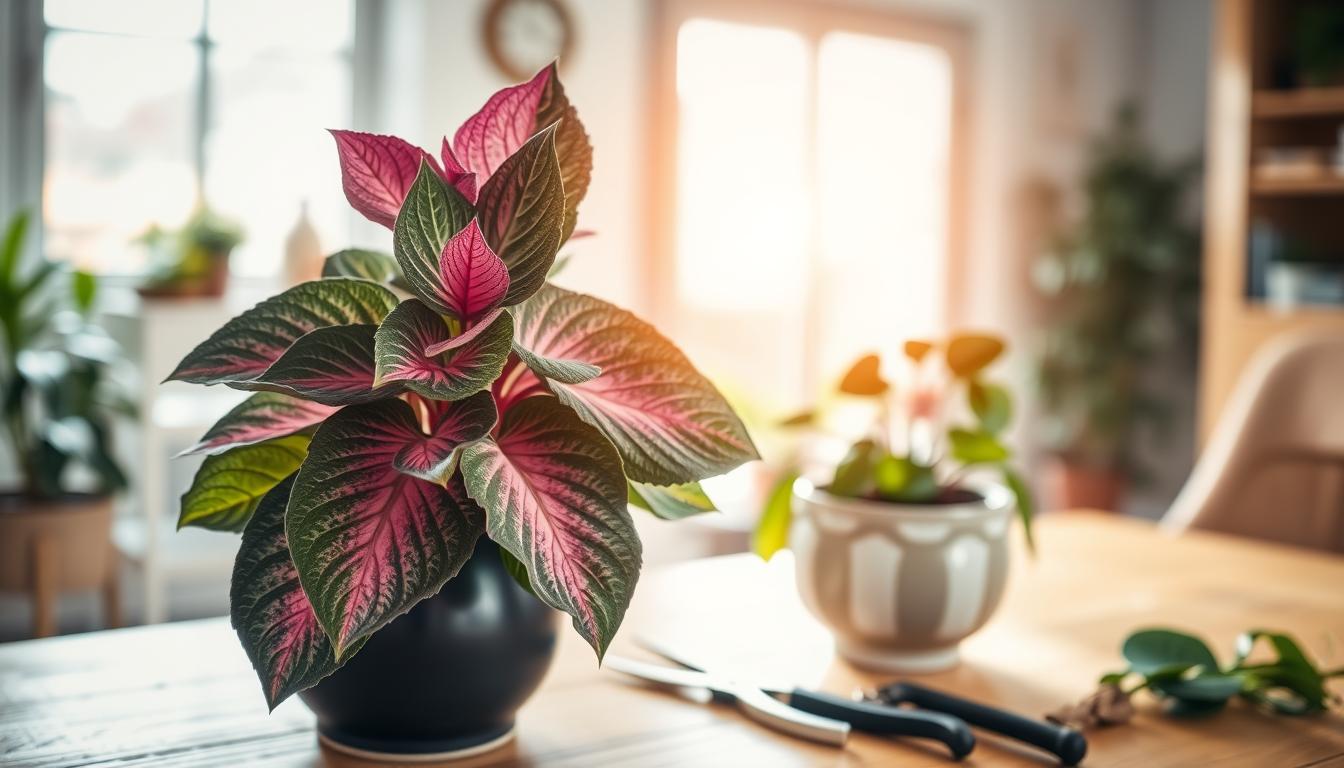
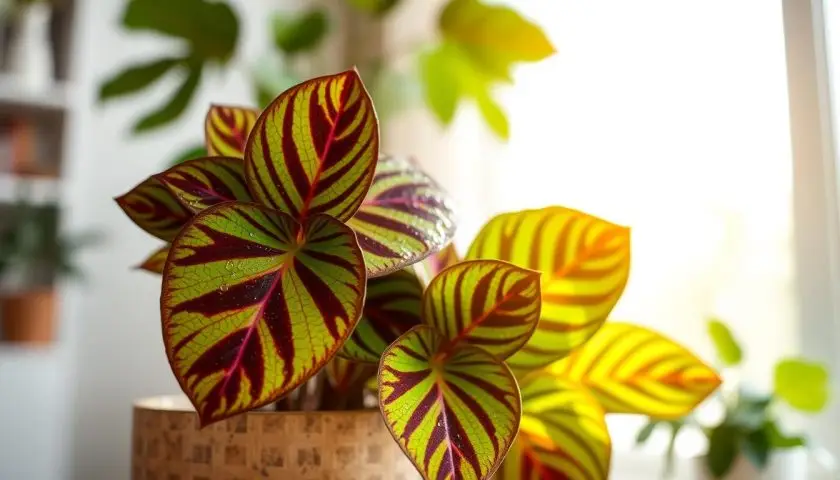
UF/IFAS describes rex begonia leaves as asymmetrical and heart-shaped, with toothed edges and veins that fan out from the leaf stalk. They range from about 7.5cm to more than 15cm (3 to over 6in) long and come in green, red, pink, silver, grey, lavender and maroon, often with a metallic or iridescent sheen. The flowers are small, pink to white, and easy to overlook.
Those patterns are the reason to grow a rex begonia, and they are also why care matters. Large, thin, colourful leaves lose water quickly in dry air and mark easily if they stay wet. That is the botany behind the two rules that matter most in rex begonia care: keep the air humid, but keep the leaves dry.
8 Easy Tips for Rex Begonia Care
1. Give it bright, indirect light
UF/IFAS recommends bright, indirect light for rex begonias and warns that direct sun can scorch the foliage. The RHS similarly advises keeping rhizomatous begonias shaded in summer. A spot near an east-facing window, or a little back from a brighter south- or west-facing one, works well. UF/IFAS also notes that rex begonias grow best with long days, so in autumn and winter many cultivars slow down, drop leaves or rest; a grow light can help keep them growing. See our complete guide to indoor light for more on placement.
2. Water when the top third is dry
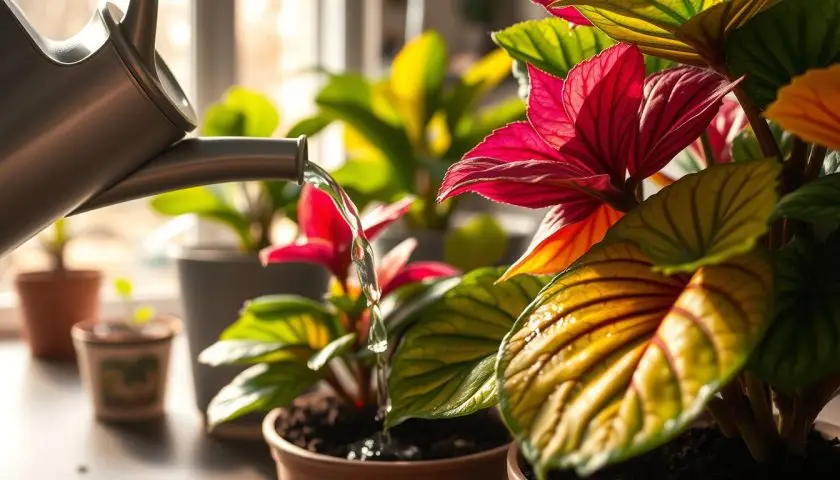
UF/IFAS advises letting the top third of the compost dry before watering again, checking with a finger, and draining any excess water each time. Overwatering causes root rot, so always use a pot with drainage holes. The RHS adds that rhizomatous begonias can be watered freely in summer if drainage is good, and less in winter, letting the surface dry first. Our guide to signs you are overwatering shows what to watch for.
3. Keep water off the leaves and crown
The RHS advises not to wet the leaves or the crown of rex and other rhizomatous begonias. Water the compost at the edge of the pot, or water from below by standing the pot in a saucer of water for a short time and then draining it. Wet leaves and a wet crown are an open invitation to the fungal and bacterial problems described below.
4. Raise the humidity to 50% or more
Humidity is the heart of rex begonia care. UF/IFAS states that rex begonias need 50% humidity or higher, and that low humidity causes crispy leaf edges. It suggests standing pots on gravel or pebbles in a tray of water, with the pot above the waterline. The RHS also recommends high humidity for rhizomatous begonias in summer but warns against misting, which encourages begonia mildew. A DIY humidity tray is the simplest fix. A bright bathroom can also suit a rex begonia; see our list of plants for bathrooms.
5. Keep it warm, especially at night
UF/IFAS gives a general range of about 16 to 27°C (60 to 80°F) for rex begonias, with ideal days of 22 to 27°C (72 to 80°F) and nights of 16 to 18°C (60 to 65°F). The RHS gives a winter minimum of 13°C (55°F) for Begonia rex. Keep plants away from cold glass and draughts in winter, and from radiators, which dry the air and brown the leaf edges. UF/IFAS notes that some modern series, such as the Jurassic series, tolerate a wider range of temperatures.
6. Use a light, airy compost
UF/IFAS explains that rex begonias have fine roots that need well-aerated compost. A light, free-draining houseplant mix suits them, and adding perlite helps if your compost feels heavy. Do not over-pot: a shallow pot only slightly larger than the root ball keeps the compost from staying wet. The rhizome should sit at the surface rather than be buried deeply. For more on mixes, see the best soil mix for every type of plant, and for repotting steps, read how to repot a plant.
7. Feed lightly for strong leaf colour
UF/IFAS recommends feeding rex begonias monthly and notes that nitrogen is the most important nutrient for vibrant foliage. The RHS also suggests a high-nitrogen fertiliser for rhizomatous begonias from May to September. UF/IFAS warns that rex begonias tolerate salts poorly, so use a low dose, water thoroughly so excess drains away, and stop feeding when the plant is resting in winter.
8. Keep the plant clean
UF/IFAS advises removing dead leaves from the compost surface, because decaying leaves encourage pests and disease. Cut off faded or damaged leaves at the base of the stalk, and give the plant some space so air can move around it. This simple habit prevents many of the most common rex begonia problems.
How to Propagate a Rex Begonia
Rex begonias are among the easiest plants to propagate from a leaf. UF/IFAS notes that they can be grown from softwood cuttings, leaf cuttings or by dividing the rhizome in summer, and that leaf cuttings work however the leaf is cut, because rex begonias can regenerate from almost any part of the plant.
- Leaf vein cuttings (RHS method): in May or June, choose a newly matured leaf. Cut through the main veins on the underside about 2.5cm (1in) apart, lay the leaf top side up on sandy, peat-free cuttings compost and peg it down. Keep it at 18 to 24°C (64 to 75°F) with high humidity, and pot up the young plants once they have two or three leaves.
- Leaf wedges or whole leaves: cut a leaf into wedges, each with a section of main vein, and insert the vein end into moist compost; or insert a whole leaf by its stalk. Cover loosely with a clear bag to hold humidity.
- Division: the RHS advises dividing rhizomatous begonias in spring, making sure each piece of rhizome has one or more growing points.
- Stem cuttings: for rhizomatous begonias, the RHS notes cuttings may need to be longer than 10cm (4in) so they include a leaf at the base.
Our guide on how to propagate houseplants covers the general technique.
Rex Begonia Varieties
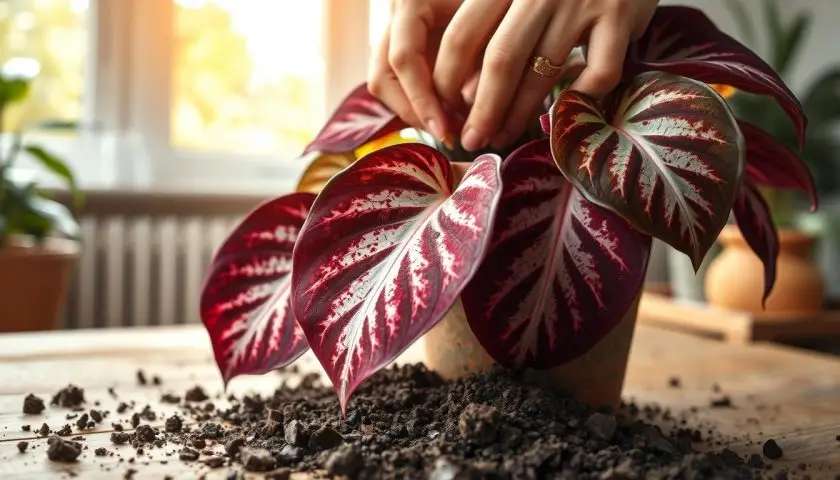
There are hundreds of rex begonia cultivars, and new ones appear all the time. UF/IFAS names ‘Fedor’, ‘Spitfire’, ‘Michelle Guan’ and ‘Marble Leaf Guan’ among them, along with the Jurassic series, which tolerates a wider temperature range. When choosing, look for firm leaves without brown edges or powdery spots, and check the undersides for pests. If you love patterned foliage, our guide to houseplants with patterned leaves and our list of plants with pink and green leaves have more ideas.
Common Rex Begonia Problems
| Problem | Likely Cause | What to Do |
|---|---|---|
| Crispy brown leaf edges | Humidity below 50% (UF/IFAS) | Use a pebble tray and move away from heaters |
| White powdery patches | Powdery mildew or botrytis | Remove affected leaves, improve air flow and stop misting |
| Yellow spots underneath that turn brown and round | Bacterial leaf spot (UF/IFAS) | Remove affected leaves; keep foliage dry |
| White, cottony clusters at leaf joints | Mealybugs | Dab with rubbing alcohol on a cotton bud |
| Scorched, faded patches | Direct sun | Move to bright, indirect light |
| Soft, collapsing stems | Overwatering or a wet crown | Let the top third dry; check the rhizome for rot |
| Leaf drop in winter | Short days and cool rooms | Water less, keep above 13°C and wait for spring |
For help telling white coatings apart, see our guide to white spots on plant leaves. If the rhizome feels soft, read about identifying and treating root rot; healthy leaves can often be rescued as cuttings.
Rex Begonia Care Through the Year
| Season | What to Do |
|---|---|
| Spring | Divide crowded plants, repot if needed and start feeding as growth resumes. |
| Summer | Shade from sun, keep humidity high, water freely with good drainage and take leaf cuttings. |
| Autumn | Stop feeding, water less and move away from cold windows. |
| Winter | Keep above 13°C (55°F), let the surface dry between waterings and expect slower growth. |
Is Rex Begonia Safe for Pets?
No. The ASPCA lists rex begonia as toxic to dogs, cats and horses because it contains soluble calcium oxalates. For begonias in general, the ASPCA lists vomiting and salivation in dogs and cats and notes that the most toxic part is underground. UF/IFAS also notes that the underground parts contain calcium oxalate. Keep pots where pets cannot chew leaves or dig, and contact your vet or the ASPCA Animal Poison Control Center at (888) 426-4435 (a consultation fee may apply) if you are worried. Our guide to making your plants cat-friendly has more tips.
Frequently Asked Questions
Is rex begonia care difficult?
It is moderate. The main needs are humidity of 50% or more, bright indirect light and careful watering that keeps the leaves dry. Once those are in place, rex begonias are steady growers.
Why are the edges of my rex begonia leaves turning brown?
Crispy brown edges usually mean the air is too dry. UF/IFAS links low humidity to this symptom, so use a pebble tray and keep the plant away from heaters.
Should I mist my rex begonia?
No. The RHS warns that misting encourages begonia mildew. Raise humidity with a pebble tray or by grouping plants instead, and keep water off the leaves.
Why is my rex begonia losing leaves in winter?
Short days and cooler rooms slow rex begonias down, and UF/IFAS notes that many cultivars drop leaves or rest in autumn and winter. Water less and wait for spring growth.
How do I propagate a rex begonia?
The easiest way is a leaf cutting. Cut through the main veins of a mature leaf, pin it onto moist cuttings compost and keep it warm and humid until new plants form.
Final Thoughts
As a botanist, I think rex begonias are the perfect plant for learning to read leaves. Crisp edges, faded colour and soft patches each point to a specific cause, and once you match humidity, light and watering to the plant’s needs, the colours speak for themselves. Start with a single plant in a bright, humid spot, watch how its leaves respond for a few weeks, and adjust one thing at a time.
Each Patch Plants guide is written to explain the plant science behind the advice, so rex begonia care feels less like guesswork. For the wider family, including cane and flowering types, read our guide to begonia care indoors.
Sources: UF/IFAS Extension, Begonia rex-cultorum; RHS, Begonias: houseplants; UConn Extension, Rex Begonia; ASPCA, Rex Begonia.

About the author
Sawera Shahid is a botanist with an MPhil in Botany and 5+ years of writing about plants. As founder and lead writer of Patch Plants, she writes practical, science-backed guides on indoor plants, outdoor gardens and plant problems, checked against RHS and university extension advice.