String of hearts grows best in bright light, in a gritty cactus or succulent mix, watered only when the compost has dried out, with a drier, cooler rest in winter. I am Sawera Shahid, a botanist at Patch Plants, and the string of hearts plants I see struggling are almost always kept too wet rather than too dry. This trailing succulent stores water in its stems, tubers and swollen base, so it forgives a missed watering far more easily than a soggy pot.
String of hearts (Ceropegia woodii), also called rosary vine, sweetheart vine or hearts entangled, is native to southern Africa, from Zimbabwe to eastern South Africa. It belongs to the dogbane family, Apocynaceae, and some botanists list it as Ceropegia linearis subsp. woodii. Below you will find 9 easy care tips, then flowering, propagation, seasonal care and the problems most likely to affect a string of hearts at home.
String of Hearts Care at a Glance
| Need | What Works |
|---|---|
| Light | Bright light; a west- or south-facing window suits it (University of Wisconsin) |
| Water | Only when the compost is dry; less in winter |
| Compost | Free-draining cactus or succulent compost (RHS) |
| Temperature | Keep above 15.5°C (60°F) in winter (University of Wisconsin) |
| Feeding | Half-strength houseplant feed, at most monthly in growth |
| Repotting | Only when needed, in spring; likes being slightly crowded |
| Pets | Listed as safe for cats by Cats Protection; not on the ASPCA toxic list |
What Makes String of Hearts Different
String of hearts looks delicate, but it is built like a succulent. University of Wisconsin Extension describes it as caudiciform: the base swells to store water and becomes a woody caudex as it matures, and tubers can also form underground until they fill the pot. Small aerial tubers, which look like tiny potatoes, also form at the nodes along the stems. These “beads” are one explanation for the name rosary vine.
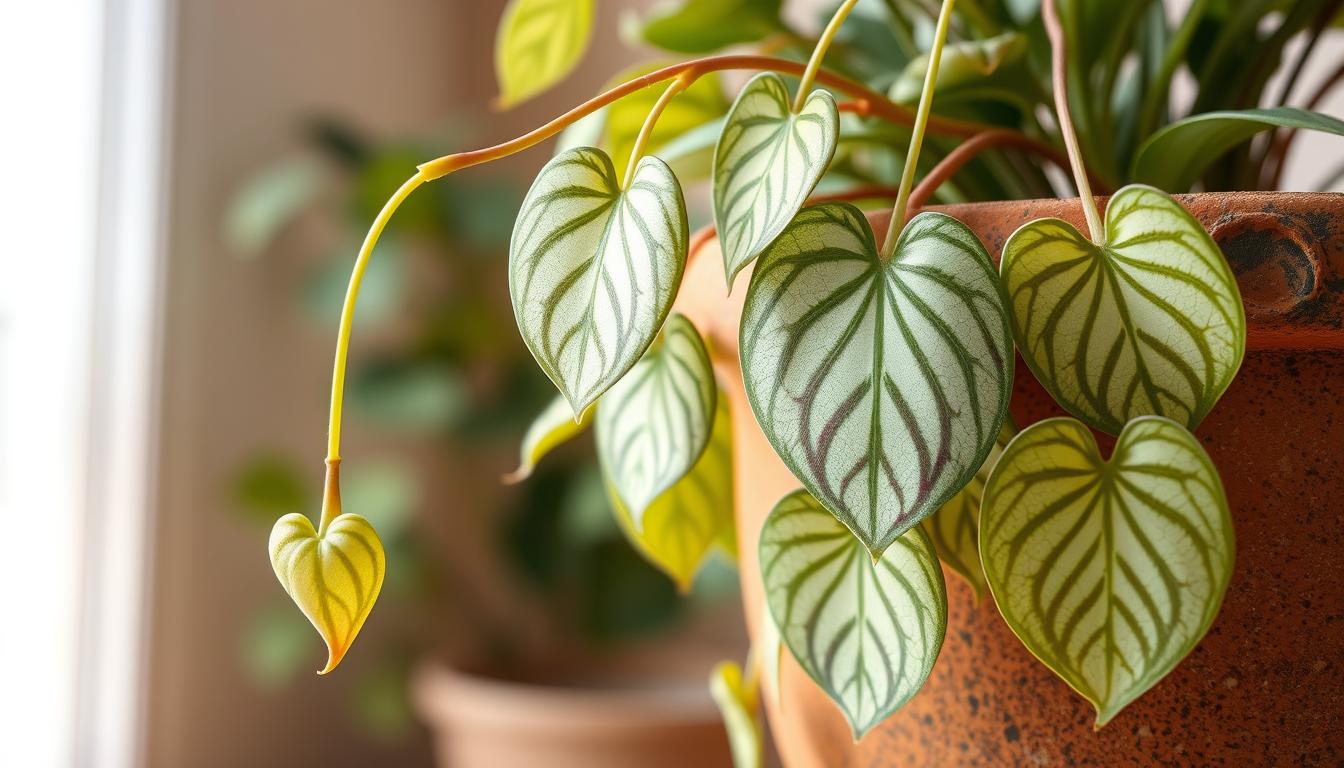
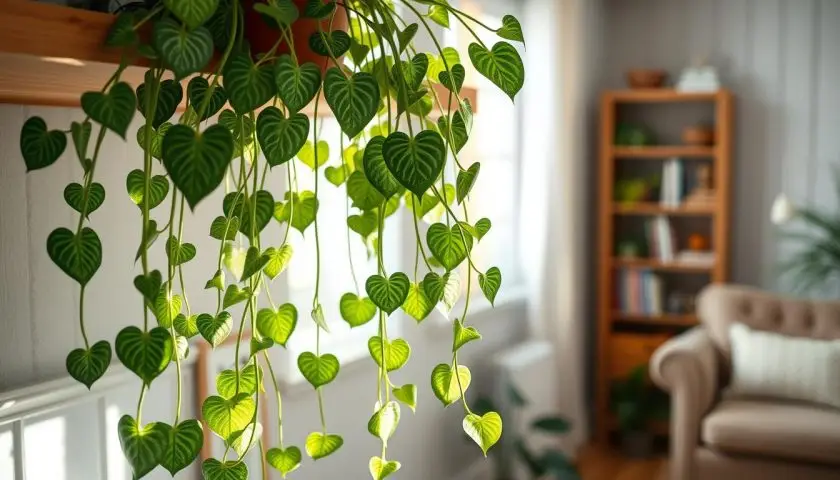
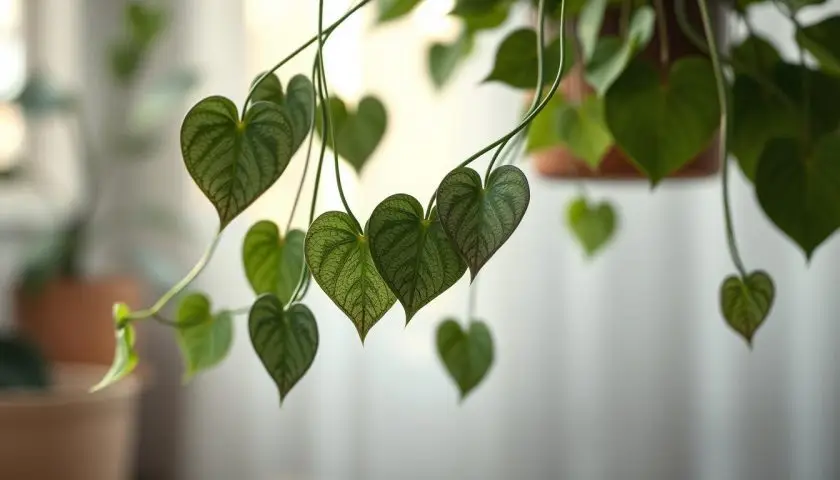
The leaves are opposite, heart-shaped and about 1 to 2cm (½ to ¾in) across, dark green with silver marbling above and green to purple beneath. The purplish stems trail for several feet, which is why string of hearts is so popular in hanging pots and on high shelves. Understanding this water-storing design explains nearly every care tip below: it wants a thorough drink, then time to dry out.
9 Easy Tips for String of Hearts Care
1. Give string of hearts plenty of light
University of Wisconsin Extension notes that string of hearts grows well in a west- or south-facing window. Strong light produces darker leaves with clear silver marbling, while low light gives pale green leaves and longer gaps between them along the stem. The RHS plant profile lists it for partial shade, so in a very hot, glassy conservatory a little shelter from the harshest midday sun helps. If your plant looks thin and stretched, more light is usually the answer. Our guide to house plants that like direct sunlight explains how to judge a bright spot.
2. Water only when the compost is dry
Wisconsin Extension is clear that string of hearts tolerates dry conditions far better than soggy ones, and that overwatering is the most common way to kill it. Water only when the compost has dried, then water deeply and let the excess drain away. The RHS adds that you should avoid overwatering at any time, and especially in low light, when the plant uses water slowly. Lift the pot before and after watering; you will soon feel when a string of hearts is ready for another drink. If you are unsure, our guide to signs you are overwatering shows what to look for.
Leaves also tell you a lot. Thirsty string of hearts leaves feel slightly soft and thin and may look a little wrinkled, then firm up within a day of watering. Yellow, mushy leaves and stems that turn soft near the compost point the other way, to too much water.
3. Use a gritty, free-draining compost
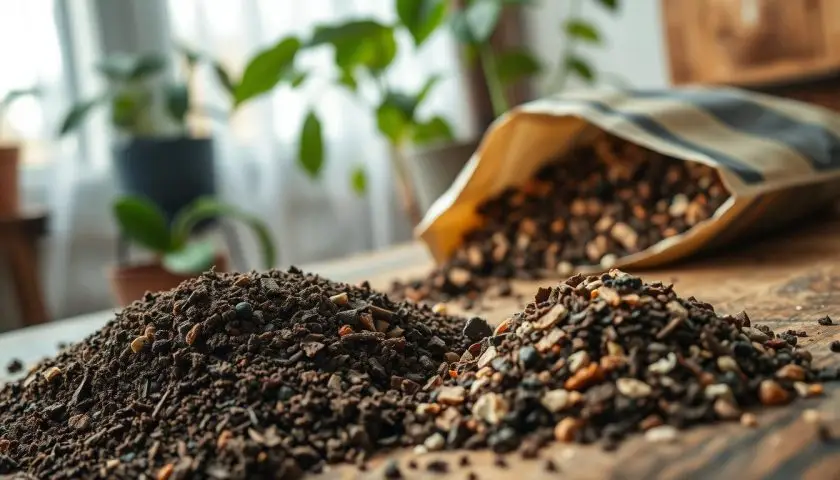
The RHS recommends a free-draining cactus or succulent compost to prevent root rot. Wisconsin Extension suggests the same, or a mix with added perlite. The aim is compost that drains within seconds and holds air around the roots and tubers. Always use a pot with drainage holes. For more detail on mixes, see the best soil mix for every type of plant.
4. Keep it warm in winter
String of hearts is a tender plant. Wisconsin Extension advises keeping winter temperatures above 15.5°C (60°F). Keep it away from cold, draughty windows on winter nights and from blasts of hot air from a radiator. If you move a string of hearts outside for summer, do it gradually to avoid sunburn and bring it back in before the first frost.
5. Feed lightly during active growth
This is not a hungry plant. Wisconsin Extension recommends half-strength houseplant fertiliser, at most monthly, while the plant is actively growing, and no feeding in winter. Too much fertiliser gives soft, sappy growth that is more attractive to pests and adds little to a plant built for poor soil.
6. Let it rest in winter
A string of hearts benefits from a winter rest with reduced watering, according to Wisconsin Extension. Growth slows in the shorter days, so water much less often and wait for the compost to dry fully between drinks. Do not expect much new growth until spring. This rest is part of the plant’s natural cycle, not a sign that something has gone wrong.
7. Repot only when you need to
String of hearts prefers being slightly crowded, so repot only when necessary, ideally in spring before new growth begins. Choose a pot only a little larger than the old one, because extra compost stays wet around the roots for longer. Handle the vines gently; the thin stems tangle easily, which is why one of the plant’s common names is hearts entangled. For step-by-step help, read how to repot a plant.
8. Trim and train the vines
Long, bare vines are common on older plants. Trim them back to just above a pair of leaves to tidy the plant, and use the cuttings for new plants (see propagation below). Wisconsin Extension notes that string of hearts can also be trained around a small trellis or topiary frame instead of left to trail. Winding a few stems back over the top of the pot is another easy way to make a sparse string of hearts look fuller.
9. Watch for mealybugs
Few pests bother string of hearts, but Wisconsin Extension names mealybugs as a possible problem. Look for small, white, cottony clusters at the leaf joints and along the stems. Remove them early with a cotton bud dipped in soapy water, and isolate the plant until it is clear. Checking under the leaves each time you water catches problems before they spread.
Does String of Hearts Flower?
Yes. String of hearts blooms mainly in summer and autumn, with occasional flowers at other times. Wisconsin Extension describes the flowers as about 2.5cm (1in) long, with a bulbous base and a tube in white to pale magenta topped by five purple petals fused at the tips.
The flowers have a clever trick. Downward-pointing hairs inside the tube trap small flies that are drawn in by the scent. The flies are held until the hairs wither, then leave carrying pollen masses to the next flower. Pollinated flowers form horn-shaped seed pods, and the seeds carry a tuft of silky hairs, much like milkweed seeds, that helps them drift on the wind. Good light is the main thing that encourages a string of hearts to flower indoors.
How to Propagate String of Hearts
Wisconsin Extension notes that string of hearts can be propagated from cuttings, aerial tubers or seed. The two easiest methods at home are tubers and cuttings.
- From aerial tubers: press a bead-like tuber into a pot of moist, but not wet, compost, ideally while it is still attached to the vine. Once it has rooted and started to grow, cut it free from the parent plant.
- From stem cuttings: cut a length of healthy vine with several pairs of leaves and lay it on, or lightly press it into, gritty compost. Wisconsin Extension notes that cuttings root best with bottom heat, so a warm spot helps.
- Back into the same pot: to make a thin string of hearts fuller, root cuttings or tubers directly in the parent pot.
Spring and summer are the best times, when warmth and light speed up rooting. Our guide on how to propagate houseplants covers the basic technique.
Variegated String of Hearts
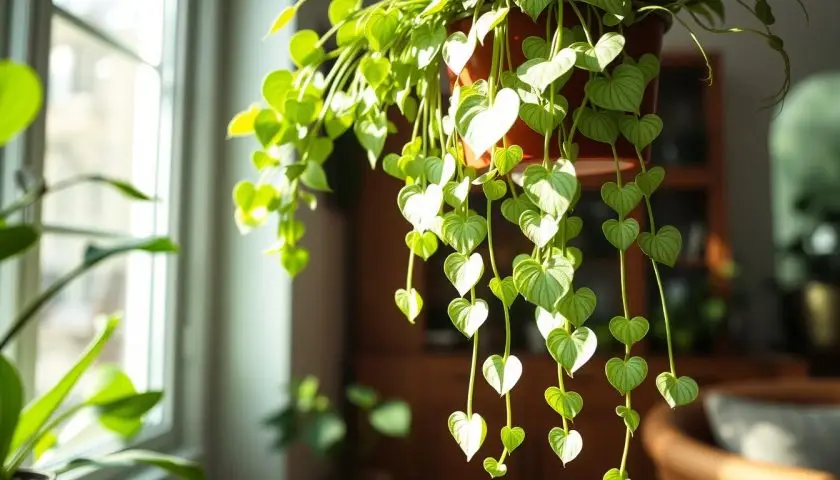
There are few cultivars of string of hearts. The best known, according to Wisconsin Extension, is Ceropegia woodii f. variegata, which has cream and pink variegated leaves. Care is the same as for the plain form, but variegated leaves have less chlorophyll, so give the variegated string of hearts the brightest spot you can to keep growth compact and colours strong.
String of Hearts Care Through the Year
| Season | What to Do |
|---|---|
| Spring | Repot if crowded, start light feeding and take cuttings or root tubers as growth resumes. |
| Summer | Water when the compost is dry, give bright light and watch for flowers and mealybugs. |
| Autumn | Flowers may continue; bring outdoor plants in before frost and start to water less. |
| Winter | Rest period: water sparingly, stop feeding and keep above 15.5°C (60°F). |
Where to Display a String of Hearts
Because the vines trail for several feet, a string of hearts looks best when it can hang freely. A hanging pot near a bright window, the top of a bookcase or a high shelf all work well, as long as the plant still gets plenty of light. Avoid placing it where vines will be brushed or pulled as people pass. For more ideas, see our list of trailing plants for shelves and bookcases, and if you like this plant, its relative in the same family, the Hoya linearis, is another elegant trailer.
Common String of Hearts Problems
| Problem | Likely Cause | What to Do |
|---|---|---|
| Yellow, mushy leaves and soft stems | Overwatering, especially in winter or low light | Let the compost dry fully; check roots and tubers for rot |
| Pale green leaves with long bare gaps | Too little light | Move closer to a bright window |
| Soft, thin, wrinkled leaves | Underwatering | Water thoroughly and let drain |
| Scorched or bleached patches | Sudden move into strong sun | Increase light gradually |
| White, cottony clusters | Mealybugs | Remove by hand and isolate the plant |
| Leaf drop after a cold spell | Temperatures below about 15.5°C (60°F) | Move somewhere warmer and steadier |
If stems are collapsing at the base and the compost smells sour, read our guide to identifying and treating root rot. Healthy vines can often be saved as cuttings even if the roots are lost.
Is String of Hearts Safe for Pets?
String of hearts is generally considered pet-safe. The UK charity Cats Protection includes it in its list of plants that are safe for cats, and it does not appear on the ASPCA list of plants toxic to dogs or cats. Any plant can still upset a pet’s stomach if a lot is eaten, and dangling vines are tempting to cats, so hang it out of reach. If you are worried, contact your vet or the ASPCA Animal Poison Control Center at (888) 426-4435 (a consultation fee may apply). Our guide to making your plants cat-friendly has more tips.
Frequently Asked Questions
How often should I water a string of hearts?
Water only when the compost is completely dry, then water deeply and let it drain. That may be every week or two in summer and much less often in winter. Check the compost rather than following a fixed schedule.
Why are my string of hearts leaves turning yellow?
Yellow, soft leaves usually mean too much water, often combined with low light or cold. Let the compost dry fully, move the plant somewhere brighter and check the roots for rot.
Why is my string of hearts so thin and leggy?
Thin growth with long gaps between leaves is a sign of too little light. Move it to a brighter window, trim the bare vines and root the cuttings back into the pot for a fuller plant.
What are the little balls on my string of hearts?
They are aerial tubers. They store water and can grow into new plants if you press them into moist compost. They are one reason the plant is also called rosary vine.
Is string of hearts toxic to cats?
It is generally considered safe. Cats Protection lists it as safe for cats, and it is not on the ASPCA toxic plant list, but keep vines out of reach to avoid stomach upsets.
Final Thoughts
As a botanist, I think the string of hearts is one of the most rewarding trailing plants once you treat it as the succulent it is. Bright light, gritty compost and a patient hand with the watering can are almost all it needs, and its tubers make it one of the easiest plants to share.
At Patch Plants, my aim is to explain the plant science behind each tip, so a string of hearts with pale leaves or soft stems becomes a puzzle you can solve rather than a lost cause. If you are building a collection of easy trailers, our guide to hanging plants for shelves and ceilings and our list of indoor plants for beginners are good next reads.
Sources: University of Wisconsin Extension, String of Hearts; RHS, Ceropegia linearis subsp. woodii; NC State Extension, Ceropegia woodii; Cats Protection, Indoor plants.

About the author
Sawera Shahid is a botanist with an MPhil in Botany and 5+ years of writing about plants. As founder and lead writer of Patch Plants, she writes practical, science-backed guides on indoor plants, outdoor gardens and plant problems, checked against RHS and university extension advice.