🌿 Key Takeaways
- How to repot a plant correctly — water 24 hours before, choose a pot 2–3cm wider, use fresh potting mix, inspect roots, and wait 48 hours before first post-repot watering
- Signs plant needs repotting include roots emerging from drainage holes, soil drying within 2 days of watering, stunted growth, and a plant that becomes unstable or top-heavy
- Root bound plant symptoms — circling roots, cracked pots, and water running straight through without absorbing — indicate immediate repotting is needed
- Best time to repot plants is early spring (March–May) as plants enter active growth — they recover fastest and establish quickly in fresh soil
- Repotting houseplants in the wrong season — particularly during flowering or dormancy — causes unnecessary stress and can trigger leaf drop
- Transplant shock after repotting is normal and temporary — wilting, drooping, and temporary leaf drop resolve within 1–3 weeks with correct aftercare
- Best soil for repotting must match the plant type — never use the same mix for succulents and ferns. Our complete soil mix guide covers every plant category
- How often to repot plants depends on growth rate — fast growers need repotting annually, slow growers every 2–3 years
- Browse our full indoor plant care guides for plant-specific repotting instructions alongside complete care information
Why Repotting Is One of the Most Important Plant Care Skills
Repotting plants is the single most transformative care action you can take for a struggling houseplant — yet it is consistently underestimated, delayed, or done incorrectly by even experienced plant owners. A plant that has outgrown its container is a plant under permanent stress. Its roots are compacted, competing for water and oxygen in soil that has long since been depleted of nutrients. Every other care effort — correct watering, appropriate light, regular feeding — becomes progressively less effective when root health is compromised by an inadequate growing space.
Understanding how to repot a plant correctly is not complicated — but it does require knowing the right timing, the right technique, the right soil, and the right aftercare to avoid transplant shock and ensure rapid, healthy establishment in fresh growing conditions.
This complete guide covers everything — from recognizing the signs plant needs repotting and understanding root bound plant conditions to the exact step-by-step repotting technique, specific guidance for every major houseplant type, transplant shock recovery, and the seasonal planning that keeps your entire plant collection in peak health year after year.
Signs Plant Needs Repotting — How to Tell If Your Plant Needs Repotting
Root Bound Plant — The Primary Signal
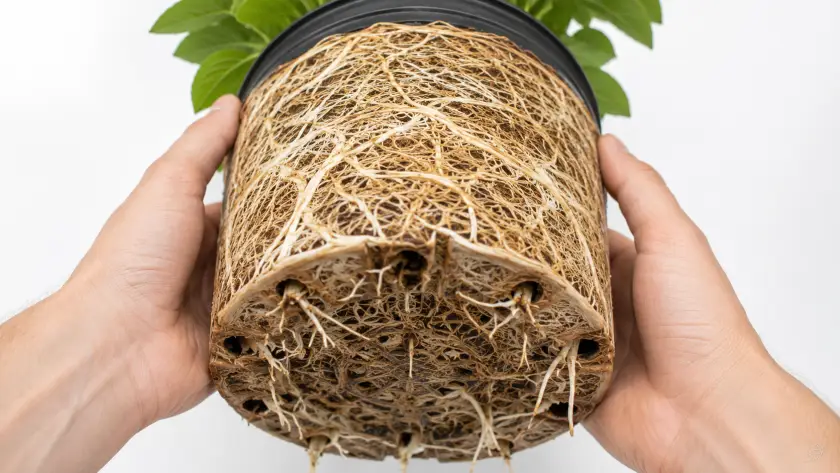
A root bound plant is the most common and most important reason for repotting houseplants. When a plant’s root system fills its container completely — leaving no space for further root development — the plant enters a state of chronic stress that no amount of watering, feeding, or light adjustment can fully resolve.
Root bound signs to look for:
Roots Growing Out of Drainage Holes
The most visible and unambiguous of all signs plant needs repotting — roots emerging from drainage holes mean the root ball has completely filled the pot and has begun searching for any available growing space outside it. Once roots are visible at drainage holes, repotting is overdue rather than upcoming.
Soil Drying Out Within 1–2 Days of Watering
When a root bound plant fills its pot entirely, soil volume is reduced to a minimum — meaning the tiny amount of remaining soil dries out almost immediately after watering. If you are checking your plant and finding completely dry soil within 24–48 hours of thorough watering, the root-to-soil ratio has become critically imbalanced. Repotting is the only solution — no amount of more frequent watering corrects the underlying problem.
Water Running Straight Through the Pot
Related to rapid drying — in severely root bound plants, water poured at the top of the pot flows immediately through the root mass and out of drainage holes without being absorbed. The roots have become so dense that they prevent proper water retention in what little soil remains.
Stunted or Stopped Growth
A root bound plant that has exhausted all available root space cannot physically grow larger — even in ideal light with correct watering and regular feeding. If a plant that previously showed consistent new leaf production has stopped growing entirely, check the root situation before assuming the problem is light or nutrition related.
Plant Becoming Unstable or Top-Heavy
As plants grow larger while remaining in the same pot, the ratio of plant to container becomes increasingly imbalanced — resulting in a top-heavy plant that tips or wobbles in its pot. This is particularly common in trailing plants and tall container plants that extend significantly beyond their pot dimensions.
Cracked or Deformed Pot
In severe cases of root bound plants — particularly in terracotta or ceramic pots — root pressure can literally crack the pot. If you notice hairline cracks appearing in a previously undamaged container, check the root situation immediately. This level of root bound stress requires urgent repotting.
Visible Roots on Soil Surface
Roots appearing on the soil surface — circling the top of the pot or lifting the plant upward out of the container — indicate that underground root space has been exhausted and the plant is searching upward for any available growing room.
When NOT to Repot — Avoiding Unnecessary Stress
Understanding when to repot plants includes knowing when NOT to repot. Repotting at the wrong time causes significant stress that can trigger leaf drop, bud loss, and prolonged recovery periods:
Never repot when:
- The plant is actively flowering or has visible developing buds — bud drop is almost guaranteed
- The plant is in winter dormancy — roots cannot establish in cold, low-light conditions
- The plant is already severely stressed — a struggling plant cannot survive the additional stress of repotting without first stabilizing
- You have just brought the plant home from a nursery — allow 2–4 weeks minimum adjustment before repotting a newly purchased plant, regardless of its root situation
When to Repot Plants — The Complete Seasonal Guide
Best Time to Repot Plants — Spring Is Always Optimal
The best time to repot plants is early spring — March through May in the Northern Hemisphere — when plants are entering their active growing season. The combination of increasing day length, warming temperatures, and rising plant metabolism means roots are primed to establish quickly in fresh soil. Recovery from any transplant shock is faster, new growth emerges more rapidly, and the entire transition from old to new pot completes more smoothly than at any other time of year.
Why spring repotting works best:
- Plants are beginning their fastest growth phase — damaged roots heal and regenerate quickly
- Soil temperatures are rising — root activity increases with soil warmth
- Longer days provide the light energy plants need for post-repotting recovery
- There is an entire growing season ahead for the plant to establish fully before autumn slows growth again
Repotting in Summer — Acceptable With Caution
Repotting in summer is acceptable for most plants but requires more careful aftercare. Summer heat increases water loss through leaves (transpiration) at exactly the time when roots are temporarily compromised by repotting. This combination can cause more severe transplant shock than spring repotting.
If repotting in summer:
- Do it in the morning when temperatures are coolest
- Move the repotted plant to a shaded position for 1–2 weeks after repotting
- Increase watering monitoring — hot weather dries new potting mix faster
- Avoid repotting during extended heatwaves — wait for a cooler period
Fall Repotting — Only for Urgent Cases
Fall repotting should be limited to emergency situations — severely root-bound plants showing acute stress, root rot requiring immediate treatment, or pot damage. Plants repotted in autumn have little time to establish before winter slows root activity — meaning they enter their cold season with compromised root systems.
Repotting in Winter — Generally Avoid
Repotting in winter is not recommended for most houseplants. During winter dormancy, root activity slows dramatically — meaning newly repotted plants cannot establish in fresh soil effectively. The exceptions are plants actively growing under supplemental lighting, or those with urgent root rot requiring immediate intervention regardless of season. Our guide on root rot — how to identify, prevent and treat it covers the emergency repotting process for root rot cases that cannot wait for spring.
How Often to Repot Plants — General Schedule
How often to repot plants depends primarily on growth rate:
| Plant Category | Repotting Frequency | Signs to Watch |
|---|---|---|
| Fast-growing tropicals (pothos, philodendron) | Every 12–18 months | Roots at drainage holes |
| Medium growers (peace lily, snake plant) | Every 18–24 months | Soil drying too fast |
| Slow growers (ZZ plant, cacti) | Every 2–3 years | Visible root circling |
| Large specimen plants | Every 3–5 years | Top-dress annually instead |
| Succulents and aloe | Every 2–3 years | Root bound signs |
| Orchids | Every 2 years | Medium breakdown |
Should I repot a new plant immediately? No — this is one of the most common repotting tips for beginners questions. Allow any newly purchased plant at least 2–4 weeks to adjust to its new environment before repotting. Moving a plant generates stress — combining the stress of a new home environment with the stress of repotting simultaneously creates more setback than benefit. The exception is if you can clearly see the plant is severely root-bound or in completely unsuitable soil.
What You Need Before You Start Repotting
Choosing the Right Pot Size — Going Up a Pot Size Correctly
Going up a pot size by the correct increment is one of the most critical decisions in how to repot a plant. The instinct to give a plant significantly more space — jumping from a 15cm pot to a 30cm pot — is consistently counterproductive.
Why over-potting causes problems: When a plant moves into a much larger pot, the surrounding soil that has no roots cannot dry out properly between waterings — because there are no roots to draw moisture from it. This creates persistently wet soil conditions around the plant’s existing root ball that promote root rot, fungal growth, and the same overwatering symptoms that most plant owners are specifically trying to avoid.
Correct pot size increase for repotting:
- Move up only 2–3cm in diameter from the previous pot for most houseplants
- For severely root-bound plants that have been in the same pot for many years, moving up 4–5cm maximum is acceptable
- For large specimen plants, move up 5–8cm — but no more
- For succulents and cacti — never move up more than 2cm to avoid waterlogging in excess soil
Best Pots for Repotting — Terracotta vs Plastic
Terracotta vs plastic pots is one of the most frequently asked questions in repotting houseplants:
Terracotta pots:
- Porous — allow moisture to evaporate through pot walls
- Best for succulents, cacti, snake plants, and Mediterranean herbs that need fast-drying soil
- Heavier — better for tall container plants that need stability
- More expensive but far longer-lasting
Plastic pots:
- Non-porous — retain moisture longer
- Best for ferns, peace lilies, and tropical moisture-lovers
- Lighter — easier to move large plants
- Less expensive and widely available
Ceramic and glazed pots:
- Partially porous depending on glaze — behaviour between terracotta and plastic
- Best for medium-needs tropical plants
- Heavy — excellent stability for larger plants
The universal requirement: Every pot used for repotting must have drainage holes. No exceptions. A pot without drainage holes will cause root rot regardless of plant type, potting mix choice, or how carefully you water.
Best Soil for Repotting — Matching Mix to Plant
Best soil for repotting is the most plant-specific element of the entire repotting process. Using the wrong potting mix — no matter how perfectly the technique is executed — will cause ongoing problems that only worsen over time.
Repotting soil by plant type:
| Plant Type | Best Repotting Mix | Key Requirement |
|---|---|---|
| Succulents and cacti | Cactus mix + 30% pumice | Drains within seconds |
| Snake plant | Cactus mix + 30% perlite | Never stays wet |
| Peace lily | Potting mix + coco coir + perlite | Moisture-retentive but draining |
| Monstera and aroids | Potting mix + perlite + bark | Airy and chunky |
| Ferns | Coco coir + perlite + compost | Stays consistently moist |
| Pothos and trailing plants | General potting mix + perlite | Balanced drainage |
| Orchids | Bark chips + perlite | Maximum aeration |
| Aloe vera | Cactus mix + pumice | Immediately draining |
Our comprehensive complete soil mix guide covers exact ratios and testing methods for every plant category — essential reading before purchasing potting mix for repotting houseplants.
Tools Required for Repotting
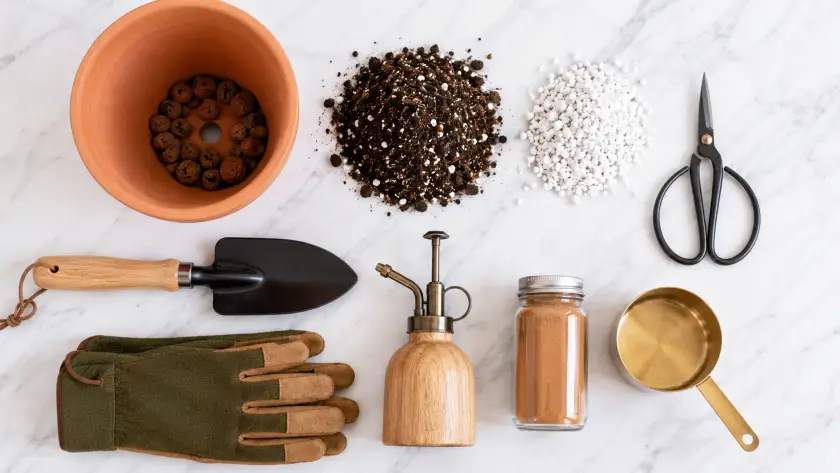
Essential repotting equipment:
- Clean pots with drainage holes (correct size — 2–3cm wider than current)
- Appropriate potting mix for the specific plant type
- Clean scissors or pruning shears — for trimming roots
- Trowel or large spoon — for moving and packing soil
- Gloves — particularly important for spiny plants (cacti) and irritant species (ficus)
- Newspaper or tray — to contain soil during the repotting process
- Watering can — for post-repotting watering
Optional but useful:
- Rooting hormone powder — for dusting cut root surfaces
- Cinnamon — natural antifungal for dusting cut surfaces
- Drainage crocks — broken pot pieces or gravel for base of new pot
- Mesh — to cover drainage holes and prevent soil loss
How to Repot a Plant — Complete Step-by-Step Guide
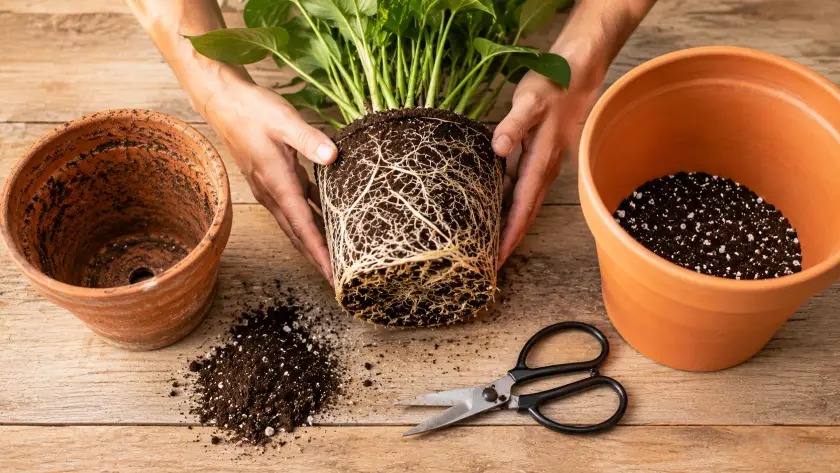
Step 1 — Water Thoroughly 24 Hours Before Repotting
Repotting is physically stressful for plants — the root system is disturbed, some fine roots will inevitably be damaged, and the plant must immediately begin establishing in unfamiliar growing medium. Watering thoroughly 24 hours before repotting reduces this stress significantly:
- Well-hydrated roots are more flexible and less likely to snap during removal
- The moistened root ball slides more easily from the old pot
- The plant enters the repotting process with its cells fully turgid — giving it better reserves to handle the transition
Do not water immediately before repotting — soggy, waterlogged soil is heavy, messy, and more likely to fall apart, damaging fine root hairs. 24 hours gives time for excess moisture to drain while keeping roots well-hydrated.
Step 2 — Prepare the New Pot
Before removing the plant from its old pot, prepare everything you need:
- Place a layer of crocks (broken pot pieces), gravel, or large perlite at the base of the new pot — covering drainage holes without blocking them completely
- Add a layer of fresh potting mix appropriate for the plant type — enough so the plant will sit at the correct final depth
- The plant should sit with its soil surface 2–3cm below the pot rim — allowing space for watering without overflow
Step 3 — Remove the Plant From Its Old Pot
Removing a plant from its pot without breaking roots requires patience and the right technique:
For small to medium plants:
- Place one hand flat over the soil surface with the plant stem between your fingers
- Tip the pot upside down
- Squeeze the sides of a plastic pot gently — breaking the root-to-pot adhesion
- For terracotta pots, run a thin knife or trowel blade around the inside pot wall to loosen the root ball
- Gently slide the root ball free — if it resists, do not force it. Run the knife around again more thoroughly
For large plants:
- Lay the pot on its side
- Firmly tap the outside of the pot all around with your hand or a rubber mallet
- Have a second person gently hold the plant while you ease the pot away from the root ball
- Never pull the plant by its stems — always support the root ball
If the root ball will not release: Slide a long knife or trowel blade around the entire inner circumference of the pot. For terracotta pots that have been in place for many years, the root-to-pot bond can be extremely strong.
Step 4 — Inspect and Prepare the Root Ball
Once the plant is free from its old pot, examine the root system carefully before placing it in the new pot:
Healthy roots: White or cream-colored, firm, and flexible. These need no attention — handle gently.
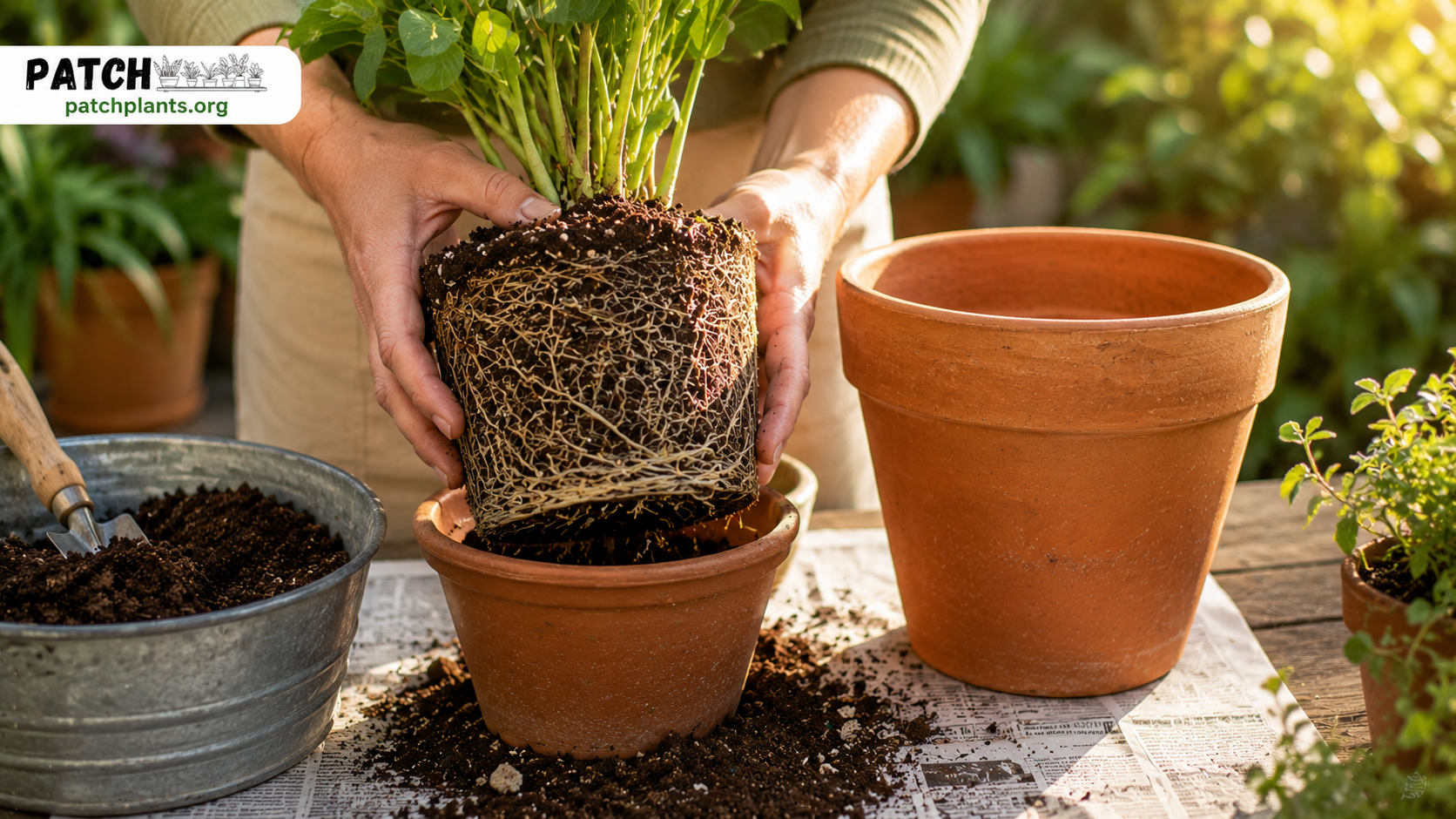
Circling roots: Dark, compacted roots that have been growing in circles following the pot wall. Gently tease these outward with your fingers — breaking the circular pattern encourages them to grow outward into new soil rather than continuing to circle.
Dead or mushy roots: Brown, soft, and foul-smelling — these are roots killed by root rot or age. Remove completely with clean scissors. Cut back to firm, healthy root tissue. If significant root rot is present, treat as a root rot emergency — our guide on root rot — how to identify, prevent and treat it gives the complete rescue protocol.
Root pruning for large plants: For very large, severely root-bound plants where going up a pot size significantly is not desirable, root pruning allows the plant to remain in the same size pot or move up only minimally. Trim up to one-third of the root mass — removing the outermost circling roots — then repot into fresh soil in the same or only slightly larger pot. This is particularly useful for mature specimen plants where pot size is already at the practical maximum.
Dust cut surfaces: After trimming any roots, dust the cut surfaces lightly with cinnamon (natural antifungal) or horticultural rooting hormone powder to prevent fungal infection through open root wounds.
Step 5 — Remove Old Soil
Shake off as much of the old potting mix from the root ball as possible before repotting. This serves several important purposes:
- Removes exhausted, nutrient-depleted old growing medium
- Exposes the root system for thorough inspection
- Allows maximum contact between roots and fresh potting mix after repotting
- Removes any pests, fungal spores, or disease organisms present in old soil
For severely root-bound plants with very compacted roots, use a chopstick or pencil to gently loosen the root ball — working from the bottom upward — before shaking off old soil.
Step 6 — Position the Plant in the New Pot
Place the plant in the center of the prepared new pot:
- Hold the plant at the correct height — soil surface should sit 2–3cm below the pot rim
- Begin adding fresh potting mix around the sides of the root ball — working in layers rather than pouring all at once
- Gently press each layer of soil around the roots — eliminating large air pockets that allow roots to dry out
- Continue adding soil until the pot is filled to 2–3cm below the rim
- Gently firm the soil surface — it should feel consolidated but not compacted
- Check that the plant is centered and stable
Important depth guideline: Never bury the plant deeper than it was growing in its previous pot. The crown of the plant — the point where stems meet roots — should sit at or very slightly above the new soil surface. Burying the crown causes crown rot, particularly in succulents, aloe, and snake plants.
Step 7 — Water Thoroughly and Allow to Drain
How to water after repotting correctly is critical for establishing the plant in its new pot:
- Water slowly and thoroughly — pour in circles around the pot to wet all the new soil evenly
- Continue watering until water flows freely from drainage holes
- Allow to drain completely — never leave a freshly repotted plant sitting in standing water
- Return to its growing position
Important exception for succulents, cacti, and aloe vera: Do not water immediately after repotting. Allow 5–7 days before first watering — any roots cut during repotting need time to callous and heal before water exposure. Watering immediately increases rot risk through open root wounds. Our guide on aloe vera care for home covers the specific post-repotting protocol for succulent species.
Plant Care After Repotting — Complete Aftercare Guide
Transplant Shock — What It Is and How to Manage It
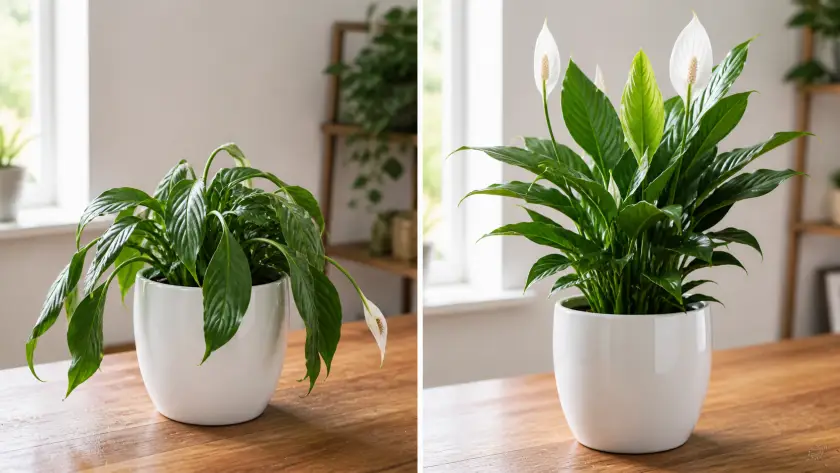
Transplant shock is the temporary stress response that plants experience after repotting — caused by root disturbance, change in growing medium, and the energy demands of establishing in new soil. Transplant shock is completely normal and expected — it is not a sign that something has gone wrong.
Transplant shock symptoms:
- Wilting or drooping — even with correct soil moisture
- Temporary leaf drop — particularly in tropical plants sensitive to root disturbance
- Yellowing of lower leaves
- Temporary pause in new growth
- Slight leaf curl or flagging
How long does transplant shock last? For most houseplants, transplant shock symptoms resolve within 1–3 weeks. Large specimen plants, orchids, and plants with extensive root damage during repotting may take 4–6 weeks to fully recover. If symptoms worsen beyond 4 weeks or include soft, mushy stems, investigate for root rot. Our guide on how to revive a dying plant covers emergency recovery for plants not responding normally after repotting.
How to Avoid Transplant Shock — Prevention Is Better Than Treatment
How to avoid transplant shock begins before repotting even starts:
- Water 24 hours before repotting — well-hydrated plants handle root disturbance better
- Work quickly — minimize the time roots are exposed to air
- Handle roots gently — avoid unnecessary breakage of fine root hairs
- Use appropriate potting mix — wrong soil creates ongoing stress that compounds transplant shock
- Repot in spring when plant metabolism is highest — faster recovery
- Move to a slightly shaded position after repotting — reducing transpiration demand on a temporarily compromised root system
Wilting After Repotting — When to Worry
Wilting after repotting in the first 1–2 weeks is normal transplant shock — roots are temporarily unable to supply water as efficiently as before. However, wilting accompanied by soil that is consistently wet is a warning sign:
Normal post-repotting wilting: Soil feels appropriately moist, no foul odors, leaves are drooping but not yellowing rapidly. Provide bright indirect light, maintain normal watering, and wait. The plant will recover.
Concerning post-repotting wilting: Soil is wet or waterlogged, leaves are yellowing rapidly from the base upward, or there is a musty smell from the pot. This indicates root rot developing in overly wet new soil — check our guide on signs you are overwatering and how to correct it for immediate corrective action.
Yellowing After Repotting — Common Causes
Yellowing after repotting is among the most common transplant shock symptoms and almost always temporary. The most common causes:
- Root damage during repotting temporarily reduces nutrient delivery to leaves
- Change in soil pH — new potting mix may have slightly different pH than the old
- Inconsistent watering in the adjustment period
- The plant redirecting energy to new root development rather than maintaining older leaves
Our comprehensive guide on why your plants leaves are turning yellow covers the complete diagnostic process for post-repotting yellowing — helping you identify whether the cause is normal transplant shock or a more serious underlying issue.
Plant Drooping After Repotting — Assessment Guide
Plant drooping after repotting follows two distinct patterns with different causes:
Drooping with dry soil: The new potting mix is drying faster than expected — increase watering frequency slightly in the first 2–3 weeks while the root system re-establishes.
Drooping with wet soil: Too much moisture around temporarily damaged roots — hold off watering and allow soil to dry more thoroughly before the next watering. If drooping with wet soil persists, check for root rot.
Our guide on leaf curl, browning, and drooping — what your plant is telling you decodes all post-repotting leaf symptoms in detail.
Watering After Repotting — The First Month Schedule
How to water after repotting in the critical first month:
Week 1: Water thoroughly after repotting (except succulents — wait 5–7 days). Then do not water again until the top inch of soil is dry. Check daily.
Week 2: Continue checking daily. Most plants will need water every 5–10 days depending on pot size, light, and temperature.
Week 3–4: Transition to normal watering routine appropriate for the plant type. The root system should be beginning to establish by now.
Key principle: Never water on a fixed schedule in the first month after repotting houseplants — always use the finger test. New potting mix has different moisture retention characteristics than the exhausted old soil the plant was previously growing in. For complete watering guidance applicable to all post-repotting situations, our guide on worst times to water your plants covers optimal watering timing for every plant type.
Fertilizing After Repotting — Wait Before Feeding
Fertilizing after repotting should be delayed for at least 4–6 weeks after the repotting date. Fresh potting mix contains sufficient starter nutrients for the immediate post-repotting period — adding fertilizer to a plant with temporarily compromised roots risks root burn that compounds transplant shock.
After 4–6 weeks, resume normal feeding appropriate for the plant type and season. For complete fertilizing guidance across all plant categories, our guide on fertilizing indoor vs outdoor plants — what’s the difference covers post-repotting feeding schedules in detail.
How to Repot Specific Plants — Species-by-Species Guide
How to Repot Snake Plant
How to repot snake plant (Sansevieria trifasciata) requires specific attention to its succulent nature and thick rhizome structure:
When: Every 2–3 years or when roots emerge from drainage holes. Snake plants prefer being slightly pot-bound — do not rush repotting.
Pot size: Move up only 2–3cm — snake plants bloom and produce pups more readily when pot-bound.
Soil: Cactus mix with 30% additional perlite — fast drainage is non-negotiable. Never use standard potting compost.
Key technique: Snake plants grow from a horizontal rhizome underground. When removing from the old pot, identify the rhizome structure and avoid cutting through it unnecessarily. This is also the ideal time to divide — separate individual leaf clusters with their attached rhizome sections for free new plants.
Post-repotting: Do not water for 5–7 days — snake plant root cuts need time to callous. Our snake plant care guide covers the complete repotting and division process in detail.
How to Repot Peace Lily
How to repot peace lily (Spathiphyllum) is one of the most commonly needed repotting tasks — peace lilies are fast growers that signal their need for repotting with dramatic drooping that does not resolve even with correct watering.
When: Every 12–18 months for active growers. Peace lilies tolerate being moderately pot-bound but will decline sharply when severely root-bound.
Pot size: 2–3cm wider. Peace lilies bloom most reliably when slightly pot-bound — do not over-pot.
Soil: General purpose potting mix with added coco coir and perlite — moisture-retentive but well-draining.
Key technique: This is the ideal time to divide — peace lilies produce multiple growth points that can be separated during repotting, each becoming a new plant. Ensure each division has at least 2–3 leaves and attached roots before separating.
Post-repotting: Water immediately and thoroughly — peace lilies are moisture-lovers and do not benefit from the dry period succulents need. Place in bright indirect light. Expect 1–2 weeks of drooping as roots re-establish. Our peace lily care guide covers post-repotting care in full detail.
How to Repot Aloe Vera
How to repot aloe vera requires understanding aloe’s drought-adapted root system and its production of pups around the mother plant’s base.
When: Every 2–3 years or when pups are significantly crowding the pot.
Pot size: 2–3cm wider — aloe vera is prone to root rot in oversized pots with excess soil.
Soil: Dedicated cactus/succulent mix with pumice — drains within seconds of watering.
Key technique: Aloe pups (offsets) can be separated at repotting time. Each pup should be at least 8–10cm tall with its own visible root system before separation. Allow both mother plant and pup cut surfaces to callous for 24–48 hours before planting.
Post-repotting: Wait 5–7 days before first watering — essential for all succulent species. Our aloe vera care guide covers the complete aloe repotting and pup separation process.
How to Repot Pothos
How to repot pothos (Epipremnum aureum) is among the easiest repotting tasks — pothos is extremely forgiving of root disturbance and recovers from transplant shock faster than almost any other houseplant.
When: Every 12–18 months — pothos is a fast grower that fills pots quickly.
Pot size: 2–3cm wider. Pothos trailing stems can become very long — consider whether the display needs trailing plant stems trimming back at repotting time.
Soil: General purpose potting mix with 20–30% perlite.
Post-repotting: Water immediately and thoroughly. Pothos rarely shows significant transplant shock — expect normal growth to resume within 1–2 weeks. For guidance on displaying repotted pothos effectively, our guide on trailing plants that look stunning on shelves and bookcases covers optimal display positions for trailing plants post-repotting.
How to Repot Monstera
How to repot monstera (Monstera deliciosa) — the most popular large tropical houseplant — requires managing both its substantial root system and its aerial roots.
When: Every 18–24 months for young plants — slow down to every 2–3 years for mature specimens.
Pot size: 3–5cm wider for young plants; for mature large monsteras, top-dressing (replacing the top 5–10cm of soil with fresh mix) is often preferable to a full repot.
Soil: General purpose potting mix with perlite and pine bark chips — chunky, airy mix that supports the large root structure.
Key technique: Aerial roots (the brown, rope-like roots growing from stems above soil) do not need to be buried — leave them as they are or tuck them into the fresh potting mix if manageable. Never cut aerial roots — they serve important functions in moisture absorption and plant stability.
Post-repotting: Water thoroughly and support the plant with a moss pole or stakes if it has become top-heavy. Expect 2–3 weeks of slower growth during establishment.
How to Repot Spider Plant
How to repot spider plant (Chlorophytum comosum) — famous for producing cascading stems with baby plantlets (spiderettes):
When: Every 12–18 months — spider plants are moderately fast growers that form substantial root masses.
Pot size: 2–3cm wider. Spider plants actually bloom and produce more spiderettes when slightly pot-bound.
Key technique: This is the ideal time to propagate — spiderette plantlets that have small root nubs at their base can be potted separately at repotting time. Snip the plantlet from the connecting stem and pot in moist potting mix. Our guide on how to propagate houseplants easily at home covers spider plant propagation in full detail.
How to Repot Succulents
How to repot succulents follows the same general process as other plants but with critical differences in timing and post-repotting care:
When: Every 2–3 years or when root-bound signs appear.
Soil: Cactus and succulent specific mix with pumice or perlite — immediately draining.
Root pruning: More commonly beneficial for succulents than other plants — removing up to one-third of old roots encourages fresh root development and prevents root-bound stress from recurring too quickly.
Post-repotting: Always wait 5–7 days before watering — cut root surfaces must callous completely before any moisture contact. Place in indirect light for 1–2 weeks — direct sun on freshly repotted succulents can cause stress before roots are established.
Repotting Large Plants — Special Considerations
Repotting large plants — mature specimens in pots over 35cm — requires special consideration because full repotting becomes increasingly disruptive and physically difficult as plants grow:
Top-dressing as an alternative to full repotting: For large specimen plants that are not severely root-bound, removing the top 5–10cm of old potting mix and replacing with fresh mix provides a nutrient boost and improved soil structure without the full stress of repotting. Top-dress annually in spring.
Pot-in-pot technique: For very large plants where repotting is genuinely impractical, root pruning (removing the outer root layer) and returning the plant to the same or only slightly larger pot extends the period between full repots by 2–3 years.
For guidance on displaying large repotted specimen plants, our guide on how to create an indoor jungle without overcrowding covers positioning and styling for large indoor plant specimens.
Indoor Plant Repotting vs Outdoor Plant Repotting
Indoor plant repotting and repotting outdoor plants and repotting container plants share the same fundamental principles — but timing and post-repotting care differ:
Indoor plant repotting: Can be done in any season if the plant is actively growing. Post-repotting placement in a bright, stable indoor position is straightforward.
Repotting outdoor plants and repotting container plants on patios: Spring repotting is even more important for outdoor plants — they will face more variable conditions (wind, temperature fluctuation, direct sun) that compound transplant shock if repotted in less-than-ideal seasons.
For specific guidance on repotting patio plants and container gardening specimens, our guide on the best plants for container gardening on patios covers outdoor container repotting considerations in detail.
Common Repotting Mistakes — What to Avoid
Mistake 1 — Going Up Too Many Pot Sizes
Going up a pot size by more than 2–3cm at once creates excess soil around the root ball that stays wet — creating waterlogging conditions and root rot regardless of how carefully you water. Always increase pot size incrementally.
Mistake 2 — Using the Wrong Potting Mix
Using the same potting mix for all plants is the second most common repotting error. Best soil for repotting must match the plant — cactus mix for succulents and snake plants, moisture-retentive mix for peace lilies and ferns. Our soil mix guide covers every combination.
Mistake 3 — Watering Immediately After Repotting Succulents
Repotting tips for beginners often overlook this — succulents, cacti, and aloe vera must not be watered for 5–7 days after repotting. Any root cuts need to callous before water contact. Immediate watering causes rot through open wounds.
Mistake 4 — Repotting at the Wrong Time
Repotting in winter for non-emergency situations, repotting a flowering plant and losing all buds, or repotting a newly purchased plant before it has adjusted — all cause preventable stress. Follow the seasonal guidelines above.
Mistake 5 — Fertilizing Too Soon After Repotting
Fertilizing after repotting within the first 4–6 weeks causes root burn through open root wounds in fresh potting mix. Always wait a full 4–6 weeks before resuming feeding.
Mistake 6 — Burying the Plant Too Deep
Burying the crown (the junction between roots and stems) deeper than the plant was previously growing causes crown rot — particularly serious in succulents, aloe, and snake plants. The crown should always sit at or slightly above soil level.
Mistake 7 — Not Checking for Root Rot Before Repotting
If a plant is struggling with root rot, repotting into fresh soil without first removing all affected roots simply transfers the problem to new growing medium. Always inspect roots thoroughly before repotting and address any rot before placing in the new pot. Our guide on root rot — how to identify, prevent and treat it is essential reading before repotting any plant showing rot symptoms.
Frequently Asked Questions
When Is the Best Time to Repot Plants?
Best time to repot plants is early spring — March through May — when plants are entering active growth and recover fastest from transplant shock. Repotting in summer is acceptable with extra care. Repotting in winter should be limited to emergencies only.
How Do I Know If My Plant Is Root Bound?
Root bound signs include: roots growing from drainage holes, soil drying within 24–48 hours of watering, water running straight through without absorbing, stunted growth despite correct care, a plant that is top-heavy or unstable in its pot, and roots visibly circling on the soil surface. Any two or more of these signs together confirm repotting is needed.
Should I Repot a New Plant Immediately?
Should I repot a new plant right after purchase? No — allow 2–4 weeks minimum adjustment time before repotting houseplants that are newly acquired. Moving generates stress — combining adjustment stress with repotting stress simultaneously sets the plant back more than leaving it in its nursery pot temporarily.
How Long Does Transplant Shock Last?
How long does transplant shock last for most houseplants? Transplant shock symptoms — wilting, drooping, temporary leaf drop, yellowing — typically resolve within 1–3 weeks for most species. Large specimen plants and those with significant root damage may take 4–6 weeks. If symptoms worsen beyond 4 weeks, check for root rot.
Can I Repot a Flowering Plant?
Repotting a plant that is actively flowering almost always causes bud drop as the plant redirects energy from flower production to root establishment. Wait until flowering is completely finished before repotting. The exception is if the plant is severely stressed — in which case repotting urgency outweighs the lost flowering display.
How Often Should I Repot Plants?
How often to repot plants depends on growth rate. Fast-growing tropicals like pothos and philodendrons need repotting every 12–18 months. Medium growers like peace lily and snake plant every 18–24 months. Slow growers like ZZ plants and cacti every 2–3 years. Let the plant’s own signs plant needs repotting guide the timing rather than a fixed schedule.
What Happens If I Don’t Repot a Root-Bound Plant?
A severely root bound plant left without repotting enters progressive decline — growth stops, watering becomes almost impossible to manage correctly, nutrients cannot be absorbed, and root health deteriorates. Eventually the plant dies from the compounded stress of root compaction, nutrient depletion, and inconsistent moisture. Early repotting when root bound signs first appear prevents this entirely.
How Do I Repot a Large Plant by Myself?
Repotting large plants solo requires technique: lay the pot on its side, tap around the pot exterior to loosen the root ball, and slide the plant out sideways rather than lifting vertically. For extremely large plants, a second person to hold the plant while you manage the root ball significantly reduces root damage risk.
Related Guides on Patch Plants
- 🐍 Snake Plant Care Guide — Complete Repotting & Care
- 🌸 Peace Lily Care Guide — Complete Spathiphyllum Tips
- 🌵 Aloe Vera Care Guide — Growing, Gel & Benefits
- 🔬 Root Rot — How to Identify, Prevent and Treat It
- 🪴 Best Soil Mix for Every Type of Plant
- 💧 Worst Times to Water Your Plants
- 🌿 How to Propagate Houseplants Easily at Home
- 🌱 Signs You Are Overwatering — How to Fix It
- 🍃 Why Your Plant Leaves Are Turning Yellow
- 🌿 How to Revive a Dying Plant — Step by Step
- 🌱 Leaf Curl, Browning & Droop — What Your Plant Is Telling You
- 🌸 Fertilizing Indoor vs Outdoor Plants — The Difference
- 🌿 Complete Watering Guide for Healthy Thriving Plants
- 🌱 Browse All Indoor Plant Guides
Final Thoughts
Repotting plants is not just a maintenance task — it is one of the most meaningful acts of care you can perform for any houseplant. When you take a root bound plant out of its cramped, exhausted growing medium and give it fresh soil, space for root expansion, and the conditions it needs to thrive, you are genuinely transforming its capacity to grow, bloom, and contribute to your space for years to come.
The signs plant needs repotting are always there if you look for them — roots at drainage holes, rapid soil drying, stunted growth. And the process itself, when understood correctly — right timing, right pot size, right best soil for repotting, careful root inspection, correct transplant shock aftercare — is far less intimidating than it initially appears. Plants are extraordinarily resilient. They want to grow. Repotting houseplants correctly simply removes the barriers that have been preventing them from doing so.
Start with one plant. Follow the steps. Experience the satisfaction of placing a previously struggling plant into fresh growing conditions and watching it respond — new roots establishing, new leaves emerging, the plant visibly healthier within weeks of repotting. Then apply the same process to every plant in your collection, systematically, as root bound signs appear.
According to the Royal Horticultural Society, regular repotting is the single maintenance task most likely to extend the lifespan and improve the health of indoor plants — making it one of the highest-return investments of time and effort in any plant collection. 🌿