
Key Takeaways
- Edible flowers add colour, flavour, scent, texture, and pollinator value to outdoor gardens.
- Learn how to grow edible flowers safely by choosing chemical-free plants, harvesting fresh blooms, and avoiding unknown flowers.
- Edible flowers for cakes include pansies, violas, rose petals, lavender, calendula, borage, and cornflowers.
- Edible flowers for drinks work beautifully in ice cubes, syrups, teas, cocktails, mocktails, and summer lemonades.
- Use fresh edible flowers when possible, and only use dried edible flowers from trusted culinary sources.
Introduction
Edible flowers are one of the easiest ways to make an outdoor garden feel beautiful and useful at the same time. They look good in beds, pots, borders, raised planters, and patio containers, but they also bring colour and flavour to salads, cakes, drinks, desserts, herb butters, and simple summer meals.
The idea of food flowers can feel unusual at first. Most people are used to seeing flowers in vases, not on plates. But many edible garden flowers have been used for generations. Nasturtiums taste peppery, borage has a cucumber-like freshness, roses can taste soft and fragrant, and chive blossoms bring a mild onion flavour.
This guide explains how to grow edible flowers outdoors, which flowers are safe for beginners, what flowers are edible for cakes, how to use edible flowers for drinks, and where to buy edible flowers if you need them for a special event.
For a stronger outdoor garden setup, you can also use the garden calendar, easiest outdoor edible plants, and pollinator-friendly plants guides.
Can You Eat Flowers?
Can you eat flowers? Yes, but only some flowers. This is the most important rule in the whole article. A flower is not safe just because it looks pretty, smells nice, or grows in your garden.
Some flowers are edible. Some are unpleasant. Some can cause stomach upset. Some are toxic. That is why edible flowers should always be correctly identified before eating. Never eat a flower if you are unsure what it is.
Avoid these common risks:
- Unknown flowers from mixed seed packets
- Florist flowers unless clearly labelled for culinary use
- Roadside flowers exposed to pollution
- Flowers sprayed with pesticides or weed killers
- Flowers from areas used by pets or livestock
- Old, dusty, faded, or diseased flowers
If you want to use edible flower garnish, edible flower cake decorations, or edible cocktail flowers, grow your own or buy flowers labelled for culinary use.
The Golden Safety Rule for Edible Flowers
The safest edible flowers are the ones you grow yourself from known plants using organic or chemical-free practices. When you grow them yourself, you know what has touched the plant, how it was watered, and whether sprays were used.
Start with easy edible flowers and flowering herbs. Avoid experimenting with unfamiliar plants. Correct identification matters more than creativity.
People with pollen allergies should be careful with edible flowers. Try a tiny amount first, and avoid flowers if you are sensitive to pollen or plant-based allergens.
17 Best Edible Flowers to Grow Outdoors
1. Nasturtiums
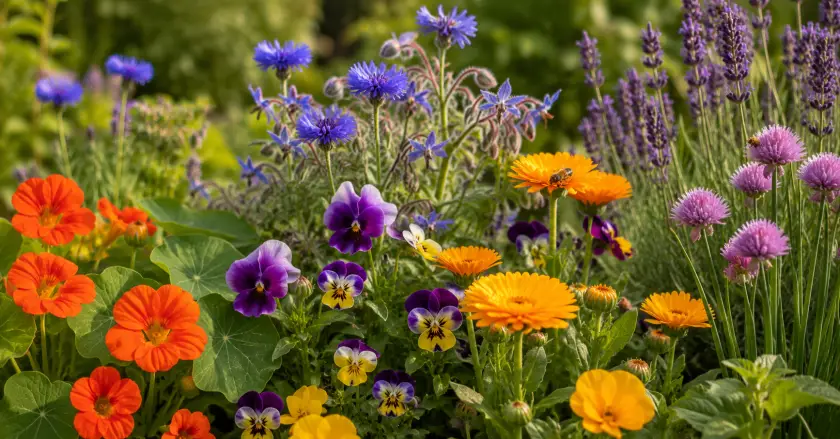
Nasturtiums are among the best edible flowers for beginners. They are easy to grow, colourful, fast, and useful in both beds and containers.
The flowers taste peppery, almost like mild radish. The leaves and buds are also edible. Use nasturtium flowers in salads, sandwiches, pasta, herb butter, and as an edible flower garnish for savoury plates.
Nasturtiums are also helpful in a food garden because they attract pollinators and can bring life to vegetable beds.
2. Calendula
Calendula, also called pot marigold, is a cheerful edible flower with orange or yellow petals. It is easy to grow and works well in borders, vegetable beds, and containers.
Marigolds are also useful in gardens where you want flowering plants that repel mosquitoes. Pair them with lavender, basil, rosemary, mint, and lemon balm near vegetable beds, patios, and outdoor dining areas.
Use calendula petals in rice, soups, salads, butters, and simple cake decoration. The flavour is earthy and slightly peppery, so use petals lightly rather than adding whole handfuls.
Calendula is also a good choice for gardeners who want edible perennials-style colour, although many gardeners grow it as an annual or self-seeding flower.
3. Pansies
Are pansy flowers edible? Yes, pansies are widely used as edible flowers for cakes, cupcakes, salads, drinks, and decorative desserts.
Pansies have a mild flavour and a beautiful flat shape, which makes them ideal for edible flower cake decorations. They are especially useful when you want a flower to sit neatly on icing, cookies, or chilled desserts.
Use clean, chemical-free pansies only. Do not use bedding plants from a garden centre for food unless they are clearly grown for edible use or you grow them on safely before harvesting.
4. Violas
Violas are smaller than many pansies, but they are just as useful. Their size makes them perfect for edible flowers for cakes, flower decor for cakes, and small edible flower garnish ideas.
They work well pressed into buttercream, frozen into ice cubes, scattered over fruit, or used on mini desserts. Their mild flavour makes them beginner-friendly.
5. Borage
Borage has bright blue star-shaped flowers with a fresh cucumber-like taste. It is one of the best edible flowers for drinks because the flowers look beautiful floating in clear liquids or frozen into ice cubes.
Use borage in lemonade, iced tea, edible cocktail flowers, mocktails, salads, and summer desserts. Bees also love borage, so it is a strong choice for pollinator-friendly gardens.
6. Roses
Are all roses edible? Petals from true roses are generally edible when the plant is correctly identified and grown safely. Are all rose petals edible? Clean rose petals from true roses are edible, but florist roses are not a safe choice unless they are labelled for culinary use.
Edible roses are best when they are fragrant. The stronger the scent, the more flavour the petal usually has. Use rose petals in syrups, teas, sugar, jams, desserts, drinks, and cake decoration.
Remove the bitter white base of the petal if needed. Use only petals that are clean, fresh, and free from chemical sprays.
7. Lavender
Lavender is a classic edible flower, but it needs restraint. Too much lavender can taste soapy or medicinal. A small amount can be lovely in biscuits, cakes, sugar, tea, lemonade, and syrups.
Lavender suits sunny beds, gravel gardens, patio pots, and pollinator borders. It is also useful if you want flowers for drinks and dried edible flowers for later use.
For outdoor growing help, see best plants for small outdoor spaces and top drought-resistant plants.
8. Chamomile
Chamomile flowers are best known for tea. They have a soft apple-like scent and work well fresh or dried.
Use chamomile as a gentle food flower for herbal tea, simple syrups, honey, desserts, and light garnishes. It is also a useful flower in plant-based relaxation gardens because it brings soft texture and scent.
9. Chive Blossoms
Chive blossoms are edible flowering herbs with a mild onion flavour. They are excellent in salads, eggs, potatoes, cream cheese, savoury butter, soups, and vinegar infusions.
If you grow herbs, do not waste the flowers. Flowering herbs like chives, basil, dill, mint, thyme, rosemary, and rocket can offer subtle flavour and useful garnish options.
10. Sunflowers
Sunflowers are usually grown for seeds and height, but their petals can be used as edible flower garnish in salads and savoury dishes. The flavour can be slightly bitter, so use small amounts.
Young sunflower buds can also be cooked in some recipes, but beginners should start with petals only and use them lightly.
11. Hibiscus
Hibiscus has a tart, cranberry-like flavour and a strong colour. It is popular in teas, syrups, iced drinks, jams, and edible cocktail flowers.
Dried edible flowers often include hibiscus because it keeps colour and flavour well. Always buy dried hibiscus from a food-grade supplier.
12. Cornflowers
Cornflowers are beautiful blue edible flowers used mostly for decoration. Their flavour is mild, but their colour makes them useful for edible flowers for cakes, biscuits, salads, and drinks.
Use petals rather than tough flower centres. Cornflowers look especially good with white icing, lemon cakes, and summer salads.
13. Dianthus
Dianthus petals can have a clove-like flavour. They are useful in cakes, sugar, syrups, and floral desserts.
Use only the petals and remove the bitter base. As with all edible flowers, make sure the plant has not been sprayed or treated with non-food-safe chemicals.
14. Squash Blossoms
Squash blossoms are one of the best answers to what vegetables are flowers. Courgette, marrow, pumpkin, and squash flowers are edible and often cooked.
They can be stuffed, baked, fried, or chopped into savoury dishes. If you are growing squash and want fruit later, use mostly male flowers and leave enough female flowers to produce vegetables.
15. Rocket Flowers
Rocket flowers are spicy, peppery, and useful in salads. They belong in the flowering herbs and flower veg category because they come from a leafy edible plant.
If your rocket bolts, do not rush to pull it all out. The flowers can still bring flavour and pollinator value.
16. Dill Flowers
Dill flowers have a soft anise-like flavour and are useful with fish, potatoes, cucumbers, salads, pickles, and sauces.
Small herb flowers like dill can be used whole because the flowers are tiny and delicate.
17. Mint Flowers
Mint flowers are edible and can be used in drinks, fruit salads, syrups, teas, and desserts. They are milder than the leaves but still carry a minty flavour.
Mint can spread aggressively outdoors, so grow it in a container if you want control.
What Are Flower Vegetables?
What are flower vegetables? These are vegetables where the flower, flower bud, or flowering part is eaten. People sometimes search for flower veg when they mean edible flower vegetables.
Examples include cauliflower, broccoli, artichokes, squash blossoms, courgette flowers, and unopened flower buds from some edible plants.
What vegetables are flowers? Cauliflower and broccoli are the most familiar examples because the part you eat is made of undeveloped flower buds. Squash blossoms are a clearer flower example because you eat the actual flower.
Flower in Plant: What Part Are You Eating?
The phrase flower in plant usually means the reproductive part of a plant. In edible gardening, that can include petals, whole small flowers, buds, or flower clusters.
For large flowers such as roses, hibiscus, hollyhocks, or squash blossoms, you may use petals or the whole flower depending on the plant and recipe. For small flowering herbs such as dill, fennel, chives, and mint, the flowers are often used whole.
Do not assume every part of an edible flower is edible. Sometimes only the petals are used. Sometimes stamens, pistils, calyces, or bitter bases should be removed.
How to Grow Edible Flowers
How to grow edible flowers starts with choosing the right seeds or plants. Look for varieties known for edible use, and avoid ornamental plants treated with chemicals.
- Choose safe varieties: Start with nasturtiums, calendula, pansies, violas, borage, chives, and lavender.
- Grow without unsafe sprays: Avoid chemical pesticides and herbicides on plants you plan to eat.
- Match light needs: Most edible flowers prefer sun, but pansies and violas can handle cooler, gentler conditions.
- Use good drainage: Many edible flowers dislike soggy soil.
- Water consistently: Dry stress can make flowers bitter or short-lived.
- Harvest fresh: Pick flowers when newly opened and clean.
For outdoor care, read complete watering guide, best soil mix for every plant, and seasonal plant care autumn.
Best Edible Perennials
Edible perennials are useful because they return year after year. Some edible flowers are annuals, but many perennial or herbaceous plants also produce edible blooms.
Good edible perennials and long-lasting edible flowering plants include roses, lavender, chives, mint, thyme, rosemary, daylilies, dianthus, bee balm, and some scented geraniums.
Always check the exact plant before eating. Common names can be confusing, and two plants with similar names may not have the same safety profile.
Fresh Edible Flowers vs Dried Edible Flowers
Fresh edible flowers are best for salads, cake tops, garnishes, drinks, and any recipe where appearance matters. They look brighter and usually have a cleaner flavour.
Dried edible flowers are better for teas, syrups, infused sugar, bath-free culinary blends, baked goods, and cooked recipes. Hibiscus, chamomile, lavender, rose petals, calendula, and cornflowers are common dried options.
Buy dried edible flowers only from culinary suppliers. Craft flowers, potpourri flowers, and florist petals are not the same thing.
Edible Flowers for Cakes
Edible flowers for cakes should be beautiful, clean, mild, and safe. The best choices are usually pansies, violas, rose petals, cornflowers, calendula petals, lavender, borage, chamomile, and dianthus petals.
What flowers are edible for cakes? Use flowers with soft petals and pleasant flavours. Avoid strong-tasting flowers unless the cake flavour can handle them. Lavender works with lemon, honey, vanilla, and shortbread, but too much can overpower a dessert.
For a wedding-style cake or birthday cake, use edible flower cake decorations sparingly. A few well-placed flowers look more elegant than covering the whole cake with random blooms.
Edible Flower Cake Decorations
Edible flower cake decorations can be fresh, pressed, crystallized, or dried. Fresh flowers are best added close to serving time. Pressed flowers work well on biscuits and flat icing. Crystallized petals are useful when you need a longer-lasting finish.
Good flower decor for cakes includes pansies, violas, rose petals, calendula petals, cornflowers, and tiny borage flowers. Keep stems short and avoid pushing unknown plant parts into icing.
For food safety, never decorate cakes with florist flowers unless they are clearly sold as edible or culinary flowers.
How to Make an Edible Flower for Cakes
How to make an edible flower usually means how to turn a safe flower into a cake decoration. The easiest method is to use clean fresh flowers as a garnish.
For a crystallized flower effect:
- Choose a safe edible flower such as a pansy, viola, or rose petal.
- Make sure it is clean, dry, and pesticide-free.
- Use a food-safe method such as pasteurized egg white or a suitable edible flower coating.
- Brush the petal lightly.
- Sprinkle with fine sugar.
- Dry fully before using on cakes.
How to make edible flowers does not mean making unsafe flowers edible. It means preparing already edible flowers in a food-safe way.
How to Make Food Flowers
How to make food flowers is another common search phrase. The safest answer is simple: start with flowers that are already edible, then prepare them for food.
You can make food flowers by washing and drying fresh petals, freezing small flowers in ice cubes, drying petals for tea, crystallizing safe flowers for cake decorations, or infusing petals into syrup.
Do not try to make toxic flowers safe through washing, drying, cooking, or freezing. If a flower is not edible, do not use it as food.
Edible Flowers for Drinks
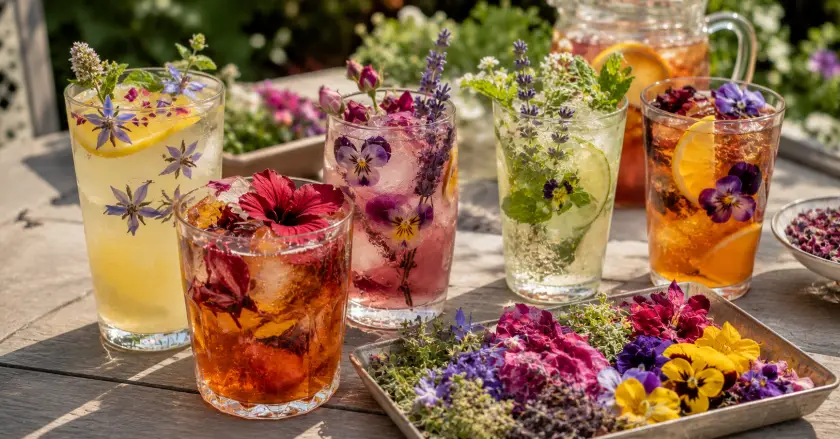
Edible flowers for drinks are one of the easiest ways to use garden blooms. They work in water, lemonade, iced tea, herbal tea, syrups, spritzers, mocktails, cocktails, and ice cubes.
Best edible flowers for drinks include borage, rose petals, lavender, hibiscus, chamomile, mint flowers, violets, pansies, and calendula petals.
Use strong flowers carefully. Hibiscus can add tartness and colour. Lavender can become too intense. Rose petals add fragrance, but only if the roses are clean and unsprayed.
Edible Cocktail Flowers
Edible cocktail flowers should look fresh and hold their shape. Small flowers are easiest because they float neatly and fit into glasses.
Try borage in gin-style drinks, hibiscus in tart red drinks, lavender in lemon drinks, rose petals in sparkling drinks, and violas or pansies in ice cubes.
Always tell guests when a drink contains flowers, especially if allergies are possible.
Edible Flower Garnish Ideas
An edible flower garnish should support the dish, not distract from it. Use peppery flowers like nasturtiums on savoury plates. Use soft flowers like pansies and violas on cakes. Use aromatic flowers like rose or lavender in drinks and desserts.
Simple edible flower garnish ideas:
- Nasturtium flowers on salads
- Calendula petals over soup
- Violas on cupcakes
- Borage in ice cubes
- Rose petals over panna cotta
- Chive blossoms over eggs
- Hibiscus in iced tea
Where Can I Buy Edible Flowers Near Me?
Where can I buy edible flowers near me? Look for specialist food suppliers, farmers markets, farm shops, culinary herb growers, high-end grocery stores, and local organic growers.
If you search for edible flowers nearby, check the product label carefully. You want flowers sold for eating, not display flowers.
Where do I buy edible flowers for a party? Try a culinary flower supplier first. For regular use, growing your own is usually cheaper and safer.
Where to Buy Edible Flowers for Cakes
Where to buy edible flowers for cakes depends on your timeline. For a special cake, buy from a supplier that clearly labels flowers as food-safe or culinary-grade.
Where to get edible flowers locally? Ask bakeries, farmers markets, organic growers, local produce shops, and specialty grocers. Do not use florist flowers for cakes unless they are specifically sold as edible.
If you bake often, grow pansies, violas, calendula, roses, and borage in pots. That gives you fresh edible flowers whenever you need them.
Common Mistakes to Avoid
- Eating unknown flowers: Correct identification is essential.
- Using florist flowers: Florist flowers are often grown for display, not food.
- Using sprayed flowers: Do not eat flowers treated with non-food-safe chemicals.
- Overusing strong flavours: Lavender, rose, and hibiscus can overpower recipes.
- Harvesting old flowers: Older blooms can taste bitter or look tired.
- Using the wrong plant part: Sometimes only petals are recommended.
- Ignoring allergies: Pollen-sensitive people should be careful with food flowers.
Expert Tips from Sawera Shahid
Start with three easy edible flowers: nasturtiums, calendula, and pansies. They give you colour, flavour, and confidence without making the garden complicated.
Grow edible flowers close to the kitchen if you can. A pot near the back door is more useful than a flower bed at the far end of the garden. You will use them more often when they are easy to harvest.
For cakes and drinks, grow smaller flowers. Violas, borage, cornflowers, and small pansies are easier to place neatly than large blooms.
Future Trends
Edible flowers are becoming more popular because home gardeners want plants that do more than look pretty. A flower can feed pollinators, decorate a cake, brighten a salad, flavour a drink, and make a small patio feel productive.
Expect more interest in fresh edible flowers, edible cocktail flowers, edible flower cake decorations, flowering herbs, and balcony-friendly food flowers.
Small-space gardeners can grow plenty of edible flowers in pots. Nasturtiums, calendula, pansies, violas, chives, borage, lavender, and mint all work well in containers when given the right light and drainage.
Frequently Asked Questions
Can you eat flowers?
Yes, you can eat some flowers, but not all. Only eat correctly identified edible flowers that are clean and chemical-free.
Are all roses edible?
True rose petals are generally edible when the plant is correctly identified and grown safely. Avoid florist roses unless they are labelled for culinary use.
Are all rose petals edible?
Clean petals from true roses are edible, but remove the bitter white base if needed. Never eat rose petals from sprayed or florist-grade flowers.
Are pansy flowers edible?
Yes. Pansies are edible and are commonly used as edible flowers for cakes, salads, drinks, and desserts.
What flowers are edible for cakes?
Good edible flowers for cakes include pansies, violas, rose petals, calendula, lavender, borage, cornflowers, chamomile, and dianthus petals.
What are flower vegetables?
Flower vegetables are edible plant parts that are flowers or flower buds. Examples include cauliflower, broccoli, artichokes, squash blossoms, and courgette flowers.
What vegetables are flowers?
Cauliflower and broccoli are made of undeveloped flower buds, while squash blossoms and courgette flowers are actual edible flowers from vegetable plants.
Where can I buy edible flowers near me?
Look for culinary flower suppliers, farmers markets, organic growers, specialty grocers, and farm shops. Make sure the flowers are labelled edible or culinary.
How do I use dried edible flowers?
Dried edible flowers are best for teas, syrups, sugar, infusions, baking, and cooked recipes. Buy only food-grade dried flowers.
Related Guides
- PATCH Plants homepage
- PATCH Plants blog
- Outdoor Plants hub
- Plant Care hub
- Indoor Plants hub
- Garden Calendar 2026
- Seasonal Plant Care Autumn
- Pruning Basics
- Easiest outdoor edible plants
- Pollinator-friendly plants
- Wildlife-friendly garden guide
- Native plants
- Colorful garden for all seasons
- Plants that bloom at night
- Container gardening on patios
- Best plants for small outdoor spaces
- Year-round balcony plants
- Best low-maintenance outdoor plants
- 15 hardy outdoor plants
- Hardy plants with minimal watering
- Outdoor plants that survive British winters
- Coastal and windy outdoor plants
- Top drought-resistant plants
- Heat tolerant plants
- Keep pests away from outdoor plants
- Plants that keep bugs away
- Mosquito repellent plants
- Shade-loving outdoor plants
- Complete watering guide
- Signs you are overwatering
- Worst times to water plants
- Root rot guide
- How to revive a dying plant
- Leaf curl, browning, and droop
- Why plant leaves turn yellow
- How to clean plant leaves
- Best soil mix for every plant
- Repotting mistakes to avoid
- How to repot a plant
- Fertilizing indoor vs outdoor plants
- Self-watering pots guide
- Complete guide to indoor light
- 35 low-maintenance plants
- Best indoor plants for beginners
- Best indoor plants for first-time plant parents
- Best indoor plants for tiny apartments
- Air-purifying indoor plants
- How to style indoor plants by room
- Bedroom plants for style and calm
- Indoor plants as room dividers
- Indoor jungle guide
- Trailing plants for shelves
- Low-light hanging plants
- Indoor plants that smell amazing
- Colorful foliage indoor plants
- Rare houseplants worth the hunt
- Blooming indoor plants
- Best office plants
- Office plants for fluorescent lighting
- Oversized indoor plants
- Indoor gardening systems
- Snake plant care guide
- Peace lily care guide
- Christmas cactus care guide
- Money tree care guide
- Succulent care guide
- Cactus care guide
- Boston fern care guide
- Bird of paradise care
- Pothos care guide
- Philodendron care guide
- Monstera care guide
- Hoya care guide
- Rubber plant care guide
- Fiddle leaf fig care guide
- Spider plant care guide
- ZZ plant care guide
- Jade plant care guide
- Dracaena care guide
- String of pearls care
Final Thoughts
Edible flowers are a simple way to make your outdoor garden more useful, more colourful, and more connected to the kitchen. Start with safe, easy plants like nasturtiums, calendula, pansies, violas, borage, chives, roses, and lavender. Grow them without unsafe sprays, harvest them fresh, and use small amounts until you understand each flavour.
The Royal Horticultural Society explains that edible flowers can add colour, flavour, and texture to sweet and savoury dishes, but it also stresses correct identification, pesticide-free growing, and avoiding flowers when in doubt: RHS edible flowers guide.
The safest approach is simple: grow your own food flowers, label them clearly, use them fresh, and never eat a flower you cannot identify. Once you get comfortable, edible flowers can become one of the most rewarding parts of your outdoor garden.
Summary
This guide explains edible flowers, how to grow edible flowers, fresh edible flowers, dried edible flowers, edible flowers for cakes, edible flowers for drinks, edible flower garnish ideas, edible cocktail flowers, edible flower cake decorations, flowering herbs, edible roses, edible perennials, flower vegetables, and where to buy edible flowers near you. It also answers common safety questions such as can you eat flowers, are all roses edible, are all rose petals edible, and are pansy flowers edible. The best edible flowers for beginners include nasturtiums, calendula, pansies, violas, borage, roses, lavender, chamomile, chive blossoms, sunflowers, hibiscus, cornflowers, dianthus, squash blossoms, rocket flowers, dill flowers, and mint flowers.


[…] for cutting. For more edible and dual-purpose plant ideas for patio containers, our guide on edible flowers to grow in your outdoor garden covers ornamental-edible combinations that work beautifully in container garden […]
[…] patio plants, combine lemongrass with ideas from easiest outdoor edible plants for beginners, edible flowers to grow outdoors, and garden […]
[…] Edible flowers to grow outdoors […]