
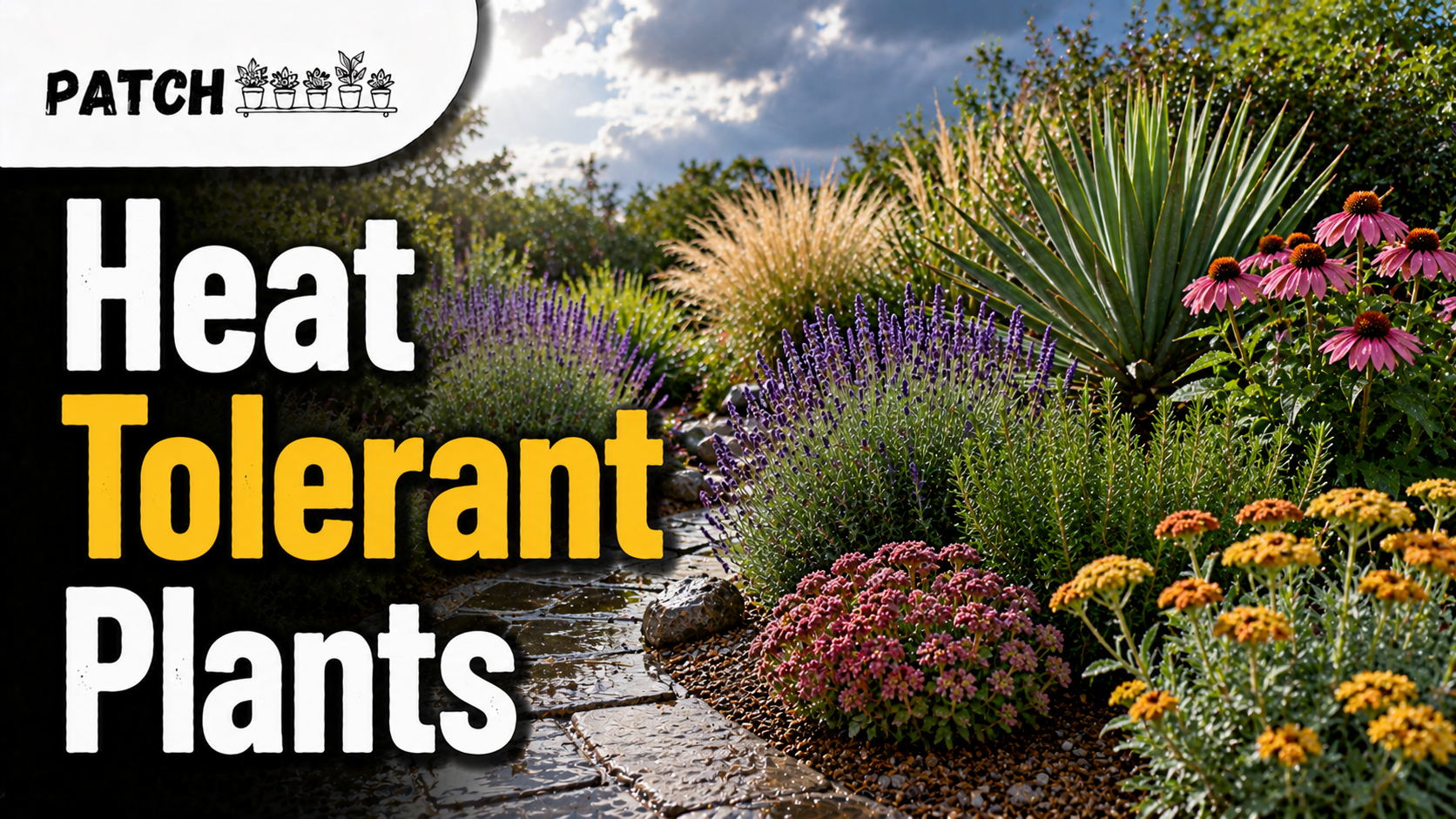
Key Takeaways
- Heat tolerant plants are essential for gardens that face strong sun, dry spells, sudden storms, and unpredictable summer weather.
- The best heat resistant flowers include salvia, yarrow, lavender, verbena, lantana, gazania, blanket flower, coreopsis, and coneflower.
- Heat tolerant perennials return year after year and often need less work than seasonal bedding plants once established.
- Full sun heat tolerant plants still need deep watering while they establish, especially during their first growing season.
- Heat tolerant outdoor plants that also handle storms usually have strong roots, flexible stems, compact growth, or tough foliage.
Introduction
Heat tolerant plants are no longer just useful in dry climates. They are becoming important for patios, balconies, front gardens, raised beds, and flower borders everywhere. One week can bring heavy rain and wind. The next can bring dry heat that leaves soft plants wilted by lunchtime.
A resilient garden needs plants that can cope with both sides of that weather pattern. Some plants handle sun but collapse in wind. Some recover from rain but scorch in heat. The best choices are strong, practical, and still beautiful.
This guide covers heat resistant flowers, heat tolerant perennials, full sun plants, hot weather plants, heat tolerant plants for pots, storm-friendly shrubs, and design tips for gardens that need to survive more than perfect weather. For more outdoor planning, read top drought-resistant plants, best low-maintenance outdoor plants, and coastal and windy outdoor plants.
Why Heat Tolerant Plants Matter Now
Heat tolerant plants matter because gardens are being asked to handle more stress. High temperatures dry soil faster. Wind strips moisture from leaves. Sudden storms can flatten soft stems and waterlog pots. A good plant choice reduces that damage before it begins.
The strongest heat tolerant outdoor plants usually share a few traits. They may have narrow leaves, silver foliage, aromatic oils, deep roots, succulent leaves, flexible stems, or a compact shape. These features help them conserve water, stay upright, or recover faster after difficult weather.
This does not mean every heat resistant plant can survive neglect. New plants still need water. Pots still need drainage. Roots still need room. But once established, the right plants can handle summer stress with far less drama.
Best Heat Tolerant Plants for Storms and Heatwaves

Lavender
Lavender is one of the best full sun heat tolerant plants for gardens, borders, gravel beds, and patio pots. It loves sun, prefers free-draining soil, and brings scent, flowers, and pollinators.
Lavender also handles wind better than many soft flowering plants because it has woody stems and compact growth. It works well as a heat resistant plant for edging paths, sunny front gardens, and Mediterranean-style planting.
Rosemary
Rosemary is a strong evergreen herb for hot weather planting. It is one of the most useful heat tolerant outdoor plants because it gives structure, scent, edible stems, and drought tolerance once established.
Use rosemary in raised beds, large containers, sunny borders, or near seating areas. It also works as one of the easiest heat tolerant bushes for small gardens where you want year-round greenery.
Salvia
Salvia is one of the best heat resistant flowers for long summer colour. It attracts bees, handles sun, and usually performs better in heat than delicate bedding plants.
Many salvias are also excellent heat tolerant perennials. Plant them with lavender, yarrow, ornamental grasses, and sedum for a dry, sunny border that keeps flowering through difficult weather.
Yarrow
Yarrow is a reliable choice if you want flowers that are heat tolerant and easy to grow. Its flat flower heads come in yellow, white, pink, red, and soft pastel shades.
Yarrow is one of the best perennial flowers heat tolerant gardeners can use in full sun. It is also useful in wildlife-friendly gardens because pollinators visit the flowers often.
Sedum
Sedum stores water in its fleshy leaves, which makes it one of the best plants for high heat. Upright sedum gives late-season flowers, while creeping sedum works as a low ground cover or container filler.
It is also one of the easiest heat tolerant plants for pots. Use sedum in shallow bowls, troughs, rock gardens, sunny balconies, and dry borders.
Catmint
Catmint is soft, fragrant, and surprisingly tough. It is one of the best heat loving perennials for relaxed borders and cottage-style gardens.
Once established, catmint copes with dry soil and full sun. Cut it back after the first flush of flowers and it often returns with fresh growth.
Coneflower
Coneflower is one of the best heat resistant perennial flowers for sunny gardens. It has strong stems, bright blooms, and a long flowering period.
Use coneflower with grasses, salvia, yarrow, and sedum. It is a strong choice for anyone asking what flowers can handle full sun and heat while still supporting pollinators.
Lantana
Lantana is one of the most colourful heat resistant flowering plants for warm regions and sunny containers. It loves heat, blooms generously, and works well in pots, planters, and summer borders.
In cooler climates, treat lantana as a seasonal plant. In warmer areas, it can become a dependable heat resistant plant for long-lasting colour.
Blanket Flower
Blanket flower is one of the best flowers that do well in heat. Its red, orange, and yellow blooms suit sunny borders and dry gardens.
It is also one of the best flowers that withstand heat because it can keep blooming when softer plants slow down. Pair it with yarrow, salvia, and ornamental grasses for a low-water summer display.
Ornamental Grasses
Ornamental grasses are valuable because they handle wind and heat together. Their flexible stems move during storms instead of snapping.
Many grasses are sun tolerant plants that also give winter structure. Use them to soften hard landscaping, protect smaller plants, and bring movement to hot weather gardens.
Yucca
Yucca is bold, sculptural, and built for sun. It is one of the best plants that can withstand direct sunlight, especially in dry, free-draining soil.
Use yucca as a focal point in gravel gardens, large pots, or modern landscapes. It works well with agave, sedum, rosemary, and ornamental grasses.
Heat Resistant Flowers for Full Sun Colour
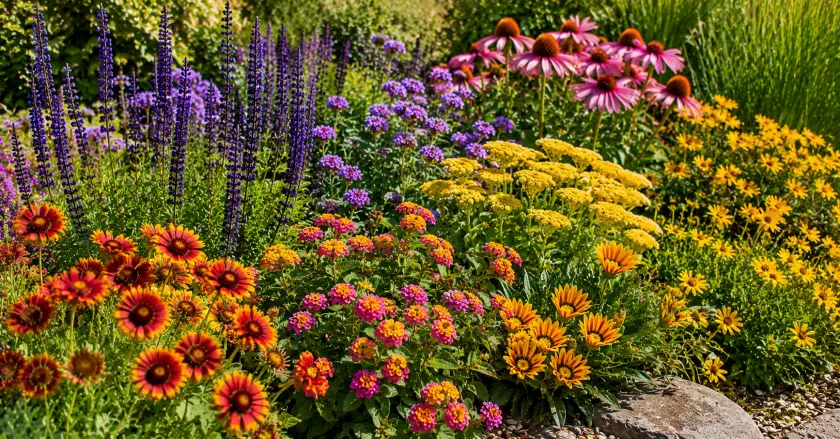
Heat resistant flowers bring colour when summer weather gets harsh. Good options include salvia, yarrow, lavender, verbena, gazania, lantana, blanket flower, coneflower, coreopsis, zinnia, portulaca, and osteospermum.
If you need flowers that do well in heat, start with plants that naturally like sun and free-draining soil. Avoid placing thirsty shade plants in exposed afternoon sun. That creates stress before the plant has a chance.
For containers, choose heat resistant flowers for pots such as lantana, geraniums, verbena, portulaca, gazania, dwarf salvia, and sedum. For larger displays, heat tolerant flowers for planters work best when you combine one upright plant, one trailing plant, and one filler plant with similar water needs.
Heat Tolerant Perennials That Return Every Year
Heat tolerant perennials are useful because they come back each year and usually establish deeper roots than annual bedding plants. That makes them better prepared for heatwaves once they settle in.
Good heat tolerant perennial plants include salvia, yarrow, catmint, coneflower, sedum, coreopsis, Russian sage, sea holly, ornamental grasses, and blanket flower. These heat resistant perennials are ideal for sunny borders and low-maintenance gardens.
If you are searching for a single heat tolerant perennial, start with salvia, yarrow, or sedum. Each one is reliable, widely available, and easy to combine with other hot weather plants.
Heat Tolerant Plants for Pots and Planters

Heat tolerant plants for pots need extra care because containers dry out faster than garden beds. A plant that copes well in the ground can still struggle in a small black plastic pot on a hot patio.
Hot patios can also benefit from heat-tolerant mosquito repellent plants such as lavender, rosemary, lemongrass, basil, marigolds, and scented geraniums. Use them in pots near chairs, doors, and outdoor dining spaces for the best effect.
Good heat tolerant flowers for pots include verbena, lantana, geraniums, gazania, portulaca, salvia, and sedum. Good structural choices include rosemary, lavender, yucca, dwarf grasses, thyme, and compact shrubs.
Use large containers where possible. Choose pots with drainage holes. Water deeply in the morning during hot spells. Move small pots into light afternoon shade if the root ball dries too quickly. For more container support, read best plants for container gardening on patios and year-round balcony plants.
Heat Tolerant Bushes and Shrubs
Heat tolerant bushes give structure, shelter, and privacy. They also help protect smaller plants from wind and strong afternoon sun.
Good choices include rosemary, lavender, cistus, bottlebrush, abelia, elaeagnus, juniper, pittosporum in mild areas, oleander where appropriate, and dwarf conifers suited to your climate. These heat resistant plants help a garden look settled even when flowers are between bloom cycles.
Use shrubs as windbreaks, corner anchors, and background planting. A border with heat tolerant bushes behind heat resistant flowers will usually survive weather swings better than a border made only of soft bedding plants.
Storm-Friendly Plants That Also Handle Heat
The best storm-friendly plants are not always the stiffest. Flexible plants often survive wind better because they bend rather than resist. Ornamental grasses are the classic example.
Other useful choices include lavender, rosemary, sedum, yucca, compact shrubs, hardy geraniums, sea thrift, and plants with low mounded growth. These plants can handle wind, heavy rain, and hot sun better than tall, brittle flowers.
Storm resilience also depends on design. Improve drainage before storms arrive. Use mulch to reduce erosion. Stake young plants loosely so stems can still move. Place the toughest plants on exposed edges and use them to shelter more delicate planting behind.
Full Sun Heat Tolerant Plants by Garden Type
For Front Gardens
For front gardens, choose full sun heat tolerant plants that look tidy without daily care. Lavender, rosemary, salvia, sedum, ornamental grasses, yucca, and compact shrubs all work well.
For Patios
For patios, choose heat tolerant plants for pots that can handle reflected heat from paving. Rosemary, lavender, sedum, lantana, geraniums, dwarf grasses, and yucca are strong choices.
For Flower Beds
For flower beds, repeat heat resistant flowers in groups. Use salvia, yarrow, coneflower, blanket flower, coreopsis, and ornamental grasses for colour and structure.
For High Heat Spots
For plants for high heat, choose tough Mediterranean, prairie, succulent, and dry-climate plants. Agave, yucca, rosemary, lavender, sedum, salvia, and grasses cope better than soft, thirsty plants.
Hardiness Zone Notes
Heat tolerance is not the same as winter hardiness. Some plants love summer heat but cannot survive cold winters. That matters if you are searching for hardiness zone 6 plants or planting in areas with frost.
For hardiness zone 6 plants, look for cold-hardy heat tolerant perennials such as sedum, yarrow, coneflower, catmint, coreopsis, Russian sage, ornamental grasses, and hardy salvia varieties. In warmer zones, you can add more heat loving plants such as lantana, agave, yucca, bottlebrush, rosemary, and cistus depending on local winter lows.
Always check both heat tolerance and cold hardiness before planting. A strong summer plant is not useful if it dies in the first winter.
How to Help Heat Tolerant Plants Survive Heatwaves
Even heat tolerant plants need help during extreme heat, especially when newly planted. Water deeply and less often rather than giving quick surface sprinkles. Deep watering encourages roots to grow down into cooler soil.
Add mulch around plants to reduce evaporation and keep roots cooler. Avoid heavy feeding during heatwaves because fast soft growth needs more water. Delay planting new perennials until temperatures are milder if a heatwave is already underway.
For pots, check moisture daily during extreme heat. Containers can dry quickly, especially on balconies, rooftops, patios, and paved areas. Move smaller pots to temporary shade if needed.
Common Mistakes to Avoid
- Assuming heat tolerant means no watering: New plants need regular water while roots establish.
- Using tiny pots in full sun: Small containers dry quickly and overheat roots.
- Choosing only soft flowers: Mix flowers with shrubs, grasses, and perennials for better resilience.
- Ignoring drainage: Storm rain can damage roots if soil or pots stay waterlogged.
- Planting without checking cold hardiness: Heat loving plants may still fail in winter.
- Overfeeding in hot weather: Too much fertiliser can push weak growth that needs more water.
Expert Tips from Sawera Shahid
Build the garden in layers. Start with heat tolerant bushes and shrubs for structure, add heat tolerant perennials for repeat colour, then use heat resistant flowers for seasonal brightness.
Use the toughest plants on the most exposed edges. Ornamental grasses, rosemary, lavender, and yucca can protect softer flowers from wind and reflected heat.
Finally, repeat your best performers. If one salvia thrives in your hottest corner, plant more of it. A resilient garden is built by watching what works and then leaning into it.
Future Trends
Heat tolerant plants will become a bigger part of everyday garden design. Gardeners want outdoor spaces that can handle heatwaves, storms, wind, drought, and sudden weather shifts without constant rescue.
Expect more demand for heat resistant flowers for pots, heat tolerant flowering plants, full sun heat tolerant plants, low-water perennials, climate-resilient shrubs, and planting plans that combine beauty with survival.
Frequently Asked Questions
What are the best heat tolerant plants?
The best heat tolerant plants include lavender, rosemary, salvia, yarrow, sedum, catmint, coneflower, lantana, blanket flower, ornamental grasses, yucca, agave, thyme, verbena, and drought-tolerant shrubs.
What flowers can handle full sun and heat?
If you are asking what flowers can handle full sun and heat, choose salvia, yarrow, lavender, verbena, gazania, lantana, blanket flower, coneflower, coreopsis, zinnia, and portulaca.
What are good heat resistant flowers for pots?
Good heat resistant flowers for pots include lantana, geraniums, verbena, gazania, portulaca, dwarf salvia, sedum, and compact zinnias. Use large pots and free-draining compost.
What are the best heat tolerant perennials?
The best heat tolerant perennials include salvia, yarrow, sedum, catmint, coneflower, coreopsis, Russian sage, sea holly, ornamental grasses, and blanket flower.
What plants can withstand direct sunlight?
Plants that can withstand direct sunlight include lavender, rosemary, thyme, salvia, sedum, yucca, agave, lantana, yarrow, ornamental grasses, and portulaca when planted in suitable soil.
Are heat resistant plants also storm resistant?
Some heat resistant plants are also storm resistant, especially ornamental grasses, lavender, rosemary, sedum, yucca, and compact shrubs. Strong roots, flexible stems, and good drainage matter as much as heat tolerance.
Related Guides
- PATCH Plants homepage
- PATCH Plants blog
- Outdoor Plants hub
- Plant Care hub
- Indoor Plants hub
- Top drought-resistant plants
- Best low-maintenance outdoor plants
- Coastal and windy outdoor plants
- Year-round balcony plants
- Container gardening on patios
- Best plants for small outdoor spaces
- 15 hardy outdoor plants
- Hardy plants that survive minimal watering
- Outdoor plants that survive British winters
- Keep pests away from outdoor plants
- Plants that bloom at night
- Pollinator-friendly outdoor plants
- Wildlife-friendly garden guide
- Shade-loving outdoor plants
- Colorful garden for all seasons
- Easiest outdoor edible plants
- Plants that keep bugs away
- Mosquito repellent plants
- Native plants that thrive in your region
- Complete watering guide
- Worst times to water plants
- Signs you are overwatering
- Root rot guide
- How to revive a dying plant
- Leaf curl, browning, and droop
- Why plant leaves turn yellow
- How to clean plant leaves
- Fertilizing indoor vs outdoor plants
- Best soil mix for every plant
- Repotting mistakes to avoid
- How to repot a plant
- Self-watering pots guide
- DIY humidity tray
- Humidity hacks for plants
- Dog-friendly plants
- Cat-friendly plants
- Air-purifying indoor plants
- 35 low-maintenance plants
- Best indoor plants for beginners
- First-time plant parent plants
- Best indoor plants for tiny apartments
- Bedroom plants for style and calm
- How to style indoor plants by room
- Indoor plant room dividers
- Indoor jungle guide
- Trailing plants for shelves
- Low-light hanging plants
- Indoor plants that smell amazing
- Colorful foliage plants
- Rare houseplants worth hunting
- Blooming indoor plants
- Best office plants
- Office plants for fluorescent lighting
- Oversized indoor plants
- Indoor light guide
- Indoor gardening systems
- Should you talk to your plants?
- Snake plant care guide
- Peace lily care guide
- Christmas cactus care guide
- Money tree care guide
- Best bathroom plants
- Succulent care guide
- Cactus care guide
- Boston fern care guide
- Bird of paradise care
- Pothos care guide
- Philodendron care guide
- Monstera care guide
- Hoya care guide
- Orchid care guide
- Rubber plant care guide
- Fiddle leaf fig care guide
- Spider plant care guide
- ZZ plant care guide
- Jade plant care guide
- Dracaena care guide
- Anthurium care guide
- African violet care guide
- String of pearls care
Final Thoughts
Heat tolerant plants make outdoor spaces stronger. They help your garden stay alive through hot spells, recover after storms, and keep looking good when delicate plants struggle. The goal is not to fight the weather. It is to plant in a way that works with it.
The Royal Horticultural Society explains that extreme weather can damage gardens through high winds, heat, drought, and heavy rain, and recommends thinking carefully about plant selection, drainage, shelter, and garden conditions. Read the full advice here: Royal Horticultural Society extreme weather gardening advice.
Start with a few strong full sun heat tolerant plants, then add heat resistant flowers, heat tolerant perennials, compact shrubs, grasses, and large well-drained pots. With the right choices, your garden can handle more heat, more wind, more rain, and still feel beautiful.
Article Summary
The best heat tolerant plants are resilient outdoor plants that can handle full sun, hot weather, dry spells, and sometimes stormy conditions too. Strong choices include lavender, rosemary, salvia, yarrow, sedum, catmint, coneflower, lantana, blanket flower, ornamental grasses, yucca, agave, thyme, and drought-tolerant shrubs. Good heat resistant flowers include salvia, verbena, gazania, lantana, coreopsis, coneflower, and portulaca. Reliable heat tolerant perennials include yarrow, sedum, catmint, salvia, and ornamental grasses. For pots and planters, use large containers with drainage and choose heat tolerant plants for pots that can cope with reflected heat. For storm resilience, combine flexible grasses, compact shrubs, strong-rooted perennials, mulch, drainage, and smart plant placement.
[…] Outdoor plants for storms and heatwaves […]
Thank you for your sharing. I am worried that I lack creative ideas. It is your article that makes me full of hope. Thank you. But, I have a question, can you help me?
[…] Outdoor plants for storms and heatwaves […]