Key Takeaways
- Native plants are naturally adapted to your region, which means they often need less water, fertiliser, and pest control once established.
- A native plant garden supports bees, butterflies, birds, and beneficial insects better than many ornamental-only landscapes.
- Native landscaping can work in front yards, small gardens, containers, borders, slopes, and pollinator beds.
- Native wildflowers are one of the easiest ways to add colour, seasonal movement, and wildlife value to a garden.
- Native pollinator plants are especially useful because they provide nectar, pollen, seeds, shelter, and host plants for local wildlife.
Introduction
Native plants are the plants that already belong to your region. They evolved with local soil, rainfall, seasons, insects, birds, and wildlife long before garden centres made plant shopping feel global.
That local connection is why native plants matter. A plant that has spent generations adapting to your climate usually needs less fuss once established. It can handle local weather better, support local pollinators, and fit into the wider ecosystem instead of standing apart from it.
This guide explains what native plants are, how to build a native plant garden, how to use native landscaping in front yards and small spaces, where to buy native plants near you, and how to choose region-specific options such as native Florida landscape plants, native Missouri plants, native plants in Maine, indigenous plants of North Carolina, and indigenous plants of Virginia. For more outdoor garden planning, read how to design a wildlife-friendly garden, pollinator-friendly plants, and best low-maintenance outdoor plants.
What Are Native Plants?
What are native plants? Native plants are species that occur naturally in a particular region without being introduced from somewhere else by people. They are shaped by local conditions: soil type, rainfall, winter cold, summer heat, insects, birds, fungi, and seasonal cycles.
If you are asking what is a native plant, think of it as a plant with a long relationship to the place where it grows. It is not simply “wild-looking” or “old-fashioned.” A native plant is part of a local ecosystem.
People also ask what are the native plants in a region or what are native plants in my area. The answer depends on where you live. Native plants in Maine are not the same as native Florida landscape plants. Native Missouri plants are different from native New England shrubs. That is why local research matters.
Why Native Plants Matter
Native plants matter because they support more than your garden’s appearance. They feed pollinators, shelter wildlife, stabilise soil, reduce water use, and help create healthier outdoor spaces.
Many local insects are adapted to specific native plants. Some butterflies need particular host plants for their caterpillars. Many native bees prefer familiar flower shapes and bloom times. Birds rely on seeds, berries, insects, and shelter that native plant communities provide.
Native landscaping also reduces the pressure to overwater, overfeed, and constantly replace struggling plants. Once established, many native plant garden choices can handle ordinary local weather better than plants from very different climates.
Native Plant Garden Benefits
A native plant garden can be beautiful, practical, and wildlife-friendly at the same time. It does not have to look messy or abandoned. With clear edges, repeated plants, paths, mulch, and seasonal structure, native landscaping can look polished and intentional.
The main benefits include lower maintenance, better wildlife support, improved soil health, stronger pollinator value, and better resilience through local weather. Native wildflowers, native shrubs, native trees, and wildlife herbs can all work together to create a living garden rather than a decorative display only.
A native plant garden is also flexible. It can be a small border, a front yard native plant garden design, a container display, a meadow-style patch, a rain garden, or a full landscape redesign.
Best Native Plants for Different Garden Goals
Native Wildflowers
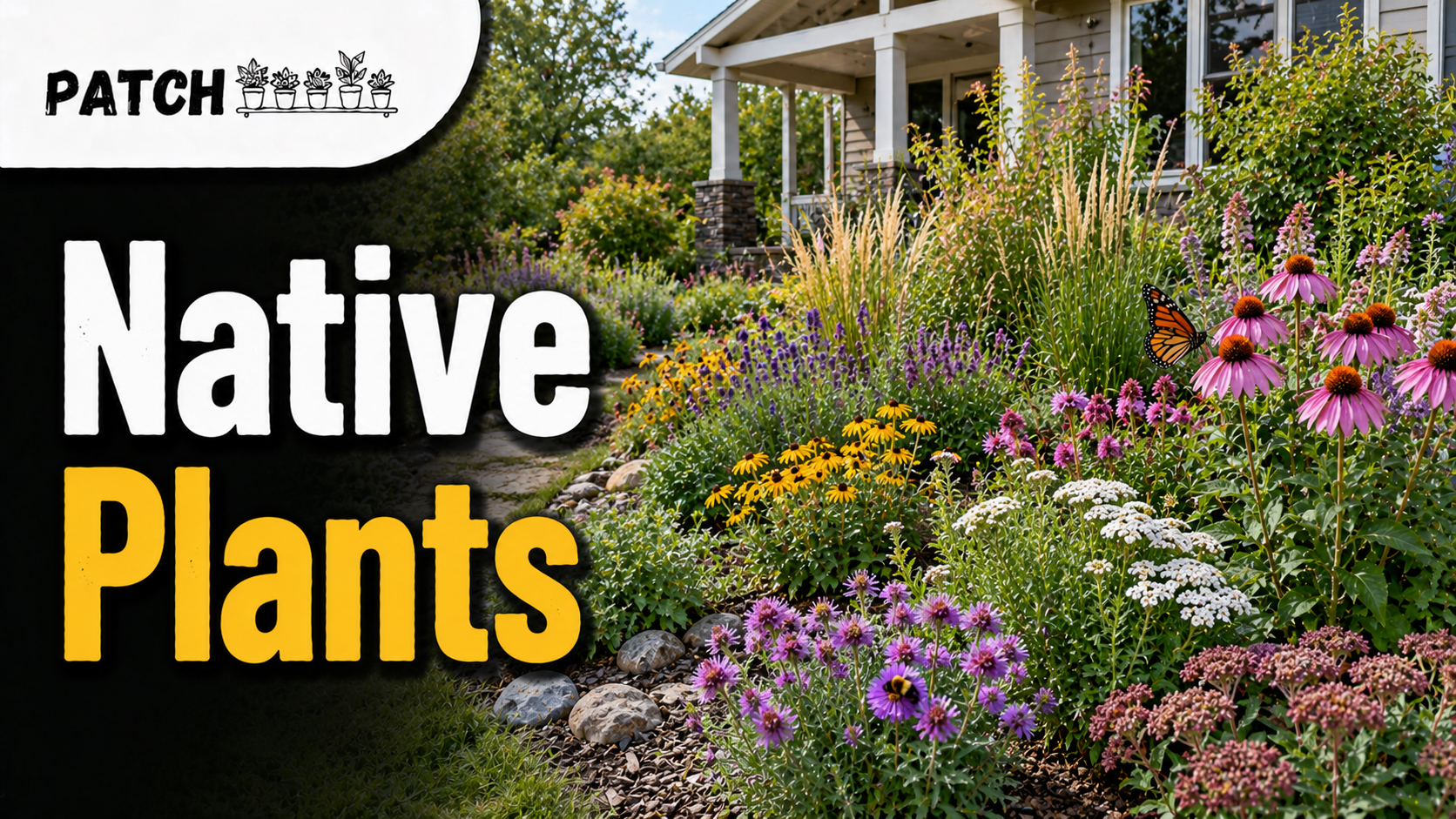
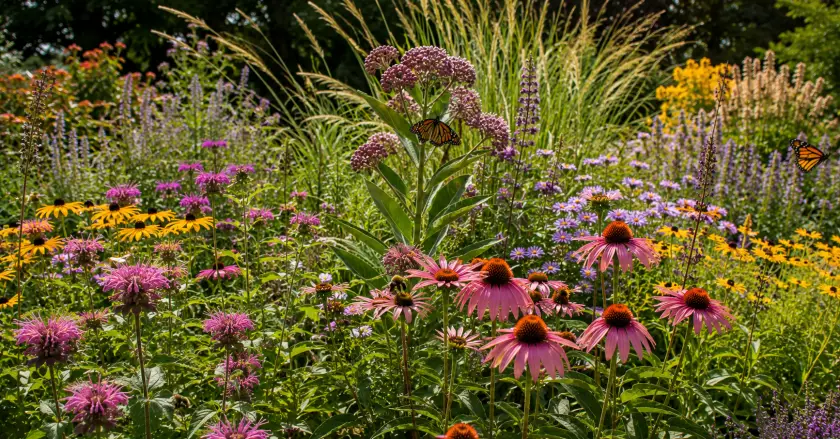
Native wildflowers are one of the easiest ways to begin. They bring colour, nectar, seed heads, and seasonal movement. Good native wildflowers depend on region, but examples may include black-eyed Susan, coneflower, milkweed, bee balm, aster, goldenrod, coreopsis, columbine, and native violets in suitable areas.
Native wildflowers are especially useful in pollinator beds and meadow-style borders. They work well with grasses and small shrubs, creating a natural look that still feels designed.
Native Pollinator Plants
Native pollinator plants are plants that provide nectar, pollen, host leaves, seed, or shelter for local pollinators. They are useful for bees, butterflies, moths, hoverflies, beetles, and sometimes hummingbirds.
Good native pollinator plants often bloom at different times of year. Aim for early, mid-season, and late flowers so bees and butterflies have food across the growing season. For more pollinator planning, see plants that bloom at night and create a colorful garden for all seasons.
Native Flowers for Bees
Native flowers for bees are especially valuable because they match local bee behaviour, bloom timing, and feeding needs. Single, open flowers are often easier for bees to use than highly doubled flowers.
Depending on your region, native flowers for bees may include bee balm, asters, goldenrod, milkweed, native sunflowers, penstemon, mountain mint, coneflower, black-eyed Susan, and native clovers. Avoid spraying these plants with pesticides when pollinators are active.
Native Shrubs
Native shrubs give structure, privacy, flowers, berries, and nesting cover. They can make a native plant garden look finished even in winter.
Native New England shrubs may include winterberry, serviceberry, summersweet, spicebush, and native viburnums in suitable sites. NC native bushes may include sweetshrub, oakleaf hydrangea, beautyberry, inkberry, and native viburnums depending on local conditions. Always check your exact region before planting.
Native Trees
Native trees support wildlife on a larger scale than small flowers alone. They provide shade, nesting habitat, leaves for caterpillars, seeds, nuts, berries, and structure.
North Carolina native trees may include oak, redbud, serviceberry, dogwood, tulip poplar, sourwood, and pawpaw depending on location and site conditions. In other regions, the best native trees will change with climate, soil, and available space.
Native Landscaping for Front Yards
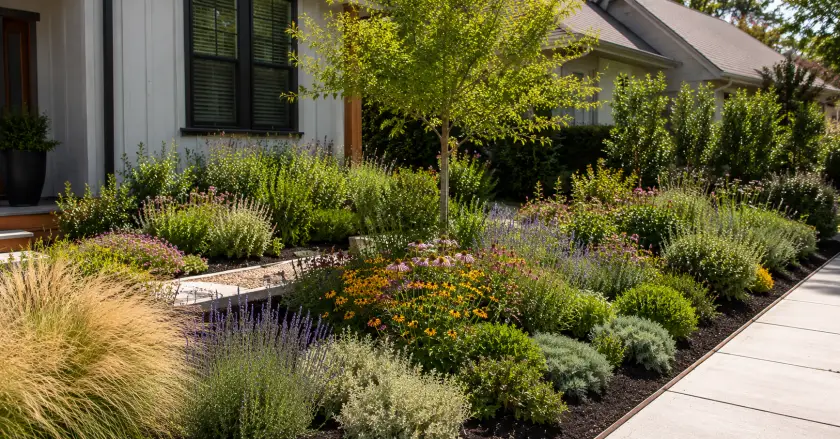
Native landscaping works beautifully in front yards when it is designed with structure. The trick is to make the garden look intentional. Use clear borders, repeated plant groups, tidy paths, evergreen anchors, and seasonal flowers.
A good front yard native plant garden design might include one small native tree, three to five native shrubs, a repeated group of native wildflowers, native grasses for movement, and a mown or mulched edge to keep everything neat.
For small front yards, avoid planting too many different species at once. Repeat your strongest native pollinator plants and add a few native flowers for bees near paths or windows where you can enjoy them.
Regional Native Plant Ideas
Native Florida Landscape Plants
Native Florida landscape plants need to handle heat, humidity, sandy soil, storms, and sometimes salt exposure. Options may include coontie, firebush, muhly grass, beautyberry, blanket flower, saw palmetto, coral honeysuckle, and Simpson’s stopper depending on the site.
For Florida gardens, choose plants by region because northern Florida, central Florida, coastal areas, and southern Florida can have different needs.
Native Missouri Plants and Native MO Plants
Native Missouri plants and native mo plants are often excellent for prairie-style planting, pollinator gardens, and resilient sunny borders. Options may include purple coneflower, black-eyed Susan, little bluestem, switchgrass, butterfly milkweed, wild bergamot, asters, and goldenrod.
These plants can work well in native landscaping because many handle heat, cold, clay, and seasonal swings once established.
Native Plants in Maine
Native plants in Maine need to handle cold winters, shorter growing seasons, and regional soil conditions. Possibilities may include serviceberry, winterberry, native asters, wild columbine, ferns, blueberries, bunchberry, goldenrod, and native grasses.
When choosing native plants in Maine, check cold hardiness, deer pressure, soil moisture, and whether the plant suits coastal or inland conditions.
Indigenous Plants of North Carolina
Indigenous plants of North Carolina vary from mountains to piedmont to coastal plain. Good options may include oakleaf hydrangea, sweetshrub, purple coneflower, black-eyed Susan, redbud, dogwood, serviceberry, switchgrass, and native milkweed.
For native nc plants for landscaping, match plants to sun, shade, clay, slope, and rainfall. NC native bushes and North Carolina native trees can make strong anchors for a wildlife-friendly garden.
Indigenous Plants of Virginia
Indigenous plants of Virginia can include native asters, milkweed, goldenrod, Virginia bluebells, redbud, serviceberry, spicebush, oak, native ferns, and native grasses depending on site and region.
Virginia gardens can use native wildflowers for colour, shrubs for structure, and native trees for wildlife value. Local extension resources and native plant societies are useful for exact recommendations.
Native American Plants and Cultural Meaning
Native American plants can mean two things in garden searches. Sometimes people mean plants native to the Americas. Other times they are looking for plants connected to Indigenous histories, foodways, medicine, craft, or ceremony.
A native american flower might refer to regionally native flowers such as echinacea, columbine, milkweed, black-eyed Susan, blanket flower, or other plants with cultural and ecological importance. It is important to approach this topic with respect and avoid treating Indigenous plant knowledge as decoration.
When discussing native American plants, use reliable regional sources and recognise that plant meaning varies between communities, places, and traditions.
Where to Buy Native Plants Near Me
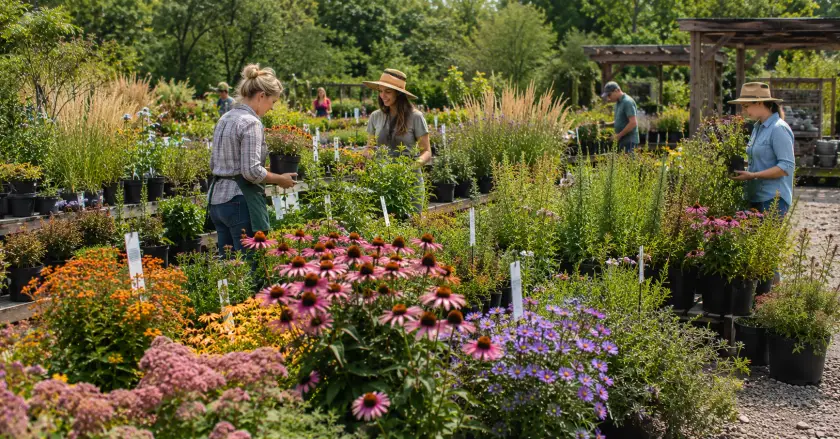
Searches like native plants near me, native plant nursery near me, and native plant nurseries near me are useful because local growers often know what actually thrives in your climate.
If you are asking where to buy native plants near me, start with native plant nurseries, botanical gardens, native plant society sales, conservation groups, local growers, farmers’ markets, and university extension recommendations.
When looking for native plants for sale, check whether the plants are truly native to your region, not just native somewhere in the country. Also ask if plants are grown without neonicotinoid pesticides, especially if you are buying native pollinator plants.
Where to Buy Native Plants Online
Where to buy native plants online depends on your country, region, and shipping rules. Choose specialist nurseries that clearly list the plant’s native range, growing conditions, mature size, and ecological value.
Avoid buying wild-dug plants unless they come from legal, ethical rescue operations. Nursery-grown native plants are usually better for garden success and habitat protection.
For online buying, look for clear botanical names, regional filters, pollinator information, and growing-zone guidance. This helps you avoid accidentally buying plants that are native somewhere else but wrong for your garden.
Wild Plants, Wildlife Herbs, and Garden Safety
Wild plants are not automatically safe, useful, or garden-friendly. Some are valuable natives. Some are aggressive. Some are protected. Some may be toxic to people, pets, or livestock.
Wildlife herbs can include native aromatic plants, nectar herbs, seed-producing plants, and herbs that support beneficial insects. Depending on region, these may include mountain mint, bee balm, native sages, goldenrod, yarrow, and other locally adapted plants.
Never dig wild plants from public land or natural areas unless you have permission and it is legal. A better choice is to buy from reputable native plant nurseries or grow from responsibly sourced seed.
How to Start a Native Plant Garden
Start small. A native plant garden does not need to replace your whole yard in one weekend. Choose one bed, one border, one corner, or one set of pots.
- Choose your goal: pollinators, low maintenance, privacy, erosion control, flowers, birds, or front yard design.
- Check your conditions: sun, shade, soil, drainage, wind, deer pressure, and mature plant size.
- Research your region: use local native plant societies, extension services, and nursery advice.
- Plant in layers: trees, shrubs, grasses, wildflowers, groundcovers, and seasonal bloomers.
- Water during establishment: native does not mean no care during the first season.
For plant care basics, read complete watering guide, best soil mix for every plant, and how to keep pests away from outdoor plants.
Common Mistakes to Avoid
- Assuming all native plants are low maintenance immediately: They still need watering and weeding while establishing.
- Buying by common name only: Use botanical names because common names can refer to different plants.
- Choosing plants native to the wrong region: Native Florida landscape plants may not suit Maine, Missouri, or New England.
- Planting too randomly: Native landscaping still needs structure, repetition, and clear edges.
- Ignoring mature size: Native shrubs and trees can outgrow small spaces if chosen carelessly.
- Digging wild plants illegally: Buy nursery-grown plants or responsibly sourced seed instead.
Expert Tips from Sawera Shahid
Start with one native anchor plant. It might be a shrub, small tree, or group of native wildflowers. Once that plant succeeds, build around it.
Choose bloom times like you would plan a calendar. Early flowers help emerging bees, summer flowers support peak activity, and late flowers help pollinators before winter.
Finally, keep the design readable. A native plant garden with repeated groups, tidy edges, and visible paths will feel intentional, not neglected.
Future Trends
Native plants are becoming more important as gardeners look for resilient, waterwise, pollinator-friendly, and low-maintenance outdoor spaces. Native landscaping is no longer only for wild meadows or conservation projects. It is moving into front yards, balconies, public spaces, patios, school gardens, and modern landscape design.
Expect more demand for native plant nurseries near me, native plants for sale, native pollinator plants, regional planting guides, and front yard native plant garden design ideas that look attractive while supporting wildlife.
Frequently Asked Questions
What are native plants?
Native plants are plants that naturally occur in a region and have adapted over time to local soil, weather, rainfall, wildlife, and seasonal patterns.
What is a native plant?
If you are asking what is a native plant, it is a plant with a natural historic relationship to a particular place. It was not introduced from another region for decoration, farming, or trade.
What are native plants in my area?
To learn what are native plants in my area, check local extension offices, native plant societies, botanical gardens, conservation groups, and native plant nurseries near you.
Where can I buy native plants near me?
For where to buy native plants near me, look for native plant nurseries, local plant sales, botanical gardens, farmers’ markets, conservation groups, and specialist growers.
Where can I buy native plants online?
Where to buy native plants online depends on your region. Choose reputable nurseries that list botanical names, native range, growing conditions, mature size, and whether plants are nursery-grown.
Are native plants good for bees?
Yes. Native flowers for bees and native pollinator plants can provide nectar, pollen, nesting support, and seasonal food sources that match local pollinator needs.
Related Guides
- PATCH Plants homepage
- PATCH Plants blog
- Outdoor Plants hub
- Plant Care hub
- Indoor Plants hub
- Wildlife-friendly garden guide
- Pollinator-friendly plants
- Low-maintenance outdoor plants
- Top drought-resistant plants
- Heat tolerant plants
- Outdoor plants for storms and heatwaves
- Coastal and windy outdoor plants
- Outdoor plants that survive British winters
- 15 hardy outdoor plants
- Hardy plants with minimal watering
- Year-round balcony plants
- Container gardening on patios
- Best plants for small outdoor spaces
- Shade-loving outdoor plants
- Colorful garden for all seasons
- Easiest outdoor edible plants
- Plants that bloom at night
- Plants that keep bugs away
- Mosquito repellent plants
- USDA plant database guide
- Complete watering guide
- Worst times to water plants
- Signs you are overwatering
- Root rot guide
- How to revive a dying plant
- Leaf curl, browning, and droop
- Why plant leaves turn yellow
- How to clean plant leaves
- Fertilizing indoor vs outdoor plants
- Best soil mix for every plant
- Repotting mistakes to avoid
- How to repot a plant
- Self-watering pots guide
- DIY humidity tray
- Humidity hacks for plants
- Dog-friendly plants
- Cat-friendly plants
- Air-purifying indoor plants
- 35 low-maintenance plants
- Best indoor plants for beginners
- First-time plant parent plants
- Best indoor plants for tiny apartments
- Bedroom plants for style and calm
- How to style indoor plants by room
- Indoor plant room dividers
- Indoor jungle guide
- Trailing plants for shelves
- Low-light hanging plants
- Indoor plants that smell amazing
- Colorful foliage plants
- Rare houseplants worth hunting
- Blooming indoor plants
- Best office plants
- Office plants for fluorescent lighting
- Oversized indoor plants
- Indoor light guide
- Indoor gardening systems
- Should you talk to your plants?
- Snake plant care guide
- Peace lily care guide
- Christmas cactus care guide
- Money tree care guide
- Best bathroom plants
- Succulent care guide
- Cactus care guide
- Boston fern care guide
- Bird of paradise care
- Pothos care guide
- Philodendron care guide
- Monstera care guide
- Hoya care guide
- Orchid care guide
- Rubber plant care guide
- Fiddle leaf fig care guide
- Spider plant care guide
- ZZ plant care guide
- Jade plant care guide
- Dracaena care guide
- Anthurium care guide
- African violet care guide
- String of pearls care
Final Thoughts
Native plants make gardening feel more connected to place. They support wildlife, reduce unnecessary inputs, and help your outdoor space work with the local climate instead of constantly fighting it.
The National Wildlife Federation explains that native gardens can help create spaces that attract butterflies, birds, and other animals, making native planting a practical step toward stronger wildlife habitat. Read the full advice here: National Wildlife Federation native plant resources.
Start with one native plant garden bed, one group of native wildflowers, or one container of native pollinator plants. Then keep building. A garden does not have to be fully native overnight to make a difference. Every well-chosen native plant adds food, shelter, beauty, and belonging.
Article Summary
Native plants are plants that naturally occur in a region and are adapted to local soil, weather, wildlife, and seasonal conditions. A native plant garden can support bees, butterflies, birds, and beneficial insects while reducing water, fertiliser, and pesticide needs once established. Good native landscaping uses native wildflowers, native pollinator plants, native shrubs, native trees, grasses, and wildlife herbs in clear, intentional designs.
Regional research matters because native Florida landscape plants, native Missouri plants, native plants in Maine, indigenous plants of North Carolina, and indigenous plants of Virginia are not the same. To buy native plants, look for native plant nurseries near you, local plant sales, botanical gardens, conservation groups, and reputable online growers that list plant range and botanical names.