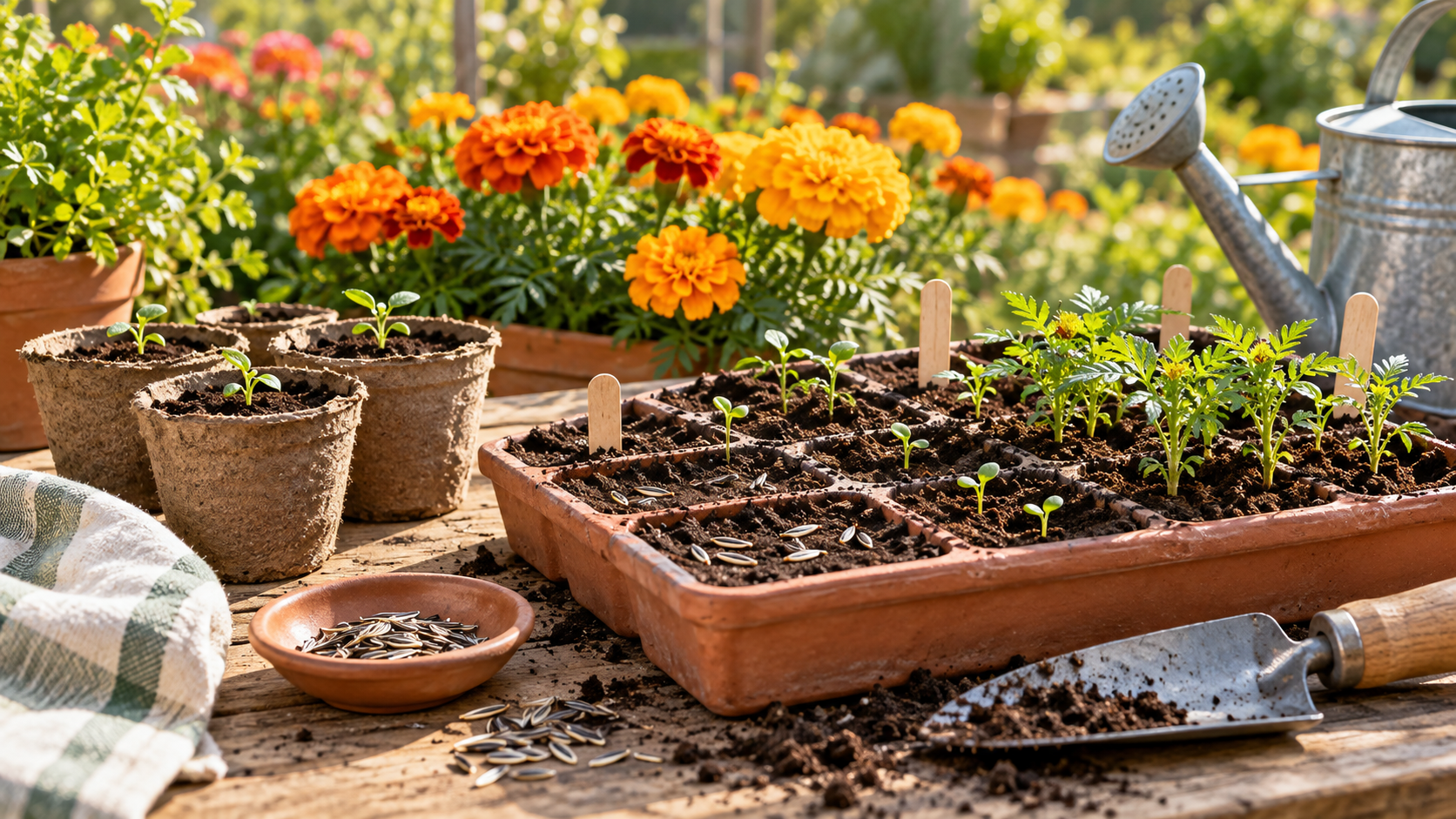
You do not need complicated equipment or advanced gardening experience. The most important things are healthy seeds, a well-draining growing medium, correct planting depth, consistent moisture during germination, and enough light once the seedlings emerge.
This guide walks you through how to plant marigold seeds in 9 easy steps, from choosing your seeds to transplanting seedlings and encouraging healthy flowers throughout the growing season.
For more beginner-friendly growing advice, explore our Outdoor Plants guides and Plant Care guides.
QUICK ANSWER
How Do You Plant Marigold Seeds?
Plant marigold seeds about ¼ inch deep in a light, well-draining seed-starting medium. Keep the medium consistently moist but not waterlogged while the seeds germinate.
Once seedlings emerge, give them strong light so they develop compact, sturdy stems. If you start the seeds indoors, gradually harden the seedlings off before transplanting them outside after the danger of frost has passed.
Marigolds generally perform best in full sun and well-drained soil.
If you are preparing a rectangular planter or garden bed, use our free Soil Calculator to estimate how much soil you need.
PATCH PLANTS SUMMARY
Key Takeaways
- Plant marigold seeds about ¼ inch deep.
- Use clean containers and seed-starting medium when starting indoors.
- Keep seeds moist during germination without saturating the soil.
- Provide strong light as soon as seedlings emerge.
- Grow mature marigolds in full sun for strong flowering.
- Thin crowded seedlings so they have room to develop.
- Harden indoor-grown seedlings before transplanting.
- Follow the seed packet for final spacing because marigold varieties differ in mature size.
- Avoid excessive fertilizer, which can encourage foliage at the expense of flowers.
What to Know Before Planting Marigold Seeds
Before learning how to plant marigold seeds, decide what type of marigold you want to grow.
Marigolds belong primarily to the genus Tagetes, and three common garden groups are French, African, and Signet marigolds. These groups differ in mature height, spread, flower size, and overall appearance.
French Marigolds
French marigolds (Tagetes patula) are generally compact and work especially well along borders and in smaller garden spaces.
Their manageable size also makes many varieties useful where you want dense seasonal color without extremely tall plants.
African Marigolds
African marigolds (Tagetes erecta) generally grow larger and can produce impressive flower heads.
Because these varieties tend to become larger than French marigolds, they usually need more space.
Signet Marigolds
Signet marigolds have finer foliage and numerous smaller flowers. They can create a softer appearance than large-flowered marigold varieties.
The variety you choose affects your eventual spacing and care, so always check the mature size printed on the seed packet.
When Should You Plant Marigold Seeds?
You have two main options: start the seeds indoors or sow them directly outside.
Starting Marigold Seeds Indoors
Starting indoors gives seedlings time to establish before outdoor planting conditions become suitable.
The exact starting date depends on the marigold type and your expected outdoor planting date. Rather than using one date for every climate and cultivar, work backward from your local frost conditions and follow the seed packet.
Direct Sowing Marigold Seeds Outdoors
Marigolds can also be sown directly into the garden.
Wait until damaging frost is no longer expected and the soil has warmed sufficiently for warm-season annual seedlings. Direct sowing eliminates the need to transplant seedlings later.
What You Need to Plant Marigold Seeds
- Marigold seeds
- Seed-starting tray or small pots if starting indoors
- Containers with drainage holes
- Seed-starting medium
- Plant labels
- Gentle watering bottle or mister
- Suitable grow light for indoor seedlings
- Clean gardening tools
For help choosing a suitable growing medium, read our soil mix guide.
Step 1: Choose Healthy Marigold Seeds
The first step in how to plant marigold seeds is choosing the right seeds for your garden.
Look at the seed packet before planting. It should provide useful information about the variety, mature height, spread, planting depth, expected germination, and recommended spacing.
Check the Seed Packet
Do not assume that all marigolds have identical requirements.
A compact French marigold and a large African marigold can have very different mature dimensions. The seed packet gives you cultivar-specific information that a general gardening guide cannot.
Check Older Seeds
If you already have marigold seeds from a previous season, inspect how they were stored.
Seed viability generally decreases over time. Keeping leftover seeds in a cool, dry environment can help preserve them.
Test Questionable Seeds
You can test older seeds before dedicating an entire tray or garden area to them.
Place a sample in a moist germination environment and observe how many successfully sprout. A poor germination rate may mean you need fresher seed or need to sow more heavily.
Step 2: Prepare the Growing Medium
Good germination starts below the surface. Young marigold roots need access to moisture, but they also need oxygen.
Starting Seeds Indoors
Fill clean containers with a growing medium specifically intended for seed starting.
Avoid filling indoor seed trays with ordinary garden soil. A light seed-starting medium is generally easier to manage in small containers and provides better conditions for young roots.
Direct Sowing Outdoors
Prepare a weed-free planting area with good drainage. Break up large compacted clumps and remove debris that would make sowing difficult.
Moisten the Medium
Moisten dry seed-starting medium before planting. This gives you an evenly damp surface and reduces the need for aggressive watering immediately after sowing.
FREE PATCH PLANTS TOOL
How Much Soil Does Your Marigold Planter Need?
For rectangular containers and garden beds, use our free Soil Calculator to estimate soil volume.
You can then use our soil mix guide to understand drainage, aeration, and moisture retention.
Step 3: Plant Marigold Seeds About ¼ Inch Deep
Planting depth matters when learning how to plant marigold seeds. Tiny seedlings have limited stored energy, so seeds planted unnecessarily deep may struggle to emerge.
Make Shallow Planting Holes
Create shallow holes or furrows approximately ¼ inch deep.
Place the seeds into the prepared positions and gently cover them with growing medium. Avoid pushing the seeds unnecessarily deep into the soil.
Label Your Seeds
If you are growing more than one variety, label each container or row immediately.
Include the cultivar name and sowing date. Once several similar-looking seedlings emerge, it can become difficult to remember which variety is which.
Step 4: Water Marigold Seeds Gently
Freshly planted seeds need moisture to begin germination. However, a heavy stream of water can move seeds, expose them, or push them too deeply into the growing medium.
Use Gentle Watering
Use a mister, fine watering rose, or another gentle method for indoor trays.
Moist Does Not Mean Waterlogged
Aim for consistent moisture rather than saturation. Containers should have drainage holes so excess water can escape.
Our complete watering guide explains how to judge moisture more effectively.
If the growing medium remains constantly saturated, also read our overwatering guide.
Step 5: Give Seedlings Plenty of Light
Light becomes particularly important once marigold seeds germinate.
Watch for Emerging Seedlings
As soon as green growth appears, make sure the seedlings have adequate light.
Insufficient light can result in thin, stretched seedlings rather than compact, sturdy growth.
A Window May Not Always Be Enough
A bright window can look sunny to us while still providing inconsistent light for seedling development.
If seedlings begin stretching strongly toward the window, they may need a better light source.
Using Grow Lights
When natural light is insufficient, a suitable grow light can provide more consistent illumination. Follow the light manufacturer’s recommendations for height and duration because fixtures vary considerably.
You can also read our indoor light guide to better understand plant light levels.
Step 6: Thin and Harden Off Marigold Seedlings
Crowded seedlings compete for light, moisture, nutrients, and root space.
Thin Weak or Crowded Seedlings
Once seedlings develop sufficiently, retain the strongest plants and remove unnecessary extras.
If roots are intertwined, cutting weaker seedlings near soil level can sometimes cause less disturbance than pulling them out.
Harden Off Indoor Seedlings
Indoor-grown seedlings should not move directly from protected conditions into intense outdoor sun and wind.
Hardening off gradually acclimates them to outdoor conditions.
Begin with a protected outdoor location and progressively expose the seedlings to longer periods outside and stronger light before permanent transplanting.
Step 7: Transplant Marigold Seedlings Outdoors
Once frost danger has passed, conditions are suitable, and your seedlings have been hardened off, they can move into their permanent growing location.
Choose Full Sun
Marigolds generally perform best in full sun and produce abundant flowers under bright conditions.
Avoid positioning them where taller plants, fences, or buildings will shade them for most of the day.
Give Them Enough Space
Spacing depends on the variety. Compact French marigolds can generally grow closer together than large African marigolds.
Your cultivar’s seed packet should remain the final reference for mature spacing.
Plant Carefully
Make a planting hole large enough to accommodate the root ball.
Remove the seedling carefully and minimize unnecessary root disturbance. Set it at approximately the same soil level at which it was growing in its original container.
Water after planting to settle soil around the roots.
Step 8: Care for Growing Marigolds
Once your seedlings become established plants, their care becomes relatively straightforward.
Water According to Conditions
Check soil moisture instead of watering automatically on specific days.
Weather, soil type, container size, plant size, and rainfall all influence water needs.
Avoid Constantly Wet Soil
Marigolds need good drainage. If plants begin yellowing while the root zone stays wet, investigate drainage rather than automatically adding more water.
Keep Weeds Under Control
Remove weeds before they become large enough to compete strongly with young marigolds for moisture, light, and root space.
Do Not Overfertilize
More fertilizer does not necessarily mean more flowers. Excessive fertility can encourage leafy growth without improving flowering.
If fertilizer is needed, use a suitable product according to its label rather than applying arbitrary amounts.
Watch for Problems
Inspect leaves, stems, buds, flowers, and leaf undersides regularly. Catching pest or disease problems early makes them easier to identify and manage.
Step 9: Encourage More Marigold Flowers
Once your plants start flowering, a few simple maintenance habits can keep them attractive throughout the growing season.
Remove Spent Blooms
Removing faded flowers can keep plants tidy and may encourage continued flowering.
Leave Some Flowers for Seeds
If you want to collect marigold seeds for another season, leave several healthy flowers on the plant.
Allow the flower heads to mature and dry before collecting the seeds.
Support Tall Varieties
Larger marigold varieties growing in exposed locations may lean after strong wind or heavy rain. Provide discreet support when necessary.
Clean Up at the End of the Season
Remove dead annual plants at the end of the growing season. Diseased plant material should be handled appropriately rather than automatically added to a home compost pile.
How to Plant Marigold Seeds Indoors vs. Outdoors
| Factor | Start Indoors | Direct Sow Outdoors |
|---|---|---|
| Main Advantage | Earlier controlled start | Simpler growing process |
| Growing Medium | Seed-starting medium | Prepared garden soil |
| Light | Bright artificial or suitable natural light | Natural sunlight |
| Hardening Off | Required | Not required |
| Transplanting | Required | Usually unnecessary |
Common Problems When Planting Marigold Seeds
Marigold Seeds Are Not Germinating
Check seed freshness, temperature, planting depth, and moisture.
Seeds that are planted too deeply, repeatedly allowed to dry out, or kept under unsuitable conditions may germinate poorly.
Seedlings Are Tall and Thin
Leggy seedlings commonly indicate inadequate light. Correct the lighting early while the seedlings are still developing.
Seedlings Collapse at Soil Level
This can indicate damping-off. Clean containers, fresh seed-starting medium, good airflow, appropriate moisture, and suitable growing conditions can help reduce the risk.
Soil Stays Wet
Check drainage holes, watering frequency, and the structure of the growing medium.
Do not add more water simply because the surface looks dry if the deeper root zone remains saturated.
For established plants with declining roots, our root rot guide explains the symptoms to investigate.
Seedlings Wilt After Transplanting
Some temporary stress can occur after transplanting. Proper hardening off, careful root handling, appropriate watering, and protection from extreme conditions can help seedlings establish more smoothly.
10 Beginner Mistakes to Avoid
- Planting marigold seeds too deeply.
- Using containers without drainage holes.
- Keeping seed-starting medium constantly saturated.
- Letting germinating seeds repeatedly dry out.
- Providing inadequate light after germination.
- Moving indoor seedlings directly into harsh outdoor conditions.
- Planting seedlings too close together.
- Applying unnecessary amounts of fertilizer.
- Ignoring early pest or disease symptoms.
- Forgetting to label different marigold varieties.
KEEP LEARNING WITH PATCH PLANTS
Grow Healthier Marigolds From Seed
Explore more growing advice in our Outdoor Plants section and solve common growing problems through our Plant Care library.
Before filling a rectangular garden bed or planter, use our Soil Calculator. For better growing-medium decisions, read our soil mix guide.
Improve your watering habits with our complete watering guide and learn to recognize excess moisture with our overwatering guide.
Frequently Asked Questions About Planting Marigold Seeds
How deep should I plant marigold seeds?
Plant marigold seeds approximately ¼ inch deep and cover them lightly with growing medium. Check your seed packet for any cultivar-specific instructions.
How long do marigold seeds take to germinate?
Under suitable conditions, marigold seeds can germinate relatively quickly. Actual germination time depends on temperature, moisture, cultivar, and seed freshness.
Do marigold seeds need to be soaked before planting?
Pre-soaking is generally unnecessary. Marigold seeds can be planted directly into appropriately moist seed-starting medium or prepared garden soil.
Can I start marigold seeds indoors?
Yes. Starting marigold seeds indoors gives seedlings time to develop before outdoor conditions are suitable. Provide strong light after germination and harden seedlings off before transplanting.
Can I plant marigold seeds directly outside?
Yes. Marigolds can be directly sown outdoors once damaging frost is no longer expected and soil conditions are warm enough for successful growth.
Do marigolds need full sun?
Marigolds generally perform best in full sun. Strong sunlight supports compact growth and abundant flowering.
Why are my marigold seedlings leggy?
Insufficient light is a common reason for long, weak seedlings. Increase suitable light as early as possible while avoiding excessive heat.
Can marigolds grow in containers?
Yes. Many marigold varieties grow successfully in containers. Choose a container suitable for the cultivar’s mature size and make sure it has functional drainage holes.
Should I deadhead marigolds?
Removing spent flowers can keep marigolds tidy and may encourage additional flowering. Leave selected flowers in place if you want to collect mature seeds.
Can I save marigold seeds?
Yes. Allow selected healthy flower heads to mature and dry before collecting the seeds. Store fully dried seeds in a labeled, cool, dry location until the next planting season.
Final Thoughts
Learning how to plant marigold seeds is an excellent first seed-growing project. Start with healthy seeds, plant them about ¼ inch deep in a suitable growing medium, maintain consistent moisture during germination, and provide strong light as soon as seedlings emerge.
If you start indoors, harden the seedlings off before transplanting. Once outside, give marigolds plenty of sunlight, well-drained soil, appropriate spacing, and sensible watering.
With those basics in place, your small marigold seeds can develop into colorful flowering plants that continue adding interest to beds, borders, and containers throughout the growing season.
Continue learning with Patch Plants, browse our Outdoor Plants guides, visit our Plant Care library, or use the Soil Calculator before preparing your next rectangular garden bed or planter.