This complete guide covers 11 practical tips for colorful, healthy leaves, along with planting, watering, soil, feeding, pest, troubleshooting, and winter-storage advice.
For more growing advice, explore the Indoor Plants guides, Outdoor Plants guides, and our Plant Care library.
QUICK ANSWER
What Does Good Caladium Plant Care Require?
Successful caladium plant care starts with warmth, appropriate light, moisture, and drainage. Most caladiums perform well in partial shade or filtered light, although light tolerance varies by cultivar. Keep the growing medium moist during active growth without leaving the tubers in saturated soil.
Use a loose, well-draining growing medium and a container with drainage holes. Feed conservatively while the plant is actively growing, inspect the foliage regularly, and reduce watering as the leaves naturally decline and dormancy begins.
For additional help, read our watering guide, indoor light guide, and soil mix guide.
PATCH PLANTS SUMMARY
Key Takeaways
- Choose firm, healthy caladium tubers without obvious rot.
- Match light conditions to the cultivar you are growing.
- Most caladiums perform well in filtered light or partial shade.
- Keep the growing medium moist during active growth without waterlogging it.
- Use loose, well-draining soil rich in organic matter.
- Grow caladiums in containers with functional drainage holes.
- Feed lightly rather than trying to force rapid growth.
- Keep actively growing plants warm and protected from frost.
- Remove badly damaged foliage with clean tools.
- Check foliage regularly for pests and disease symptoms.
- Adjust watering as foliage declines and the tubers enter dormancy.
Understanding Caladium Plant Care
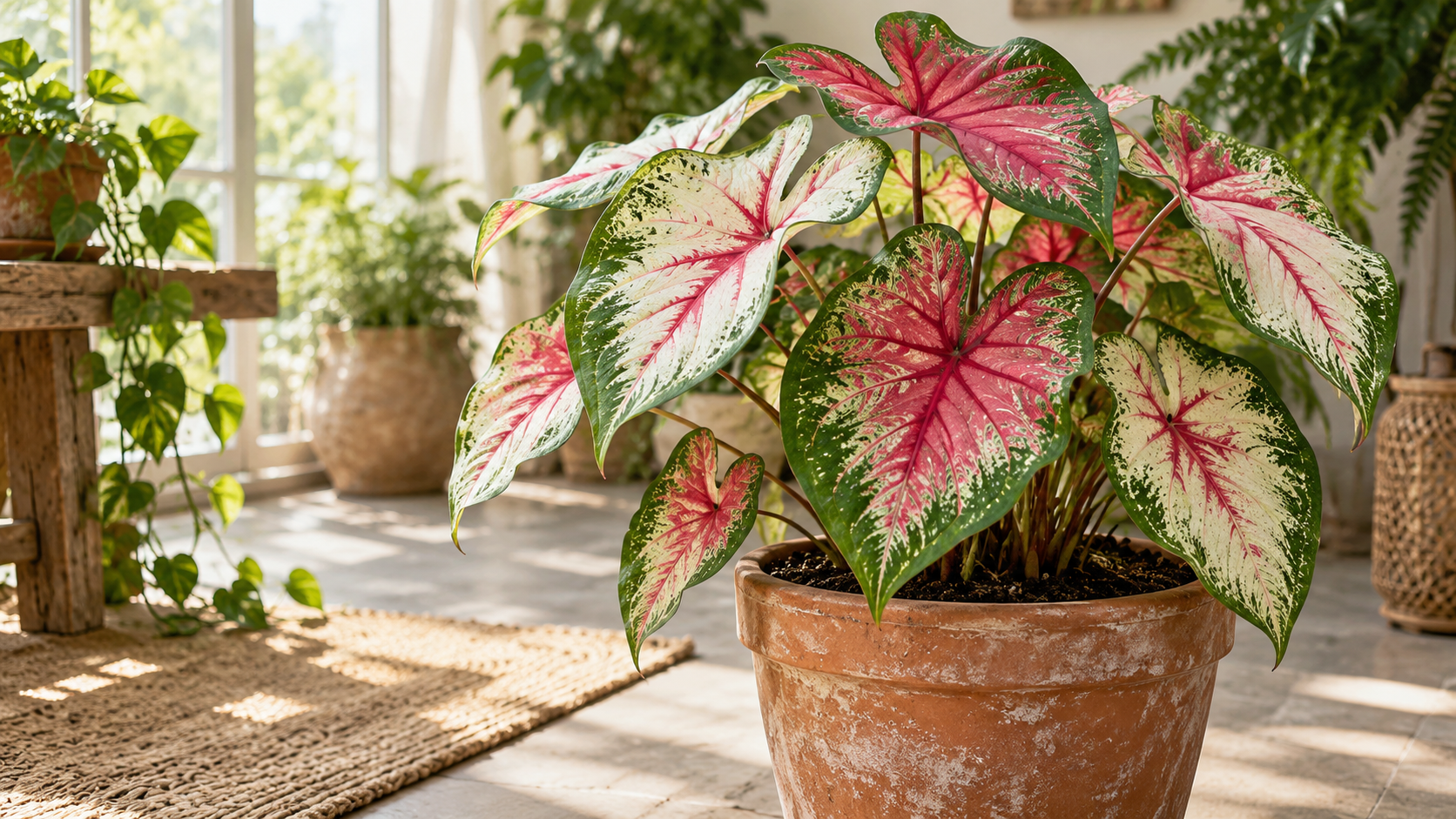
Caladiums are tropical foliage plants grown primarily for their extraordinary leaves rather than their flowers. Fancy-leaved cultivars typically produce broad, heart-shaped foliage, while lance-leaved or strap-leaved types tend to have narrower leaves and more compact growth.
One reason caladium plant care can be confusing is that different cultivars do not always respond identically to sunlight. Many perform best with partial shade, while selected cultivars have greater sun tolerance.
According to the University of Florida IFAS Extension, most caladiums thrive in partial shade, prefer moist but adequately drained soil, and naturally become dormant as the growing season ends.
That means your care routine should respond to the plant, cultivar, weather, growing location, and season rather than relying on one rigid schedule.
Tip 1: Start With Healthy Caladium Tubers or Plants
Good caladium plant care begins before the first leaf appears. Whether you purchase dormant tubers or established nursery plants, starting with healthy material gives you a much better foundation.
Choose Firm Tubers
A healthy dormant tuber should feel firm rather than soft or mushy. Avoid specimens showing obvious decay, extensive mold, or serious physical damage.
Look for Growing Points
The upper surface of a caladium tuber has growing points or “eyes” from which shoots emerge. Healthy-looking growth points are useful when deciding which side should face upward during planting.
Inspect Nursery Plants
If buying an established plant, inspect the foliage and growing medium. Look for healthy growth and check the undersides of leaves for obvious pest activity.
Tip 2: Match the Growing Location to Your Caladium Variety
Not every caladium cultivar has identical light tolerance. Choosing an appropriate location is therefore an important part of caladium plant care.
Most Caladiums Appreciate Some Shade
Partial shade or filtered light is a dependable starting point for many varieties. It helps protect delicate foliage from excessive heat while allowing the plant to display its characteristic color.
Some Cultivars Tolerate More Sun
Modern breeding has produced cultivars capable of handling stronger sunlight than traditional shade-loving types. Always consider the label or cultivar information supplied with your plant.
Protect Plants From Drying Conditions
Strong sun combined with hot, drying wind can increase moisture loss dramatically. A sheltered position can make moisture management much easier.
Outdoor growers can explore our Outdoor Plants guides for more help with garden placement.
Tip 3: Provide the Right Amount of Light
Appropriate light helps maintain the dramatic foliage that makes caladium plant care so rewarding.
Use Bright, Filtered Light Indoors
If you grow caladiums indoors, position them where they receive useful natural light without exposing sensitive foliage to hours of harsh sunlight through hot glass.
An east-facing window can work well in many homes. Brighter south- or west-facing windows may require additional distance or a sheer curtain.
Read our complete indoor light guide for help assessing window exposure.
Watch for Excessive Light
Bleached areas, scorched margins, or rapidly deteriorating foliage can indicate that the plant is receiving more direct sun than it can comfortably tolerate.
Watch for Insufficient Light
Extremely dim conditions can contribute to weaker growth and less impressive foliage. If an indoor location is very dark, move the plant gradually to a brighter position.
Tip 4: Water Caladiums According to Soil Moisture
Moisture management is one of the most important parts of caladium plant care. Caladiums appreciate moisture while actively growing, but saturated soil can encourage tuber and root problems.
Check Before Watering
Rather than watering automatically every two, five, or seven days, inspect the growing medium.
Container size, temperature, sunlight, humidity, airflow, root development, and growing medium all influence how quickly moisture is used.
Our complete watering guide explains why checking actual conditions is more useful than following a rigid calendar.
Water Thoroughly When Needed
When the growing medium needs moisture, apply water evenly across the root zone and allow excess water to escape through the drainage holes.
Do Not Leave the Pot Standing in Water
Empty excess water from saucers and decorative cachepots. Caladium tubers should not remain surrounded by persistently saturated soil.
If the growing medium stays wet for unusually long periods, compare your symptoms with our signs of overwatering.
Tip 5: Use Moisture-Retentive but Well-Draining Soil
The ideal growing medium supports moisture without becoming a stagnant, waterlogged mass.
Keep the Mix Loose and Airy
For container caladium plant care, choose a quality growing medium that maintains useful moisture while allowing excess water to drain.
Organic material can improve moisture retention, while appropriate coarse components can help preserve drainage and aeration.
Read our soil mix guide for a broader explanation of drainage, moisture retention, and root-zone aeration.
Avoid Dense, Persistently Wet Soil
Heavy soil that remains saturated can create poor conditions around the tuber and roots. If growing outdoors in compact soil, improve the bed before planting rather than placing the tuber into a poorly draining pocket.
FREE PATCH PLANTS TOOL
How Much Soil Does Your Caladium Planter Need?
If you are preparing a compatible rectangular container, planter, or garden bed, use the free Patch Plants Soil Calculator to estimate how much growing medium you need.
You can calculate soil volume before buying potting materials and then use our soil mix guide to choose an appropriate growing medium.
Tip 6: Choose a Container With Good Drainage
Containers make it easier to display caladiums on patios, porches, balconies, and indoors, but the wrong pot can complicate caladium plant care.
Drainage Holes Are Essential
Use a growing container that allows excess irrigation water to escape freely.
Avoid an Unnecessarily Oversized Pot
A very large volume of growing medium around a small tuber can remain wet for longer than expected. Choose a container appropriate to the amount of plant material you are growing.
Check Decorative Outer Pots
If the growing pot sits inside a decorative cachepot, remove accumulated water after irrigation.
Tip 7: Feed Lightly During Active Growth
Caladiums produce substantial foliage from underground tubers, but excessive fertilizer is not the answer to every growth problem.
Follow the Product Label
During active growth, use an appropriate fertilizer according to its label and your growing conditions.
The University of Florida IFAS notes that excessive fertilization can reduce the intensity of the reds and whites that make caladium foliage so attractive.
Do Not Fertilize a Stressed Plant Automatically
If the leaves look unhealthy, first investigate water, drainage, light, temperature, pests, and root-zone conditions.
Additional fertilizer cannot correct waterlogged roots or badly unsuitable light.
Reduce Feeding as Growth Declines
As the plant approaches dormancy and foliage naturally declines, its active growth requirements change. Avoid trying to force the plant to remain in continuous active growth with unnecessary fertilizer.
Tip 8: Keep Caladiums Warm and Plant Tubers at the Right Time
Warm conditions are fundamental to caladium plant care. These are tropical foliage plants and should not be treated like cool-season garden plants.
Wait for Warm Soil
Do not rush dormant tubers into cold outdoor soil. UF/IFAS recommends planting caladium tubers once soil has warmed to approximately 60–70°F, because cooler conditions can slow growth and increase the risk of tuber rot.
Plant With the Growing Side Up
Position the puckered or knobby “eye” side upward so developing shoots are oriented toward the soil surface.
Plant at an Appropriate Depth
University of Florida guidance commonly recommends planting tubers about 2 inches deep, although planting recommendations can vary somewhat by production method and local conditions.
Protect Plants From Frost
Outdoor caladiums need protection when cold weather approaches. Container plants are easier to relocate when conditions become unsuitable.
Tip 9: Groom Caladium Foliage Carefully
Regular observation and selective grooming keep a caladium display attractive without unnecessarily removing productive foliage.
Remove Badly Damaged Leaves
If a leaf has become completely yellow, severely damaged, or diseased, remove it carefully using clean cutting tools.
Our Pruning Basics guide explains how clean tools and sensible cuts help protect plants.
Keep Healthy Leaves
A slightly imperfect leaf can still contribute to the plant. Avoid removing healthy foliage simply because it is asymmetrical or has minor cosmetic damage.
Give Crowded Plants Space
Good spacing can improve airflow and reduce unnecessary contact between wet leaves. Do not tightly bind delicate caladium stems together.
Tip 10: Inspect Caladiums for Pests and Diseases
Regular inspection is an easy but valuable caladium plant care habit.
Check Both Sides of the Leaves
Look over the upper and lower leaf surfaces, tender new growth, stems, and protected junctions.
Watch for Common Pests
Depending on growing conditions, caladium foliage may encounter pests such as mites, mealybugs, aphids, or other common garden and houseplant pests.
If you identify a pest, isolate an indoor plant when practical and choose a treatment appropriate to the specific pest and setting.
Investigate Leaf Spots
Not every mark is caused by insects. Leaf spotting can also be associated with disease, environmental stress, or physical damage.
Watch the Root Zone
Persistently wet soil combined with declining foliage deserves attention because caladium tubers can be vulnerable to fungal problems.
For moisture-related root problems, see our root rot guide.
Tip 11: Prepare Caladiums for Natural Dormancy
Dormancy is an important part of caladium plant care. Declining foliage as conditions cool does not automatically mean the plant has failed.
Watch for Natural Foliage Decline
As temperatures and seasonal conditions change, caladium foliage can yellow and decline naturally.
Gradually Reduce Water
As active growth ends and the foliage dies back, gradually reduce irrigation rather than continuing the same active-growth watering routine.
Protect Tubers From Freezing Conditions
In climates where winter conditions are unsuitable, tubers may need to be lifted and stored before freezing weather.
Dry and Store Healthy Tubers
After lifting, remove excess soil and allow healthy tubers to dry appropriately before storage. Discard tubers that are badly rotten or damaged.
Store them under suitable dry, protected conditions until warm planting conditions return.
Common Caladium Problems and What to Check
| Symptom | Possible Factors | What to Check |
|---|---|---|
| Bleached or scorched leaves | Excessive direct sun or heat stress | Light Guide |
| Yellow leaves | Moisture stress, roots, season or dormancy | Yellow Leaves Guide |
| Soggy soil and declining plant | Excess moisture or poor drainage | Overwatering Guide |
| Soft or rotting tuber | Decay associated with unsuitable conditions | Root Rot Guide |
| Weak indoor growth | Insufficient light or general stress | Indoor Light Guide |
Why Are My Caladium Leaves Turning Yellow?
Yellow leaves do not always indicate the same problem. During active growth, investigate watering, drainage, roots, light, and environmental stress.
Later in the growing season, yellowing foliage may also be part of the plant’s natural transition toward dormancy.
Use our yellow leaves guide to distinguish common causes before changing your caladium plant care routine.
Why Are My Caladium Leaves Curling?
Curling can be associated with environmental stress, including excessive heat, intense light, or moisture problems.
Check the growing medium first, then evaluate light exposure and surrounding conditions. Avoid assuming that every curled leaf means the plant needs more water.
Why Are My Caladium Leaves Scorched?
Caladium foliage can burn when a shade-adapted cultivar receives excessive direct sunlight, particularly during the hottest part of the day.
Move the plant gradually to a more protected position if excessive sunlight appears to be the cause.
For indoor plants, use our indoor light guide to reassess placement.
Why Is My Caladium Drooping?
Drooping foliage can occur when a plant becomes too dry, but root stress from excessive moisture can also affect plant structure.
Check the growing medium instead of immediately adding water.
If the plant continues declining despite corrected conditions, follow our step-by-step plant rescue guide.
Can Caladiums Grow Indoors?
Yes, caladiums can be grown indoors when their warmth, light, moisture, and drainage requirements are met.
Indoor caladium plant care is usually easier near a bright window with filtered light than in a dark interior corner.
For other colorful indoor options, browse our pink and green leaf plants and tropical house plants.
Caladium Plant Care Checklist
- Start with firm, healthy tubers or vigorous plants.
- Identify the light tolerance of your cultivar.
- Use partial shade or filtered light for varieties that need protection.
- Check growing-medium moisture regularly.
- Water thoroughly when needed and allow excess water to drain.
- Never leave containers standing in water.
- Use a loose, moisture-retentive but well-draining growing medium.
- Use containers with functional drainage holes.
- Feed conservatively during active growth.
- Protect plants from cold and frost.
- Inspect leaves regularly for pests and disease symptoms.
- Reduce watering as natural dormancy begins.
KEEP LEARNING WITH PATCH PLANTS
Build Better Caladium Care Habits
Visit our Indoor Plants category for more houseplant guides or browse Outdoor Plants if your caladiums grow in beds, patios, or outdoor containers.
Use our watering guide to improve moisture management and our overwatering guide if the growing medium remains wet.
For root problems, see our root rot guide. For foliage discoloration, use the yellow leaves guide.
Learn more about growing media with our soil mix guide and use the Soil Calculator when planning compatible rectangular containers or garden beds.
For light questions, visit our indoor light guide. If a plant is seriously declining, follow our plant rescue plan.
Frequently Asked Questions About Caladium Plant Care
What kind of light is best for caladiums?
Most caladiums perform well in partial shade or filtered light, although cultivar tolerance varies. Indoors, bright filtered light can help support colorful foliage without exposing sensitive leaves to excessive direct sun.
How often should I water caladiums?
Do not rely on a rigid calendar. During active growth, check the growing medium regularly and water when conditions indicate that moisture is needed. Keep it moist without allowing the tuber and roots to remain waterlogged.
What is the best soil for caladium plants?
Caladiums perform well in a loose growing medium that holds useful moisture while still draining excess water and maintaining air around the roots and tuber.
How deep should I plant caladium tubers?
University of Florida guidance commonly recommends planting caladium tubers about 2 inches deep with the knobby growing or eye side facing upward. Wait until outdoor soil is sufficiently warm before planting.
Can caladiums grow indoors?
Yes. Indoor caladium plant care can be successful when plants receive useful filtered light, warm conditions, appropriate moisture, and good drainage.
Can caladiums grow in full sun?
Some cultivars have been bred for greater sun tolerance, while many traditional caladiums perform better with partial shade. Check the requirements of the specific cultivar you are growing.
Why are my caladium leaves turning yellow?
During active growth, yellowing may justify checking moisture, drainage, roots, and environmental conditions. Later in the season, yellow foliage may also be part of the plant’s natural transition into dormancy.
Why are the edges of my caladium leaves turning brown?
Brown or scorched margins can be associated with excessive sunlight, heat, moisture stress, or other environmental problems. Check soil moisture and light exposure before making major changes.
Should I fertilize caladiums?
Caladiums can benefit from appropriate light feeding during active growth, but excessive fertilization can negatively affect foliage quality. Follow the fertilizer label and avoid feeding simply to force faster growth.
Do caladiums die in winter?
The foliage naturally declines as caladiums enter dormancy. The underground tuber can survive and produce new growth later when it is protected from unsuitable winter conditions.
How should I store caladium tubers?
Where winter conditions require lifting, allow healthy tubers to dry after digging and store them under suitable dry, protected conditions. Discard badly damaged or rotting tubers before storage.
Are caladiums toxic to pets?
Caladium tissues contain calcium oxalates and should not be eaten. Keep the plant away from pets and children who may chew the foliage.
Final Thoughts on Caladium Plant Care
Successful caladium plant care does not require a complicated routine. The most important habits are choosing healthy tubers, matching the cultivar to appropriate light, managing moisture carefully, providing drainage, keeping actively growing plants warm, and recognizing natural dormancy.
Pay particular attention to the growing medium. Caladiums appreciate moisture during active growth, but keeping the tubers constantly saturated can create serious problems.
Likewise, do not assume every cultivar needs deep shade. Light tolerance varies, and some modern caladiums can handle substantially brighter conditions than traditional varieties.
Observe your plant before changing several parts of its routine at once. If something looks wrong, start with our watering guide, indoor light guide, yellow leaves guide, and root rot guide.
For more practical gardening advice, browse Indoor Plants, Outdoor Plants, Plant Care, or return to Patch Plants.