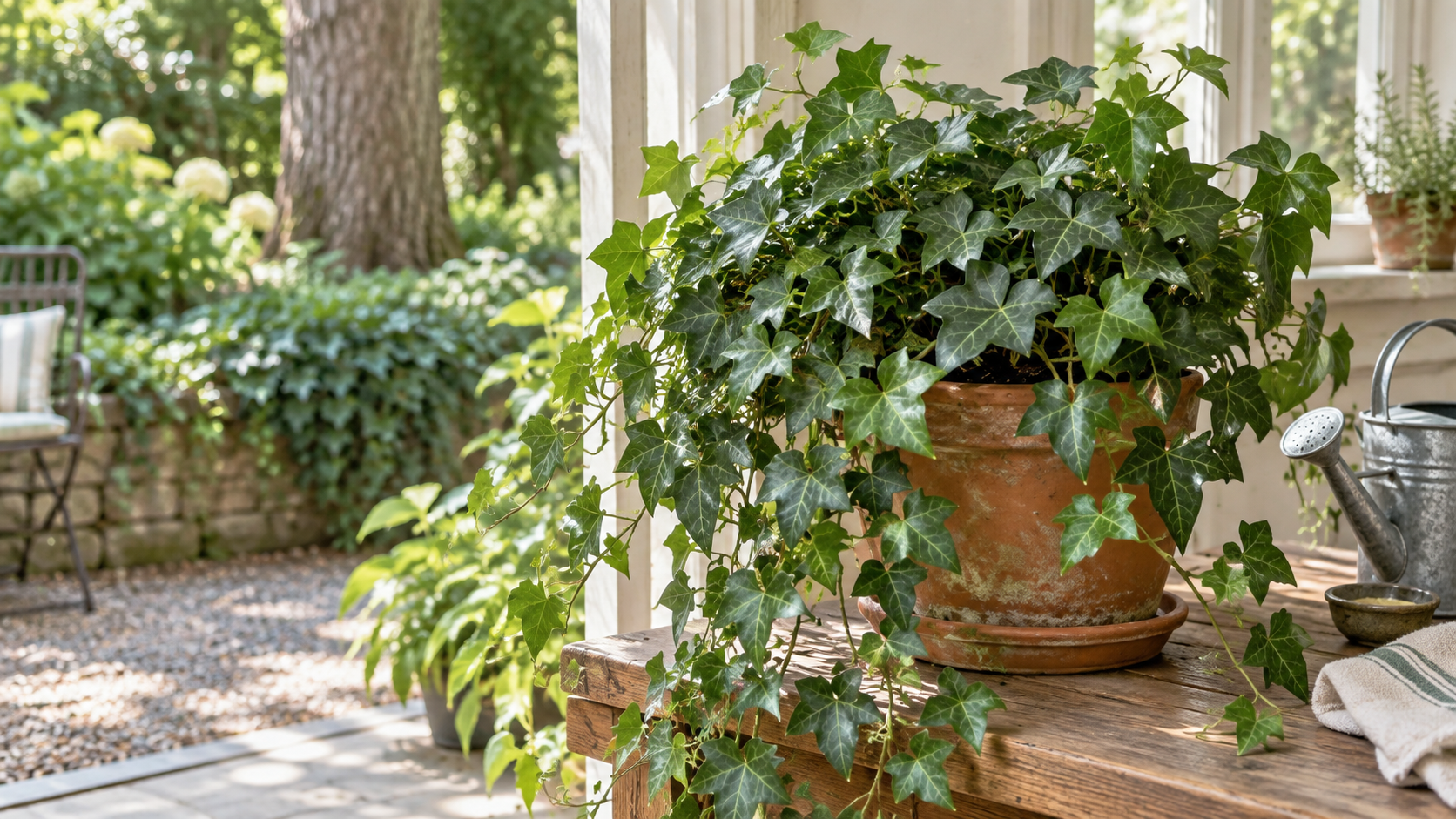
The key to healthy growth is balance. Give indoor ivy useful light, use a well-draining growing medium, check the soil before watering, prune long stems when necessary, and inspect the foliage regularly for pests. Outdoors, responsible management becomes just as important as ordinary plant care because English ivy can escape cultivation and affect trees and surrounding vegetation.
This guide covers 11 practical English ivy care tips for healthier indoor and outdoor growth, including light, soil, watering, temperature, feeding, pruning, repotting, propagation, pest management, troubleshooting, and seasonal maintenance.
For more growing advice, browse the Indoor Plants guides, Outdoor Plants guides, and Plant Care library.
QUICK ANSWER
What Does Good English Ivy Care Require?
Good English ivy care starts with appropriate light, well-draining soil, a container with drainage holes, and watering based on actual soil moisture rather than a rigid calendar. Indoor plants also benefit from good airflow, occasional pruning, and regular pest inspections.
Outdoor English ivy requires additional management. Do not allow vines to spread unchecked onto trees, structures, neighboring land, or natural areas. English ivy is considered invasive in a number of regions, so check local guidance before planting it outdoors.
For related help, see our watering guide, indoor light guide, and soil mix guide.
PATCH PLANTS SUMMARY
Key Takeaways
- Give indoor English ivy useful bright or filtered light.
- Use loose, well-draining growing media.
- Always use containers with functional drainage holes.
- Check soil moisture instead of following a rigid watering schedule.
- Keep indoor plants away from extreme heat and drying vents.
- Feed according to plant growth and fertilizer-label directions.
- Prune vines to maintain the desired size and encourage branching.
- Repot when roots become crowded rather than automatically every year.
- Inspect leaf undersides regularly for common pests.
- Keep outdoor English ivy under strict control.
- Adjust care as light, temperature, and plant growth change seasonally.
Understanding Indoor and Outdoor English Ivy Care
English ivy is an evergreen climbing and trailing vine scientifically known as Hedera helix. Its recognizable lobed leaves and flexible stems have made it a popular ornamental plant.
However, indoor and outdoor English ivy care should not be treated as exactly the same thing.
English Ivy Indoors
Indoors, English ivy is generally grown in a container, hanging basket, or trailing display where its spread can be controlled. Light, watering, drainage, pests, and pruning become the main concerns.
English Ivy Outdoors
Outdoors, English ivy can spread along the ground and climb vertical surfaces using aerial rootlets. Once established in favorable conditions, its growth can become difficult to contain.
Because English ivy has invasive status in various parts of North America, outdoor growers should check regional invasive-species recommendations before planting it in the landscape.
The U.S. National Invasive Species Information Center provides additional information about English ivy and its invasive behavior in the United States.
Tip 1: Give English Ivy the Right Amount of Light
Light influences leaf color, stem length, growth rate, and moisture use, making it one of the most important parts of English ivy care.
Provide Useful Light Indoors
A bright location with filtered or indirect light is a practical starting point for indoor English ivy.
An east-facing window can provide gentle morning light. Near stronger south- or west-facing exposures, observe the foliage and move the plant farther from hot glass if necessary.
Our complete indoor light guide can help you evaluate different window exposures.
Watch for Insufficient Light
Long spaces between leaves, sparse growth, weak stems, or reduced variegation in variegated cultivars can indicate that the plant needs a brighter location.
Watch for Excessive Sun and Heat
Sudden exposure to strong direct sun can stress foliage that has adapted to lower light. Scorched or bleached patches may indicate that the plant needs a more protected position.
If you are comparing plants for dimmer rooms, see our small low-light indoor plants guide.
Tip 2: Use Loose, Well-Draining Soil
Healthy roots need both moisture and oxygen. A dense growing medium that remains saturated can make English ivy care unnecessarily difficult.
Choose a Suitable Container Mix
For indoor ivy, use a quality potting medium that drains adequately while retaining enough moisture for the roots.
Depending on the starting mix, an appropriate coarse component may help maintain aeration and reduce compaction.
Read our complete soil mix guide for more information about balancing drainage, moisture retention, and root aeration.
Avoid Dense Garden Soil in Indoor Containers
Ordinary garden soil is generally unsuitable as the sole growing medium in an indoor container. It can compact, drain unpredictably, and behave very differently inside a pot than it does in the ground.
Use a Container With Drainage Holes
The growing container should allow excess water to escape freely. If you use a decorative cachepot, keep the ivy in a properly drained inner container and empty accumulated water after irrigation.
FREE PATCH PLANTS TOOL
Preparing a Rectangular Ivy Planter?
If you are planting English ivy in a compatible rectangular planter or garden bed, use our free Soil Calculator to estimate how much growing medium you need.
After calculating the volume, use our soil mix guide to understand how different growing-medium components affect drainage and moisture.
Tip 3: Water English Ivy According to Soil Moisture
A rigid calendar is rarely the best watering strategy. Successful English ivy care requires checking actual growing conditions.
Check the Growing Medium First
Feel the upper portion of the growing medium before watering. If it still feels adequately moist, additional water may not be necessary yet.
Pot size, root density, temperature, airflow, humidity, light, and season all influence how quickly the soil dries.
Our watering guide explains how to make watering decisions based on the plant and growing medium rather than the calendar.
Water Thoroughly When Needed
When watering is required, moisten the root zone evenly and allow excess water to drain from the bottom of the container.
Empty Standing Water
Do not leave the growing pot standing in a saucer or cachepot filled with water.
If the growing medium remains saturated for unusually long periods, investigate drainage and watering frequency. See our overwatering guide for additional troubleshooting.
Tip 4: Maintain Stable Indoor Growing Conditions
Indoor English ivy can react to sudden environmental changes, especially when placed close to heating equipment or strong drafts.
Avoid Drying Heat Sources
Keep indoor plants away from radiators, fireplaces, and heating vents that repeatedly expose foliage to hot, dry air.
Watch Cold Drafts
A plant sitting directly against very cold glass or in a strong winter draft may experience unnecessary stress.
Balance Humidity With Airflow
Very dry indoor air can contribute to foliage stress and can also create favorable conditions for spider mites. However, repeatedly soaking the foliage is not the solution.
If indoor air is unusually dry, a room humidifier can raise ambient humidity more consistently than frequent misting.
Our humidity guide covers additional ways to manage dry indoor conditions.
Tip 5: Feed English Ivy Conservatively
Fertilizer supports growth when nutrients are genuinely needed, but it cannot compensate for poor light, damaged roots, or unsuitable watering.
Feed During Active Growth
If your indoor ivy is actively producing healthy new foliage, an appropriate houseplant fertilizer can be used according to its label.
Avoid Rigid Fertilizer Calendars
Growth rate depends on light, temperature, plant health, growing medium, and season. Follow the fertilizer manufacturer’s instructions rather than assuming every English ivy requires feeding at identical intervals.
Do Not Feed a Severely Stressed Plant Automatically
If your ivy suddenly turns yellow, wilts, or develops damaged roots, diagnose the underlying problem before adding fertilizer.
Excess fertilizer can contribute to salt buildup and root stress rather than solving an environmental problem.
Tip 6: Prune English Ivy for Fuller, Controlled Growth
Pruning is useful for both appearance and management. It can keep indoor vines compact while preventing outdoor growth from spreading into unwanted locations.
Trim Long or Sparse Stems
Cutting healthy stems near a node can encourage branching below the cut and help maintain a fuller shape.
For general technique, see our Pruning Basics guide.
Remove Dead or Diseased Growth
Use clean tools to remove badly damaged stems and leaves. Avoid leaving severely diseased material mixed into healthy foliage.
Clean Cutting Tools
Clean pruning equipment before moving between plants, particularly when disease is suspected.
Control Outdoor Vines Early
Do not wait until outdoor English ivy has covered a tree, wall, fence line, or neighboring planting before managing it. Regularly remove unwanted runners while they are still manageable.
Tip 7: Repot and Propagate English Ivy Carefully
English ivy does not need a new container simply because another year has passed. Repot when the plant and root system actually need additional space or fresh growing conditions.
Look for Signs of a Crowded Root System
Roots densely circling the container, emerging heavily through drainage holes, or a pot that has become difficult to water evenly can indicate that repotting deserves consideration.
Increase Pot Size Gradually
When repotting, avoid moving a small root system into an unnecessarily huge volume of wet growing medium.
Choose a slightly larger container with drainage holes and use a fresh, appropriate potting medium.
Propagate From Healthy Stem Cuttings
English ivy can be propagated from healthy stem cuttings containing viable nodes. Remove foliage that would otherwise sit below the water or growing-medium surface.
Cuttings can be rooted using an appropriate propagation medium or water before being transitioned into potting mix.
Keep propagating material from outdoor invasive populations contained and dispose of unwanted cuttings responsibly.
Tip 8: Inspect English Ivy for Common Pests
Indoor ivy can develop pest problems, and regular inspection is one of the simplest preventative habits.
Check Leaf Undersides
Inspect the underside of foliage, stem junctions, and tender new growth rather than looking only at the upper leaf surface.
Watch for Spider Mites
Fine webbing, stippled foliage, or tiny moving pests can indicate spider mites. Dry indoor conditions may make mite problems more troublesome.
Look for Other Common Houseplant Pests
Aphids, scale insects, and mealybugs can also affect indoor ornamental plants.
Identify the Pest Before Treating
Different pests may require different management. Start with correct identification, isolate an affected indoor plant when practical, and use any pesticide or horticultural product strictly according to its label.
Tip 9: Troubleshoot Leaf and Root Problems Early
Yellowing, browning, wilting, and leaf spots are symptoms rather than diagnoses. Several unrelated problems can produce similar-looking foliage.
Yellow Leaves
Check soil moisture, drainage, roots, light, pest activity, and the age of the affected leaves before changing the entire care routine.
Our yellow leaves guide explains the major categories worth investigating.
Wilting With Wet Soil
Do not assume that a wilted plant always needs more water. Wilting while the growing medium remains saturated can indicate root stress.
If root decline is suspected, read our root rot guide.
Brown or Crispy Leaves
Brown foliage can be associated with moisture stress, excessive heat, root problems, pests, fertilizer issues, or environmental changes.
Leaf Spots
Remove severely affected material when appropriate and improve overall growing conditions. Avoid allowing foliage to remain unnecessarily wet for prolonged periods.
If your plant continues declining, follow our step-by-step plant rescue plan.
Tip 10: Manage Outdoor English Ivy Responsibly
This is one of the most important differences between indoor and outdoor English ivy care.
Hedera helix has escaped cultivation in parts of North America and can form dense growth that affects native vegetation.
Check Local Guidance Before Planting
Before adding English ivy to an outdoor landscape, check your state, provincial, municipal, or local invasive-plant guidance. Restrictions and recommendations vary by location.
Do Not Let Ivy Climb Trees
Remove vines from around tree bases before they establish large climbing growth. Dense ivy can obscure tree defects, add weight, and interfere with inspection and maintenance.
Keep It Away From Vulnerable Structures
English ivy attaches to surfaces using aerial rootlets. Established vines can be difficult to remove and may create problems on vulnerable or already damaged surfaces.
Prevent Escape Into Natural Areas
Do not allow outdoor runners or discarded cuttings to establish outside the intended growing area.
Consider Contained or Alternative Plantings
Where outdoor English ivy is invasive, discouraged, or restricted, consider growing a suitable alternative rather than introducing it into the landscape.
Tip 11: Adjust English Ivy Care With the Seasons
The environment surrounding an ivy plant changes throughout the year, so the care routine should change with it.
Spring
Inspect the plant for winter damage, check roots and growing medium, prune unwanted growth, and watch for renewed pest activity as new leaves emerge.
Summer
Monitor moisture more frequently when warmer temperatures and stronger light increase water use. Protect indoor foliage from excessive heat near windows.
Fall
As growth slows, reassess watering and fertilizer needs rather than continuing a summer routine automatically.
Winter
Indoor heating can change humidity and drying rates. Keep the plant away from direct heat and continue checking soil before watering.
Outdoor care depends strongly on climate and local management recommendations.
English Ivy Care Troubleshooting Guide
| Symptom | Possible Factors | What to Check |
|---|---|---|
| Yellow leaves | Moisture, roots, light, pests or leaf age | Yellow Leaves Guide |
| Wet soil and wilting | Root stress or poor drainage | Root Rot Guide |
| Long sparse stems | Insufficient light or lack of pruning | Indoor Light Guide |
| Fine webbing | Possible spider mites | Inspect leaf undersides closely |
| Brown leaf edges | Moisture, heat, roots, fertilizer or pests | Watering Guide |
Why Is My English Ivy Turning Yellow?
Yellow leaves are commonly associated with watering or root problems, but they can also result from light conditions, pests, nutrient issues, environmental stress, or normal aging.
Check the growing medium and roots before adding more water. If the soil remains wet, additional irrigation may make the problem worse.
Why Does My English Ivy Have Brown Leaves?
Brown leaves can develop when plants experience inconsistent moisture, excessive heat, root stress, pests, or other environmental problems.
Check whether the damage affects the entire plant, older foliage, only the tips, or leaves closest to a window or heat source. The pattern can help narrow the cause.
Why Is My English Ivy Losing Leaves?
Leaf drop can occur after sudden changes in light, temperature, watering, or location. Pest infestations and root problems can also contribute.
Try to identify the environmental change rather than making several major care adjustments at once.
Why Is My English Ivy Leggy?
Long stems with widely spaced leaves can develop when the plant receives insufficient light or has grown for a long time without pruning.
Move the plant gradually to a more suitable light level and prune excessively long stems to encourage more compact branching.
English Ivy Care Checklist
- Identify whether you are managing indoor or outdoor ivy.
- Give indoor plants useful filtered light.
- Use a loose, well-draining potting medium.
- Choose a container with drainage holes.
- Check the soil before watering.
- Do not leave pots standing in water.
- Keep indoor ivy away from extreme heat and drafts.
- Feed according to active growth and product directions.
- Prune unwanted or damaged stems with clean tools.
- Inspect leaf undersides for pests.
- Repot only when the root system needs it.
- Manage outdoor vines before they spread.
- Keep outdoor ivy away from trees and natural areas.
- Check local invasive-species guidance.
- Adjust care as seasonal conditions change.
KEEP LEARNING WITH PATCH PLANTS
Build Better English Ivy Care Habits
Browse our Indoor Plants library for more container-growing guides or visit Outdoor Plants for garden advice.
Improve moisture management with our watering guide and troubleshoot saturated soil with our overwatering guide.
For root problems, use the root rot guide. For foliage discoloration, visit our yellow leaves guide.
Learn more about growing media with our soil mix guide and estimate soil volume for compatible rectangular planters with our Soil Calculator.
If an indoor ivy plant is seriously declining, follow our plant rescue guide.
Frequently Asked Questions About English Ivy Care
What light is best for English ivy indoors?
Indoor English ivy generally performs well in useful bright or filtered light. Protect foliage from sudden exposure to intense hot sunlight and gradually adjust the plant if moving it to a brighter position.
How often should I water English ivy?
Do not use a rigid watering calendar. Check the growing medium and water according to its moisture level, plant growth, temperature, light, airflow, and season.
What soil is best for English ivy?
Use a loose, well-draining growing medium that retains useful moisture without staying saturated around the roots for long periods.
Does English ivy need drainage holes?
Yes. Indoor English ivy should be grown in a container with functional drainage holes so excess irrigation water can escape from the root zone.
Why is my English ivy turning yellow?
Yellow foliage can be associated with excessive moisture, root stress, unsuitable light, pests, environmental changes, nutrient problems, or natural aging. Check the growing conditions before assuming one specific cause.
Why does my English ivy have brown leaves?
Brown foliage may be associated with moisture stress, excessive heat, root problems, pests, fertilizer issues, or other environmental stress. Examine where and how the browning appears before changing the care routine.
How do I make English ivy grow fuller?
Useful light and selective pruning can encourage a more compact appearance. Trim excessively long stems near healthy nodes to encourage branching while maintaining suitable growing conditions.
Can English ivy be propagated from cuttings?
Yes. Healthy stem cuttings containing viable nodes can be rooted in water or an appropriate propagation medium before being transitioned into potting mix.
What pests attack English ivy indoors?
Spider mites are a common concern, while aphids, scale insects, and mealybugs may also occur. Inspect leaf undersides and new growth regularly so problems can be identified early.
Is English ivy invasive?
English ivy is considered invasive or problematic in a number of regions where it can escape cultivation and spread into natural areas. Check local invasive-plant guidance before planting it outdoors.
Should English ivy climb trees?
It is better to prevent English ivy from establishing dense growth on tree trunks and canopies. Outdoor vines should be controlled while they are still manageable.
Is English ivy safe for pets?
English ivy should not be eaten by pets. Keep indoor plants and freshly cut plant material away from animals that may chew the foliage.
Final Thoughts on English Ivy Care
Successful English ivy care begins with a simple principle: respond to the plant and its environment rather than relying on a rigid calendar. Provide suitable light, use well-draining soil, check moisture before watering, maintain functional drainage, and inspect foliage regularly.
For indoor plants, pruning, pest monitoring, stable conditions, and sensible repotting can keep the vine manageable and attractive. If the plant begins declining, investigate light, moisture, roots, and pests before automatically adding water or fertilizer.
Outdoor English ivy requires an additional level of responsibility. Because Hedera helix can spread aggressively and is invasive in some regions, check local recommendations and prevent vines from escaping into trees, neighboring properties, or natural vegetation.
For more practical growing advice, browse Indoor Plants, Outdoor Plants, Plant Care, or return to Patch Plants.