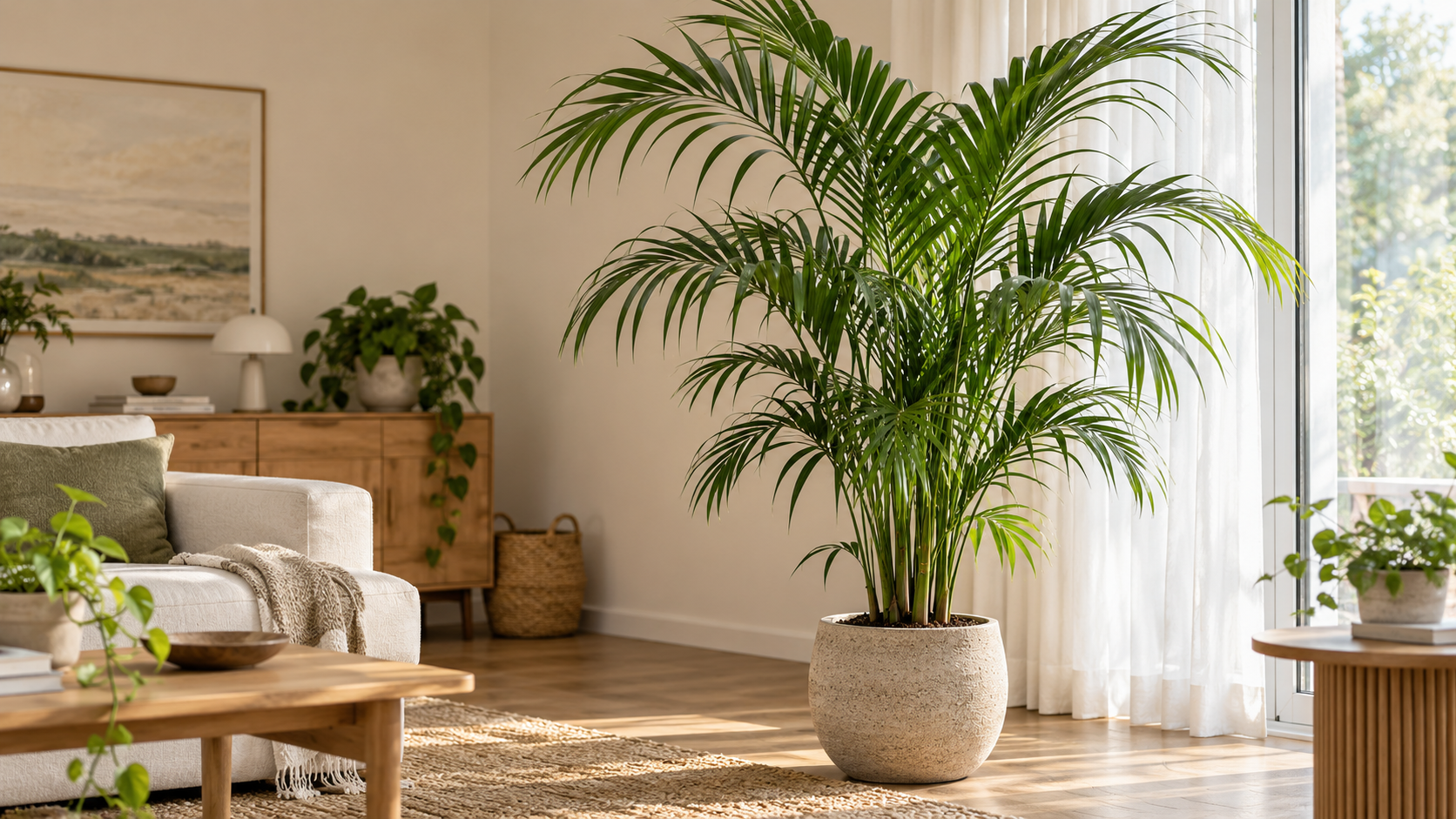
The secret to successful Kentia palm indoor care is consistency. Give the plant useful indirect light, check the soil before watering, provide reliable drainage, avoid sudden environmental extremes, and resist the temptation to overfeed or constantly repot a slow-growing palm.
This guide covers 11 practical tips for maintaining healthy growth, plus troubleshooting advice for yellow leaves, brown tips, drooping fronds, slow growth, pests, and repotting.
For more houseplant advice, explore our Indoor Plants guides and Plant Care guides.
QUICK ANSWER
Kentia Palm Indoor Care at a Glance
For reliable Kentia palm indoor care, place your palm in bright, indirect or filtered light, although it can tolerate somewhat lower indoor light. Check the growing medium before watering and avoid allowing the root zone to remain waterlogged.
Use a well-draining potting medium and a container with functional drainage holes. Protect the palm from harsh direct sunlight, cold drafts, radiators, and abrupt environmental changes. Feed conservatively during active growth and regularly inspect the foliage for pests.
Need help with the basics? Read our complete watering guide, indoor light guide, and soil mix guide.
PATCH PLANTS SUMMARY
Key Takeaways
- Bright, filtered or indirect light is a strong choice for indoor Kentia palms.
- Kentia palms can tolerate relatively low indoor light.
- Protect indoor-grown foliage from sudden harsh direct sunlight.
- Check the growing medium before watering rather than following a rigid calendar.
- Never leave the pot standing in excess water.
- Use a well-draining growing medium and container.
- Protect the palm from radiators and cold drafts.
- Feed conservatively during active growth.
- Clean dusty fronds gently.
- Remove old or badly damaged fronds carefully.
- Regularly inspect for scale, mealybugs, and spider mites.
Understanding Kentia Palm Indoor Care
The Kentia palm is botanically known as Howea forsteriana. It originates from Lord Howe Island and has long been cultivated as an elegant indoor palm.
The Royal Horticultural Society indoor palm guide notes that Kentia palms can tolerate fairly low light and recommends bright filtered light for indoor palms, while also advising against strong direct sunlight through glass.
That makes Kentia palm indoor care particularly suitable for homes where you can provide useful natural light without exposing the foliage to intense sun for extended periods.
Kentia palms are naturally slow growers. A healthy plant does not need to produce new leaves constantly to be doing well.
What Does a Healthy Kentia Palm Look Like?
Healthy Kentia palm indoor care starts with knowing what normal growth looks like.
Healthy Fronds
Look for long, gracefully arching fronds with healthy green leaflets. Some individual older lower foliage will eventually decline naturally, but widespread discoloration deserves investigation.
Healthy New Growth
New growth develops from the center of the palm. Young foliage may initially appear lighter before maturing.
Slow Growth Can Be Normal
Kentia palms are not rapid growers indoors. Avoid interpreting slow growth alone as a sign that the plant needs more fertilizer or water.
For comparison with other indoor tropical species, browse our guide to tropical house plants.
Tip 1: Give Your Kentia Palm Bright, Indirect Light
Light is one of the most important parts of Kentia palm indoor care. A position with bright, filtered or indirect natural light is an excellent starting point.
Choose a Suitable Window Position
An east-facing window can work well in many homes. In brighter south- or west-facing rooms, the palm may benefit from additional distance from the glass or filtered light through a sheer curtain.
Our complete indoor light guide explains how window orientation and distance influence available light.
Can Kentia Palms Tolerate Low Light?
Yes. Kentia palms are known for tolerating lower light better than many palms. However, tolerance does not mean that complete darkness or an extremely dim windowless room is suitable.
If you have a naturally darker home, compare your conditions with our small low-light indoor plants guide.
Tip 2: Protect the Fronds From Harsh Direct Sun
Even though light matters, successful Kentia palm indoor care does not mean putting the palm against the hottest window in the house.
Indoor-grown palm foliage can scorch when suddenly exposed to intense direct sunlight through glass.
Use Filtered Light
If sunlight becomes intense during part of the day, use a sheer curtain or move the plant farther from the window.
Make Changes Gradually
If you are moving a Kentia into a substantially brighter position, acclimate it gradually rather than changing conditions abruptly.
You can learn more about genuinely sun-tolerant indoor plants in our guide to house plants that like direct sunlight.
Tip 3: Check the Soil Before Watering
A reliable Kentia palm indoor care routine should respond to actual soil conditions rather than a fixed weekly watering schedule.
Feel the Upper Growing Medium
Check the upper portion of the growing medium before adding more water. The amount of time a pot takes to dry depends on light, temperature, season, humidity, container size, soil structure, and root development.
Our watering guide for healthy plants explains why these factors matter.
Do Not Judge by the Surface Alone
A soil surface can appear dry while moisture remains lower in the container. A finger or clean wooden stick can help you assess conditions below the surface.
Tip 4: Water Thoroughly Without Waterlogging the Roots
When watering is needed, moisten the root zone thoroughly and allow excess water to leave through the drainage holes.
Good Kentia palm indoor care requires a balance: the root system needs moisture, but prolonged waterlogging can cause serious problems.
Empty Standing Water
If water collects in a saucer or decorative cachepot after watering, empty it. Do not leave the nursery pot sitting in accumulated water.
Watch for Persistent Wetness
If the growing medium remains wet for unusually long periods, investigate drainage, pot size, soil structure, and watering frequency.
Our signs of overwatering guide can help identify moisture-related problems.
If roots become soft, dark, or deteriorated, use our root rot identification and treatment guide.
Tip 5: Use Well-Draining Potting Soil
The growing medium has a major influence on Kentia palm indoor care. Roots need access to both moisture and air.
A suitable potting medium should retain useful moisture while allowing excess water to drain rather than remaining dense and saturated.
Avoid Heavy, Compacted Mixes
Dense growing media can remain wet too long and make moisture management more difficult.
Read our complete soil mix guide for more information about drainage, aeration, and moisture retention.
FREE PATCH PLANTS TOOL
Repotting Into a Large Planter?
If your Kentia palm is going into a compatible rectangular planter, use our free Soil Calculator to estimate the volume of potting medium required.
You can calculate how much soil you need before purchasing growing media and then review our soil mix guide before choosing the material.
Tip 6: Always Use a Pot With Drainage
Good drainage simplifies Kentia palm indoor care by giving excess irrigation water somewhere to escape.
Check the Drainage Holes
Make sure the nursery or permanent growing pot has functional drainage holes that are not blocked.
Be Careful With Decorative Pots
Decorative outer pots can hide standing water. After watering, check inside the cachepot and remove any excess water.
This simple habit can help prevent the root zone from remaining unnecessarily saturated.
Tip 7: Maintain Suitable Humidity
Humidity is another consideration in Kentia palm indoor care, particularly in homes where heating or air conditioning creates very dry conditions.
Improve the Room Environment When Necessary
If the air is consistently dry, a humidifier can provide more controlled humidity around your plants.
Grouping compatible houseplants can also alter the immediate microclimate slightly.
See our houseplant humidity hacks for additional ideas.
Do Not Confuse Misting With Watering
Misting foliage does not replace watering the root zone. It also should not be used as an excuse to keep the leaves constantly wet.
Our guide to misting plants explains the limitations of this common houseplant practice.
Tip 8: Keep Temperatures and Placement Stable
Stable indoor conditions generally make Kentia palm indoor care easier.
Avoid positioning the palm directly beside radiators, heaters, strong air-conditioning vents, or cold drafty doorways.
Watch Seasonal Changes
The same location can behave differently through the year. Sun angle changes, heating systems start operating, and indoor air can become drier during colder months.
Observe the plant and its environment rather than assuming one placement will behave identically throughout every season.
Tip 9: Feed Conservatively During Active Growth
Heavy feeding is unnecessary for good Kentia palm indoor care. Kentias are slow-growing palms, and excessive fertilizer will not transform them into fast-growing plants.
Follow the Fertilizer Label
When the palm is actively growing, use an appropriate houseplant or palm fertilizer according to the manufacturer’s instructions.
Do Not Fertilize to Fix Every Symptom
If foliage turns yellow or growth declines, first investigate watering, drainage, roots, light, pests, and environmental conditions.
Use our yellow leaves troubleshooting guide before assuming that additional nutrients are the answer.
Tip 10: Keep the Fronds Clean and Prune Carefully
Kentia fronds can collect household dust. Occasional gentle cleaning can keep the foliage looking attractive.
Clean Dusty Leaves
Use a soft damp cloth and support the leaflets while cleaning them. Avoid aggressive rubbing or pulling.
Remove Dead or Badly Damaged Fronds
Healthy green foliage should generally remain on the plant. If an old frond has died or become substantially damaged, use clean cutting tools.
Our Pruning Basics guide covers clean tools and sensible pruning practices.
Tip 11: Inspect Your Kentia Palm for Pests
Routine inspection should be part of your Kentia palm indoor care routine. Checking regularly makes it easier to notice a developing pest problem before it becomes severe.
Spider Mites
Look closely for fine webbing, tiny moving pests, or stippled foliage, especially when conditions are dry.
Scale Insects
Scale may appear as small attached bumps along stems or foliage.
Mealybugs
Mealybugs can appear as white, cotton-like clusters in protected areas of the plant.
Isolate an Infested Plant
If you find a pest problem, consider separating the affected Kentia from the rest of your indoor plant collection while identifying and treating the issue.
Kentia Palm Indoor Care by Season
Your Kentia palm indoor care routine should respond to seasonal changes inside your home.
Spring and Summer
Longer days and warmer conditions may increase plant growth and water use. Continue checking soil moisture instead of automatically increasing watering.
Active growth is also the period when conservative feeding may be appropriate according to your fertilizer label.
Fall and Winter
Lower light and cooler conditions can slow growth and cause the growing medium to remain moist longer.
Check soil carefully before watering. Avoid maintaining a summer watering routine when the plant is using moisture more slowly.
Common Kentia Palm Problems and Solutions
| Symptom | What to Check | Helpful Guide |
|---|---|---|
| Yellow leaves | Moisture, roots, drainage, aging | Yellow Leaves Guide |
| Brown tips | Dry air, watering stress, environmental conditions | Humidity Guide |
| Persistently wet soil | Drainage, soil structure, watering frequency | Overwatering Guide |
| Weak growth | Light and general growing conditions | Indoor Light Guide |
| Root deterioration | Prolonged wetness or poor drainage | Root Rot Guide |
Why Are My Kentia Palm Leaves Turning Yellow?
Yellow leaves are a common Kentia palm indoor care concern, but they do not have one universal cause.
Individual older lower fronds can yellow naturally. However, widespread yellowing may justify checking moisture, drainage, root condition, light, and recent environmental changes.
Use our guide to yellow leaves on plants to investigate systematically.
Why Does My Kentia Palm Have Brown Tips?
Brown leaf tips can be associated with dry conditions, moisture stress, environmental changes, or other growing conditions.
Do not automatically flood the container when you see brown tips. Check the growing medium first.
Review our watering guide and humidity guide before making major changes.
Why Is My Kentia Palm Drooping?
Drooping can be associated with excessively dry conditions, waterlogging, root problems, or environmental stress.
Because opposite moisture problems can produce similar-looking symptoms, inspect the root zone before deciding what the plant needs.
If your palm continues declining, work through our step-by-step plant rescue plan.
Why Is My Kentia Palm Growing Slowly?
Slow growth is normal for this palm and does not automatically mean your Kentia palm indoor care routine is failing.
If slow growth is accompanied by weak foliage or other symptoms, check available light, root health, soil moisture, pests, and environmental conditions.
Our indoor light guide is a useful starting point.
When Should You Repot a Kentia Palm?
Kentia palms do not need unnecessary root disturbance. Repot because the plant actually needs additional root space or because the growing medium or drainage has become problematic—not simply because a calendar says it is time.
Possible Signs That Repotting Is Needed
- Roots have extensively filled the available container.
- Roots are emerging heavily through drainage holes.
- The growing medium has become badly degraded or compacted.
- Drainage has become consistently poor.
- A root problem requires access to the root system.
Move up conservatively in pot size rather than placing a relatively small root ball into an enormous volume of growing medium.
For compatible rectangular planters, use our Soil Calculator to estimate how much soil you need.
Before repotting, also review our soil mix guide.
KEEP LEARNING WITH PATCH PLANTS
More Help for Healthy Indoor Palms
Explore our Indoor Plants library for more houseplant growing guides or visit the Plant Care library for troubleshooting advice.
For watering questions, use our complete watering guide. If the growing medium stays wet, compare your plant with the signs of overwatering.
For unhealthy roots, read our root rot guide. For discolored foliage, use the yellow leaves guide.
For placement questions, read our indoor light guide. For dry indoor conditions, explore our humidity guide.
You can also compare Kentia palms with other tropical house plants and use our plant rescue guide if your palm is seriously declining.
Frequently Asked Questions About Kentia Palm Indoor Care
Is a Kentia palm a good indoor plant?
Yes. Kentia palms are widely grown indoors and can tolerate lower light better than many palms. Successful Kentia palm indoor care still requires appropriate light, watering, drainage, and stable growing conditions.
How often should I water a Kentia palm indoors?
Water according to the condition of the growing medium rather than a rigid calendar. Check the soil before watering because light, temperature, humidity, season, pot size, and root development all affect drying speed.
What light is best for a Kentia palm?
Bright, filtered or indirect light is a strong choice. Kentia palms can tolerate lower indoor light, but they should still receive useful natural or suitable supplemental light.
Can Kentia palms tolerate low light?
Yes, Kentia palms can tolerate relatively low indoor light. However, very dark conditions may limit growth, so lower-light tolerance should not be interpreted as an ability to grow without adequate light.
Can Kentia palms take direct sunlight?
Indoor-grown Kentia foliage can be damaged by harsh direct sunlight, particularly when a plant has not been acclimated to stronger light. Filter intense sunlight when necessary.
Why are my Kentia palm leaves turning yellow?
Possible causes include moisture problems, poor drainage, root stress, environmental changes, or normal aging of individual older fronds. Check the whole growing environment before changing your routine.
Why does my Kentia palm have brown tips?
Brown tips can be associated with dry conditions, inconsistent moisture, environmental stress, or other growing conditions. Check soil moisture and the surrounding environment before taking action.
Should I mist my Kentia palm?
Misting is not a replacement for correct root watering. If the room is extremely dry, improving overall humidity may be more useful than repeatedly wetting the foliage.
What soil is best for a Kentia palm?
Use a well-draining growing medium that holds useful moisture while allowing excess water to escape and maintaining air around the roots.
Does a Kentia palm need drainage holes?
Functional drainage holes are strongly recommended because they allow excess irrigation water to leave the container and make moisture management easier.
How often should I fertilize a Kentia palm?
Feed conservatively during active growth according to the directions on the fertilizer you use. Avoid excessive feeding because Kentia palms are naturally slow growers.
When should I repot a Kentia palm?
Repot when there is a genuine need, such as substantial root crowding, degraded growing medium, or persistent drainage problems. Avoid unnecessary disturbance of a healthy root system.
Final Thoughts on Kentia Palm Indoor Care
Successful Kentia palm indoor care does not require a complicated routine. Focus on appropriate filtered light, careful moisture management, effective drainage, a suitable growing medium, stable indoor conditions, conservative feeding, and regular observation.
Because Kentia palms grow slowly, patience is important. Avoid trying to accelerate growth with excessive fertilizer, unnecessary repotting, or constant watering.
If your palm develops problems, change one thing at a time after identifying the likely cause. Start with our watering guide, indoor light guide, yellow leaves guide, and root rot guide.
For more practical indoor gardening advice, browse Indoor Plants, visit Plant Care, or return to Patch Plants.