This guide covers 11 practical growing and care tips for a healthy flowering garlic plant, including plant selection, light, soil, planting, watering, feeding, bloom support, seasonal care, troubleshooting, harvesting, and safe use.
For more growing advice, explore our Outdoor Plants guides and Plant Care guides.
QUICK ANSWER
How Do You Grow a Healthy Flowering Garlic Plant?
Start with healthy cloves, bulbs, or established plants and confirm whether you are growing true garlic, garlic chives, or an ornamental allium. Provide plenty of suitable light, loose and well-draining soil, a container with drainage holes, and enough room for roots to develop.
Water according to soil moisture rather than following a rigid calendar. Feed during active vegetative growth, reduce excessive nitrogen once flowering begins, and support tall flower stalks if they start leaning.
Most importantly, identify the plant correctly before eating any leaves, scapes, flowers, or bulbs, particularly when growing ornamental alliums.
PATCH PLANTS SUMMARY
Flowering Garlic Plant: Key Takeaways
- Identify whether you are growing true garlic, garlic chives, or ornamental allium.
- Start with firm, healthy cloves, bulbs, or established plants.
- Give the plant plenty of suitable light for strong foliage and flower stalks.
- Use loose, well-draining soil and containers with drainage holes.
- Water according to soil conditions instead of a rigid schedule.
- Feed during active growth without overusing nitrogen as flowering begins.
- Support tall flower stalks when necessary.
- Maintain airflow to reduce problems associated with persistently damp foliage.
- Confirm plant identity and growing conditions before harvesting anything for food.
What Is a Flowering Garlic Plant?
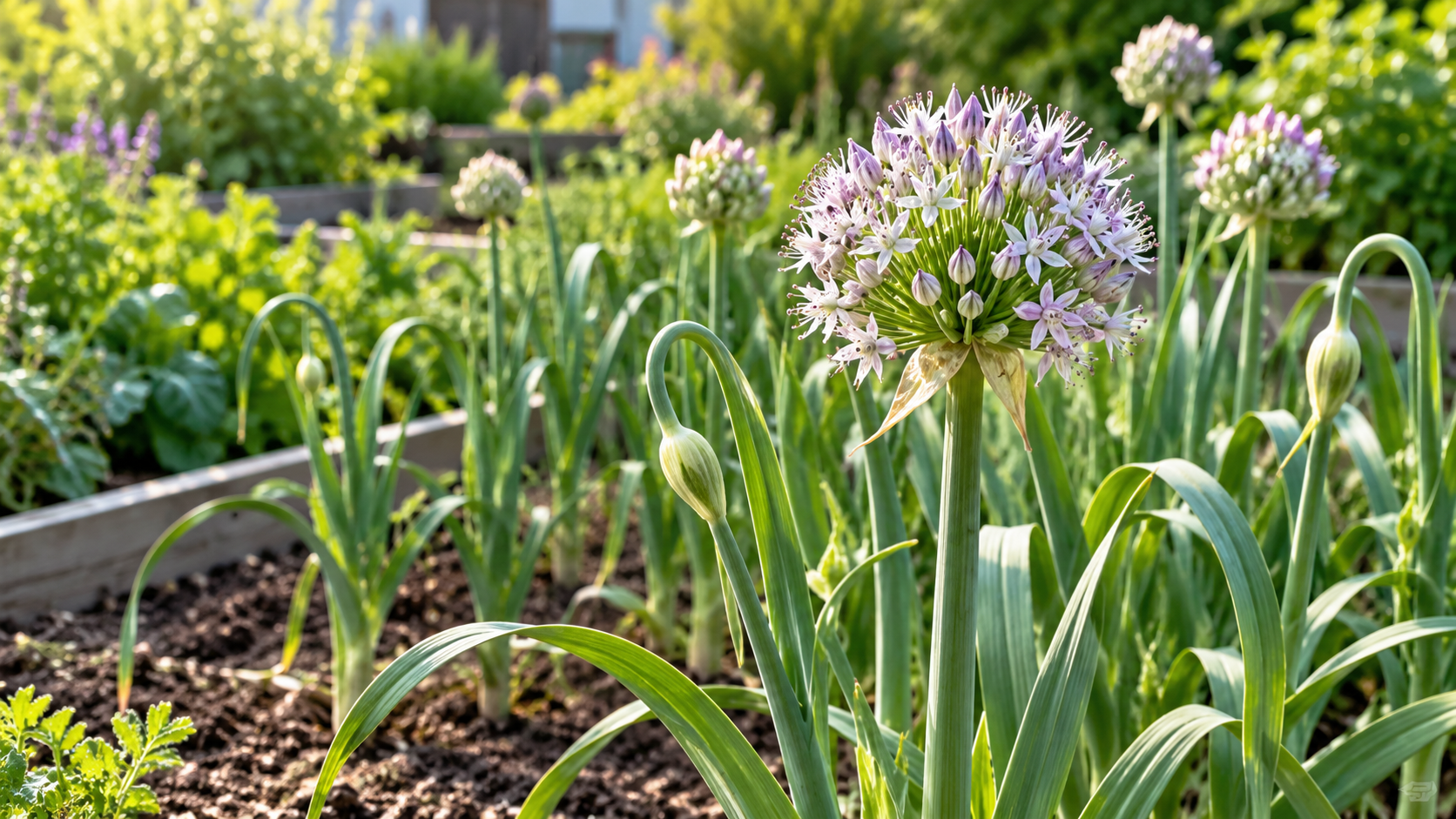
A flowering garlic plant is generally a garlic or related Allium that has progressed from leafy growth into production of a central flowering stalk and flower head.
The exact appearance and use depend on what you are growing. Some plants are primarily grown for edible bulbs, some for greens and scapes, while ornamental alliums are selected mainly for their flowers.
True Garlic
True garlic is primarily grown for bulbs and, depending on the type, edible scapes. As the plant matures, a central flower stalk may develop from the foliage.
Garlic Chives
Garlic chives are grown mainly for their edible leaves. Their flowers are typically star-shaped and white, giving them a different appearance from many ornamental alliums.
Ornamental Alliums
Ornamental alliums are grown primarily for decorative value. Many develop prominent spherical flower heads and can create a dramatic architectural feature in a garden.
| Plant Type | Primary Use | Flower Style |
|---|---|---|
| True Garlic | Bulbs and scapes | Tight flower clusters |
| Garlic Chives | Edible leaves | Star-shaped white blooms |
| Ornamental Allium | Decorative display | Large spherical flower heads |
Tip 1: Start With the Right Flowering Garlic Plant
Successful flowering garlic plant care begins with choosing the right plant for your goal.
If you want a culinary harvest, choose garlic intended for edible bulbs, greens, or scapes. If your main goal is a dramatic flower display, an ornamental allium may be more appropriate.
Choose Healthy Cloves and Bulbs
When starting with cloves or bulbs, look for firm, plump planting material without obvious mold, severe shriveling, or soft damaged areas.
Healthy starting material gives the developing roots and shoots a stronger beginning.
Inspect Established Plants Carefully
If you are buying an established flowering garlic plant, examine the entire plant rather than looking only at the flowers.
Healthy foliage should appear reasonably upright and vigorous. Avoid specimens showing extensive yellowing, severe wilting, widespread brown damage, or soft tissue around the stem base.
Check Flower Stalks
If the plant already has a developing flower stalk, check that it appears firm and structurally sound.
A severely limp or damaged stalk may indicate stress or physical injury.
Tip 2: Understand the Garlic Plant Growth and Flowering Cycle
Understanding the growth cycle helps you recognize what is normal as your flowering garlic plant develops.
Watch the Plant Progress From Sprouting to Flowering
Growth begins when the planted clove produces a green shoot. The plant then develops foliage that captures light and supports continued growth.
As a flowering plant matures, a central stalk may emerge and eventually carry the developing flower structure.
Recognize the Flower Stalk
A developing flower stalk rises from the central growth of the plant. As it develops, the structure at its tip eventually becomes more obvious.
This transition represents a change from primarily vegetative growth toward reproduction.
Watch for Stress-Related Early Flowering
The source distinguishes normal mature flowering from flowering triggered too early by environmental stress.
If a plant rushes toward flowering while the foliage remains unusually small or weak, review recent changes in temperature, light, and general growing conditions.
Set Realistic Expectations for Container Garlic
A container-grown plant can provide attractive foliage, flowers, and potentially edible greens or scapes, but indoor conditions do not always produce large bulbs.
Limited root space and differences in seasonal conditions can affect bulb development.
Tip 3: Give a Flowering Garlic Plant Plenty of Light
Light supports the foliage that powers the development of your flowering garlic plant.
The source recommends approximately six to eight hours of bright sunlight each day for strong growth.
Choose a Bright Position
Outdoors, choose a location with plenty of suitable sunlight.
For indoor container growing, a bright window can provide the stronger light garlic needs. The source specifically suggests south- or west-facing exposure where appropriate.
Use Supplemental Light When Needed
If natural indoor light is inadequate, a suitable full-spectrum grow light can supplement the available sunlight.
Weak, stretched, leaning growth can be a sign that the plant needs more useful light.
Our indoor light guide explains how to evaluate different light conditions.
Rotate Indoor Containers
Plants growing near a window can lean toward the strongest light source.
Rotating the container periodically can encourage more balanced growth, although rotation cannot compensate for severely inadequate light.
Watch for Excessive Heat Through Glass
Strong light is useful, but intense afternoon heat through glass can stress foliage.
If leaves show scorching or heat stress, adjust the plant’s position while preserving as much useful light as possible.
Tip 4: Use Well-Draining Soil and the Right Container
The root environment is fundamental to healthy flowering garlic plant growth.
Choose a Container With Drainage Holes
Container-grown garlic needs functional drainage holes so excess water can escape from the root zone.
A decorative container without drainage can make moisture management unnecessarily difficult.
Give Roots Enough Depth
The source recommends a container approximately eight to ten inches deep to provide room for root development.
The exact container should also suit the number of cloves you intend to grow.
Use a Loose Growing Medium
The source combines potting soil, compost, and perlite to create a mixture that provides structure, nutrients, and aeration.
The most important goal is a loose medium that retains useful moisture without remaining saturated around the roots.
Read our soil mix guide to learn more about balancing drainage, moisture retention, and aeration.
FREE PATCH PLANTS TOOL
How Much Soil Does Your Garlic Planter Need?
If you are preparing a rectangular container or raised bed for your flowering garlic plant, use the free Patch Plants Soil Calculator to estimate how much growing medium you need.
Then use our soil mix guide to understand how to build a better-draining root environment.
Avoid Dense Garden Soil in Containers
Heavy soil can compact inside a container and remain wet for too long.
Choose a proper container growing medium rather than filling pots directly with dense garden soil.
Tip 5: Plant Garlic Cloves Correctly
Correct planting gives roots space to develop and allows the green shoot to reach the surface efficiently.
Keep the Papery Skin Intact
Separate healthy cloves carefully from the bulb while leaving the protective papery skin around each clove intact.
Plant With the Pointed End Facing Up
Place each clove with the pointed end facing upward.
The source recommends covering the clove with approximately two inches of soil.
Give Plants Enough Space
The source recommends spacing cloves about four inches apart to provide room for growth and improve airflow.
Avoid packing too many cloves into a small container simply to increase the number of plants.
Water Thoroughly After Planting
After planting, water the growing medium evenly until excess moisture drains from the bottom.
This helps settle the medium around the clove and removes large air pockets.
Move the Container Into Suitable Light
Place the planted container where developing shoots can receive consistent light.
If natural light is limited, supplemental lighting can help support stronger growth.
Tip 6: Water a Flowering Garlic Plant Without Causing Root Problems
Watering a flowering garlic plant should be based on the condition of the growing medium rather than a rigid calendar.
Check the Top Layer of Soil
The source recommends checking approximately the top inch of soil before watering.
If this layer still feels noticeably moist, the plant may not need additional water yet.
Water the Root Zone Thoroughly
When watering is necessary, apply enough water to moisten the root zone and allow excess moisture to escape through the drainage holes.
Our complete watering guide explains why checking actual soil conditions is more useful than relying on a fixed schedule.
Reduce Water When Growth Slows
When temperatures and light levels decrease or flowering and active growth slow, the growing medium may dry more slowly.
Adjust watering according to actual soil conditions rather than continuing the same routine automatically.
Recognize Possible Overwatering
Warning signs described in the source include yellowing leaves, soft stems, and unpleasant or sour-smelling soil.
If these symptoms appear alongside persistently wet soil, review drainage and watering practices.
Our overwatering guide can help you investigate further.
Recognize Possible Underwatering
Wilted foliage, very dry soil, and growing medium pulling away from the sides of the container can indicate that the plant has become too dry.
Always check the soil rather than diagnosing a moisture problem from one symptom alone.
Tip 7: Feed Flowering Garlic Plants During Active Growth
Nutrition helps support foliage, stems, roots, and flowering, but more fertilizer does not automatically produce a healthier flowering garlic plant.
Feed During Active Vegetative Growth
The source recommends a balanced fertilizer while the plant is actively developing foliage and stems.
Apply fertilizer according to its label rather than making the solution stronger in an attempt to accelerate growth.
Use Compost or Mild Fertilizer in Containers
Container plants grow in a limited volume of soil, so available nutrients can become depleted over time.
Compost or an appropriate mild fertilizer can help replenish nutrients during active growth.
Avoid Excessive Nitrogen During Flowering
As the plant begins producing its flower stalk, avoid excessive nitrogen applications.
Too much nitrogen can favor leafy growth instead of supporting a balanced flowering plant.
Watch for Fertilizer Buildup
Repeated fertilizer applications can leave soluble salts in container soil.
The source recommends occasionally allowing plain water to run thoroughly through the growing medium and drain away to help reduce accumulated salts.
Tip 8: Support a Garlic Plant in Bloom
A garlic plant in bloom can develop a tall flower stalk that becomes increasingly top-heavy as the flower head matures.
Recognize Scapes and Developing Flowers
A flowering stalk emerges from the central portion of the plant. As it develops, a protective sheath forms around the flower structure before the bloom opens.
Stake a Leaning Flower Stalk
If a tall stalk begins leaning significantly, use a simple stake for support.
Insert the stake carefully so you do not unnecessarily damage the bulb or roots, and attach the stalk using a loose tie rather than binding it tightly.
Deadhead When Seed Production Is Not Your Goal
If you do not want the plant to produce seed, remove the flower after it begins fading.
Use clean, sharp tools and avoid damaging healthy surrounding foliage.
Leave Flowers When You Want Ornamental Value
You can leave flower heads attached when their decorative appearance is part of the reason you are growing the plant.
The source also notes that leaving flowers in place allows seed heads to mature naturally.
Protect Open Flowers
Open blooms can be vulnerable to strong drafts, heavy rain, and extreme heat.
Container plants can be repositioned when necessary to protect the flowers from particularly harsh conditions.
Tip 9: Keep Indoor Flowering Garlic Plants Healthy
Indoor flowering garlic plant care requires balancing light, temperature, airflow, soil condition, and the plant’s natural growth cycle.
Maintain Stable Growing Conditions
The source recommends indoor temperatures around 60°F to 70°F while maintaining reasonable air circulation.
Avoid placing the plant directly beside heating vents, air conditioners, or extremely cold windows.
Maintain Airflow
Gentle air circulation helps prevent foliage from remaining persistently damp and stagnant.
Do not crowd numerous plants tightly together if doing so prevents air from moving around their leaves.
Refresh Depleted Growing Medium
After a complete growth cycle, container soil may need refreshing before another planting.
Adding fresh growing medium or suitable compost can restore structure and nutrients for the next crop.
Grow Garlic Greens When Full Bulbs Are Not Practical
If your indoor conditions do not support large bulb development, you can focus on growing useful foliage instead.
The source suggests harvesting garlic greens while leaving enough growth at the base to support continued development.
Adjust Care When Growth Slows
Some garlic varieties naturally experience periods of slower growth.
When the plant is no longer actively growing, reduce water and fertilizer according to the plant’s actual condition rather than maintaining an active-growth routine indefinitely.
Tip 10: Troubleshoot Yellow Leaves, Pests, and Poor Flowering
Even a well-cared-for flowering garlic plant can occasionally develop problems. Early observation makes troubleshooting easier.
Yellow Leaves
Yellow foliage can be associated with excessive moisture, insufficient light, or nutrient imbalance.
Start by checking the soil. If it remains soggy for long periods, improve moisture management and drainage.
Our yellow leaves guide can help you evaluate the problem systematically.
Root Problems
Persistently saturated soil can create poor conditions around the roots.
If you notice soft growth, declining foliage, or suspicious root tissue, review our root rot guide.
Common Pests
The source identifies aphids, thrips, and fungus gnats among pests that can affect indoor garlic.
Inspect foliage regularly, particularly when plants are growing close together indoors.
Improve Airflow Around Flowers
Persistently stagnant, humid conditions can encourage fungal problems around foliage and flowers.
Provide enough space for air to circulate and avoid leaving flowers constantly wet.
Weak Stems or Small Flowers
If flower stalks appear weak or blooms are disappointing, check the light conditions first.
Inadequate useful light can reduce the energy available for stronger flowering growth.
Remove Severely Damaged Tissue
Use clean, sanitized tools to remove severely damaged, brown, or mushy plant tissue when necessary.
For a plant showing widespread decline, use our plant rescue guide to work through possible causes.
| Problem | What to Check | Possible Adjustment |
|---|---|---|
| Yellow leaves | Moisture, light, nutrition | Correct the underlying growing condition |
| Soft stems | Wet soil and root condition | Improve drainage and reassess watering |
| Weak flower stalk | Light and structural support | Improve suitable light and stake if needed |
| Poor flowering | Light, stress, fertilizer | Stabilize care and review feeding |
| Fungus gnats | Persistently moist growing medium | Review moisture and drainage |
Tip 11: Harvest and Enjoy Your Flowering Garlic Plant Safely
A flowering garlic plant can potentially provide greens, scapes, flowers, or bulbs depending on the plant’s identity and how it was grown.
Harvest Garlic Greens Carefully
The source recommends avoiding removal of more than about one-third of the foliage at one time.
Leaving sufficient foliage allows the plant to continue photosynthesizing and supporting its remaining growth.
Harvest Edible Scapes
For suitable culinary garlic, the flowering scape can be harvested when it begins curling.
Scapes can become tougher as they mature, so the source recommends harvesting while they are still relatively tender.
Confirm Plant Identity Before Eating It
Do not assume every plant sold under an Allium-related common name should automatically be treated as a food crop.
Confirm the exact identity of the plant and how it was grown before consuming foliage, scapes, flowers, or bulbs.
Consider Previous Treatments
Do not eat plant material that has been treated with products intended only for ornamental plants or grown in contaminated soil.
This is especially important when purchasing an established ornamental plant whose previous treatment history may not be known.
Wash Harvested Plant Material
Rinse suitable edible greens and scapes before using them in cooking.
This helps remove soil and surface debris.
Enjoy Culinary and Decorative Uses
Depending on the confirmed plant type, suitable edible scapes and greens can be used in cooking, while attractive flower stalks can also provide ornamental value.
Garlic can contribute flavor and nutrients to a balanced diet, but avoid exaggerated health or medical claims about what the plant can do.
Flowering Garlic Plant Care by Growth Stage
| Growth Stage | Main Priority | What to Watch |
|---|---|---|
| Newly planted cloves | Drainage and moisture | Saturated soil or damaged cloves |
| Leafy growth | Light and balanced nutrition | Weak, pale, or stretched growth |
| Flower stalk development | Light and support | Leaning or weak stalks |
| Flowering | Stable conditions | Heat, drafts, excessive nitrogen |
| Growth slowing | Reduced inputs | Overwatering and unnecessary feeding |
Common Flowering Garlic Plant Care Mistakes
- Assuming true garlic, garlic chives, and ornamental alliums are identical.
- Using unhealthy, moldy, or damaged cloves.
- Growing garlic in insufficient light.
- Using a container without drainage holes.
- Filling containers with dense soil that remains wet.
- Planting cloves upside down.
- Overcrowding multiple cloves in a small container.
- Watering on a rigid schedule without checking the soil.
- Applying excessive nitrogen once flowering begins.
- Ignoring tall flower stalks that need support.
- Eating unidentified or ornamentally treated plants.
Flowering Garlic Plant Care Checklist
- Confirm the exact type of garlic or Allium you are growing.
- Start with healthy cloves, bulbs, or established plants.
- Provide plenty of suitable light.
- Use loose, well-draining growing medium.
- Choose containers with functional drainage holes.
- Plant cloves with the pointed end facing upward.
- Provide enough spacing for airflow and development.
- Check soil moisture before watering.
- Feed appropriately during active growth.
- Avoid excessive nitrogen during flowering.
- Support tall flower stalks when necessary.
- Maintain reasonable airflow.
- Check foliage regularly for pests and disease symptoms.
- Confirm plant identity and treatment history before eating it.
KEEP LEARNING WITH PATCH PLANTS
Keep Your Flowering Garlic Growing Strong
Explore more growing advice in our Outdoor Plants guides and use the Plant Care library when you need help troubleshooting your plants.
For container preparation, use the Patch Plants Soil Calculator to estimate soil volume for rectangular planters, then review our soil mix guide for drainage and aeration advice.
If your garlic develops moisture-related problems, see our watering guide, overwatering guide, and root rot guide.
Frequently Asked Questions About Flowering Garlic Plants
Is flowering garlic edible?
Some flowering garlic plants have edible leaves, scapes, flowers, or bulbs, but you should confirm the exact plant identity first. Also make sure the plant has not been treated with products intended only for ornamental plants.
Can I grow a flowering garlic plant indoors?
Yes. Garlic can be grown in containers indoors when it receives sufficient light, good drainage, appropriate moisture, and enough root space. However, indoor conditions may not always produce large bulbs.
How much light does a flowering garlic plant need?
The source recommends approximately six to eight hours of bright sunlight per day. Indoor plants should be placed in a suitably bright location or given supplemental light when natural light is inadequate.
What soil is best for flowering garlic plants?
Use loose, well-draining growing medium. The source uses a combination of potting soil, compost, and perlite to provide structure, nutrients, and aeration.
How often should I water flowering garlic?
Check the soil instead of following a rigid schedule. The source recommends watering when approximately the top inch becomes dry, then watering thoroughly enough for excess moisture to drain from the container.
Why are my garlic leaves turning yellow?
Yellow leaves can be associated with excessive moisture, insufficient light, or nutrient imbalance. Check soil moisture, drainage, light, and the plant’s overall condition before making major changes.
Why is my flowering garlic not blooming?
Review the plant’s light, maturity, nutrition, temperature, and overall growing conditions. Insufficient useful light or environmental stress can contribute to weak or delayed flowering.
Should I cut the flower stalk from garlic?
That depends on your goal. If you are growing suitable culinary garlic for scapes or bulb production, the stalk may be harvested. If you are growing the plant for its flowers or want seed development, you can leave the flower stalk attached.
Can I grow flowering garlic from store-bought cloves?
Some grocery-store garlic cloves may sprout, but the source notes that commercially sold cloves can sometimes be treated in ways that affect growth. Planting material intended for growing provides a more predictable starting point.
Can flowering garlic grow in containers?
Yes. Use a container with functional drainage holes and sufficient depth for root development. Avoid overcrowding and use a loose growing medium rather than dense garden soil.
What pests can affect flowering garlic plants?
The source identifies aphids, thrips, and fungus gnats among pests that may affect indoor plants. Regular inspection, suitable airflow, and appropriate moisture management can help you identify problems early.
Final Thoughts
A healthy flowering garlic plant begins with correct identification and suitable growing conditions. Whether you are growing true garlic for bulbs and scapes, garlic chives for edible leaves, or an ornamental Allium for its dramatic flowers, knowing what you have makes every other care decision easier.
Give the plant plenty of suitable light, loose and well-draining soil, enough root space, and water based on actual soil moisture. Feed during active growth without overusing fertilizer, and support tall flower stalks when necessary.
When your flowering garlic plant begins blooming, decide whether your priority is ornamental flowers, edible scapes, seed development, or bulb growth. That goal can guide how you manage the flower stalk.
Finally, never assume that every decorative Allium is automatically suitable for your kitchen. Confirm the plant’s identity and growing history before eating it, especially if it was originally sold as an ornamental plant.
Continue learning with Patch Plants, explore our Outdoor Plants guides, browse the Plant Care library, or use our Soil Calculator when preparing your next rectangular planter or raised bed.