Poinsettia care is simple once you know what the plant needs: bright indirect light for at least six hours a day, water only when the top 2–3 cm (about an inch) of soil feels dry, a steady temperature of around 18–21°C (65–70°F), and protection from cold draughts and hot radiators. Remove the decorative foil so water can drain, and a healthy poinsettia will keep its red bracts for six weeks or more, well past Christmas.
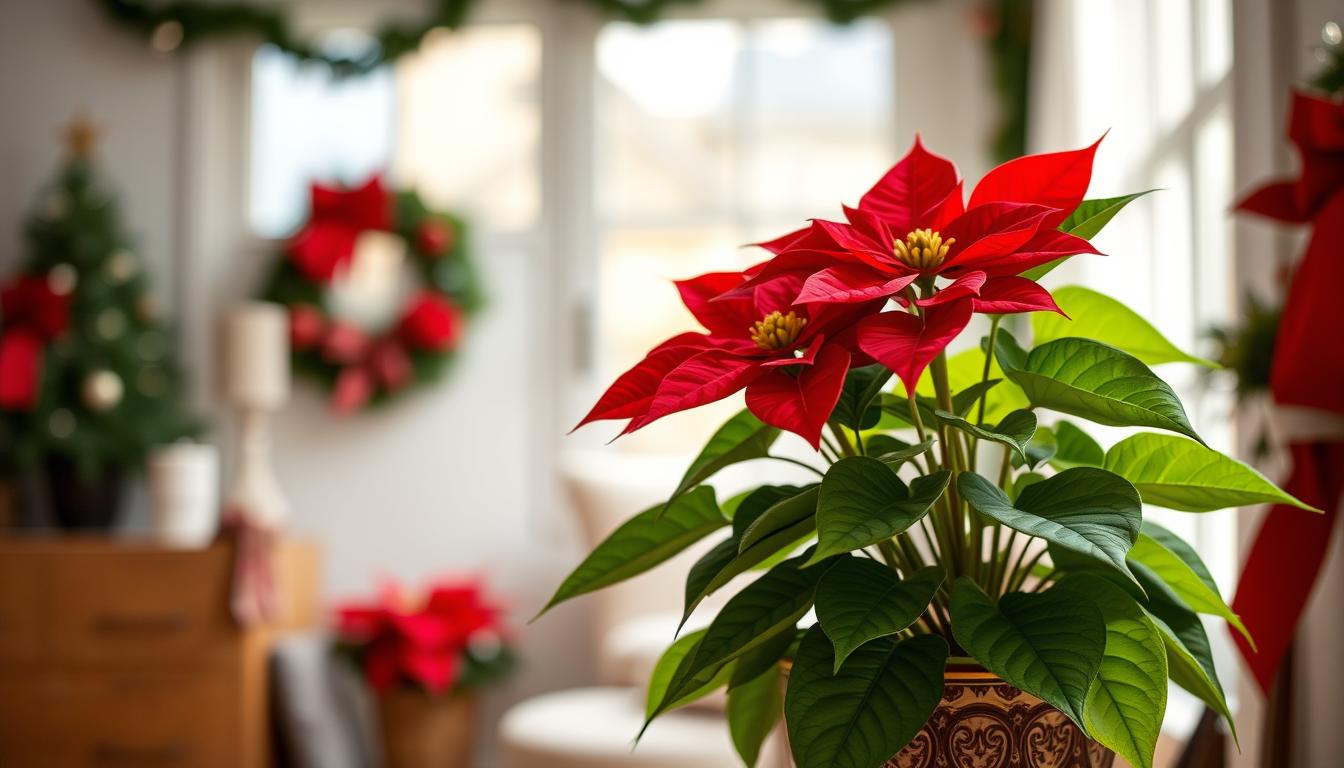
The bright red “petals” of a poinsettia (Euphorbia pulcherrima) are not flowers at all. They are coloured leaves called bracts. The true flowers are the tiny yellow-green buds, called cyathia, in the centre of each bract cluster. This guide covers how to choose a healthy plant, where to put it, how to water it, how to keep it looking good through the holidays, and how to grow it on and make it turn red again next year.
Here at Patch Plants, botanist Sawera Shahid sees the same story every January: poinsettias thrown away after a few weeks because of cold draughts or a soggy foil wrapper. With a little understanding of where the plant comes from, a warm, bright spot in its native Mexico and Central America, it can easily last the whole winter. Read more about our approach on the About Patch Plants page.
Key Takeaways
- The coloured parts are bracts (modified leaves); the small yellow cyathia in the centre are the real flowers.
- Give it bright indirect light, ideally near a sunny window but not touching the glass.
- Water when the top 2–3 cm of soil is dry, let it drain, and never leave it standing in water or foil.
- Keep it at about 18–21°C by day and no lower than about 15°C at night, away from draughts and heaters.
- Cold damage, overwatering and sudden changes are the main causes of leaf and bract drop.
- To make it turn red again, give it 14 hours of complete darkness every night from about early October.
- Poinsettia is only mildly toxic: its milky sap can irritate the mouth, stomach and skin of pets and people.
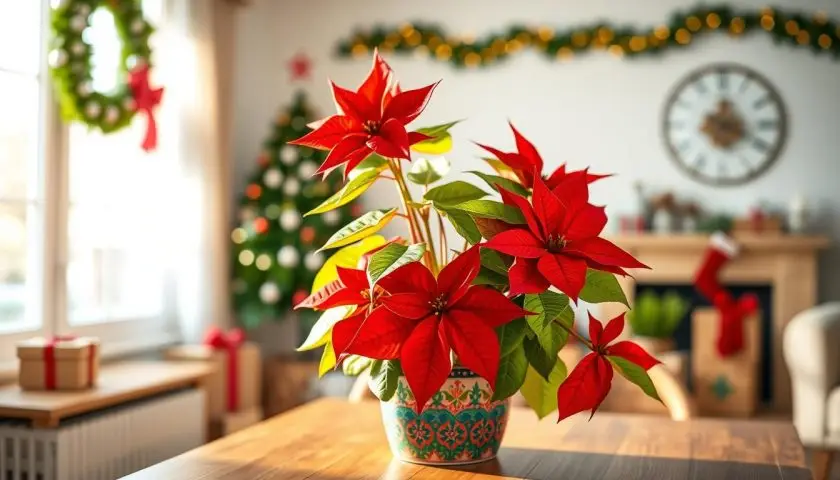
Poinsettia Care at a Glance
| Need | What poinsettia likes | Why it matters |
|---|---|---|
| Light | Bright indirect light, 6+ hours a day | Low light causes leaf drop and faster fading |
| Water | When the top 2–3 cm of soil is dry | Wet soil leads to root rot; bone-dry soil causes wilting |
| Temperature | 18–21°C (65–70°F) by day, not below 15°C (60°F) at night | Cold and sudden changes trigger leaf drop |
| Humidity | Moderate; avoid very dry air near heaters | Dry air causes crispy edges |
| Drainage | Pot with holes; remove or pierce foil | Trapped water rots roots quickly |
| Feeding | None while in colour; feed from spring to autumn | Fertilizer does not lengthen bract colour |
| Pets | Mildly toxic sap | Can cause mouth and stomach irritation |
How to Choose a Healthy Poinsettia
A good plant from the shop will last far longer at home. Look for:
- Tight, fresh cyathia: the small yellow-green buds in the centre should be closed or only just opening. If they have dropped or turned brown, the plant is past its best.
- Full, evenly coloured bracts with no brown edges or bruising.
- Dark green leaves right down to the soil, with no yellowing or bare lower stems.
- Firm, upright stems and soil that is moist but not soggy.
- No pests: check under the leaves for whiteflies, which fly up when you touch the plant.
Avoid plants displayed by automatic doors or outside the shop, or squashed in plastic sleeves for a long time. The red poinsettia is the classic choice, but pink, white, cream and marbled types need exactly the same care; see our list of indoor plants with red flowers for other festive options.
Protect It on the Way Home
Poinsettias are tropical plants, and even a short walk in freezing air can damage the leaves. In cold weather, ask for the plant to be wrapped in a paper or plastic sleeve, carry it straight to a warm car, and never leave it in a cold car while you run other errands. Unwrap it as soon as you get home, because sleeved plants quickly drop leaves.
Where to Put Your Poinsettia
Choose a bright spot with indirect or gentle filtered sun for at least six hours a day, such as near an east-, west- or south-facing window. Behind a sheer curtain is ideal for a south-facing window in mild weather. Make sure the leaves and bracts don’t touch cold window glass, and keep the plant away from:
- draughty front doors and windows that are often opened,
- radiators, fireplaces and hot-air vents,
- the top of the television or other warm appliances.
A stable position matters more than a perfect one, so once you have found a good spot, try not to move the plant around. Turn the pot a quarter turn every few days so it grows evenly. Our complete guide to indoor light explains how to judge how bright each window really is.
Pot, Drainage and Soil
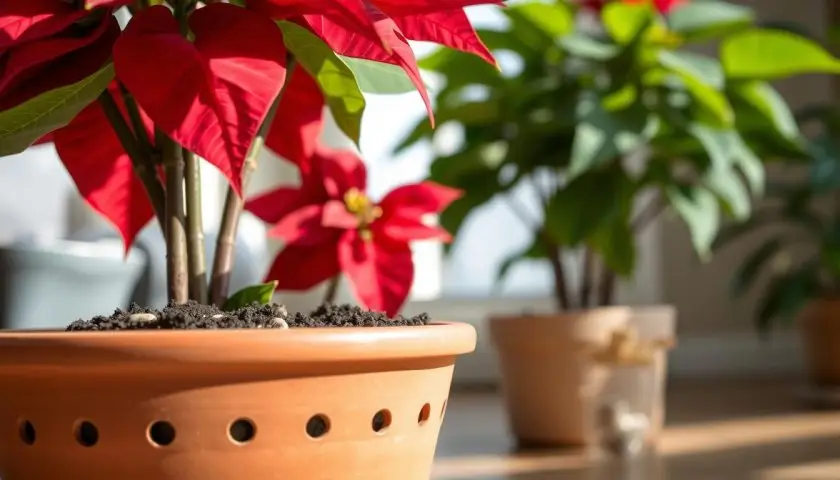
The decorative foil or plastic wrapper on most poinsettias is the single biggest threat to the plant, because it traps water around the roots. Either remove it completely, or cut several holes in the bottom and stand the pot on a saucer. Always make sure the plant is not sitting in water.
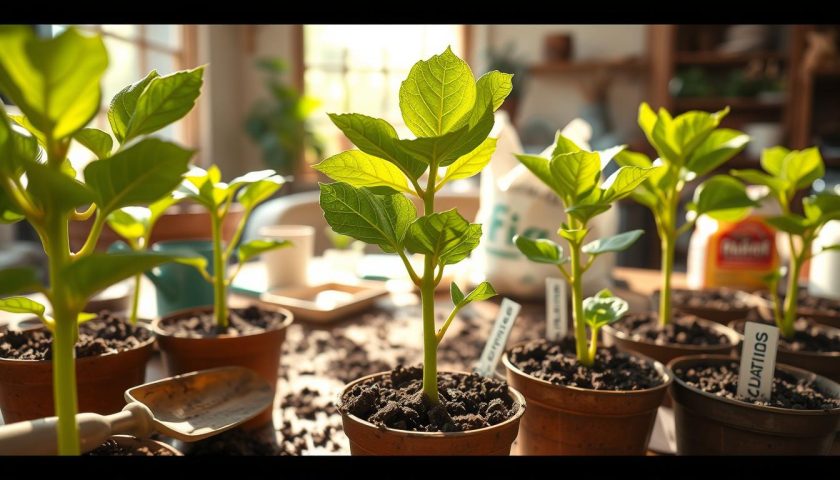
There is no need to repot a poinsettia while it is in colour; repotting then stresses the plant and can cause leaf drop. Leave it in its nursery pot unless the pot has no drainage holes. In spring, if you keep the plant, move it to a pot one size larger with a free-draining houseplant compost mixed with some perlite. Our soil mix guide and how to repot a plant guide show how.
How to Water a Poinsettia
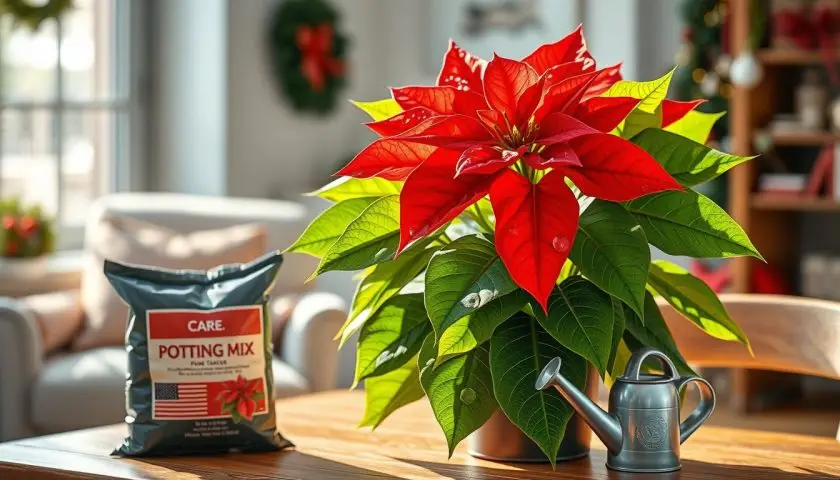
Poinsettias like evenly moist soil but rot quickly if they stay wet. Instead of watering on a fixed day, check the soil every couple of days.
- Check the soil: push a finger 2–3 cm into the compost. If it feels dry, water; if it is still damp, wait. A pot that feels light when lifted also needs water.
- Water thoroughly: pour room-temperature water evenly over the soil until it runs out of the drainage holes.
- Drain: after 10–15 minutes, empty the saucer or the foil so the roots are not left in water.
In a warm, heated room this may mean watering every few days; in a cooler room, once a week or less. Small pots dry out faster than large ones.
| Symptom | Likely cause | What to do |
|---|---|---|
| Wilting with dry, light soil | Underwatering | Water thoroughly; the plant usually recovers within hours |
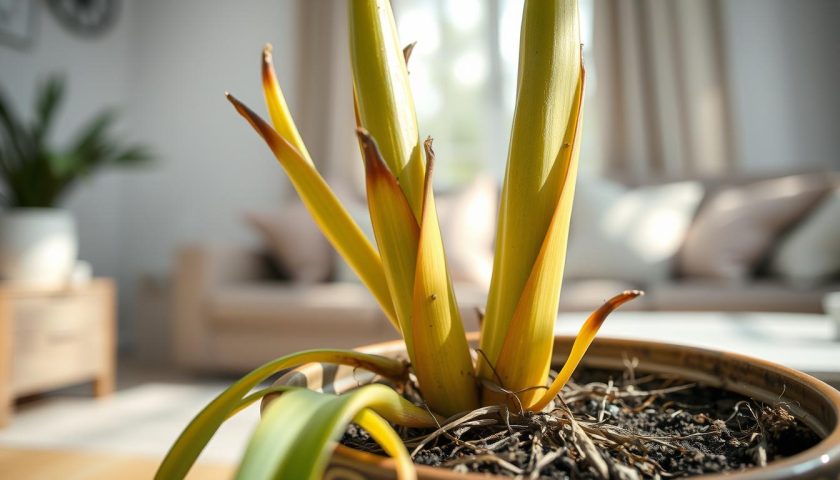
| Yellow lower leaves dropping, soil wet | Overwatering or blocked drainage | Remove foil, empty saucers, let the top dry before watering |
| Wilting even though the soil is wet | Root rot | Check the roots; trim soft brown roots and improve drainage |
For more on getting watering right, see our complete watering guide and our signs of overwatering guide.
Temperature and Humidity
Poinsettias do best at normal room temperatures of about 18–21°C (65–70°F) during the day, and slightly cooler nights, ideally not below 15°C (60°F). A slightly cooler room helps the bracts last longer, but cold below about 10°C (50°F) damages the leaves, and frost kills the plant.
Central heating makes the air dry, which can cause crispy leaf edges. Group the poinsettia with other houseplants or run a humidifier in the room rather than misting, because wet bracts can develop grey mould. Our humidity hacks guide has simple ideas.
How to Keep a Poinsettia Red Through Christmas
A healthy poinsettia bought in late November or early December can stay colourful into January or February. To get the longest display:
- keep it in bright light with no harsh midday sun,
- keep the temperature steady and avoid draughts,
- water carefully and never let it sit in water,
- don’t feed it while it is in colour; fertilizer does not make bracts last longer,
- keep it away from ripening fruit, which releases ethylene gas that can speed up leaf and bract drop.
Poinsettias look lovely with other seasonal plants. See our guides to Christmas cactus care indoors, cyclamen care and the outdoor Christmas rose, and our ideas for decorating your home with festive plants.
Poinsettia Care After Christmas
Your poinsettia does not have to go in the compost bin in January. It is a shrub in the wild, and with some care it can live for years.
| When | What to do |
|---|---|
| January to March | Keep in bright light, water when the top of the soil is dry. Bracts gradually fade or fall. |
| Late March to April | Water a little less to let the plant rest. Cut stems back to about 15–20 cm (6–8 in). |
| May | Repot into a slightly larger pot when new shoots appear. Start feeding every 2–4 weeks with a balanced houseplant fertilizer. |
| Early summer | Once nights stay above about 13°C (55°F), it can go outside in a sheltered spot with morning sun and afternoon shade. |
| June to late August | Pinch out the tips of new shoots every few weeks to make a bushier plant. Stop pinching by the end of August. |
| September | Bring it indoors before nights fall below about 13°C, checking carefully for pests first. |
| October to December | Give it the long nights it needs to colour up (see below). |
When moving it outdoors, introduce it to brighter light gradually over a week or two so the leaves don’t scorch.
How to Make a Poinsettia Turn Red Again
Poinsettias are short-day plants: they only form coloured bracts when the nights are long. Indoors, even a few minutes of lamplight at night can stop this process, which is why most poinsettias stay green the following year.
According to NC State Extension, the plant needs a steady 14 hours of uninterrupted darkness each night, starting around 1 October, with colour typically appearing in about 6–8 weeks.
- Start in late September or early October.
- Give 14 hours of total darkness every night, for example from 5 pm to 7 am, in a dark cupboard or under a light-proof box.
- Give bright light by day: 6–10 hours of bright light near a sunny window.
- Keep to the routine every single night, with no lamps, TV glow, streetlights or opening the cupboard door.
- Stop once the bracts are well coloured, usually by late November or early December, then display it as normal.
Keep watering normally and feeding lightly during this period, and keep night temperatures around 16–18°C. Reblooming takes patience, and home-grown plants are often smaller and less perfect than greenhouse plants, but the result is very rewarding.
Pests and Diseases
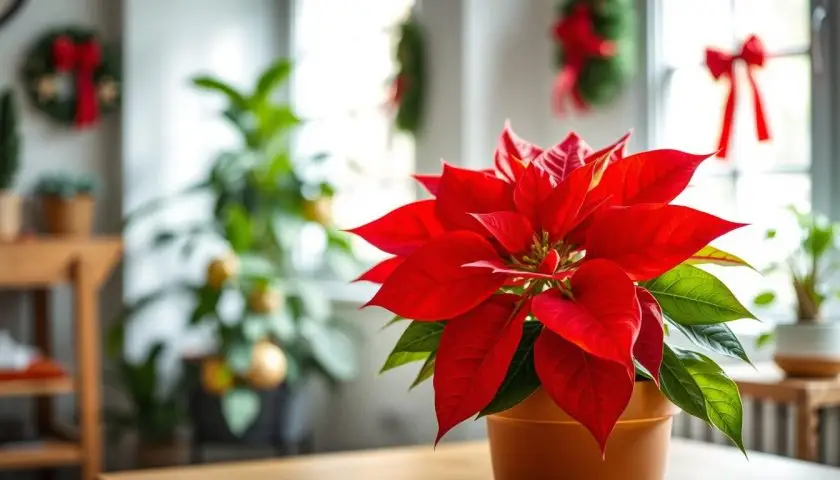
The most common poinsettia pest is whitefly: tiny white insects that fly up when the plant is disturbed and leave sticky honeydew. Mealybugs, aphids, fungus gnats and spider mites can also appear. Check the undersides of the leaves regularly, wipe or rinse pests off, use yellow sticky traps for whiteflies, and treat persistent infestations with insecticidal soap. Our guide to white spots on plant leaves helps identify mealybugs and other problems.
Root rot from wet soil and grey mould (botrytis) on damp bracts are the main diseases. Good drainage, careful watering, gentle airflow and dry foliage prevent both.
Common Poinsettia Problems and Fixes
| Problem | Likely cause | Solution |
|---|---|---|
| Sudden leaf drop | Cold draught, temperature change, low light | Move to a warm, bright, stable spot |
| Black or water-soaked leaves | Cold damage | Remove damaged parts; keep above 15°C |
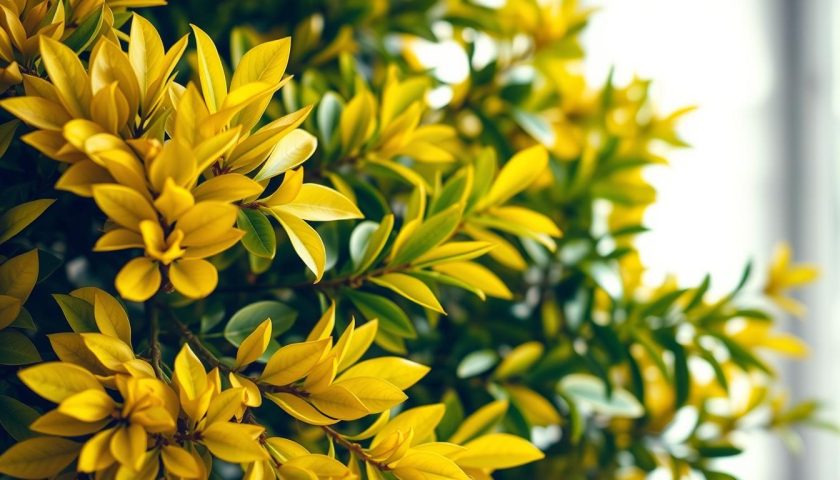
| Yellow leaves | Overwatering, poor drainage, low light | Remove foil, water less often, improve light |
| Crispy brown edges | Dry air, heat, underwatering | Move away from heaters, water when dry, raise humidity |
| Bracts fading early | Low light, heat, age | Brighter, slightly cooler spot |
| Sticky leaves, tiny white insects | Whiteflies or aphids | Rinse, sticky traps, insecticidal soap |
| Leggy stems | Low light | Prune in spring and pinch in summer |
Our guides on why leaves turn yellow and how to revive a dying plant help with plants that are struggling.
Is Poinsettia Poisonous to Pets and Children?
Poinsettia’s reputation as a deadly plant is a myth. The ASPCA lists it as toxic to cats and dogs but notes that its toxicity is generally overrated: the milky sap irritates the mouth and stomach and can sometimes cause vomiting. In people, the sap can irritate the skin and eyes, and people with a latex allergy may react to it.
- Keep the plant out of reach of pets and young children.
- Wear gloves when pruning and wash your hands afterwards.
- If sap gets in the eyes or mouth, rinse with plenty of cool water and contact your doctor, vet or a poison helpline if symptoms continue.
For festive plants that are kinder to pets, see our cat-friendly plants guide and dog-friendly plants guide.
Frequently Asked Questions
How long does a poinsettia last?
With good care, the bracts usually stay colourful for six weeks or more, often into February. The plant itself is a long-lived shrub and can be kept for years if you prune it in spring and grow it on over summer.
How often should I water a poinsettia?
Water whenever the top 2–3 cm of soil feels dry, which may be every few days in a warm room or about once a week in a cooler one. Let excess water drain away and never leave the pot standing in water or foil.
Why is my poinsettia dropping its leaves?
Leaf drop is usually caused by cold draughts, sudden temperature changes, too little light, or soil that is too wet or too dry. Move it to a warm, bright, stable spot and check that water can drain freely.
How do I get my poinsettia to turn red again?
From about early October, give it 14 hours of uninterrupted darkness every night and bright light during the day. Keep this up for 8–10 weeks, until the bracts are well coloured.
Are poinsettias poisonous to cats and dogs?
They are mildly toxic. The sap can irritate a pet’s mouth and stomach and may cause vomiting, but serious poisoning is rare. Keep the plant out of reach and call your vet if your pet eats a lot of it.
Final Thoughts
A poinsettia doesn’t need special skills, just a bright, warm, stable spot, careful watering and good drainage. Take off the foil, keep it away from draughts and heaters, and it will stay festive well beyond Christmas. If you would like a challenge, keep it growing through the summer and give it long nights in autumn, and you can enjoy your own home-grown red bracts next December.