Begonia care indoors comes down to bright, filtered light out of direct sun, a free-draining peat-free compost that never dries out completely, good humidity without wet leaves, and a winter minimum of around 10 to 13°C (50 to 55°F), depending on the type. I am Sawera Shahid, a botanist at Patch Plants. Begonias are one of the largest plant genera, with over 1,000 species and some 10,000 hybrids according to the ASPCA, so the first step is knowing which kind you have.
The RHS divides begonias grown indoors into four main groups: fibrous-rooted, cane-stemmed, rhizomatous and semi-tuberous. Each has slightly different needs, so begonia care starts with identifying the group. This guide explains the 4 main types, the core begonia care that applies to all of them, how to propagate each one, and the common problems to watch for.
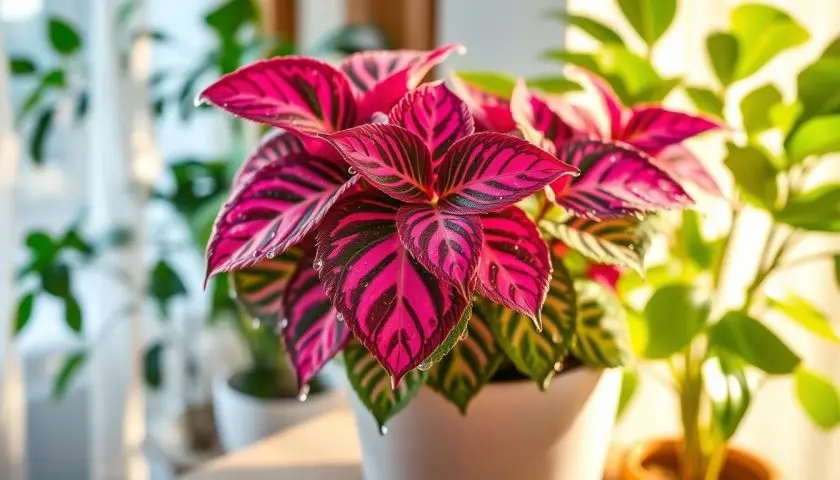
Begonia Care at a Glance
| Need | What Works |
|---|---|
| Light | Bright, filtered light; shield from direct sun |
| Compost | Peat-free multipurpose compost or peat-free John Innes No 2 |
| Water | Keep moist but well-drained; do not let it dry out completely or sit wet |
| Humidity | Good humidity from a gravel tray; avoid misting the leaves |
| Feeding | May to September |
| Winter minimum | 10 to 13°C (50 to 55°F), depending on the group |
| Pets | Toxic to dogs, cats and horses (ASPCA) |
All of the care guidance above comes from the RHS advice guide to begonias as houseplants, apart from pet safety, which comes from the ASPCA.
The 4 Main Types of Indoor Begonia
| Group | Examples | Grown For | Key Care Difference |
|---|---|---|---|
| Fibrous-rooted | Begonia metallica, B. scharffii | Mostly foliage, some flowers | Winter minimum 13°C (55°F); high-potassium feed |
| Cane-stemmed | B. maculata (polka dot begonia), ‘Lucerna’ | Spotted leaves and flower clusters | Best at 15 to 22°C (58 to 72°F); good light for sturdy canes |
| Rhizomatous | B. rex hybrids, B. masoniana | Colourful, patterned leaves | Shade in summer; high-nitrogen feed; keep water off leaves |
| Semi-tuberous | B. × hiemalis (Elatior begonias) | Winter flowers | Rest at about 7°C (45°F) after flowering; often replaced yearly |
Fibrous-rooted begonias
The RHS describes fibrous-rooted begonias as tender evergreens with upright, sometimes shrubby stems. A few are grown for their flowers, but most are valued for bold leaf shapes and silver markings. They need a winter minimum of 13°C (55°F) and bright, filtered light, and the RHS recommends feeding them from May to September with a high-potassium plant food.
Cane-stemmed begonias
Cane-stemmed begonias are woody, fibrous-rooted, evergreen tender perennials, according to the RHS. This group includes Begonia maculata, sold as the polka dot begonia, and ‘Lucerna’, which the RHS describes as having olive-green, silver-spotted leaves and pink flowers. They are best kept at 15 to 22°C (58 to 72°F) and need good light for sturdy stems and flowers, with protection from direct sun. Reduce watering in winter.
Rhizomatous begonias
These begonias grow from a creeping rootstock and are mostly grown for brightly coloured leaves. The best known are the Begonia rex hybrids (see our rex begonia care guide), which the RHS describes as evergreen perennials to about 30cm with metallic green leaves and a silver zone, available in many coloured and patterned forms. ‘Tiger Paws’ is another, with dark green, lobed leaves and pink flowers. Rhizomatous begonias need shade in summer, high humidity, and a winter minimum of 10°C (50°F), rising to 13°C (55°F) for B. rex, B. masoniana and B. bowerae. The RHS advises not to wet the leaves or crown when watering.
Semi-tuberous begonias
This group is made up of cultivars of B. × hiemalis, often sold as Elatior begonias. The RHS describes them as largely winter-flowering plants grown as florist’s pot plants. They like semi-shade, high humidity and 10 to 13°C (50 to 55°F) while in flower. After flowering, the RHS suggests resting them at about 7°C (45°F) for around six weeks, then cutting back and taking cuttings, as these plants are usually replaced each year.
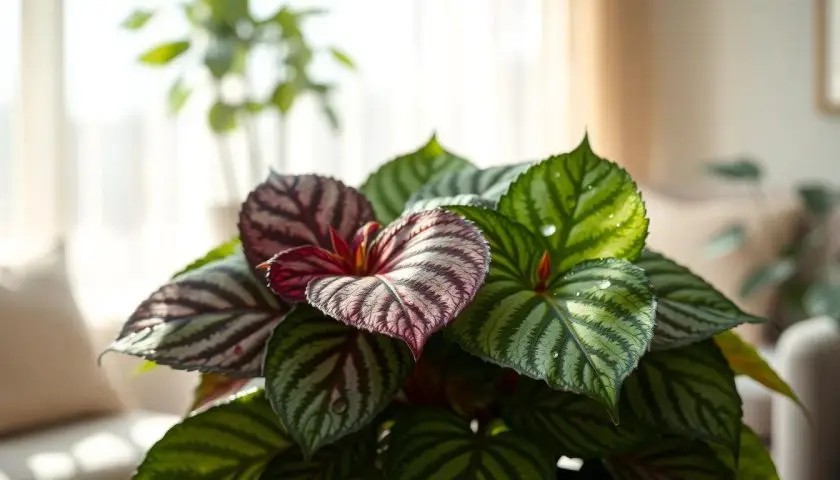
Core Begonia Care for Every Type
Light
Light is the first part of begonia care to get right. The RHS recommends bright, filtered light for begonias, with shelter from direct sun to stop the leaves scorching. A spot near an east- or west-facing window, or a little back from a sunnier one, suits most begonias. Rhizomatous types such as rex begonias need shade in summer. Our complete guide to indoor light explains how to find the right position.
Compost and pots
For begonia care in pots, the RHS suggests a peat-free multipurpose compost or peat-free John Innes No 2, kept moist but well-drained. Use a pot with drainage holes, and do not over-pot: begonia roots are fine and rot easily in a large volume of wet compost. For more on mixes, see the best soil mix for every type of plant.
Watering
Good begonia care means steady moisture. The RHS advises not letting the compost dry out completely but also avoiding overwatering. Rhizomatous types can be watered freely in summer if drainage is good, then watered less in winter, letting the surface dry before watering again. For all types, water the compost rather than the leaves. If you are not sure whether you are watering too much, our guide to signs you are overwatering will help.
Humidity
Humidity is where begonia care differs from many houseplants. Begonias like good humidity, but wet leaves invite disease. The RHS recommends standing pots on a gravel tray kept moist, with the water level just below the surface of the gravel, and warns against misting and poor ventilation, both of which encourage begonia mildew. A DIY humidity tray is an easy way to do this.
Feeding
In begonia care, feeding follows the growing season: the RHS advises feeding from May to September. Use a high-potassium plant food for fibrous-rooted and cane-stemmed begonias, which encourages flowers, and a high-nitrogen fertiliser for rhizomatous begonias grown for their leaves. Follow the dose on the packaging and stop feeding in winter.
Temperature
Temperature is the part of begonia care that catches most people out in winter. All indoor begonias are frost tender. Depending on the group, the RHS gives a winter minimum of 10 to 13°C (50 to 55°F), and an ideal range of 15 to 22°C (58 to 72°F) for cane-stemmed types. Keep begonias away from cold glass and draughts in winter, and away from radiators, which dry the air and can cause brown leaf edges.
A Simple Weekly Begonia Care Routine
Once you know your begonia’s group, a short weekly check covers most of its needs. This simple begonia care routine follows the RHS guidance above.
- Feel the compost and water if the surface is starting to dry, keeping water off the leaves and crown.
- Top up the gravel tray so the water sits just below the gravel surface.
- Look under a few leaves for mites, aphids or white powdery patches.
- Remove faded flowers and any yellow or rotting leaves to keep air moving.
- From May to September, add feed at the dose and frequency on the packaging.
Good begonia care is mostly about consistency. Sudden swings in watering, temperature or light cause more problems than any single mistake.
Pink Begonias
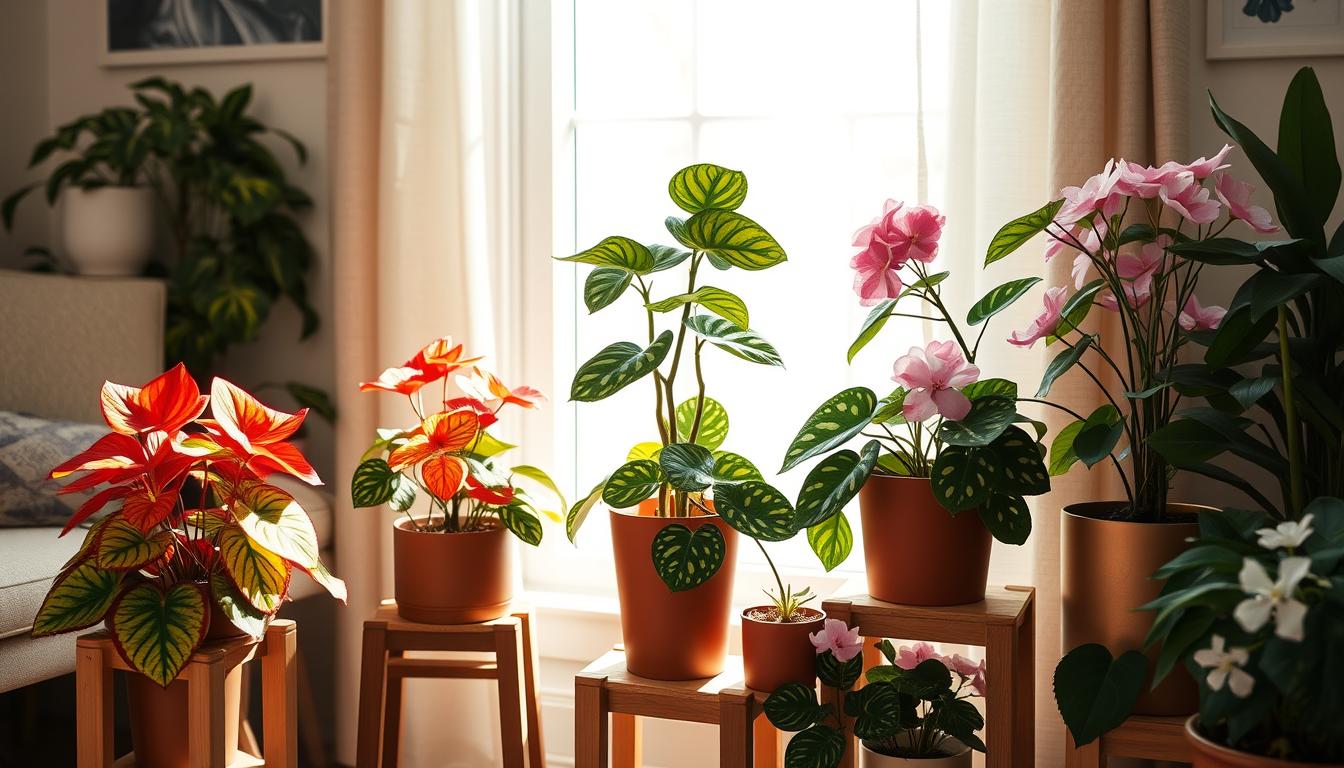
If you are looking for a begonia pink plant, there are options in almost every group. Pink-flowered types include the cane-stemmed ‘Lucerna’ and rhizomatous ‘Tiger Paws’, both described by the RHS as having pink flowers, while many Elatior begonias are sold in pink for winter colour. For pink foliage, look at the many coloured Begonia rex cultivars. Pink-leaved begonias usually keep their colour best in bright, filtered light. For more ideas, see our guide to plants with pink and green leaves.
How to Propagate Begonias
Begonias are among the easiest houseplants to propagate, and the best method depends on the group. These methods come from the RHS.
- Leaf cuttings (rex begonias and B. masoniana): in May or June, take a newly matured leaf, cut through the main veins on the underside about 2.5cm (1in) apart, lay it top side up on sandy, peat-free cuttings compost and peg it down. Keep it in a propagator at 18 to 24°C (64 to 75°F) with high humidity, and pot up the plantlets once they have two or three leaves.
- Division (rhizomatous begonias): divide in spring, making sure each piece of rhizome has at least one growing point.
- Stem cuttings (fibrous-rooted and cane-stemmed begonias): in April, take cuttings 7 to 10cm (3 to 4in) long and root them with bottom heat of 18 to 21°C (64 to 70°F).
- Basal cuttings (Elatior begonias): after the winter rest, cut back to within 15cm (6in) of the base, then take new shoots once they reach 5 to 7.5cm (2 to 3in) and root them at 18 to 22°C (65 to 71°F).
For general technique, see our guide on how to propagate houseplants, and for repotting new plants, read how to repot a plant.
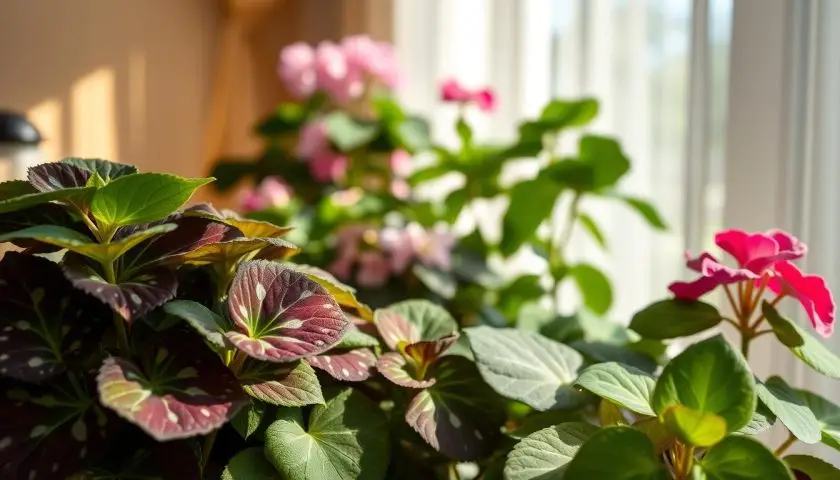
Common Begonia Care Problems
| Problem | Likely Cause (RHS) | What to Do |
|---|---|---|
| Brown leaf edges | Low humidity or too high a temperature | Use a gravel tray; move away from heat |
| Rotten leaves or leaf drop | Too much humidity, overwatering or low light | Improve air flow, water less and move to brighter light |
| Yellow leaves | Low light, or over- or under-watering | Check light and adjust watering |
| Flower buds dropping | Dry air or underwatering | Raise humidity and water more steadily |
| White powdery coating | Powdery mildew or begonia mildew | Stop misting, improve ventilation and remove affected leaves |
| Speckled leaves, fine webbing | Red spider mite | Raise humidity and treat early |
| Clusters of small insects | Aphids | Wipe off and check new growth regularly |
White coatings on leaves can have several causes; our guide to white spots on plant leaves helps you tell them apart. For mites, see spider mites on plants, and if stems collapse at the base, read about identifying and treating root rot.
Begonia Care Through the Year
| Season | What to Do |
|---|---|
| Spring | Divide rhizomatous types, take stem cuttings in April and pot on where needed. |
| Summer | Feed from May to September, shade rex begonias and take leaf cuttings in May or June. |
| Autumn | Stop feeding at the end of September and start to reduce watering for foliage types. |
| Winter | Keep above the group’s minimum, water less and enjoy Elatior flowers; rest them afterwards. |
Using Begonias Outdoors in Summer
Many begonias sold for gardens, such as wax and tuberous begonias, are grown outside in summer and need different care from the indoor groups above. The RHS notes that garden begonias grow well in partial shade and give colour until the first frosts. If you want to use them in shady containers, see our guides to container plants for shade and shade garden pots.
Are Begonias Safe for Pets?
No. The ASPCA lists begonias (Begonia spp.) as toxic to dogs, cats and horses. They contain soluble calcium oxalates, and listed signs in dogs and cats include vomiting and salivation, with kidney failure seen in grazing animals. The ASPCA notes that the most toxic part of the plant is underground, so keep pets from digging in begonia pots. Contact your vet or the ASPCA Animal Poison Control Center at (888) 426-4435 (a consultation fee may apply) if you think a pet has eaten any part of a begonia. Our guide to making your plants cat-friendly has more tips.
Frequently Asked Questions
Do begonias like sun or shade indoors?
They prefer bright, filtered light. The RHS advises shielding begonias from direct sun, which can scorch the leaves, and giving rex begonias shade in summer.
How often should I water an indoor begonia?
Keep the compost moist but well-drained, and do not let it dry out completely. Water the compost rather than the leaves, and water less in winter.
Should I mist my begonia?
No. The RHS warns that misting and poor ventilation encourage begonia mildew. Use a gravel tray with water just below the surface instead.
What is the minimum temperature for begonias?
Most indoor begonias need at least 10 to 13°C (50 to 55°F) in winter, depending on the type. Rex begonias need 13°C (55°F).
Are begonias toxic to cats and dogs?
Yes. The ASPCA lists begonias as toxic to dogs, cats and horses because they contain soluble calcium oxalates. The underground parts are the most toxic.
Final Thoughts
As a botanist, I think begonias are easiest to grow once you stop treating them as one plant. A cane-stemmed polka dot begonia, a leafy rex and a flowering Elatior come from very different groups, and good begonia care simply means matching light, feeding and winter temperature to the type you have.
Patch Plants guides aim to make begonia care simpler by giving you that kind of plant-by-plant understanding, so you can choose begonias that suit your home and keep them looking their best. For more striking leaves, browse our guide to houseplants with patterned leaves, or for flowers indoors, see house plants with white flowers.
Sources: RHS, Begonias: houseplants; RHS, Begonias: outdoors; ASPCA, Begonia.

About the author
Sawera Shahid is a botanist with an MPhil in Botany and 5+ years of writing about plants. As founder and lead writer of Patch Plants, she writes practical, science-backed guides on indoor plants, outdoor gardens and plant problems, checked against RHS and university extension advice.