Aglaonema Silver Bay is one of the easiest Chinese evergreens to grow: give it low to moderate indirect light, water when the top 2.5 to 5cm (1 to 2in) of compost is dry and keep it above about 13°C (55°F). I am Sawera Shahid, a botanist at Patch Plants, and Silver Bay is the cultivar I suggest when someone wants a large, bold foliage plant for a dim room. It was bred specifically to perform well indoors, and it shows.
This guide explains where Aglaonema Silver Bay came from, how to recognise it, and 8 easy care tips covering light, water, temperature, compost, feeding, repotting, propagation and pests. For the wider picture on the whole genus, see our Chinese evergreen care guide.
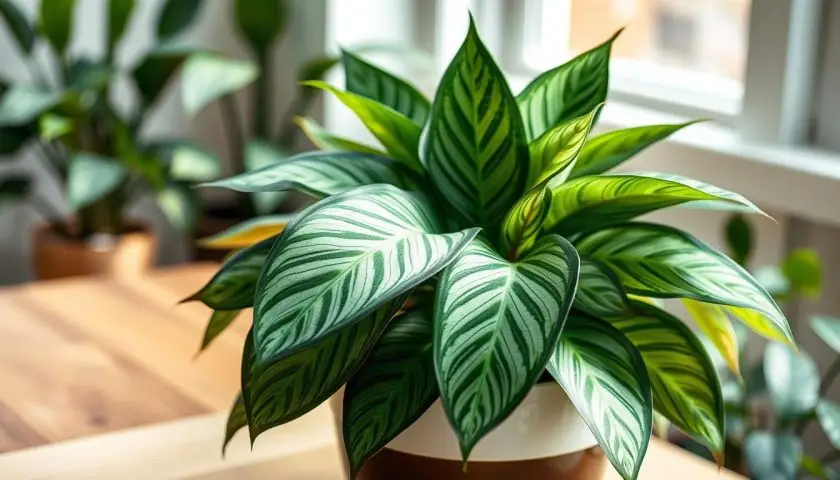
Aglaonema Silver Bay at a Glance
| Feature | Details |
|---|---|
| Botanical name | Aglaonema ‘Silver Bay’ (hybrid) |
| Bred by | University of Florida foliage breeding programme, Apopka; released 1992 |
| Size | About 75cm (30in) tall and 90cm (36in) wide in a large pot |
| Leaves | About 30cm (12in) long and 10cm (4in) wide; grey-silver centre, green edges |
| Light | Low to moderate indirect light; no direct sun |
| Water | When the top 2.5 to 5cm (1 to 2in) is dry |
| Temperature | Best at 20 to 27°C (68 to 80°F); avoid below 13°C (55°F) |
| Pets | Toxic to dogs, cats and horses (ASPCA, Chinese evergreen) |
The size and leaf measurements come from University of Arkansas Extension; the light, water and temperature ranges come from Clemson Extension’s Chinese evergreen guide.
Where Aglaonema Silver Bay Came From
Aglaonema Silver Bay is not a wild plant. University of Florida IFAS Extension records that it was one of the first Aglaonema interspecific hybrids developed by the Foliage Plant Breeding Program at the UF/IFAS Mid-Florida Research and Education Center in Apopka, and that it was released in 1992. University of Arkansas Extension credits the breeding to Dr. Richard (Jake) Henny, whose goals were larger plants, distinctive leaf patterns, good branching from the base and cold tolerance.
That breeding is why Aglaonema Silver Bay behaves so well in homes and offices. UF/IFAS describes it as a very popular cultivar because of its beautiful foliage, good growth habit and excellent performance in interior conditions. It has even produced new cultivars of its own: ‘Moonlight Bay’ and ‘Diamond Bay’ were both selected from unusual plants that appeared among tissue-cultured Silver Bay stock.
How to Recognise Aglaonema Silver Bay
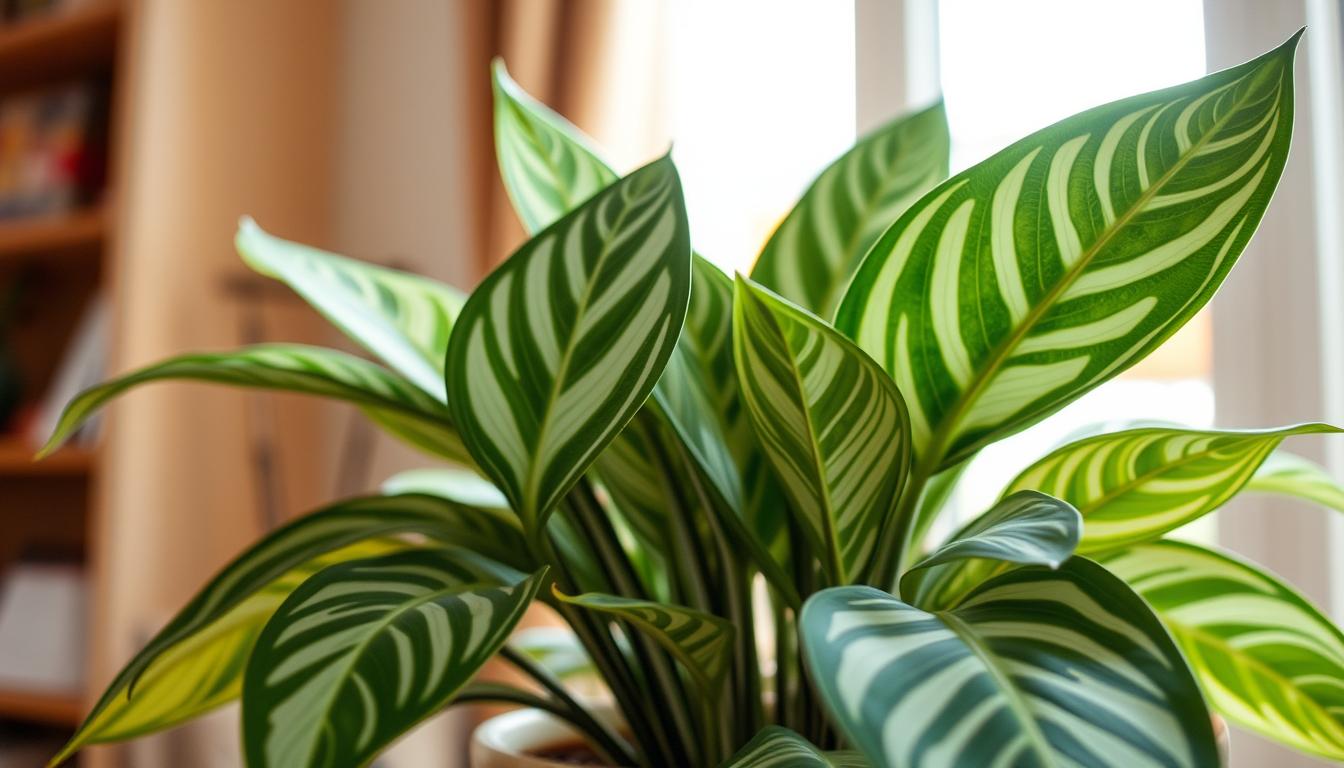
According to University of Arkansas Extension, Silver Bay leaves are about 30cm (12in) long and 10cm (4in) wide, on stalks of around 13cm (5in). The inner part of the leaf is solid silver-grey, while the outer third has a patchwork of green and grey tones. The RHS describes the same effect as large green leaves with dark green margins and a paler centre.
The plant is self-branching, sending up new shoots that keep the base covered with leaves. This is one of the features Henny bred for, and it is why a mature Aglaonema Silver Bay looks full rather than leggy. Arkansas Extension gives its size as about 75cm (30in) tall and 90cm (36in) wide in a 30cm (12in) pot; the RHS gives an ultimate height of around 90cm. It is slow-growing, so it takes several years to reach that size.
8 Easy Care Tips for Aglaonema Silver Bay
1. Choose low to moderate indirect light
University of Arkansas Extension notes that Aglaonema Silver Bay thrives in very low light, which makes it one of the best Chinese evergreens for a dim room or a spot well back from a window. Clemson Extension adds that Chinese evergreens do not like direct sunlight on their foliage. A north-facing room, a hallway with indirect light or a few steps back from an east- or west-facing window all suit it. Our complete guide to indoor light explains how to read the light in your home.
2. Water when the top few centimetres are dry
Clemson Extension recommends keeping Chinese evergreen compost evenly moist but never too wet, and watering once the top 2.5 to 5cm (1 to 2in) has dried. Push two fingers into the compost: if it feels dry, water; if it is cold and damp, wait. Use room-temperature water, water thoroughly, and empty the saucer afterwards. Arkansas Extension notes that Aglaonema Silver Bay tolerates both moist and dry conditions, but steady, moderate watering keeps the leaves at their best. Our guide to signs you are overwatering shows what too much water looks like.
3. Keep it warm and away from cold draughts
Cold tolerance was one of the breeding goals for Aglaonema Silver Bay, and Arkansas Extension notes that it performs well in cooler indoor temperatures. Even so, it is a tropical plant. Clemson Extension gives 20 to 27°C (68 to 80°F) as the ideal range for Chinese evergreens and advises avoiding temperatures below 13°C (55°F). UF/IFAS research shows that Aglaonema can suffer chilling injury, seen as dark, greasy-looking patches on the leaves, at temperatures up to about 15°C (59°F), with older leaves the most sensitive. Keep your plant away from cold glass, outside doors and winter draughts.
4. Use a well-drained compost and a pot with holes
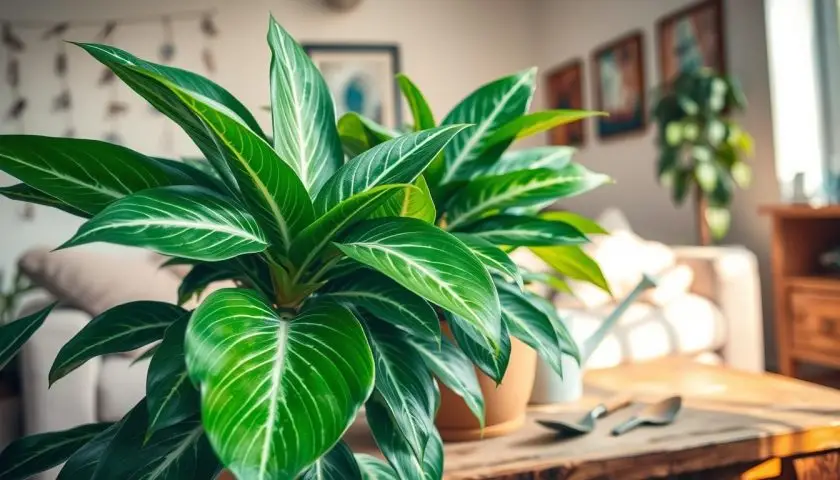
The RHS recommends well-drained, peat-free compost for Aglaonema, and Clemson Extension suggests a standard soilless mix with extra organic matter. The compost should hold some moisture but let excess water run straight through. A pot with drainage holes is essential, because Chinese evergreens can develop root and stem rots in compost that stays wet. For help choosing a mix, see the best soil mix for every type of plant.
5. Feed monthly in the growing season
The RHS advises a balanced liquid fertiliser once a month during the growing season for Aglaonema. Stop in autumn and winter, when growth slows. Aglaonema Silver Bay is a slow grower, so extra feed will not make it grow much faster and can leave salts in the compost that scorch the roots.
6. Repot every 2 to 3 years
The RHS suggests potting on Chinese evergreens every 2 to 3 years. Spring is the best time. Because Aglaonema Silver Bay grows into a large, wide clump, it will eventually need a heavy, stable pot. Move up only a little in size each time, so the roots are not sitting in a large volume of wet compost. The RHS notes that Aglaonema sap is a skin and eye irritant, so wear gloves. Step-by-step help is in our guide on how to repot a plant.
7. Divide or take cuttings to propagate
The RHS recommends propagating Aglaonema in spring by removing basal shoots that have three or four leaves and their own roots, and potting them up separately. Because Aglaonema Silver Bay is self-branching, it produces plenty of these shoots. Clemson Extension also lists stem and tip cuttings and air-layering, and notes that if a stem has lost its lower leaves, the top can be removed and rooted to make a new, compact plant. Our guide on how to propagate houseplants covers the basics.
8. Check for mealybugs and spider mites
University of Arkansas Extension describes Aglaonema Silver Bay as among the most pest-free plants, though mealybugs and spider mites occasionally attack it. Look for white, cottony clusters where leaves meet the stem, and for fine speckling or webbing under the leaves. Wipe the large leaves with a damp cloth every few weeks; this keeps them clean and lets you spot pests early. Our guide to spider mites on plants explains how to deal with an outbreak.
Humidity for Aglaonema Silver Bay
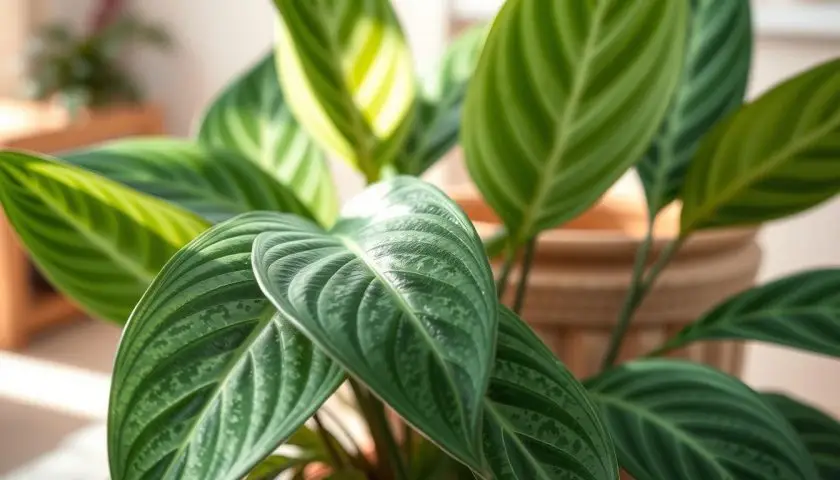
Clemson Extension notes that most Chinese evergreens grow well in an average house with low to moderate humidity, and prefer moderate levels. Aglaonema Silver Bay is no exception, so it does not need misting or a humidifier in most homes. If leaf tips start to brown in a room with strong central heating, stand the pot on a tray of moist pebbles or group it with other plants. Our guide to building a DIY humidity tray shows how.
Silver Bay vs Other Aglaonema Varieties
| Variety | How It Differs From Silver Bay |
|---|---|
| ‘Moonlight Bay’ | A mutation found among tissue-cultured Silver Bay plants, with a three-coloured leaf pattern (UF/IFAS) |
| ‘Diamond Bay’ | A Silver Bay mutation that lacks one of its leaf patterns; leaves about 28 to 30cm long (UF/IFAS) |
| Aglaonema modestum | Plain, shiny dark green leaves; copes with the lowest light (RHS) |
| ‘Maria’ | Smaller, rich green leaves with silver-green chevrons (RHS) |
| Pink types such as ‘Red Star’ | Colour depends on light, so they need brighter light than Silver Bay (RHS) |
If you enjoy patterned foliage, our guide to houseplants with patterned leaves has more ideas.
Common Aglaonema Silver Bay Problems
| Problem | Likely Cause | What to Do |
|---|---|---|
| Dark, greasy-looking patches | Chilling injury (UF/IFAS) | Move away from cold glass and draughts |
| Yellow lower leaves | Overwatering or cold, wet compost | Let the top 2.5 to 5cm dry; check roots |
| Brown leaf tips | Dry air or irregular watering | Water evenly; raise humidity |
| Bleached or scorched patches | Direct sun | Move into indirect light |
| White, cottony clusters | Mealybugs | Remove by hand and isolate the plant |
| Fine speckling and webbing | Spider mites | Wipe leaves and treat early |
Losing an occasional old lower leaf is normal as the plant grows. If several leaves yellow at once, or the base of a stem feels soft, check the roots and read our guide to identifying and treating root rot.
Where to Use Aglaonema Silver Bay
Its tolerance of low light and its broad, self-branching shape make Aglaonema Silver Bay a good floor plant for corners, offices and rooms that other plants find too dark. A single mature plant fills a space well, and the silver centres of the leaves brighten shady spots. For more plants that cope with dim rooms, see our list of low-light house plants and our guide to small low-light indoor plants for tables and shelves.
Is Aglaonema Silver Bay Safe for Pets?
No. The ASPCA lists Chinese evergreen (Aglaonema) as toxic to dogs, cats and horses. It contains insoluble calcium oxalates, and listed signs include oral irritation, pain and swelling of the mouth, tongue and lips, excessive drooling, vomiting and difficulty swallowing. Place your Aglaonema Silver Bay where pets cannot chew it, and contact your vet or the ASPCA Animal Poison Control Center at (888) 426-4435 (a consultation fee may apply) if you are worried. Our guide to making your plants cat-friendly has more tips.
Frequently Asked Questions
Is Aglaonema Silver Bay good for low light?
Yes. University of Arkansas Extension notes that it thrives in very low light, which makes it one of the best Chinese evergreens for dim rooms. Keep it out of direct sun.
How big does Aglaonema Silver Bay get?
It can reach about 75 to 90cm (30 to 36in) tall and about 90cm (36in) wide in a large pot. It grows slowly, so it takes several years to get there.
How often should I water Aglaonema Silver Bay?
Water when the top 2.5 to 5cm (1 to 2in) of compost is dry, then let it drain fully. In winter, it will need water less often.
Why are my Aglaonema Silver Bay leaves turning yellow?
One old lower leaf yellowing is normal. Several at once usually point to overwatering or cold, wet compost, so check the compost and roots.
Is Aglaonema Silver Bay toxic to cats?
Yes. The ASPCA lists Chinese evergreen as toxic to cats, dogs and horses because it contains insoluble calcium oxalates. Keep it out of reach.
Final Thoughts
As a botanist, I find Aglaonema Silver Bay a good example of plant breeding done well. It was selected for the conditions most of us can offer indoors, so it rewards simple, steady care: indirect light, moderate watering and protection from cold.
At Patch Plants, I like to show where a plant’s needs come from, and with Silver Bay the story starts in a breeding programme rather than a rainforest. If you are choosing between varieties, our Chinese evergreen guide compares the main types, and our list of tropical house plants has more foliage favourites.
Sources: University of Arkansas Extension, Silver Bay Chinese Evergreen; UF/IFAS Extension, Aglaonema ‘Moonlight Bay’; UF/IFAS Extension, Chilling Injury in Aglaonema; Clemson Extension, Chinese Evergreen; RHS, Aglaonema ‘Silver Bay’; ASPCA, Chinese Evergreen.

About the author
Sawera Shahid is a botanist with an MPhil in Botany and 5+ years of writing about plants. As founder and lead writer of Patch Plants, she writes practical, science-backed guides on indoor plants, outdoor gardens and plant problems, checked against RHS and university extension advice.