🌿 Key Takeaways
- Cat safe plants include spider plant, areca palm, calathea, prayer plant, bamboo palm, and Boston fern — all non-toxic and beautiful
- Plants poisonous to cats include pothos, peace lily, snake plant, aloe vera, English ivy, philodendron, and ficus — common houseplants that cause real harm
- Are aloe plants toxic to cats? Yes — aloe plant cats interaction causes vomiting, diarrhoea, and lethargy if ingested
- Are air plants toxic to cats? No — Tillandsia (air plants) are non-toxic and one of the safest decorative plant options for cat households
- Is a money tree plant toxic to cats? No — money trees are considered non-toxic to cats and dogs making them an excellent choice
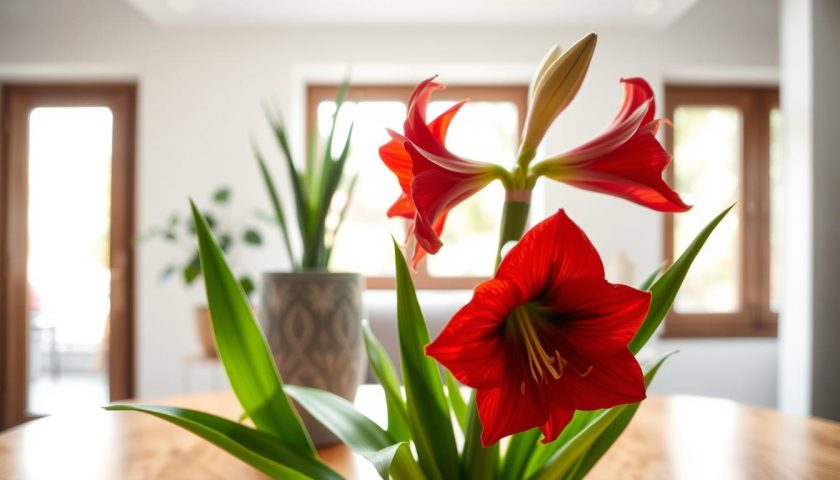
- What plants kill cats? Lilies (Lilium species) are the most dangerous — even small amounts cause acute kidney failure in cats
- Air purifying plants pet safe options include Boston fern, spider plant, and areca palm — all clean air without endangering your cat
- Browse our full indoor plant care guides to find care information for all the cat-safe plants mentioned in this guide
Why Plant Safety Matters More Than You Think in a Cat Household
There is a particular challenge that plant-loving cat owners know intimately — the moment you bring home a beautiful new plant, you spend the next hour Googling whether it will poison your cat. And with good reason. The ASPCA’s toxic plant database lists over 400 plants that are dangerous to cats — many of them among the most popular and widely sold houseplants in every garden centre and supermarket.
What plants are toxic to cats is not a niche concern. It is a genuine daily safety issue in any home where cats and plants coexist. And what plants kill cats — particularly true lilies — represent a real emergency risk that kills thousands of cats annually in the UK and US combined.
But here is the encouraging reality: making your plants cat-friendly does not mean sacrificing your plant collection, your interior style, or your love of greenery. It means understanding which plants are genuinely safe, which are dangerous, and how to create a home environment where your cat and your plants can coexist — beautifully, safely, and with minimal chaos.
This complete guide covers everything — from identifying houseplants poisonous to cats and understanding feline poisonous plants to building a stunning collection of cat safe plants, using smart placement strategies, and redirecting your cat’s natural plant obsession toward designated safe green spaces.
Why Are Cats Drawn to Plants? — Understanding the Behavior
Before addressing how to make your plants cat-friendly, understanding why cats are attracted to plants in the first place helps you work with your cat’s instincts rather than against them.
Instinctual Grass Eating
In the wild, cats regularly consume grass and plant material — primarily to aid digestion, help expel hairballs, and supplement their diet with trace minerals. Houseplants trigger this same instinct. When your cat chews your peace lily or nibbles your pothos, it is often acting on a deeply embedded biological drive rather than misbehaving.
Boredom and Stimulation Seeking
A bored cat will investigate, bat at, and eventually chew anything interesting in its environment. Plants — with their moving leaves, interesting textures, and novel scents — are irresistible enrichment objects for a cat that lacks adequate stimulation.
Scent Attraction
Some plants release oils and fragrances that actively attract cats. Valerian, catnip (Nepeta cataria), and silver vine are the best-known examples — but other plants release scent compounds that cats find fascinating without the human nose detecting them.
Territorial Behavior
Cats sometimes dig in plant soil as territorial marking behavior — particularly in multi-cat households. The loose, soft soil of houseplant pots triggers the same instinct as outdoor digging for waste elimination.
Understanding these drivers transforms the approach from reactive (stopping your cat from destroying plants) to proactive (designing a home where cat needs and plant safety are both met from the start).
Plants Poisonous to Cats — The Complete Safety Reference

What Plants Are Toxic to Cats — The Most Important List
What plants are toxic to cats that are commonly kept indoors? This is the most critical information for any cat-owning plant lover. The following are among the most frequently encountered houseplants poisonous to cats:
What Plants Kill Cats — The Most Dangerous Species
What plants kill cats outright, rather than simply causing illness? True lilies represent the most dangerous category — causing acute kidney failure in cats with even small exposures.
True Lilies — The Most Dangerous Feline Poisonous Plants
All species in the Lilium and Hemerocallis (daylily) genera are potentially lethal to cats. This includes:
- Easter lily (Lilium longiflorum)
- Tiger lily (Lilium tigrinum)
- Asiatic lily (Lilium species)
- Daylily (Hemerocallis species)
- Stargazer lily (Lilium orientalis)
Even small exposures — a cat brushing against a lily and licking pollen from its fur — can cause acute kidney failure within 24–72 hours. Lilies are the most dangerous feline poisonous plants available in the UK and should never be kept in any household with cats, even in rooms the cat cannot access.
Peace lily (Spathiphyllum) — despite the name — is a different plant from true lilies and causes a different, less severe reaction. However, it remains a significant feline poisonous plants concern.
Houseplants Poisonous to Cats — Full Reference Table
| Plant | Toxicity Level | Symptoms in Cats |
|---|---|---|
| True lilies (Lilium species) | ☠️ Potentially fatal | Kidney failure, vomiting, lethargy |
| Daylily (Hemerocallis) | ☠️ Potentially fatal | Kidney failure |
| Oleander | ☠️ Potentially fatal | Heart arrhythmia, collapse |
| Sago palm | ☠️ Potentially fatal | Liver failure, seizures |
| Peace lily (Spathiphyllum) | 🔴 Toxic | Oral irritation, vomiting, drooling |
| Pothos | 🔴 Toxic | Oral burning, vomiting, difficulty swallowing |
| Philodendron | 🔴 Toxic | Oral irritation, excessive drooling |
| Snake plant (Sansevieria) | 🔴 Toxic | Nausea, vomiting, diarrhoea |
| Aloe vera | 🟡 Moderately toxic | Vomiting, diarrhoea, lethargy |
| English ivy (Hedera helix) | 🟡 Moderately toxic | Vomiting, abdominal pain, drooling |
| Ficus | 🟡 Moderately toxic | Skin irritation, digestive upset |
| Jade plant | 🟡 Moderately toxic | Vomiting, lethargy, incoordination |
| Coleus | 🟡 Moderately toxic | Vomiting, diarrhoea |
| Peonies | 🟡 Moderately toxic | Vomiting, diarrhoea |
| Christmas cactus | 🟢 Mildly toxic | Mild digestive upset only |
Are Aloe Plants Toxic to Cats?
Are aloe plants toxic to cats? Yes — aloe plant cats toxicity is a real and important concern. Are aloe plants poisonous to cats enough to cause serious illness? Aloe plants and cats interact through the saponins and anthraquinones in aloe vera leaves — compounds that cause vomiting, diarrhoea, tremors, and lethargy when ingested. Can cats eat aloe plants without harm? No — keep aloe vera completely out of reach or choose an alternative succulent species.
Is aloe plant safe for cats for topical application? The gel should not be applied to cats even externally — cats groom themselves and will ingest anything applied to their fur. Our comprehensive guide to aloe vera care for home covers aloe plant care including the specific safety concerns for pet households.
Are Ficus Toxic to Cats?
Are ficus toxic to cats? Yes — ficus species (Ficus benjamina, fiddle leaf fig, rubber plant) contain a sap that causes skin irritation on contact and digestive upset if ingested. The milky latex sap of ficus plants is the primary toxin — contact with cat skin or mucous membranes causes irritation even before ingestion. Ficus plants should be kept in rooms cats cannot access.
Are Ivy Plants Poisonous to Cats?
Are ivy plants poisonous to cats? Yes — is english ivy safe for cats? No. English ivy (Hedera helix) contains triterpenoid saponins that cause vomiting, abdominal pain, hypersalivation, and diarrhoea in cats that chew the leaves. Despite being a beautiful trailing plant, ivy is among the more commonly encountered feline poisonous plants in UK homes. Our guide on trailing plants for shelves and bookcases identifies safe trailing alternatives for cat households.
Are Jade Plants Poisonous for Cats?
Are jade plants poisonous for cats? Yes — jade plants (Crassula ovata) contain unknown toxic compounds that cause vomiting, lethargy, incoordination, and depression in cats. Despite being widely sold as low-maintenance succulents, they should be kept away from cats entirely.
Are Peonies Poisonous to Cats?
Are peonies poisonous to cats? Yes — peonies toxic to cats is confirmed. Peonies contain paeonol in their bark and flower petals, which causes vomiting, diarrhoea, and depression in cats. Peonies toxic to cats risk is highest from cut flowers brought indoors — the fallen petals are particularly tempting to cats investigating at floor level.
Is Coleus Toxic to Cats?
Is coleus toxic to cats? Yes — coleus (Plectranthus scutellarioides) contains essential oils that cause vomiting, diarrhoea, and depression in cats. Despite being a popular and colorful houseplant, it is among the feline poisonous plants that should be avoided in cat households.
Flowers Bad for Cats and Flowers Toxic to Cats
Flowers bad for cats that are commonly brought into homes as cut flowers include:
- All true lilies — most dangerous
- Tulips — bulb most toxic but all parts dangerous
- Daffodils — vomiting, diarrhoea, cardiac effects
- Chrysanthemums — digestive upset and skin irritation
- Autumn crocus — potentially fatal kidney and liver damage
- Hyacinth — vomiting, diarrhoea, respiratory issues
Flowers that cats are allergic to — beyond toxicity, some cats develop contact allergies to plant pollen that cause sneezing, watery eyes, and skin irritation without ingesting any plant material. Common allergens include chrysanthemums, daisies, and some lily species.
Cat Safe Plants — Complete List for Beautiful Pet-Friendly Homes
Cat Safe Plants That Are Also Air Purifiers
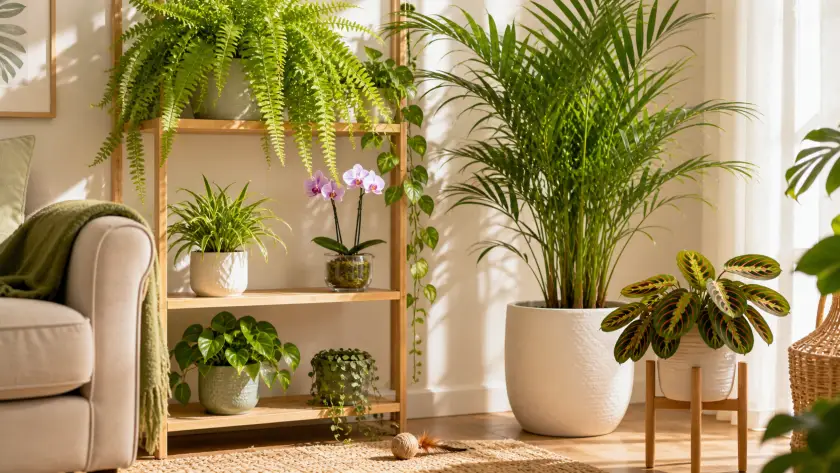
Air purifying plants pet safe options allow you to improve indoor air quality without endangering your cat. The intersection of effective air purification and cat safety includes several excellent choices:
Boston Fern — The Best Air Purifying Cat Safe Plant
Boston fern (Nephrolepis exaltata) is both one of the most effective air purifying plants pet safe for cat households and one of the most beautiful. It removes formaldehyde and xylene from indoor air while posing zero toxicity risk to cats. Its feathery fronds are a cat magnet — but entirely safe if chewed.
Care: High humidity, indirect light, consistently moist soil. Our guide on the best plants for your bathroom identifies Boston fern as one of the top bathroom plants — where bathroom humidity suits it perfectly.
Spider Plant — The Most Forgiving Cat Safe Plant
The spider plant (Chlorophytum comosum) is technically safe for cats — classified as non-toxic by the ASPCA. However, it does have mild hallucinogenic properties similar to catnip that can cause cats to chew it obsessively. This does not cause harm but can damage the plant.
Why cats love it: The long arching stems with dangling plantlets are irresistible to cats. Position on high shelves where stems can trail safely out of reach. Our guide on trailing plants for shelves and bookcases covers optimal spider plant display positions.
Areca Palm — The Statement Cat Safe Plant
The areca palm (Dypsis lutescens) is one of the best large cat safe plants available — non-toxic, air purifying, and dramatic enough to make a genuine design statement. Its feathery fronds add movement and height to any room without endangering your cat.
Care: Bright indirect light, regular watering, high humidity. Position on the floor in a corner — its size naturally discourages cat investigation compared to smaller plants at cat height.
Cat Safe Flowers List — Non-Toxic Flowering Plants
Cat safe flowers list — flowering plants safe for cat households:
- Roses (Rosa species) — non-toxic, though thorns are a physical hazard
- Snapdragons (Antirrhinum) — non-toxic
- Orchids (Phalaenopsis) — non-toxic
- Sunflowers (Helianthus) — non-toxic
- Zinnias — non-toxic
- Gerbera daisies — non-toxic
- African violets (Saintpaulia) — non-toxic and cat-safe
- Lisianthus — non-toxic
- Freesias — non-toxic
- Wax plant/Hoya — non-toxic
Flowers that are safe for cats and dogs — the above list applies to dogs as well. When choosing cut flowers for display, orchids, sunflowers, and gerbera daisies are the safest and most widely available non-toxic options. Our guide on indoor plants that smell amazing covers fragrant non-toxic options that are safe around pets.
Is a Money Tree Plant Toxic to Cats?
Is a money tree plant toxic to cats? No — money trees (Pachira aquatica) are considered non-toxic to cats and dogs by the ASPCA. This makes the money tree one of the most valuable cat safe plants in terms of the combination of visual impact, low maintenance, and pet safety. Our guide on caring for a money tree covers everything you need to grow a thriving money tree safely alongside your cats.
Are Air Plants Toxic to Cats?
Are air plants toxic to cats? No — Tillandsia (air plants) are non-toxic to cats and dogs. This makes them one of the most interesting and versatile cat safe plants available — particularly because they require no soil, can be mounted on walls and driftwood, and are genuinely difficult for cats to access or chew effectively. Air plants are an excellent option for cat households wanting unusual, contemporary plant displays.
Complete Cat Safe Plants Reference
| Plant | Cat Safe? | Air Purifying? | Light Need | Maintenance |
|---|---|---|---|---|
| Boston fern | ✅ Yes | ✅ Yes | Indirect | Medium |
| Spider plant | ✅ Yes | ✅ Yes | Low–bright | Low |
| Areca palm | ✅ Yes | ✅ Yes | Bright indirect | Medium |
| Money tree | ✅ Yes | ❌ No | Indirect | Low |
| Calathea | ✅ Yes | ❌ No | Low–indirect | Medium |
| Prayer plant | ✅ Yes | ❌ No | Low–indirect | Low |
| Bamboo palm | ✅ Yes | ✅ Yes | Indirect | Low |
| African violet | ✅ Yes | ❌ No | Indirect | Low |
| Orchid (Phalaenopsis) | ✅ Yes | ❌ No | Indirect | Medium |
| Air plants (Tillandsia) | ✅ Yes | ❌ No | Bright indirect | Low |
| Roses | ✅ Yes | ❌ No | Direct | Medium |
| Gerbera daisy | ✅ Yes | ✅ Yes | Bright | Medium |
| Hoya | ✅ Yes | ❌ No | Bright indirect | Low |
| Swedish ivy | ✅ Yes | ❌ No | Indirect | Low |
| Catnip | ✅ Yes | ❌ No | Full sun | Low |
How to Make Your Plants Cat-Friendly — 7 Practical Strategies
Strategy 1 — Replace Toxic Plants with Cat Safe Alternatives
The most direct approach to how to make your plants cat-friendly is systematic replacement. For each toxic plant you currently keep, identify a visually similar cat safe plants alternative:
| Toxic Plant | Cat Safe Alternative |
|---|---|
| Pothos (toxic trailing) | Swedish ivy or spider plant |
| Peace lily (toxic white flower) | African violet or orchid |
| Snake plant (toxic upright) | Areca palm or bamboo palm |
| Aloe vera (toxic succulent) | Haworthia (non-toxic succulent) |
| English ivy (toxic trailer) | Hoya or Swedish ivy |
| Philodendron (toxic) | Calathea or prayer plant |
| Ficus (toxic tree) | Money tree or areca palm |
For specific care guidance on the peace lily and snake plant — the two most commonly kept toxic plants — our dedicated guides help you understand what you are replacing and what safe alternatives match their care requirements.
Strategy 2 — Smart Placement for Toxic Plants You Cannot Bear to Remove
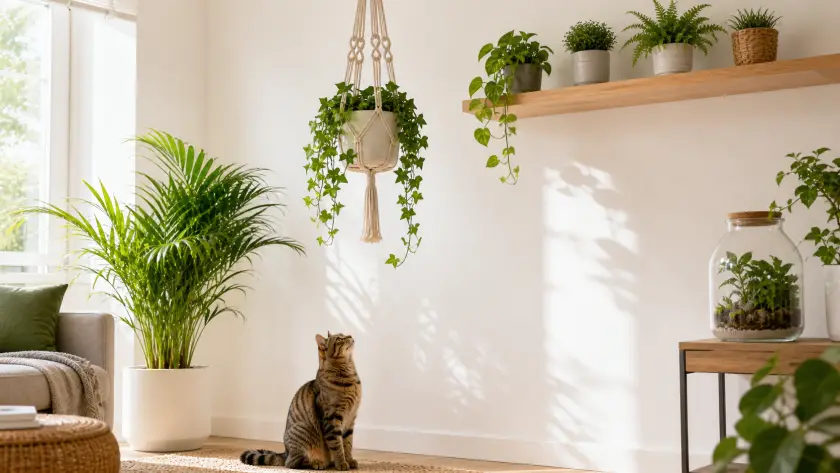
Some toxic plants are difficult to part with — established specimens, sentimental plants, or rare varieties. If you choose to keep houseplants poisonous to cats, placement becomes critical:
Effective placement strategies:
- Ceiling hooks and macramé hangers — suspend plants from the ceiling where no furniture gives a cat a launching point to reach them
- Floating wall shelves at genuine ceiling height — ensure no adjacent furniture allows jumping access
- Terrariums and enclosed glass cases — stylish and protective for smaller plants
- Dedicated plant rooms — a room the cat is permanently excluded from, with a door that closes securely
- High cabinet tops — effective only if there is absolutely no adjacent surface the cat can jump from to reach the cabinet top
The challenge with placement is that cats are extraordinary jumpers — capable of reaching heights of 1.8–2.4 metres from a standing position. Any placement strategy must account for this vertical capability. Our guide on creating an indoor jungle without overcrowding covers spatial planning for plant displays that also addresses access control.
Strategy 3 — Create a Dedicated Cat Garden

The most effective long-term strategy for coexistence is providing your cat with its own designated green space — redirecting plant-chewing instincts toward safe, designated materials:
Cat garden essentials:
- Cat grass (Dactylis glomerata or mixed grass seed) — the most effective redirection tool. Grow in a wide, low tray accessible to your cat at all times
- Catnip (Nepeta cataria) — many cats are irresistibly attracted, providing endless enrichment and satisfaction
- Valerian (Valeriana officinalis) — some cats prefer valerian to catnip for its more intense effect
- Wheatgrass — nutritious, digestive-supporting, and completely safe
- Oat grass — gentle on digestion and easy to grow
A consistently available cat garden dramatically reduces the motivation to investigate other plants. The logic is simple — provide what the cat is instinctually seeking in a safe, designated location and the expensive monstera in the corner becomes far less interesting.
Strategy 4 — Non-Toxic Cat Deterrents for Plant Protection
For cat safe plants you still want to protect from digging or chewing, gentle deterrents work without harming your cat:
Effective deterrents:
- Citrus peel or citrus essential oil spray (diluted, tested on plant first) — cats dislike citrus scent strongly
- Aluminium foil around pot bases — the sound and texture deters digging
- Pine cones or decorative stones on soil surface — prevents digging without harming the plant or cat
- Double-sided sticky tape around pot rims — cats dislike the sticky texture on paws
- Commercial cat repellent sprays — available from pet stores, specifically formulated to be safe for plants and cats
Never use: Mothballs, essential oils at high concentrations, or any spray containing phenols — these are toxic to cats regardless of dilution.
Strategy 5 — Choose Low-Maintenance Cat Safe Plants
High-maintenance plants in cat households create double stress — the plant requires careful attention AND protection from cat interference. Choosing cat safe plants that are also robust and low-maintenance reduces the overall burden significantly.
The best low-maintenance cat safe plants include money trees, areca palms, prayer plants, and calatheas — all non-toxic, visually impressive, and tolerant of the inconsistent care that comes with a busy household. For a comprehensive overview of low-maintenance indoor plants suitable for cat households, our guide on how to make your plants dog-friendly covers overlapping pet-safe plant selection principles applicable to cats.
Strategy 6 — Use Air Plants and Mounted Displays
Are air plants toxic to cats? No — making Tillandsia air plants one of the most creative solutions for cat-proof plant displays. Mounted on driftwood, wall-hung frames, or suspended from ceiling wires, air plants create striking botanical displays that are genuinely difficult for cats to access and completely safe if they do.
Air plant displays can be combined with other non-toxic mounted plants — staghorn ferns, mounted orchids, and living moss walls — to create sophisticated botanical installations that are both visually stunning and inherently cat-safe.
Strategy 7 — Train Consistently and Patiently
Cats can be redirected — not perfectly, not immediately, but consistently over time. The most effective training approaches for plant protection:
Positive redirection — whenever your cat approaches a plant, immediately redirect to a toy, cat grass, or scratching post. Reward the redirection with praise or treats. Over weeks, the cat learns that approaching the plant leads to ignored behavior while the alternative leads to rewards.
Environmental discouragement — make the plant area less appealing through citrus spray, foil, or sticky tape while simultaneously making the cat garden area more appealing through fresh catnip and cat grass. Cats follow the path of greatest reward.
Consistency — every household member must apply the same approach. Inconsistent training — one person redirecting while another allows plant access — extends the training period dramatically.
Non Poisonous Plants to Cats — Room by Room Guide
Bedroom — Cat Safe Plants for Night Spaces
Non poisonous plants to cats that work well in bedrooms include orchids, African violets, and prayer plants — all non-toxic, manageable in size, and suitable for the indirect light of most bedroom windows. Our guide on decorating your bedroom with plants covers optimal bedroom plant display for households with free-roaming cats.
Living Room — Statement Cat Safe Plants
Money trees, areca palms, and bamboo palms create dramatic living room focal points while remaining completely safe for cats. Position floor plants in corners where cat access is less convenient. Our guide on indoor plants that double as natural room dividers covers large non-toxic plant varieties suitable for cat households.
Home Office — Low-Disturbance Cat Safe Plants
For home offices where plant disturbance is particularly disruptive, calatheas and prayer plants are excellent choices — non-toxic and low enough maintenance to survive the distracted care of a busy work schedule. Our guide on improving your home office with plants covers office plant selection with pet safety in mind.
Kitchen — Edible Cat Safe Plants
The kitchen presents an opportunity to grow edible herbs that are also safe for cats. Non toxic flowers for cats and cat-safe edible herbs include basil, dill, coriander, and sage — all non-toxic to cats and genuinely useful as culinary herbs. Cat grass grown in the kitchen serves double duty — as cat enrichment and as a clear signal of the designated cat green space.
What to Do If Your Cat Eats a Toxic Plant
Emergency Response — Cat Eats Toxic Plant
Despite all precautions, cats sometimes access toxic plants. If you suspect your cat has eaten any feline poisonous plants — particularly true lilies — act immediately:
- Remove the cat from the plant and prevent further access
- Identify the plant — take a photo or cutting to show the vet
- Do not induce vomiting unless specifically instructed to by a vet
- Contact your vet or animal poison control immediately — do not wait for symptoms to appear
- Monitor for symptoms: vomiting, drooling, lethargy, difficulty breathing, seizures
For true lily exposure in cats — the most dangerous category of what plants kill cats — kidney failure can develop within 24–72 hours. Immediate veterinary treatment dramatically improves outcomes. Speed is critical.
UK: Contact your vet or the Animal Poison Line: 01202 509000 US: ASPCA Animal Poison Control: (888) 426-4435
Frequently Asked Questions
What Plants Are Toxic to Cats That I Might Already Own?
What plants are toxic to cats that are commonly kept indoors? The most frequently owned houseplants poisonous to cats are pothos, peace lily, snake plant, aloe vera, English ivy, philodendron, and ficus. All are widely sold in garden centres without prominent toxicity warnings. Check every plant currently in your home against the ASPCA toxic plant database if you have cats.
Are Aloe Plants Toxic to Cats?
Are aloe plants toxic to cats? Yes — are aloe plants poisonous to cats is confirmed by the ASPCA. Aloe plants and cats should be kept completely separate — the saponins and anthraquinones in aloe vera cause vomiting, diarrhoea, and lethargy in cats. Can cats eat aloe plants without harm? No — keep aloe vera on genuinely inaccessible high shelves or remove from cat households entirely.
Are Air Plants Toxic to Cats?
Are air plants toxic to cats? No — Tillandsia (air plants) are non-toxic to cats and dogs. They are one of the safest and most creative cat safe plants options available — easily mounted at heights cats cannot reach and completely harmless if accessed. Air plants are highly recommended for cat households wanting contemporary botanical displays.
Is a Money Tree Plant Toxic to Cats?
Is a money tree plant toxic to cats? No — money trees (Pachira aquatica) are considered non-toxic to cats and dogs by the ASPCA. They are one of the best large cat safe plants combining visual impact, easy care, and complete pet safety.
What Are the Best Cat Safe Flowers?
Cat safe flowers list for indoor display includes orchids, roses, snapdragons, African violets, gerbera daisies, sunflowers, and freesias. Non toxic flowers for cats and flowers that are safe for cats and dogs overlap significantly — this list is safe for both species. Avoid lilies, tulips, daffodils, and chrysanthemums entirely in cat households.
Are Ficus Toxic to Cats?
Are ficus toxic to cats? Yes — all commonly kept ficus species including fiddle leaf fig, weeping fig, and rubber plant contain irritating latex sap toxic to cats. Contact causes skin irritation; ingestion causes digestive upset. Keep ficus plants in rooms cats cannot access.
Is English Ivy Safe for Cats?
Is english ivy safe for cats? No — English ivy (Hedera helix) causes vomiting, abdominal pain, drooling, and diarrhoea in cats. Despite being a beautiful trailing plant, it is among the more commonly encountered feline poisonous plants in UK homes. Replace with Swedish ivy (Plectranthus australis) — visually similar, genuinely cat safe.
Are Peonies Poisonous to Cats?
Are peonies poisonous to cats? Yes — peonies toxic to cats is confirmed. The paeonol compound in peony bark and flowers causes vomiting and diarrhoea. Avoid bringing peony cut flowers indoors in cat households — particularly during the spring and early summer when they are widely available.
Related Guides on Patch Plants
- 🐕 How to Make Your Plants Dog-Friendly
- 🌸 Peace Lily Care Guide — Complete Spathiphyllum Tips
- 🐍 Snake Plant Care Guide — Complete Sansevieria Tips
- 🌵 Aloe Vera Care Guide for Home
- 💰 Money Tree Care Guide — The Luckiest Indoor Plant
- 🌿 Trailing Plants That Look Stunning on Shelves
- 🏠 Indoor Plants That Double as Natural Room Dividers
- 🌱 How to Create an Indoor Jungle Without Overcrowding
- 🌸 Indoor Plants That Smell Amazing Without Being Overpowering
- 🌱 Browse All Indoor Plant Guides
Final Thoughts
How to make your plants cat-friendly is ultimately about two things working together — knowledge and design. Knowing what plants are toxic to cats and replacing them with cat safe plants removes the risk. Designing your home with smart placement, cat gardens, and gentle deterrents creates an environment where both your plant collection and your cat can coexist comfortably.
The reward is a home that feels genuinely alive — plants thriving in every room, a cat that has its own designated green space and leaves your calatheas alone, and the quiet confidence of knowing that the relationship between your greenery and your pet is genuinely safe rather than a daily source of anxiety.
Start with one replacement. Swap one toxic plant for a cat-safe alternative. Add a tray of cat grass. Raise one shelf. Small, consistent changes accumulate into a home where plants cat-friendly coexistence is the default rather than the exception.
According to the ASPCA Animal Poison Control Center, plant ingestion is one of the most common causes of cat poisoning calls — making informed plant selection one of the most important safety decisions any cat-owning plant lover can make. 🌿🐱