
Key Takeaways
- Pollinator-friendly plants can be grown in any urban outdoor space — balconies, patios, window boxes, and courtyards all support meaningful pollinator activity with the right plant selection
- The best pollinator-friendly plants for urban spaces include lavender, salvia, coneflower, bee balm, borage, catmint, thyme, and marigolds — all compact enough for containers
- Choose single-flower varieties over double-flowered cultivars — pollinators cannot access the nectar in tightly packed double blooms
- Aim for continuous blooming from early spring through late autumn to support pollinators throughout their active season — mix early, mid-season, and late bloomers
- Native pollinator plants are more nutritionally valuable to local bees and butterflies than exotic species — always include some native varieties in an urban pollinator garden
- Avoid all pesticides and systemic treatments — even organic sprays can disrupt pollinator populations and kill beneficial insects alongside pest species
- Add a shallow water source with pebbles — pollinators need water as well as food, and even a small saucer significantly increases the value of a pollinator garden
- Pollinator-friendly plants do more than support wildlife — they improve air quality, increase biodiversity, naturally control garden pests, and create measurably more attractive outdoor spaces
- Urban pollinator gardens contribute to ecological corridors — a patchwork of nectar-rich stops across rooftops, balconies, and courtyards that connects fragmented green spaces across cities
- Even three pots with the right plant combinations make a genuine difference — diversity of species is more important than quantity of plants
Introduction
Cities might not seem like obvious habitats for bees, butterflies, and other pollinators. But urban areas — with their mix of gardens, parks, window boxes, and container plantings — increasingly represent some of the most important refuges for pollinator populations under pressure from intensive agriculture, pesticide use, and habitat loss in the wider countryside.
This means that every balcony, every patio, every window box planted with pollinator-friendly plants is a genuine contribution to urban biodiversity. It is not a gesture — it is functional ecological infrastructure that makes a measurable difference to local pollinator populations.
This guide covers the best pollinator-friendly plants for urban outdoor spaces — from the most effective bee-attracting plants for sunny balconies to shade-tolerant options for north-facing courtyards, and from spring-blooming bulbs to late-season rescue plants that keep pollinators fed into autumn. It also covers the practical principles of how to make a pollinator garden work in a container-based urban setting.
For complementary reading on outdoor plant care and garden design, our best plants for small outdoor spaces guide and 15 hardy outdoor plants guide cover many of the same plants from a garden design perspective.
Why Pollinators Need Urban Gardens Now More Than Ever
Pollinator populations across the world are under sustained and serious pressure. Bee species are declining at rates that alarm ecologists. Butterfly populations in the UK have dropped dramatically over the past fifty years. Hoverfly numbers fluctuate with changing agricultural practices. The causes are well documented — pesticide use, monoculture farming, habitat fragmentation, and loss of wildflower meadows.
Urban areas, counterintuitively, have become significant refuges. City temperatures are typically warmer than surrounding rural areas — creating longer growing seasons. Urban pesticide use, while still a concern, is generally lower than intensive agricultural application. And urban gardens, balconies, parks, and verges collectively provide a patchwork of flowering plants that, when managed well, can support diverse pollinator communities.
Research consistently shows that urban bee diversity can match or exceed rural bee diversity in well-planted cities. The key factor is the availability of nectar-rich, accessible flowers throughout the active season — exactly what a thoughtfully planted urban pollinator garden provides.
For more context on how outdoor plant choices affect local wildlife, our how to design a wildlife-friendly garden guide covers the broader principles of urban wildlife gardening alongside pollinator planting.
The Principles of Effective Pollinator-Friendly Planting
Before getting into specific plant recommendations, understanding these core principles will make any urban pollinator garden significantly more effective.
Choose Single-Flower Varieties
This is the single most important principle in pollinator-friendly planting. Modern breeding has produced many double-flowered cultivars — varieties where the stamens and nectaries have been replaced by additional petals, creating fuller, more visually impressive blooms. But pollinators cannot access the nectar or pollen in these tightly packed double flowers. From a pollinator’s perspective, a double-flowered dahlia or rose is essentially useless.
Always choose single-flower varieties — open-centred blooms where the nectar and pollen are fully accessible. The original species form of most flowers is always a good choice. Check plant labels for the word “single” or look for open, daisy-like blooms rather than tightly packed pompom forms.
Prioritise Native Species
Native plants have co-evolved with local pollinators over thousands of years — their flowers are shaped, coloured, and scented to attract and reward the specific pollinators present in their region. Native plants typically provide more nutritionally valuable pollen and nectar than exotic species, and they support a wider range of native pollinator species including specialist bees that cannot use exotic plant pollen at all.
For UK urban gardens, key native pollinator plants include foxglove, wild marjoram, red clover, field scabious, knapweed, teasel, and native wildflower mixes. Our native plants that thrive in your region guide covers native plant selection in more detail.
Provide Continuous Blooming from Spring to Autumn
Pollinators are active from the first warm days of late winter through to the last mild days of autumn. An urban pollinator garden that only blooms in June and July — the easiest period to fill with colour — leaves pollinators without food in the critical early spring period when queen bumblebees emerge hungry from hibernation, and in late summer and autumn when they are building reserves for winter.
Aim for at least one plant blooming in each of these periods: early spring (March to April), late spring (May), early summer (June), midsummer (July to August), late summer (August to September), and autumn (September to October). This requires deliberate planning but makes an enormous difference to the value of your urban pollinator garden. Our garden calendar 2026 guide helps plan seasonal planting for continuous coverage.
Avoid All Pesticides
Pesticides — including many products labelled as organic or natural — are lethal to pollinators. Systemic insecticides (neonicotinoids) are particularly damaging as they persist in plant tissue and are present in pollen and nectar. Contact insecticides kill visiting pollinators directly. Even fungicides can disrupt the gut microbiome of bees and reduce their ability to digest pollen effectively.
In an urban pollinator garden, pest management should rely entirely on physical controls (picking off pests, using barriers), biological controls (encouraging predatory insects), and tolerating a level of pest damage that nature itself manages over time. Our plants that keep bugs away guide covers natural pest deterrence methods that are safe for pollinators.
Provide Water
Pollinators need water as well as food — particularly in hot summer weather when dehydration is a real risk for bees working in urban heat island conditions. A shallow dish or saucer filled with water and pebbles (so insects can land safely without drowning) placed near your pollinator plants significantly increases the habitat value of your outdoor space. Change the water every two to three days to prevent mosquito larvae from establishing.
The Best Pollinator-Friendly Plants for Urban Outdoor Spaces
Lavender (Lavandula) — The Classic Bee Plant
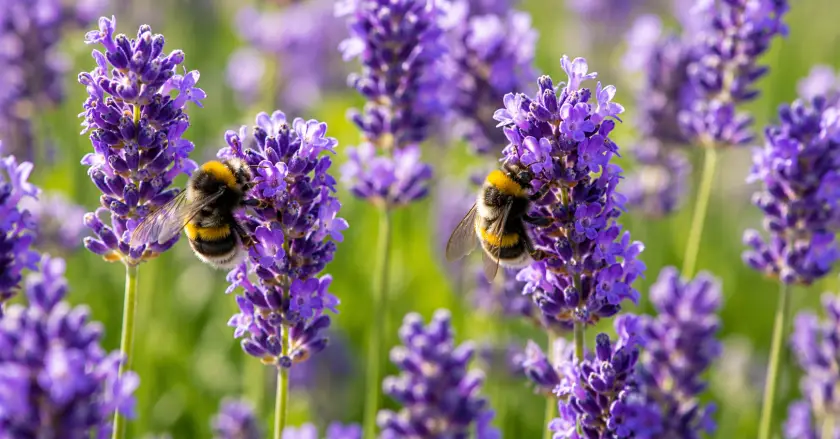
Lavender is perhaps the most effective single pollinator-friendly plant available for urban outdoor spaces. Its flowers are rich in nectar, accessible to a wide range of bee species, and produced continuously for weeks through midsummer. It suits containers, window boxes, and small border positions in full sun, and its fragrance makes it as pleasant for the gardener as for the pollinators it attracts.
Lavender is also one of the best mosquito repellent plants that support pollinators, especially when grown near sunny patios, paths, and outdoor seating areas. Pair it with rosemary, basil, mint, and marigolds for a useful scented border.
Choose species lavender (Lavandula angustifolia) rather than highly bred cultivars for the best pollinator value — the original forms produce more accessible flowers and stronger nectar. Our hardy outdoor plants guide covers lavender care in detail. It is also one of the best plants for naturally deterring aphids and other garden pests — our plants that keep bugs away guide explains this dual benefit.
Salvia (Salvia nemorosa and varieties)
Salvia is one of the most valuable long-blooming pollinator-friendly plants for urban containers — its upright spikes of blue, purple, or pink flowers bloom from late spring through summer and often rebloom if cut back after the first flush. It is particularly attractive to bumblebees and is excellent for balcony railing planters and large containers.
Annual salvias (Salvia splendens) are also useful but the perennial varieties provide greater seasonal value and return reliably year after year. Salvia is drought-tolerant once established — an important characteristic for containers in sunny urban positions that dry out quickly.
Coneflower (Echinacea purpurea)
Coneflower is one of the most reliably effective pollinator-friendly plants for sunny urban positions — its large, open daisy-like flowers in pink, purple, and white attract bees and butterflies from midsummer through early autumn. It is drought-tolerant, long-lived, and provides structural interest in containers as well as small border positions. Leave the seed heads standing through winter as they provide food for birds.
Our hardy outdoor plants guide covers coneflower care in detail, including container growing requirements. It is one of the best pollinator-friendly plants for filling the mid-to-late summer gap when many spring bloomers have finished.
Bee Balm (Monarda)
Bee balm lives up to its name — it is one of the most attractive plants for bumblebees, honeybees, and butterflies, producing shaggy, tubular flower heads in red, pink, purple, and white that provide accessible nectar throughout summer. Its wild, meadow-like appearance suits naturalistic urban planting schemes and it grows well in containers with adequate moisture.
Bee balm is susceptible to powdery mildew in dry conditions — improve air circulation around plants and avoid overhead watering to minimise this. Choose mildew-resistant varieties like Monarda ‘Balmy’ or ‘Petite Delight’ for urban container growing.
Borage (Borago officinalis)
Borage is one of the most effective bee-attracting plants available — its star-shaped blue flowers produce nectar extremely rapidly and are replenished continuously, making each flower visited many times throughout the day. It is an annual that self-seeds freely, effectively maintaining its presence in a garden or container planting from year to year with no effort.
Borage is also edible — its flowers are used in salads and drinks — making it one of the most practically versatile pollinator-friendly plants for urban herb and edible gardens. It grows fast from seed, flowers within weeks of sowing, and tolerates a wide range of container and soil conditions.
Sweet Alyssum (Lobularia maritima)
Sweet alyssum is one of the best pollinator-friendly plants for the edges of containers, window boxes, and hanging baskets — its tiny white, pink, or purple flowers are individually small but produced in such abundance that they create a cloud of fragrant nectar accessible to small bees, hoverflies, and beneficial wasps throughout the summer months.
It is particularly valuable for attracting hoverflies — whose larvae are among the most effective predators of aphids in urban gardens — providing natural pest control alongside pollinator support. Easy from seed or as established plants.
Marigolds (Tagetes and Calendula)
Marigolds deserve special mention as pollinator-friendly plants because they deliver multiple benefits simultaneously — nectar for bees and hoverflies, natural deterrence of aphids and whitefly, and continuous blooming from late spring through the first frosts.
French marigolds (Tagetes patula) are particularly compact and container-friendly. Pot marigolds (Calendula officinalis) are native-adjacent, extremely easy from seed, and bloom almost continuously if deadheaded regularly. Both attract hoverflies, bumblebees, and small solitary bees. Our how to keep pests away from outdoor plants guide covers the pest deterrence role of marigolds in detail.
Thyme (Thymus vulgaris)
Thyme is one of the most dual-purpose pollinator-friendly plants available for urban outdoor spaces — a culinary herb that also produces small flowers intensely attractive to bees, particularly small solitary bees that find many larger flowers inaccessible. It is drought-tolerant, extremely compact, and suits window boxes, container edges, and small sunny gaps in paving.
Allow thyme to flower rather than harvesting it back completely — the flowering period is when its pollinator value is highest. After flowering, cut back by around one third to keep the plant compact and productive. Our best plants for small outdoor spaces guide covers thyme alongside other compact herb options.
Catmint (Nepeta x faassenii)
Catmint is one of the longest-blooming and most bee-attractive pollinator plants available for urban gardens. Its soft silver-blue flower spikes appear from late spring, continue through summer, and rebloom prolifically after cutting back — potentially providing three or four separate blooming periods in a single season. Bumblebees visit catmint flowers constantly throughout its blooming period.
It is also drought-tolerant, extremely hardy, and suits containers, border edges, and window boxes in sunny to partially shaded positions. One of the most low-maintenance high-value pollinator-friendly plants available for any urban outdoor space.
Phacelia (Phacelia tanacetifolia)
Phacelia is perhaps the single most effective bee-attracting annual available — it is so productive of pollen and nectar that it is used commercially as a bee forage crop. In an urban garden context, even a single container of phacelia produces extraordinary pollinator activity within days of flowering.
It grows fast from seed (flowering within six to eight weeks of sowing), suits containers well, and produces its lavender-blue flowers in abundance throughout summer. Sow successionally — every three to four weeks from April through June — for continuous blooming through the season.
Nasturtium (Tropaeolum majus)
Nasturtium is one of the easiest and most versatile pollinator-friendly plants for urban outdoor spaces — it grows extremely quickly from seed, trails beautifully from hanging baskets and container edges, produces continuous colourful flowers in orange, red, and yellow throughout summer, and is fully edible (flowers, leaves, and seeds all used in cooking).
Long-tongued bumblebees particularly favour nasturtiums and will visit flowers repeatedly throughout the day. Nasturtiums also naturally attract aphids away from other plants — a sacrificial plant role that reduces pest pressure on more valued plants without any chemical intervention.
Foxglove (Digitalis purpurea)
Foxglove is one of the most important pollinator-friendly plants for shaded urban outdoor spaces. Its tall spikes of tubular flowers are specifically shaped for bumblebees — which climb inside to reach the nectar — and it is one of the few shade-tolerant flowering plants that provides significant pollinator value in north-facing and woodland-edge garden positions.
It is biennial — producing a rosette of leaves in its first year and flowering in its second — so planting annually maintains continuous supply. It self-seeds freely once established. Note that all parts of the foxglove are toxic — handle with care and keep away from children and pets. Our cat-friendly plants guide and dog-friendly plants guide cover toxic plant safety in more detail.
Calendula (Pot Marigold)
Calendula is one of the most beginner-friendly pollinator-friendly plants available — it grows easily from seed, flowers almost continuously from late spring through autumn if deadheaded regularly, and provides valuable early and late-season nectar when many other plants are not yet blooming or have finished. Hoverflies are particularly attracted to calendula’s open, accessible flower centres.
It also has medicinal properties — the petals are used in skin preparations — adding further practical value to what is already one of the most useful urban pollinator plants available.
Alliums (Ornamental Onions)
Alliums are among the most visually dramatic pollinator-friendly plants for urban containers — their large, globe-shaped flower heads composed of hundreds of tiny individual flowers provide an extraordinary nectar source for bees and butterflies in late spring and early summer. They emerge from bulbs planted in autumn and require almost no maintenance.
Allium ‘Purple Sensation’, Allium hollandicum, and the smaller Allium sphaerocephalon (drumstick allium) all suit container growing and provide significant pollinator value alongside striking visual impact. Leave the seed heads in place after flowering — they remain ornamental and provide structure through summer.
Sedum (Autumn Stonecrop)
Sedum spectabile (now Hylotelephium spectabile) is one of the most important late-season pollinator-friendly plants available. It blooms from August through October — providing nectar at the critical period when most summer flowers have finished and pollinators are building reserves for winter or preparing for hibernation. The flat-topped flower heads in pink and white are visited continuously by bumblebees, butterflies, and hoverflies during this important autumn period.
It is also exceptionally drought-tolerant, fully hardy, and well-suited to container growing. Our hardy outdoor plants guide covers sedum care in the context of year-round outdoor garden performance.
Seasonal Pollinator Planting Plan for Urban Spaces
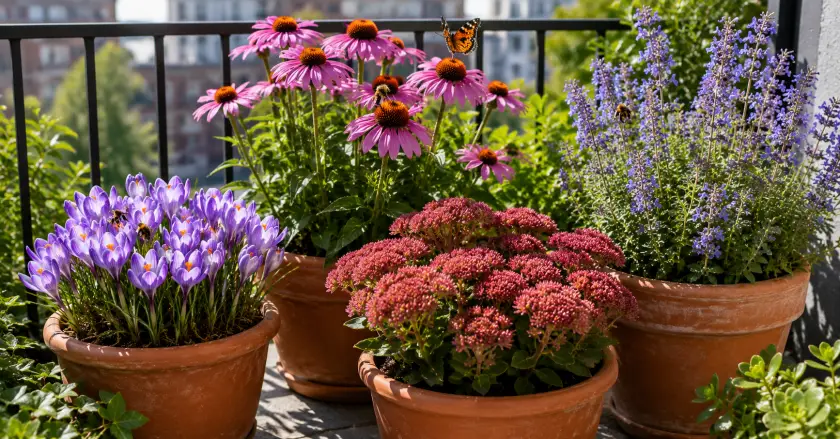
Achieving continuous bloom from early spring through late autumn requires deliberate planning. Here is a practical seasonal planting framework for urban container pollinator gardens:
| Season | Best Pollinator Plants | Key Pollinators Supported |
|---|---|---|
| Early spring (Mar–Apr) | Crocuses, pulmonaria, hellebores, lungwort | Early bumblebee queens, early solitary bees |
| Late spring (May) | Alliums, catmint, salvia, phacelia | Bumblebees, honeybees, solitary bees |
| Early summer (Jun) | Lavender, borage, nasturtium, foxglove | All bee species, butterflies, hoverflies |
| Midsummer (Jul–Aug) | Coneflower, bee balm, calendula, sweet alyssum | Butterflies, bumblebees, hoverflies |
| Late summer (Aug–Sep) | Sedum, thyme flowers, marigolds, salvia | Late bumblebees, migrating butterflies |
| Autumn (Sep–Oct) | Sedum, asters, ivy flowers, single dahlias | Ivy mining bees, late bumblebees, hoverflies |
For seasonal outdoor plant planning across the full year, our garden calendar 2026 provides month-by-month guidance on what to plant and when.
Creating a Pollinator Garden on a Balcony or Small Patio
The practical challenge of creating a pollinator garden in a small urban outdoor space is container management. All the principles above apply — the challenge is executing them in pots rather than open ground.
Use Vertical Space
Wall-mounted planters, railing containers, and hanging baskets all extend the planting area of a small balcony without consuming floor space. Trailing pollinator plants like nasturtium, sweet alyssum, and thyme suit hanging positions well. Our best plants for small outdoor spaces guide covers vertical planting strategies in detail.
Choose Large Containers
Larger containers retain moisture longer, provide more root space for perennial plants, and support more vigorous growth than small pots. For perennial pollinator plants like coneflower, catmint, and sedum, choose containers at least 30cm in diameter. For annual pollinator plants like borage and nasturtium, smaller containers are acceptable but still benefit from being as large as practical.
Group Containers for Impact
A single lavender pot makes little ecological impact. A group of five or six containers planted with complementary pollinator plants — lavender, catmint, borage, thyme, and nasturtium — creates a genuinely functional pollinator habitat that attracts multiple species and provides continuous foraging opportunities throughout the season.
Include a Water Source
As noted above, a shallow saucer of water with pebbles placed among the pollinator containers significantly increases their habitat value. Place it in a visible position and refill every two to three days. Our DIY humidity tray guide covers pebble-and-water setups in detail — the same principle applies outdoors as a water source for pollinators.
Beyond Bees: Supporting a Full Range of Urban Pollinators
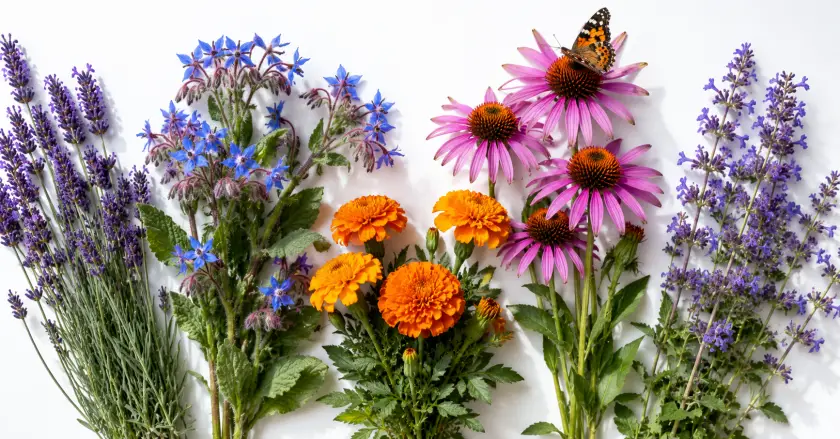
Bee species receive the most attention in pollinator garden discussions but urban biodiversity extends considerably beyond bees. A well-planted urban pollinator garden supports:
Hoverflies — whose larvae are voracious aphid predators, providing free natural pest control. Attracted by open-centred flowers particularly in the daisy family, and by umbellifers like fennel and dill. Our plants that keep bugs away guide covers the pest control role of hoverfly-attracting plants.
Butterflies — which prefer open, flat-topped flowers they can land on, including buddleia (butterfly bush), verbena bonariensis, sedum, and single dahlias. Many butterfly species also need specific host plants for their caterpillars — nettles for red admirals and peacocks, fennel and dill for swallowtails.
Moths — many of which are night-flying pollinators visiting pale, fragrant flowers after dark. Nicotiana (tobacco plant), evening primrose, and night-scented stock all attract moth pollinators that most gardens ignore entirely. Our plants that bloom at night guide covers this overlooked aspect of pollinator support.
Solitary bees — the most diverse and often most effective group of pollinators, requiring a wider range of flower types than social bees. Lavender, borage, phacelia, catmint, and native wildflowers support the greatest diversity of solitary bee species in urban gardens.
Article Summary
| Topic | Key Points |
|---|---|
| Best pollinator plants for urban spaces | Lavender, salvia, coneflower, bee balm, borage, catmint, phacelia, thyme |
| Key planting principles | Single flowers, native species, continuous blooming, no pesticides |
| Seasonal coverage | Early spring through late autumn — at least one plant blooming in each period |
| Shade-tolerant pollinator plants | Foxglove, astrantia, pulmonaria — for north-facing urban positions |
| Water provision | Shallow dish with pebbles — refresh every 2–3 days |
| Beyond bees | Support hoverflies, butterflies, moths, and solitary bees with diverse plant choices |
| Container strategy | Group large containers, use vertical space, include water source |
| Native plants | Most nutritionally valuable for local pollinators — always include some |
Related Guides
- Best Plants for Small Outdoor Spaces
- 15 Hardy Outdoor Plants That Thrive All Year Round
- Best Low-Maintenance Outdoor Plants for Busy Gardeners
- Year-Round Balcony Plants
- Native Plants That Thrive in Your Region
- Plants That Keep Bugs Away Without Chemical Repellents
- How to Keep Pests Away from Outdoor Plants
- How to Design a Wildlife-Friendly Garden
- Plants That Bloom at Night — Moon Garden Guide
- Top Drought-Resistant Plants
- Garden Calendar 2026
- Outdoor Plants That Survive British Winters
Final Thoughts
There is something genuinely powerful about the idea that a small pot of lavender on a seventh-floor balcony is ecologically connected — through the flight paths of bees and butterflies — to parks, gardens, and green spaces across an entire city. Urban pollinator gardens are not isolated gestures. They are nodes in a living network, and every node added to that network strengthens it.
The practical steps required are minimal. Choose nectar-rich, single-flower, largely native plants. Aim for blooming coverage from early spring through late autumn. Avoid pesticides. Add water. Observe what visits and adjust from there.
According to the Royal Horticultural Society, urban gardens collectively cover an area larger than all UK National Nature Reserves combined — making the cumulative choices of individual urban gardeners one of the most significant factors in national pollinator conservation. What you plant on your balcony matters more than it might seem.
Start with one plant. Add another. Watch who comes. Let something wild find its way to you.
Frequently Asked Questions
What are the best pollinator-friendly plants for small urban spaces?
The best pollinator-friendly plants for small urban spaces include lavender, salvia, coneflower, bee balm, borage, sweet alyssum, thyme, marigolds, catmint, and phacelia. These plants are compact enough for containers and balconies, produce abundant nectar and pollen, and attract a wide range of pollinators. Our best plants for small outdoor spaces guide covers container growing for these plants in detail.
Can I attract pollinators to a balcony or rooftop?
Yes — balconies and rooftops can attract significant pollinator activity with the right plant selection. Choose nectar-rich, single-flower varieties, provide a shallow water source with pebbles, avoid pesticides, and aim for continuous blooming from spring through autumn. Even three or four well-chosen pots make a genuine and measurable ecological contribution.
Which plants attract bees most effectively?
Plants that attract bees most effectively include lavender, borage, phacelia, coneflower, salvia, catmint, thyme, rosemary, alliums, and nasturtium. Bees are particularly attracted to blue, purple, and yellow flowers with open, accessible blooms. They cannot access double-flowered varieties where petals block the nectaries — always choose single-flower forms for maximum pollinator value.
What pollinator-friendly plants grow well in shade?
Pollinator plants for shade include foxglove, astrantia, pulmonaria, sweet cicely, and wild garlic. While most pollinator-friendly plants prefer sun, these shade-tolerant varieties produce accessible nectar and pollen for bees and other pollinators in north-facing or shaded urban garden positions. For more shade-tolerant outdoor plants, our hardy outdoor plants guide covers several excellent options.
How do I start a pollinator garden in an urban space?
To start a pollinator garden in an urban space: choose three to five nectar-rich plants that bloom at different times from spring through autumn, use single-flower varieties, avoid all pesticides, add a shallow water source with pebbles, and use containers with drainage holes. Start small, observe which pollinators visit, and expand based on what works in your specific location. Our garden calendar 2026 helps plan seasonal planting for continuous pollinator coverage.
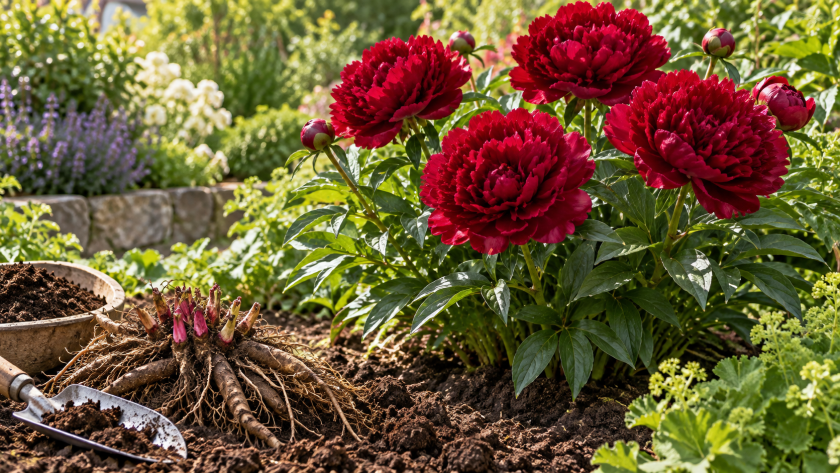


[…] on pollinator plants that work in container gardening and small space situations, our guide on pollinator-friendly plants for urban outdoor spaces covers the most effective pollinator plants for gardens of every […]
[…] September is also perfect for autumn garden calendar tasks. Repair lawns, divide perennials, tidy borders, start composting fallen material, and plant pollinator-friendly choices. For wildlife planting, read wildlife-friendly garden guide and pollinator-friendly plants. […]