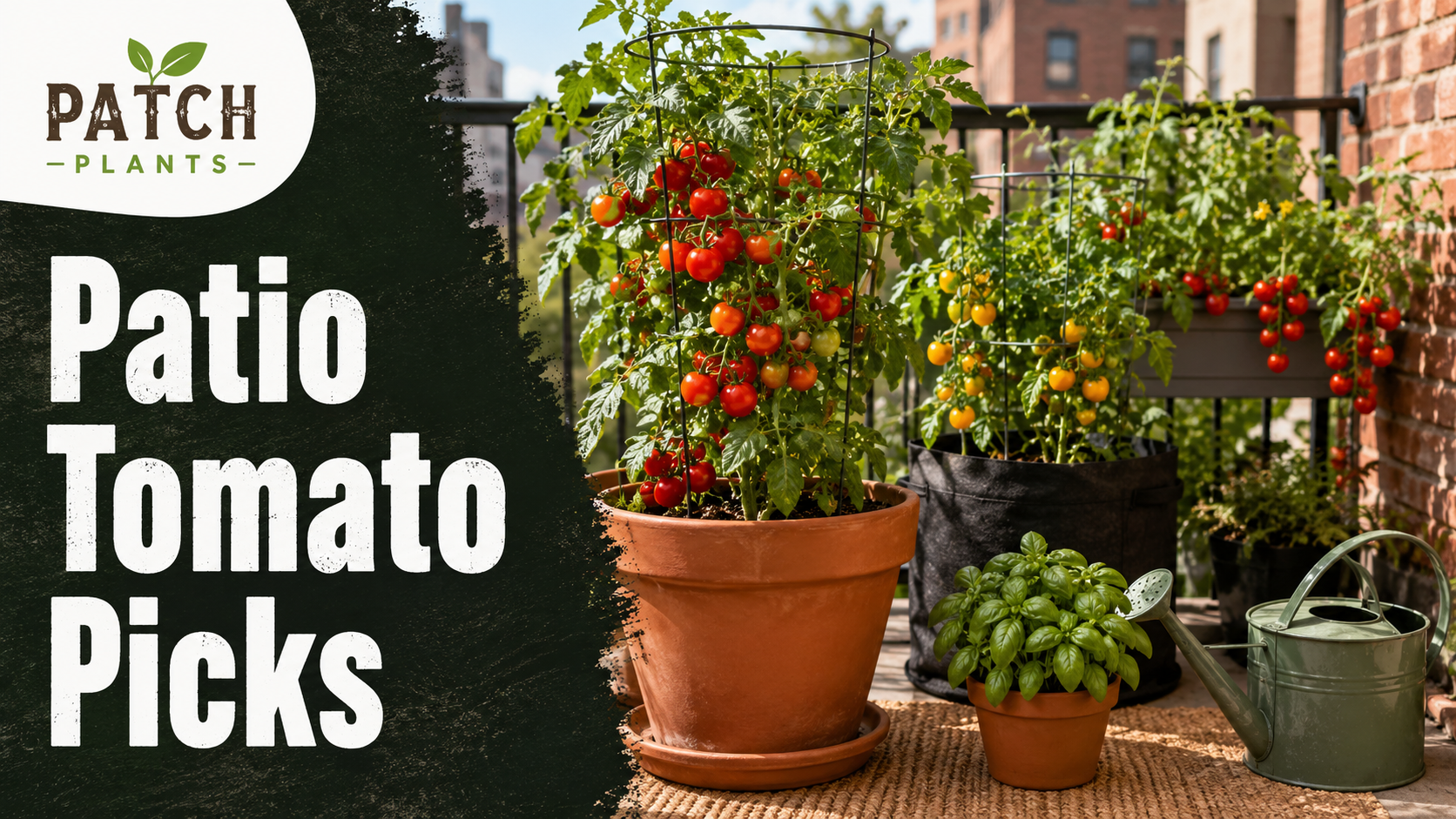
Patio tomato plants are one of the easiest ways to grow fresh food in a small outdoor space. You do not need a big vegetable garden. A sunny patio, balcony, doorstep, deck, or courtyard can grow healthy tomato plants if you choose compact varieties, use the right pot, and keep watering consistent.
Key Takeaways
- Patio tomato plants grow best in large containers with drainage holes, loose potting mix, full sun, and steady water.
- The best balcony tomato plants are usually compact, bush, dwarf, patio, or cherry tomato varieties.
- Good beginner choices include Tiny Tim, Micro Tom, Red Robin, Patio Princess, Tumbling Tom, Patio Choice Yellow, Bush Early Girl, Celebrity, Roma, and Window Box Roma.
- Container gardening tomatoes need more regular watering and feeding than tomatoes in the ground because pots dry out faster and nutrients wash through.
- Use cages or stakes early, water at the base, remove damaged leaves, and give plants space for airflow.
- This article should support edible and container guides like best plants for container gardening on patios, easiest outdoor edible plants, and planting potatoes in containers.
Introduction
Growing tomatoes feels like a big garden project, but it does not have to be. Many of the best patio tomato plants are bred for containers, small spaces, and busy home gardeners. They stay shorter than large vining tomatoes, fit neatly into pots, and still produce sweet fruit through the season.
A patio tomato setup can be as simple as one sturdy pot, one healthy plant, one support, and a sunny corner. It can also become a full edible patio with herbs, edible flowers, potatoes, salad leaves, and compact fruiting plants. If you are building that kind of small-space garden, pair this guide with grow your own edible plants, edible flowers to grow outdoors, and container gardening on patios.
This patio tomato growing guide covers the full process: choosing varieties, picking pots, preparing compost, planting deeply, watering, feeding, pruning, preventing disease, and harvesting at the right time.
Why Patio Tomato Plants Work So Well in Small Spaces
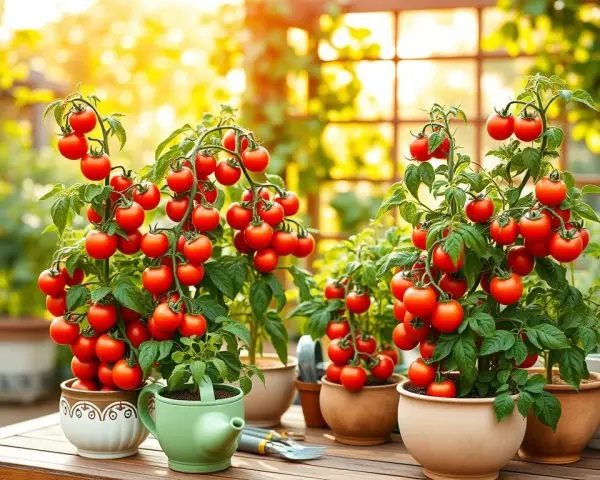
Patio tomato plants are made for people who want a useful crop without needing raised beds or a large garden. They work because tomatoes are naturally happy in warm, sunny conditions, and many compact varieties grow well when their roots have enough compost and steady water.
You control the soil
Garden soil can be heavy, compacted, or full of weed seeds. In pots, you choose a clean, loose growing mix. This helps roots breathe, drain properly, and take up nutrients more easily.
You can move plants if needed
Container tomato plants can be moved to follow sun, escape strong wind, or avoid a cold night early in the season. This is one of the biggest advantages of patio tomato container gardening.
Pests and diseases are easier to spot
When plants are close to your door, you notice problems sooner. Aphids, whiteflies, yellow leaves, drooping stems, and dark leaf spots are easier to catch before they spread.
Harvesting is convenient
Fresh tomatoes are best picked often. A patio plant near your kitchen makes it easier to harvest fruit as soon as it ripens.
For more small-space outdoor ideas, read best plants for small outdoor spaces, year-round balcony plants, and how to keep outdoor plants alive.
Determinate vs Indeterminate Tomatoes for Patios
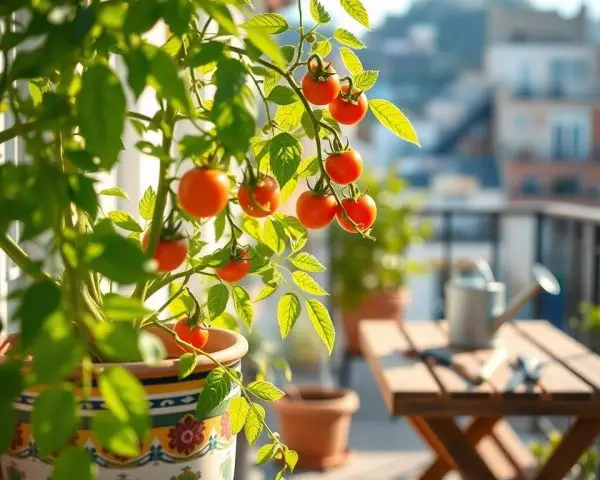
Before choosing patio tomato plant varieties, it helps to understand the difference between determinate and indeterminate tomatoes. This choice affects pot size, support, pruning, and how much space the plant needs.
Determinate tomatoes
Determinate tomatoes are often called bush tomatoes. They grow to a set size, produce fruit over a shorter window, and stay more manageable in containers. These are usually the best choice for beginners, balconies, and compact patios.
Indeterminate tomatoes
Indeterminate tomatoes keep growing until cold weather or disease stops them. They can produce over a long season, but they need stronger support, deeper pots, more pruning, and more vertical space. They can work in containers, but they are not always ideal for very small balconies.
| Feature | Determinate Tomatoes | Indeterminate Tomatoes |
|---|---|---|
| Growth style | Compact and bushy | Vining and tall |
| Best for | Small pots, patios, balconies | Large containers and trellises |
| Support needed | Small cage or stake | Strong cage, stake, or trellis |
| Harvest pattern | Often heavier over a shorter period | Often spread across the season |
| Beginner-friendly? | Yes | Only if space and support are available |
13 Best Patio Tomato Plants for Pots and Balconies
The best compact tomato plants depend on your space, pot size, and how much fruit you want. These 13 options are strong choices for container gardening tomatoes.
1. Tiny Tim
Tiny Tim is one of the most famous dwarf tomato varieties for containers. It stays short, fits into small pots, and produces small red tomatoes that are easy to snack on.
- Best for: Tiny balconies, tabletops, small pots.
- Fruit type: Small cherry tomatoes.
- Care tip: Use a pot that is still deep enough to hold steady moisture.
2. Micro Tom
Micro Tom is one of the smallest tomato varieties available. It is useful when you want small space tomato plants for a windowsill, sunny step, or very compact balcony.
- Best for: Very small containers and novelty edible gardening.
- Fruit type: Small red tomatoes.
- Care tip: Do not expect huge harvests. Grow it for fun and compactness.
3. Red Robin
Red Robin is a reliable dwarf tomato that suits pots and balcony planters. It stays neat and produces sweet red cherry tomatoes.
- Best for: Beginners and small patios.
- Fruit type: Red cherry tomatoes.
- Care tip: Give it bright sun for better flavor.
4. Patio Princess
Patio Princess is made for containers and small outdoor spaces. It has a compact habit but produces good-sized fruit for a patio plant.
- Best for: Patio pots and compact edible displays.
- Fruit type: Medium red tomatoes.
- Care tip: Use a sturdy pot and support early.
5. Tumbling Tom
Tumbling Tom is one of the best cherry tomato cultivars for hanging baskets and raised pots. Instead of growing upright, it spills over the side of the container.
- Best for: Hanging baskets, railing planters, raised containers.
- Fruit type: Red or yellow cherry tomatoes.
- Care tip: Water carefully because hanging baskets dry quickly.
6. Patio Choice Yellow
Patio Choice Yellow is a cheerful option for people who want bright fruit and a compact plant. It suits warm patios and sunny balconies.
- Best for: Decorative edible containers.
- Fruit type: Yellow cherry tomatoes.
- Care tip: Feed regularly once fruit begins forming.
7. Sun Gold
Sun Gold is loved for its sweet orange cherry tomatoes. It is usually more vigorous than many dwarf types, so it needs a larger pot and strong support.
- Best for: Larger patio pots with strong cages.
- Fruit type: Orange cherry tomatoes.
- Care tip: Choose this only if you have room for a taller plant.
8. Sweetheart of the Patio
Sweetheart of the Patio is a compact cherry tomato bred for containers. It gives good production without needing a full garden bed.
- Best for: Balcony tomato plants and container harvests.
- Fruit type: Red cherry tomatoes.
- Care tip: Keep moisture consistent to avoid fruit splitting.
9. Bush Early Girl
Bush Early Girl gives gardeners a compact version of a popular early tomato. It is useful if you want larger fruit from a container plant.
- Best for: Larger pots and early harvests.
- Fruit type: Medium red tomatoes.
- Care tip: Use at least a 5-gallon container, preferably larger.
10. Celebrity
Celebrity is a dependable semi-determinate tomato that can work in large containers. It is a good choice if you want a balance between manageable growth and useful fruit size.
- Best for: Large patio pots and gardeners who want slicing tomatoes.
- Fruit type: Medium red tomatoes.
- Care tip: Provide strong support because fruit can become heavy.
11. Roma
Roma tomatoes are useful for cooking, sauces, and roasting. They are often compact enough for containers if the pot is large enough.
- Best for: Cooking tomatoes in patio gardens.
- Fruit type: Plum tomatoes.
- Care tip: Water consistently to reduce stress and fruit problems.
12. Balconi Red
Balconi Red is bred for small spaces and container growing. It stays compact and works well in patio displays where appearance matters too.
- Best for: Decorative balcony pots.
- Fruit type: Small red tomatoes.
- Care tip: Use it in sunny balcony containers with good airflow.
13. Window Box Roma
Window Box Roma is a compact tomato suited to containers, small patios, and balcony planters. It is a practical choice if you want paste-style fruit from a smaller plant.
- Best for: Small-space cooking tomatoes.
- Fruit type: Small Roma-style tomatoes.
- Care tip: Do not overcrowd window boxes. Roots still need space.
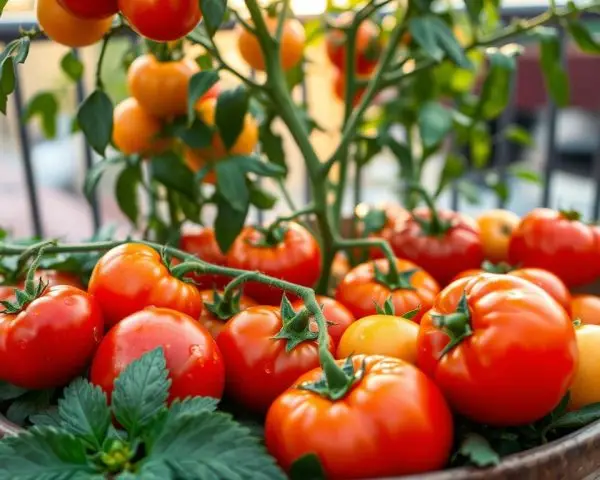
Best Patio Tomato Varieties by Space
| Space Type | Best Varieties | Container Tip |
|---|---|---|
| Very small balcony | Tiny Tim, Micro Tom, Red Robin | Use compact pots but avoid drying out |
| Sunny patio | Patio Princess, Bush Early Girl, Celebrity | Use deep pots with cages |
| Hanging basket | Tumbling Tom | Water often in hot weather |
| Decorative edible pot | Patio Choice Yellow, Balconi Red | Pair with basil or nasturtiums nearby |
| Cooking tomatoes | Roma, Window Box Roma | Keep water steady for firm fruit |
Choosing the Right Container for Patio Tomato Plants
The pot is not just decoration. It decides how much root space, moisture, and stability your tomato plant has. Most problems with growing tomatoes in pots start with containers that are too small.
Use a large enough pot
For most patio tomato plants, a 5-gallon pot is a useful minimum. Larger pots are easier because they hold more compost, dry out more slowly, and support heavier plants better. For vigorous varieties like Sun Gold or Celebrity, go bigger if you can.
Choose drainage holes
Drainage holes are essential. Tomatoes like steady moisture, but they do not like waterlogged roots. If a decorative container has no holes, use it only as a cover pot and keep the tomato in a draining pot inside.
Think about material
Plastic pots are light and hold moisture well. Terracotta looks natural but dries faster. Fabric grow bags allow good airflow but may need more frequent watering. Glazed ceramic looks stylish but can become heavy when full of wet compost.
Use stable pots on windy balconies
Balconies can be windy. Choose broad, stable containers, and avoid tall narrow pots that tip easily. For exposed spaces, read year-round balcony plants and outdoor plants for windy environments.
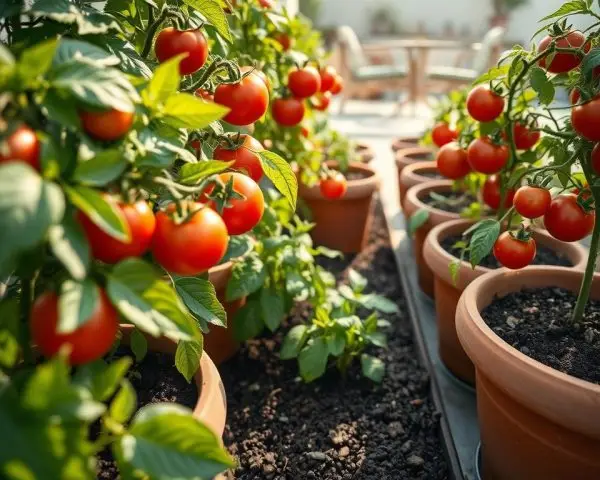
Best Potting Mix for Container Tomato Plants
Container tomato plants need a loose, fertile, moisture-retentive mix that still drains well. Do not use heavy garden soil in pots. It can compact, hold too much water, and carry pests or disease.
Use peat-free multi-purpose compost
A good peat-free multi-purpose compost is a practical base. It gives roots a light structure and is easier to manage than garden soil.
Add compost or slow-release fertilizer
Tomatoes are hungry plants. Mix in well-rotted compost or a slow-release vegetable fertilizer before planting. This gives the plant a steady start.
Improve drainage if needed
If the mix feels heavy, add perlite, bark, or grit. The goal is compost that holds moisture without staying soggy.
Mulch the surface
A thin layer of straw, compost, bark, or other suitable organic mulch helps reduce moisture swings. This is useful in hot patio gardens where pots dry fast.
For potting basics, use best soil mix guide, how to repot a plant, and repotting mistakes to avoid.
How to Plant Patio Tomato Plants Step by Step
Step 1: Wait for warm weather
Tomatoes dislike cold. Plant outside only after frost risk has passed and nights are reliably mild. If you buy plants early, keep them sheltered until the weather is ready.
Step 2: Prepare the pot
Check drainage holes, place the pot in its final sunny position, and fill part of the container with potting mix. A full tomato pot can be heavy, so position it before planting if needed.
Step 3: Remove lower leaves
Tomatoes can root along buried stems. Remove the lowest leaves before planting so the stem can be placed deeper in the compost.
Step 4: Plant deeply
Set the tomato seedling deeper than it was in its nursery pot, leaving the top healthy leaves above the compost. This encourages a stronger root system.
Step 5: Add support early
Install a stake, small cage, or support at planting time. Adding support later can damage roots. Dwarf varieties may need only a small stake, while larger cherry types need stronger cages.
Step 6: Water well
Water thoroughly after planting so compost settles around the roots. Then check soil moisture regularly instead of watering by habit.
Step 7: Place for maximum sun
Balcony tomato plants need strong light. Choose the sunniest safe spot you have. If light shifts during the day, use rolling pot caddies to move containers more easily.
Watering Patio Tomato Plants
Watering is the part of patio tomato plant care that matters most. Containers dry faster than garden beds, especially in sun, heat, and wind. Uneven watering can lead to wilt, fruit splitting, poor growth, and blossom end rot.
Use the finger test
Push your finger into the top inch or two of compost. If it feels dry, water deeply. If it still feels damp, wait. This is better than watering on a fixed calendar.
Water at the base
Water the compost, not the leaves. Wet leaves increase the chance of fungal disease, especially if plants are crowded or airflow is poor.
Water deeply
A light splash is not enough. Water until moisture reaches the lower roots and drains from the base of the pot.
Adjust during hot weather
In hot, windy conditions, growing tomatoes on a patio may mean watering once daily or even twice daily. Fabric grow bags and hanging baskets dry especially fast.
| Weather | Watering Check | Goal |
|---|---|---|
| Cool and cloudy | Every 2 to 4 days | Lightly moist, not wet |
| Mild and sunny | Daily check | Even moisture |
| Hot and windy | Daily or twice daily check | No full dry-out |
For more watering help, read complete watering guide, worst times to water plants, and signs you are overwatering.
Feeding Patio Tomato Plants for Better Fruit
Tomatoes in the ground can send roots deeper to find nutrients. Potted tomatoes cannot. That means patio gardening tomatoes need steady feeding once they begin active growth.
Start with compost nutrients
Mix slow-release fertilizer or compost into the potting mix at planting time. This helps the seedling settle in.
Feed once flowers and fruit appear
Once the plant starts flowering and forming fruit, use a tomato feed according to the product directions. Tomato feeds are usually higher in potassium, which supports flowers and fruit.
Do not overfeed with nitrogen
Too much nitrogen can give you lots of leafy growth and fewer tomatoes. If your plant is huge and green but not flowering, reduce nitrogen-heavy feeding.
Watch for deficiency signs
Yellow lower leaves, weak growth, purple tones, or brown edges can suggest nutrient stress, but always check watering and root health too. Fertilizer will not fix waterlogged compost.
For more feeding detail, read fertilizing indoor vs outdoor plants.
Sunlight and Temperature Tips
Patio tomato plants need sun to produce sweet fruit. A bright, warm spot is usually the difference between a strong crop and a plant that only grows leaves.
Aim for six to eight hours of sun
Six hours is a useful minimum. Eight hours is better. South-facing and west-facing patios often work well, while shaded balconies may struggle.
Use reflected light
White walls, pale paving, and light-colored containers can reflect extra brightness onto plants. This can help in tight urban spaces.
Protect from extreme heat
Containers heat up faster than garden beds. During heatwaves, water carefully, mulch the surface, and consider afternoon shade if leaves are wilting badly.
Protect from wind
Wind dries pots and can snap stems. Place containers near a wall, use wind screens, or choose low, stable varieties for exposed balconies.
For more exposed-space planning, use outdoor plants for storms and heatwaves, drought-resistant plants, and coastal and windy outdoor plants.
Pruning and Patio Tomato Plant Maintenance
Patio tomato plant maintenance should be simple but consistent. You do not need to fuss over the plant every hour, but a few minutes of checking each week can prevent many problems.
Remove yellow or diseased leaves
Lower leaves are often the first to yellow or spot. Remove damaged foliage promptly to improve airflow and reduce disease spread.
Prune suckers only when needed
Indeterminate tomatoes often need sucker pruning. Many dwarf and determinate tomatoes need less pruning because too much removal can reduce the crop. Always check the variety’s growth habit.
Use clean tools
Use clean scissors or pruners, especially when removing diseased leaves. Dirty tools can move disease from one plant to another.
Tie stems loosely
Use soft ties, not tight wire. Leave room for stems to thicken as the plant grows.
| Task | How Often | Why It Matters |
|---|---|---|
| Check soil moisture | Daily in warm weather | Prevents drought stress and splitting |
| Inspect leaves | Every few days | Catches pests and disease early |
| Tie stems | As needed | Stops snapping and leaning |
| Remove damaged leaves | Weekly or as seen | Improves airflow and plant health |
| Feed | During fruiting | Supports flowers and tomatoes |
Common Patio Tomato Plant Diseases and Problems
Patio tomato plant diseases are easier to manage when plants have good airflow, clean compost, base watering, and enough space between pots.
Blight
Blight can cause dark patches on leaves, stems, and fruit. Wet foliage and humid conditions increase risk. Water at the base, space plants well, and remove infected material quickly.
Fungal leaf spots
Leaf spots often begin on lower leaves. Remove affected leaves and improve airflow around the plant.
Blossom end rot
Blossom end rot appears as dark, sunken patches at the bottom of the fruit. It is often linked to uneven watering and calcium uptake problems. Keep moisture steady and avoid letting pots dry out completely.
Fruit cracking
Tomatoes may crack after sudden heavy watering follows dry soil. Consistent watering and mulch help reduce the risk.
Aphids and whiteflies
Check soft new growth and leaf undersides. Remove small infestations early by hand or with a gentle water spray.
Yellow leaves
Yellow leaves can come from overwatering, underwatering, nutrient deficiency, old age, or disease. Check the soil first before adding fertilizer.
For more troubleshooting, read root rot guide, how to revive a dying plant, leaf curl, browning, and droop, and why plant leaves turn yellow.
Harvesting Patio Tomatoes
Harvesting is the best part of growing best patio tomato plants. Check your plants daily once fruit begins to color, especially during warm weather.
Pick when fully colored
A ripe tomato should be deeply colored for its variety and slightly soft when gently pressed. Red, yellow, orange, and dark tomatoes all ripen to different final colors, so know your variety.
Use clean snips if needed
Small cherry tomatoes may come away easily by hand. Larger tomatoes are better cut with clean scissors to avoid tearing stems.
Pick before fruit splits
If rain or heavy watering is expected after a dry spell, pick nearly ripe tomatoes early and let them finish indoors.
Store at room temperature
Fresh tomatoes usually taste best stored at room temperature away from direct sun. Eat ripe patio tomatoes soon for the best flavor.
Good Companion Pots Near Patio Tomato Plants
Tomatoes do best with their own pot, but you can build an edible patio around them with nearby companion containers.
Basil
Basil likes warmth and sun, so it fits well near tomatoes. Keep it in its own pot or in a large shared container only if there is enough room.
Parsley
Parsley can grow in nearby pots and gives useful leaves through the season.
Marigolds
Marigolds add color to the patio and are useful in edible garden designs.
Nasturtiums
Nasturtiums trail nicely from pots and have edible flowers and leaves. They suit sunny container gardens.
Potatoes
Potatoes are not ideal in the same pot as tomatoes, but they work well as a separate edible container crop. For that setup, read planting potatoes in containers.
For more edible pairings, read edible flowers to grow outdoors, garden calendar, and pollinator-friendly plants for urban spaces.
Helpful PATCH Guides for Patio Tomatoes, Edibles, Containers, and Plant Care
Use these internal guides to support the edible container cluster while helping readers move naturally to the next useful article.
Edible and Container Gardening Guides
- Best plants for container gardening on patios
- Easiest outdoor edible plants
- Planting potatoes in containers
- Edible flowers to grow outdoors
- Garden calendar
- Outdoor Plants hub
- PATCH Plants blog
Patio, Balcony, and Outdoor Growing Guides
- Best plants for small outdoor spaces
- Year-round balcony plants
- How to keep outdoor plants alive
- Low-maintenance outdoor plants
- Hardy outdoor plants
- Hardy plants with minimal watering
- Outdoor plants that survive British winters
- Outdoor plants for coastal and windy spaces
- Drought-resistant plants
- Outdoor plants for storms and heatwaves
- Native plants that thrive in your region
Shade and Container Support Guides
- Plants in pots in shade
- Small plants that like shade
- Shade-loving plants for outdoor spaces
- Plants for bathroom with no light
- Bathroom plants for mold
- Low light house plants
- Complete indoor light guide
Outdoor Planning and Seasonal Guides
- Seasonal plant care in autumn
- Outdoor garden color themes
- Create a colorful garden for all seasons
- Pollinator-friendly plants for urban spaces
- Wildlife-friendly garden design
- Plants that bloom at night
- Festive plants for Christmas
Pest and Outdoor Protection Guides
- How to keep pests away from outdoor plants
- Plants that keep bugs away
- Mosquito repellent plants
- Mosquito repellent plants for patios
- Shade plants that repel mosquitoes
- Herbs that keep mosquitoes away
Plant Care Guides
- Plant Care hub
- Complete watering guide
- Worst times to water plants
- Signs you are overwatering
- Root rot guide
- How to revive a dying plant
- Leaf curl, browning, and droop
- Why plant leaves turn yellow
- How to clean plant leaves
- Best soil mix guide
- How to repot a plant
- Repotting mistakes to avoid
- Fertilizing indoor vs outdoor plants
- Pruning basics
- Humidity hacks
- DIY humidity tray
- Self-watering pots guide
Indoor Plant Guides for Patio Gardeners Too
- Indoor Plants hub
- Best indoor plants for tiny apartments
- Best indoor plants for beginners
- Best indoor plants for first-time plant parents
- Low-maintenance plants
- Air-purifying indoor plants
- Blooming indoor plants
- Colorful foliage indoor plants
- Unusual indoor plants
- Rare houseplants
Specific Plant Care Guides
- Snake Plant care guide
- ZZ Plant care guide
- Pothos care guide
- Spider Plant care guide
- Peace Lily care guide
- Boston Fern care guide
- Philodendron care guide
- Dracaena care guide
- Calathea care guide
- Monstera care guide
- Hoya care guide
- Anthurium care guide
- Orchid care guide
- African Violet care guide
- Succulent care guide
- Cactus care guide
- String of Pearls care
- Moss pole for plants
Frequently Asked Questions
What are the best patio tomato plants for beginners?
The best patio tomato plants for beginners include Tiny Tim, Micro Tom, Red Robin, Patio Princess, Tumbling Tom, Patio Choice Yellow, Sweetheart of the Patio, Bush Early Girl, Celebrity, Roma, Balconi Red, and Window Box Roma.
Can tomatoes grow well on a patio?
Yes. Tomatoes can grow well on a patio if they get strong sun, enough root space, drainage holes, loose potting mix, consistent water, regular feeding, and support.
How big should a pot be for patio tomato plants?
Most patio tomato plants need at least a 5-gallon pot. Larger containers are easier to manage because they hold more moisture and give roots more space.
Do balcony tomato plants need full sun?
Yes. Balcony tomato plants grow best with six to eight hours of direct sun. They may grow in less light, but fruit production is usually weaker.
How often should I water tomato plants in containers?
Water when the top inch or two of compost begins to dry. In hot or windy weather, tomato plants in containers may need water every day.
Can I grow cherry tomatoes in pots?
Yes. Cherry tomatoes are among the best choices for pots. Compact types like Tumbling Tom, Patio Choice Yellow, Red Robin, and Tiny Tim are especially useful for small spaces.
Do patio tomato plants need cages?
Most do. Even compact tomatoes benefit from a small cage or stake because fruit can make stems heavy. Add support at planting time to avoid root damage later.
Should I prune patio tomato plants?
Prune damaged, diseased, or crowded growth. Indeterminate tomatoes usually need more sucker pruning than dwarf or determinate patio varieties.
Why are my patio tomato leaves turning yellow?
Yellow leaves can come from overwatering, underwatering, nutrient shortage, poor drainage, disease, or normal ageing of lower leaves. Check soil moisture and drainage first.
Final Thoughts
Patio tomato plants are a practical, satisfying crop for small outdoor spaces. Start with a compact variety, use a large container with drainage, plant deeply, add support early, water consistently, feed once fruit begins to form, and keep leaves dry where possible.
The RHS explains that compact bushy cherry tomato cultivars are among the easiest tomatoes to grow in pots and recommends regular feeding once fruits start forming: RHS guide to growing tomatoes in a pot.
Once you grow one tomato plant successfully, it becomes much easier to build a full edible patio with herbs, potatoes, salad leaves, edible flowers, and pollinator-friendly plants nearby.
Final Recap
The best patio tomato plants are compact, productive, and suited to container life. Choose varieties like Tiny Tim, Red Robin, Patio Princess, Tumbling Tom, Patio Choice Yellow, Sweetheart of the Patio, Bush Early Girl, Celebrity, Roma, Balconi Red, or Window Box Roma. Use a large pot, free-draining potting mix, full sun, steady watering, tomato feed, and early support. Keep this post as a support article for your edible plants, container gardening, outdoor plants, plant care, and balcony gardening clusters.