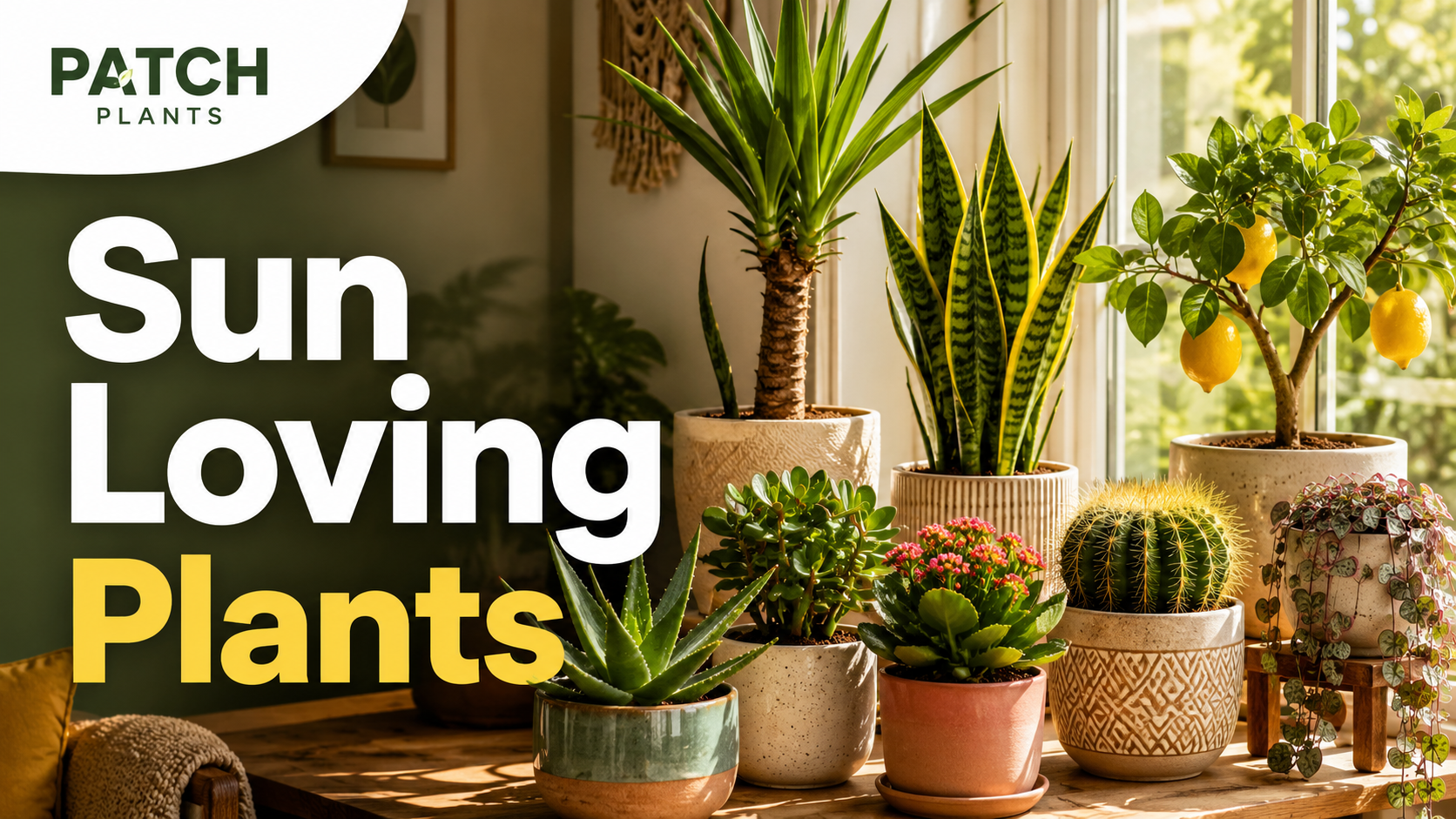
House plants that like direct sunlight can turn a bright windowsill, sunny living room, or south-facing conservatory into a beautiful indoor garden. While many tropical houseplants prefer filtered light, certain cacti, succulents, flowering plants, and small citrus trees grow particularly well when they receive plenty of sunshine.
However, direct sunlight is not the same for every plant. An established barrel cactus may tolerate strong rays that would scorch a fiddle-leaf fig. Aloe vera and jade plants need bright conditions but may appreciate protection from intense summer afternoon sun. Even plants that naturally grow in sunny habitats can burn when moved abruptly from a shaded nursery into a hot window.
This guide explores 17 house plants that like direct sunlight or benefit from carefully managed periods of direct sun. You’ll discover which plants suit south-facing windows, which prefer gentler morning rays, how to acclimate indoor plants, and how to balance watering, temperature, and pet safety in the sunniest parts of your home.
What House Plants Like Direct Sunlight?
Some of the best house plants that like direct sunlight include Echeveria, barrel cactus, prickly pear cactus, ponytail palm, yucca cane, Meyer lemon, calamondin citrus, and ornamental pepper. These plants generally benefit from very bright conditions, although their individual requirements still vary.
Other popular indoor plants, including aloe vera, jade plant, burro’s tail, kalanchoe, snake plant, bird of paradise, string of hearts, pelargonium, and tropical hibiscus, may also enjoy some direct sunlight when introduced gradually. Several need protection from the hottest midday or afternoon exposure.
The Royal Horticultural Society’s guide to houseplants for sunny rooms recommends suitable cacti, succulents, Echeveria, aloe, and kalanchoe for bright indoor locations. It also distinguishes true full-sun plants from species better suited to bright but filtered light.
For additional growing advice, visit our indoor plant lighting guide.
Key Takeaways
- House plants that like direct sunlight include certain desert cacti, Echeveria, ponytail palm, yucca, citrus trees, ornamental peppers, and sunny-window flowering plants.
- Not every bright-light houseplant tolerates intense midday sun. Some thrive with only gentle morning or late-afternoon exposure.
- In the Northern Hemisphere, unobstructed south-facing windows generally provide the strongest natural indoor light, while west-facing windows often receive hotter afternoon sunlight.
- Windows can differ substantially in brightness because of season, latitude, buildings, curtains, and surrounding trees.
- Even sun-loving plants should be introduced gradually to stronger light to reduce the chance of leaf scorch.
- Cacti and succulents often need their potting medium to dry between waterings, while citrus and flowering plants typically need more consistent moisture.
- Large plants such as bird of paradise and yucca require adequate space as well as suitable light.
- Some popular houseplants, including ZZ plant and Dieffenbachia, prefer indirect light and should not be recommended for harsh direct sun.
- Several sunny-window plants are toxic to pets. Check botanical names and veterinary safety information before placing plants within reach.
- Watch for bleaching, dry patches, wilting, and unusual leaf changes when increasing sunlight exposure.
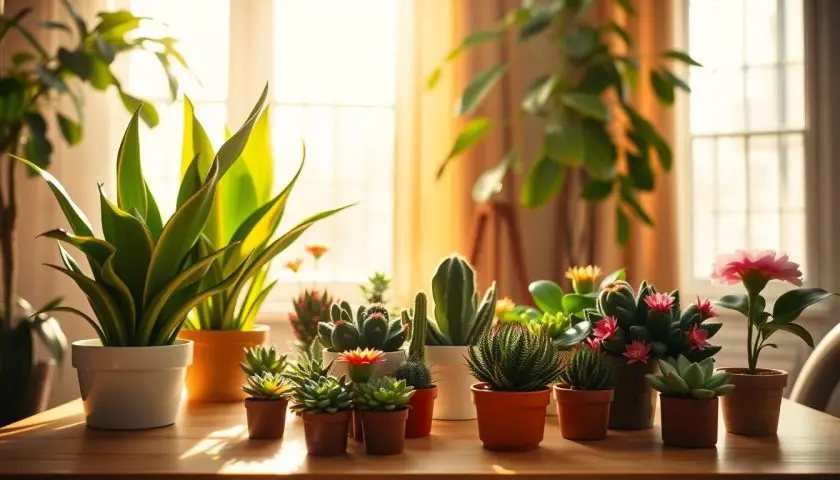
What Does Direct Sunlight Mean for Indoor Plants?
Direct sunlight reaches a plant’s leaves without being diffused by curtains, blinds, or other shading materials.
Bright indirect light describes a well-lit location where the strongest sun rays do not fall directly on the foliage.
Filtered light passes through a material such as a sheer curtain, which softens and disperses the incoming sunlight.
Direct Sunlight vs Bright Indirect Light
| Light Type | What It Means | Typical Indoor Location |
|---|---|---|
| Direct sunlight | Sun rays fall directly on the leaves | Unshaded sunny windowsill |
| Bright indirect light | Strong ambient light without direct sun on foliage | Bright room away from the direct sunbeam |
| Filtered sunlight | Sunlight softened through a curtain or similar barrier | Window behind a sheer curtain |
| Moderate light | Useful daylight with less intensity | Suitable east-facing windows or farther inside a bright room |
| Low light | Limited natural illumination | Areas distant from windows or in heavily shaded rooms |
These categories are practical descriptions rather than exact measurements. Actual light intensity changes throughout the day and across seasons.
Which Windows Receive the Most Sunlight?
In most Northern Hemisphere homes, unobstructed south-facing windows receive strong sunlight during much of the day.
West-facing windows often receive intense afternoon light, which can increase leaf and container temperatures.
East-facing windows provide morning sunshine that is often easier for many sensitive houseplants to tolerate.
North-facing windows usually receive less direct sunlight in the Northern Hemisphere.
In the Southern Hemisphere, north-facing windows are generally the sunnier orientation instead.
Building overhangs, trees, nearby structures, window treatments, and local latitude may change these patterns.
Does Window Glass Reduce Sunlight?
Window glass changes the spectrum and intensity of incoming light, but ordinary clear windows still allow substantial visible light through.
A sunny windowsill can therefore provide useful light for plants while also becoming very warm on bright days.
Specially coated glazing and tinted windows may reduce available light more significantly.
Observe the plant’s response rather than assuming all windows with the same orientation provide identical growing conditions.
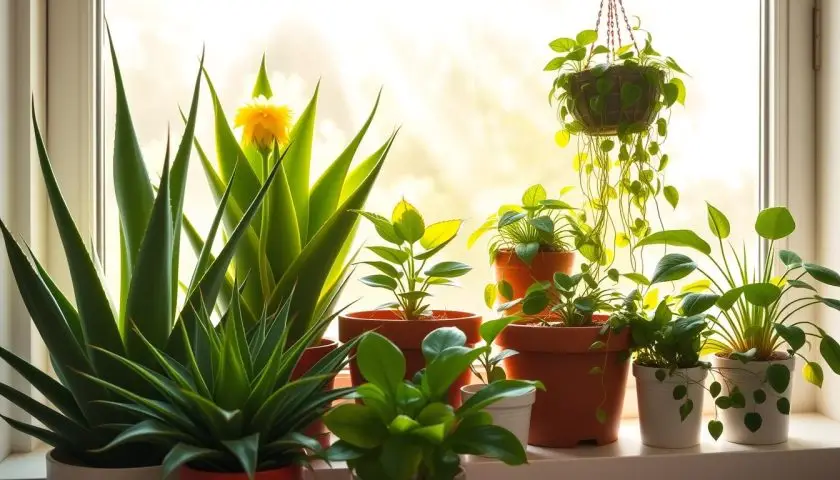
Quick Comparison: 17 House Plants for Sunny Windows
This comparison separates strong-sun candidates from plants that need more careful exposure. Sun tolerance depends on acclimatization, season, and local conditions.
| Plant | Light Preference Indoors | Watering Approach | Best Feature |
|---|---|---|---|
| 1. Echeveria | Very bright sun; protect when necessary | Allow suitable drying | Colourful rosette |
| 2. Barrel Cactus | Strong direct sunlight | Water sparingly when appropriate | Architectural shape |
| 3. Prickly Pear Cactus | Strong direct sunlight | Allow potting mix to dry | Distinctive flat pads |
| 4. Ponytail Palm | Very bright light and direct sun | Allow drying | Swollen trunk |
| 5. Yucca Cane | Sunny location; protect from extreme summer rays | Allow appropriate drying | Upright architectural form |
| 6. Meyer Lemon | Several hours of direct sunlight | Consistent, careful moisture management | Fragrant flowers and fruit |
| 7. Calamondin Citrus | Very bright direct sunlight | Check moisture regularly | Small citrus fruit |
| 8. Ornamental Pepper | Strong direct sunlight | Moderate, consistent moisture | Colourful fruits |
| 9. Aloe Vera | Very bright light; gentle direct sun | Allow soil to dry appropriately | Fleshy foliage |
| 10. Jade Plant | Bright light with some direct sun | Allow soil to dry | Tree-like succulent |
| 11. Burro’s Tail | Bright light and gentle sun | Free-draining soil; avoid saturation | Trailing stems |
| 12. Kalanchoe | Very bright light and suitable sun | Allow partial drying | Colourful flowers |
| 13. Snake Plant | Bright light; some acclimated sun | Allow appropriate drying | Upright foliage |
| 14. Bird of Paradise | Very bright light; managed direct sun | Moderate moisture | Large tropical foliage |
| 15. String of Hearts | Bright light; gentle morning sun | Allow partial drying | Trailing heart-shaped leaves |
| 16. Pelargonium | Sunny conditions; shade harsh midday sun if needed | Water according to growth | Repeated flowers |
| 17. Tropical Hibiscus | Very bright light; gentle sun or filtered strong light | More consistent moisture | Large flowers |
Important: The last group should not be placed immediately into unfiltered afternoon sunlight. These are bright-window plants that can benefit from suitable amounts of direct light, not plants guaranteed to tolerate intense sun throughout the day.
17 Best House Plants That Like Direct Sunlight
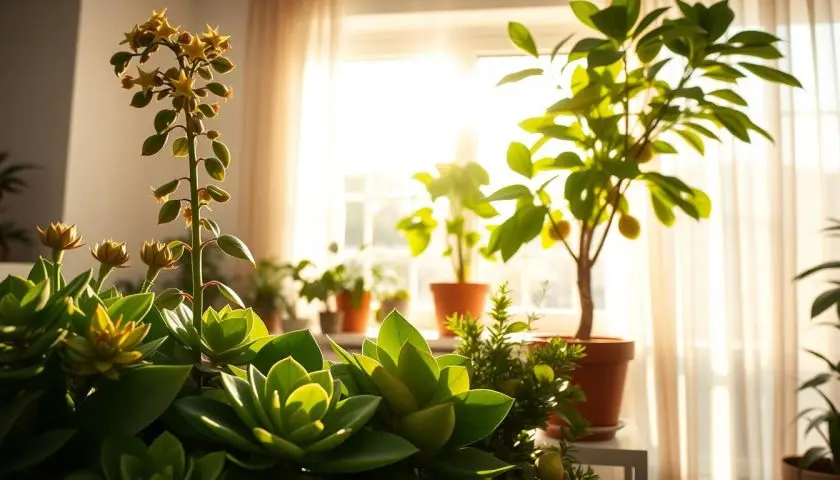
1. Echeveria: Best for Colourful Sunny Windowsills
Botanical name: Echeveria species and cultivars.
Echeverias are among the most attractive house plants that like direct sunlight. They form symmetrical rosettes of fleshy leaves in shades of green, blue, grey, pink, or purple.
Many varieties develop stronger colours and compact shapes when they receive abundant light.
However, newly purchased plants that were previously grown in filtered greenhouse conditions can develop scorched leaves if exposed suddenly to intense afternoon sunlight.
Provide a bright window, introduce stronger sun gradually, and avoid wet potting medium for prolonged periods.
- Best light: Strong bright light and suitable direct sun after acclimatization.
- Watering: Water when the mix has dried appropriately for the plant and season.
- Soil: Free-draining succulent medium.
- Best placement: Bright south-facing windowsill or similar sunny location.
- Main caution: Leaf scorch and root rot from unsuitable care.
Echeveria is a useful choice for a compact succulent display. See our succulent care guide for more information.
2. Barrel Cactus: Best for Strong Indoor Sunshine
Botanical example: Kroenleinia grusonii, commonly sold as Echinocactus grusonii.
The golden barrel cactus is known for its rounded body and prominent yellowish spines.
It belongs to a group of desert cacti that generally require abundant sunlight and well-drained growing conditions.
A bright indoor windowsill or conservatory can provide a suitable growing position where temperatures remain appropriate.
Unlike moisture-loving tropical plants, barrel cacti are vulnerable to problems when potting mix remains wet for extended periods.
- Best light: Strong direct sunlight, introduced gradually.
- Watering: Water sparingly according to season and potting-medium dryness.
- Soil: Suitable cactus compost with effective drainage.
- Best placement: Unobstructed sunny window.
- Main caution: Sharp spines and excessive watering.
Choose a secure location away from children and pets, and use appropriate protection when handling the cactus.
3. Prickly Pear Cactus: Best for a Distinctive Desert Look
Botanical example: Opuntia microdasys.
Prickly pear cacti are popular for their unusual flat pads and architectural appearance.
Many species grow successfully in strong sunlight, making them useful for bright windows and conservatories.
However, cactus varieties vary in size and growth rate, so botanical identification matters.
Even species adapted to hot environments should be acclimated gradually when moving from shade into intense sun.
- Best light: Strong direct sun.
- Watering: Allow substantial drying between appropriate waterings.
- Soil: Well-draining cactus mix.
- Best placement: Sunny indoor windows or bright conservatories.
- Main caution: Fine glochids that can irritate skin.
Some Opuntia species have very fine barbed glochids that detach easily. Keep these plants away from areas where people or animals may brush against them.
4. Ponytail Palm: Best Low-Maintenance Sunny Statement Plant
Botanical name: Beaucarnea recurvata.
Despite its common name, the ponytail palm is not a true palm.
It is recognized by its swollen trunk base and long, arching leaves that create a fountain-like appearance.
The plant stores water in its enlarged base and generally performs well in bright conditions with appropriate drainage.
It is an attractive choice for gardeners who want an architectural indoor plant without the relatively frequent watering required by many tropical foliage plants.
- Best light: Very bright light and appropriate direct sunlight.
- Watering: Allow the growing medium to dry appropriately.
- Soil: Free-draining potting mix.
- Best placement: Bright sunny room with enough space.
- Main caution: Avoid prolonged saturation around roots.
Ponytail palms grow slowly indoors, but mature plants can eventually need considerable space.
5. Yucca Cane: Best for Sunny Modern Interiors
Botanical name: Yucca elephantipes, also known as Yucca gigantea.
Yucca cane is valued for its woody trunk and clusters of pointed leaves.
It adds a strong architectural element to bright living rooms, hallways, and conservatories.
Yucca generally needs plentiful light. However, the Royal Horticultural Society recommends shielding indoor yucca from excessively hot direct summer sun.
This means a south-facing winter window may be suitable, while a very hot summer window may require filtered light.
- Best light: Sunny location, with protection from excessive summer heat.
- Watering: Allow suitable drying between waterings.
- Soil: Well-drained compost.
- Best placement: Bright spacious room.
- Main caution: Leaf tips, mature size, and root waterlogging.
Position yucca where its pointed foliage will not obstruct frequently used walkways.
6. Meyer Lemon Tree: Best for Sunny Indoor Fruit Growing
Botanical name: Citrus × meyeri.
Meyer lemon trees are among the most rewarding indoor plants for sunny conditions, although they require more attention than many succulents.
They produce fragrant flowers and can develop edible fruit when light, pollination, nutrition, and growing conditions are suitable.
Citrus trees generally need substantial light to flower and fruit well.
A bright south-facing window or conservatory is often a better choice than a room receiving only brief indirect daylight.
Supplemental grow lights may be necessary when natural indoor daylight is inadequate.
- Best light: Several hours of strong direct sunlight.
- Watering: Monitor moisture carefully, avoiding prolonged drought or saturation.
- Soil: Suitable citrus potting mix.
- Best placement: Sunny window, greenhouse, or conservatory.
- Main caution: Low winter light, pests, and inconsistent moisture.
Some citrus flowers are self-fertile, but indoor fruit set can benefit from suitable pollination assistance when insects are absent.
For related care information, explore our indoor versus outdoor fertilizing guide.
7. Calamondin Citrus: Best for a Compact Indoor Citrus Display
Botanical name: Citrus × microcarpa, also called calamansi or calamondin.
Calamondin is a small citrus tree often grown in containers for its glossy foliage, fragrant flowers, and decorative fruit.
It generally prefers very bright conditions with plenty of sunlight.
Compared with many common foliage houseplants, calamondin requires a brighter position and more consistent management of water and nutrients.
A bright conservatory or suitable south-facing window can provide a useful growing environment.
- Best light: Strong sunlight.
- Watering: Maintain suitable moisture without waterlogging.
- Soil: Well-drained citrus growing medium.
- Best placement: Sunny window or conservatory.
- Main caution: Insufficient winter light and dry indoor air.
Calamondin is especially appealing when you want a compact fruiting plant, but fruit production indoors should not be guaranteed.
8. Ornamental Pepper: Best for Colourful Sunny Windows
Botanical name: Capsicum annuum ornamental cultivars.
Ornamental peppers produce bright fruits that may be red, yellow, orange, purple, or other colours depending on the variety.
They need high light levels to maintain strong growth and support flowering and fruit development.
A sunny window is generally preferable to a dim interior location.
Ornamental peppers often need more frequent watering than desert cacti because their leaves and fruiting growth demand a steadier supply of moisture.
- Best light: Strong direct sunlight.
- Watering: Regular checks; avoid prolonged drying or saturation.
- Soil: Fertile, well-drained potting mix.
- Best placement: Sunny kitchen or conservatory.
- Main caution: Irritating hot fruits and access by pets or children.
Some ornamental peppers are grown primarily for decoration and may produce extremely hot fruit. Do not assume every ornamental cultivar is appropriate for culinary use.
9. Aloe Vera: Best for a Bright Succulent Collection
Botanical name: Aloe vera.
Aloe vera is one of the best-known succulent houseplants.
Its thick leaves store water, allowing it to tolerate periods of relatively dry potting medium.
However, aloe vera is sometimes incorrectly described as requiring several hours of intense direct sunlight every day.
It generally performs well in very bright light, including suitable gentle direct sun, but leaves can brown or scorch when exposed suddenly to intense sunlight through hot windows.
- Best light: Very bright light with suitable morning or gentle direct sun.
- Watering: Allow substantial drying between waterings as appropriate.
- Soil: Well-draining succulent compost.
- Best placement: Bright east-, south-, or west-facing window with appropriate exposure.
- Main caution: Leaf scorch, wet roots, and pet toxicity.
Aloe can be toxic to cats and dogs if ingested. Keep it away from pets that chew plants.
10. Jade Plant: Best for a Tree-Like Sunny Succulent
Botanical name: Crassula ovata.
Jade plants are popular for their thick oval leaves and woody stems.
With good care, they can gradually develop a miniature tree-like appearance.
They prefer bright growing conditions and may tolerate some direct sunlight after suitable acclimatization.
However, very intense sun can damage leaves, particularly when a previously shaded plant is moved abruptly into a hot window.
- Best light: Bright light, with suitable periods of direct sun.
- Watering: Allow the growing medium to dry appropriately.
- Soil: Free-draining succulent mix.
- Best placement: Bright sunny window with controlled heat.
- Main caution: Overwatering, sudden sun exposure, and toxicity to pets.
For detailed growing instructions, read our jade plant care guide.
11. Burro’s Tail: Best for Bright Hanging Planters
Botanical name: Sedum morganianum.
Burro’s tail is a trailing succulent admired for its densely packed fleshy leaves.
Its hanging stems make it attractive on shelves and in suspended containers.
It generally appreciates abundant light and can tolerate suitable gentle sun, but harsh midday or afternoon rays may damage foliage.
The leaves also detach easily, so the plant should be handled carefully.
- Best light: Bright light with gentle direct morning sun.
- Watering: Allow appropriate drying between waterings.
- Soil: Well-drained succulent compost.
- Best placement: Bright hanging planter or shelf near a sunny window.
- Main caution: Fragile leaves and sun scorch.
For attractive alternatives, explore our trailing plants for shelves and bookcases.
12. Kalanchoe: Best for Colourful Succulent Flowers
Botanical name: Kalanchoe blossfeldiana.
Kalanchoe is a popular flowering succulent with clusters of colourful blooms.
Flowers may appear in red, pink, orange, yellow, white, or other shades.
It enjoys strong light and may tolerate suitable direct sun, although intense exposure can scorch plants that have been grown under shade.
Unlike many foliage plants that simply benefit from greater light, kalanchoe can also require appropriate day-length conditions for repeated flowering.
- Best light: Very bright light with suitable direct sun.
- Watering: Allow partial drying and avoid waterlogging.
- Soil: Free-draining succulent compost.
- Best placement: Sunny windowsill or bright room.
- Main caution: Excessive watering and toxicity to pets.
Kalanchoe species are toxic to cats and dogs if ingested. Keep them out of reach.
13. Snake Plant: Best for Flexible Bright-Light Care
Botanical name: Dracaena trifasciata, formerly Sansevieria trifasciata.
Snake plants are commonly recommended for lower-light rooms, but they can also grow well in brighter locations.
Some acclimated plants tolerate periods of direct sunlight, although sudden intense exposure may damage sensitive foliage.
Their upright leaves and relatively modest watering requirements make them appealing for busy indoor gardeners.
However, they should not automatically be treated as desert cacti that require full sun.
- Best light: Bright indirect light through suitable periods of direct sun.
- Watering: Allow appropriate drying before watering again.
- Soil: Well-drained growing medium.
- Best placement: Bright window or sunny room with gradual acclimatization.
- Main caution: Root problems from overwatering and leaf damage from abrupt sun exposure.
Our snake plant care guide explains how to balance light, watering, and potting mix.
14. Bird of Paradise: Best for a Large Sunny Room
Botanical name: Strelitzia reginae.
Bird of paradise is a striking tropical plant with large, paddle-shaped leaves.
It is an excellent option for a spacious bright room or conservatory where light, temperature, and humidity can be managed.
Mature plants may produce colourful flowers, although indoor flowering can be difficult without sufficient light and suitable growing conditions.
Bird of paradise likes a bright environment and may tolerate direct sun after acclimatization. Nevertheless, harsh hot summer exposure through glass may still need to be filtered.
- Best light: Very bright light and carefully managed direct sunlight.
- Watering: Moderate moisture during active growth without waterlogging.
- Soil: Suitable well-drained loam-based compost.
- Best placement: Large sunny room or conservatory.
- Main caution: Mature size, intense heat, and insufficient light for flowering.
For growing advice, visit our bird of paradise care guide.
15. String of Hearts: Best for Gentle Morning Sun
Botanical name: Ceropegia woodii.
String of hearts is a trailing plant known for its delicate heart-shaped leaves.
Its thin vines make it attractive in hanging pots, on shelves, and in bright windows.
It performs best in bright conditions and may tolerate gentle morning sunshine, but strong afternoon sun can damage foliage.
It is better categorized as a bright-light plant with limited direct-sun tolerance than as a full-sun desert plant.
- Best light: Bright indirect light with gentle morning sun.
- Watering: Allow the growing medium to dry appropriately.
- Soil: Well-draining container mix.
- Best placement: East-facing window or bright sheltered position.
- Main caution: Scorching and damage to delicate vines.
String of hearts is particularly useful when your window receives some direct sunlight but becomes shaded during the hottest part of the day.
16. Pelargonium: Best for Flowering Sunny Windows
Botanical group: Pelargonium species and cultivars, often sold as geraniums.
Pelargoniums are popular flowering plants that can be grown indoors in bright conditions.
They produce clusters of colourful flowers and may continue blooming when light, moisture, and temperature are suitable.
Although pelargoniums generally enjoy sunshine, the Royal Horticultural Society recommends providing shade from scorching midday sun when they are grown indoors or under glass.
- Best light: Sunny conditions with protection from extreme midday heat when necessary.
- Watering: Water according to moisture and active growth.
- Soil: Well-drained potting medium.
- Best placement: Bright windowsill or conservatory.
- Main caution: Excessive wetness, heat scorch, and cold exposure.
Remove spent flower clusters where appropriate and provide adequate airflow.
17. Tropical Hibiscus: Best for Large Indoor Flowers
Botanical name: Hibiscus rosa-sinensis.
Tropical hibiscus is admired for its large, colourful flowers.
It requires a bright growing environment and can be grown indoors or in conservatories when temperature, watering, and humidity are appropriate.
However, hibiscus is not as tolerant of neglected watering or extreme window heat as most desert succulents.
The Royal Horticultural Society recommends bright, filtered conditions for tropical hibiscus under glass. Gentle direct sun may be suitable in certain conditions, but harsh prolonged exposure should be avoided.
- Best light: Very bright filtered light with suitable gentle direct sun.
- Watering: More consistent moisture during active growth.
- Soil: Moisture-retentive but well-drained growing medium.
- Best placement: Bright warm conservatory or suitable indoor window.
- Main caution: Bud drop, temperature stress, and inadequate light for flowering.
Indoor hibiscus often requires more attention than low-water succulents, especially during active flowering.
Which Common Houseplants Should Avoid Harsh Direct Sunlight?
Some plants from the original sunny-houseplant selection are better suited to bright indirect light.
They can still be attractive in sunny rooms if placed away from the most intense rays.
ZZ Plant
ZZ plants are excellent low-maintenance houseplants that tolerate a range of indoor conditions.
However, bright indirect light is generally preferable to intense direct sun, which may scorch their leaves.
Read our ZZ plant care guide for appropriate growing conditions.
Dieffenbachia
Dieffenbachia is usually better grown in bright filtered or indirect light.
Its patterned foliage can be damaged by excessive direct exposure.
It should not be treated as a plant for an unshaded hot windowsill.
Haworthia cooperi
Haworthia cooperi is a small succulent with attractive translucent leaf tips.
Despite being a succulent, it generally prefers bright indirect light or gentle sun rather than prolonged harsh exposure.
Not every succulent is adapted to full desert sunlight.
Rubber Plant
Rubber plants generally perform well in bright indoor conditions, but hot direct sun can damage their foliage.
Choose a bright position with suitable filtered light.
For more information, read our rubber plant care guide.
Fiddle-Leaf Fig
Fiddle-leaf figs need good light but can suffer sun damage when suddenly exposed to very strong direct sunlight.
A bright position with managed exposure is usually safer than an excessively hot unfiltered window.
Visit our fiddle-leaf fig care guide for additional advice.
Jasmine
Indoor jasmine varies by species.
Pink jasmine, Jasminum polyanthum, benefits from very bright conditions but is generally recommended for bright filtered light under glass.
It should not automatically be placed with cacti that tolerate prolonged strong direct sun.
How to Acclimate Indoor Plants to Direct Sunlight
Even house plants that like direct sunlight need time to adjust when moving from a shaded shop or nursery into a brighter home.
A sudden increase in exposure may cause bleaching, leaf scorch, wilting, or other damage.
Step 1: Observe the Current Light
Identify whether the plant currently receives direct, filtered, or indirect sunlight.
Note when sunlight reaches the leaves and how intense the heat becomes around the window.
Step 2: Check Species Requirements
Confirm whether the plant naturally tolerates strong direct sunlight or benefits only from gentle morning exposure.
Do not attempt to acclimate a shade-preferring plant to harsh full-day sun simply because it is in a bright room.
Step 3: Begin With Gentler Exposure
For species suited to direct sun, introduce a short period of morning sunshine or a slightly brighter position.
Keep other growing conditions stable and inspect the plant for stress.
Step 4: Increase Light Gradually
Over approximately one to two weeks, or longer for sensitive plants, increase exposure in small increments when the plant remains healthy.
The appropriate pace depends on species, previous growing conditions, season, and window temperature.
Step 5: Monitor for Sunburn
Watch for pale or bleached patches, dry brown tissue, unusual leaf colour changes, or sudden wilting.
If damage appears, reduce exposure and review the growing conditions.
Step 6: Maintain Appropriate Placement
After acclimatization, continue monitoring as the seasons change.
A window that is comfortable for a plant during winter may become excessively hot during summer.
| Stage | Recommended Approach | What to Watch |
|---|---|---|
| Initial assessment | Identify current light and plant requirements | Baseline leaf condition |
| Early transition | Begin with gentle sunlight | Wilting or discoloration |
| Gradual increase | Increase exposure only when tolerated | Scorched patches or abnormal leaves |
| Established position | Maintain suitable species-specific light | Seasonal heat and growth changes |
For further information, see the University of Minnesota Extension’s seasonal houseplant care advice, which recommends gradual adjustment when moving plants into stronger spring sunlight.
How to Care for House Plants in Sunny Windows
Water According to Plant Type
A cactus, citrus tree, and hibiscus may receive similar sunlight but have very different moisture requirements.
Succulents often need drying periods between waterings.
Citrus trees and actively flowering plants may require more consistent moisture.
Always check the growing medium and plant needs rather than using one fixed watering schedule.
For additional guidance, read our complete plant watering guide.
Choose Suitable Containers
Use containers with functional drainage holes and a growing medium appropriate for the plant.
Succulents and desert cacti usually require particularly reliable drainage.
Large citrus and architectural plants need containers suitable for their developing root systems.
If you are repotting several plants, the PatchPlants Soil Calculator can help you estimate potting-mix volume.
Manage Fertilizer Carefully
Bright light can support active plant growth, but additional fertilizer is not always necessary.
Feed according to the species, season, growing medium, and product directions.
Excessive fertilization can contribute to root damage and soluble-salt buildup.
Inspect Leaves and Stems
Bright, warm indoor environments can also provide suitable conditions for certain plant pests.
Check foliage regularly for spider mites, mealybugs, scale insects, and other problems.
Identify pests before applying treatment.
Clean Leaves Appropriately
Dust can accumulate on broad foliage and reduce the light reaching leaves.
Smooth leaves may be gently cleaned with a soft damp cloth.
Do not rub powder-coated succulent leaves unnecessarily because their natural wax coating can be damaged.
See our guide to cleaning plant leaves safely.
Rotate Pots When Appropriate
Plants may lean toward the strongest available light.
Rotating suitable containers periodically can help produce more balanced growth.
However, not every flowering or fruiting plant appreciates frequent changes in position. Consider species-specific needs and avoid unnecessary disturbance.
Common Problems With Sun-Loving Houseplants
| Problem | Possible Cause | What to Check |
|---|---|---|
| Bleached patches | Sudden excessive sunlight | Recent change in light exposure |
| Crispy leaf edges | Heat, dry roots, salts, or environmental stress | Soil moisture and temperature |
| Wilting during afternoon sun | Heat stress or unsuitable root moisture | Root-zone moisture and heat |
| Yellow succulent leaves | Possible excessive watering or other stress | Drainage and root condition |
| Long, stretched stems | Insufficient light | Sunlight exposure and seasonal changes |
| Citrus fails to fruit | Possible low light, nutrition, pollination, or other issues | Overall citrus growing conditions |
| Hibiscus drops buds | Environmental changes or moisture stress | Light, temperature, and watering |
| Brown patches on one side | Possible sun scorch or temperature damage | Which leaves face the window |
| Small insects or webbing | Possible pest infestation | Leaf undersides and stems |
How to Tell Sunburn From Underwatering
Sunburn often produces pale or brown patches on foliage that has received excessive light.
Underwatering may cause wilting, loss of leaf firmness, and dry growing medium.
However, these symptoms can overlap.
Inspect soil moisture, recent exposure, and damaged leaf location before deciding on treatment.
Will Sunburned Leaves Recover?
Dead or fully scorched leaf tissue will not return to its original green appearance.
Correcting excessive exposure can help protect healthy leaves and allow new growth to develop normally.
Do not remove every partially damaged leaf immediately if it still contains healthy functioning tissue.
Why Are Sunny-Window Plants Turning Yellow?
Yellowing can occur because of waterlogging, root problems, nutrient deficiencies, temperature changes, or natural ageing.
Do not assume intense sunlight is the only cause.
For more detailed diagnosis, read our leaf curling, browning and drooping guide.
Seasonal Care for Direct-Sunlight Houseplants
Spring
Spring sunlight may become considerably stronger as the sun’s angle changes.
Check whether plants have started receiving more direct light than during winter.
Increase exposure gradually when needed.
Summer
Very hot windows can cause problems even for some sun-tolerant houseplants.
Monitor root moisture, room temperature, and signs of scorch.
Use filtered light where necessary for sensitive species.
Autumn
As daylight changes, monitor whether plants continue receiving sufficient light.
Reduce watering when the plant’s growth and actual moisture needs decrease.
Winter
Winter light may be too weak for successful flowering or fruit production in certain homes.
Some citrus and other high-light plants may benefit from an appropriate grow light.
Protect tropical species from cold drafts and very cold window glass.
Are Sunny Houseplants Safe for Cats and Dogs?
Not every houseplant suited to a bright window is pet-safe.
Plant toxicity depends on the species, the amount eaten, and the animal involved.
| Plant | Pet-Safety Consideration |
|---|---|
| Aloe Vera | Toxic to cats and dogs if ingested |
| Jade Plant | Toxic to cats and dogs if ingested |
| Kalanchoe | Toxic to cats and dogs if ingested |
| Prickly Pear and Barrel Cacti | Spines or glochids may cause injury |
| Ornamental Pepper | Fruit can cause irritation and gastrointestinal problems |
| Other Sunny Plants | Check the exact botanical species before purchasing |
For specific toxicity information, use the ASPCA Toxic and Non-Toxic Plants database.
Keep potentially harmful plants away from pets that chew foliage and contact a veterinarian promptly if ingestion is suspected.
For home planning, explore our cat-friendly plants guide and dog-friendly plants guide.
Sunny Houseplant Care Checklist
| Task | When to Check | Purpose |
|---|---|---|
| Identify plant’s light needs | Before placement | Avoid excessive or insufficient sun |
| Observe the window’s sunlight | When positioning plants | Check timing and heat intensity |
| Acclimate to stronger light | During significant light changes | Reduce sunburn risk |
| Inspect potting-medium moisture | Before watering | Match irrigation to root needs |
| Check drainage | During watering and repotting | Prevent standing water around roots |
| Inspect foliage | Regularly | Look for scorch, pests, and stress |
| Review feeding | During active growth | Avoid nutrient deficiency or excess |
| Check temperature near glass | During extreme weather | Prevent heat or cold injury |
| Review pet safety | Before adding new plants | Reduce poisoning and injury risks |
| Assess winter lighting | As daylight decreases | Support high-light plants |
Common Mistakes With House Plants That Like Direct Sunlight
- Moving plants into harsh sun immediately: Sudden exposure can cause leaf scorch even in sun-loving species.
- Assuming all succulents like full sun: Some Haworthia and other species prefer filtered conditions.
- Using one watering schedule for every plant: Citrus, flowering plants, and desert cacti have different requirements.
- Confusing bright indirect light with direct sunlight: A bright room does not always provide rays falling directly on the leaves.
- Ignoring seasonal changes: The amount of sunlight reaching a window changes throughout the year.
- Overwatering cacti: Prolonged wet potting mix can damage roots.
- Keeping citrus in insufficient light: Flowering and fruiting may be limited.
- Placing tropical foliage directly against hot glass: Heat and sudden intense exposure may damage leaves.
- Choosing plants without checking mature size: Bird of paradise and yucca may eventually need substantial space.
- Ignoring drainage holes: Poor drainage increases the risk of root problems.
- Using unnecessary fertilizer: Extra nutrients cannot compensate for incorrect lighting or watering.
- Failing to inspect for pests: Warm indoor conditions can favour certain pests.
- Ignoring pet safety: Aloe, jade, and kalanchoe are among the popular plants that can be harmful if eaten.
Frequently Asked Questions About Direct-Sunlight Houseplants
Which house plants like direct sunlight the most?
Desert cacti, Echeveria, ponytail palm, selected yuccas, and indoor citrus trees are among the stronger sunlight-loving choices. Their exact needs vary by species, season, and growing conditions. Even sun-adapted plants should be introduced gradually to intense light to prevent leaf damage.
What houseplants are best for a south-facing window?
Suitable choices include Echeveria, desert cacti, ponytail palm, yucca cane, and citrus trees where sunlight and temperature are appropriate. Aloe vera, jade plants, and other succulents may also thrive with managed exposure. Protect sensitive species from excessively hot afternoon rays.
Can houseplants get too much direct sunlight?
Yes. Excessive sunlight can cause bleached patches, brown dry tissue, wilting, and leaf scorch. Plants moved suddenly from low light into strong sun are especially vulnerable. Acclimate plants gradually and use filtered light where necessary, even when the species prefers a bright growing environment.
Do house plants that like direct sunlight need more water?
Not necessarily. Sunny conditions may increase evaporation, but watering needs depend on plant type, container, soil, season, and root health. Desert cacti often need less frequent watering than citrus or tropical flowering plants. Check root-zone moisture and follow species-specific guidance instead of watering every sunny plant on the same schedule.
Which sun-loving indoor plants are easiest for beginners?
Ponytail palm, suitable Echeveria varieties, established jade plants, and some sun-tolerant snake plants can be manageable choices when light and watering are appropriate. For truly intense direct sun, selected desert cacti may be suitable, although spines and species-specific care require extra attention.
Final Thoughts
House plants that like direct sunlight can make the brightest rooms in your home more attractive and productive.
Desert cacti, Echeveria, ponytail palm, yucca cane, and suitable citrus trees are useful options for strong light, while aloe vera, jade plant, burro’s tail, bird of paradise, and several flowering species benefit from more carefully managed exposure.
The key is choosing plants according to the actual conditions of your window rather than relying on a general label such as sun-loving or low maintenance.
Check how long direct sunlight reaches the foliage, how much heat builds up near the glass, and whether the plant needs full sun or only gentle morning exposure.
Introduce stronger light gradually, provide suitable drainage, and adjust watering according to the species and growing season.
For more guidance, explore our indoor lighting guide, succulent care guide, complete watering guide, and plant leaf troubleshooting guide.
With the right plant in the right sunny position, you can enjoy a healthy collection that continues to grow throughout the seasons.