Learning how to plant tomatoes in a pot is one of the easiest ways to grow fresh food in a small space. You do not need a big backyard. A sunny balcony, patio, deck, doorstep, or compact courtyard can grow a healthy tomato plant if the pot, soil, water, and support are right.
Tomatoes are hungry, thirsty, sun-loving plants, so container growing needs a little planning. The pot has to be large enough, the mix has to drain well, and the plant needs steady care once flowers and fruit appear. This guide walks you through the full process, from choosing the right variety to harvesting ripe tomatoes from a small-space garden.
Small Space Snapshot
To plant tomatoes in a pot, choose a sunny spot with at least 6 hours of direct sun, use a container with drainage holes, fill it with quality potting mix, plant the tomato deeply, add a cage or stake right away, water slowly until the pot drains, and feed regularly once the plant starts growing strongly. Compact, dwarf, patio, determinate, and cherry tomatoes are the easiest choices for small spaces.
Key Takeaways
- How to plant tomatoes in a pot starts with sun, container size, drainage, and variety choice.
- Tomatoes need strong direct sunlight to flower and fruit well.
- Use potting mix instead of garden soil because containers need better airflow and drainage.
- Plant tomato seedlings deeply so buried stems can grow extra roots.
- Add a cage, stake, or trellis at planting time before roots fill the pot.
- Consistent watering helps prevent wilting, cracking, and blossom-end rot.
- For more edible container ideas, read patio tomato plants, container gardening on patios, and easy outdoor edible plants.
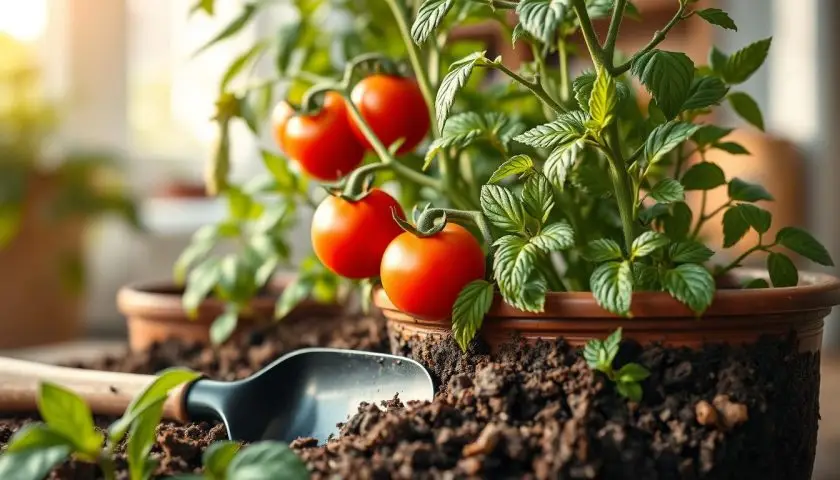
Tomatoes in Pots at a Glance
| Care Area | Best Choice | Common Mistake |
|---|---|---|
| Sunlight | 6 to 8+ hours of direct sun | Growing in shade and expecting heavy fruit |
| Pot size | Large pot with enough root volume | Using a tiny decorative pot |
| Drainage | Drainage holes and no standing water | Keeping roots in a closed pot |
| Soil | Lightweight potting mix | Using dense garden soil |
| Support | Cage, stake, or trellis installed early | Adding support after stems bend |
| Water | Deep and consistent watering | Letting the pot swing from dry to soaked |
| Feeding | Regular tomato or vegetable fertilizer | Overfeeding nitrogen before fruiting |
Plan a Productive Container Tomato Garden
Container gardening tomatoes works best when you plan before you buy the plant. Tomatoes grow fast, get heavy, and need more root space than many herbs or flowers. A little planning now prevents broken stems, dry pots, and weak harvests later.
Check your sunlight first
Tomatoes need strong direct sun for the best harvest. A south-facing or west-facing patio, balcony, or deck usually works well. East-facing spots may work if they receive enough morning light, but deep shade will produce weak plants and fewer tomatoes.
Choose a place with easy water access
Potted tomatoes dry out faster than tomatoes growing in the ground. If the pot is far from a tap, watering becomes a chore. Place containers where you can reach them easily with a watering can or hose.
Think about heat and wind
Balconies, rooftops, paving, metal railings, and brick walls can heat up quickly. Tomatoes like warmth, but container roots can dry out fast. Strong wind can also snap stems or tip pots, so choose a sheltered sunny spot when possible.
Choose the Best Tomato Varieties for Pots
Tomato varieties for pots matter because not every tomato plant behaves the same way. Some become tall vines and need big containers with strong support. Others stay compact and are made for patios, balconies, and small gardens.
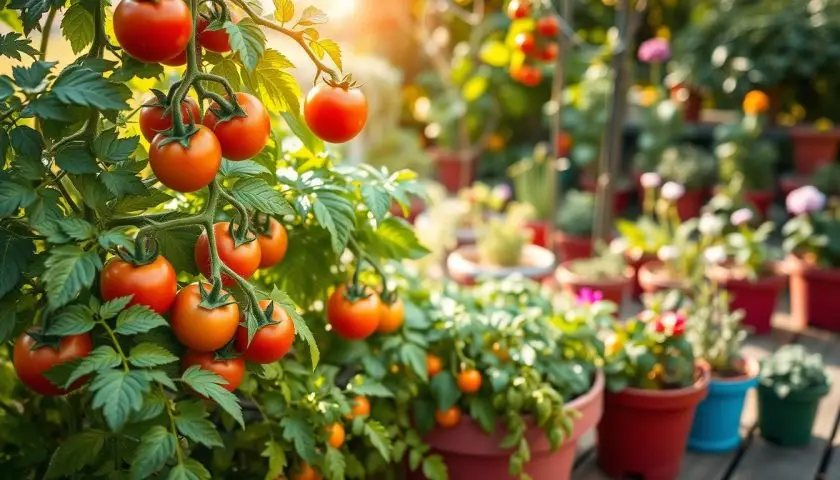
Determinate tomatoes
Determinate tomatoes grow to a more limited size and produce much of their crop over a shorter period. They are often easier in pots because they stay more manageable.
Indeterminate tomatoes
Indeterminate tomatoes keep vining and producing until weather or disease stops them. They can grow in pots, but they need a larger container, strong support, and more pruning control.
Dwarf and patio tomatoes
Dwarf and patio tomatoes are ideal for small spaces. They stay compact, need less pruning, and suit balconies, decks, and container gardens.
| Tomato Type | Best For | Container Note |
|---|---|---|
| Cherry tomato | Beginners, balconies, frequent harvests | Choose compact or patio types for small pots |
| Determinate tomato | Patio pots and shorter harvest windows | Needs support but stays more controlled |
| Dwarf tomato | Small spaces and containers | Great for balconies and raised patios |
| Indeterminate tomato | Long harvests and larger pots | Needs a big pot, pruning, and strong support |
| Paste tomato | Sauces and cooking | Use a larger container for good yields |
For a dedicated variety guide, read patio tomato plants.
Choose the Right Tomato Plant Pot Size
Tomato plant pot size affects watering, root health, fruiting, and stability. A small pot may look tidy, but it dries out fast and limits the plant. A larger pot holds more mix, more moisture, and more root space.
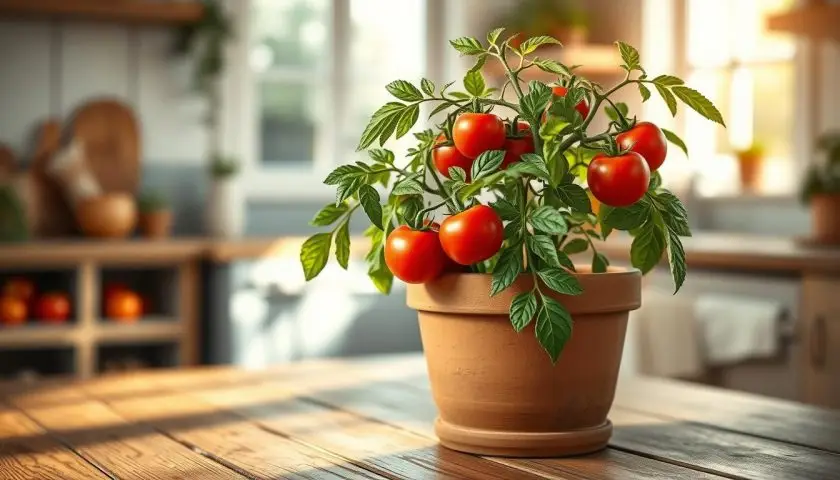
Simple pot size guide
| Tomato Type | Minimum Pot Size | Better Choice |
|---|---|---|
| Compact cherry tomato | 2 to 5 gallons | 5 gallons for easier watering |
| Patio or dwarf tomato | 5 gallons | 7 to 10 gallons for stronger growth |
| Determinate tomato | 5 gallons | 10 gallons where space allows |
| Indeterminate tomato | 10 gallons | 15 to 25 gallons for better harvests |
| Large slicing tomato | 10 gallons | 15+ gallons with strong support |
Choose drainage every time
A tomato pot must have drainage holes. If water cannot leave the pot, roots can rot quickly. Decorative containers can be used as cover pots only if the inner pot drains fully and standing water is removed.
Plastic, fabric, terracotta, or self-watering?
- Plastic pots: light, affordable, and hold moisture longer.
- Fabric grow bags: good airflow, but they can dry out faster.
- Terracotta pots: attractive and breathable, but heavy and fast-drying.
- Self-watering containers: useful for hot patios, but still need regular checking.
For pot guidance, read self-watering pots guide and container gardening on patios.
Prepare the Best Soil for Potted Tomatoes
The best soil for potted tomatoes is not garden soil. Garden soil can become dense in containers, hold too much water, and block oxygen from the roots. Use a lightweight potting mix made for containers.
Good tomato potting mix should
- Drain well but hold some moisture.
- Stay loose enough for root oxygen.
- Contain organic matter for nutrient support.
- Not compact into a hard block after watering.
- Work well with regular feeding through the season.
Simple potting mix formula
- 2 parts high-quality potting mix.
- 1 part compost or worm castings for nutrient support.
- 1 part perlite, pumice, or fine bark for drainage and airflow.
- Optional slow-release vegetable fertilizer mixed according to the label.
Moisten the mix before planting
Dry potting mix can repel water at first. Lightly moisten the mix before planting so it settles around the roots evenly. It should feel damp, not soggy.
For more soil help, read best soil mix guide, how to repot a plant, and repotting mistakes to avoid.
How to Plant Tomatoes in a Pot Step by Step
This is the practical planting method for a nursery seedling or home-grown transplant. Set up the pot before removing the plant from its tray so roots spend less time exposed.
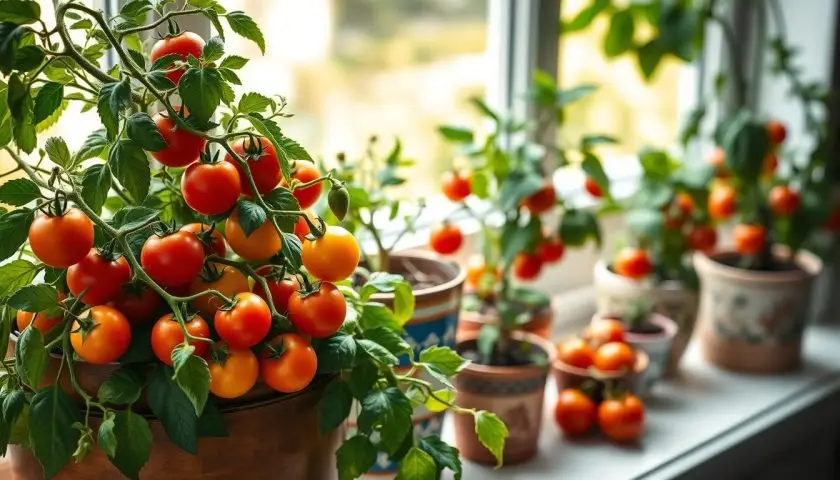
Step 1: Harden off the tomato plant
If your tomato plant was grown indoors or under cover, move it outdoors gradually over several days. Give it a little more sun and wind exposure each day before planting it in its final pot.
Step 2: Fill the pot halfway
Add potting mix to the container, leaving enough depth to bury part of the tomato stem. Tomatoes can root along buried stems, which helps build a stronger plant.
Step 3: Remove lower leaves
Pinch off the lowest leaves on the tomato stem. Keep the top healthy leaves intact because they power new growth.
Step 4: Set the tomato deep in the pot
Place the tomato plant deeper than it was growing in its nursery pot. Burying part of the stem helps create extra roots and better support.
Step 5: Backfill gently
Add potting mix around the roots and buried stem. Firm lightly with your hands, but do not compact the mix hard.
Step 6: Add support immediately
Install a tomato cage, stake, or trellis now. Waiting until the plant is larger can damage roots and make support harder to place.
Step 7: Water slowly and deeply
Water until moisture reaches the full root zone and excess drains from the bottom. This helps settle soil around the roots.
Step 8: Add mulch
Add straw, shredded leaves, compost mulch, or another light mulch on top of the potting mix. Keep mulch slightly away from the stem to reduce rot risk.
Step 9: Move into final position
Place the pot in its sunny growing spot. Large containers become heavy after watering, so position the pot before it is difficult to move.
Sunlight for Potted Tomatoes
Tomatoes need direct sun to produce a good crop. A plant in shade may survive, but it will usually make fewer flowers, weaker stems, and fewer ripe tomatoes.
Best sunlight spots
- South-facing patios and balconies.
- West-facing decks with enough water support.
- Sunny courtyards with open sky above.
- Raised stands that lift the pot out of shade.
- Driveways or paved areas if heat is managed carefully.
When sunlight is too intense
Hot patios can overheat small containers. If leaves wilt badly every afternoon even when soil is moist, move the pot where it gets morning sun and some light afternoon shade, or use a larger container that holds moisture better.
For light guidance, read complete guide to indoor light and house plants that like direct sunlight.
Watering Tomatoes in Pots
Watering tomatoes in pots is one of the most important parts of container tomato care. Pots dry faster than garden beds, especially in sun, heat, wind, and fabric grow bags.
Simple watering rule
Check the soil daily during warm weather. Water when the top inch or two begins to dry, then water deeply until excess drains from the bottom. Avoid tiny sips that only wet the surface.
| Condition | Watering Need | Care Tip |
|---|---|---|
| Freshly planted tomato | Even moisture | Do not let the small root ball dry out |
| Flowering plant | Consistent watering | Dry swings can affect fruit set |
| Fruiting plant | Deep regular watering | Inconsistent water can cause cracking and blossom-end rot |
| Hot windy weather | Check daily or more | Containers can dry very quickly |
| Cool cloudy weather | Water less often | Check soil before watering again |
Signs your tomato needs water
- The pot feels light.
- The top soil is dry.
- Leaves wilt in the morning.
- Fruit development slows.
- Soil pulls away from the pot edge.
Signs you are watering too much
- Leaves yellow while soil is wet.
- Stems look weak or soft.
- Fungus gnats appear around the pot.
- Soil smells sour.
- The plant wilts even though the mix is wet.
For watering help, use complete watering tips, worst times to water plants, and signs you are overwatering.
Support Tomatoes in Containers
Tomato plants become top-heavy once fruit forms. Even compact varieties can bend or snap if they are not supported. Add support early while the plant is still small.
Best support options
- Tomato cage: easiest for determinate and patio tomatoes.
- Single stake: useful for compact upright plants.
- Trellis: better for indeterminate tomatoes in large pots.
- Balcony rail support: useful only if ties are gentle and secure.
- String support: good for advanced growers with overhead anchoring.
Support tips
- Install support before the roots fill the pot.
- Use soft ties that do not cut into stems.
- Check ties as stems thicken.
- Support heavy fruit clusters if needed.
- Keep the pot stable so wind does not tip it over.
Feeding Tomatoes in Pots
Tomato plant fertilizer for pots matters because container roots cannot search far for nutrients. Watering also washes nutrients through the pot over time.
When to start feeding
If your potting mix contains fertilizer, wait until the plant settles and starts growing strongly. If the mix is plain, begin feeding lightly after the roots establish. Always follow the fertilizer label.
Feeding stages
| Growth Stage | Feeding Focus | Tip |
|---|---|---|
| New transplant | Root establishment | Avoid heavy feeding immediately after planting |
| Leafy growth | Balanced nutrition | Do not overdo nitrogen |
| Flowering | Steady feeding | Support blooms without forcing too much leaf growth |
| Fruiting | Regular tomato feed | Containers often need repeated light feeding |
| Late season | Ripening | Reduce feeding when growth slows |
Signs feeding is off
- Lots of leaves but few flowers can mean too much nitrogen.
- Pale leaves may mean low nutrients, root stress, or water issues.
- Brown leaf edges after feeding can mean fertilizer burn.
- Weak fruiting can come from poor light, inconsistent water, or low nutrition.
For feeding basics, read fertilizing indoor vs outdoor plants.
Pruning Tomatoes in Containers
Pruning depends on the tomato type. Compact determinate tomatoes usually need less pruning. Indeterminate tomatoes often need more training so they do not become tangled and heavy.
What to prune
- Lower leaves touching the soil.
- Yellow, diseased, or damaged leaves.
- Weak suckers on indeterminate vines if airflow is poor.
- Overcrowded stems that block air circulation.
- Broken growth after wind or heavy fruiting.
What not to over-prune
- Do not remove too many healthy leaves at once.
- Do not strip leaves that shade fruit during intense heat.
- Do not heavily prune determinate tomatoes, as this can reduce harvest.
For pruning help, read pruning basics and how to clean plant leaves.
Pollination and Fruit Set
Tomatoes are self-fertile, but container plants in sheltered balconies, greenhouses, or enclosed patios sometimes need help with pollination. Wind and insects usually move pollen outdoors, but still air can reduce fruit set.
How to help pollination
- Gently tap flower clusters during dry mornings.
- Keep plants where bees can reach flowers.
- Avoid spraying open flowers.
- Keep water consistent during flowering.
- Protect plants from extreme heat when possible.
Common Problems With Potted Tomatoes
Most container tomato problems come from sunlight, water, pot size, nutrients, pests, or heat stress. Check the basics before assuming the plant has a disease.
| Problem | Likely Cause | First Fix |
|---|---|---|
| Yellow leaves | Overwatering, low nutrients, old leaves, root stress | Check soil moisture and drainage |
| Wilting | Dry pot, heat stress, root rot, small container | Check soil before watering |
| Blossom-end rot | Inconsistent watering and calcium movement issues | Keep moisture steady |
| Fruit cracking | Water swings after dry spells | Water consistently and mulch |
| Few flowers | Too little sun, too much nitrogen, heat stress | Improve light and adjust feeding |
| Leaf spots | Fungal disease or wet foliage | Improve airflow and remove affected leaves |
| Small harvest | Small pot, low light, poor feeding, poor pollination | Upgrade care or choose compact varieties |
Blossom-end rot
Blossom-end rot appears as a dark sunken patch on the bottom of fruit. In pots, the usual trigger is uneven watering. Keep moisture consistent and avoid letting the pot dry hard between soakings.
Yellow leaves
Lower leaves may yellow naturally as the plant ages. Many yellow leaves at once can mean watering problems, poor drainage, low nutrients, or root stress.
Wilting in a pot
Wilting can mean the pot is dry, but it can also happen when roots are damaged in wet soil. Check the potting mix before watering again.
For more plant problem help, read yellow leaves on plants, leaf curl, browning and droop, root rot guide, and how to revive a dying plant.
Tomato Pests in Containers
Potted tomatoes can still get pests, especially on warm patios and balconies. Check under leaves and around new growth every few days during active growth.
Common pests
- Aphids: small soft insects on new growth and flower stems.
- Whiteflies: tiny white flying insects under leaves.
- Spider mites: fine webbing and speckled leaves in hot dry conditions.
- Tomato hornworms: large green caterpillars that chew leaves quickly.
- Leaf miners: pale winding trails inside leaves.
Simple pest control routine
- Inspect leaves often, especially undersides.
- Remove small pest colonies early.
- Prune badly damaged leaves.
- Keep the plant watered well enough to avoid stress.
- Avoid broad spraying while pollinators are active.
- Clean up fallen leaves and old fruit.
For broader pest support, read how to keep pests away from outdoor plants.
Harvest Tomatoes From a Pot
Harvesting regularly keeps the plant productive and prevents heavy fruit from stressing branches. Pick tomatoes when they are fully coloured for the variety and slightly firm to the touch.
Harvest tips
- Pick ripe tomatoes often.
- Use snips if stems resist pulling.
- Support branches while harvesting.
- Remove cracked or damaged fruit quickly.
- Let nearly ripe fruit finish indoors if weather turns cold.
End-of-season care
At the end of the season, remove old tomato plants, discard diseased foliage, empty or refresh the potting mix, and clean containers before reuse. Do not leave diseased leaves sitting in the pot over winter.
For seasonal garden planning, read garden calendar and seasonal plant care in autumn.
Container Tomato Care Checklist
| Task | How Often | What to Watch |
|---|---|---|
| Check sunlight | Before planting and seasonally | Shade from walls, railings, and trees |
| Check soil moisture | Daily in hot weather | Dry pots, wilting, cracking fruit |
| Water deeply | As needed | Water draining from bottom holes |
| Feed | During active growth and fruiting | Pale leaves, weak fruiting, excess leaf growth |
| Support stems | Weekly | Heavy clusters and leaning vines |
| Inspect pests | Several times weekly | Aphids, whiteflies, mites, caterpillars |
| Harvest | As fruit ripens | Overripe or cracked fruit |
Common Mistakes When Planting Tomatoes in Pots
| Mistake | What Happens | Better Choice |
|---|---|---|
| Using a small pot | Roots dry fast and harvest suffers | Use the largest practical container |
| Using garden soil | Soil compacts and drainage suffers | Use container potting mix |
| Skipping support | Stems bend or snap under fruit weight | Add a cage or stake at planting |
| Watering inconsistently | Cracking, wilting, and blossom-end rot increase | Keep moisture steady |
| Growing in shade | Few flowers and weak fruiting | Choose a sunnier spot |
| Overfeeding nitrogen | Lots of leaves but fewer tomatoes | Use balanced tomato feeding |
Helpful PATCH Guides for Potted Tomatoes
Use these related PATCH guides to plan your container garden, improve watering, manage pests, and grow more edible plants in small spaces.
Edible and Outdoor Growing Guides
- Outdoor Plants hub
- Patio tomato plants
- Easy outdoor edible plants
- Planting potatoes in containers
- Japanese cucumber plant
- Edible flowers to grow outdoors
Container and Small Space Guides
- Container gardening on patios
- How to keep outdoor plants alive
- Plants in pots in shade
- Small plants that like shade
- Low-maintenance outdoor plants
- Garden calendar
Watering, Soil and Feeding Guides
- Complete watering guide
- Worst times to water plants
- Signs you are overwatering
- Best soil mix guide
- Fertilizing indoor vs outdoor plants
- Self-watering pots guide
Plant Problem Guides
- Plant Care hub
- How to keep pests away from outdoor plants
- Yellow leaves on plants
- Why plant leaves turn yellow
- Leaf curl, browning and droop
- Root rot guide
- Pruning basics
Frequently Asked Questions
What is the best tomato plant pot size?
Most standard tomato plants need at least a 5-gallon pot, while compact cherry or dwarf tomatoes can grow in smaller containers. Bigger pots are usually easier because they hold more moisture and give roots more room.
Can I grow tomatoes in a pot on a balcony?
Yes. A balcony can grow tomatoes if it gets enough direct sun, has safe weight support, allows water drainage, and gives the plant protection from strong wind.
What is the best soil for potted tomatoes?
The best soil for potted tomatoes is a lightweight container potting mix with good drainage, moisture balance, and nutrient support. Avoid dense garden soil in pots.
How deep should I plant tomatoes in a pot?
Plant tomatoes deeply by removing the lower leaves and burying part of the stem. The buried stem can grow extra roots, which helps the plant become stronger.
How often should I water tomatoes in pots?
Check tomatoes in pots daily during hot weather. Water when the top layer starts to dry, then water deeply until excess drains out of the bottom.
Do potted tomatoes need a cage?
Yes, most potted tomatoes need some support. Use a cage, stake, trellis, or soft ties to keep stems upright and stop heavy fruit from snapping branches.
What tomatoes grow best in containers?
Compact, patio, dwarf, determinate, and cherry tomato varieties are usually best for containers. Indeterminate tomatoes can grow in pots too, but they need much larger containers and stronger support.
Can I use garden soil for tomatoes in pots?
It is better not to. Garden soil can compact in containers and cause poor drainage. Use quality potting mix made for container growing.
Why are my potted tomato leaves turning yellow?
Yellow leaves can come from overwatering, poor drainage, low nutrients, old leaves, root stress, or disease. Check soil moisture and drainage before feeding or watering more.
How do I get more tomatoes from a potted plant?
Give the plant strong sun, enough pot size, steady water, regular feeding, support, light pruning where needed, and harvest ripe fruit often. Avoid overfeeding nitrogen because it can produce leaves instead of fruit.
Final Thoughts
Once you know how to plant tomatoes in a pot, small-space growing becomes much easier. The main rule is simple: give the plant enough sun, enough root room, enough water, and enough support. A compact tomato in a good pot can produce a useful harvest even on a balcony or patio.
University of Maryland Extension explains that tomatoes and other warm-season container crops need 6 to 8 hours of direct sun, that standard tomatoes need at least a 5-gallon container, and that some containers may need daily watering in hot dry weather: University of Maryland Extension container vegetable guide.
For best results, choose a variety made for containers, plant it deeply, water consistently, and support it early. Tomatoes respond quickly to steady care, and even one healthy pot can make a small space feel productive.
Final Recap
To plant tomatoes in a pot, start with a sunny location, choose a compact or container-friendly variety, and use a pot with drainage holes. Standard tomatoes need a larger container than compact cherry or patio types. Fill the pot with lightweight potting mix, remove the lower leaves, plant the tomato deeply, and add support at planting time. Water slowly until the pot drains, then keep moisture consistent through flowering and fruiting. Feed regularly during the growing season, prune lightly when needed, check pests often, and harvest ripe fruit regularly. With the right tomato plant pot size, soil, sunlight, watering, support, and feeding, you can grow tomatoes successfully on a balcony, patio, deck, or small garden space.