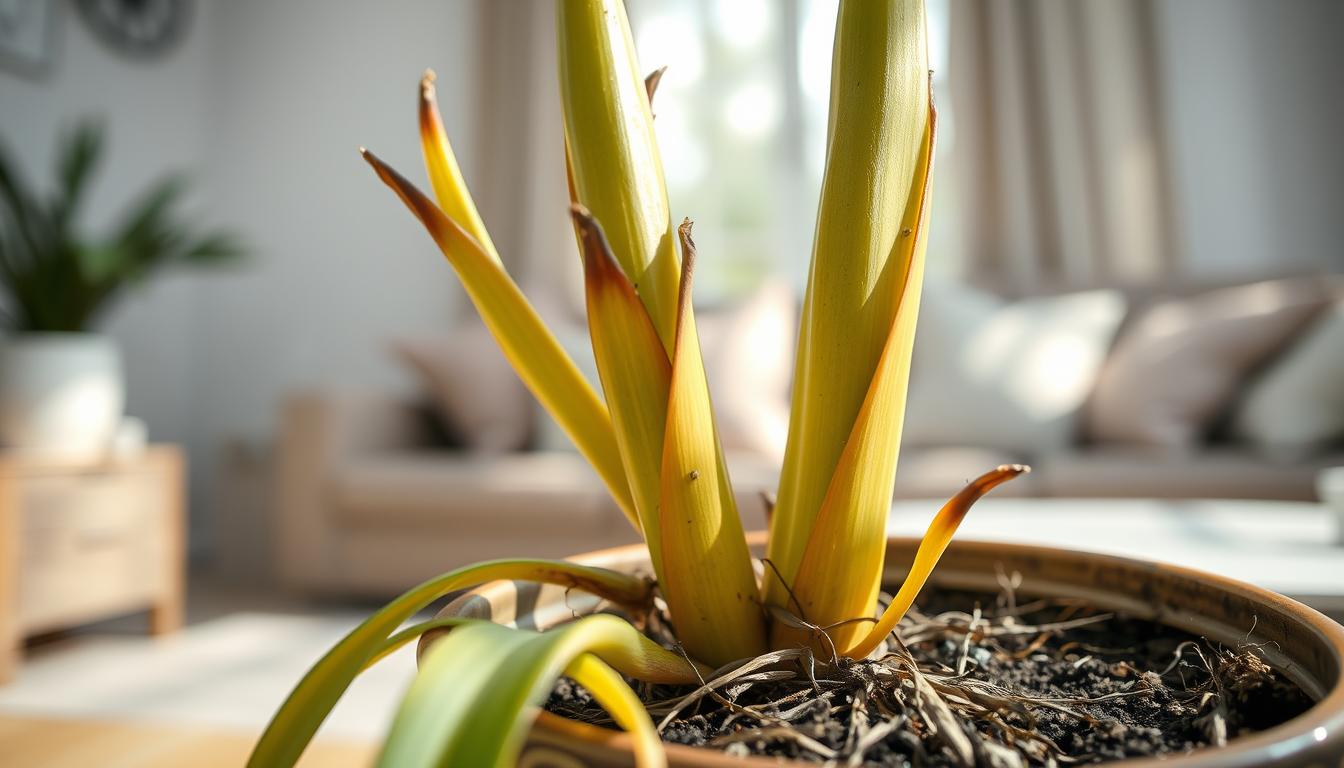
If your yucca plant dying, the cause is most often too much water, poor drainage, or too little light. Squeeze the base of the cane and check the soil before changing anything. A soft cane and wet soil point to rot. Dry soil and crispy leaves point to underwatering. Pale, stretched growth points to low light. Fix the main cause, then judge recovery by firm stems and new leaves, because damaged leaves will not turn green again.
The yucca grown indoors is usually Yucca elephantipes (also sold as Yucca gigantea, spineless yucca, or stick yucca). It is a tough, drought-tolerant plant, so when it struggles there is usually a clear reason. This guide covers nine causes and a safe, step-by-step plan to help it recover.
Key Takeaways
- Overwatering is the most common way indoor yuccas die. Let the top half of the soil dry before watering.
- Squeeze the cane near the soil. Firm means the plant is alive. Soft, hollow, or wrinkled means rot or severe drought.
- Yuccas love bright light and can take direct sun once they are used to it. Low light causes stretching, pale leaves, and leaning.
- Use a pot with drainage holes and a gritty, fast-draining mix.
- Older lower leaves naturally yellow and die as the cane grows. Losing one or two at a time is normal.
- Do not fertilize a struggling yucca. Wait for new growth.
- Yucca is toxic to cats and dogs if chewed.
Quick Answer: What to Do When a Yucca Plant Is Dying
- Stop watering until you know whether the soil is wet or dry.
- Squeeze the cane at the base and along its length.
- Check drainage. Make sure water can escape and is not pooling in a decorative pot.
- Look at the leaves for pests, webbing, or sticky residue.
- Check the light. Most struggling indoor yuccas are too far from a window.
If the soil is soggy and the cane base is soft, unpot the plant and check the roots right away (see Cause 3).
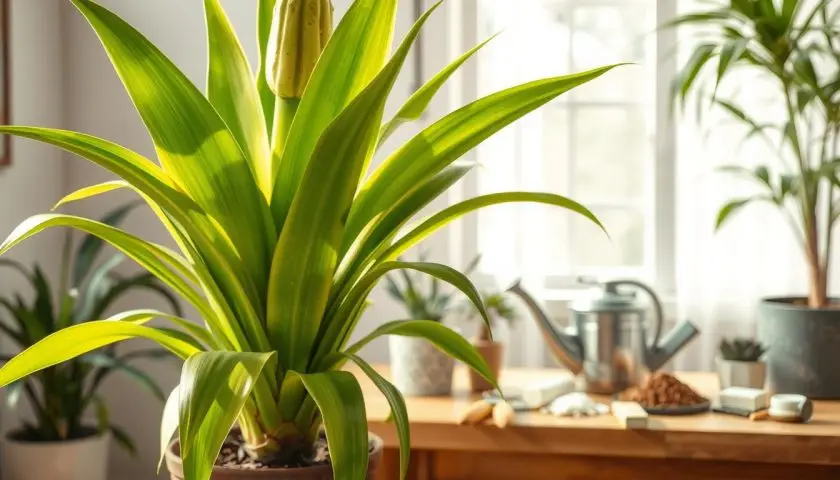
Yucca Plant Dying? Start With a Fast Diagnosis
Check the plant in this order so you do not miss the real cause: leaves, cane, soil, then roots.
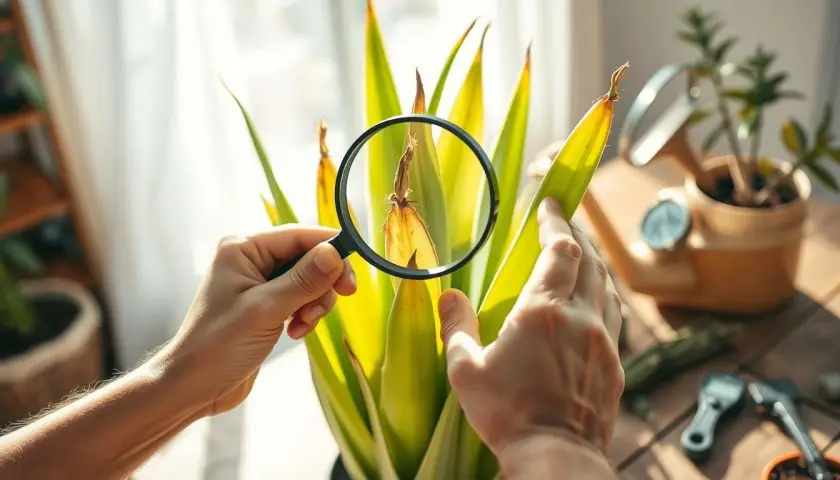
| Symptom | Likely Cause | First Action |
|---|---|---|
| Yellow leaves, wet soil | Overwatering or poor drainage | Stop watering; check drainage |
| Soft, mushy cane base | Root or stem rot | Unpot and inspect roots |
| Wrinkled cane, dry soil, drooping leaves | Severe underwatering | Water thoroughly and drain |
| Brown, crispy tips | Watering swings or salt buildup | Water consistently; flush the soil |
| Pale, thin, stretched leaves, leaning | Too little light | Move closer to a bright window |
| Bleached or brown patches after a move | Sunburn from sudden strong light | Acclimatize gradually |
| Fine webbing, speckled leaves | Spider mites | Isolate and clean leaves |
| White cottony patches or brown bumps | Mealybugs or scale | Remove and treat |
| Spreading brown or black leaf spots | Leaf spot disease | Remove affected leaves; keep foliage dry |
| One or two old lower leaves yellowing | Natural aging | Remove when fully dry |
The Cane Squeeze Test
Gently squeeze the cane at the soil line and further up. Healthy canes feel woody and firm. A soft, spongy, or hollow-feeling cane usually means rot. A shrivelled, wrinkled cane in very dry soil usually means the plant has been underwatered for a long time.
What Damaged Leaves Can and Cannot Do
Leaves that are fully yellow, brown, or crispy will not turn green again. Remove them once they are clearly dead. Leaves that are mostly green with brown tips can stay, because they still feed the plant. Recovery shows up as firm stems and fresh leaves from the top of the cane.
Causes 1–3: Water, Drainage, and Root Problems
Cause 1: Overwatering
Yuccas store water in their canes and come from dry habitats, so they need the soil to dry out between waterings. Frequent watering keeps the roots short of oxygen. This is the single most common reason indoor yuccas fail.
Signs: yellowing leaves (often starting low on the plant), soft leaf bases, soil that stays damp for a week or more, fungus gnats, and a sour smell.
Fix: Stop watering until at least the top half of the soil is dry. Check with your finger or a wooden skewer, then water thoroughly and empty the saucer. Water much less in winter, when growth slows. For more on spotting this problem, see yellow leaves on plants and signs you are overwatering.
Cause 2: Poor Drainage or the Wrong Potting Mix
Even careful watering fails in a pot without drainage holes or a dense, peaty mix that stays wet. A layer of gravel at the bottom does not help. It actually keeps the wet zone closer to the roots.
Fix:
- Use a pot with open drainage holes. If you love a decorative pot without holes, keep the yucca in a plastic nursery pot inside it and tip out any water after watering.
- Use a cactus or succulent mix, or blend regular potting mix with plenty of grit, perlite, or pumice.
- Choose a heavy, stable pot. Tall yuccas are top-heavy.
- Only go up one pot size when repotting.
See our best soil mix guide.
Cause 3: Yucca Root and Cane Rot
Long-term wet soil leads to rot in the roots and the base of the cane. This is the most serious yucca problem, but it can often be managed if caught early.
Signs: a soft or mushy cane base, leaves collapsing or pulling out easily, wet soil, a foul smell, and dark, slimy roots.
Fix:
- Slide the plant out of its pot and shake off the wet soil.
- Healthy roots are firm and pale. Cut away soft, dark roots with sterilized scissors.
- Check the cane. Cut away any soft tissue back to firm, clean wood.
- Repot into fresh, dry, gritty mix in a clean pot with drainage holes.
- Wait about a week before watering lightly, so cut roots can heal.
If the base of the cane is rotten: cut the cane above the rot, where the wood is firm and clean. Let the healthy top section dry for a few days, then plant it in barely moist, gritty mix. Yucca canes root readily, and a healthy lower stump can also produce new leafy shoots. Read more in our root rot guide and healthy roots vs root rot.
Causes 4–6: Underwatering, Light, and Temperature
Cause 4: Underwatering
Yuccas tolerate drought, but months of very dry soil eventually cause drooping, crispy leaves, and a wrinkled cane. A bone-dry root ball can also repel water, so water runs straight out of the pot.
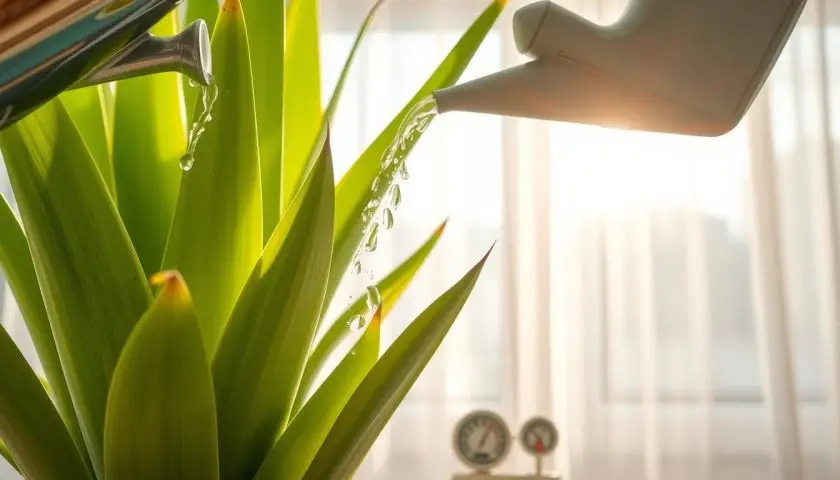
Fix: Water slowly until it drains from the bottom, or stand the pot in a bowl of water for 15–20 minutes, then drain fully. After that, water whenever the top half of the soil has dried.
Cause 5: Too Little Light (or a Sudden Jump in Light)
Yucca is one of the few houseplants that genuinely loves strong light. In dim rooms it grows slowly, stretches toward the window, produces thin, pale, floppy leaves, and uses water so slowly that overwatering becomes more likely.
Fix: Move it close to a bright south-, west-, or east-facing window, or add a grow light. Yucca can take direct sun, but a plant that has been in a dim room needs time to adjust. Move it toward stronger light over one to two weeks to avoid bleached or burnt patches. Turn the pot every few weeks for even growth. See our guide to indoor light.
Cause 6: Cold, Heat Stress, and Drafts
Indoor yuccas are comfortable at roughly 16–27°C (60–80°F) and handle normal home temperature swings well. They are not frost-hardy, and cold drafts can cause leaf damage and drop.
Fix: Keep the plant above about 10°C (50°F), away from cold windows and doors in winter, and away from blasting heaters or AC vents. If you move it outdoors for summer, acclimatize it gradually and bring it back inside before night temperatures fall.
Causes 7–9: Pests, Disease, and Root or Nutrient Stress
Cause 7: Spider Mites, Scale, and Mealybugs
Yuccas are fairly pest-resistant, but stressed plants can attract:
- Spider mites: fine webbing and pale speckling, especially in hot, dry rooms.
- Scale: small brown bumps on leaves and the cane, often with sticky residue.
- Mealybugs: white, cottony patches in leaf bases and along the cane.
Fix: Isolate the plant. Wipe leaves on both sides with a damp cloth, and dab scale and mealybugs with a cotton bud dipped in rubbing alcohol. Use insecticidal soap or neem-based products if needed, testing a small area first and following the label. Repeat every 5–7 days for several weeks, because one treatment rarely gets every egg. If you are not sure what white marks are, see white spots on plant leaves.
Cause 8: Leaf Spot and Stem Disease
Fungal leaf spot shows as brown or black spots, sometimes with a yellow edge, that spread across leaves. It is encouraged by wet foliage and poor airflow. Soft, foul-smelling rot in the cane is more serious and usually follows overwatering.
Fix: Remove badly spotted leaves with sterilized tools, water the soil rather than the foliage, and improve airflow. For cane rot, cut back to healthy tissue or root the healthy top as described in Cause 3. If you cannot identify the problem or it keeps spreading, contact your local extension service or a plant clinic.
Cause 9: Transplant Shock, Salt Buildup, or Overfeeding
Recent repotting, damaged roots, mineral salts from hard tap water, or too much fertilizer can all cause brown tips, yellowing, and slow growth.
Signs: brown leaf tips, white crust on the soil or pot rim, and decline soon after repotting or feeding.
Fix: Stop fertilizing. If the pot drains well, flush it by running plenty of water through the soil, then let it dry properly. Once the plant is growing again, feed only lightly, with a balanced fertilizer at half strength in spring and summer. See fertilizing indoor vs outdoor plants.
How to Revive a Yucca Plant: Step-by-Step Plan
- Isolate and note what changed. Move the yucca away from other plants and think about recent changes in watering, light, location, or repotting.
- Fix the most obvious problem first. Usually this means letting soggy soil dry or moving the plant to brighter light. Change one thing at a time.
- Remove dead tissue. Use sharp, sterilized tools to cut away fully dead leaves and any soft, rotten cane. Leave green leaves in place.
- Repot only if needed. Repot if the soil stays wet, the pot has no drainage, or you found root rot.
- Be patient and watch new growth. Firm canes and fresh leaves at the top of the cane mean the plant is recovering. This can take several weeks.
For a general rescue routine, see our step-by-step plant rescue plan.
Yucca Care Tips to Prevent Future Problems
| Care Factor | What Yucca Needs | Avoid |
|---|---|---|
| Light | Bright light near a window; some direct sun once acclimatized | Dim corners; sudden moves into hot sun |
| Water | Water when the top half of the soil is dry; much less in winter | Fixed schedules; standing water |
| Soil | Gritty cactus or succulent mix | Dense, peaty mix that stays wet |
| Pot | Drainage holes; heavy, stable base | Oversized or holeless pots |
| Temperature | About 16–27°C (60–80°F); above 10°C (50°F) | Frost, cold drafts |
| Feeding | Half-strength balanced feed in spring and summer | Feeding stressed plants or in winter |
Wipe dust off the leaves occasionally, turn the pot every few weeks, and check leaf bases for pests when you water. For more everyday care, see our yucca plant indoor care guide, succulent care guide, and cactus care guide.
Common Mistakes When Saving a Yucca
- Watering on a fixed schedule: Water needs change with light, season, and pot size. Check the soil every time.
- Keeping it in a holeless decorative pot: Water pools around the roots and causes rot.
- Fertilizing a sick plant: Fertilizer stresses damaged roots further.
- Cutting off healthy leaves: Green leaves fuel recovery. Remove only dead or rotting tissue.
- Repotting again and again: Repeated disturbance causes shock. Repot only for a real reason.
- Treating without diagnosing: Pest sprays will not fix overwatering, and moving the plant will not fix rot.
Is Yucca Safe for Pets?
No. Yucca contains saponins that can cause vomiting and drooling if cats or dogs chew it. Keep it out of reach of pets that nibble plants, and check the ASPCA toxic and non-toxic plants list when choosing plants for a pet-friendly home. Our dog-friendly plant tips can help.
Related Guides
- Yucca plant indoor care
- Parlor palm dying: causes and fixes
- Schefflera plant problems
- How to repot a plant
- Complete watering guide
- Plant Care hub
Frequently Asked Questions
Why is my yucca plant dying?
The most common cause is overwatering, often combined with poor drainage or low light. Other causes include underwatering, cold drafts, sudden moves into strong sun, pests like spider mites and scale, leaf spot disease, and salt buildup. Check the soil and squeeze the cane first, because those two checks point to the cause quickly.
Why are my yucca leaves turning yellow?
One or two old lower leaves yellowing is normal as the cane grows. Many yellow leaves, especially with damp soil, usually mean overwatering or poor drainage. Pale, yellowish new growth often means too little light. Let the soil dry and move the plant closer to a bright window.
How do I know if my yucca has root rot?
Signs include a soft or mushy cane base, leaves that collapse or pull out easily, soil that stays wet, and a sour smell. Unpot the plant to check. Healthy roots are firm and pale. Rotten roots are dark, soft, and slimy. Trim rotten roots and repot into fresh, dry, gritty mix.
Can I save a yucca with a soft, rotting cane?
Often, yes. Cut the cane above the rot where the wood is firm and clean. Let the healthy top dry for a few days, then plant it in barely moist, gritty mix. Yucca canes root readily. If the lower stump is still firm, it can also sprout new leafy shoots.
How often should I water a yucca plant indoors?
There is no fixed schedule. Water thoroughly when the top half of the soil is dry, then empty the saucer. In bright summer conditions that may be every couple of weeks. In winter or lower light it may be once a month or less.
Final Thoughts
A yucca plant dying indoors is usually telling you it is too wet, too dark, or both. Squeeze the cane, check the soil, and look at the light before changing anything. Then fix one problem at a time.
Extension horticulturists advise letting Yucca elephantipes dry out between waterings, watering only when the top few inches of soil are dry, and watering very little in winter. If drainage is fine, the next thing to check is light. You can read one such Extension answer on indoor yucca decline from ask.extension.org.
Damaged leaves will not recover, but firm canes and healthy new leaves at the top mean your yucca is on its way back.