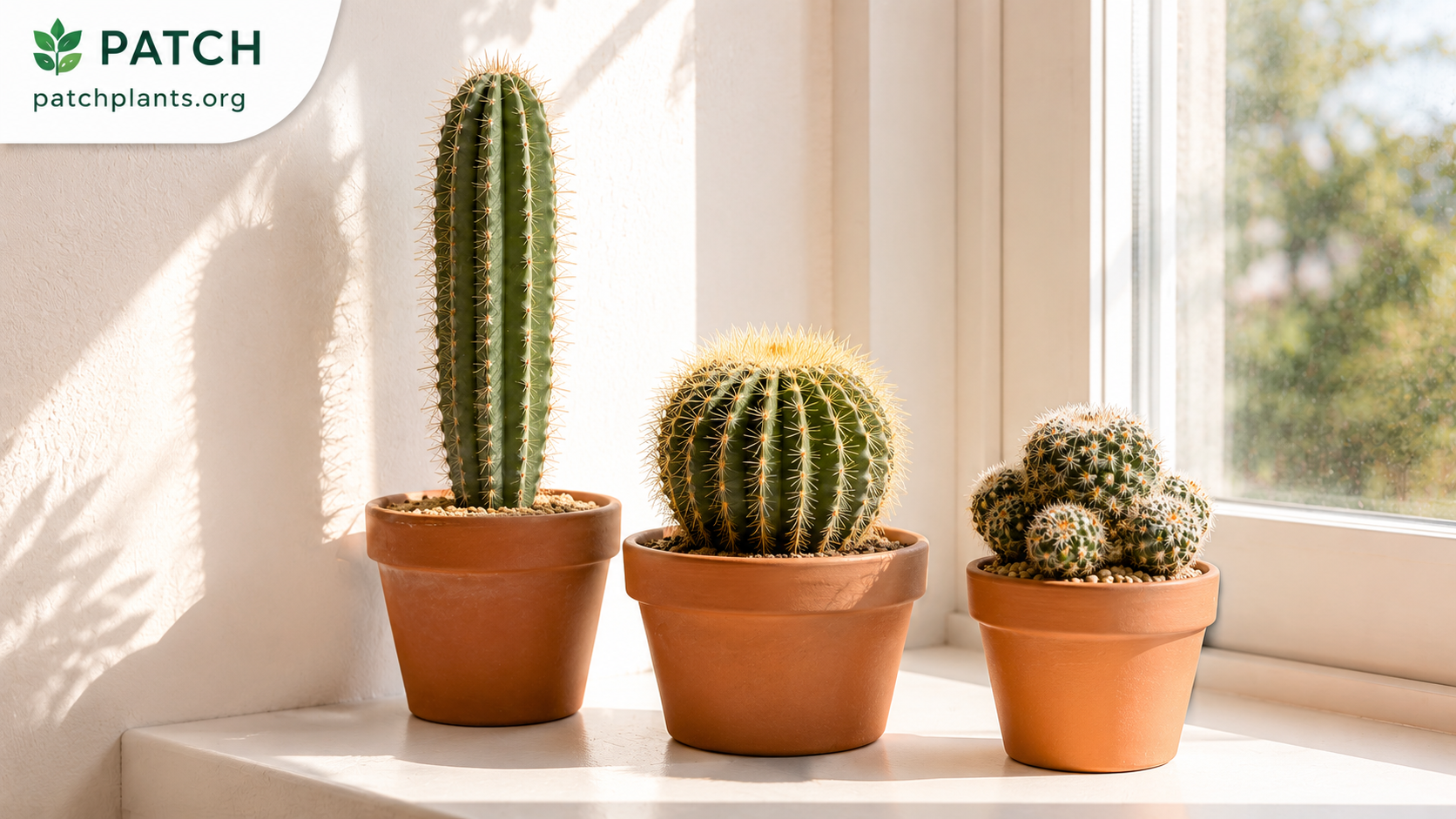
This cactus care guide covers the basics that keep most cacti healthy: bright light, free-draining gritty compost, thorough but infrequent watering, and a cool, almost dry winter rest. Overwatering is the most common way to lose a cactus, so most problems start below the soil.
I am Sawera Shahid, a botanist at Patch Plants. In this cactus care guide I cover light, watering, soil, feeding, repotting and common problems, with advice checked against the Royal Horticultural Society (RHS), Clemson Cooperative Extension and University of Minnesota Extension.
Cactus Care Guide at a Glance
| Care Area | What Cacti Need |
|---|---|
| Light | Bright light; a sunny windowsill (RHS); south or west window with several hours of direct sun for desert cacti (Clemson) |
| Watering | Water thoroughly when the compost feels dry; very little in winter |
| Compost | Free-draining, gritty, peat-free (RHS) |
| Feeding | Monthly from April to September at most; sources vary |
| Repotting | In spring, once roots fill the pot |
| Winter | Cool, 8 to 10°C at night (RHS), with minimal water |
Cactus Care Guide: Light Requirements
Light is the most important part of cactus care. The RHS advises a sunny windowsill all year round for most cacti, and Clemson says desert cacti need bright sunlight, ideally a south- or west-facing window with several hours of direct sun daily. Insufficient light produces weak, misshapen growth, according to the RHS.
Forest cacti are different. The RHS says Christmas cactus (Schlumbergera), orchid cacti and Rhipsalis prefer semi-shade and an east or west window, and Clemson says holiday cacti can sunburn in direct sun. See our Christmas cactus care guide.
- Pale, thin, stretched growth means the plant needs more light.
- Move plants gradually when changing their position, because sudden bright sun can scorch them.
- Clean prickly cacti with a soft paintbrush, as the RHS suggests, because dust reduces light.
For help choosing a window, read the complete guide to indoor light.
Cactus Care Guide: How to Water a Cactus
The RHS says to water thoroughly in spring and summer once the compost feels dry to the touch, let excess drain away, and never let pots stand in water. University of Minnesota Extension says to let the soil dry out completely between waterings. There is no fixed number of days, because light, pot size and warmth change how fast the compost dries.
- Spring and summer: Water thoroughly when the compost feels dry.
- Winter rest: The RHS says to water only if necessary to stop plants shrivelling, from about November to early March. Clemson says usually about once every few weeks.
- Christmas cactus is the exception, as the RHS says it needs warmth and regular watering in winter.
The RHS suggests tepid rainwater if possible, because minerals in tap water can build up. University of Minnesota Extension says frequent shallow sprinklings can distort growth, so water deeply when you water.
Signs of an overwatered cactus
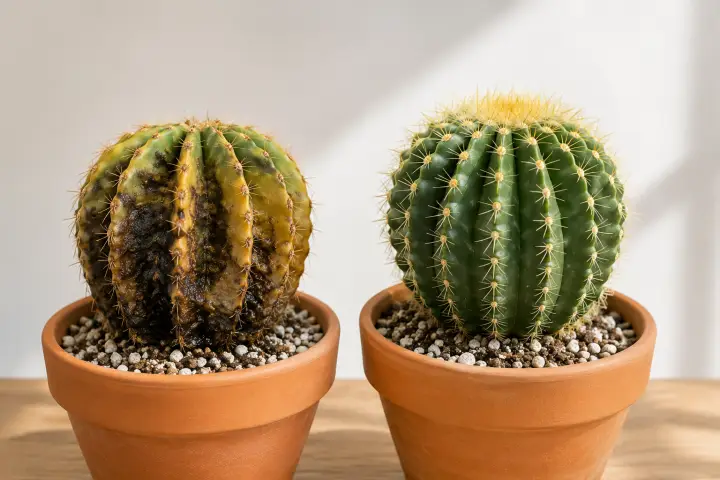
The RHS lists root damage, stunted growth, oedema (blistering) and rot as overwatering problems, and underwatering shows as shrivelling and slow or misshapen growth. A soft, dark base with a sour smell points to rot. Clemson says root and stem rot usually result from poor drainage or watering too often. Rot is hard to reverse, and a firm, healthy section of stem may sometimes be saved as a cutting. Read healthy roots vs root rot, signs you are overwatering and how to revive a dying plant.
Best Soil for Cactus Plants
The RHS recommends free-draining, peat-free, gritty compost that will not waterlog, either a ready-mixed cactus compost or peat-free John Innes No 2 with up to 30% grit or fine gravel by volume. University of Minnesota Extension suggests one part potting soil to one part coarse sand and says the mix should fall apart when squeezed. Always use pots with drainage holes.
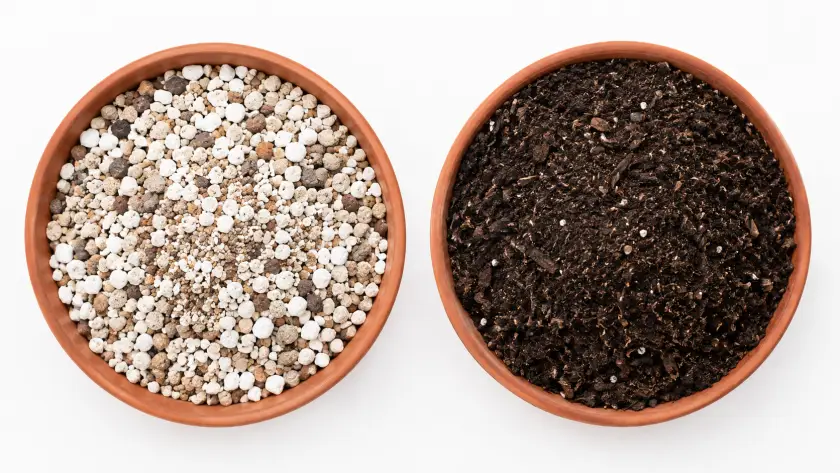
For more soil advice, see our soil mix guide.
Cactus Care Guide: Feeding
Cacti need little feeding, and the sources differ. The RHS says to feed once a month from April to September with a potassium-rich liquid feed such as tomato fertiliser or a specialist cactus feed. Clemson suggests a low-nitrogen fertiliser monthly from June to September, and says not to feed repotted plants or in winter. University of Minnesota Extension suggests feeding cacti only once or twice a year at half the recommended rate. Starting light and stopping in winter is the safe approach. See fertilizing indoor vs outdoor plants.
Repotting a Cactus
The RHS says to repot in spring once roots fill the pot or the plant outgrows it, and to avoid a pot that is too large, because the extra volume of compost can stay too wet and cause rot. Clemson says to use a container only slightly larger than the present one and to wait several days after repotting before watering.
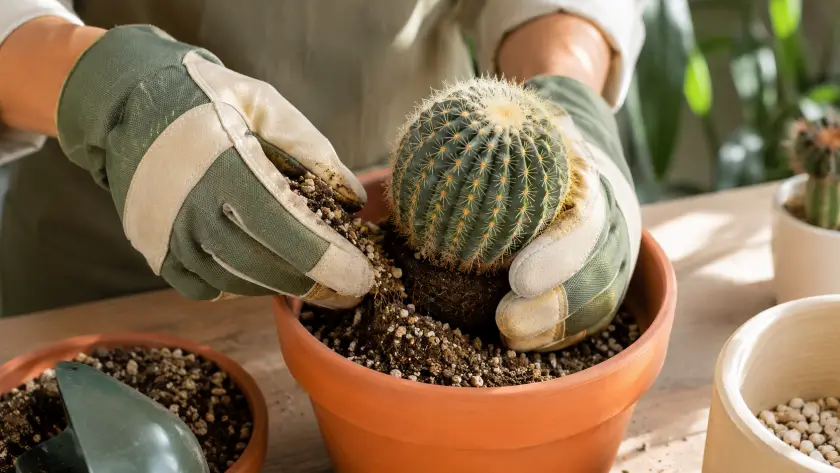
- Protect your hands. The RHS suggests thick strips of folded newspaper as tongs or an oven glove, and Clemson suggests heavy leather gloves or several layers of newspaper.
- Tip the plant out and loosen the old compost.
- Pot it into a slightly larger pot with fresh gritty compost.
- Wait several days before watering.
Prickly pears have tiny barbed bristles that Clemson says can be painful and hard to see, so take extra care. See how to repot a plant and repotting mistakes to avoid.
Indoor Cactus Care: Temperature and Humidity
The RHS gives a winter night temperature of 8 to 10°C (46 to 50°F) and says central heating is fine if plants are not close to radiators. Clemson gives 45 to 55°F for winter dormancy and 65 to 85°F in the growing season. The RHS says excessive cold can cause dieback or discoloured patches. A cool, drier rest with plenty of light can help cacti to flower.
University of Minnesota Extension says many cacti and succulents tolerate indoor humidity of 10 to 30 percent, and the RHS says too much humidity or brightness can cause corky scab. Keep humidity-loving plants separate. See humidity hacks for the opposite problem.
Common Cactus Care Problems
| Problem | Likely Cause | What to Do |
|---|---|---|
| Soft, dark base | Overwatering or poor drainage | Reduce watering, check drainage and roots |
| Shrivelling | Too little water | Water thoroughly, outside the winter rest |
| Stretched, pale growth | Too little light | Move gradually to a brighter place |
| Corky scab | Too much humidity or brightness (RHS) | Correct the conditions gradually |
| Dieback or patches | Excessive cold (RHS) | Move away from cold glass in winter |
| Yellow patches | Overwatering, scorch or cold | Check watering and recent changes |
For yellowing, read yellow leaves on plants.
Pests
The RHS lists mealybugs, red spider mites and scale insects as sap-sucking pests. Clemson also names aphids, and says light infestations can be hand-picked. University of Minnesota Extension suggests wiping mealybugs or scale with a cotton swab dipped in alcohol. Check new plants before you buy them. See how to keep pests away from plants.
Cactus Care Guide for Beginners
Start with a plant that suits your light. A sunny south- or west-facing window suits desert cacti, while a Christmas cactus suits a brighter spot without harsh sun. Cacti are also slow-growing, so judge progress over months, not weeks. For related easy options, see our best indoor plants for beginners and succulent care guide.
Frequently Asked Questions
How often should I water a cactus?
Water thoroughly when the compost feels dry to the touch in spring and summer, and give very little in winter. The right gap depends on light, warmth and pot size.
What is the best soil for cactus plants?
Use free-draining, gritty, peat-free compost. The RHS suggests a ready-mixed cactus compost or peat-free John Innes No 2 with up to 30% grit.
Why is my cactus going soft?
A soft, dark base usually points to overwatering and rot. Stop watering, check the roots and drainage, and read our root rot guides.
How much light does a cactus need indoors?
Most cacti need bright light, ideally a sunny windowsill. Clemson says desert cacti prefer a south- or west-facing window with several hours of direct sun.
When should I repot my cactus?
Repot in spring once the roots fill the pot, using a pot only slightly larger and fresh gritty compost.
Final Thoughts
As a botanist, I keep this cactus care guide simple: bright light, gritty compost, thorough but infrequent watering, and a cool winter rest. Most cacti recover from a missed watering far better than from a wet pot. At Patch Plants, I write practical care guides, so use this one with our watering guide when you set up your routine.
Sources: RHS, Cacti and succulents as houseplants; Clemson Cooperative Extension, Indoor cacti; University of Minnesota Extension, Cacti and succulents.