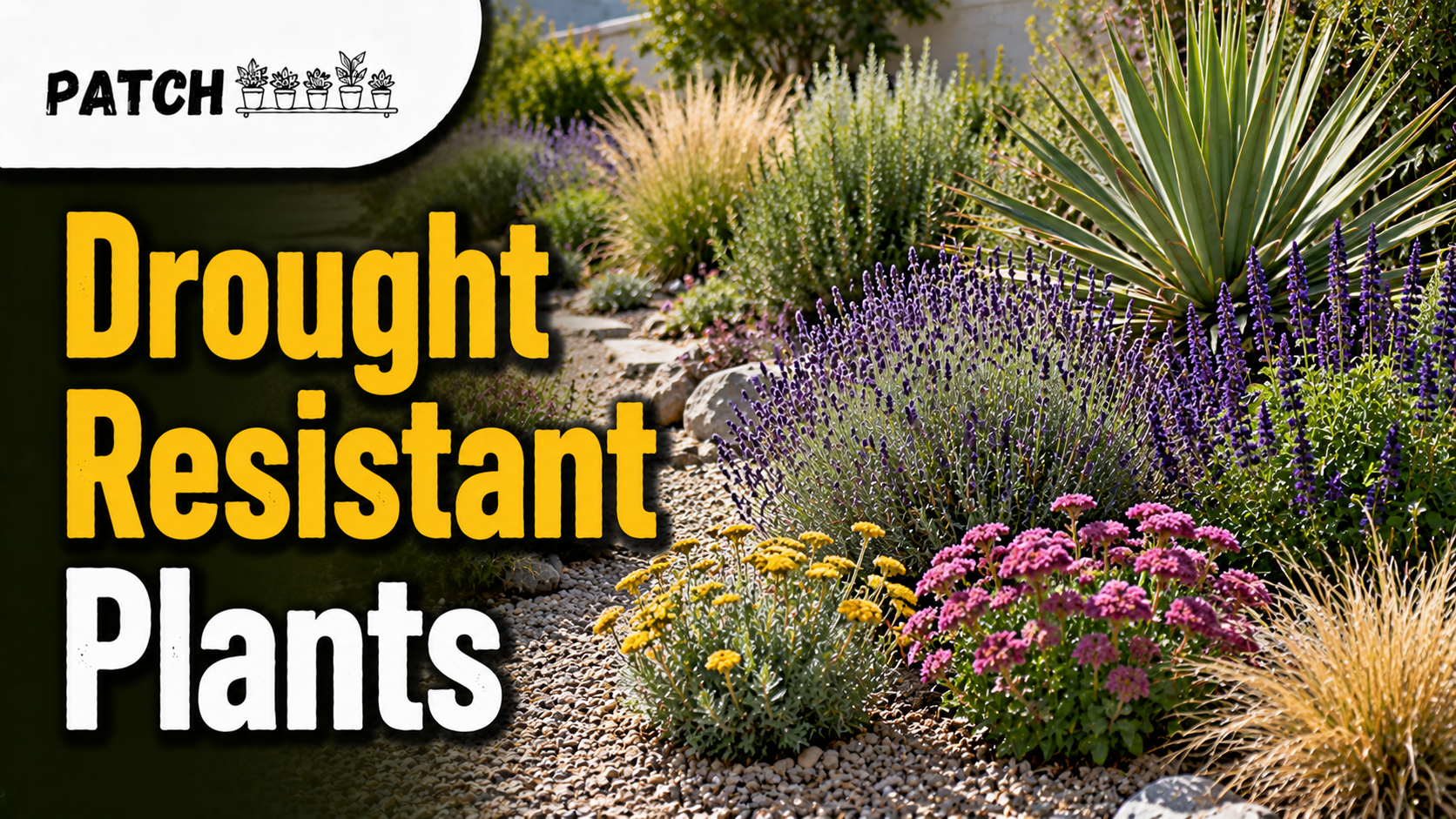
Drought resistant plants can transform a hot, dry garden into a colourful landscape that requires less irrigation once established. Whether you are dealing with summer dry spells, water restrictions, a sunny patio, or a garden that dries out quickly, the right plants can make outdoor gardening more manageable without sacrificing flowers, fragrance, or attractive foliage.
However, drought tolerance does not mean a plant can survive indefinitely without water. Lavender may grow successfully in a sunny, well-drained border but struggle in wet clay. A drought-tolerant perennial may need regular watering during its first growing season, and a hardy ornamental grass in one region may not suit another climate. Understanding those differences helps prevent expensive planting mistakes.
This guide covers 10 of the best drought resistant plants for low-water gardens, including flowering perennials, aromatic shrubs, architectural foliage plants, and ornamental grasses. You will also learn how to choose drought resistant flowers and shrubs, create a waterwise garden, manage outdoor containers, and water more efficiently.
What Are the Best Drought Resistant Plants?
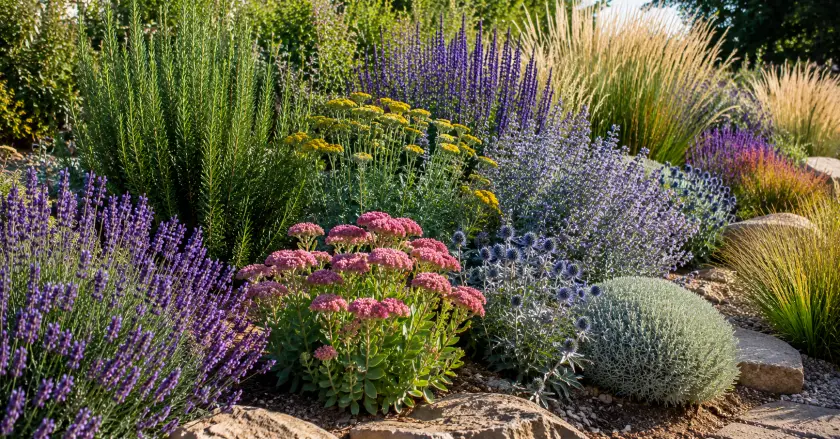
The best drought resistant plants for many sunny, well-drained gardens include lavender, rosemary, suitable salvias, yarrow, sedum, catmint, sea holly, santolina, selected artemisias, and drought-tolerant ornamental grasses. Once properly established, these plants can withstand periods of reduced soil moisture better than many moisture-loving garden species.
For colourful flowers, consider lavender, salvia, yarrow, catmint, and sea holly. Rosemary and santolina provide useful shrub structure, while sedum and appropriate ornamental grasses add foliage interest and seasonal texture.
However, plant selection should always account for your local climate, winter hardiness, soil drainage, mature plant size, and summer conditions. A species described as drought tolerant in one region may need more attention elsewhere.
The Royal Horticultural Society’s drought-resistant plants guide explains that many plants can tolerate dry conditions after establishment when soil preparation, plant selection, and watering are managed appropriately.
Key Takeaways
- Drought resistant plants can tolerate periods of limited soil moisture once their roots have established, but they are not completely independent of water.
- Lavender, salvia, yarrow, catmint, sea holly, and sedum offer colourful options for suitable sunny gardens.
- Rosemary and santolina are useful drought resistant shrubs for structure, fragrance, and attractive foliage.
- Selected ornamental grasses provide movement and seasonal interest without demanding frequent irrigation in appropriate conditions.
- Most new plants require establishment watering before their mature drought tolerance develops.
- Good drainage is particularly important for Mediterranean herbs and many succulent or silver-leaved plants.
- Drought resistant container plants often need more frequent moisture checks than established garden-bed plants.
- Grouping species with similar watering needs makes irrigation easier and helps prevent overwatering.
- Mulch, suitable soil preparation, and efficient irrigation can reduce unnecessary water loss.
- Always check local hardiness, invasive-plant guidance, and climate suitability before choosing drought-tolerant species.
What Are Drought Resistant Plants?
Drought resistant plants are species that can survive periods of reduced water availability better than plants adapted to consistently moist conditions.
Some use specialized leaves to limit water loss. Others store water in fleshy tissues, develop extensive root systems, or reduce growth during unusually dry weather.
These adaptations vary significantly between species. A plant that survives a short period without rainfall may still suffer during an extended drought, especially when temperatures are very high.
How Do Drought Resistant Plants Survive Dry Conditions?
Plants use different physical and physiological adaptations to manage water stress.
- Succulent leaves: Sedum and other succulents store water in specialized tissues.
- Narrow leaves: Some Mediterranean herbs have small or narrow foliage that helps limit water loss.
- Silver or hairy foliage: Certain plants have reflective leaf surfaces or fine hairs that influence light exposure and moisture loss.
- Extensive roots: Established plants may explore a larger volume of soil for available water.
- Seasonal growth adjustments: Some plants reduce active growth during dry periods.
These characteristics can be useful clues, but appearance alone does not prove a plant’s drought tolerance.
Drought Resistant vs Drought Tolerant Plants
Gardeners commonly use the terms drought resistant and drought tolerant interchangeably.
Both generally describe the ability to withstand reduced water availability, although neither term means a plant can live without water indefinitely.
Low-water-use plants are not necessarily the same as highly drought-tolerant plants. A species may use relatively little water under normal conditions yet fail during prolonged drought.
The best choice depends on how often your garden experiences dry soil and how severe those dry periods become.
Do Drought Resistant Plants Need Water?
Yes. Newly planted specimens need enough moisture to establish healthy roots.
Even mature drought resistant plants may require supplemental irrigation during exceptional heat, prolonged drought, or when grown in limited soil volumes.
Rather than following a universal watering schedule, monitor root-zone moisture, local weather, and the needs of each species.
For additional guidance, read our hardy plants that survive on minimal watering.
Quick Comparison: 10 Best Drought Resistant Plants
This table provides a practical starting point for planning low-water borders and containers.
| Plant | Botanical Name | Best Light | Best Garden Use |
|---|---|---|---|
| 1. Lavender | Lavandula angustifolia and suitable cultivars | Full sun | Fragrant borders and sunny paths |
| 2. Rosemary | Salvia rosmarinus | Full sun | Evergreen herbs and containers |
| 3. Salvia | Salvia nemorosa and selected species | Full sun | Flowering perennial beds |
| 4. Yarrow | Achillea millefolium and cultivars | Full sun | Naturalistic and pollinator borders |
| 5. Sedum | Sedum and Hylotelephium species | Usually full sun | Rock gardens and dry edges |
| 6. Catmint | Nepeta species and hybrids | Full sun to suitable partial shade | Low flowering borders |
| 7. Sea Holly | Eryngium species | Full sun | Architectural flower beds |
| 8. Santolina | Santolina chamaecyparissus | Full sun | Compact silver-leaved shrubs |
| 9. Artemisia | Artemisia species and cultivars | Usually full sun | Silver foliage and dry borders |
| 10. Ornamental Grasses | Selected Festuca, Schizachyrium and other species | Species-dependent | Texture, movement, and structure |
Important: Drought tolerance, cold hardiness, and maintenance vary among species and cultivars. The table does not guarantee that every listed plant will thrive in every dry garden.
10 Best Drought Resistant Plants for Low-Water Gardens
1. Lavender: Best for Sunny Fragrant Borders
Botanical name: Lavandula angustifolia and other suitable Lavender species.
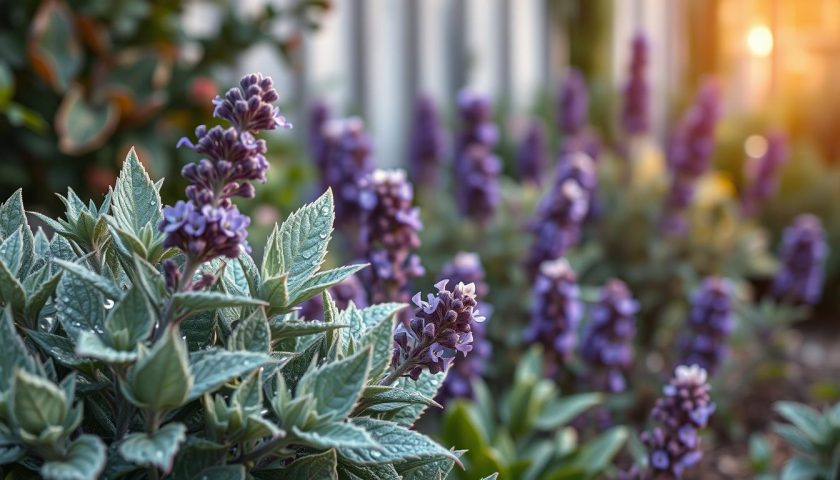
Lavender is one of the most popular drought resistant plants for gardens with full sun and well-drained soil. Its narrow aromatic foliage, purple flowers, and compact growth make it attractive along paths, raised beds, gravel gardens, and sunny patio edges.
Established lavender generally tolerates periods of dry soil better than many moisture-loving flowering plants. It is also valued for the insects that visit its flowers, particularly bees.
However, lavender is not universally easy to grow. Heavy wet soil, deep shade, and unsuitable winter conditions can create significant problems. Varieties differ in cold tolerance and performance in humid climates.
- Sunlight: Full sun.
- Watering: Regular attention during establishment; relatively low needs once established.
- Soil: Well-drained and generally not excessively rich.
- Best location: Sunny paths, gravel borders, raised beds, and suitable containers.
- Maintenance: Appropriate seasonal pruning and removal of damaged stems.
For dry-garden planting, avoid positioning lavender where water collects after rainfall.
Where the soil is persistently wet, consider a raised planting area or choose a species better adapted to those conditions.
2. Rosemary: Best for Evergreen Structure and Fragrance
Botanical name: Salvia rosmarinus, formerly Rosmarinus officinalis.
Rosemary is a woody evergreen herb that can also serve as an attractive ornamental shrub in suitable climates. Its narrow fragrant leaves remain useful for cooking, while its growth habit provides structure to herb gardens and sunny borders.
Established rosemary generally performs well where rainfall is limited but drainage is reliable. In warm, suitable climates, it can be a useful component of a low-water garden.
Rosemary is less suitable for persistently wet soil, deep shade, or winters colder than the selected variety can tolerate.
- Sunlight: Full sun.
- Watering: Moderate during establishment, lower after successful establishment.
- Soil: Free-draining soil or suitable container compost.
- Best location: Sunny herb beds, raised borders, and outdoor kitchen gardens.
- Maintenance: Occasional shaping, harvesting, and removal of dead growth.
Rosemary is particularly practical if you want a drought resistant shrub that provides both ornamental and culinary value.
For more easy-care ideas, see our low-maintenance outdoor plants guide.
3. Salvia: Best for Colourful Summer Flowers
Botanical examples: Salvia nemorosa and other appropriately selected Salvia species.
Salvias provide colourful flowers and are popular in mixed perennial borders. Depending on the species and cultivar, flowers may appear in purple, blue, red, pink, or white.
Many sun-loving perennial salvias tolerate dry periods once established, making them useful companions for yarrow, lavender, and selected ornamental grasses.
Salvia is a large genus, however. Some species prefer relatively moist conditions, while others are adapted to dry climates. Winter hardiness also varies significantly.
- Sunlight: Usually full sun for drought-tolerant varieties.
- Watering: Low to moderate once established, depending on species.
- Soil: Well-drained soil suited to the cultivar.
- Best location: Sunny perennial beds and pollinator gardens.
- Maintenance: Seasonal pruning or removal of spent flower stems.
Choose a locally suitable perennial salvia rather than assuming every variety can survive the same drought conditions.
For additional flower combinations, explore our pollinator-friendly outdoor plants guide.
4. Yarrow: Best for Naturalistic Dry Borders
Botanical name: Achillea millefolium and suitable cultivars.
Yarrow is a flowering perennial known for its finely divided foliage and flat clusters of small flowers. Different cultivars produce white, yellow, pink, peach, and red blooms.
It works well in sunny, well-drained planting areas and is commonly included in naturalistic and wildlife-friendly garden designs.
Established plants often tolerate reduced watering, although their performance depends on soil, climate, and variety.
Yarrow can spread under favourable conditions, so gardeners should check local suitability and allow enough space for its mature growth.
- Sunlight: Full sun.
- Watering: Low once established in suitable conditions.
- Soil: Well-drained soil, often with modest fertility.
- Best location: Dry borders, prairie-style plantings, and pollinator gardens.
- Maintenance: Remove spent stems and divide overcrowded clumps when needed.
Yarrow pairs attractively with salvia and grasses where all plants share compatible moisture and light requirements.
5. Sedum: Best for Rock Gardens and Dry Edges
Botanical group: Sedum species and related Hylotelephium species.
Sedums, commonly called stonecrops, are well known for their ability to store moisture in fleshy leaves. Many are suitable for rock gardens, gravel borders, containers, and other sunny areas with good drainage.
Low-growing Sedum types can form attractive mats, while upright Hylotelephium varieties provide larger flower clusters and seasonal interest.
These plants are useful where frequent watering is difficult, but not every Sedum prefers identical growing conditions. Certain woodland or shade-adapted species have different requirements.
- Sunlight: Usually full sun, depending on species.
- Watering: Low after establishment for suitable dry-garden species.
- Soil: Free-draining soil.
- Best location: Rock gardens, border edges, gravel beds, and containers.
- Maintenance: Remove damaged stems and divide crowded plants when appropriate.
Keep moisture-sensitive varieties away from soil that remains waterlogged for extended periods.
For further information about water-storing foliage, visit our succulent care guide.
6. Catmint: Best for Soft Blue-Purple Flowers
Botanical group: Nepeta species and ornamental hybrids.
Catmint is a popular perennial for relaxed borders. Many ornamental varieties produce masses of small blue-purple flowers above aromatic grey-green foliage.
Its soft growth habit works particularly well along sunny paths, in mixed borders, and beside taller perennials.
Once established, suitable catmint varieties can tolerate periods of dry weather, especially where drainage is good.
However, the genus includes different species and growth habits. Choose a compact, locally appropriate cultivar for smaller gardens.
- Sunlight: Full sun to suitable partial shade.
- Watering: Moderate during establishment, lower once settled.
- Soil: Well-drained soil.
- Best location: Sunny border edges and cottage-style plantings.
- Maintenance: Cut back tired flowering growth where appropriate.
Catmint is especially attractive when repeated in small groups alongside ornamental grasses and other drought-adapted perennials.
7. Sea Holly: Best for Architectural Flowers
Botanical group: Eryngium species and cultivars.
Sea holly provides an unusual appearance with spiny leaves and striking flower heads that may appear blue, silver, or green depending on the species.
Many varieties are suited to full sun and well-drained soil. Their architectural shape makes them useful in gravel gardens, exposed borders, and naturalistic perennial combinations.
Sea holly can also attract pollinating insects when flowering.
However, it is important to choose a species suited to the garden’s climate and soil. Not every Eryngium has identical cold hardiness or watering requirements.
- Sunlight: Full sun.
- Watering: Generally modest once established for suitable species.
- Soil: Well-drained soil.
- Best location: Gravel borders, sunny gardens, and architectural planting.
- Maintenance: Remove dead growth when appropriate and minimize unnecessary root disturbance.
Sea holly is a useful choice when you want drought resistant flowers with a more dramatic form than typical soft-stemmed perennials.
8. Santolina: Best for Compact Silver-Leaved Shrubs
Botanical name: Santolina chamaecyparissus.
Santolina, often called lavender cotton, is a compact evergreen shrub with silvery aromatic foliage and small yellow button-like flowers.
It suits sunny gravel gardens, Mediterranean-inspired beds, and low ornamental borders in appropriate climates.
The foliage provides colour and texture even when the plant is not flowering.
Established santolina generally tolerates dry conditions better than many moisture-loving shrubs, but it performs poorly where its roots remain persistently wet.
- Sunlight: Full sun.
- Watering: Relatively low once established.
- Soil: Well-drained soil.
- Best location: Sunny edging, dry borders, and Mediterranean-style gardens.
- Maintenance: Light pruning to maintain a suitable shape.
Choose santolina where its mature size fits the planting space without constant aggressive clipping.
9. Artemisia: Best for Contrasting Silver Foliage
Botanical group: Artemisia species and cultivars, including selected ornamental forms.
Artemisia is grown primarily for its foliage, which may be silver, grey-green, or finely textured.
Suitable varieties provide excellent contrast beside purple salvia, colourful yarrow, and other flowering plants.
Many ornamental artemisias originate from relatively dry growing environments and can suit sunny borders with good drainage.
However, Artemisia is a diverse genus. Some species become large, spread aggressively, or have different environmental requirements.
- Sunlight: Usually full sun for dry-garden ornamental varieties.
- Watering: Often low to moderate after establishment.
- Soil: Generally well-drained for dry-border selections.
- Best location: Silver-foliage borders and sunny mixed plantings.
- Maintenance: Manage spread and prune according to cultivar needs.
Check mature size and local planting recommendations rather than choosing an Artemisia solely for its drought-tolerant reputation.
10. Ornamental Grasses: Best for Movement and Seasonal Structure
Botanical examples: Schizachyrium scoparium, Panicum virgatum, and appropriate Festuca species.
Ornamental grasses bring movement, texture, and structure to drought-conscious garden designs.
Some provide attractive foliage through summer and autumn, while others retain interesting seed heads during winter.
Certain prairie and dry-climate grasses develop extensive root systems once established, allowing them to tolerate periods of reduced rainfall.
However, ornamental grasses vary substantially in their moisture requirements. Some prefer moist soils, and certain introduced species can become invasive.
- Sunlight: Species-dependent; many drought-adapted types prefer full sun.
- Watering: Varies; selected established species require relatively little irrigation.
- Soil: Match to the chosen species and local conditions.
- Best location: Naturalistic borders, gravel gardens, and mixed perennial beds.
- Maintenance: Seasonal cutting back or removal of old foliage where appropriate.
Locally appropriate native grasses may offer excellent value, but native status alone does not guarantee that a plant will suit every part of your garden.
Our native plants guide explains how to make more informed regional selections.
Best Drought Resistant Flowers for Long-Lasting Colour
Drought resistant flowers make it possible to create attractive garden beds without depending entirely on thirsty seasonal bedding plants.
For sunny, well-drained locations, good starting options include lavender, selected salvias, yarrow, catmint, sea holly, and suitable sedums.
Other flowering plants may also work well depending on region, including California poppy, blanket flower, coneflower, certain verbenas, and locally adapted native wildflowers.
| Flower | Typical Appeal | Important Consideration |
|---|---|---|
| Lavender | Purple flowers and fragrance | Needs excellent drainage |
| Salvia | Long-season flower colour | Choose a drought-adapted species |
| Yarrow | Flat flower clusters | Can spread in suitable conditions |
| Catmint | Soft blue-purple flowering | Growth habit varies by cultivar |
| Sea Holly | Architectural flower heads | Species-specific hardiness |
| Sedum | Fleshy foliage and seasonal flowers | Avoid prolonged wet soil |
| California Poppy | Bright orange or yellow flowers | Check regional suitability and spread |
| Blanket Flower | Warm red and yellow flowers | Choose appropriate regional species |
How to Combine Drought Resistant Flowers
Choose three or four plants with similar sunlight and moisture requirements.
For example, lavender, suitable salvia, yarrow, and selected grasses can create a coordinated dry-border planting in an appropriate climate.
Repeat plants in small groups rather than buying many unrelated varieties.
This can make the planting easier to maintain and provide a more consistent appearance.
How to Support Pollinators in a Low-Water Garden
Select flowers that bloom at different points during the growing season.
Consider locally appropriate native species that provide nectar, pollen, and habitat.
Avoid introducing invasive ornamental species, even when they are advertised as easy-care or drought tolerant.
For more ideas, visit our wildlife-friendly garden guide.
Best Drought Resistant Shrubs and Evergreen Hedges
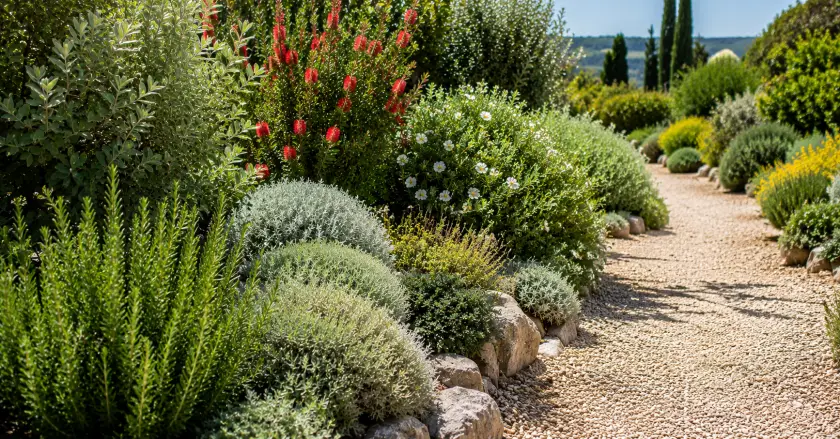
Drought resistant shrubs provide permanent structure in gardens where regular irrigation is limited.
Some evergreen varieties are particularly useful for front gardens, informal hedges, and dry borders because their foliage remains attractive throughout much of the year.
However, shrubs generally require establishment watering before their root systems can support them during extended dry conditions.
Best Shrubs for Sunny Dry Gardens
Depending on climate and soil, suitable options may include:
- Rosemary: Evergreen aromatic structure in suitable mild climates.
- Santolina: Compact silver foliage for sunny borders.
- Rock Rose (Cistus): Attractive flowering shrubs for certain Mediterranean-style gardens.
- Ceanothus: Selected species and cultivars offer flowers and drought tolerance in appropriate regions.
- Abelia: Certain varieties cope with dry periods once established.
- Potentilla: Selected shrub forms provide flowers in suitable temperate climates.
- Juniper: Certain varieties provide evergreen foliage in appropriate sunny, well-drained sites.
The drought performance of these shrubs varies between species, cultivars, and growing conditions.
What About Drought Tolerant Hedges?
Informal drought-tolerant hedges can sometimes be created using rosemary, selected junipers, appropriate native shrubs, or other regionally suitable species.
Consider mature width and height before planting.
A hedge repeatedly clipped far smaller than its natural size may require more maintenance and watering than a naturally compact planting.
How to Choose Drought Tolerant Evergreen Bushes
Check winter hardiness, wind exposure, drought tolerance, expected mature size, and local disease problems.
Evergreen foliage can lose moisture during winter as well as summer, so recently planted evergreen shrubs may need attention during prolonged dry periods even in colder weather.
Read our winter-hardy outdoor plants guide for additional climate considerations.
Best Drought Resistant Container Plants for Patios
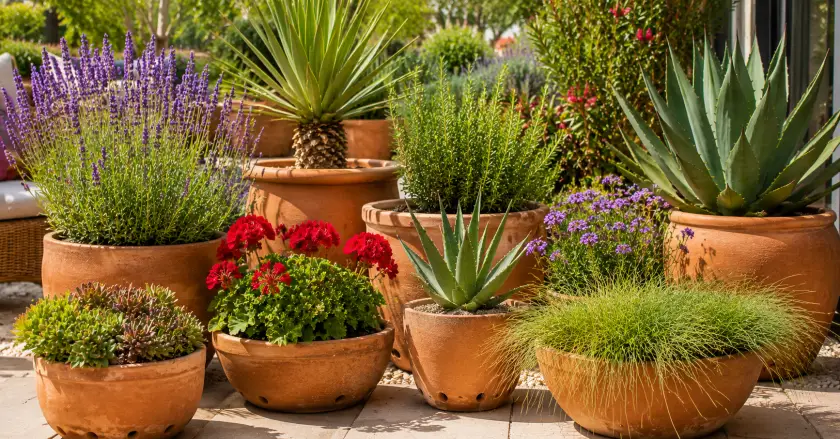
Drought resistant container plants are useful for patios, balconies, rooftops, and small outdoor spaces where garden beds are unavailable.
However, growing a drought-tolerant species in a pot does not automatically mean the plant needs little watering.
Containers expose roots to greater temperature fluctuations and contain a limited amount of growing medium, which can dry out quickly during hot or windy weather.
Best Plants for Sunny Patio Pots
Possible choices include lavender, rosemary, thyme, compact sedum, selected salvias, santolina, and locally appropriate dwarf grasses.
Choose plants with compatible needs if combining several species in one container.
Choose the Right Pot Size
Very small containers dry rapidly and may restrict developing roots.
Use pots appropriate for the plant’s mature size and growing habits.
However, avoid placing a small plant into an excessively large pot filled with moisture-retentive compost, particularly if the species is vulnerable to root problems in wet conditions.
Use Drainage Holes
Drainage is essential for most conventional outdoor containers.
Choose a pot with functioning drainage holes and use a suitable growing medium.
Do not leave moisture-sensitive plants standing in water-filled saucers after irrigation or rain.
Choose the Right Potting Mix
Plants such as lavender, rosemary, and thyme generally need free-draining growing media.
Other container plants may require somewhat greater moisture retention.
For a detailed explanation, read our plant soil mix guide.
If you are planning several containers, the PatchPlants Soil Calculator can help estimate the growing-medium volume needed.
Protect Patio Plants During Heatwaves
Check container moisture more frequently during extended hot, dry weather.
Water according to root-zone conditions rather than assuming drought-tolerant plants can be left without attention indefinitely.
For balcony-specific advice, see our year-round balcony plants guide.
How to Create a Waterwise Garden: 9 Practical Steps
Waterwise gardening combines climate-appropriate plants, healthy soil, efficient irrigation, and thoughtful design to reduce unnecessary water use.
The U.S. Environmental Protection Agency’s WaterSense guidance supports selecting plants suitable for local site conditions, grouping similar watering needs, and using mulch appropriately.
Step 1: Assess Your Garden’s Conditions
Observe how much direct sunlight each planting area receives.
Identify exposed slopes, windy corners, compacted soil, and places where rainwater collects.
A dry, sunny gravel bed requires different plants from a shady border that becomes dry beneath established tree roots.
Step 2: Check Your Climate and Hardiness Zone
Find your local winter-hardiness zone where applicable.
Also consider humidity, summer temperatures, annual rainfall, and typical drought duration.
A plant capable of surviving cold winters may still struggle during extremely hot and dry summers.
Step 3: Choose Locally Appropriate Plants
Select species with documented suitability for your region.
Locally adapted native plants may provide useful ecological benefits, but not all native species prefer dry conditions.
Check local invasive-plant restrictions before purchasing vigorous ornamental varieties.
Step 4: Improve Soil Structure Where Necessary
Healthy soil helps water enter the ground and remain available to roots.
Compacted soil can limit infiltration and root growth.
Appropriate organic matter may improve many garden soils, although amendments should be selected according to existing soil conditions and the needs of the plants.
Do not assume every drought-resistant species prefers extremely sandy or nutrient-poor soil.
Step 5: Group Plants by Watering Needs
Place plants with similar moisture requirements together.
For example, drought-adapted Mediterranean herbs should not automatically share an irrigation zone with plants that require consistently moist soil.
Grouping plants by water use is sometimes called hydrozoning.
This approach can reduce both overwatering and underwatering.
Step 6: Allow Enough Space for Mature Growth
Check each plant’s expected mature dimensions.
Overcrowding can create competition for light and moisture and may increase future maintenance.
Use repeated groups of compatible plants instead of filling every available gap immediately.
Step 7: Apply Suitable Mulch
Mulch can help reduce evaporation, moderate soil temperatures, and suppress some weeds.
Organic mulch is useful in many gardens, while mineral mulch may suit selected dry-garden designs.
However, gravel and rock mulch can become very hot in exposed sunny positions, making them unsuitable for some plants and climates.
Keep mulch away from direct contact with sensitive crowns and woody stems.
Step 8: Water Carefully During Establishment
New plants usually need supplemental moisture while roots develop.
Monitor weather conditions and soil moisture throughout establishment.
The time required varies with species, planting size, soil, and climate.
Step 9: Monitor and Adjust Irrigation
Established plants may require less supplemental water, but exceptionally dry conditions can still create stress.
Use soil-moisture observations and actual weather rather than following a rigid year-round irrigation schedule.
Inspect irrigation systems for leaks and avoid spraying water onto paths or other non-planted surfaces.
How to Water Drought Resistant Plants Correctly
Efficient watering is an important part of successful drought-tolerant landscaping.
Water Deeply When Appropriate
For many established garden plants, thorough irrigation that reaches the active root zone is more useful than frequent surface-only sprinkling.
However, the depth and timing of watering depend on the root system, soil type, and plant.
Do not assume every shallow-rooted seedling, container plant, or established shrub needs identical irrigation.
Water in the Morning When Possible
Early morning can be a practical time to water because temperatures are often cooler and unnecessary evaporation may be reduced.
However, a plant suffering severe water stress should not be left without needed irrigation simply because it is not morning.
Check Moisture Before Watering
Examine the soil below the surface rather than judging moisture from its colour alone.
Dry-looking soil on top may still contain moisture around the roots.
Similarly, water may run off compacted soil without adequately moistening the root zone.
Adjust Watering to the Season
Reduce or increase irrigation based on rainfall, temperature, plant growth, and soil conditions.
Some established plants require very little supplemental water during cooler or wetter periods.
Other plants may need additional attention during prolonged heatwaves.
Our complete watering guide</a explains how to recognize watering needs.
Drought Resistant Plants for Different USDA Growing Zones
USDA hardiness zones indicate typical extreme minimum winter temperatures.
They are useful when evaluating cold tolerance but do not independently predict drought resistance, summer humidity tolerance, or drainage requirements.
Zones 6a and 6b
In suitable soils and local conditions, possible choices include selected cold-hardy sedums, yarrow, catmint, sea holly, appropriate perennial salvias, and locally adapted grasses.
Some lavender varieties may also be suitable, but winter drainage and species selection are important.
Zone 8a
Depending on regional conditions, gardeners may have options such as rosemary, santolina, selected lavenders, hardy salvias, yucca, and suitable ornamental grasses.
However, an eastern Zone 8 garden can be far more humid than a western Zone 8 location. The same plant may perform differently in each.
Zone 9
Suitable plants may include selected rosemary, salvia, yucca, agave, ornamental grasses, and locally appropriate drought-adapted shrubs.
Summer humidity, seasonal rainfall, and invasive-plant restrictions remain important considerations.
What About Very Hot or Desert Climates?
For hot, arid regions, choose plants recommended by local horticultural extension services.
Some Mediterranean plants can experience stress in extreme desert temperatures even when they tolerate dry soil.
Locally adapted desert species may offer more reliable results than plants selected solely from general drought-resistant lists.
Affordable Drought Tolerant Landscaping Ideas
A low-water garden does not require expensive landscaping materials or mature specimen plants.
Start With Small Plants
Smaller nursery-grown plants can be more affordable and may adapt successfully to their new environment when planted and watered appropriately.
Allow enough time for growth instead of expecting an instantly mature border.
Repeat a Few Reliable Species
Choose a manageable selection of plants suited to your site.
For example, a sunny border could repeat appropriate salvia, yarrow, and ornamental grasses.
Repetition can provide a coordinated appearance while reducing the number of different care routines.
Use Divisions and Cuttings
Some perennial plants can be divided, while certain shrubs and herbs can be propagated from cuttings.
Choose methods suited to the species rather than assuming every drought-resistant plant roots successfully in water.
Propagation allows a garden to expand gradually without buying every plant at full size.
Improve Beds Before Buying More Plants
Correcting major drainage or soil problems before planting may save money in the long term.
A suitable planting position often matters more than purchasing an expensive variety.
Combine Flowers With Structural Plants
Use a small number of drought resistant shrubs for structure, flowering perennials for colour, and appropriate ornamental grasses for movement.
This creates a balanced garden without depending entirely on short-lived annual flowers.
For related ideas, visit our small outdoor spaces guide.
Common Problems in Drought Resistant Gardens
| Problem | Possible Cause | What to Check |
|---|---|---|
| New plants wilt | Insufficient establishment watering, heat, or root problems | Root-zone moisture and planting conditions |
| Leaves turn yellow | Poor drainage, excess moisture, nutrients, or other stress | Soil wetness and root health |
| Plants develop brown dry edges | Drought, intense heat, wind, or root stress | Recent weather and water availability |
| Roots begin to rot | Prolonged waterlogging or root disease | Drainage, irrigation, and roots |
| Flowering is weak | Insufficient light, unsuitable pruning, or other stress | Species requirements and growing conditions |
| Patio pots dry too quickly | Small containers, heat, wind, or growing medium | Container size and moisture retention |
| Plants fail in winter | Insufficient cold hardiness or winter-wet problems | Climate and drainage suitability |
| Shrubs outgrow borders | Plant size unsuitable for location | Mature height and spread |
| Grasses spread too far | Vigorous or regionally invasive species | Exact botanical identification |
Why Are My Drought Resistant Plants Dying?
Drought-resistant plants can decline when they are exposed to unsuitable growing conditions.
New plants may have insufficient roots to survive extended dry weather.
Other problems include waterlogged soil, poor drainage, extreme heat, cold damage, pests, and incorrect species selection.
Inspect the plant and growing medium before deciding whether to water or apply treatment.
Why Do My Drought Tolerant Plants Need Water?
Drought tolerance normally becomes more useful after root establishment.
A newly installed plant still relies on sufficient soil moisture for root development.
Established plants may also need supplemental water during exceptional drought, particularly where soil is shallow or root competition is intense.
Why Are My Drought Resistant Plants Turning Yellow?
Yellowing has several possible causes, including waterlogging, nutrient problems, natural ageing, and other environmental stresses.
Do not assume yellow foliage means the plant needs more water.
Check drainage and root-zone moisture first.
Our yellowing leaves guide provides additional diagnostic advice.
Drought Resistant Garden Maintenance Checklist
| Task | When to Check | Purpose |
|---|---|---|
| Confirm species and climate suitability | Before planting | Avoid unsuitable purchases |
| Check soil drainage | Before planting and when problems occur | Support healthy roots |
| Water newly planted specimens | As required during establishment | Support root development |
| Inspect established plants | During extended dry weather | Identify genuine water stress |
| Check mulch coverage | Seasonally | Reduce evaporation and weeds |
| Inspect patio containers | Frequently during hot weather | Prevent excessive drying |
| Review irrigation systems | Regularly during use | Reduce leaks and wasted water |
| Prune or divide plants | According to species needs | Maintain healthy growth |
| Check for aggressive spreading | During active growth | Prevent unwanted expansion |
| Review winter hardiness | Before colder seasons | Protect unsuitable or tender plants |
Common Mistakes When Growing Drought Resistant Plants
- Assuming drought resistant means never watering: New plants and established specimens during exceptional drought may still require irrigation.
- Planting without checking local climate: Winter cold, humidity, and summer heat can influence survival.
- Ignoring drainage: Many Mediterranean and succulent plants are vulnerable to prolonged wet roots.
- Using the same watering routine for every species: Moisture requirements differ.
- Expecting container plants to behave like garden-bed plants: Pots can dry much faster.
- Planting too closely: Overcrowding can increase competition and future pruning work.
- Overusing fertilizer: Excessive nutrients may encourage unnecessary soft growth or create other problems.
- Choosing invasive ornamental plants: A drought-tolerant plant may still cause ecological problems when introduced outside its suitable region.
- Applying gravel mulch everywhere: Mineral mulch can increase heat around some plants and is not universally appropriate.
- Ignoring plant establishment: Drought tolerance develops with healthy root growth, not immediately after planting.
- Choosing shrubs without checking mature size: Oversized plants may require extensive maintenance.
- Assuming every native plant tolerates drought: Native species have different habitat requirements.
- Ignoring root-zone moisture: Surface appearance may not accurately show water availability around roots.
- Overwatering after rainfall: Irrigation should reflect weather and soil moisture.
Frequently Asked Questions About Drought Resistant Plants
What are the best drought resistant plants for a garden?
The best drought resistant plants for many sunny, well-drained gardens include lavender, rosemary, selected salvia varieties, yarrow, sedum, catmint, sea holly, santolina, artemisia, and appropriate ornamental grasses. Choose species suited to local climate, soil, drainage, and winter temperatures rather than relying on drought tolerance alone.
Which drought resistant flowers are best for full sun?
Lavender, yarrow, selected salvias, catmint, sea holly, and suitable sedums are useful flowering choices for sunny, well-drained gardens. Other possibilities include regionally appropriate blanket flowers and California poppies. Check cold hardiness and local growing recommendations before planting.
What are the best drought resistant shrubs and hedges?
Rosemary, santolina, selected junipers, rock roses, and some ceanothus and abelia varieties can work well in suitable dry gardens. For hedges, choose shrubs that naturally grow to the required height and width. Water during establishment and check local climate and pest suitability.
Do drought resistant plants need watering after planting?
Yes. Most newly planted drought resistant plants need supplemental water while roots develop. Their ability to withstand dry periods generally improves after establishment. Water according to soil moisture, rainfall, weather, and the species’ requirements. During exceptional drought, even mature plants may need irrigation.
What are the best drought resistant plants for patio pots?
Lavender, rosemary, thyme, compact sedum, suitable salvias, santolina, and selected dwarf grasses can be grown in sunny outdoor containers. Use pots with drainage holes and an appropriate growing medium. Check moisture more frequently during hot, windy weather because containers usually dry faster than garden beds.
Final Thoughts
Drought resistant plants can make outdoor gardening more practical, especially in locations with dry summers, limited irrigation, or exposed planting areas.
Lavender, rosemary, salvia, yarrow, sedum, catmint, sea holly, santolina, artemisia, and appropriate ornamental grasses provide a useful starting point for colourful, low-water gardens.
However, successful drought-resistant planting depends on much more than selecting hardy-looking species. Soil drainage, winter hardiness, sunlight, local humidity, mature plant size, and establishment watering all matter.
Begin with plants that genuinely suit your garden. Group species with compatible watering needs, use suitable mulch, and monitor root-zone moisture rather than following a rigid irrigation schedule.
Once plants have established healthy roots, a thoughtful waterwise garden can provide attractive flowers, shrubs, and foliage with less unnecessary irrigation.
For additional outdoor gardening advice, explore our low-maintenance plants guide, hardy plants for minimal watering, plants for heatwaves and storms, and patio container gardening guide.

About the author
Sawera Shahid is a botanist with an MPhil in Botany and 5+ years of writing about plants. As founder and lead writer of Patch Plants, she writes practical, science-backed guides on indoor plants, outdoor gardens and plant problems, checked against RHS and university extension advice.