
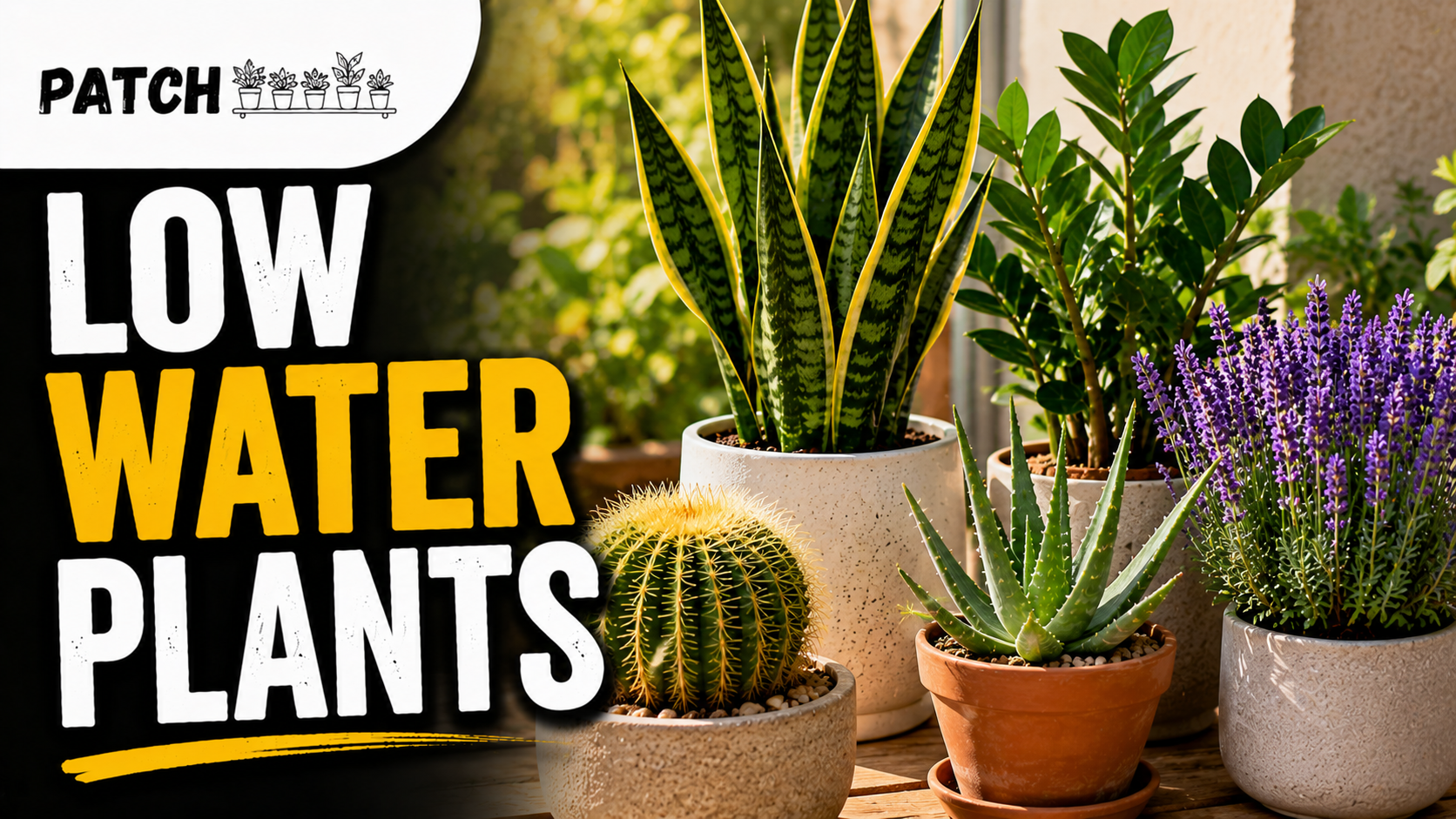
Key Takeaways
- Hardy drought-tolerant plants survive on minimal watering by storing water in leaves, stems, or roots — they are biologically designed for periods of drought
- The most drought-tolerant indoor plants include snake plant, ZZ plant, aloe vera, cacti, jade plant, pothos, and cast iron plant — all can go weeks to months between waterings
- The most drought-tolerant outdoor plants include lavender, rosemary, sedum, agave, yucca, ornamental grasses, Russian sage, and coneflower — all thrive with minimal supplementary watering once established
- Overwatering kills drought-tolerant plants more reliably than underwatering — the most common mistake is watering too frequently rather than too little
- Well-draining soil is as important as infrequent watering for drought-tolerant plants — compacted, moisture-retaining soil creates root rot even with careful watering habits
- Drought-tolerant plants are genuinely eco-friendly — they reduce household water consumption, lower garden maintenance time, and contribute to more sustainable growing practices
- Most drought-tolerant plants still benefit from thorough watering when they do receive water — the key principle is deep but infrequent watering rather than shallow frequent watering
- Hardy plants for minimal watering exist across all plant categories — from compact desk succulents to large outdoor statement plants and everything in between
- Establishing drought-tolerant outdoor plants properly with adequate initial watering in their first season dramatically improves their long-term drought resistance
- Even the toughest hardy plants have limits — understanding each plant’s specific threshold prevents confusing drought tolerance with complete water independence
Introduction
Not everyone has time to water their plants every day. Not everyone should have to. Some of the most beautiful, architecturally interesting, and ecologically valuable plants in cultivation are also among the most water-efficient — plants that have evolved over millions of years in environments where water is scarce and unreliable.
This guide covers the best hardy plants that survive on minimal watering — from the most drought-tolerant indoor houseplants to outdoor garden plants that thrive through summer dry spells with little or no supplementary irrigation. Each plant entry explains how and why it tolerates drought, how infrequently it actually needs water, and the specific care conditions that keep it performing well between waterings.
Whether you are a busy professional who travels frequently, a gardener who wants to reduce water use, or simply someone who has killed plants through overwatering and wants to start fresh with more forgiving species — this guide has everything you need.
For companion reading on watering technique — because how you water matters as much as how often — our complete guide to watering tips covers correct watering methodology for all plant types including drought-tolerant varieties. Our signs you are overwatering guide is particularly relevant — overwatering kills drought-tolerant plants more reliably than underwatering.
How Drought-Tolerant Plants Actually Work
Understanding why some plants tolerate drought so effectively explains why they should be watered differently from moisture-loving plants — and why the most common mistake with these species is watering too much rather than too little.
Water Storage in Leaves and Stems
Succulent plants — cacti, aloe vera, agave, sedum, jade plant, and many others — store significant quantities of water in specialised leaf and stem tissue. When water is available, they absorb and store it. When drought conditions arrive, they draw on these reserves over weeks or months, maintaining metabolic function long after soil moisture has been exhausted.
The thick, fleshy appearance of succulent leaves is directly related to this water storage capacity — the plumper the leaf, the more water it holds. A slightly wrinkled or shrivelled appearance in a succulent indicates the reserves are running low and watering is genuinely needed.
Water Storage in Roots and Rhizomes
Some drought-tolerant plants store water underground rather than in visible foliage. The ZZ plant is the most common example — its thick, waxy rhizomes store substantial water reserves that the plant draws on during dry periods. This is why ZZ plants can look completely healthy for months without watering — they are living off reserves the gardener cannot see.
Reduced Transpiration
Many drought-tolerant plants have evolved leaf structures that minimise water loss through transpiration — the process by which plants release water vapour through their leaves. Cacti have replaced leaves with spines entirely, eliminating transpiration surface almost completely. Lavender and rosemary have fine, needle-like leaves with a small surface area relative to volume. Many Mediterranean herbs have waxy or silver-coated leaves that reflect sunlight and reduce evaporation.
Deep Root Systems
Established drought-tolerant outdoor plants typically develop deep root systems that access groundwater at levels unavailable to shallower-rooted plants. This is why establishment watering is so important — giving drought-tolerant outdoor plants adequate water in their first growing season encourages deep root development that underpins their long-term drought resistance.
The Most Drought-Tolerant Indoor Plants
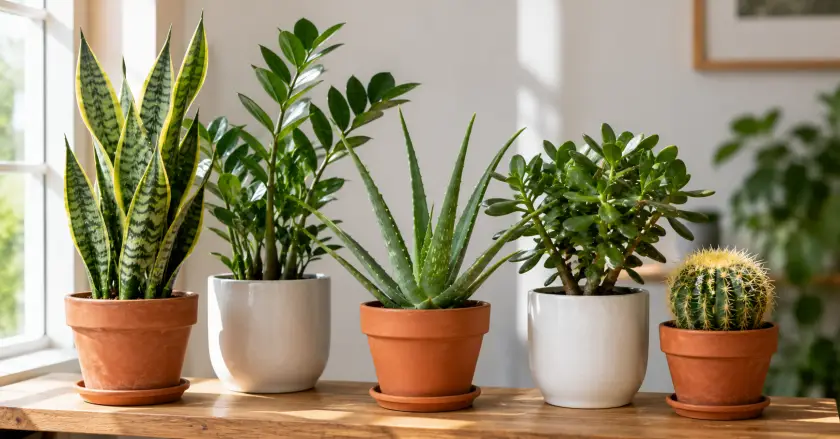
These indoor plants require the least frequent watering of any commonly available houseplants. Each entry includes specific watering frequency guidance under normal indoor conditions.
Snake Plant (Sansevieria / Dracaena trifasciata)
The snake plant is the most widely recommended drought-tolerant houseplant for good reason — it stores water in its thick, upright leaves, tolerates very low light, and can go six to eight weeks between waterings in winter without any visible decline. Even in summer under bright light, watering every two to four weeks is typically sufficient.
The snake plant’s tolerance for neglect is almost unparalleled among common houseplants. It is also one of the most effective air-purifying houseplants — its drought tolerance does not come at any aesthetic or functional cost. Our snake plant care guide covers specific watering guidance and care requirements in full. It appears in our 35 low-maintenance plants guide as one of the most consistently recommended varieties.
- Watering frequency: Every 4–8 weeks in winter, every 2–4 weeks in summer
- Light: Low to bright indirect — extremely adaptable
- Drought mechanism: Water storage in thick leaves
ZZ Plant (Zamioculcas zamiifolia)
The ZZ plant is arguably the most drought-tolerant common houseplant available — its thick underground rhizomes store significant water reserves that allow it to survive months without any watering in some cases. It also tolerates very low light and genuinely thrives on neglect in a way few other houseplants can match.
The ZZ plant’s one vulnerability is overwatering — its rhizomes rot in persistently moist soil. Allow the soil to dry completely between waterings and the plant is virtually indestructible. Our ZZ plant care guide covers care in detail.
- Watering frequency: Every 6–8 weeks in winter, every 3–4 weeks in summer
- Light: Low to medium indirect
- Drought mechanism: Water storage in rhizomes
Aloe Vera
Aloe vera is a desert succulent that stores water in its thick, fleshy leaves — making it one of the most drought-tolerant houseplants available. It needs watering only every two to three weeks in summer and once a month or less in winter. Its preference for neglect extends to soil too — it needs a very well-draining gritty mix and will rot rapidly in moisture-retaining compost.
Our aloe vera care guide covers its specific soil, light, and watering requirements. Aloe vera also appears in our air-purifying plants guide for its additional functional benefits.
- Watering frequency: Every 3–4 weeks in winter, every 2–3 weeks in summer
- Light: Bright — needs direct or very bright indirect light
- Drought mechanism: Water storage in fleshy leaves
Cacti (Various genera)
Cacti are the ultimate minimal-watering plants — their entire evolutionary history is an adaptation to extreme drought. In indoor conditions, most common cactus varieties need watering only every two to four weeks in summer and once a month or less in winter. Many experienced cactus growers stop watering entirely through winter, allowing natural dormancy.
Our cactus care guide covers watering, soil, light, and repotting for all common indoor cactus varieties. The most drought-tolerant varieties for indoor growing include mammillaria, golden barrel, and opuntia. Our succulent care guide covers the broader succulent family alongside cacti.
- Watering frequency: Every 4–6 weeks in winter (sometimes none), every 2–4 weeks in summer
- Light: Bright — requires direct or very bright light
- Drought mechanism: Water storage in stems, modified leaves (spines), reduced transpiration
Jade Plant (Crassula ovata)
The jade plant is a slow-growing succulent shrub that stores water in its thick, oval leaves and tolerates weeks without watering without visible decline. It is one of the longest-lived commonly kept houseplants — well-maintained jade plants can survive for decades, outlasting much of the furniture around them. Our jade plant care guide covers its specific requirements including soil and light.
- Watering frequency: Every 3–4 weeks in winter, every 2–3 weeks in summer
- Light: Bright — south or west window preferred
- Drought mechanism: Water storage in leaves and stems
Cast Iron Plant (Aspidistra elatior)
The cast iron plant genuinely earns its name — it tolerates drought, low light, dust, temperature extremes, and irregular watering better than almost any other common houseplant. It grows slowly but reliably in the most challenging indoor positions. Its dark green strap-like leaves look attractive year-round and require almost no attention beyond occasional watering and dusting.
- Watering frequency: Every 3–4 weeks — very tolerant of extended dry periods
- Light: Very low — one of the few plants that tolerates deep shade
- Drought mechanism: Slow growth rate reduces water demand; stores some moisture in thick rhizomes
Pothos (Epipremnum aureum)
Pothos is not a true drought-tolerant succulent, but it tolerates irregular watering better than most non-succulent houseplants — allowing soil to dry partially between waterings without visible stress. Its trailing stems and fast growth make it one of the most rewarding easy-care plants for busy households. Our pothos care guide covers care in detail.
- Watering frequency: Every 1–2 weeks — tolerates skipping waterings
- Light: Low to bright indirect
- Drought mechanism: Relatively high tolerance for soil drying compared to most tropical plants
Aglaonema (Chinese Evergreen)
Aglaonema is one of the most tolerant all-round houseplants — handling low light, dry air, and irregular watering without significant visible decline. Some coloured varieties bring pink and red to low-light positions where most plants would not survive. Our air-purifying plants guide covers aglaonema’s additional air quality benefits.
- Watering frequency: Every 2–3 weeks — tolerates extended dry periods
- Light: Low to medium indirect
- Drought mechanism: Tolerates dry soil without the immediate wilting response of more moisture-sensitive plants
Dracaena
Most dracaena varieties tolerate irregular watering well — their thick stems store some moisture and they recover from dry periods without significant lasting damage. They suit the low-attention indoor plant collection well. Our dracaena care guide covers the main varieties and their specific requirements.
- Watering frequency: Every 2–3 weeks — reduce significantly in winter
- Light: Low to medium indirect
- Drought mechanism: Moderate drought tolerance from stored moisture in stems
The Most Drought-Tolerant Outdoor Plants
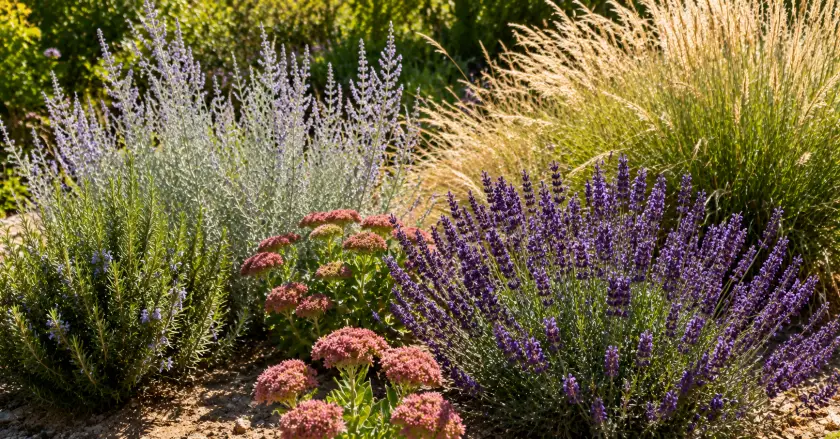
Outdoor drought-tolerant plants — once established — typically require no supplementary watering beyond natural rainfall in temperate climates. These are the best choices for low-water outdoor gardens, container plantings, and exposed positions where containers dry out quickly.
Lavender (Lavandula)
Lavender is among the most drought-tolerant flowering plants available for outdoor use — it evolved in the dry, rocky hillsides of the Mediterranean and actively thrives in poor, dry soil conditions that would stress most plants. Once established, it requires no supplementary watering in most temperate climates except during prolonged severe drought.
Our 15 hardy outdoor plants guide covers lavender in detail. It also appears in our plants that keep bugs away guide for its pest-deterring properties — drought tolerance and pest resistance make it one of the most practically valuable outdoor plants available.
- Watering once established: Rainfall only in temperate climates — water during extreme drought only
- Best position: Full sun, poor well-draining soil
- Drought mechanism: Fine leaves reduce transpiration surface; evolved in dry Mediterranean conditions
Rosemary (Salvia rosmarinus)
Rosemary shares lavender’s Mediterranean origin and its extraordinary drought tolerance. Evergreen, fragrant, edible, and pollinator-friendly — it requires watering only during establishment and extreme drought once settled in its position. It thrives in the same poor, well-draining, sunny conditions as lavender and suits the same garden design styles. Our hardy outdoor plants guide covers rosemary alongside lavender.
- Watering once established: Rainfall only in most climates
- Best position: Full sun, poor well-draining soil
- Drought mechanism: Fine needle-like leaves minimise transpiration
Sedum (Hylotelephium)
Sedum is the most drought-tolerant commonly grown perennial border plant — it stores water in its thick succulent leaves and produces flat-topped flower heads in pink, red, and white in late summer that are exceptionally valuable for pollinators. It tolerates extended dry spells that would cause other perennials to wilt and requires almost no supplementary watering in garden positions. Our hardy outdoor plants guide covers sedum care and its year-round garden value.
- Watering once established: Rainfall only — very high drought tolerance
- Best position: Full sun, well-draining soil
- Drought mechanism: Succulent leaves store water; tolerates dry periods like a desert plant
Agave
Agave is one of the most extreme drought-tolerant plants available for outdoor and container growing — it can survive years without irrigation in dry climates and months without water in containers. Its architectural rosette form — large, sculptural, and dramatically spiked — makes it one of the most visually impactful low-water plants available for patios, terraces, and sunny garden borders.
Agave suits the Mediterranean and modern sculptural outdoor design themes covered in our best plants for small outdoor spaces guide. It needs full sun and excellent drainage — in containers use a gritty, free-draining mix as described in our best soil mix guide.
- Watering once established: Very infrequent — monthly in summer, none in winter
- Best position: Full sun, very well-draining soil
- Drought mechanism: Massive water storage in fleshy leaves; waxy surface prevents evaporation
Ornamental Grasses
Most ornamental grasses are significantly more drought-tolerant than other garden plants once established — their deep fibrous root systems access moisture at lower soil levels and they reduce their growth rate naturally during dry periods without visibly declining. Blue fescue, stipa, miscanthus, and pennisetum all tolerate extended dry periods well.
Our hardy outdoor plants guide covers ornamental grasses as year-round performers. They suit exposed, windy positions covered in our best outdoor plants for coastal and windy environments guide where drought tolerance often coincides with wind tolerance.
- Watering once established: Rainfall only in most temperate climates
- Best position: Full sun to partial shade
- Drought mechanism: Deep root systems; natural growth reduction in dry periods
Russian Sage (Perovskia atriplicifolia)
Russian sage is one of the most beautiful drought-tolerant flowering plants for outdoor borders — its tall, airy stems of lavender-blue flowers and silvery foliage perform best in poor, dry conditions. It actively prefers to be left alone, tolerating drought that would cause more demanding plants to wilt and lose flowering performance. Our hardy outdoor plants guide covers Russian sage care in detail.
- Watering once established: Rainfall only — prefers dry conditions
- Best position: Full sun, poor well-draining soil
- Drought mechanism: Silver-coated leaves reflect heat; evolved for dry conditions
Coneflower (Echinacea purpurea)
Coneflower combines drought tolerance with exceptional pollinator value — its large, open flowers attract bees and butterflies through midsummer to early autumn, and it tolerates dry periods that would stress many other flowering perennials. It is native to the prairies of North America, where dry summers are the norm rather than the exception. Our pollinator-friendly plants guide covers coneflower alongside other drought-tolerant pollinator plants.
- Watering once established: Supplementary watering only in prolonged severe drought
- Best position: Full sun to partial shade, average well-draining soil
- Drought mechanism: Deep taproot accesses groundwater; prairie-adapted growth habits
Yucca
Yucca is one of the most architecturally dramatic drought-tolerant plants available for outdoor container and garden use — its sword-like leaves create strong structural impact and it tolerates extreme neglect and drought with virtually no visible decline. It suits hot, sunny, exposed positions where most ornamental plants would struggle.
- Watering once established: Very infrequent — tolerates months without water in outdoor positions
- Best position: Full sun, very well-draining soil
- Drought mechanism: Fibrous leaves with minimal transpiration surface; water storage in thick trunk and roots
Essential Care Principles for Drought-Tolerant Plants
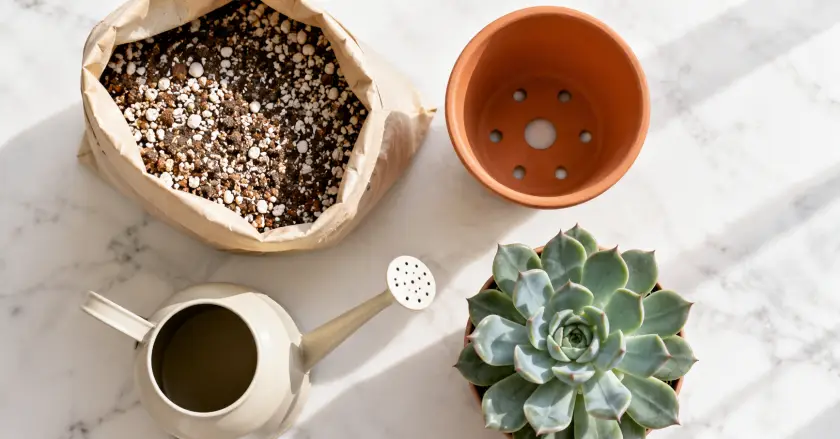
Drought-tolerant plants have specific care requirements that differ significantly from moisture-loving plants. Understanding these differences prevents the most common failures with these species.
The Most Important Rule: Do Not Overwater
Overwatering kills drought-tolerant plants more reliably and more rapidly than underwatering. Their roots are adapted to dry conditions and have little or no tolerance for prolonged soil moisture — root rot develops quickly when drought-tolerant plants sit in wet soil. Our root rot guide covers identification and treatment, and our signs you are overwatering guide helps identify the problem before it becomes fatal.
The correct watering approach for drought-tolerant plants is: water thoroughly when watering, then wait until the soil is completely dry before watering again. Deep, infrequent watering is far better than shallow, frequent watering for all drought-tolerant species.
Soil Selection Is Critical
Drought-tolerant plants — particularly succulents and cacti — need well-draining, gritty growing medium that does not retain moisture around the roots. Standard potting compost retains too much moisture for most drought-tolerant plants. Our best soil mix guide covers the correct growing medium for succulents, cacti, and drought-tolerant perennials in detail.
For container plants, always use pots with drainage holes — this is non-negotiable for drought-tolerant species. A pot without drainage will eventually cause root rot regardless of how infrequently you water.
Establishment Watering for Outdoor Plants
Despite their eventual drought tolerance, newly planted outdoor drought-tolerant plants need adequate watering in their first growing season to establish a root system capable of accessing groundwater. Water thoroughly at planting and continue weekly watering for the first six to eight weeks, then gradually reduce frequency as the plant establishes. Once established — typically after the first full growing season — most drought-tolerant outdoor plants manage on rainfall alone in temperate climates. For seasonal planting guidance, our garden calendar 2026 covers planting timing month by month.
Repotting Considerations
Most drought-tolerant houseplants — particularly succulents and cacti — need repotting less frequently than moisture-loving plants. They prefer slightly root-bound conditions in many cases. When repotting is needed, our how to repot a plant guide covers the full process, and our repotting mistakes to avoid guide covers the specific errors most common with drought-tolerant species — including choosing too large a pot (which retains excess moisture) and using moisture-retaining compost.
Drought-Tolerant Plants by Situation
Best Drought-Tolerant Plants for Low Light Indoors
ZZ plant, snake plant, cast iron plant, and aglaonema all combine drought tolerance with low light capability — a rare and valuable combination for offices, hallways, and north-facing rooms. Our office-friendly plants guide covers the best drought-tolerant plants for workplace environments where lighting and watering consistency are both challenging.
Best Drought-Tolerant Plants for Outdoor Containers
Sedum, lavender, rosemary, agave, ornamental grasses, and compact succulents all suit outdoor containers in sunny positions — and all tolerate the faster drying that characterises container growing in exposed positions. Our best plants for small outdoor spaces guide and year-round balcony plants guide cover drought-tolerant container options in detail.
Best Drought-Tolerant Plants for Full Sun Outdoors
Lavender, rosemary, agave, yucca, sedum, Russian sage, coneflower, and ornamental grasses all thrive in full sun positions with minimal watering. These plants are covered in detail in our top drought-resistant plants guide, which provides a comprehensive reference for water-efficient outdoor gardening. For an overview of the broader category of tough outdoor plants, our 15 hardy outdoor plants guide covers many of the same varieties from a year-round performance perspective.
Best Drought-Tolerant Plants for Beginners
Snake plant, ZZ plant, and pothos are the most forgiving starting points for anyone new to drought-tolerant plant keeping. All three tolerate the most common beginner mistakes — overwatering, irregular care, variable light — with minimal visible consequence. Our best indoor plants for beginners guide covers these and other beginner-friendly options in detail.
Article Summary
| Plant | Indoor/Outdoor | Watering Frequency | Key Feature |
|---|---|---|---|
| Snake Plant | Indoor | Every 4–8 weeks winter, 2–4 weeks summer | Stores water in thick leaves |
| ZZ Plant | Indoor | Every 6–8 weeks winter, 3–4 weeks summer | Water storage in rhizomes |
| Aloe Vera | Indoor/Outdoor | Every 3–4 weeks winter, 2–3 weeks summer | Desert succulent — fleshy leaves |
| Cacti | Indoor/Outdoor | Monthly or less winter, 2–4 weeks summer | Ultimate drought champions |
| Jade Plant | Indoor | Every 3–4 weeks winter, 2–3 weeks summer | Long-lived succulent shrub |
| Cast Iron Plant | Indoor | Every 3–4 weeks | Virtually indestructible |
| Lavender | Outdoor | Rainfall only once established | Mediterranean drought champion |
| Rosemary | Outdoor | Rainfall only once established | Evergreen, edible, drought-tolerant |
| Sedum | Outdoor | Rainfall only once established | Succulent perennial, pollinator plant |
| Agave | Outdoor | Monthly summer, none winter | Extreme drought tolerance, dramatic form |
Related Guides
- Top Drought-Resistant Plants
- 35 Low-Maintenance Plants That Will Thrive
- Succulent Care Guide
- Cactus Care Guide
- Snake Plant Care Guide
- ZZ Plant Care Guide
- 15 Hardy Outdoor Plants Guide
- Signs You Are Overwatering
- Complete Guide to Watering Tips
- What Is Root Rot?
- Best Indoor Plants for Beginners
- Best Plants for Small Outdoor Spaces
Final Thoughts
The best plant for any home is one that fits the life being lived in that home. For busy people, forgetful waterers, frequent travellers, and those simply looking to reduce the maintenance burden of their plant collection — drought-tolerant, hardy plants are not the compromise option. They are often the most elegant, architecturally interesting, and long-lived plants available.
A snake plant that has been in the same corner for fifteen years, a lavender that fills a patio with scent every summer without ever being watered, an agave that becomes more impressive every season — these are the plants that outlast trends, survive moves, and remain beautiful through every stage of a busy life.
According to the Royal Horticultural Society, drought-tolerant planting is one of the most important adaptations UK gardeners can make in response to increasingly dry summers — with water conservation in gardens becoming a priority as climate patterns shift. Choosing plants that need little water is not just convenient. It is responsible.
Water less. Choose wisely. Let the right plants do the work.
Frequently Asked Questions
What are the best indoor plants that need little water?
The best indoor plants that need little water include snake plant, ZZ plant, aloe vera, cacti, jade plant, cast iron plant, and aglaonema. These drought-tolerant houseplants can go weeks to months between waterings and still thrive. Our snake plant care guide and ZZ plant care guide cover the two most extreme drought-tolerant options in detail.
Which outdoor plants are most drought tolerant?
The most drought-tolerant outdoor plants include lavender, rosemary, sedum, agave, yucca, ornamental grasses, Russian sage, and coneflower. These plants survive extended dry periods once established and require very little or no supplementary watering in temperate climates. Our top drought-resistant plants guide covers a comprehensive range of outdoor water-efficient plants.
How often do drought-tolerant plants need watering?
Most drought-tolerant indoor plants need watering every two to eight weeks depending on species and season. Most drought-tolerant outdoor plants established in the garden need no supplementary watering beyond natural rainfall in temperate climates. The key principle is to water thoroughly but infrequently — allowing the soil to dry completely between waterings. Our complete guide to watering tips covers the correct approach for drought-tolerant species.
Can drought-tolerant plants survive complete neglect?
No plant survives indefinitely without any water, but drought-tolerant plants can survive weeks or months without watering that would kill other plants. The snake plant and ZZ plant are among the most extreme examples — capable of going six to eight weeks or more without water in indoor conditions. If any plant shows significant stress symptoms, it needs water regardless of its drought tolerance rating.
What is the most drought-tolerant houseplant?
The ZZ plant is widely considered the most drought-tolerant common houseplant — its thick rhizomes store significant water reserves allowing it to survive months without watering. The snake plant is a close second. Both are covered in our 35 low-maintenance plants guide as the most consistently recommended drought-tolerant varieties for indoor settings.


[…] For hardy outdoor choices, see outdoor plants that survive British winters, 15 hardy outdoor plants, and hardy plants with minimal watering. […]
[…] drought-friendly planting, connect rosemary with top drought-resistant plants, hardy plants for minimal watering, and plants for storms and […]
[…] Hardy plants with minimal watering […]