The best smelling indoor plants are jasmine, Arabian jasmine, gardenia, hoya, stephanotis, citrus, and fragrant orchids for flowers, plus scented geraniums, rosemary, and mint for leaves you can brush to release scent. Most fragrant houseplants need bright light to bloom, because no flowers means no fragrance. If you have pets, start with true jasmine, hoya, stephanotis, or rosemary, which the ASPCA lists as non-toxic to cats and dogs. Key Takeaways Fragrant flowering plants only smell when they bloom, and most need bright light, often with some direct sun, to flower…
Category: Featured
Complete Calathea Plant Care Guide: How to Grow Every Popular Variety
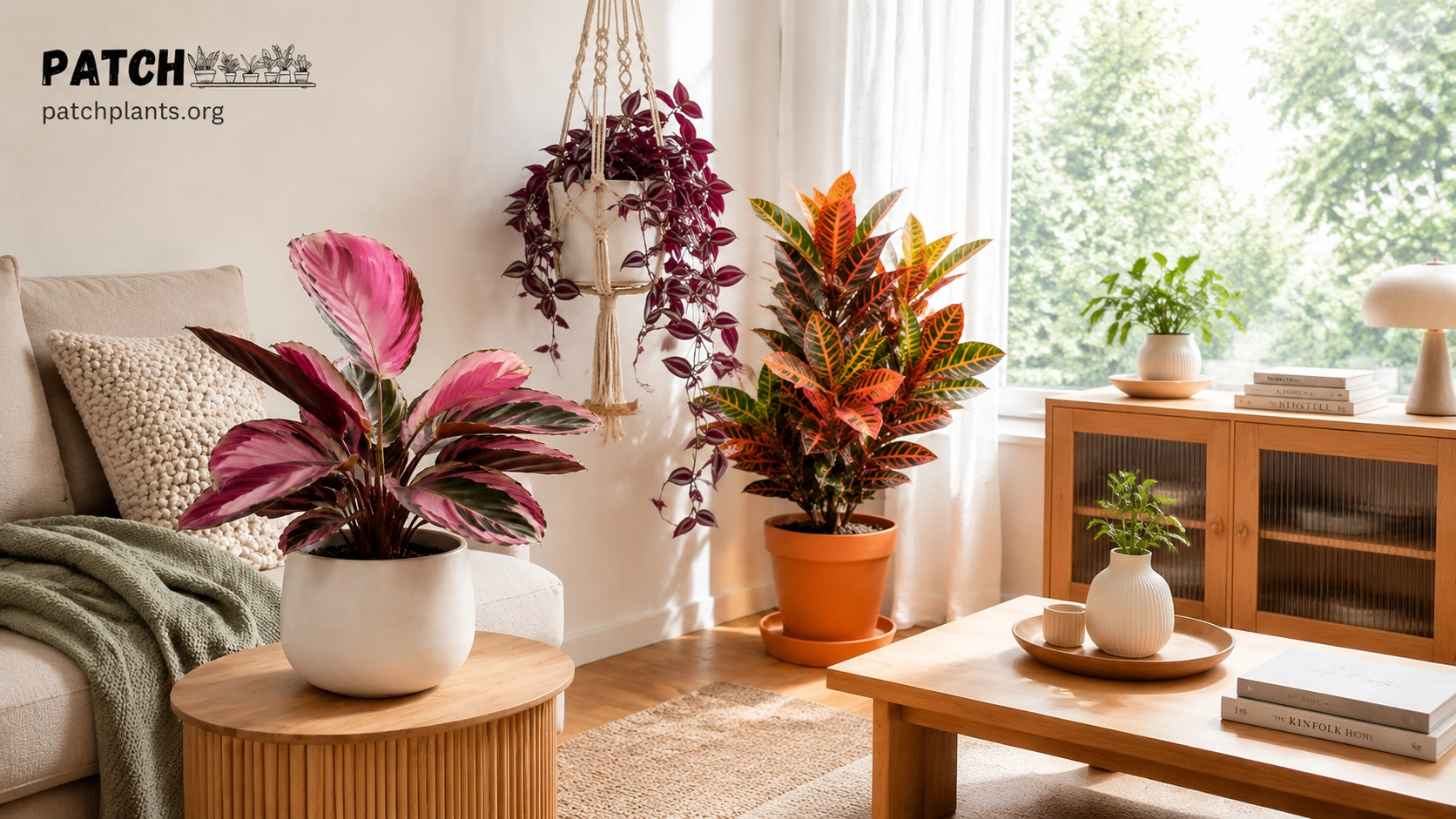
To grow a healthy calathea, give it bright to medium indirect light, keep the soil evenly moist but never soggy, use rainwater, distilled or filtered water, and keep humidity around 50–60% at a steady 18–27°C (64–80°F). Most calathea problems, especially brown edges and curling leaves, come from dry air, drying out between waterings, or minerals in hard tap water. Calatheas are worth that extra attention. Their striped, feathered and painted leaves are some of the most striking foliage you can grow indoors, and many of them fold their leaves upward…
Air-Purifying Indoor Plants That Actually Work: Complete NASA-Approved Guide
Air purifying indoor plants do remove some pollutants in sealed laboratory tests, but in a real home the effect is small, and ventilation does far more. Plants like spider plant, snake plant, peace lily and Boston fern are still worth growing: they are easy, they look good, and they make a room nicer to live in. Just do not rely on them to clean your air. I am Sawera Shahid, a botanist at Patch Plants. Most articles about air purifying indoor plants repeat the famous NASA study without its limits.…
Complete Philodendron Care Guide: How to Grow Every Popular Philodendron Variety
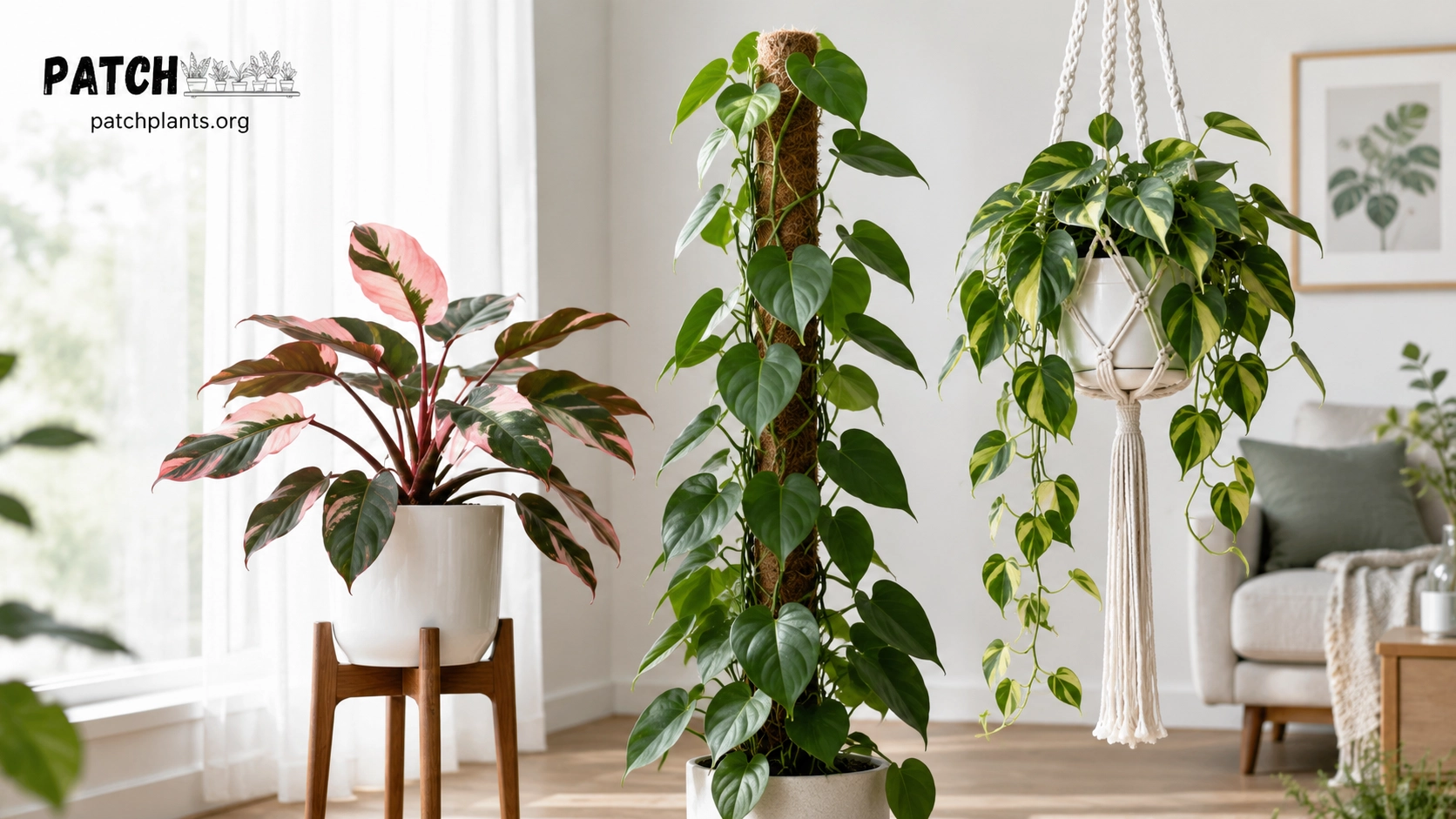
🌿 Key Takeaways Philodendron represents one of the largest houseplant genera with 400+ species ranging from climbing vines to self-heading varieties — offering options for every indoor space and skill level Pink Princess Philodendron and other rare varieties command premium prices due to unstable variegation requiring specific propagation techniques to maintain pink coloring Heartleaf Philodendron (Philodendron hederaceum) ranks as the easiest beginner variety — tolerating low light, inconsistent watering, and neglect better than most houseplants Philodendron care fundamentals remain consistent across varieties: bright indirect light, well-draining soil, moderate watering when…
Colorful Indoor Plants: 10 Best Picks for Vibrant Foliage
The best colorful indoor plants for vivid, year-round leaf color are croton, calathea, stromanthe ‘Triostar’, tradescantia, coleus, polka dot plant, nerve plant (fittonia), pink aglaonema, caladium and rex begonia. Most of them need bright, indirect light to keep their colors strong; in dim rooms, pinks, reds and creams fade toward green. If your space is darker, choose aglaonema or plants with very dark foliage, such as ZZ ‘Raven’. Colorful foliage gives you the impact of flowers without waiting for blooms. This guide compares the most popular colorful houseplants, explains how…
Rubber Plant Care Guide: Complete Guide to Ficus Elastica and Baby Rubber Plant
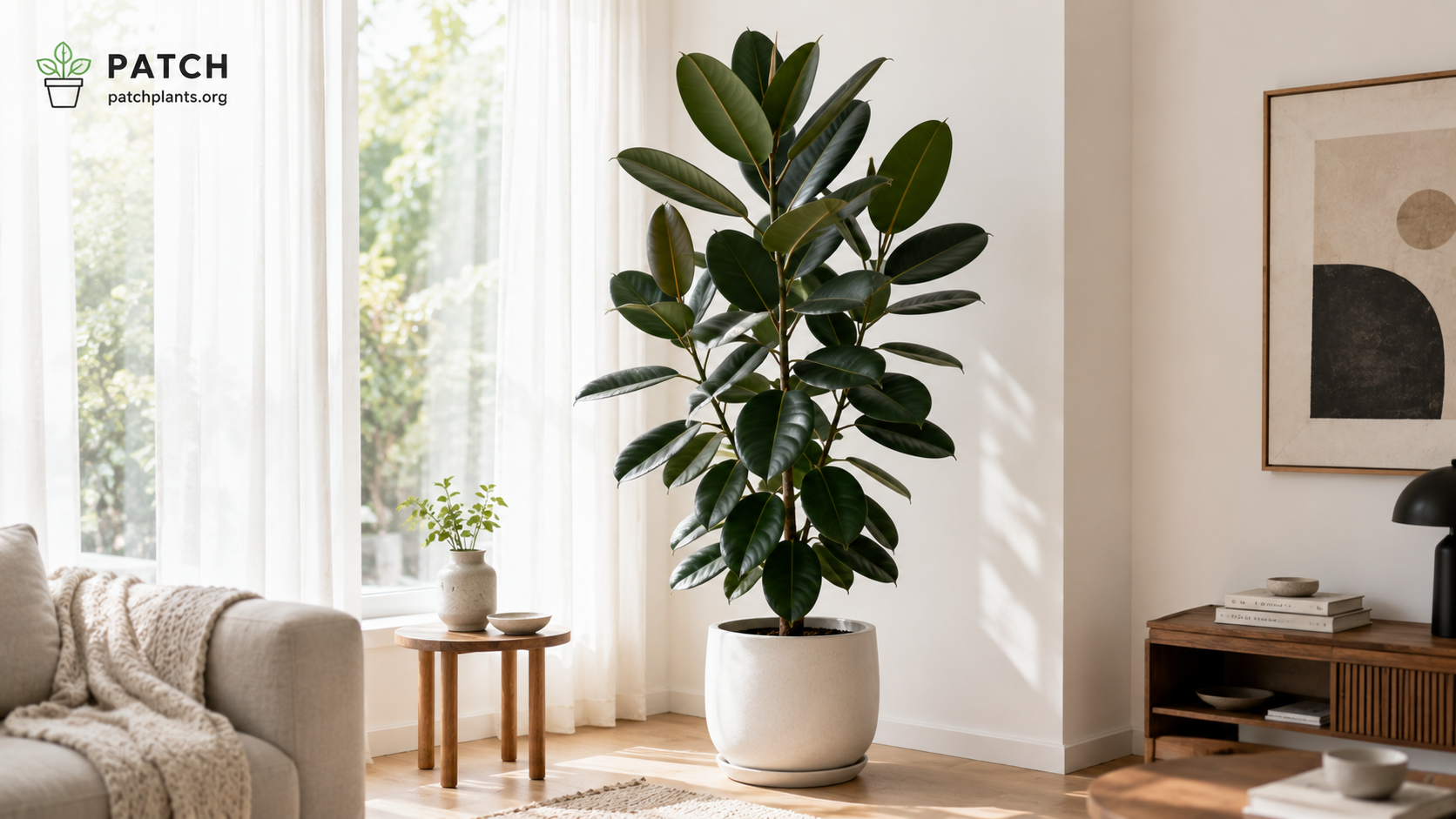
Rubber plant care is simple once you get light and watering right: give Ficus elastica bright, indirect light, water when the top 5cm of soil is dry, keep it above about 13°C and away from draughts, and feed lightly in spring and summer. It is one of the easiest large houseplants, and most problems, especially sudden leaf drop, come from overwatering, cold or being moved. This guide covers light, watering, soil, feeding, varieties, pruning, propagation, common problems and pet safety. Patch Plants guides are written by Sawera Shahid, a botanist…
Low-Light Hanging Plants for Shelves, Showers & Ceilings: Complete Guide to Best Indoor Hanging Plants
The best low light hanging plants are pothos (especially ‘Jade’), heartleaf philodendron, spider plant, Boston fern for humid bathrooms, English ivy and tradescantia. They cope with bright indirect or moderate light, such as a north-facing window or a few metres from a brighter one. Trailing succulents such as string of hearts and string of turtles, plus hoyas and lipstick plants, need a brighter spot to do well. No plant grows in complete darkness, so in windowless rooms add a grow light. Hanging plants and trailing shelf plants make good use…
Fiddle Leaf Fig Care Guide: Complete Guide to Growing Healthy Ficus Lyrata Indoors
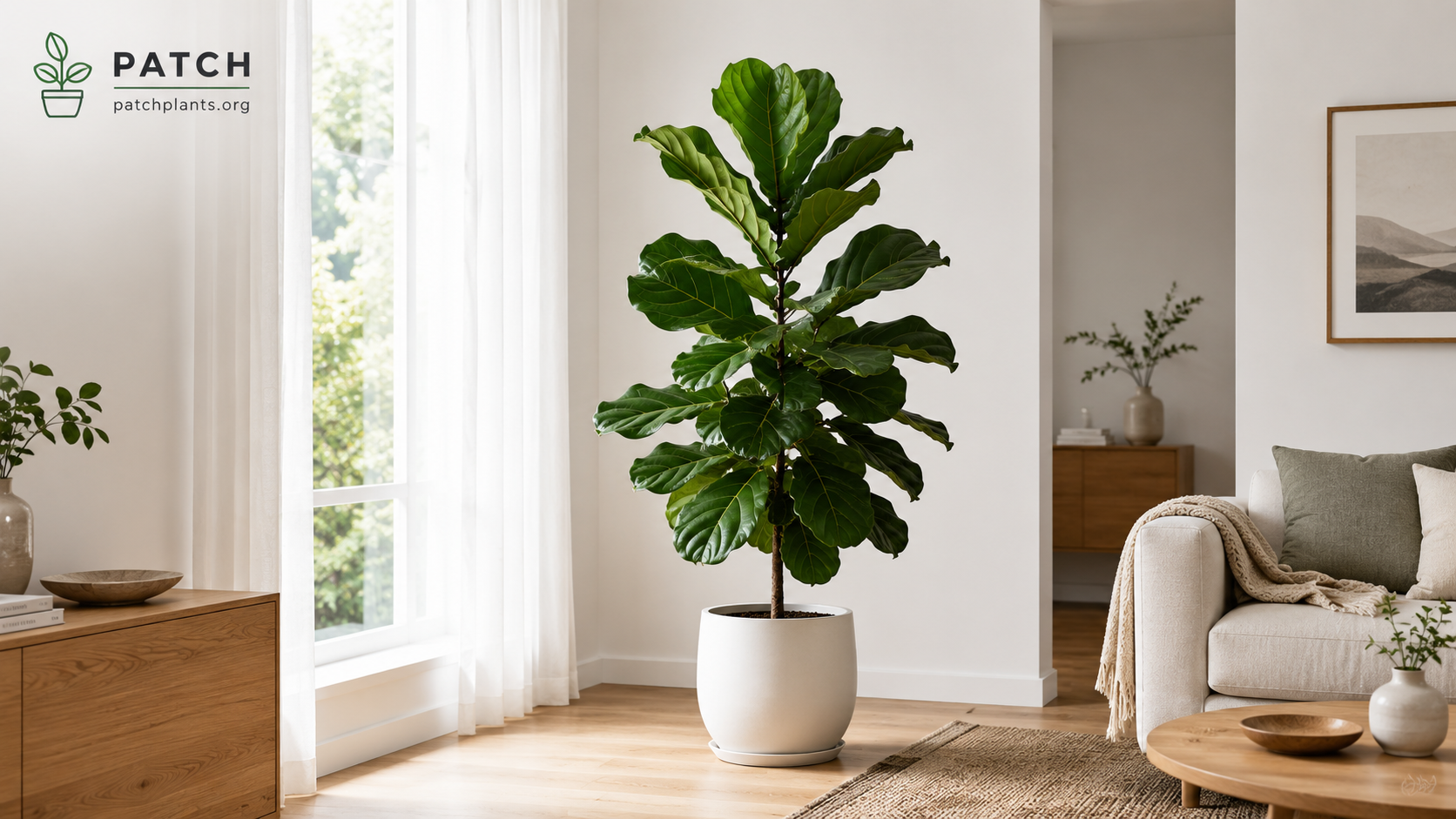
Fiddle leaf fig care comes down to five things: bright, indirect light for most of the day, watering only when the top 5cm of soil is dry, free-draining soil, steady warmth above about 13°C, and as few moves as possible. Most problems, from brown spots to sudden leaf drop, trace back to too little light, uneven watering or a sudden change in conditions. Get those basics steady and Ficus lyrata is a long-lived, dramatic indoor tree. This guide covers light, watering, soil, feeding, repotting, pruning and propagation, then explains how…
Fertilizing Indoor vs Outdoor Plants: Complete Guide to Plant Food and Feeding Schedules
Fertilizing indoor vs outdoor plants is not the same job. A houseplant lives in a small pot and depends on you for every nutrient it gets, so feed it lightly, only while it is growing, and follow the label. Garden plants draw on a much larger soil system, so they usually need less frequent feeding, guided by a soil test. I am Sawera Shahid, a botanist at Patch Plants. This guide explains how fertilizing indoor vs outdoor plants differs, how to read a fertilizer label, which fertilizer types suit houseplants,…
Spider Plant Care Guide: Complete Indoor Care for Every Spider Plant Variety
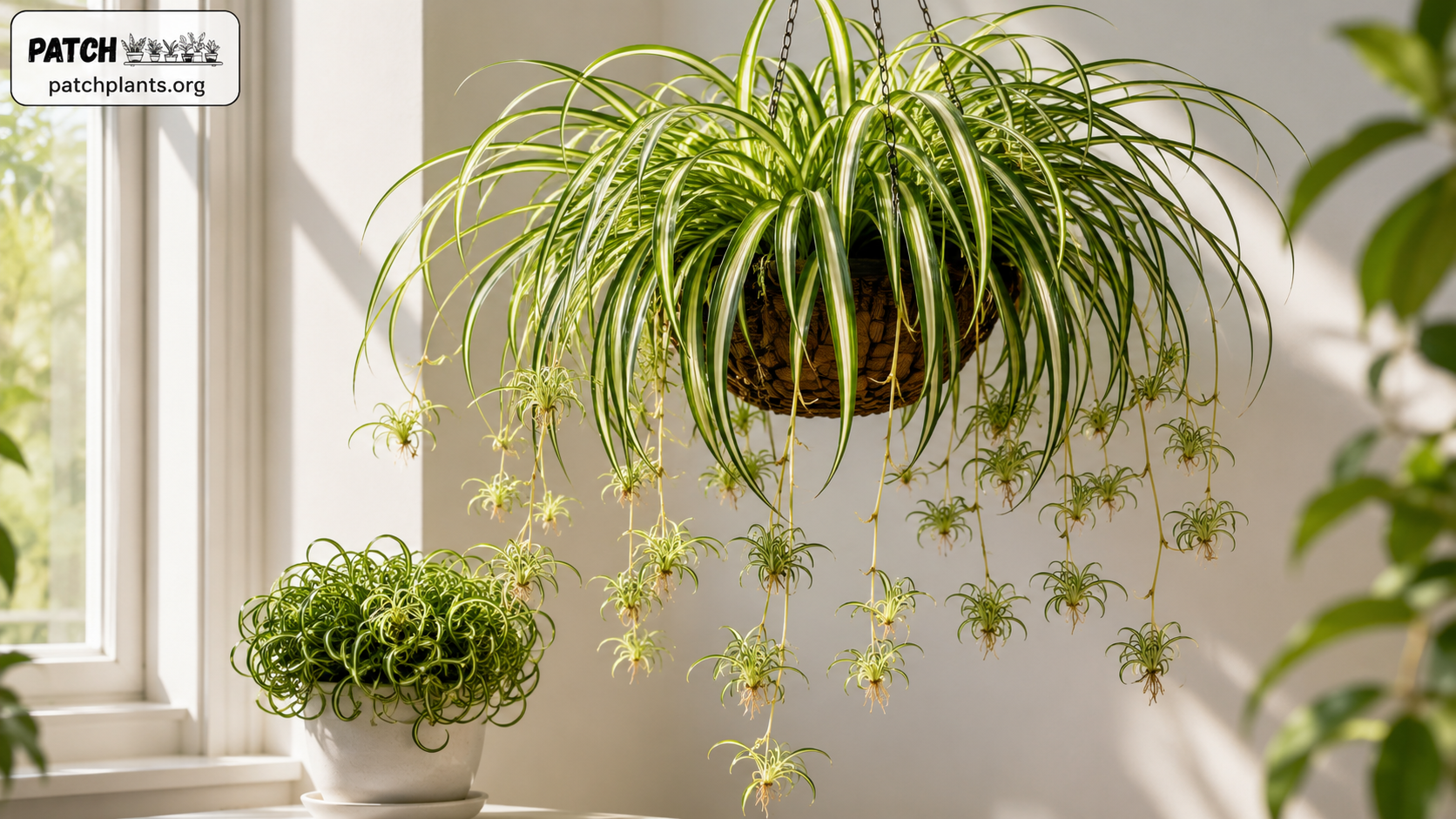
Spider plant care is simple: give it bright to medium indirect light, water when the top inch of soil is dry, use a free-draining potting mix in a pot with drainage holes, and keep it above about 45°F (7°C). Spider plants (Chlorophytum comosum) forgive missed waterings, average room humidity and less-than-perfect light, and they reward you with arching leaves and dangling babies you can root for free. Most problems come down to soggy soil, harsh direct sun, or minerals in tap water, which cause the famous brown leaf tips. This…