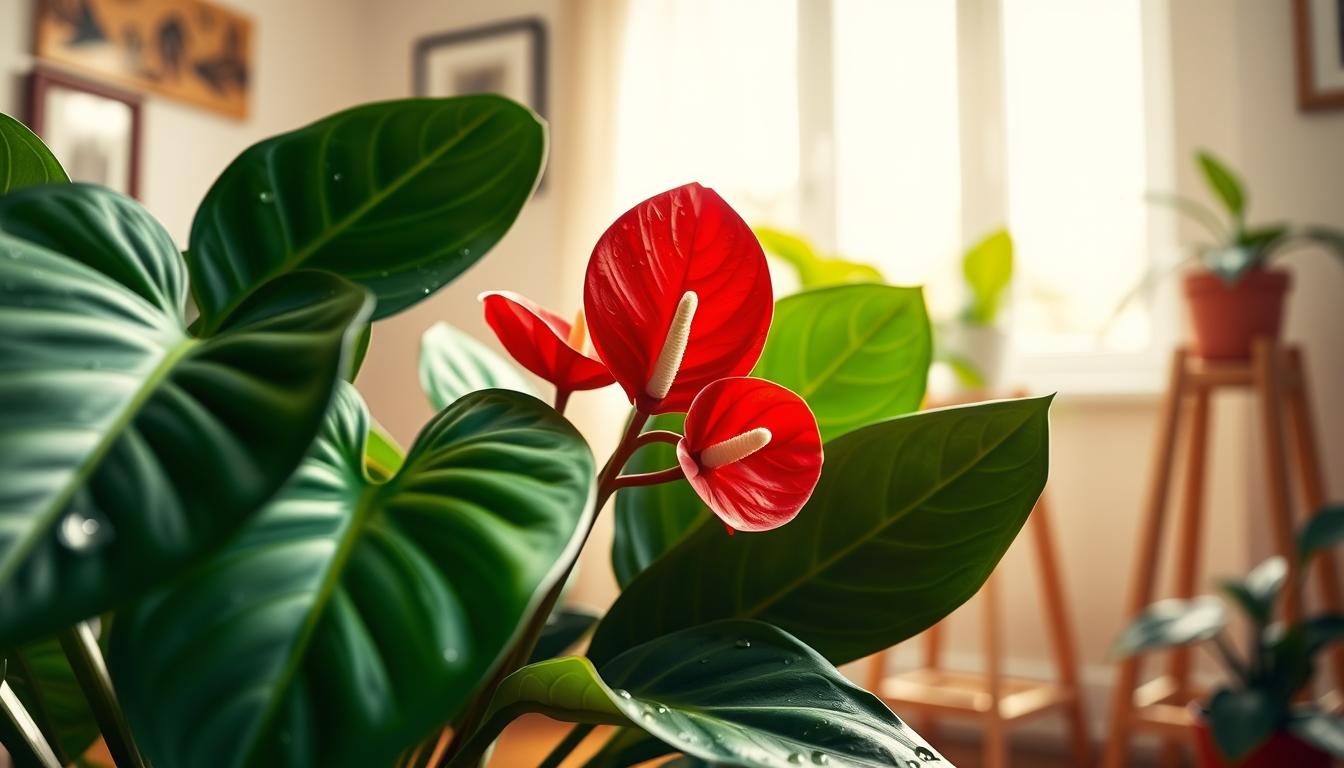
If you are wondering how to get anthurium to flower, start by improving the conditions that support healthy growth rather than searching for a quick bloom booster. Give your anthurium bright, indirect light, water when the potting mix begins to dry, maintain warm and stable conditions, support suitable humidity, and keep the roots healthy. Once these basics are in place, light feeding and consistent care can support new flowers.
Key Takeaways
- Bright, indirect light is one of the most important conditions for encouraging an anthurium to bloom.
- Water thoroughly, but allow excess water to drain instead of keeping the roots constantly wet.
- Warm, stable conditions are better than repeated changes in temperature or location.
- Humidity can support healthy tropical growth, but constantly wet foliage is unnecessary.
- Fertilizer supports an actively growing plant but cannot compensate for poor light or unhealthy roots.
- An airy potting mix and a container with drainage holes help protect the root system.
- Remove spent blooms and damaged foliage without heavily pruning healthy leaves.
- Deal with pests, disease, or root problems before trying to encourage more flowers.
- If a healthy anthurium still does not bloom, reassess light and overall growing conditions before making several changes at once.
Why Is My Anthurium Not Flowering?
An anthurium may continue producing foliage without flowering when one or more of its growing conditions are unsuitable. Insufficient light, inconsistent watering, unhealthy roots, temperature stress, poor drainage, pests, or inappropriate feeding can all interfere with healthy growth.
Before trying to promote anthurium blooms, examine the entire plant. Healthy leaves, active new growth, firm roots, and an airy potting mix provide a better foundation for flowering than a stressed plant struggling to survive.
If your plant is declining rather than simply failing to bloom, use our step-by-step guide to reviving a dying plant before focusing on flower production.
Check Whether Your Anthurium Is Healthy Enough to Bloom
Different anthuriums can have different flowering patterns, so first identify the plant you are growing and set realistic expectations. Some cultivars are selected for frequent colorful spathes, while others may not perform exactly the same way.

Look at the Leaves
Healthy foliage should generally appear firm and functional. Widespread yellowing, browning, spotting, or severe wilting suggests that the plant may need basic care corrections before flowering becomes the priority.
Inspect the Root System
Healthy roots support both foliage and flowers. Soft, dark, or foul-smelling roots can indicate serious root problems, while very dry and brittle roots may point to prolonged moisture stress.
Check the Potting Mix
The growing medium should provide both moisture and air around the roots. Dense, compacted, or constantly waterlogged potting mix can interfere with healthy root function.
| Plant Feature | Healthier Condition | Needs Attention |
|---|---|---|
| Leaves | Firm and actively growing | Widespread yellowing or damage |
| Roots | Firm | Soft, dark, or foul-smelling |
| Potting Mix | Airy and draining properly | Compacted or persistently waterlogged |
| Growth | Producing new growth | Stalled or declining |
Once the plant is reasonably healthy, use the following nine practical tips to create better conditions for flowering.
1. Provide Bright, Indirect Light
If you want to learn how to get anthurium to flower, begin with light. The uploaded source treats bright, indirect light as one of the most important factors for encouraging blooms.

Choose Strong but Filtered Light
Place the plant where it receives plenty of bright, indirect light. An east-facing window can provide gentler morning light, while stronger exposures may require filtering to prevent leaf damage.
Our complete indoor light guide can help you understand how window direction and light intensity affect houseplants.
Recognize Insufficient Light
If the plant remains in a dim location, it may struggle to produce the energy required for strong growth and flowering. Stretched or weak-looking growth can be a reason to reassess the available light.
Watch for Excessive Direct Sun
More light does not mean exposing the plant to uncontrolled harsh sunlight. Bleached areas or crispy patches can indicate excessive exposure.
| Light Situation | Possible Sign | What to Do |
|---|---|---|
| Too little light | Weak or stretched growth | Provide brighter indirect light |
| Suitable light | Healthy, sturdy foliage | Maintain the location |
| Excessive direct light | Bleached or scorched patches | Filter harsh sunlight |
Consider a Grow Light When Necessary
If natural light is consistently inadequate, supplemental lighting can provide another option. Introduce major changes in light gradually rather than suddenly exposing the plant to much stronger conditions.
2. Water Thoroughly Without Keeping the Roots Soggy
Correct watering is another essential part of anthurium care. The goal is not to follow a rigid calendar but to respond to the condition of the potting mix and plant.
Check the Potting Mix Before Watering
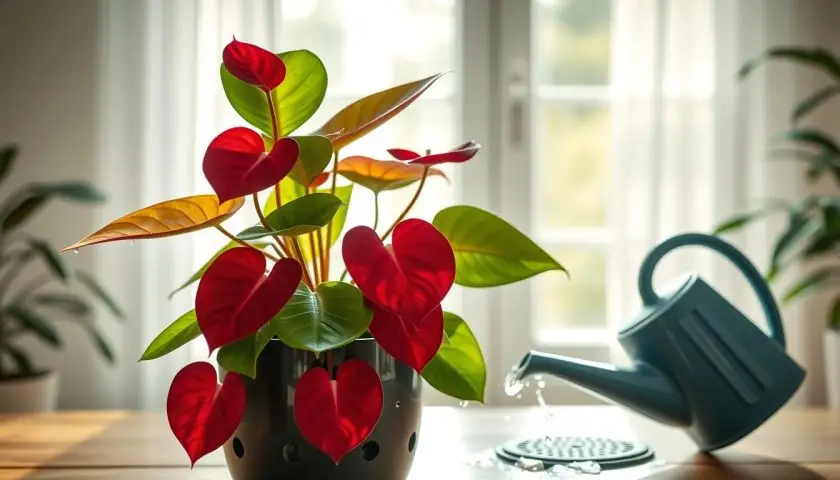
Feel the upper layer of the potting mix before adding more water. If it is still noticeably damp, the plant may not need additional water yet.
Environmental conditions affect how quickly a pot dries, so the interval between waterings can change with temperature, light, pot size, growing medium, and season.
Water the Root Ball Thoroughly
When watering is needed, moisten the root zone thoroughly and allow excess water to escape through the drainage holes.
After drainage has finished, do not leave the nursery pot sitting in accumulated water inside a saucer or decorative cachepot.
For more detail on moisture management, read our complete guide to watering plants.
Do Not Diagnose Watering Problems From One Symptom
Yellow leaves, drooping, or brown areas can have several causes. Check the potting mix, roots, drainage, and recent care rather than assuming that one symptom always means overwatering or underwatering.
If you notice widespread yellowing, our yellow leaves troubleshooting guide can help you investigate possible causes.
3. Maintain Warm, Stable Growing Conditions
Anthuriums are tropical plants, and the source emphasizes stable warmth rather than repeated environmental changes.
Keep the Plant Away From Cold Drafts
Avoid locations where the plant experiences repeated blasts of cold air from doors, drafty windows, or air-conditioning vents.
Avoid Direct Heat Sources
Do not position the plant directly beside radiators, heaters, or other sources of hot, dry air. These conditions can dry foliage and change the root zone more quickly than expected.
Avoid Unnecessary Location Changes
Once you find a location with suitable light and stable conditions, avoid repeatedly moving the plant simply to encourage flowering.
If buds are already developing, maintaining consistent conditions can be especially useful.
4. Maintain Suitable Humidity and Airflow
Humidity is part of a supportive tropical growing environment, but increasing humidity does not mean keeping anthurium foliage constantly wet.
Use a Humidifier When the Air Is Very Dry
A room humidifier can provide more consistent humidity around a plant collection than repeatedly wetting the leaves.
Grouping Plants May Help Moderate Their Immediate Environment
Plants can be grouped where their light and airflow requirements remain suitable. However, do not crowd them so closely that air becomes stagnant around foliage.
Do Not Depend on Misting to Make an Anthurium Bloom
Misting is not a substitute for proper watering, light, root health, or broader humidity management. Frequently wet foliage combined with poor airflow can also create undesirable growing conditions.
Our houseplant humidity guide covers practical ways to manage dry indoor air.
Maintain Air Movement
Humidity and airflow should work together. Avoid trapping the plant in a stagnant, constantly damp corner.
5. Feed Lightly During Active Growth
Fertilizer can support an actively growing plant, but it is not a substitute for adequate light or healthy roots. Heavy feeding is not a reliable shortcut for encouraging flowering in anthuriums.
Choose an Appropriate Houseplant Fertilizer
The source recommends a balanced fertilizer rather than relying on concentrated bloom-boosting products.
Follow the fertilizer manufacturer’s instructions and adjust use according to the plant’s condition and active growth rather than assuming more fertilizer will produce more flowers.
Avoid Fertilizing a Severely Stressed Plant
If roots are damaged, the growing medium is waterlogged, or the plant is experiencing another major problem, correct the underlying issue first.
Watch for Fertilizer Buildup
Repeated fertilizer use can contribute to soluble salt accumulation in the growing medium. Proper drainage and appropriate watering help manage the root environment.
Brown tips or declining roots should prompt you to review the entire care routine rather than immediately adding another fertilizer application.
6. Improve Potting Mix, Drainage, and Root Health
Many supposed anthurium bloom boosting tricks focus on what happens above the soil, but healthy roots provide the foundation for sustained growth and flowering.
Use an Airy Potting Mix
The source recommends a chunky, well-draining medium with ingredients such as orchid bark, perlite, and coco coir. The goal is to maintain a useful balance between moisture and oxygen around the roots.
For more background on creating appropriate growing media, see our guide to soil and potting mixes.
Always Provide Drainage
The growing container should allow excess water to escape. If you prefer a decorative container without drainage holes, keep the plant in a draining nursery pot inside it and empty accumulated water after watering.
Repot Only When There Is a Reason
Repotting should solve a problem rather than serve as a routine bloom-forcing technique.
Consider repotting when the existing medium has deteriorated, the root system has outgrown the container, drainage has become unsuitable, or unhealthy roots require intervention.
| Root or Potting Issue | What It May Indicate | Next Step |
|---|---|---|
| Soft, dark, foul-smelling roots | Possible root decay | Address root health and growing conditions |
| Densely circling roots | Plant may need more root space | Assess whether repotting is necessary |
| Compacted potting mix | Poor root-zone aeration | Consider replacing deteriorated medium |
| Water collecting in the pot | Drainage problem | Correct drainage before focusing on blooms |
If roots appear soft or decayed, read our root rot identification and treatment guide.
7. Remove Spent Blooms and Damaged Foliage
Pruning keeps an anthurium tidy and removes damaged plant material, but pruning itself does not force the plant to flower.
Remove Finished Spathes
When a spathe has faded and is clearly finished, use clean, sharp tools to remove its stalk carefully near the base without damaging nearby healthy growth.
Remove Seriously Damaged Leaves Selectively
Yellow, brown, or diseased foliage may be removed when appropriate, but avoid stripping away healthy leaves unnecessarily.
Green leaves carry out photosynthesis and support the plant’s overall energy needs.
Do Not Over-Prune
A heavily pruned plant has less functional foliage available to support future growth. Groom the plant for health rather than cutting it aggressively in an attempt to trigger flowers.
See our pruning basics guide for more information about making purposeful cuts.
8. Check for Pests and Disease Before Chasing Blooms
A stressed plant may prioritize survival and recovery rather than flower production. Before changing fertilizer or searching for another bloom trick, inspect your anthurium carefully.
Inspect Both Sides of the Leaves
Look beneath foliage as well as across the upper surfaces. Also examine petioles, stems, new growth, and the center of the plant.
Webbing, sticky residue, unusual spots, distorted growth, or visible insects can indicate that further investigation is needed.
Separate a Problem Plant When Necessary
If you suspect a pest problem that could spread to nearby houseplants, temporarily separating the affected plant can help while you identify the issue.
Identify the Problem Before Treating It
Avoid applying several products simultaneously without knowing what you are treating. Diagnose the problem first and follow the directions for any treatment you eventually choose.
Prioritize Severe Root or Disease Problems
If the plant has mushy stems, foul-smelling roots, serious pest pressure, or rapidly spreading damage, restoring plant health should come before encouraging flowers.
9. Troubleshoot an Anthurium That Still Will Not Flower
If you have corrected the basics and the plant still refuses to flower, review its growing conditions systematically. Learning how to get anthurium to flower is often about identifying the limiting factor rather than adding something new.
Healthy Leaves but No Flowers
Reassess light first. A plant may remain alive and continue producing leaves in conditions that are not bright enough to support the flowering performance you expect.
Yellow Leaves and Wet Potting Mix
Check drainage and roots. Do not continue adding water simply because the foliage looks stressed.
Brown or Crispy Leaf Edges
Review humidity, watering consistency, fertilizer buildup, root condition, and exposure to hot or dry air rather than attributing brown edges to a single cause automatically.
Buds Develop but Fail to Progress
Look for recent environmental changes, temperature stress, root problems, or pests. Avoid repeatedly moving or repotting a plant that has already started producing buds unless there is a genuine health problem.
| What You See | What to Investigate | Practical Response |
|---|---|---|
| Healthy foliage but no blooms | Available light | Increase bright, indirect light if needed |
| Yellow foliage and wet mix | Watering and drainage | Inspect roots and correct moisture conditions |
| Crispy leaf edges | Humidity, roots, salts, watering | Identify the actual source of stress |
| Weak or stalled growth | Light, roots, pests, nutrition | Restore basic plant health first |
| Bud problems | Environmental instability | Keep conditions consistent |
Common Anthurium Blooming Mistakes to Avoid
Using Bloom Booster as the First Solution
Extra fertilizer cannot compensate for insufficient light, damaged roots, or poor drainage. Fix environmental problems first.
Making Several Changes at Once
Moving, repotting, heavily fertilizing, and changing the watering routine simultaneously can make it difficult to determine what the plant actually needed.
Watering on a Fixed Calendar
Potting mix dries at different rates depending on environmental conditions. Check the plant and growing medium rather than watering automatically on a particular weekday.
Keeping the Potting Mix Constantly Wet
Anthurium roots need both moisture and oxygen. Constant saturation can undermine the healthy root system required for flowering.
Depending on Misting for Humidity
Misting should not replace appropriate room humidity, watering, airflow, or root care.
Repotting Just Because the Plant Is Not Blooming
Lack of flowers alone does not prove that an anthurium needs a larger pot. Repot when the roots, growing medium, or container actually require it.
Frequently Asked Questions
How do I get my anthurium to flower?
Start with bright, indirect light and healthy roots. Water according to the condition of the potting mix, maintain warm and stable conditions, provide suitable humidity and airflow, and feed appropriately during active growth. Address pests, disease, or root problems before focusing on additional flowers.
Why is my anthurium growing leaves but not flowers?
If foliage looks healthy but the plant does not bloom, insufficient light is one of the first conditions to investigate. Also review root health, nutrition, temperature stability, and the normal flowering behavior of your particular anthurium.
How much light does an anthurium need to flower?
The source recommends bright, indirect light. Deep shade can limit growth and flowering, while harsh direct sunlight can damage foliage. Find a bright location where the plant receives strong but appropriately filtered light.
How often should I water an anthurium for flowering?
Do not use a fixed schedule. Check the potting mix and water when it has begun to dry appropriately, then water thoroughly and allow excess moisture to drain. Conditions such as temperature, light, pot size, and season affect how quickly the plant needs water again.
Does fertilizer make an anthurium bloom?
Fertilizer can support an actively growing plant, but it does not force flowering and cannot replace adequate light, healthy roots, or appropriate watering. Use a suitable fertilizer according to its directions rather than applying excessive bloom boosters.
Should I repot an anthurium that is not flowering?
Not solely because it has stopped flowering. Repot when there is a genuine reason, such as deteriorated potting mix, unsuitable drainage, unhealthy roots, or a root system that has outgrown its container.
Does humidity help anthuriums flower?
Suitable humidity can support healthy tropical growth, but humidity is only one part of the plant’s environment. Light, root health, watering, temperature, nutrition, and airflow also matter. A humidifier can be useful where indoor air is particularly dry.
Should I cut off old anthurium flowers?
Yes, finished spathes can be removed with clean, sharp tools once they have faded. Cut carefully without damaging nearby healthy leaves or developing growth.
Why are my anthurium flowers turning green?
The source notes that green spathes may occur as flowers age and may also be associated with growing conditions such as light. Consider the age of the bloom and the plant’s overall environment before assuming something is wrong.
How long does it take an anthurium to flower after changing its care?
There is no reliable fixed countdown in the supplied source. Flowering depends on the plant’s health, maturity, cultivar, growing conditions, and growth cycle. Make necessary corrections gradually and allow the plant time to respond rather than expecting an immediate bloom.
Final Thoughts
Learning how to get anthurium to flower is mainly about creating stable conditions that allow the plant to grow well. Bright, indirect light is an important starting point, but flowering also depends on healthy roots, appropriate moisture, warmth, suitable humidity, nutrition, and freedom from serious pests or disease.
Avoid trying to force flowers through heavy fertilizer, constant repotting, excessive pruning, or several simultaneous care changes. These approaches can create additional stress without solving the underlying reason the plant is not blooming.
Instead, evaluate the plant systematically. Improve light if necessary, check the potting mix before watering, maintain drainage, protect the roots, and correct health problems before expecting more flowers.
With consistent care and suitable growing conditions, your anthurium has a stronger foundation for producing the colorful, long-lasting spathes that make this tropical houseplant so popular.