Mosquito repellent plants are popular with gardeners who want a more comfortable patio, balcony, or backyard. Lavender, lemongrass, citronella grass, basil, mint, rosemary, and several other aromatic plants are regularly recommended for keeping mosquitoes away from outdoor spaces.
But there is an important difference between a plant containing potentially repellent compounds and a living plant actually preventing mosquito bites. A fragrant pot beside your chair does not necessarily provide protection. Recent research has challenged some familiar gardening claims, so it is worth understanding what these plants can and cannot do.
This guide compares 10 popular mosquito repellent plants, explains their ideal growing conditions, identifies options for sun and partial shade, and covers the most effective ways to manage mosquitoes. It also includes practical care advice, pet-safety considerations, and garden-planning tips.
What Are the Best Mosquito Repellent Plants?
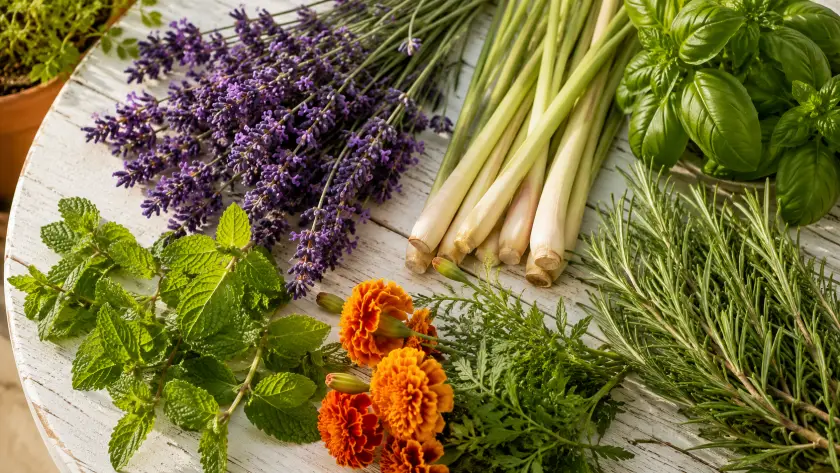
The most popular mosquito repellent plants are lavender, lemongrass, citronella grass, marigold, basil, mint, rosemary, catnip, lemon balm, and scented geranium. These aromatic plants are attractive choices for garden beds, containers, patios, and balconies, although their presence alone does not reliably prevent mosquito bites.
For sunny outdoor areas, lavender, rosemary, lemongrass, and marigolds are practical choices. Mint, lemon balm, and catnip are more suitable for places receiving partial shade. Basil is especially useful near an outdoor kitchen because its fresh leaves can also be used for cooking.
If your main priority is mosquito protection rather than decorative planting, focus on removing standing water, repairing screens, and using a tested insect repellent when appropriate.
Key Takeaways
- Mosquito repellent plants often contain aromatic compounds, but their effectiveness as living plants is not the same as that of formulated insect repellents.
- Lavender, rosemary, lemongrass, citronella grass, basil, marigold, mint, catnip, lemon balm, and scented geranium are popular fragrant garden plants.
- Mint, lemon balm, and catnip tolerate partial shade better than many sun-loving herbs.
- Several commonly recommended plants, including lavender, rosemary, mint, and catnip, are perennials in suitable climates.
- Citronella grass and the citronella-scented geranium commonly sold as a mosquito plant are botanically different.
- Removing standing water is one of the most important ways to reduce mosquito breeding opportunities around homes.
- EPA-registered insect repellents provide a more dependable option for personal protection than relying on aromatic garden plants.
- Some fragrant plants can be harmful to pets, so check species-specific toxicity before planting.
Do Mosquito Repellent Plants Actually Work?
The answer is more complicated than many gardening articles suggest. Some plants naturally produce compounds with insect-repelling properties. However, these compounds generally need to be released, extracted, or prepared in an appropriate formulation before they provide meaningful protection.
A pot of lavender or citronella grass does not continuously release enough active material to create a dependable mosquito-free barrier.
According to Iowa State University Extension’s guidance on mosquito-repelling plants, simply growing plants associated with repellent oils does not effectively keep mosquitoes away from an outdoor area.
This does not mean gardeners should avoid these plants. Their fragrance, flowers, foliage, culinary value, and ability to support pollinators can make them worthwhile additions to a garden.
What Does Scientific Research Say?
A 2026 study published in the Journal of Medical Entomology examined whether ornamental plants could reduce mosquito activity under realistic field conditions.
Researchers evaluated citronella-scented geranium and prostrate rosemary in outdoor trials. Neither plant significantly reduced captures of host-seeking mosquitoes compared with the control treatments, even when foliage was mechanically damaged.
These findings suggest that whole ornamental plants should not be relied upon for spatial mosquito protection.
The study did not prove that every aromatic plant compound is ineffective. Instead, it highlighted an important limitation: a plant growing naturally in a container is different from an appropriately formulated repellent product.
Why Do Some Plants Contain Repellent Compounds?
Plants produce numerous natural substances that help them interact with their environment.
Some aromatic compounds can influence insect behaviour. Examples include citronellal, citronellol, geraniol, linalool, and nepetalactone.
These substances occur in different plants and have been investigated for their potential insect-repelling activity.
However, the effectiveness of a compound depends on factors such as its concentration, formulation, release rate, exposure time, and the insect species being tested.
The presence of a compound in a leaf is not evidence that the whole plant will prevent mosquito bites.
Are Essential Oils Better Than Living Plants?
Essential oils are more concentrated than the fragrance naturally released by growing plants.
Some plant-derived ingredients are used in commercial insect-repellent formulations. However, not all essential oils have demonstrated consistent effectiveness, and concentrated oils can irritate skin.
Do not assume homemade essential-oil mixtures or crushed leaves provide the same protection as tested products.
The CDC’s mosquito bite prevention guidance recommends EPA-registered insect repellents when reliable protection is needed.
Quick Comparison: 10 Popular Mosquito Repellent Plants
This table compares growing requirements rather than claiming that any plant creates guaranteed protection from mosquitoes.
| Plant | Light Requirements | Growing Habit | Best Garden Use |
|---|---|---|---|
| 1. Lavender | Full sun | Perennial in suitable climates | Sunny borders and patio pots |
| 2. Lemongrass | Full sun | Tender perennial | Large pots and warm gardens |
| 3. Citronella Grass | Full sun | Tender perennial | Tropical-style gardens |
| 4. Marigold | Full sun | Usually grown as an annual | Flower borders and containers |
| 5. Basil | Full sun to bright light | Tender annual | Kitchen and herb gardens |
| 6. Mint | Sun to partial shade | Perennial | Containers and shaded herb areas |
| 7. Rosemary | Full sun | Perennial in mild climates | Sunny borders and herb pots |
| 8. Catnip | Sun to partial shade | Perennial | Informal borders and pollinator gardens |
| 9. Lemon Balm | Sun to partial shade | Perennial | Herb containers and partial shade |
| 10. Scented Geranium | Bright light to full sun | Tender perennial | Decorative patio pots |
Best selection advice: Choose plants according to the light, temperature, space, and maintenance conditions in your garden. For actual mosquito protection, use proven prevention measures separately.
10 Best Mosquito Repellent Plants for Gardens, Patios and Pots
1. Lavender: Best for Sunny Garden Borders
Botanical name: Lavandula species, including Lavandula angustifolia.
Lavender is among the most recognizable mosquito repellent plants because of its distinctive fragrance and attractive purple flowers.
This Mediterranean plant contains aromatic compounds that have attracted interest in insect-repellent research. Nevertheless, planting lavender around a patio does not guarantee protection against mosquitoes.
Lavender is especially attractive in sunny borders, raised beds, gravel gardens, and containers. Its flowers can also provide nectar for visiting pollinators.
The biggest challenge is usually moisture. Lavender dislikes soil that stays wet for extended periods, particularly during cool weather.
- Best light: Full sun.
- Watering: Allow suitable drying between waterings; avoid waterlogged soil.
- Best location: Sunny patio, pathway, raised bed, or garden border.
- Growing habit: Perennial shrub in appropriate climates.
- Main risk: Root damage caused by poor drainage.
Plant lavender in a free-draining medium and avoid placing it in a deep, damp shaded corner.
If you want attractive plants that require relatively little attention once established, explore our best low-maintenance outdoor plants.
2. Lemongrass: Best for Warm Patios and Large Containers
Botanical name: Cymbopogon citratus.
Lemongrass is a tall, tropical herb with narrow arching leaves and a fresh citrus fragrance.
It is regularly included in discussions about outdoor plants that repel mosquitoes because its aromatic compounds are related to substances used in some insect-repellent products.
However, ordinary lemongrass growing beside a garden chair should not be treated as a reliable mosquito deterrent.
Lemongrass grows best in warm weather with generous sunlight. Under suitable conditions, it can form a large clump, so choose a spacious pot rather than a small decorative container.
The plant also has culinary value. Its stalks are commonly used in soups, curries, and herbal preparations.
- Best light: Full sun.
- Watering: Maintain suitable moisture during active growth without waterlogging.
- Best location: Large patio pots and warm outdoor gardens.
- Growing habit: Tender perennial.
- Main risk: Frost damage and inadequate container space.
In colder regions, gardeners can move container-grown lemongrass into a protected environment before frost.
For advice on drainage, pot size, and container maintenance, read our container gardening guide for patios.
3. Citronella Grass: Best for Tropical-Style Planting
Botanical names: Cymbopogon nardus and Cymbopogon winterianus.
Citronella grass is frequently associated with mosquito control because citronella oil can be obtained from plants in this group.
These grasses produce tall, narrow leaves and can form substantial clumps in warm environments.
The important distinction is that citronella oil used in a formulated product is not equivalent to growing citronella grass in a garden.
A healthy plant may smell pleasant when its foliage is handled, but this does not establish a reliable protective area around it.
Citronella grass also requires room to develop. It is better suited to a spacious planter or tropical garden than a small indoor shelf.
- Best light: Full sun.
- Watering: Regular moisture during warm active growth, with adequate drainage.
- Best location: Warm gardens and large outdoor containers.
- Growing habit: Tropical perennial.
- Main risk: Cold temperatures and overcrowded roots.
When purchasing a plant, check its scientific name. Nurseries may use the term citronella plant for a completely different plant: a lemon-scented geranium.
4. Marigold: Best for Colorful Garden Borders
Botanical name: Tagetes species.
Marigolds are cheerful flowering plants that add yellow, orange, and golden colour to garden beds and containers.
Their leaves and flowers have a distinctive scent, and various marigold-derived substances have been studied in pest management.
However, it would be misleading to promise that a few flowering marigolds will stop mosquitoes from approaching your patio.
Instead, marigolds are particularly useful as seasonal ornamental plants. Many varieties flower generously when given sufficient sunlight and appropriate care.
They also combine well with edible gardens, provided you use suitable varieties and follow good growing practices.
- Best light: Full sun.
- Watering: Water when the growing medium begins to dry appropriately.
- Best location: Garden borders, containers, vegetable beds, and entrance displays.
- Growing habit: Usually grown as an annual.
- Main risk: Poor flowering in deep shade or soggy soil.
Remove spent flowers when appropriate to encourage an attractive display.
If you notice damaged leaves or insects on your ornamentals, use our guide to keeping pests away from outdoor plants to identify the issue before treating it.
5. Basil: Best for Kitchen Gardens and Outdoor Dining
Botanical name: Ocimum basilicum.
Basil is one of the most practical aromatic plants for people who enjoy cooking.
Its fresh leaves provide flavour for sauces, salads, and other dishes. The plant also has a distinctive scent that contributes to its reputation as a mosquito-repelling herb.
Although some basil-derived substances have been investigated for insect-repellent properties, a growing basil plant is not a proven substitute for personal protection.
For gardeners, basil’s real value lies in its edible foliage, compact growing habit, and suitability for warm-season containers.
It generally appreciates plenty of light and warmth. In extremely hot locations, some protection from intense afternoon sun may help prevent excessive stress.
- Best light: Full sun or strong light with suitable heat protection.
- Watering: Keep evenly moist while allowing excess water to drain.
- Best location: Kitchen garden, bright windowsill, and outdoor herb container.
- Growing habit: Usually grown as a tender annual.
- Main risk: Cold damage, prolonged drought, and waterlogged roots.
Harvest growing tips regularly to help maintain a fuller plant.
For general watering advice, see our complete guide to watering plants.
6. Mint: Best for Partial Shade and Containers
Botanical name: Mentha species.
Mint is one of the most frequently recommended mosquito repellent plants for shade because many varieties tolerate partial shade.
It has fragrant leaves, vigorous growth, and several culinary uses. Peppermint and spearmint are common examples, although their growing habits can vary.
Mint is especially suitable for gardeners who want fresh herbs without requiring a full-sun Mediterranean-style planting area.
However, there is no dependable evidence that a pot of mint beside a shaded doorway creates a mosquito-free entrance.
One important consideration is its spreading growth. Mint can spread aggressively through underground stems and become difficult to control in open beds.
- Best light: Full sun to partial shade.
- Watering: Maintain consistent moisture without leaving roots submerged.
- Best location: Herb containers, partly shaded patios, and kitchen gardens.
- Growing habit: Perennial in many temperate climates.
- Main risk: Aggressive spreading and overcrowding.
For most home gardens, growing mint in a separate container is easier than allowing it to spread through a mixed border.
Trim stems regularly and divide overcrowded plants when necessary.
7. Rosemary: Best for Sunny, Dry Garden Areas
Botanical name: Salvia rosmarinus, formerly Rosmarinus officinalis.
Rosemary is an evergreen culinary herb with narrow leaves and a strong, familiar scent.
It is regularly promoted among perennials that repel mosquitoes because its foliage contains aromatic oils.
Yet the 2026 field research involving prostrate rosemary found no meaningful reduction in host-seeking mosquito captures under the tested conditions.
This does not reduce rosemary’s value as a garden plant. It remains an attractive choice for sunny borders, gravel gardens, and herb containers.
Rosemary generally prefers relatively dry conditions once established. Soil that stays saturated is a more serious problem than occasional dryness for many established plants.
- Best light: Full sun.
- Watering: Allow appropriate drying and avoid prolonged waterlogging.
- Best location: Sunny herb borders, containers, and well-drained gardens.
- Growing habit: Evergreen perennial in suitable climates.
- Main risk: Poor drainage and cold injury in unsuitable climates.
Plant rosemary in a suitable well-draining growing medium.
Our guide to the best soil mixes for different plants explains why root aeration and moisture retention matter.
8. Catnip: Best for Informal Herb and Pollinator Gardens
Botanical name: Nepeta cataria.
Catnip is a perennial herb recognized for its soft foliage, scented leaves, and its unusual effect on some cats.
It contains nepetalactone, a natural compound that has attracted scientific interest for insect-repellent applications.
But studies involving isolated compounds should not be interpreted as proof that whole catnip plants prevent mosquito bites in ordinary gardens.
Catnip is useful in informal herb gardens and flower borders. When flowering, it can attract pollinating insects.
It usually performs best with adequate sunlight but can tolerate some partial shade.
- Best light: Full sun to partial shade.
- Watering: Moderate watering with good drainage.
- Best location: Herb beds, informal borders, and pollinator-friendly gardens.
- Growing habit: Perennial.
- Main risk: Excessive spreading or unwanted attention from cats.
Prune the plant after flowering when needed to manage its appearance.
If you want a garden that supports wildlife, explore how to design a wildlife-friendly garden.
9. Lemon Balm: Best for Fragrant Partial-Shade Gardens
Botanical name: Melissa officinalis.
Lemon balm is a member of the mint family and produces soft green leaves with a pleasant lemon fragrance.
It often appears in recommendations for mosquito repellent plants that grow in shade.
Like mint, it can tolerate partial shade, although healthy growth still requires enough usable light.
The plant has a long history of culinary and herbal use. Its foliage can be harvested for appropriate food and beverage preparations.
Lemon balm can spread or self-seed in favourable conditions, so containers are useful where garden space is limited.
- Best light: Full sun to partial shade.
- Watering: Consistent but moderate moisture with suitable drainage.
- Best location: Herb garden, partial-shade container, or kitchen garden.
- Growing habit: Perennial.
- Main risk: Spreading beyond the intended planting area.
Trim stems regularly to maintain the plant’s shape.
A bright, partly shaded position is generally better than a permanently dark corner.
10. Scented Geranium: Best for Fragrant Patio Pots
Botanical name: Pelargonium species and cultivars.
Scented geraniums are grown for their aromatic foliage, attractive leaf shapes, and sometimes their flowers.
Lemon-scented varieties are frequently marketed as citronella plants or mosquito plants.
This can be confusing because they are not the same botanical plants as true citronella grass.
A scented geranium may release a citrus fragrance when its leaves are handled, but the smell should not be mistaken for reliable mosquito protection.
The 2026 study of citronella-scented geraniums found that the tested plants did not provide dependable spatial repellency.
Scented geraniums are still attractive container plants in bright outdoor spaces.
- Best light: Bright light to full sun, depending on climate and cultivar.
- Watering: Water appropriately while avoiding persistently wet soil.
- Best location: Bright patio, window box, or decorative container.
- Growing habit: Tender perennial.
- Main risk: Frost damage, overwatering, and pet toxicity.
The ASPCA identifies scented geranium as toxic to dogs and cats, so keep these plants away from animals that chew foliage.
Best Mosquito Repellent Plants by Garden Location
The best plants for a particular space depend primarily on environmental conditions.
Although people often search for plants that keep mosquitoes away from patios or doors, choosing fragrant plants should be viewed as part of garden design rather than a proven mosquito-control strategy.
Best Plants for Sunny Patios
Lavender, rosemary, lemongrass, marigolds, and basil are suitable candidates for warm, sunny patios.
Choose pot sizes appropriate to each plant’s mature growth. A large lemongrass clump needs considerably more room than a compact basil plant.
Group containers according to their watering needs rather than assuming that grouping scents improves mosquito protection.
For additional suggestions, explore our best plants for small outdoor spaces.
Best Plants for Balconies
Mint, basil, rosemary, lemon balm, and compact lavender varieties can be useful balcony plants when light conditions are suitable.
Check how much sunlight reaches the balcony throughout the day.
A shaded balcony may favour mint or lemon balm, while a sunny balcony may support rosemary and lavender more effectively.
Wind exposure also matters. Use stable containers and avoid leaving water in saucers.
Read our year-round balcony planting guide for additional practical advice.
Best Plants for Backyards
Larger backyards allow gardeners to combine herb borders, ornamental flowers, and containers.
Lavender and rosemary can be grown in sunny, well-drained areas. Marigolds offer seasonal colour, while mint and lemon balm can occupy separate containers in partly shaded positions.
Avoid interpreting a larger number of fragrant plants as stronger mosquito protection.
More important mosquito-control improvements include eliminating water-holding objects and maintaining suitable drainage.
Best Plants for Doorways and Entrances
Compact basil, scented geraniums, lavender, or mint may look attractive beside an entrance when the light suits them.
However, placing them beside a doorway does not reliably stop mosquitoes entering the building.
Well-maintained screens, properly closing doors, and removing nearby standing water are more dependable preventive steps.
Best Plants for Outdoor Dining Areas
Basil, rosemary, and mint are practical choices for an outdoor kitchen or dining space because they provide useful edible herbs.
Keep plants in clean, well-drained containers.
Do not replace insect repellent with aromatic herbs during outdoor meals, especially where mosquito-borne diseases are a concern.
Mosquito Repellent Plants for Shade
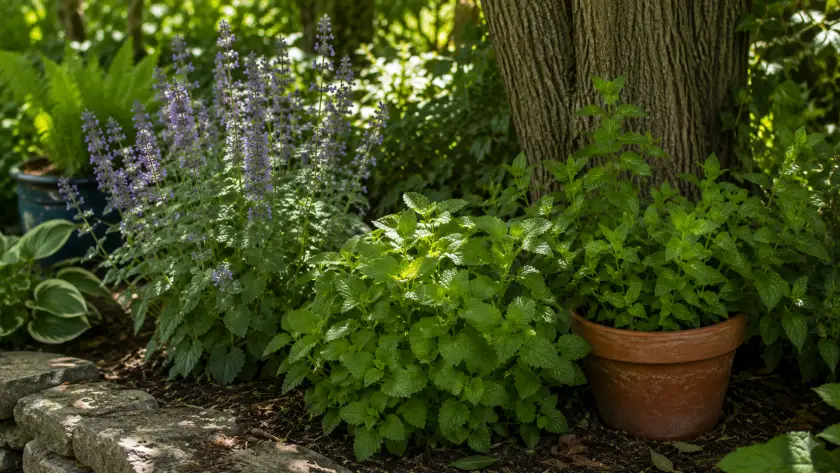
Not every aromatic herb grows well in direct sunshine throughout the day.
Gardeners searching for mosquito repellent plants for shade are usually looking for plants that can survive near shaded patios, walls, fences, or tree-covered areas.
Mint, lemon balm, and catnip are among the more suitable choices for partial shade.
However, it is important to distinguish partial shade from complete darkness.
Best Plants for Partial Shade
- Mint: Adaptable to partial shade and especially useful in containers.
- Lemon balm: Suitable for partly shaded herb beds and pots.
- Catnip: Tolerates some shade, although flowering often improves with more sunlight.
- Scented geranium: Some cultivars tolerate bright partial shade.
- Basil: Can handle limited shade but generally prefers stronger light.
These plants may grow in locations where sun-loving lavender and rosemary struggle.
Still, none should be considered a guaranteed mosquito barrier.
Can Mosquito Repellent Plants Grow in Full Shade?
Most commonly recommended aromatic herbs do not thrive in permanently dark conditions.
Even shade-tolerant plants need adequate light for photosynthesis and healthy development.
In full shade, foliage growth may become weak, soil can remain wet longer, and flowering may decline.
Choose shade-tolerant plants according to real light conditions rather than relying on broad descriptions such as “shade loving.”
For more options, visit our guide to shade-loving outdoor plants.
How to Grow and Care for Mosquito Repellent Plants
Although these plants share a reputation for strong fragrance, their growing requirements are not identical.
Lavender and rosemary prefer relatively dry, well-drained conditions. Mint and basil generally appreciate more regular moisture.
The most successful approach is to match each plant to its natural preferences.
1. Choose the Right Amount of Sunlight
Sunlight is one of the first considerations when selecting a plant.
Lavender, rosemary, citronella grass, and lemongrass usually require generous sunlight.
Mint, catnip, and lemon balm are more adaptable to partial shade.
Check the light at the exact planting location instead of assuming that the entire patio receives similar exposure.
A nearby wall, tree, or roof can substantially change the amount of sunlight reaching a container.
2. Check Soil Moisture Before Watering
Different aromatic plants have different moisture requirements.
| Plant Group | Watering Approach |
|---|---|
| Lavender and Rosemary | Allow appropriate drying and prioritize drainage |
| Lemongrass and Citronella Grass | Maintain suitable moisture during active warm-season growth |
| Basil | Keep reasonably moist without waterlogging |
| Mint and Lemon Balm | Provide more consistent moisture while allowing drainage |
| Catnip | Moderate watering; avoid prolonged saturation |
| Scented Geranium | Allow appropriate drying between waterings |
Avoid watering every container on the same fixed schedule.
Check the potting medium, weather, container size, and growth stage before adding water.
Our complete watering guide3. Use Containers With Drainage Holes
Drainage is especially important when growing aromatic plants in pots.
Containers without drainage can trap excess moisture around roots, increasing the risk of damage.
Decorative outer pots are useful, but they should not be allowed to collect water continuously.
Standing water creates an additional concern: mosquitoes may use suitable water-holding containers as breeding sites.
After watering, remove excess water from saucers or decorative containers.
4. Choose a Suitable Potting Mix
There is no single perfect growing medium for every plant in this guide.
Lavender and rosemary generally prefer free-draining conditions.
Mint, basil, and lemon balm usually benefit from a mix that retains some moisture without becoming waterlogged.
Larger tropical grasses need enough growing medium and container space to support their root systems.
If you are preparing several containers, the PatchPlants Soil Calculator can help you estimate how much potting mix you need.
5. Fertilize According to Growth Needs
Fertilizer requirements depend on the species and growing conditions.
Fast-growing container herbs may benefit from appropriate feeding during active growth.
However, excessive fertilizer can cause weak growth, accumulated salts, or root damage.
Do not increase fertilizer simply because a plant is growing slowly in inadequate light.
Follow suitable product instructions and observe the plant’s condition.
6. Prune and Harvest Regularly
Regular pruning can help manage plant shape, remove damaged growth, and support healthy development.
Harvest mint, basil, and lemon balm when appropriate.
For woody plants such as rosemary and lavender, avoid severe pruning into old stems unless the species and season permit it.
Remove damaged or diseased foliage promptly.
Remember that brushing or pruning aromatic leaves may release fragrance, but this should not be interpreted as dependable mosquito protection.
7. Protect Tender Plants From Frost
Lemongrass, citronella grass, basil, and scented geranium may suffer damage when temperatures fall too low.
In cold climates, gardeners often grow these plants as annuals or move suitable containers indoors for winter.
Hardier herbs such as mint and catnip may return in spring, depending on local conditions.
Check the cold tolerance of the exact species or cultivar before planning a permanent outdoor planting.
Do Indoor Mosquito Repellent Plants Work?
Many gardeners also search for indoor plants that repel mosquitoes.
Basil, mint, lemon balm, rosemary, and lavender can sometimes be grown indoors when enough light and appropriate care are available.
However, growing these plants near a window does not establish reliable protection from mosquitoes entering the home.
For indoor gardening, focus on healthy plant growth first.
Basil generally needs strong light. Rosemary and lavender often struggle in dim indoor environments. Mint and lemon balm can be somewhat more adaptable, but they still require adequate illumination.
If you want to grow herbs inside, consult our complete indoor light guide.
For mosquito prevention indoors, repair window screens, keep doors closed where practical, and remove standing water from containers.
What Actually Helps Keep Mosquitoes Away?
Aromatic garden plants can be enjoyable, but they should not replace practical mosquito control.
The most useful steps target mosquito breeding opportunities, entry points, and personal exposure.
1. Remove Standing Water
Mosquitoes lay eggs in or near water, depending on the species.
The CDC recommends checking water-holding items at least once a week.
Empty and scrub items such as buckets, unused pots, trays, flowerpot saucers, toys, and birdbaths.
Covered rain barrels and other stored-water containers should be properly secured against mosquito entry.
For additional guidance, read the CDC mosquito control at home guide.
2. Repair Window and Door Screens
Damaged screens can allow mosquitoes to enter indoor spaces.
Inspect windows, doors, and other openings regularly.
Repair holes and ensure screens fit properly.
Keep doors closed whenever practical, especially when mosquitoes are active.
3. Use an EPA-Registered Insect Repellent
When mosquito-bite prevention matters, use an appropriately registered repellent according to its label.
Examples of active ingredients found in EPA-registered repellents include DEET, picaridin, IR3535, and oil of lemon eucalyptus or PMD in suitable registered formulations.
Follow all label instructions and age restrictions. Oil of lemon eucalyptus or PMD products should not be used on children younger than three years.
Do not confuse a formulated oil of lemon eucalyptus repellent with homemade essential oils.
4. Wear Protective Clothing
Long sleeves, long trousers, and suitable footwear can reduce exposed skin during outdoor activities.
Choose comfortable clothing appropriate to the weather and the level of mosquito activity.
Clothing and insect repellent can be used together according to the relevant product instructions.
5. Consider Air Movement on Patios
A properly positioned outdoor fan may help make conditions less favourable for mosquito flight and landing around seating areas.
However, fans are not a replacement for effective insect repellent in situations where mosquito-borne diseases are a concern.
Make sure outdoor electrical equipment is appropriate for the location.
6. Maintain Outdoor Areas
Inspect gutters, drainage channels, abandoned containers, and shaded areas where water may collect.
Keep pathways accessible and remove unnecessary clutter.
Regular garden maintenance also makes it easier to detect pests, standing water, and drainage problems.
For general plant maintenance, read our guide to keeping outdoor plants alive.
Common Problems When Growing Aromatic Garden Plants
The plants discussed in this guide have different requirements, but several common problems occur across container gardens.
| Problem | Possible Cause | What to Check |
|---|---|---|
| Yellow leaves | Overwatering, poor drainage, nutrient stress, or aging | Soil moisture and root condition |
| Brown leaf tips | Moisture stress, excess fertilizer, or environmental conditions | Watering habits and growing conditions |
| Weak or stretched growth | Insufficient light | Actual sunlight exposure |
| Slow growth | Cold weather, insufficient light, or natural growth habit | Temperature and plant condition |
| Wilting | Dry soil, root stress, or heat exposure | Root-zone moisture and drainage |
| Leaves dropping | Environmental stress, moisture problems, or temperature changes | Recent changes in placement and care |
| Wet soil for several days | Poor drainage, oversized pot, or limited water use | Pot size, drainage holes, and root health |
Why Are My Herb Plants Turning Yellow?
Yellow leaves can result from several causes.
If the soil stays wet for extended periods, poor drainage or excessive watering may be involved.
If the plant is growing in deep shade, insufficient light may also contribute to weak growth and declining foliage.
Check the soil before watering again.
For more troubleshooting, see our signs of overwatering guide.
Why Are My Plants Growing Tall and Thin?
Long, weak stems with widely spaced leaves can indicate that the plant is receiving insufficient light.
This is particularly common when sun-loving herbs are placed in dark corners.
Move the plant gradually toward a more appropriate location.
Pruning may improve the shape, but new growth will continue to struggle unless the underlying lighting problem is corrected.
Why Does My Lavender or Rosemary Keep Dying?
Lavender and rosemary frequently struggle when their roots remain wet for too long.
Heavy soil, poor drainage, oversized containers, or excessive watering can contribute to root stress.
Check drainage and avoid using a moisture-retentive mix unsuitable for the plant.
If root damage is suspected, our root rot identification and treatment guide can help.
Why Is My Mint Spreading Everywhere?
Mint naturally spreads through underground stems.
When planted directly into a garden bed, it may move beyond its intended location.
Growing mint in a separate pot helps limit this behaviour.
Check drainage holes and nearby soil because stems and roots may escape from containers in favourable conditions.
Are Mosquito Repellent Plants Safe for Cats and Dogs?
Pet safety is an important consideration when growing herbs and ornamental plants.
A plant’s fragrance or reputation as a natural mosquito repellent does not tell you whether it is safe for animals.
Some commonly grown aromatic plants contain substances that can irritate or harm pets when eaten.
Plants That Need Extra Precaution
- Scented geranium: Pelargonium species are toxic to dogs and cats according to the ASPCA.
- Lavender: Check species-specific veterinary guidance and prevent pets from consuming the plant.
- Mint: Safety varies by species and exposure; do not assume every mint is harmless.
- Citronella grass: Avoid allowing pets to chew unfamiliar aromatic grasses.
- Lemongrass: Take appropriate precautions with pets that chew plants.
Do not apply concentrated essential oils to a pet as a homemade mosquito treatment.
If an animal eats a plant that may be harmful, contact a veterinarian or animal poison control service for advice.
For more household planning ideas, read our cat-friendly plant guide and dog-friendly plant guide.
Mosquito Control and Plant Care Checklist
This checklist combines practical mosquito prevention with routine care for aromatic plants.
| Task | When to Check | What to Look For |
|---|---|---|
| Inspect plant saucers | After watering and rainfall | No standing water |
| Empty water-holding containers | At least weekly | Clean, dry, or properly covered containers |
| Check plant sunlight | At planting and seasonally | Suitable light for each species |
| Check soil moisture | Before watering | Moisture appropriate to the plant |
| Inspect drainage | After watering | Excess water leaves the container |
| Trim damaged growth | Regularly | Healthy foliage and accessible planting areas |
| Inspect window screens | Periodically | No holes or poorly fitted edges |
| Check gutters and drains | Regularly, especially after rain | No trapped standing water |
| Review pet safety | Before adding new plants | Correct botanical identification |
| Use appropriate repellent | When mosquito-bite prevention is needed | EPA registration and correct label use |
Common Mistakes With Mosquito Repellent Plants
- Assuming scented plants guarantee protection: The presence of fragrant leaves does not establish dependable mosquito repellency.
- Confusing extracted oils with living plants: The effectiveness of a formulated ingredient cannot automatically be attributed to a whole plant.
- Mixing up citronella grass and scented geranium: These plants have different botanical identities.
- Keeping water in plant saucers: Standing water may create opportunities for mosquito breeding.
- Growing lavender in deep shade: Lavender usually needs substantial sunlight and suitable drainage.
- Planting mint without controlling its spread: Mint can invade nearby garden areas.
- Overwatering rosemary: Persistently wet soil can damage roots.
- Ignoring cold temperatures: Tropical grasses and tender herbs may not survive frost.
- Assuming all aromatic plants are pet-safe: Toxicity varies by botanical species.
- Using homemade essential oils instead of tested repellents: Homemade preparations may provide inadequate protection or irritate skin.
- Choosing plants only for mosquito claims: Light, space, growth habit, and maintenance needs should guide plant selection.
Frequently Asked Questions About Mosquito Repellent Plants
What are the best mosquito repellent plants for outdoor gardens?
Lavender, lemongrass, citronella grass, marigold, basil, mint, rosemary, catnip, lemon balm, and scented geranium are popular aromatic outdoor plants. They can provide fragrance, ornamental value, and useful herbs, but growing them does not reliably prevent mosquito bites. Effective mosquito protection requires proven preventive measures.
Do mosquito repellent plants actually keep mosquitoes away?
Living mosquito repellent plants have not been shown to provide dependable protection simply by growing near people. Some plant-derived compounds have repellent properties, but whole plants release these compounds differently from tested formulations. Use EPA-registered repellents and remove standing water for more reliable prevention.
Which mosquito repellent plants grow in shade?
Mint, lemon balm, and catnip are among the better options for partial shade. Some scented geraniums can also tolerate bright partial shade. These plants still need enough light for healthy growth, and their presence does not make a shaded area mosquito-free.
What are the best perennial mosquito repellent plants?
Lavender, rosemary, mint, catnip, and lemon balm are perennial plants in suitable climates. Lemongrass, citronella grass, and scented geranium may also survive for multiple years in warm, frost-free conditions. Their perennial growth habit does not establish reliable mosquito-repelling effectiveness.
Are mosquito repellent plants safe for pets?
Pet safety depends on the exact botanical species. Scented geraniums are toxic to dogs and cats according to the ASPCA, and other aromatic plants may also require precautions. Identify plants correctly, prevent pets from chewing unfamiliar foliage, and consult veterinary safety information before introducing new plants.
Final Thoughts
Mosquito repellent plants can be attractive additions to gardens, patios, balconies, and outdoor dining spaces. Lavender and rosemary provide fragrant foliage for sunny areas, mint and lemon balm suit many partly shaded locations, and basil offers fresh leaves for cooking.
The important thing is to appreciate these plants for their genuine gardening benefits rather than expecting them to create mosquito-free spaces.
Research indicates that simply placing aromatic plants outdoors does not offer dependable mosquito protection.
For a more comfortable garden, combine sensible plant selection with regular standing-water removal, well-maintained screens, and appropriate personal protection when mosquitoes are active.
With the right approach, you can enjoy a healthy, fragrant outdoor garden without depending on claims that the evidence does not support.
For more gardening advice, explore our Outdoor Plants guides, Plant Care resources, and patio container gardening guide.