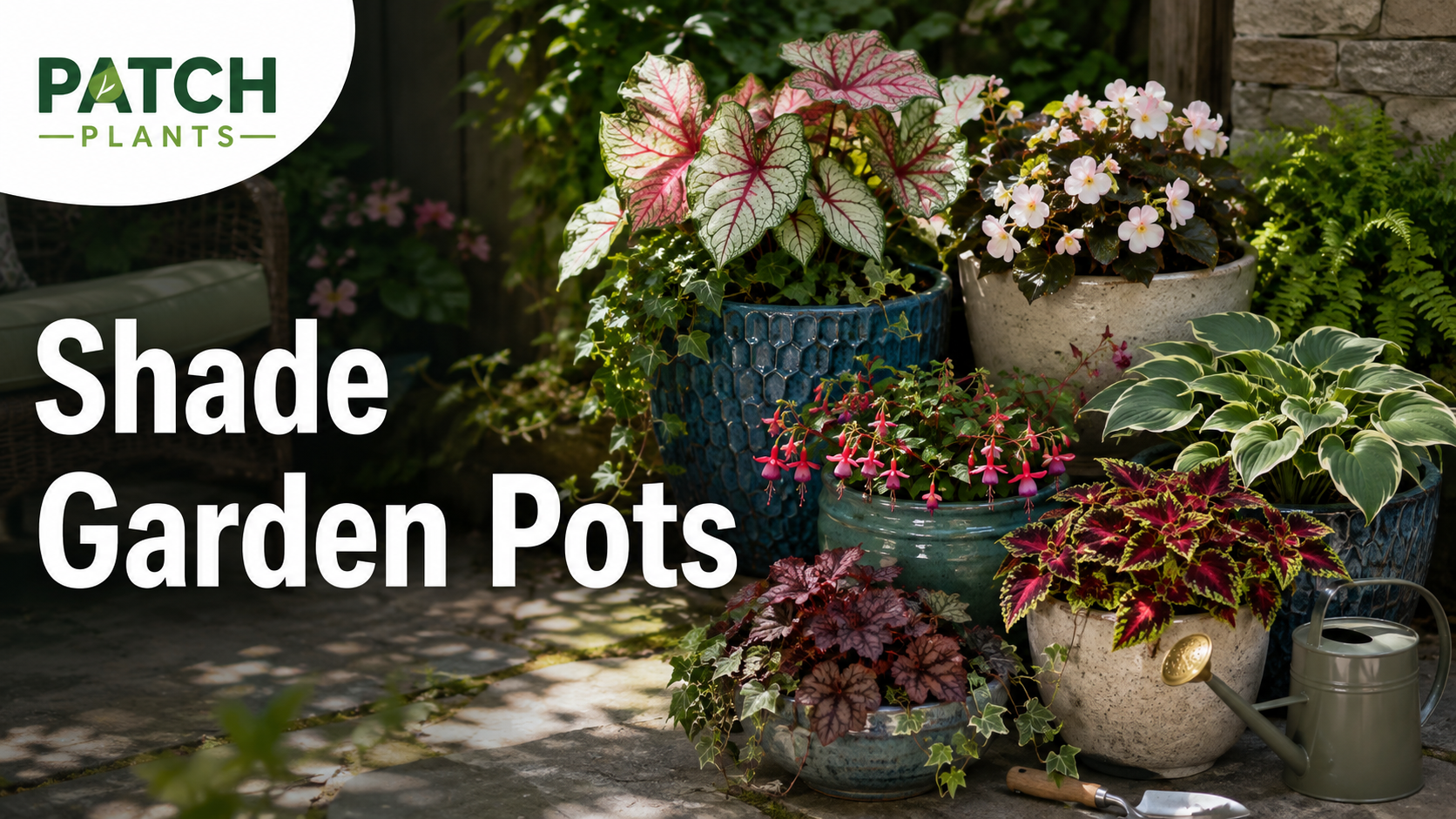
The best shade garden pots match each plant to the amount of shade it gets: flowering plants such as begonias, impatiens and fuchsias for light or partial shade, and foliage plants such as hostas, heucheras, ferns and ivy for deeper shade. Add a pot with drainage holes, peat-free compost and regular watering, and a dark corner becomes a leafy display.
I am Sawera Shahid, a botanist at Patch Plants. This guide covers 17 plants for shade garden pots, how to plant them, and how to keep them healthy. Care details come from the Royal Horticultural Society (RHS), with NC State Extension for browallia.
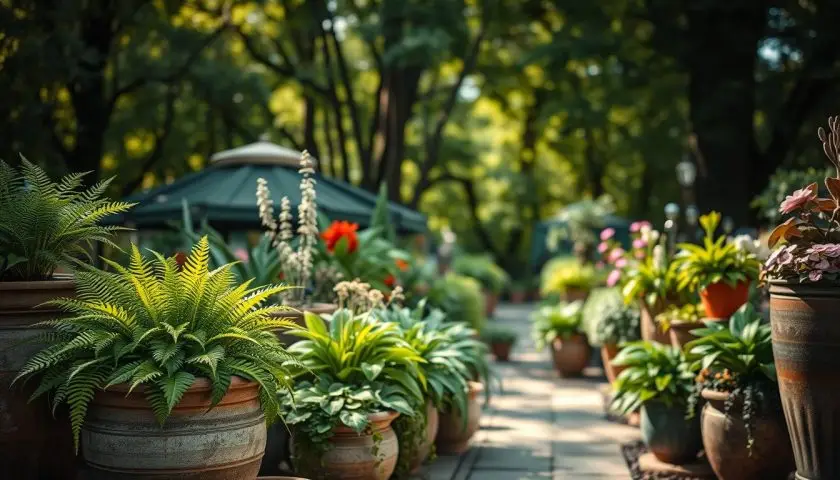
17 Plants for Shade Garden Pots at a Glance
| Plant | Best Feature | Shade It Tolerates (Source) |
|---|---|---|
| Begonia | Long-lasting flowers | Sun or partial shade (RHS) |
| New Guinea impatiens | Bright blooms | Part to full shade (RHS) |
| Coleus | Bold leaf colour | Sun or partial shade (RHS) |
| Caladium | Tropical leaves | Partial to full shade (RHS) |
| Fuchsia | Hanging flowers | Sun or dappled shade (RHS) |
| Torenia | Small summer flowers | Tolerates some shade (RHS) |
| Browallia | Violet-blue flowers | Partial shade, afternoon shade (NC State) |
| Heuchera | Colourful leaves | Partial or dappled shade (RHS) |
| Hosta | Bold leaves | Partial shade (RHS) |
| Japanese painted fern | Silvery fronds | Damp shade (RHS) |
| Asparagus fern | Soft, airy foliage | Partial shade (RHS) |
| English ivy | Trailing evergreen leaves | Very shade tolerant (RHS) |
| Japanese forest grass | Arching movement | Sun or shade (RHS) |
| Polka dot plant | Spotted leaves | Bright, no strong direct sun (RHS) |
| Oxalis | Clover-like leaves | Partial shade (RHS) |
| Hardy cyclamen | Patterned leaves, autumn flowers | Partial shade (RHS) |
| Lungwort | Speckled leaves, spring flowers | Light shade (RHS) |
Understand the Shade Before Choosing Shade Garden Pots
Shade is not one condition. Watch the spot for a full day before you buy plants. The RHS defines the main types like this:
| Shade Type | RHS Description | Best Pot Plants |
|---|---|---|
| Light shade | Open to the sky but screened from direct sun by an obstacle; flowering is often reduced | Begonia, impatiens, fuchsia, torenia |
| Partial shade | Three to six hours of direct sun at midsummer | Hosta, heuchera, hardy cyclamen, caladium |
| Dappled shade | Diffused light, for example through fairly open tree canopies | Ferns, heuchera, fuchsia |
| Moderate shade | About two to three hours of sun at midsummer; mostly foliage rather than flowers | Hosta, ferns, ivy |
| Deep shade | Less than two hours of direct sun a day | Only very shade-tolerant plants such as ivy |
The RHS also notes that soil within about 40cm of a wall can be dry, and that tree shade is linked to dry soil because of root action. Pots standing against walls or under trees may need more watering than you expect. For more ideas, see our guides to shade-loving plants for outdoor spaces and plants in pots in shade.
How to Plant Shade Garden Pots Step by Step
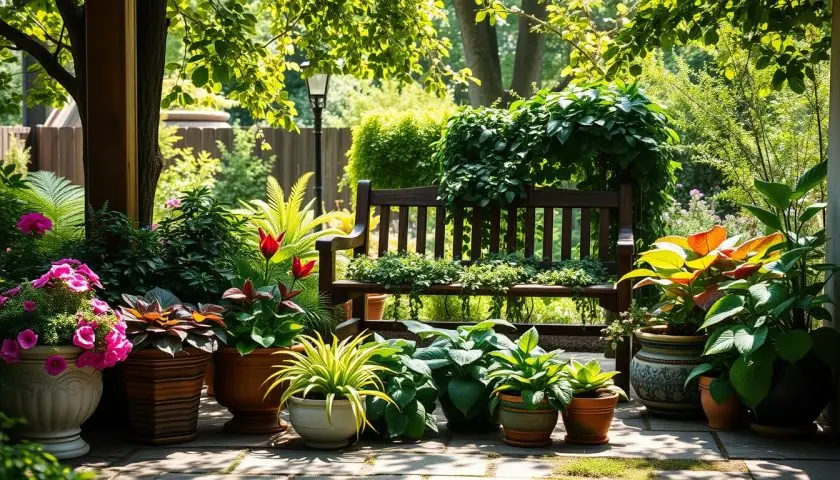
- Choose a pot with drainage holes. The RHS says drainage holes are essential. Raise pots on pot feet so the holes stay clear.
- Use peat-free compost. The RHS recommends peat-free multi-purpose compost for short-term plants such as bedding, and soil-based peat-free compost such as John Innes No 3 for longer-term plants.
- Group plants with similar needs. Do not mix a thirsty fern with a plant that wants to dry slightly.
- Plant at the same depth as in the nursery pot. Arrange the plants before you fill the gaps.
- Water well after planting until water drains from the base.
- Wait for frost to pass with tender plants. Begonias, impatiens, coleus and caladiums are tender, so plant them outside only after the frost risk has gone (the RHS says impatiens go out when nights stay above 7°C, usually late May or early June).
17 Plants for Shade Garden Pots
1. Begonia
The RHS says begonias grow in sun or partial shade, and lists bedding begonias among the reliable shade annuals. Keep the compost evenly moist, use well-drained compost and pot feet because tubers can rot in waterlogged compost, and feed containers every two weeks with a high-potassium feed such as tomato fertiliser. Begonias are tender, so wait until frost has passed.
2. New Guinea Impatiens
The RHS says busy Lizzies and New Guinea impatiens grow well in part to full shade, and suit pots, hanging baskets and window boxes in shaded spots. Keep the compost moist but not soggy. Busy Lizzie is hit by downy mildew, but New Guinea types are not affected. Frost kills them.
3. Coleus
The RHS says outdoor coleus grow in sun or partial shade in moist but well-drained soil, and that pinching out the tips promotes bushiness. It suggests a high-nitrogen feed every two weeks while growing, and warns that mealybugs and whitefly can appear. It is tender, so treat it as a summer plant.
4. Caladium
The RHS lists caladium for full or partial shade in a sheltered site, and says to protect it from direct sun, which can burn the leaves. Plant tubers with the growing tip about 5cm below the surface. It needs 10 to 15°C minimum, so use it as a summer display. The RHS says it is harmful if eaten and can irritate skin and eyes, so wear gloves.
5. Fuchsia
The RHS says tender fuchsias flower best in sun or dappled shade, and heavy shade greatly reduces or stops flowering. Container and basket fuchsias need watering about daily in summer, but the compost should be moist, not soggy. Pinch young shoots for a bushy plant, and overwinter tender types somewhere frost-free.
6. Torenia
Torenia (wishbone flower) is a small summer plant for pots and baskets. The RHS says it performs best in a sunny location but tolerates some shade if the soil is moist and well-drained. Feed it through the growing season and, if it becomes leggy, cut it back by half.
7. Browallia
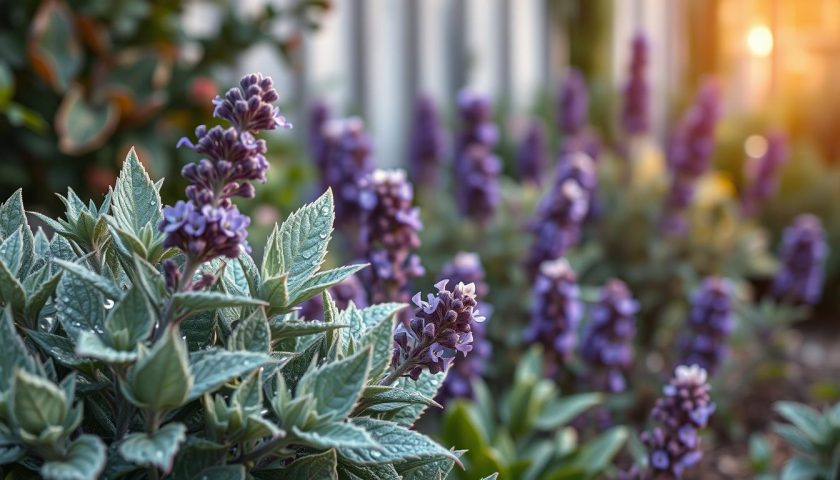
NC State Extension says browallia prefers warm weather with afternoon shade, and tolerates 2 to 6 hours of direct sun. It grows up to about 60cm and has purplish-blue flowers with a white centre, and suits containers and hanging baskets. Keep it evenly moist, and do not overwater or overfeed, which promotes leaves at the expense of flowers. In cold climates it is grown as a summer annual.
8. Heuchera
The RHS says most heucheras thrive in partial or dappled shade, darker-leaved types tolerate more sun, and paler ones can scorch. They need well-drained compost that does not stay soggy, and pots dry out quickly because they hold limited compost. Vine weevil can be a pest. Most keep their leaves year-round.
9. Hosta
The RHS says hostas give their best in moist soil in partial shade, whether in the ground or a container. It suggests a pot 30 to 45cm across with drainage holes, a monthly liquid feed while growing, and watching for slugs, snails and vine weevil. Container hostas are less likely to be eaten, but still need protecting. Stand pots against a wall in winter so they stay drier.
10. Japanese Painted Fern
The RHS describes Athyrium niponicum var. pictum as a damp-shade fern with silvery-grey and green fronds and purple-red stalks. It struggles if the soil lacks moisture and in unusually cold winters, so keep its pot evenly moist.
11. Asparagus Fern
The RHS lists Asparagus densiflorus Sprengeri Group for partial shade in a sheltered, frost-free spot with moist but well-drained soil. It is not reliably hardy, so bring pots under cover for winter. The RHS says it is a skin allergen and its fruits are harmful if eaten, so wear gloves.
12. English Ivy
The RHS says ivies are remarkable for their shade tolerance, and that miniature and Pittsburgh cultivars adapt well to life in pots. Variegated cultivars can lighten dark areas, but remove any shoots that revert to plain green. Trim excess growth in mid-spring.
13. Japanese Forest Grass
The RHS says Hakonechloa macra is easy to grow in moist, humus-rich, well-drained soil in sun or shade, and lists it for patio and container planting. It is fully hardy. ‘Aureola’ reaches about 35cm and forms arching yellow-striped mounds.
14. Polka Dot Plant
The RHS treats Hypoestes as a houseplant that needs plenty of light but not strong direct sun, with a minimum of 12°C. Pinch out shoot tips to keep it bushy. Outdoors, use it only as a summer filler in a warm, sheltered pot.
15. Oxalis
The RHS lists purple-leaved Oxalis triangularis for partial shade, in moist but well-drained soil, for patio and container planting. It is only hardy in coastal and relatively mild parts of the UK. Outdoors, slugs and snails may eat it.
16. Hardy Cyclamen
The RHS says hardy cyclamen grow in partial shade in humus-rich, well-drained soil, with excessive summer moisture avoided. Plant tubers 3 to 5cm deep, because planting too deep can stop flowering. In pots, it suggests peat-free John Innes No 2 mixed with grit and leafmould or fine bark. They flower mostly in autumn and winter.
17. Lungwort
The RHS says pulmonarias prefer light shade and tolerate most soils unless they dry out too much. They bear white, pink or blue flowers in spring on mottled, often silver leaves, which die down in late autumn. The RHS does not cover pots, so choose a roomy container that holds moisture.
Best Pots and Compost for Shade Garden Pots
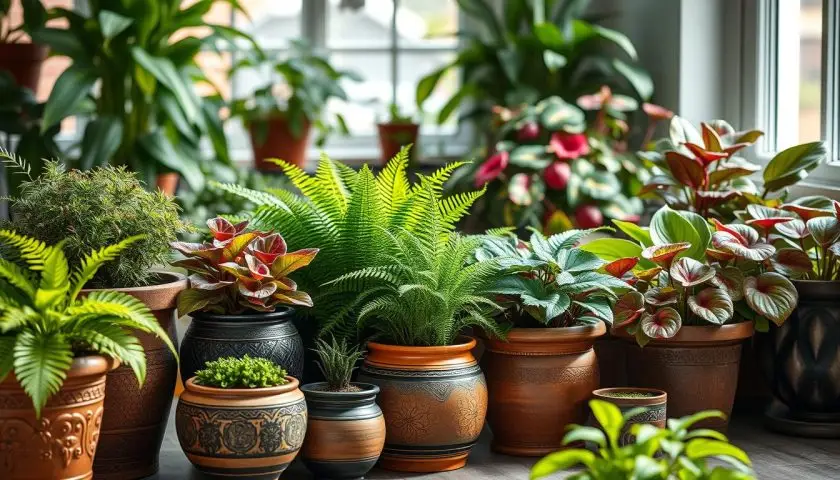
RHS advice on containers is simple: large containers dry out more slowly than several small ones, and a single plant needs a pot only slightly larger than its rootball, because an oversized pot holds excess wet compost that can cause rot.
| Material | What the RHS Says |
|---|---|
| Terracotta | Attractive, but unglazed pots dry quickly and can crack in winter; choose frost-proof pots |
| Plastic | Lighter and holds moisture better; recycled plastic is a better choice |
| Metal | Frost-proof and durable, but heats up in summer and gets very cold in winter |
| Wood | Eventually rots; line it and make drainage holes |
Tall, narrow pots can blow over, so add bricks or stones to the base. For compost, follow the RHS: peat-free multi-purpose for short-term pots and John Innes No 3 for long-term plants. Our guides to the best soil mix, repotting and repotting mistakes go deeper, and container gardening on patios covers sunnier spots.
Design Shade Garden Pots With Thriller, Filler and Spiller
Because flowering is lighter in shade, leaf shape and colour do most of the work. Use a tall plant (thriller), a mounded plant (filler) and a trailing plant (spiller). Repeat one colour across pots, and use pale or silver foliage to light up dark corners.
| Pot Style | Thriller | Filler | Spiller |
|---|---|---|---|
| Colourful porch pot | Coleus | Begonia, New Guinea impatiens | English ivy |
| Woodland pot | Japanese painted fern | Hosta, lungwort | Hardy cyclamen or ivy |
| Elegant foliage pot | Japanese forest grass | Heuchera, hosta | English ivy |
| Hanging basket | Upright fuchsia | Torenia, browallia | Trailing fuchsia |
Care for Shade Garden Pots
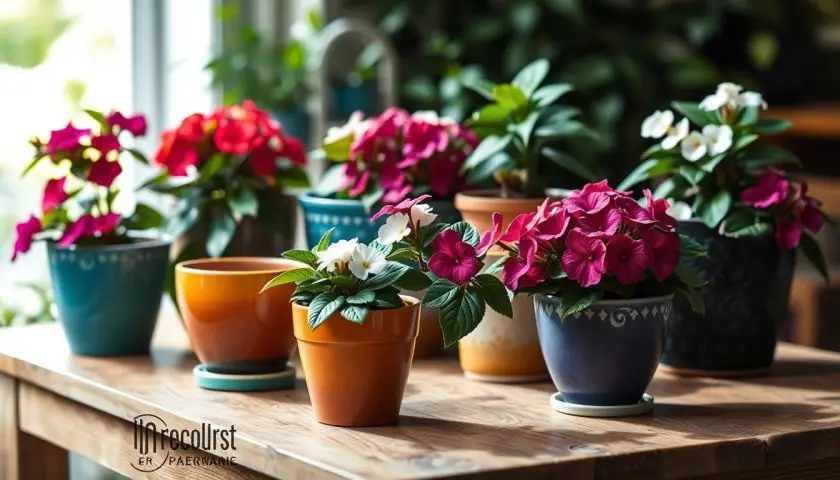
Containers need regular watering in spring and summer, and the RHS says that in hot weather you may need to water up to twice a day. Container plants also need more feeding than plants in the ground, through occasional liquid feed or slow-release fertiliser. Use a saucer in summer to catch excess water, but remove it in winter so pots do not stand in water. Our watering guide, worst times to water and signs of overwatering help you judge when to water, and fertilizing indoor vs outdoor plants covers feeding.
| Task | How |
|---|---|
| Watering | Feel the compost before watering; check pots under trees, walls and overhangs more often |
| Feeding | Liquid feed or slow-release fertiliser; begonias like high-potassium feed, coleus high-nitrogen (RHS) |
| Pinching | Pinch coleus, fuchsia and polka dot plant tips for bushy growth (RHS) |
| Repotting | Every year or two, to give roots space and replace tired compost (RHS) |
| Winter | Waterlogging is the main risk; stand pots against a wall and keep drainage clear (RHS) |
Common Problems With Shade Garden Pots
| Problem | Likely Cause | What to Do |
|---|---|---|
| Few flowers | Too much shade for the plant | Move flowering plants to lighter shade; use foliage plants in deep shade |
| Leggy growth | Too little light, or no pinching | Brighter spot; pinch tips; cut torenia back by half |
| Brown leaf edges | Compost drying out (RHS, hosta) | Water more regularly |
| Chewed leaves | Slugs and snails (RHS) | Check at dusk; protect hostas and oxalis |
| Wilting, collapse | Vine weevil grubs, or waterlogging | Check roots; improve drainage |
| Yellow leaves | Overwatering, poor drainage or hunger | Check drainage, then feed if needed |
See our guides to yellow leaves, leaf curl, browning and droop, root rot and keeping pests away from outdoor plants.
Seasonal Care for Shade Garden Pots
- Spring: Plant hardy perennials. Wait for frost to pass before planting tender begonias, impatiens, coleus and caladiums.
- Summer: Water, feed and pinch. Fuchsias in baskets may need water daily.
- Autumn: Replace tired summer plants with hardy cyclamen, ivy, heuchera or ferns. See our autumn plant care guide.
- Winter: Use frost-proof pots, keep drainage clear and bring tender plants such as asparagus fern and fuchsias under cover. See outdoor plants that survive British winters and our garden calendar.
Pet note: the RHS lists caladium and asparagus fern as harmful if eaten, so wear gloves. If you have pets, check each plant on the ASPCA toxic plants list before buying, and call the ASPCA Animal Poison Control Center on (888) 426-4435 if a pet chews one. A consultation fee may apply.
Frequently Asked Questions
What are the best plants for shade garden pots?
Begonia, New Guinea impatiens, fuchsia, hosta, heuchera, ferns, ivy and hardy cyclamen are dependable. Use flowering plants in light shade and foliage plants in deeper shade.
Can shade garden pots flower in full shade?
Not heavily. The RHS says flowering is often reduced in light shade, and heavy shade greatly reduces fuchsia flowers. In deep shade, rely on hosta, fern, ivy and lungwort leaves.
What compost should I use for shade garden pots?
The RHS says to always choose peat-free compost: multi-purpose for short-term plants, and soil-based John Innes No 3 for long-term plants.
Do shade garden pots need drainage holes?
Yes. The RHS says drainage holes in the base are essential, and pots should sit on feet so the holes stay clear.
How often should I water shade garden pots?
Check the compost first. The RHS says containers need regular watering in spring and summer, and in hot weather up to twice a day. Water less in winter and keep pots from standing in water.
Final Thoughts
Shade garden pots work best when you work with the shade instead of fighting it: match each plant to its light, use a pot with drainage, and water by feel. As a botanist, my advice is to start with one large pot of hosta, heuchera and ivy, which is forgiving, and add seasonal colour later. At Patch Plants, I write practical guides for containers and small spaces, so see our small plants that like shade and self-watering pots guide for more ideas.
Sources: RHS, Growing plants in containers; RHS, Shade gardening; RHS, Shade planting: annuals, bulbs and perennials; RHS, Begonias outdoors; RHS, Impatiens; RHS, Coleus scutellarioides; RHS, Caladium; RHS, Tender fuchsias; RHS, Torenia fournieri; NC State Extension, Browallia speciosa; RHS, Heuchera; RHS, Hostas; RHS, Japanese painted ferns; RHS, Asparagus densiflorus; RHS, Ivy; RHS, Hakonechloa macra; RHS, Hypoestes; RHS, Oxalis triangularis; RHS, Hardy cyclamen; RHS, Pulmonaria; ASPCA, Toxic and Non-Toxic Plants.

About the author
Sawera Shahid is a botanist with an MPhil in Botany and 5+ years of writing about plants. As founder and lead writer of Patch Plants, she writes practical, science-backed guides on indoor plants, outdoor gardens and plant problems, checked against RHS and university extension advice.