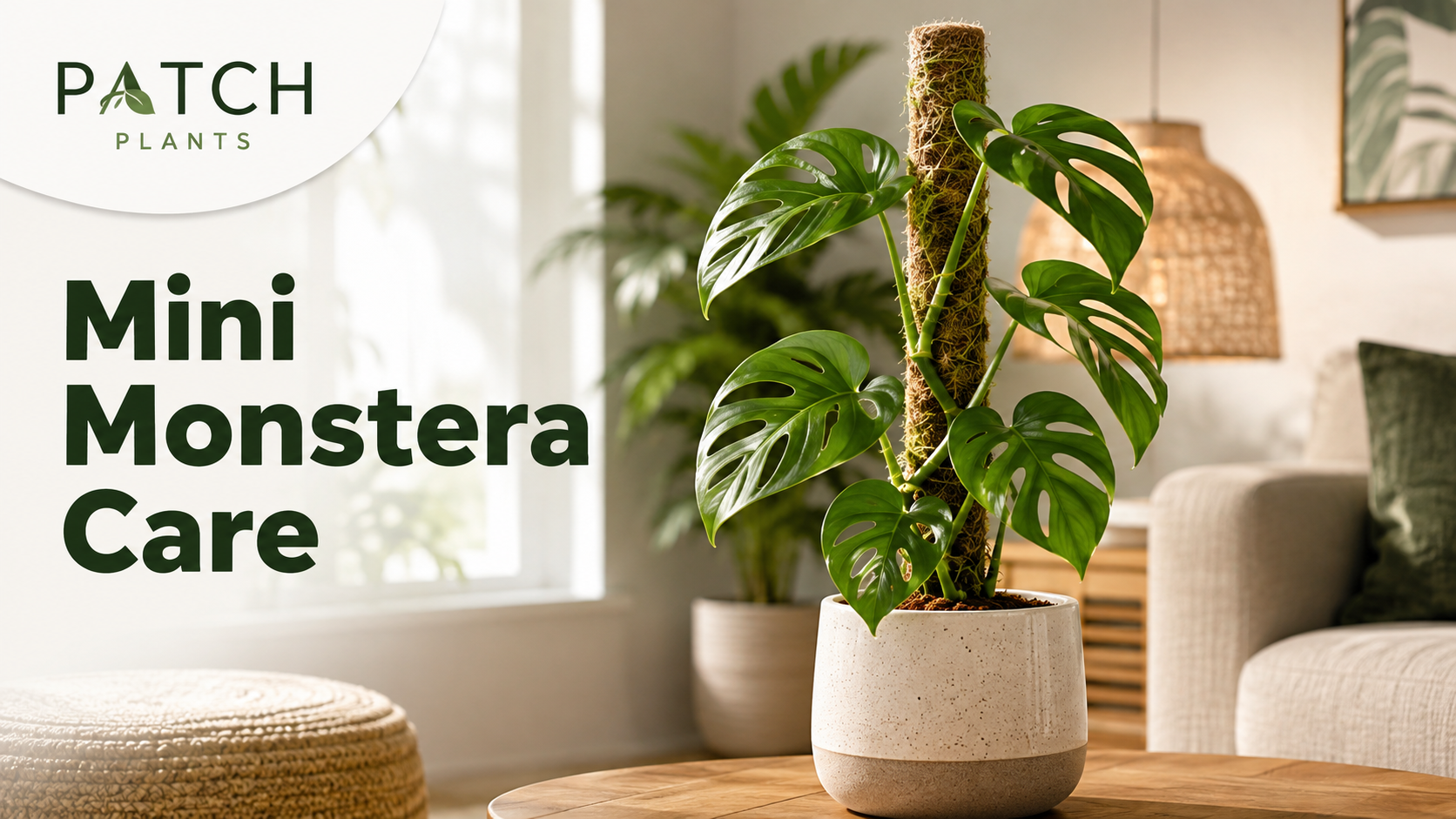
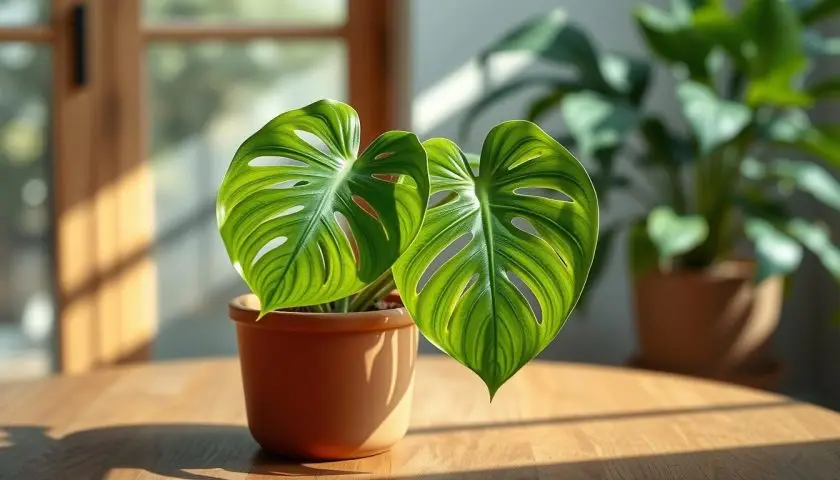
The mini monstera plant is one of those houseplants that looks rare and dramatic but is surprisingly manageable once you understand its routine. It has split green leaves, fast vining growth, and a tropical look that works beautifully on shelves, plant stands, trellises, and moss poles.
Despite the name, the mini monstera is not a true Monstera. The plant commonly sold under this name is Rhaphidophora tetrasperma. It belongs to the same broad aroid family as Monstera and Philodendron, but it has its own growth habits and care needs. The good news is simple: give it bright indirect light, a draining mix, steady warmth, and support to climb, and it can become a striking indoor vine.
Care Snapshot
For healthy mini monstera plant care, place the plant in bright indirect light, water when the top inch of soil dries, use a chunky well-draining potting mix, keep it warm, raise humidity if leaf edges brown, and add a moss pole, coir pole, trellis, or totem for climbing support. Prune long vines above a node to shape the plant, and propagate healthy node cuttings in water, sphagnum moss, or soil.
Key Takeaways
- The mini monstera plant is usually Rhaphidophora tetrasperma, not a true Monstera or Philodendron.
- Bright indirect light helps the plant grow faster and produce better leaf splits.
- Water when the top inch of potting mix feels dry, then let the pot drain fully.
- A chunky, airy soil mix helps prevent root rot.
- A moss pole, coir pole, trellis, or totem supports the plant’s natural climbing habit.
- Pruning above a node helps control long vines and encourages fuller growth.
- Use this guide with Monstera plant care guide, moss pole for plants, and complete guide to indoor light.
Mini Monstera Plant Care at a Glance
| Care Area | Best Choice | Common Mistake |
|---|---|---|
| Light | Bright indirect light | Deep shade or harsh direct afternoon sun |
| Water | Water when the top inch dries | Keeping the mix constantly wet |
| Soil | Chunky, airy, well-draining mix | Dense soil that stays soggy |
| Temperature | Warm indoor conditions | Cold windows, drafts, and winter chill |
| Humidity | Moderate to high humidity | Dry air plus inconsistent watering |
| Support | Moss pole, coir pole, trellis, or totem | Letting vines tangle without guidance |
| Propagation | Stem cuttings with at least one node | Trying to root a leaf with no node |
What Is a Mini Monstera Plant?
The mini monstera plant is best known for its split leaves and climbing growth. In shops, it may be labelled as Mini Monstera, Dwarf Monstera, Monstera Ginny, Philodendron Ginny, or Philodendron Minima. These names are common, but they can be confusing.
The plant’s accepted name is Rhaphidophora tetrasperma. It is a tropical climbing aroid with slender stems, aerial roots, and leaves that develop split edges as the plant matures and grows in good light.
Mini monstera vs Monstera deliciosa
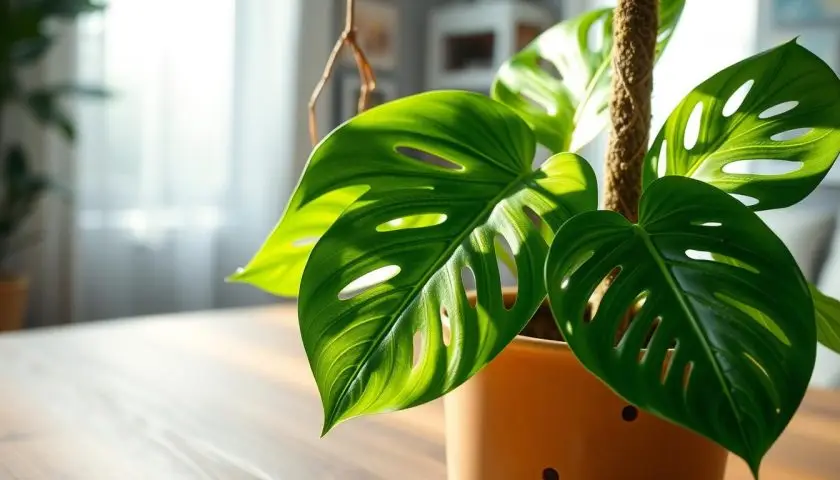
Mini monstera leaves look like a smaller version of Monstera deliciosa leaves, but the plants are not the same. Monstera deliciosa can become much larger indoors and has heavier leaves and stems. Mini monstera stays slimmer, vines faster, and is easier to train vertically in a small space.
Mini monstera vs Monstera adansonii
Monstera adansonii, often called Swiss Cheese Vine, usually has holes inside the leaves. Mini monstera usually has split leaf edges instead. If the leaves look cut along the sides rather than punched with inner holes, it is more likely Rhaphidophora tetrasperma.
Why the name matters
The nickname is fine for casual use, but the botanical name helps you avoid care confusion. Search labels and plant groups often mix Monstera, Philodendron, and Rhaphidophora together, even though each plant has slightly different growth and support needs.
For related plant comparisons and care, read Monstera plant care guide, Philodendron care guide, and tropical house plants.
Best Light for a Mini Monstera Plant
Mini monstera light is one of the biggest factors in how the plant looks. Good light supports stronger vines, healthier leaves, and better fenestrations. Low light usually causes small leaves, long gaps between leaves, and weak climbing growth.
Best indoor light
- Bright indirect light near an east-facing window.
- Bright filtered light near a south-facing or west-facing window.
- Morning sun if it is gentle.
- A grow light if natural light is weak.
- A spot where the plant can see the sky but does not bake in hot sun.
Too little light signs
- Long gaps between leaves.
- Small leaves with fewer splits.
- Vines leaning strongly toward the window.
- Slow growth during the growing season.
- Soil staying wet for too long after watering.
Too much direct sun signs
- Pale or bleached patches on leaves.
- Brown scorched spots.
- Dry crispy edges after hot sun exposure.
- Leaves curling away from the light.
Winter light tip
In winter, move the plant closer to a bright window if the room becomes dark. Growth often slows in colder, darker months, so reduce watering and feeding instead of pushing the plant too hard.
For more light support, read complete guide to indoor light, low light house plants, and house plants that like direct sunlight.
Watering a Mini Monstera Plant
Rhaphidophora tetrasperma watering should be steady but not excessive. The plant likes moisture, but it does not want wet, stale soil around the roots.
Simple watering rule
Water when the top inch of potting mix feels dry. Water slowly until excess drains from the bottom, then empty the saucer or cover pot. Do not water again until the mix has begun to dry at the top.
| Condition | Watering Need | Care Tip |
|---|---|---|
| Bright warm room | Water more often | Check soil every few days |
| Low light room | Water less often | Soil dries slowly |
| Small pot | Dries faster | Check moisture often |
| Large pot | Dries slower | Avoid oversizing the pot |
| Winter growth slowdown | Water less | Let the top layer dry before watering |
| Hot dry air | May need more frequent checks | Watch leaf curl and brown edges |
Underwatering signs
- Leaves droop or curl.
- Pot feels very light.
- Soil pulls away from the pot edge.
- Leaf tips crisp in dry air.
- Growth stalls during warm months.
Overwatering signs
- Yellow leaves with wet soil.
- Mushy stems near the soil line.
- Fungus gnats around the pot.
- Sour smell from the mix.
- Black or brown mushy roots during repotting.
For watering help, read complete watering guide, worst times to water plants, and signs you are overwatering.
Best Soil and Pot for Mini Monstera
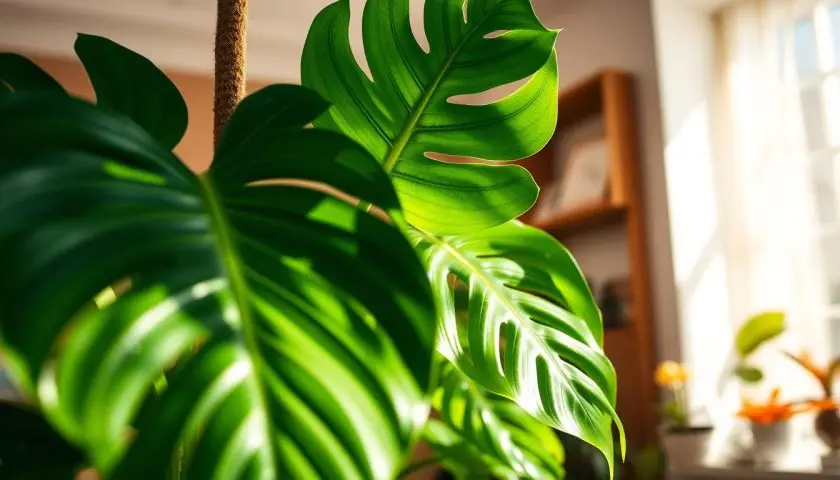
A good Rhaphidophora tetrasperma soil mix should hold light moisture while letting extra water drain away. Dense soil is one of the fastest ways to create root problems.
Simple chunky soil mix
- 2 parts quality indoor potting mix.
- 1 part orchid bark or fine bark.
- 1 part perlite or pumice.
- A small amount of coco chips or charcoal if you use chunky aroid mixes.
Pot requirements
- Use drainage holes every time.
- Choose a pot only one size larger when repotting.
- Avoid pots that are too deep for a small root ball.
- Empty decorative cover pots after watering.
- Use a heavier pot if the plant is climbing a tall support.
When to repot
Repot when roots circle tightly around the pot, roots come out of drainage holes, the mix dries too fast, or growth stalls despite good light and watering. Avoid repotting just because the plant has one long vine. Train and prune first, then repot only if the roots need more space.
For soil and repotting support, read best soil mix guide, how to repot a plant, and repotting mistakes to avoid.
Temperature, Humidity and Airflow
The mini monstera plant is a tropical indoor vine, so it grows best in warm, stable conditions. It does not like cold windows, winter drafts, or sudden temperature swings.
Temperature tips
- Keep it in normal warm indoor temperatures.
- Avoid cold windows in winter.
- Keep away from exterior doors that open often.
- Avoid heat vents and radiators that dry the leaves.
- Do not place it outside until nights are safely warm.
Humidity tips
Mini monstera can adapt to normal home humidity, but it looks better when air is not too dry. Brown tips, curling edges, and crispy patches can appear when dry air combines with inconsistent watering.
Easy humidity support
- Group it near other tropical plants.
- Use a small humidifier in dry rooms.
- Place the pot on a pebble tray without letting roots sit in water.
- Keep it away from heat vents.
- Use bathroom humidity only if the room has enough light.
For humidity help, read humidity hacks without a humidifier, DIY humidity tray, and misting for plants.
Mini Monstera Support: Moss Pole, Trellis or Totem?
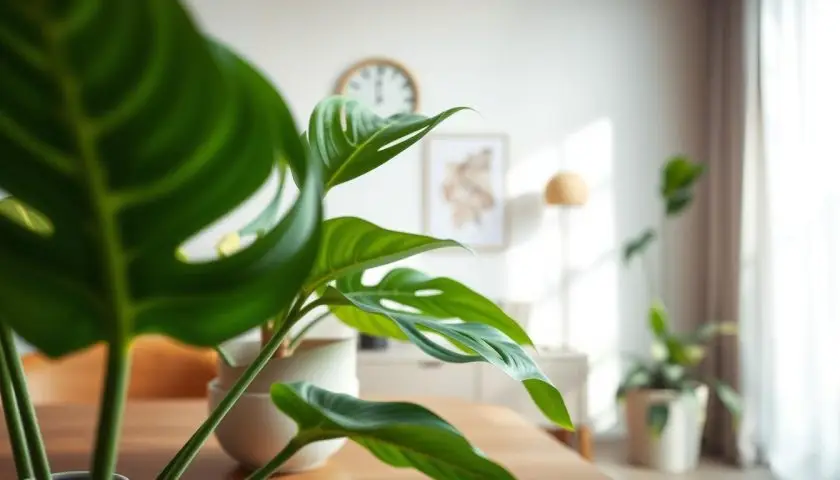
Mini monstera support matters because this plant naturally climbs. Without support, it can trail, tangle, lean, and lose its neat shape. A support also helps the plant look more mature and vertical indoors.
Best support options
| Support Type | Best For | Care Note |
|---|---|---|
| Moss pole | Natural climbing look | Useful if you can keep support lightly moist |
| Coir pole | Easy upright training | Good beginner choice |
| Trellis | Wide, decorative growth | Best for shelves and wall-adjacent displays |
| Totem | Strong vertical statement | Use a stable pot to prevent tipping |
| Wall clips | Guided wall vines | Use carefully and avoid damaging paint |
When to add support
Add support early, before the vines become long and stiff. It is much easier to train young flexible stems than to force an older vine into place.
How to tie stems
- Place the support close to the root ball without stabbing major roots.
- Guide the main vine toward the pole or trellis.
- Use soft ties, plant tape, or loose clips.
- Do not tie tightly around the stem.
- Check ties as stems thicken.
- Rotate the pot so growth stays balanced.
Do aerial roots need to attach?
Aerial roots help the plant grip and climb. You can guide them toward a moss pole or coir pole, but do not keep the soil soggy just to encourage aerial roots. Roots need oxygen as much as moisture.
For support ideas, read moss pole for plants, trailing plants for shelves, and create an indoor jungle without overcrowding.
Pruning a Mini Monstera Plant
Mini monstera pruning keeps the plant full, controlled, and attractive. Without pruning, the vine can become long, bare, and uneven.
When to prune
- Prune in spring or summer when growth is active.
- Remove yellow, damaged, or diseased leaves anytime.
- Trim long vines when the plant becomes leggy.
- Prune before vines tangle badly around support.
- Take cuttings when the plant is healthy, not declining.
How to prune correctly
- Use clean sharp scissors or pruning snips.
- Find a node on the vine.
- Cut just above a node if shaping the mother plant.
- Cut below a node if taking a propagation cutting.
- Remove no more than needed at one time.
- Use healthy cuttings for propagation.
Why pruning above a node works
Nodes are growth points where new roots and shoots can form. Cutting near nodes gives the plant a better chance to branch and gives your cuttings a better chance to root.
For plant shaping, read pruning basics and how to clean plant leaves.
Fertilizing and Growth Routine
Mini monstera is a fast grower in good conditions, so light feeding helps during active growth. Still, fertilizer will not fix poor light, soggy soil, or root rot.
Simple feeding routine
- Feed in spring and summer while the plant is actively growing.
- Use a balanced houseplant fertilizer diluted according to the label.
- Reduce or stop feeding in winter if growth slows.
- Do not fertilize a dry, wilted, or root-rotted plant.
- Flush the soil occasionally if salts build up.
Signs of overfeeding
- Brown leaf edges after fertilizer use.
- White crust on the soil surface.
- Weak soft growth.
- Leaf tip burn.
For feeding support, read fertilizing indoor vs outdoor plants.
How to Propagate Mini Monstera
Rhaphidophora tetrasperma propagation is usually done by stem cuttings. The cutting must include at least one node. A leaf with no node may stay green for a while, but it will not grow into a new plant.
Water propagation
- Cut a healthy stem with at least one node.
- Remove lower leaves if they would sit under water.
- Place the node in clean water.
- Keep the cutting in bright indirect light.
- Change water regularly.
- Move to soil once roots are several inches long and strong enough to handle.
Sphagnum moss propagation
Sphagnum moss can produce sturdy roots if kept evenly moist, not soaking wet. Place the node against the moss, keep it warm and bright, and allow airflow to prevent rot.
Soil propagation
You can root cuttings directly in a small pot of moist, airy mix. This avoids water-to-soil transition stress, but you need to keep moisture steady without waterlogging the cutting.
Propagation mistakes
- Using a cutting with no node.
- Keeping the cutting in harsh direct sun.
- Letting moss or soil stay soaking wet.
- Moving fragile new roots too roughly.
- Taking cuttings from a pest-infested or stressed plant.
For propagation and vining plant support, read how to propagate houseplants and Pothos plant care guide.
Common Mini Monstera Problems
Most mini monstera problems come from watering, light, potting mix, temperature, humidity, or pests. Check the basics before changing everything at once.
| Problem | Likely Cause | First Fix |
|---|---|---|
| Yellow leaves | Overwatering, low light, poor drainage, root stress | Check soil moisture and pot drainage |
| Drooping leaves | Dry soil, wet roots, cold stress, transplant shock | Check soil before watering |
| Brown tips | Dry air, inconsistent watering, salts, heat vents | Improve watering rhythm and humidity |
| Small unsplit leaves | Low light, immature plant, no support | Increase light and add climbing support |
| Leggy vines | Too little light or no pruning | Move brighter and prune above nodes |
| Mushy stems | Overwatering or rot | Inspect roots and remove rotten parts |
| Sticky leaves | Scale, aphids, or mealybugs | Inspect and isolate the plant |
Yellow leaves
One old yellow lower leaf is normal. Several yellow leaves at once usually mean the roots are too wet, the room is too dark, or the potting mix is not draining well.
Leaves not splitting
Young plants may produce plain leaves at first. If a mature plant keeps making small unsplit leaves, improve light, add support, and make sure the plant is not root-stressed.
Drooping leaves
Drooping can mean dry soil, but it can also mean root rot. Touch the potting mix before watering. If the mix is wet and the plant is drooping, inspect roots and drainage.
Brown tips
Brown tips often point to inconsistent water, low humidity, fertilizer salts, or dry heat from vents. Trim damaged tips only if they bother you, but fix the care issue first.
For troubleshooting, read yellow leaves on plants, leaf curl, browning and droop, root rot guide, and how to revive a dying plant.
Pests on Mini Monstera
Mini monstera can attract common indoor pests, especially when the plant is stressed, dusty, crowded, or kept in dry indoor air.
Common pests
- Spider mites: Fine webbing, pale speckling, and dry-looking leaves.
- Mealybugs: White cottony clusters near nodes and leaf joints.
- Scale: Brown bumps on stems and leaf veins.
- Thrips: Silvery streaks, distorted new growth, and black specks.
- Fungus gnats: Small black flies around wet potting mix.
Simple pest routine
- Inspect new plants before placing them near your collection.
- Check undersides of leaves, nodes, and stems weekly.
- Wipe dusty leaves with a damp cloth.
- Isolate pest-infested plants quickly.
- Trim badly damaged leaves if needed.
- Use houseplant-safe treatment only according to the product label.
Is Mini Monstera Safe for Pets?
Mini monstera contains irritating calcium oxalate crystals and should be kept away from cats, dogs, and children who may chew plants. Chewing can irritate the mouth and throat.
Safety tips
- Place the plant on a high shelf or plant stand.
- Train vines upward instead of letting them trail near pets.
- Clean fallen leaves quickly.
- Wear gloves if your skin is sensitive to plant sap.
- Contact a vet or poison service if a pet chews the plant.
For safer plant planning, read how to make your plants cat-friendly and how to make your plants dog-friendly.
Seasonal Mini Monstera Care
| Season | Main Focus | Care Tip |
|---|---|---|
| Spring | New growth, pruning, repotting | Best time to shape and refresh the plant |
| Summer | Watering, feeding, support training | Check soil more often in warmth |
| Autumn | Light adjustment | Move closer to a window as days shorten |
| Winter | Reduced watering and no cold drafts | Do not overwater slow growth |
Mini Monstera Care Checklist
| Task | How Often | What to Watch |
|---|---|---|
| Check soil moisture | Before watering | Top inch dry, wet lower mix, drainage |
| Rotate pot | Every 1 to 2 weeks | Leaning growth |
| Check support ties | Monthly | Stems thickening around ties |
| Inspect pests | Weekly | Nodes, undersides, new leaves |
| Clean leaves | Every few weeks | Dust, pests, sticky residue |
| Feed | During active growth | Only when plant is healthy |
| Prune | As needed | Leggy vines, yellow leaves, shape |
Common Mistakes With Mini Monstera
| Mistake | What Happens | Better Choice |
|---|---|---|
| Treating it like a true Monstera deliciosa | Wrong size expectations and support issues | Care for it as a fast vining Rhaphidophora |
| Growing in low light | Small leaves and leggy vines | Use bright indirect light |
| Watering on a strict schedule | Overwatering or underwatering | Check soil dryness first |
| Using dense potting soil | Root rot risk increases | Use chunky, airy mix |
| Skipping support | Vines tangle and leaves stay smaller | Add a moss pole or trellis early |
| Propagating a leaf only | No new plant forms | Use a stem cutting with a node |
| Letting pets reach vines | Chewing and irritation risk | Train upward and keep out of reach |
Helpful PATCH Guides for Mini Monstera Plant Care
Use these related PATCH guides to improve light, watering, soil, support, tropical plant care, and common houseplant problem-solving.
Mini Monstera and Tropical Plant Guides
- Monstera plant care guide
- Tropical house plants
- Moss pole for plants
- Philodendron care guide
- Pothos plant care guide
- Hoya plant care guide
- Bird of Paradise care guide
- Calathea care guide
Light and Placement Guides
- Complete guide to indoor light
- House plants that like direct sunlight
- Low light house plants
- Small low light indoor plants
- Low light hanging plants
- Office-friendly plants
- Statement plants for minimalist interiors
Watering, Soil and Humidity Guides
- Complete watering guide
- Worst times to water plants
- Signs you are overwatering
- Best soil mix guide
- How to repot a plant
- Repotting mistakes to avoid
- Humidity hacks without a humidifier
- DIY humidity tray
- Misting for plants
Plant Problem Guides
- Plant Care hub
- Yellow leaves on plants
- Why plant leaves turn yellow
- Leaf curl, browning and droop
- Root rot guide
- How to revive a dying plant
- How to clean plant leaves
- Pruning basics
Indoor Plant Styling Guides
- Indoor Plants hub
- Best indoor plants for tiny apartments
- Best indoor plants for beginners
- Best indoor plants for first-time plant parents
- Trailing plants for shelves
- Style indoor plants by room
- Decorate your bedroom with plants
- Create an indoor jungle without overcrowding
Specific Houseplant Guides
- ZZ Plant care guide
- Snake Plant care guide
- Tall Snake Plant guide
- Spider Plant care guide
- Spider Plant light requirements
- How to transplant a Spider Plant
- Peace Lily care guide
- How often to water Peace Lily
- Dracaena care guide
- Rubber Plant care guide
- Fiddle Leaf Fig care guide
- Croton Petra Plant
- Elephant Ear plant indoors
Frequently Asked Questions
Is the mini monstera plant actually a Monstera?
No. The plant commonly called mini monstera is usually Rhaphidophora tetrasperma. It is in the same broad aroid family as Monstera, but it is not a true Monstera or Philodendron.
How much light does a mini monstera need?
A mini monstera needs bright indirect light for the best growth. It can tolerate softer light, but low light often causes smaller leaves, longer vines, and fewer leaf splits.
Can a mini monstera take direct sun?
It can handle a little gentle morning sun, but harsh direct afternoon sun can scorch the leaves. Use filtered light or place it slightly back from a hot window.
How often should I water a mini monstera plant?
Water when the top inch of potting mix feels dry. Water thoroughly, let the pot drain, and empty the saucer so the roots do not sit in water.
What soil is best for mini monstera?
A chunky, airy mix is best. Use indoor potting mix with added orchid bark, perlite, pumice, or coco chips so moisture drains freely and roots get oxygen.
Does mini monstera need a moss pole?
It does not strictly need one, but a moss pole, coir pole, trellis, or totem helps it climb, keeps vines tidy, and can support better leaf size and shape.
Why are my mini monstera leaves turning yellow?
Yellow leaves often come from overwatering, poor drainage, low light, root stress, cold drafts, or pests. Check the soil and roots before adding more water.
Why are my mini monstera leaves not splitting?
Leaves may not split if the plant is young, growing in low light, lacking support, or under stress. Improve bright indirect light and give it something to climb.
How do you propagate mini monstera?
Take a healthy stem cutting with at least one node. Root it in water, sphagnum moss, or moist potting mix, then move it into soil once roots are strong enough.
Is mini monstera toxic to pets?
Yes. Mini monstera contains irritating calcium oxalate crystals and should be kept away from cats, dogs, and children who might chew the leaves or stems.
Final Thoughts
The mini monstera plant is a strong choice if you want a fast-growing, tropical-looking vine without the size of a mature Monstera deliciosa. The care is simple once you focus on the basics: bright indirect light, a chunky draining mix, careful watering, warmth, humidity, and early support.
NC State Extension explains that Rhaphidophora tetrasperma, commonly called Mini Monstera, is not a true Monstera or Philodendron, prefers bright indirect light and moist well-drained potting mix, should be watered when the top inch dries, and benefits from a trellis, totem, or moss pole: NC State Extension Mini Monstera plant profile.
For the best results, train the vine upward before it tangles, prune above nodes to shape growth, and check soil moisture before watering. A mini monstera can grow quickly indoors, but it looks best when light, support, and watering stay consistent.
Final Recap
The mini monstera plant is usually Rhaphidophora tetrasperma, a fast-growing tropical climbing houseplant with split green leaves and aerial roots. It is not a true Monstera, despite the common nickname. Grow it in bright indirect light, protect it from harsh afternoon sun, and water when the top inch of soil dries. Use a chunky well-draining mix, a pot with drainage holes, warm indoor temperatures, and moderate to high humidity. Add a moss pole, coir pole, trellis, or totem early so the vines can climb neatly. Prune leggy stems above nodes, feed lightly during active growth, and propagate only from cuttings that include a node. Watch for yellow leaves, drooping, brown tips, root rot, spider mites, mealybugs, scale, thrips, and fungus gnats. Keep the plant away from pets and children because it contains irritating calcium oxalate crystals.