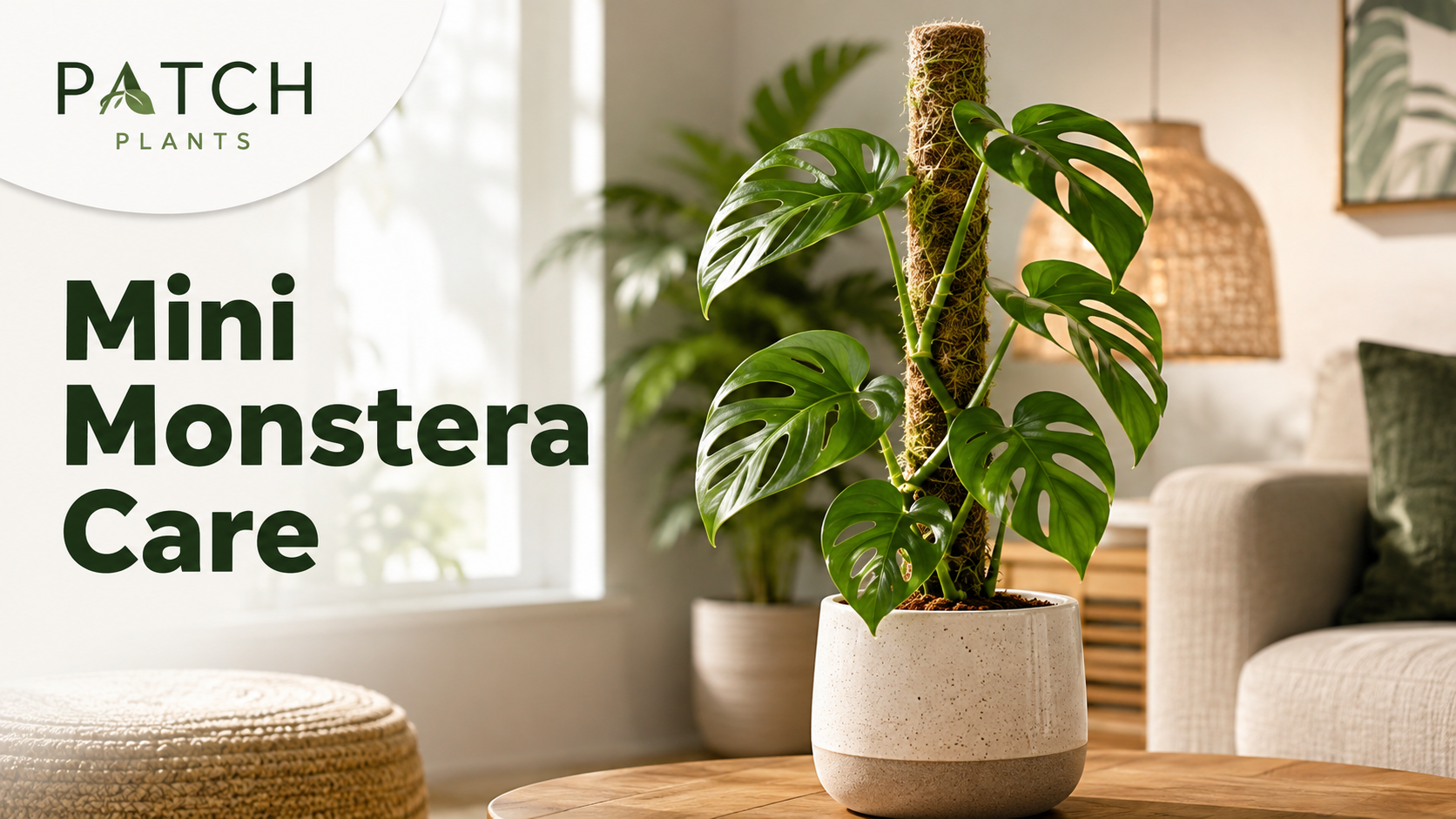
Mini monstera plant care is easier than its dramatic split leaves might suggest. The plant commonly sold as mini monstera is Rhaphidophora tetrasperma, a fast-growing tropical climber that thrives with bright indirect light, an airy potting mix, appropriate watering, and a sturdy support.
For healthy indoor growth, place your mini monstera near a bright window, water when the upper potting mix begins to dry, and guide its vines up a moss pole or trellis. Provide warmth, protect the leaves from intense afternoon sunlight, and avoid leaving its roots in constantly wet soil.
This complete guide explains 11 essential mini monstera care tips, how to recognize Rhaphidophora tetrasperma, why its leaves may not split, how to propagate it from stem cuttings, and what to do when leaves turn yellow, brown, or droopy.
Mini Monstera Plant Care at a Glance
| Care Requirement | Best Practice |
|---|---|
| Botanical name | Rhaphidophora tetrasperma |
| Common names | Mini Monstera, Monstera Ginny, Dwarf Monstera, Philodendron Ginny |
| Plant family | Araceae |
| Plant type | Tropical evergreen climbing vine |
| Light | Bright indirect light with protection from harsh direct sun |
| Watering | Water when the upper soil begins to dry, adjusting for conditions |
| Soil | Moisture-balanced, airy, well-draining aroid mix |
| Temperature | Approximately 65–80°F (18–27°C) |
| Humidity | Moderate to higher humidity; good household conditions may be adequate |
| Support | Moss pole, coir pole, trellis, or another stable climbing support |
| Propagation | Stem cuttings containing at least one viable node |
| Pet safety | Toxic if ingested; keep away from cats, dogs, and children |
Key Takeaways
- The mini monstera plant is Rhaphidophora tetrasperma, not a smaller variety of Monstera deliciosa.
- Bright indirect light, healthy roots, and climbing support help produce stronger vines and more mature split leaves.
- Water according to soil moisture, not a fixed weekly calendar. Do not let the root zone remain waterlogged.
- Use a well-draining potting mix that holds some moisture while allowing oxygen to reach the roots.
- Train the plant vertically with a moss pole, coir pole, trellis, or totem as its stems lengthen.
- Propagate with stem cuttings that include a node. A detached leaf without a viable stem node will not develop into a complete new vine.
- Keep mini monstera away from pets because the plant contains irritating calcium oxalate crystals.
What Is a Mini Monstera Plant?
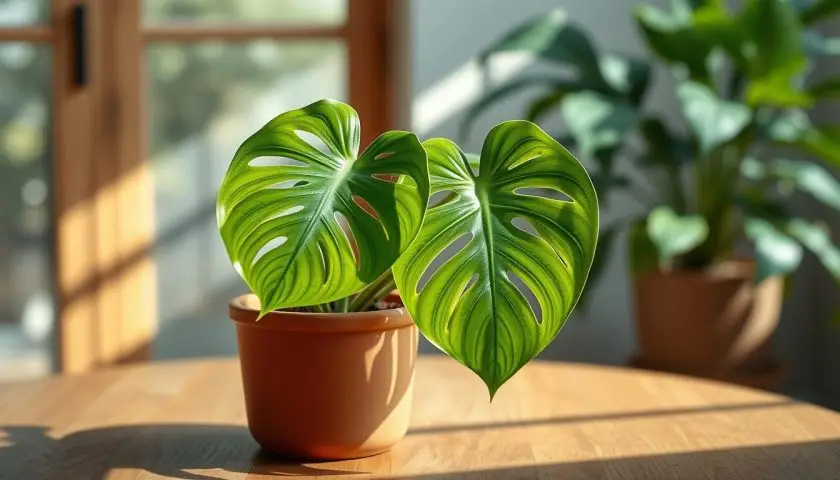
The mini monstera plant is a tropical climbing species native to parts of Thailand and Malaysia. Its accepted botanical name is Rhaphidophora tetrasperma.
Although the nickname suggests a small Monstera, mini monstera belongs to a separate genus. It shares the aroid family, Araceae, with true Monsteras and many Philodendrons.
Its most recognizable feature is its glossy green foliage with splits along the leaf margins. The stems are slender and climbing, producing aerial roots that can help the plant attach to nearby supports.
When given suitable conditions, mini monstera can grow relatively quickly indoors and develop longer vines with increasingly mature foliage.
The North Carolina State Extension Gardener Plant Toolbox identifies the plant as a tropical climbing aroid and describes its preference for bright indirect light, well-drained growing conditions, and vertical support.
Why Is It Called Mini Monstera?
The common name comes from its resemblance to a smaller Monstera plant. Its split leaf margins create a similar tropical appearance, but its growth habit, stem structure, and botanical classification are different.
You may also encounter labels such as Monstera Ginny, Dwarf Monstera, Philodendron Ginny, or Philodendron Minima. These retail names can be confusing, so use Rhaphidophora tetrasperma when checking specific care information.
Mini Monstera vs. Monstera Deliciosa vs. Monstera Adansonii
These three popular houseplants can look similar at first glance, but their leaf patterns and mature growth differ.
| Feature | Mini Monstera | Monstera deliciosa | Monstera adansonii |
|---|---|---|---|
| Botanical name | Rhaphidophora tetrasperma | Monstera deliciosa | Monstera adansonii |
| Typical leaf pattern | Distinctive splits extending to leaf edges | Large mature leaves with splits and sometimes interior holes | Noticeable holes inside the leaf blade |
| Growth habit | Slender climbing vine | Large climbing plant with thicker stems | Climbing or trailing vine |
| Indoor size | Usually easier to train in narrower spaces | Can become large and sprawling | Can develop long climbing or trailing stems |
| Suitable support | Moss pole, trellis, or totem | Strong moss pole, plank, or other substantial support | Moss pole or trellis |
Quick identification tip: If the leaves have pronounced splits reaching the edges and the plant grows on slender climbing stems, mini monstera may be a good match. If the leaves mainly contain enclosed oval holes, compare the plant with Monstera adansonii.
Leaf appearance alone is not always enough to identify a young plant. Compare stem structure, mature foliage, and the botanical label when possible.
For other aroid care guides, explore our Monstera plant care guide and Philodendron care guide.
11 Essential Mini Monstera Plant Care Tips
1. Provide Bright Indirect Light
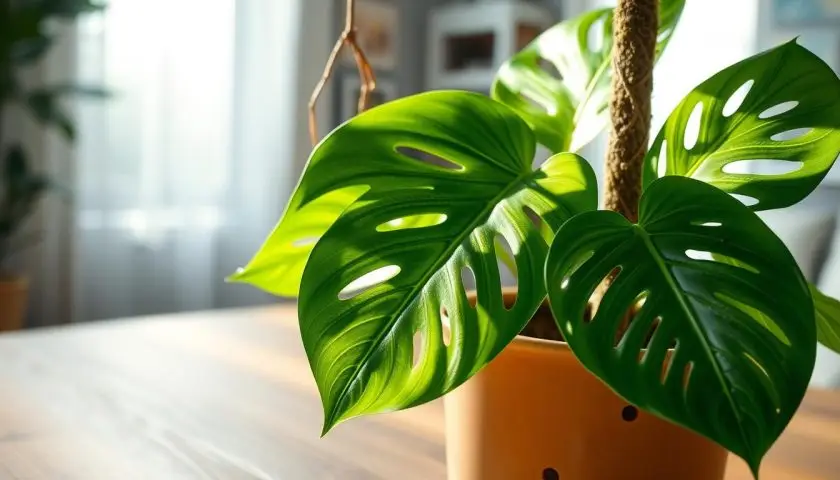
Light is one of the most important factors in successful mini monstera care. The plant grows best in bright indirect light, where it receives enough illumination to produce healthy foliage without prolonged exposure to harsh direct sunlight.
Insufficient light can lead to smaller leaves, longer spaces between nodes, and weak vines. Very intense sun can cause brown, pale, or scorched patches on foliage that has not adapted to those conditions.
Best Indoor Locations
- East-facing window: Often provides suitable bright light with gentler morning sunshine.
- South-facing window: Can work well with appropriate distance from the glass or a sheer curtain.
- West-facing window: Useful when afternoon sunlight is filtered to prevent excessive heat and scorch.
- Bright room with a grow light: An option when natural daylight is inadequate.
Window direction is only a guide. The actual light received also depends on season, latitude, nearby buildings, outdoor trees, and the position of the plant.
Signs Your Mini Monstera Needs More Light
- Unusually long spaces between leaves
- Small new leaves on an otherwise established plant
- Slow growth during the active growing season
- Stems stretching strongly toward a window
- Weak, floppy vines
- New foliage with less developed splits than expected
Leaf splitting is also influenced by maturity and growing conditions, so do not diagnose inadequate light based on leaf shape alone.
Can Mini Monstera Handle Direct Sun?
Some gentle direct sunlight may be tolerated, particularly after gradual acclimation. However, extended exposure to intense midday or afternoon sunlight can burn the leaves.
If moving a plant from a dim room to a brighter position, make the change gradually. Monitor the foliage for new pale or brown patches.
For additional advice, read our complete indoor light and grow lights guide.
2. Water According to Soil Moisture
Mini monstera prefers moisture-balanced conditions rather than soil that stays constantly saturated. The goal is to provide enough water for active growth while allowing oxygen to remain available around the roots.
A useful starting point is to water when the top inch (about 2.5 cm) of the potting mix becomes dry. However, this should not be treated as an automatic instruction to water if the deeper root zone remains very wet.
Pot size, light, temperature, growing medium, and root development all influence watering frequency.
How to Water a Mini Monstera
- Check the moisture in the upper potting mix with a finger or wooden skewer.
- If the pot is large, examine the moisture level deeper in the root zone.
- Water thoroughly once the growing medium has dried sufficiently for the plant’s needs.
- Allow excess water to drain out of the bottom.
- Empty the saucer or decorative cover pot.
- Check moisture again before the next watering.
Watering with a small splash every day can leave part of the root system inadequately hydrated while encouraging uneven moisture distribution. Thorough watering followed by appropriate drying is generally more reliable.
How Often Should You Water Mini Monstera?
| Growing Condition | What Happens | Watering Approach |
|---|---|---|
| Bright, warm room | Water may be used and evaporate faster | Check the growing medium more frequently |
| Cool, low-light room | Soil may remain wet longer | Allow more time between waterings |
| Small terracotta pot | Growing medium may dry faster | Monitor moisture closely |
| Large plastic pot | Lower root zone may retain moisture | Check below the surface before watering |
| Winter growth slowdown | Water use often decreases | Reduce watering frequency as needed |
Signs of Underwatering
- Drooping leaves with noticeably dry soil
- Very lightweight container
- Dry growing medium pulling away from the pot edge
- Reduced leaf firmness
Signs of Excessive Moisture
- Yellowing leaves with persistently wet soil
- Soft or collapsing stems near the soil line
- Unpleasant smell from the root zone
- Roots that become mushy or decay
- Repeated fungus gnat activity in very damp potting media
Drooping can occur from either dry roots or damaged, waterlogged roots. Always check soil moisture before deciding to add water.
See our complete watering guide and signs of overwatering guide.
3. Use an Airy, Well-Draining Aroid Soil Mix
The best potting mix for Rhaphidophora tetrasperma should provide drainage, root aeration, and enough moisture for healthy tropical growth.
A dense mixture that stays saturated for long periods can contribute to root problems. On the other hand, an excessively coarse medium that dries immediately may require more frequent watering than the grower can maintain.
Example Mini Monstera Soil Recipe
- 2 parts quality indoor potting mix
- 1 part fine orchid bark or suitable pine bark
- 1 part perlite or pumice
This is a flexible starting recipe. You can adjust the proportions based on the original mix, container size, humidity, and watering conditions.
Some commercial aroid mixes already contain bark, perlite, and moisture-retentive materials, so additional amendments may be unnecessary.
Signs the Potting Mix Needs Attention
- Water remains in the pot for an unusually long time.
- The mix has compacted and lost its airy structure.
- Roots are deteriorating despite careful watering.
- Water passes around the edges without moistening a dried-out root ball.
For more information about choosing a healthy growing medium, explore our soil mix guide for indoor plants.
4. Choose a Stable Pot With Drainage
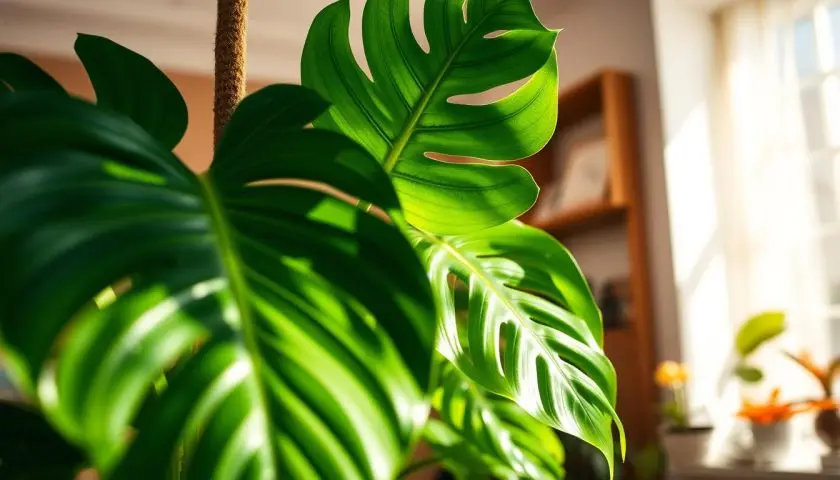
Because mini monstera grows as a climbing vine, it can eventually become top-heavy, especially when trained on a tall moss pole or trellis.
Choose a pot that is both stable and appropriate for the root system. It should have functional drainage holes, and the support should be anchored securely.
When Should You Repot Mini Monstera?
Repot when:
- Roots have significantly crowded the container.
- Roots are growing heavily through the drainage holes.
- The potting mix has deteriorated and no longer drains well.
- The plant has become unstable because of its size or support.
- Roots have limited room and the growing medium dries unusually quickly.
A long vine does not automatically mean the roots need a larger pot. If the root system is healthy and there is still enough room, focus on supporting or pruning the vine instead.
How to Repot Mini Monstera
- Choose a pot only modestly larger than the current root ball.
- Prepare a fresh, airy potting mix.
- Carefully remove the plant while supporting long stems.
- Inspect the roots for damage or rot.
- Position the support before filling the pot, if possible.
- Set the plant at approximately its previous growing depth.
- Fill around the roots without excessively compacting the mix.
- Adjust watering according to the condition of the roots and the moisture already present.
For more detailed instructions, visit our how to repot a plant guide.
5. Maintain Warm Temperatures and Suitable Humidity
Mini monstera is a tropical plant that generally performs best under warm, stable indoor conditions.
The North Carolina State Extension plant profile describes a temperature range around 65–80°F (18–27°C) as suitable for growing this species.
Keep it away from cold drafts, freezing windows, and heating or cooling vents that create sharp changes in temperature.
Does Mini Monstera Need High Humidity?
Mini monstera can adapt to many indoor environments, but moderately high humidity can support healthy tropical foliage, particularly when homes become dry in winter.
Very dry air may contribute to brown leaf margins, although similar symptoms can also result from inconsistent watering, fertilizer salts, root damage, or excessive heat.
Ways to Improve Growing Conditions
- Use a clean humidifier if indoor air is unusually dry.
- Measure humidity with a hygrometer instead of guessing.
- Keep the plant away from direct heater airflow.
- Group compatible tropical plants together.
- Maintain suitable ventilation and avoid keeping leaves constantly wet.
Pebble trays and grouping may have a limited local effect, but they should not be relied upon as substitutes for a humidifier in a very dry environment.
Our humidity hacks for houseplants explains additional options.
6. Train Your Mini Monstera on a Moss Pole or Trellis
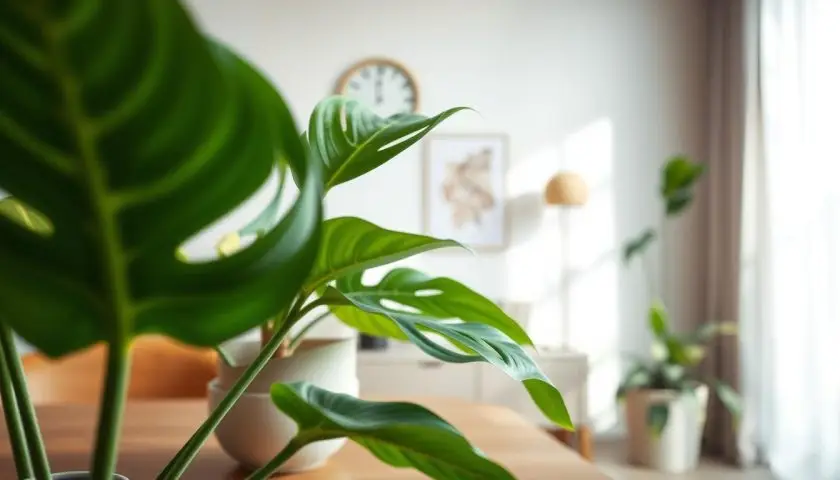
Mini monstera is naturally a climber. Its stems develop aerial roots that can help attach the vine to nearby surfaces.
Providing a support allows the plant to grow upright, keeps long stems organized, and may encourage more mature leaf development when other growing conditions are suitable.
Does mini monstera need a moss pole? Not strictly. It can be grown as a trailing plant, but a moss pole or trellis is often preferable if you want an upright display with larger, more mature foliage.
Mini Monstera Moss Pole vs. Trellis
| Support | Best Use | Important Note |
|---|---|---|
| Moss pole | Vertical climbing and possible aerial-root attachment | Moist moss can encourage attachment |
| Coir pole | Low-maintenance upright training | Useful for structural support |
| Trellis | Decorative branching and spreading vines | Secure stems loosely as they grow |
| Totem | Strong vertical support | Use a stable pot |
| Plant clips | Guiding vines along a suitable structure | Do not pinch or injure stems |
How to Attach Mini Monstera to a Moss Pole
- Choose a support tall enough for the plant’s current growth and future development.
- Position it near the main stem, preferably during repotting.
- Secure the base so the support cannot wobble.
- Guide the vine gently toward the support.
- Attach the main stem with loose, soft plant ties.
- Keep ties away from delicate leaf stalks.
- Check regularly as the stem thickens and lengthens.
If you use a damp moss pole to encourage aerial roots, keep the moss appropriately moist without repeatedly soaking the entire potting mix.
Never force an established vine into a sharp bend. Train new growth gradually to avoid damaging the stem.
For additional instructions, read our complete guide to moss poles for indoor plants.
7. Prune Long Vines to Maintain Shape
Pruning helps manage mini monstera’s fast-growing stems and can encourage new branching from suitable growth points.
It is especially useful when the plant becomes uneven, develops bare sections, or outgrows its available space.
When Is the Best Time to Prune Mini Monstera?
Spring and summer are generally good times for significant pruning because the plant is actively growing. Dead or badly damaged leaves may be removed whenever necessary.
How to Prune Mini Monstera
- Inspect the plant and identify the vines you want to shorten.
- Use clean, sharp pruning tools.
- Find a healthy node on the main stem.
- Cut just above a suitable node to shorten the mother plant.
- Avoid removing a large amount of healthy foliage from a weak plant.
- Use healthy stem sections with nodes for propagation.
A node is the point on a stem where leaves, roots, and new shoots can develop. Understanding node placement helps both pruning and propagation.
Pruning can encourage branching, but it is not a substitute for adequate light or proper climbing support.
See our pruning basics guide for more plant-shaping techniques.
8. Feed Lightly During Active Growth
Mini monstera can grow quickly in suitable conditions, and light fertilizer applications may help support new foliage.
However, fertilizer cannot compensate for poor lighting, unhealthy roots, or constantly saturated soil.
Recommended Fertilizer Routine
- Use a balanced houseplant fertilizer according to its label.
- Apply at a suitable diluted rate during active spring and summer growth.
- Reduce feeding when growth slows.
- Avoid fertilizing a severely dehydrated, root-damaged, or stressed plant.
- Monitor the growing medium for excess fertilizer salts.
Signs of potential overfertilization include white mineral deposits, unexplained leaf-tip browning, and deterioration after feeding.
Always rule out other growing problems before adding more fertilizer.
9. Propagate Mini Monstera From Stem Cuttings
Mini monstera propagation is typically carried out using stem cuttings. A viable cutting must include a stem node capable of producing new growth.
A leaf and petiole without a viable node may remain alive for some time, but it cannot reliably develop into a complete new climbing plant.
How to Propagate Mini Monstera in Water
- Select a healthy stem with at least one visible node.
- Use clean scissors to cut below the node.
- Remove any lower leaf that would remain submerged.
- Place the node in clean water while keeping most foliage above the surface.
- Position the cutting in bright, indirect light.
- Refresh the water regularly and inspect for rot.
- When a suitable root system develops, transfer the cutting into an airy potting mix.
- Keep the new plant appropriately moist while it adjusts to the growing medium.
Rooting may take several weeks depending on temperature, light, the cutting’s condition, and seasonal growth.
How to Propagate in Sphagnum Moss
Place a healthy stem node against clean, lightly moist sphagnum moss. Maintain warmth, bright indirect light, and adequate airflow.
The moss should remain appropriately damp without becoming waterlogged. Inspect the cutting for root development and signs of decay.
How to Propagate Directly in Soil
Stem cuttings can also be rooted in a small pot of airy growing medium.
Insert the node into the mix, keep the plant warm, and provide moisture without saturating the container. Rooted growth may become established without the transition from water to soil.
Common Propagation Mistakes
- Using a leaf-only cutting without a viable node
- Keeping the propagation medium excessively wet
- Leaving the cutting in intense afternoon sun
- Taking cuttings from badly diseased or infested plants
- Damaging fragile new roots during transfer
- Allowing the cutting to become severely dehydrated
For more instructions, visit our complete houseplant propagation guide.
10. Prevent Pests and Root Problems
Mini monstera can develop common indoor plant pests, including spider mites, mealybugs, scale insects, and thrips.
Inspect the leaves, nodes, stems, and undersides regularly, particularly after introducing a new plant to your collection.
Common Mini Monstera Pests
- Spider mites: Fine stippling, faded foliage, and sometimes delicate webbing.
- Mealybugs: White, cotton-like clusters near leaf joints.
- Scale: Small bumps attached to stems or foliage, sometimes with sticky residue.
- Thrips: Silvery scarring, distorted growth, or small dark waste spots.
- Fungus gnats: Small flies associated with moist potting media.
What to Do If You Find Pests
- Move the affected plant away from other houseplants.
- Identify the pest before selecting a control method.
- Remove visible insects carefully when practical.
- Use a treatment specifically labeled for the pest and application site.
- Test sensitive foliage before applying sprays broadly.
- Check the plant repeatedly for new signs of infestation.
Root problems often develop when the growing medium remains excessively wet or poorly aerated. Improve the underlying conditions rather than repeatedly applying treatments without identifying the cause.
11. Adjust Care as the Seasons Change
Seasonal adjustments help keep mini monstera healthy when the amount of natural light, room temperature, and growth rate change.
Spring
- Check the roots and repot if needed.
- Begin appropriate feeding as active growth resumes.
- Prune and propagate healthy stems.
- Install or extend climbing supports.
Summer
- Provide bright, filtered light.
- Monitor soil moisture more frequently in warmer conditions.
- Check for pests and signs of leaf scorch.
- Secure long new growth to supports.
Fall
- Adjust watering as daylight and growth decline.
- Move the plant away from cold windows.
- Reduce fertilizer when active growth slows.
- Check support ties and overall plant stability.
Winter
- Keep the plant in a bright, suitable position.
- Avoid cold drafts and sudden temperature drops.
- Water according to actual soil moisture, usually less often in cooler, darker conditions.
- Limit fertilizer when growth has slowed.
- Consider supplemental lighting if the room becomes too dark.
Why Are My Mini Monstera Leaves Not Splitting?
Mini monstera develops its characteristic split leaf margins as foliage matures under favorable growing conditions. Very young plants may produce relatively simple leaves before more pronounced splits appear.
If a previously healthy plant repeatedly produces smaller, less divided foliage, investigate several factors rather than assuming one specific cause.
1. The Plant Is Still Young
Juvenile plants may need time to develop more mature foliage. A small cutting does not necessarily produce fully divided leaves immediately.
2. Light Is Insufficient
Weak light can reduce growth quality and lead to smaller new leaves. Move the plant to bright indirect light gradually.
3. The Vine Has No Suitable Support
Because Rhaphidophora tetrasperma naturally climbs, giving it a support may help encourage stronger upward growth and more mature foliage.
4. The Roots Are Stressed
Waterlogging, severe dryness, overcrowded roots, or unsuitable potting media can interfere with normal development.
5. The Plant Is Recovering From a Setback
After severe pruning, repotting stress, pest damage, or other disruption, new growth may initially be smaller. Focus on healthy conditions rather than forcing immediate large leaves.
Important: A moss pole alone cannot guarantee larger or more split leaves. Plant maturity, genetics, light, and overall health all contribute to foliage development.
Common Mini Monstera Problems and Solutions
| Problem | Possible Cause | First Step |
|---|---|---|
| Yellowing leaves | Excess moisture, natural aging, root stress, or inadequate light | Check soil and recent growing conditions |
| Drooping leaves with dry soil | Possible water deficit | Water appropriately if the roots are healthy |
| Drooping leaves with wet soil | Possible root damage | Inspect drainage and root condition |
| Brown crispy margins | Dry air, inconsistent moisture, salts, or heat damage | Review humidity, watering, and recent changes |
| Long bare vines | Low light, growth habit, or lack of pruning | Improve light and consider pruning |
| Small leaves without splits | Juvenile growth, light limitation, lack of support, or stress | Review maturity, light, and climbing conditions |
| Soft stems and unpleasant soil smell | Possible rot | Inspect roots and remove clearly decayed tissue |
| Sticky foliage | Possible scale, mealybugs, or aphids | Inspect for insects and isolate if necessary |
Why Is My Mini Monstera Turning Yellow?
A single old yellow leaf is not always a concern, especially when the plant is actively producing healthy new growth.
However, multiple leaves yellowing rapidly may indicate a problem with watering, drainage, light, or roots.
Check soil moisture and examine whether the roots remain healthy. Do not automatically water or fertilize in response to yellow foliage.
See our guide to yellowing plant leaves for additional diagnostic advice.
Why Is My Mini Monstera Drooping?
Drooping may occur when soil becomes too dry, when waterlogged roots are damaged, or when a plant experiences significant temperature or transplant stress.
If the soil is dry and the roots appear healthy, watering may restore leaf firmness. If the soil remains wet, investigate the roots before adding more moisture.
Why Are the Leaf Edges Turning Brown?
Brown leaf edges can result from low humidity, inconsistent moisture, fertilizer buildup, heat stress, or other growing problems.
Consider whether the damage began after moving the plant, changing its watering routine, or applying fertilizer.
A damaged leaf margin generally will not turn green again, but improving conditions can help keep new foliage healthy.
How Do I Save a Mini Monstera With Root Rot?
Root rot can develop when roots remain in poorly aerated, excessively wet conditions and begin to decay.
- Remove the plant from its container carefully.
- Examine the roots for mushy, collapsing, or clearly decayed tissue.
- Preserve healthy, firm roots even when their natural color is tan or brown.
- Remove genuinely rotten roots with clean tools.
- Replant in fresh, appropriately draining potting mix.
- Adjust watering while the root system recovers.
- If the lower stem is extensively damaged, consider rooting a healthy node cutting above the affected section.
The color of a root alone does not prove it is rotten. Texture, odor, and tissue condition provide additional clues.
For more detail, read our guide to identifying and treating root rot.
Can Mini Monstera Grow as a Hanging Plant?
Yes. Mini monstera can be grown as a trailing or hanging houseplant, especially when young. Its vines can spill over shelves and hanging baskets.
However, its natural habit is climbing. A plant grown with suitable upward support may develop a different appearance from one allowed to trail freely.
Hanging Mini Monstera
- Works well for cascading foliage displays.
- May require regular pruning to control long stems.
- Needs a stable hanging container with drainage.
- Can be useful in a bright space where a tall support is impractical.
Climbing Mini Monstera
- Supports a more upright, tropical appearance.
- Keeps long vines organized.
- Provides surfaces for aerial roots to attach.
- May encourage more mature growth when other conditions are favorable.
For further inspiration, explore our moss pole guide and trailing plants for shelves and bookcases.
Is Mini Monstera Toxic to Cats and Dogs?
Yes. Mini monstera should be kept away from pets and children who may chew its leaves or stems.
Rhaphidophora tetrasperma contains irritating calcium oxalate crystals. Ingestion may cause irritation of the mouth and throat, drooling, difficulty swallowing, and gastrointestinal discomfort.
The NC State Extension plant profile identifies this species as harmful if ingested and notes the potential for skin irritation from handling plant material.
Pet Safety Tips
- Keep the plant in an area that pets cannot access.
- Train vines upward rather than allowing them to trail into a pet’s reach.
- Remove fallen leaves and cuttings promptly.
- Wear gloves when pruning if your skin is sensitive to plant sap.
- Contact a veterinarian promptly if a pet chews the plant.
For safer plant selection, read our cat-friendly plants guide and dog-friendly plants guide.
Mini Monstera Care Checklist
| Task | When to Check | What to Look For |
|---|---|---|
| Review light | When growth or seasons change | Stretched vines, leaf size, scorch marks |
| Check soil moisture | Before watering | Upper soil dryness and deeper root-zone moisture |
| Empty the saucer | After watering | No standing water |
| Inspect moss pole | During active growth | Loose ties and new aerial roots |
| Check pests | Regularly | Leaf undersides, nodes, and stems |
| Review humidity | When leaf edges become damaged | Dry air, heating vents, and other potential causes |
| Prune | When needed, preferably during active growth | Long, bare, damaged, or tangled stems |
| Feed | During active growth when appropriate | Healthy growth and fertilizer label directions |
Common Mini Monstera Care Mistakes to Avoid
- Confusing mini monstera with Monstera deliciosa: The plants are related but have different mature growth habits.
- Using a rigid watering schedule: Check actual soil moisture before watering.
- Keeping roots constantly wet: Healthy roots need oxygen as well as water.
- Growing in a dark room: Inadequate light can produce weak vines and small leaves.
- Exposing leaves abruptly to hot direct sun: Sudden intense sunlight can scorch foliage.
- Using an unstable climbing support: A tall vine may tip over if its pole and pot are not secure.
- Trying to root a node-free leaf: New climbing vines require a viable growth point.
- Overfertilizing a struggling plant: Correct environmental problems before increasing nutrients.
- Ignoring pests: Inspect leaf undersides and stem joints regularly.
- Allowing pets to chew vines: Mini monstera contains irritating calcium oxalates.
Frequently Asked Questions About Mini Monstera
Is mini monstera a real Monstera?
No. The plant commonly called mini monstera is Rhaphidophora tetrasperma. It belongs to the Araceae family, as true Monsteras do, but it is a different genus. Its nickname comes from the resemblance of its split leaves to smaller Monstera foliage.
How do you care for a mini monstera plant indoors?
Place the plant in bright indirect light, use an airy and well-draining potting mix, and water when the upper soil begins to dry. Keep temperatures warm, provide suitable humidity, and give the vine a moss pole or trellis if you want it to climb.
How often should I water mini monstera?
Water when the upper inch of soil becomes dry, while also checking whether the deeper root zone remains excessively wet. Frequency varies with light, pot size, temperature, season, and growing medium. Always allow excess water to drain away.
Does mini monstera need a moss pole?
A moss pole is not essential for survival, but it helps support the plant’s natural climbing habit. A trellis, coir pole, or another stable support can also work. Climbing support may encourage more mature foliage when light and root conditions are suitable.
Why are my mini monstera leaves not splitting?
Young plants may initially produce simpler leaves. On older plants, weak light, inadequate support, root stress, or recent setbacks can contribute to smaller, less divided foliage. Improve growing conditions gradually and allow time for healthy new leaves to develop.
Can mini monstera grow in low light?
Mini monstera may tolerate somewhat lower light for a period, but it generally grows more strongly in bright indirect light. Prolonged inadequate light can cause stretched vines, slower growth, and smaller foliage.
How do you propagate mini monstera?
Take a healthy stem cutting with at least one viable node. Root it in water, lightly moist sphagnum moss, or a suitable airy potting mix. Provide warmth and bright indirect light while roots develop. A leaf without a viable node cannot reliably produce a complete new plant.
Is mini monstera toxic to pets?
Yes. Mini monstera contains irritating calcium oxalate crystals and should be kept away from cats, dogs, and children who may chew the plant. Seek veterinary advice promptly if a pet eats part of it.
Final Thoughts on Mini Monstera Plant Care
The mini monstera plant combines striking split leaves with a manageable indoor growing routine. Its main requirements are bright indirect light, healthy roots, appropriate watering, warmth, and enough support for its climbing stems.
For the best results, establish a stable growing environment before trying to encourage faster growth or larger leaves. A well-supported plant with suitable light and watering is more likely to produce attractive, healthy foliage than one frequently moved, overwatered, or heavily fertilized.
As your plant matures, you can train it upward, prune long vines, and propagate healthy cuttings to create new plants. With consistent care, Rhaphidophora tetrasperma can become a beautiful climbing feature in a bright indoor space.
For related care advice, explore our Monstera care guide, Philodendron care guide, and moss pole guide.