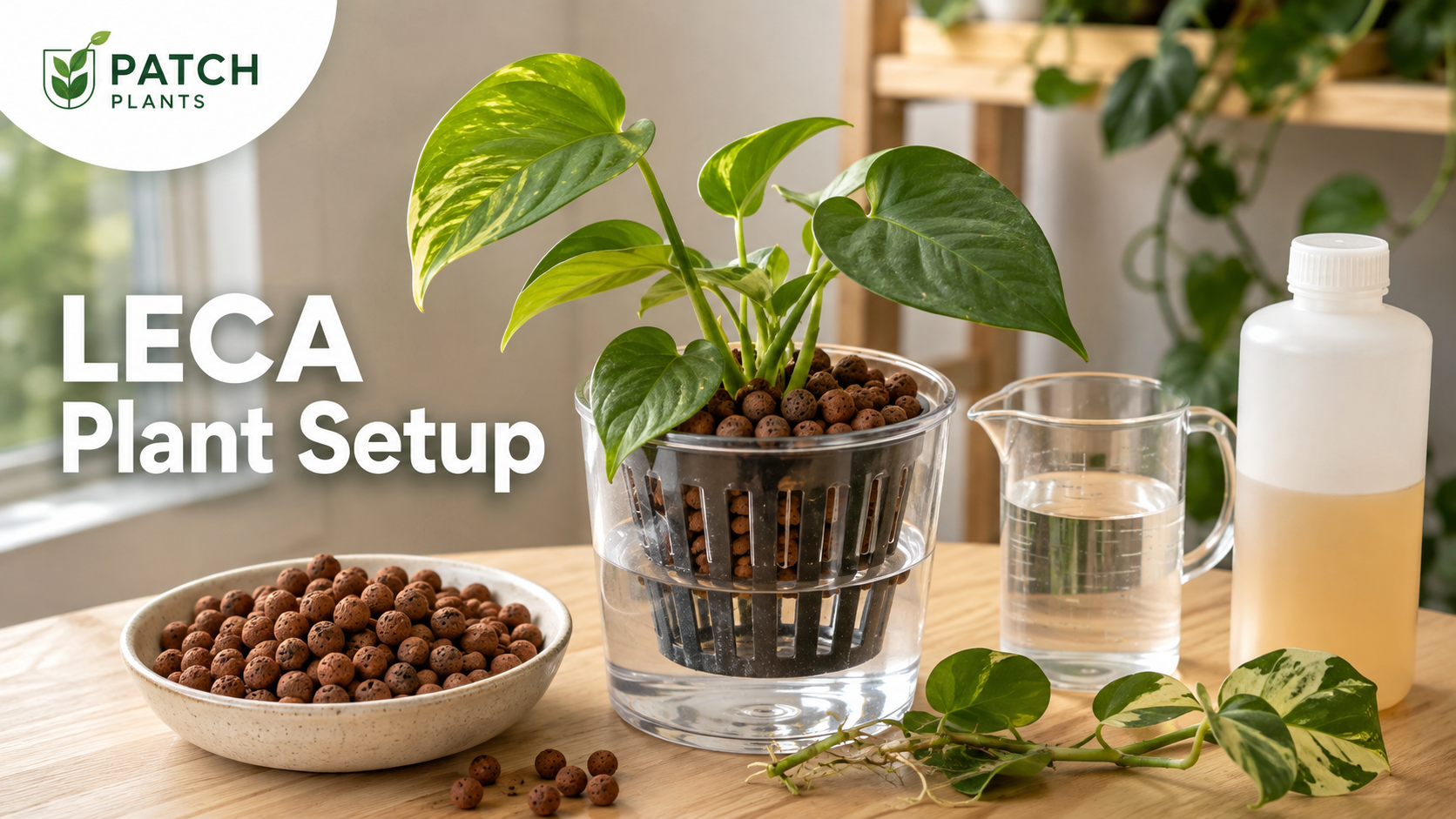
LECA for plants means growing houseplants in lightweight expanded clay pellets instead of soil, with water and nutrients held in a shallow reservoir below the roots. To set it up, rinse and soak the pellets, wash all the old soil off the roots, plant into a pot with drainage slots, keep the water level below the crown, and feed with a hydroponic nutrient solution, because the pellets themselves provide almost no food.
I am Sawera Shahid, a botanist at Patch Plants. LECA for plants is useful, but it is not a fix for every plant. This beginner guide covers what LECA is, which plants suit it, the step-by-step setup, watering, nutrients and the problems to expect.
What Is LECA?
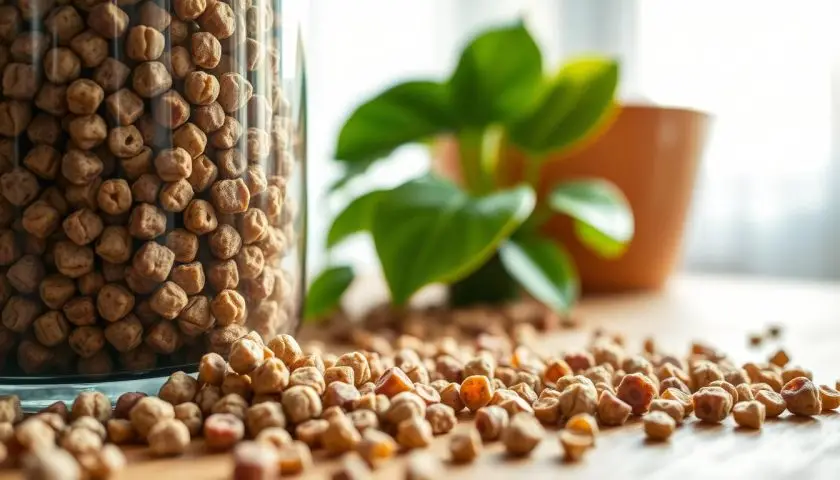
LECA stands for Lightweight Expanded Clay Aggregate. Clay is heated until it expands into round, porous balls, which are sold as LECA, clay pebbles, grow rocks or Hydroton. Oklahoma State University Extension describes them as neutral, with a pH of about 7.0, and says they release almost no nutrients. Their round shape and porosity give a good balance of oxygen and water, and they can be washed and sterilised for reuse.
The same source lists a drawback worth knowing: the pellets drain and dry very fast, which may cause roots to dry out. That is why the reservoir matters.
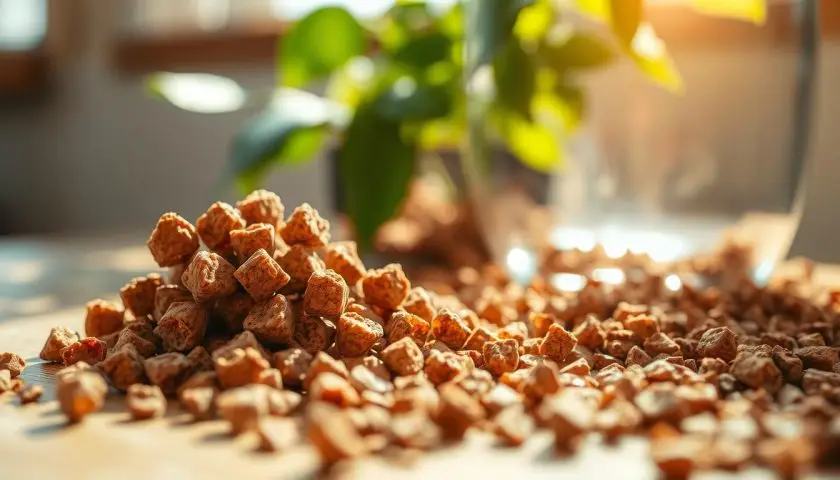
LECA for Plants vs Soil
| Feature | Potting Soil | LECA |
|---|---|---|
| Nutrition | May contain compost or slow-release feed | Almost none, so you must add nutrient solution |
| Airflow around roots | Depends on the mix and how compacted it is | High air space between pellets |
| Water | Held in the mix | Held in the reservoir and in the pellets’ pores |
| Reuse | Usually replaced | Can be cleaned and reused |
| Upkeep | Watering, repotting, refreshing the mix | Reservoir checks, feeding, flushing |
LECA is cleaner, easy to inspect and reusable. It is not automatically better than soil. It needs more attention to nutrients, and it will not rescue a plant that is short of light.
Best Plants for LECA for Plants Beginners
Rooted cuttings adapt best, because they grow water-adapted roots from the start. Growers commonly report success with pothos, heartleaf philodendron, monstera, hoya, spider plant, peace lily and some orchids and anthuriums. Be cautious with cacti and succulents that want long dry spells, plants that are weak or pest-infested, and big mature plants with dense soil rootballs.
For plant details, see our pothos care guide, philodendron care guide, monstera care guide, hoya care guide, spider plant care guide, anthurium care guide and orchid care guide.
What You Need for LECA for Plants
- LECA pellets: clean, horticultural grade.
- Inner pot with holes: a net pot or slotted orchid-style pot.
- Outer cachepot: holds the reservoir. A clear one lets you see the water level.
- Hydroponic nutrients: a complete solution made for soilless growing.
- Clean scissors: for trimming damaged roots.
- Optional pH and EC meters: helpful if you grow many plants in LECA.
Some self-watering pots can work too, as long as the reservoir stays below the crown. See our self-watering pots guide.
How to Prepare LECA Before Planting
New pellets are dusty, and that dust clouds the water and coats roots. Rinse them in a colander until the water runs clearer, soak them for several hours or overnight so they take up water, then rinse once more. Keep them in a clean covered container until you plant.
How to Move a Plant From Soil to LECA
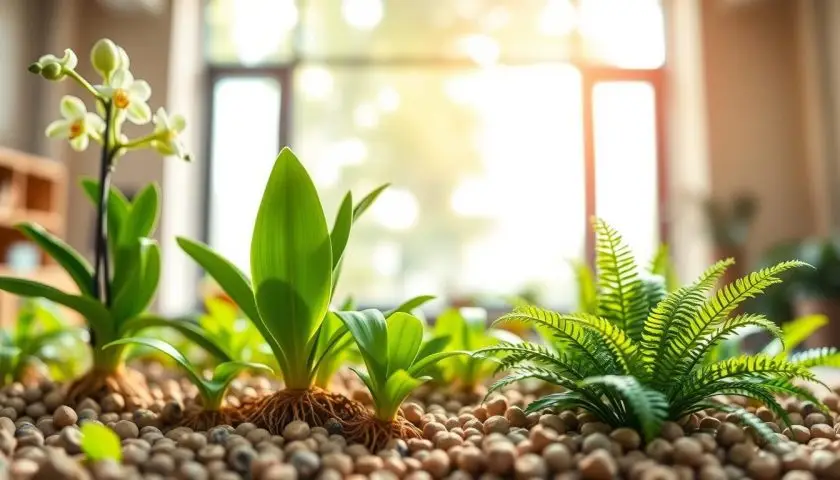
- Choose a healthy plant with active growth. Do not start with a rare or struggling plant.
- Water it the day before so the rootball loosens more easily.
- Slide it out of the pot without pulling on the stem.
- Wash off all the soil with lukewarm water, using a soft brush or chopstick in tight spots. Soil left on roots can rot in the reservoir.
- Trim roots that are black, mushy, hollow or foul-smelling and keep firm, healthy ones.
- Add a layer of prepared LECA to the inner pot and hold the plant so the crown sits above the planned water line.
- Fill around the roots and tap the pot to settle the pellets without crushing the roots.
- Add a shallow reservoir of water or weak nutrient solution to the outer pot, below the crown.
Watering and the Reservoir in LECA for Plants
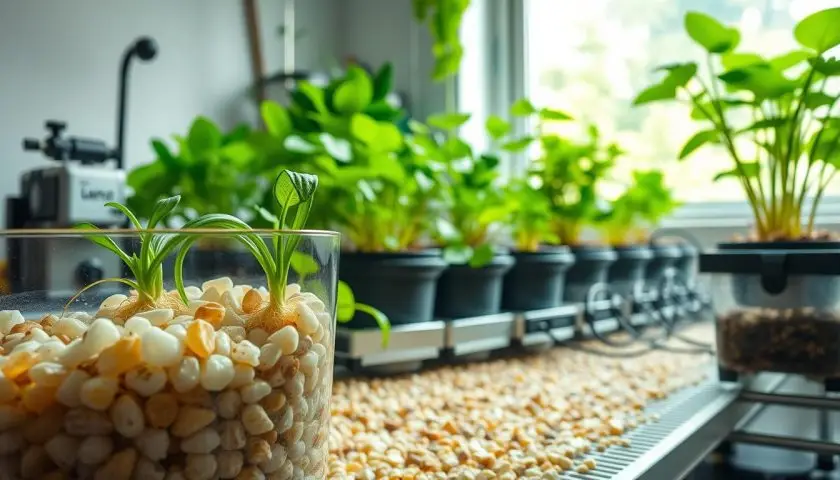
The reservoir is what makes LECA easier to manage. Keep it low enough that the crown and stem stay dry. If it is too high, roots that grew in soil can stay constantly wet and rot. If it drops too low for too long, the fast-draining pellets dry out and the roots can dehydrate.
There is no universal schedule. How fast the reservoir empties depends on the plant, light, warmth and root size. Check it weekly, refill when it is low, and do a full flush and refill when you see white crust, algae, stale water or slower growth, rather than topping off forever. During the first weeks, lightly top-water to keep moisture moving through the pellets, and empty any excess. See our watering guide and signs you are overwatering.
Nutrients and Light for LECA for Plants
Because the pellets release almost no nutrients, plants need a hydroponic fertiliser in the water. Start at a weak strength after the move, since strong feed on stressed roots can do damage, and then build up gradually following the product label. Pale new growth, yellowing after roots have adjusted and fast white crust on the pellets suggest the solution needs adjusting. See fertilizing indoor vs outdoor plants.
LECA does not replace light. In a dim room the plant uses less water, so the reservoir stays wet and growth slows. Give bright indirect light, and avoid harsh sun straight after the move. See our indoor light guide.
Common Problems With LECA for Plants
| Problem | Likely Cause | First Fix |
|---|---|---|
| A few yellow leaves after the move | Transition shock, normal while roots adjust | Be patient and keep conditions steady |
| Many yellow leaves | Root damage, low light, high reservoir, nutrients | Check roots and water level |
| Wilting | Dry pellets, damaged roots, or rot | Check moisture and root health |
| Mushy roots | Old soil rotting or reservoir too high | Trim rot, lower the water, keep the crown dry |
| Algae | Light reaching the nutrient solution | Clean the pot, use an opaque outer pot |
| White crust | Mineral or fertiliser build-up | Flush and reduce nutrient strength |
| Bad smell | Stale water or rot | Flush, inspect roots, clean the container |
Root rot can still happen in LECA. See our root rot guide, yellow leaves on plants and how to revive a dying plant.
Can You Reuse LECA?
Yes. The OSU guide notes expanded clay can be washed and sterilised for reuse. If the previous plant was healthy, rinse the pellets thoroughly, soak and rinse again. If there was rot, pests or a bad smell, disinfect and rinse very well before reusing, or replace the pellets if they are heavily crusted. See how to repot a plant for when a plant needs a bigger pot.
Frequently Asked Questions
What is LECA for plants?
LECA is Lightweight Expanded Clay Aggregate, a soilless medium of porous clay pellets. It supports roots and wicks water from a reservoir but provides almost no nutrients.
Do plants in LECA need fertiliser?
Yes. Oklahoma State University Extension notes the pellets release almost no nutrients, so plants need a hydroponic nutrient solution in the water.
How do I prepare LECA before using it?
Rinse the pellets until the water runs clearer, soak them for several hours, then rinse again before planting.
Can I move any plant from soil to LECA?
No. Rooted cuttings and easy plants such as pothos, philodendron and spider plant adapt best. Cacti, succulents and weak plants are harder.
Why are my plants turning yellow in LECA?
A few yellow leaves can be shock while roots adjust. Many yellow leaves point to root damage, low light, a reservoir that is too high or a nutrient problem.
Final Thoughts
LECA for plants is a good option if you like a clean, airy, reusable medium and are happy to manage water and nutrients yourself. As a botanist, my advice is to start with one healthy pothos or philodendron cutting, rinse everything well, keep the reservoir low and feed gently. Once that works, try something more precious. For more ideas, see our best indoor plants for beginners, trailing plants for shelves and the full indoor plants section.
Sources: Oklahoma State University Extension, Soilless growing mediums.

About the author
Sawera Shahid is a botanist with an MPhil in Botany and 5+ years of writing about plants. As founder and lead writer of Patch Plants, she writes practical, science-backed guides on indoor plants, outdoor gardens and plant problems, checked against RHS and university extension advice.