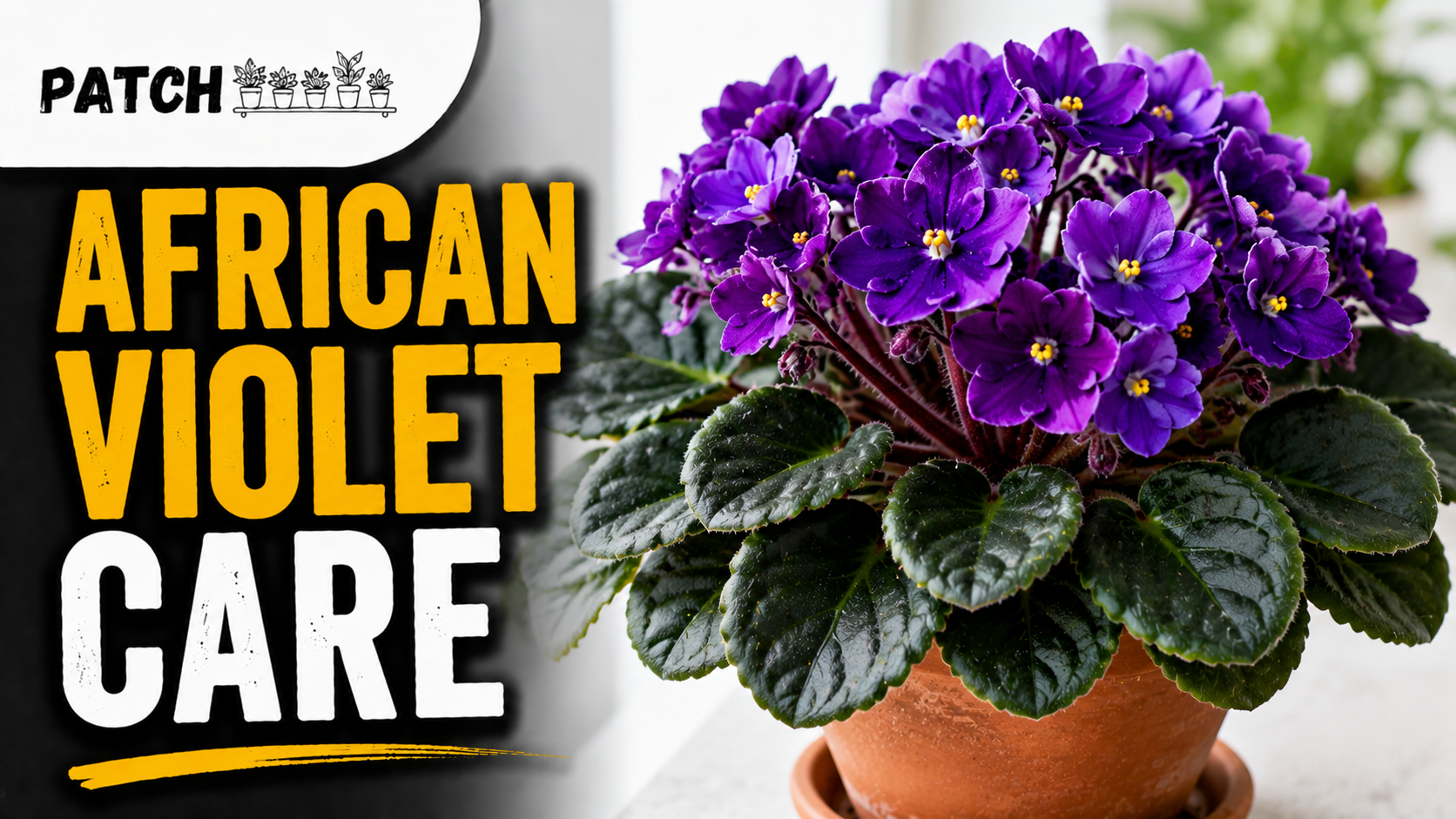
African violet care comes down to five things: bright, indirect light from an east- or north-facing window, watering with room-temperature water when the top 2–3cm of soil is dry, keeping water off the fuzzy leaves, steady warmth of about 18–27°C, and light, regular feeding. Get those right and African violets (Saintpaulia) can flower almost all year.
This guide covers light, watering, soil, feeding, repotting, propagation and the most common African violet problems, from no flowers to leaf spots.
Patch Plants guides are written by Sawera Shahid, a botanist with an MPhil in Botany and more than five years of plant-care writing. Care advice here follows university extension guidance; you can read more on our About page.
African Violet Care at a Glance
African violets come from the forested mountains of Tanzania and Kenya, where they grow in bright shade on rocky slopes. Modern plants are hybrids bred for flowers in purple, pink, blue, white and bicolours, from miniatures under 15cm across to standard rosettes of 20–30cm.
- Light: Bright, indirect; east or north window
- Water: When the top 2–3cm is dry, using room-temperature water
- Temperature: 18–27°C; damage below about 10°C
- Soil: Light, porous, soilless African violet mix
- Feeding: Little and often at reduced strength
- Pets: Non-toxic to cats and dogs
African Violet Light Requirements
Light is the most important part of African violet care, because it decides whether the plant flowers. Iowa State University Extension recommends north- or east-facing windows. Hot afternoon sun through a south or west window will scorch the leaves unless filtered by a sheer curtain.
Too little light: Plenty of dark green leaves but few or no flowers, long leaf stalks and leaves reaching towards the window. This is the most common reason African violets stop flowering.
Too much light: Pale, bleached or yellowish leaves, scorched patches and leaves bunching tightly around the centre.
African violets grow very well under grow lights. Iowa State suggests placing lights 10–20cm above the plants for 12–16 hours a day, which is a good way to keep them flowering through dark winters. Turn the pot a quarter turn every week so the rosette stays even. Our guide to indoor light and grow lights guide explain more.
African Violet Care: How to Water
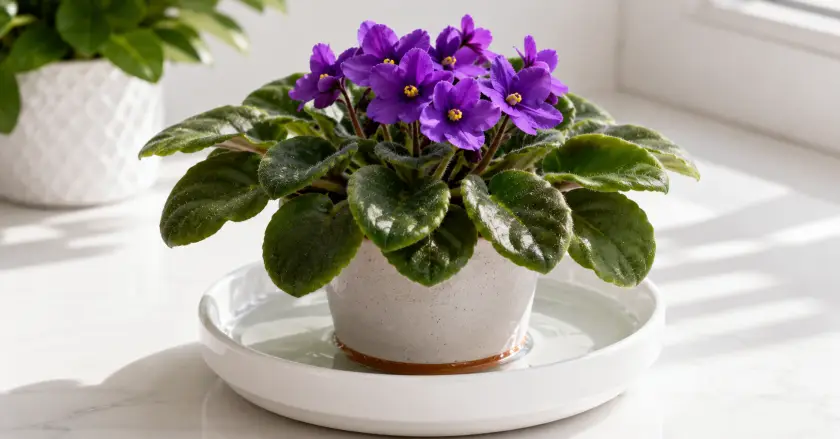
Water when the top 2–3cm of compost feels dry, usually every 7–10 days, but always check first. The most important rule is to use room-temperature water and keep it off the leaves. Iowa State notes that cold water on the leaves causes damage quickly, leaving pale or brown rings and spots.
Bottom Watering
- Stand the pot in a saucer of room-temperature water for 20–30 minutes.
- Lift it out once the surface feels moist and let it drain.
- Never leave it standing in water for long periods.
Bottom watering keeps leaves and the crown dry, but it can let fertilizer salts build up in the compost. Every month or so, water from the top instead, pouring room-temperature water slowly onto the soil, not the leaves, until it drains through to flush out the salts.
Overwatering is the main cause of root and crown rot. Our overwatering signs guide and root rot guide explain how to spot it early.
Best Soil and Pots for African Violets
African violets have fine roots that need air. Use a loose, porous, soilless mix: a bagged African violet compost, or equal parts peat-free houseplant compost, perlite and vermiculite. Standard compost on its own is too dense. Our soil mix guide explains the ingredients.
Use a small pot with drainage holes, about one-third the width of the leaf spread. African violets flower best when slightly pot-bound, and oversized pots stay wet for too long. Self-watering pots made for African violets can work well if you check the compost does not stay soggy; see our self-watering pots guide.
Temperature and Humidity
Keep African violets at normal room temperatures of about 18–27°C. Iowa State notes that below about 10°C the leaves darken and become watery, and above about 29°C growth and flowering slow. Keep them away from cold windows in winter, draughts, radiators and air-conditioning vents.
They like moderate humidity, which can drop in heated homes in winter. Stand the pot on a tray of damp pebbles rather than misting, as water left on the hairy leaves can mark them. Our DIY humidity tray guide shows how to make one.
Feeding African Violets
Feeding is the part of African violet care that keeps flowers coming. Feed regularly but gently. Iowa State recommends a complete or balanced fertilizer at one-half to one-quarter strength, and warns that too much fertilizer leads to poor flowering. A specific African violet fertilizer is the easiest option. Feed every two weeks while the plant is growing and flowering, and less often in winter. Always water before feeding so you never fertilize dry roots. See our fertilizing guide for more.
Repotting and Fixing a “Neck”
Repot roughly once a year, or when roots fill the pot or the compost stops draining well, moving up only one small pot size. Over time, older lower leaves fall and leave a bare stem, or “neck”, between the soil and the rosette. At repotting, bury this neck in fresh compost up to the lowest leaves; it will root along the buried section. Iowa State notes crown rot is more common just after repotting, so water carefully for the first few weeks. Our repotting guide covers the steps.
How to Propagate African Violets
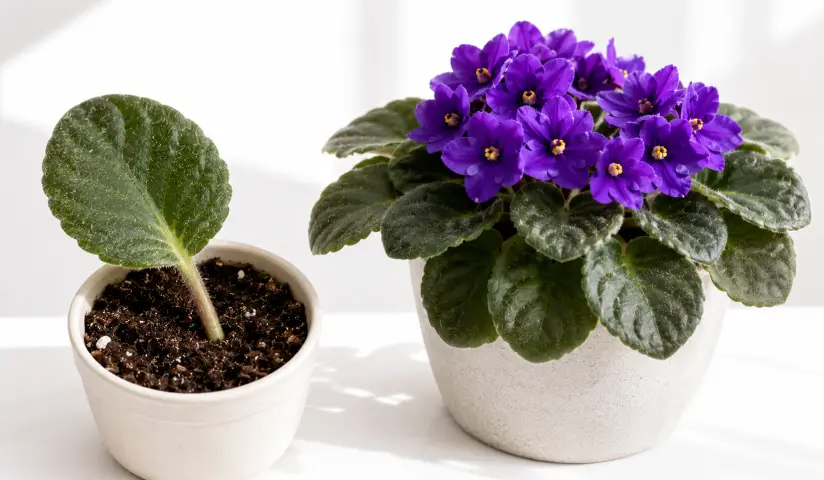
African violets are one of the easiest houseplants to grow from a single leaf.
- Choose a healthy, mature leaf from the middle row of the rosette.
- Cut it with 3–4cm of leaf stalk attached.
- Insert the stalk at an angle into moist African violet compost or a mix of compost and perlite.
- Cover loosely with a clear bag and keep in bright, indirect light at about 20–22°C.
- Small plantlets usually appear at the base within 6–8 weeks.
- Once they have a few leaves of their own, separate them and pot individually.
Our guide on how to propagate houseplants covers more methods.
Common African Violet Problems
African Violet Not Flowering
- Not enough light: The most common cause. Move closer to an east or north window or add a grow light.
- Too much fertilizer: Use a weaker solution more regularly.
- Pot too big or plant badly root-bound: Repot into a pot only slightly bigger than the roots.
- Too cold: Keep it above about 18°C.
Brown or Pale Spots on Leaves
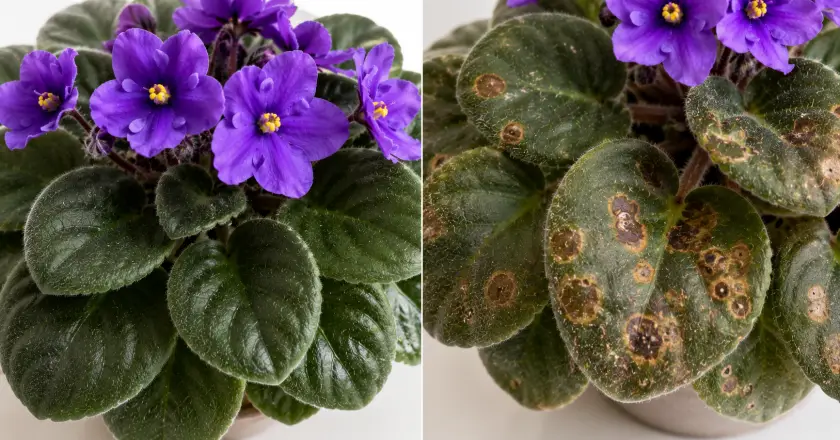
Ring-shaped pale or brown spots are almost always caused by cold water, or water left on the leaves in bright light. Damaged leaves will not recover, but new ones will be clean once you water carefully with room-temperature water. Our leaf browning guide helps with other types of spotting.
Yellow Leaves
Older outer leaves yellow naturally and can be removed. Widespread yellowing usually means overwatering, too much direct light or a lack of feeding. See our guide to why plant leaves turn yellow.
Limp Leaves and Crown Rot
Limp leaves in wet compost point to root rot; a soft, dark centre is crown rot. Both come from overwatering or water sitting in the crown. Remove rotten roots and leaves, repot into fresh mix and water less. Crown rot is often fatal, so take healthy leaf cuttings as a back-up.
Pests
Mealybugs show as white cottony patches; Iowa State recommends removing them with cotton swabs dipped in rubbing alcohol. Cyclamen mites cause small, distorted, tightly bunched new growth and are hard to control, so isolate affected plants straight away. Thrips leave silvery streaks on flowers and leaves.
Seasonal African Violet Care
African violet care changes a little with the seasons.
Spring and summer: Move plants back from windows if the sun becomes too strong, check compost more often and feed regularly.
Autumn and winter: Move plants closer to the light or add a grow light, keep them away from cold glass and draughts, top up humidity trays and feed less often. Our garden calendar has more seasonal tasks.
Are African Violets Safe for Pets?
Yes. The ASPCA lists African violets as non-toxic to cats and dogs, which makes them one of the best flowering plants for pet owners. Cats may still nibble the fuzzy leaves, so a shelf can protect the plant. Our cat-friendly plants guide lists more safe options.
Where to Display African Violets
Their small size suits east or north windowsills, desks under good light and bright bathrooms where the humidity helps. They also make long-flowering bedside plants; see our guides to bedroom plants and the best office plants. For more flowering options, see our list of 23 blooming indoor plants.
Frequently Asked Questions
How do you care for African violets indoors?
Give them bright, indirect light from an east or north window, water with room-temperature water when the top 2–3cm of compost is dry, keep the leaves dry, keep them at 18–27°C and feed lightly every two weeks.
How often should African violets be watered?
Usually every 7–10 days, but only when the top 2–3cm of compost feels dry. Bottom watering is easiest; flush from the top with room-temperature water about once a month.
Why is my African violet not blooming?
Usually because of too little light. Too much fertilizer, a pot that is too big, or cold temperatures can also stop flowering.
Are African violets safe for cats and dogs?
Yes. The ASPCA lists African violets as non-toxic to both cats and dogs.
Can African violets grow outdoors?
Only in warm, frost-free climates and in shade. In most places they are grown as houseplants, as cold below about 10°C damages the leaves.
Final Thoughts
Good African violet care is about consistency rather than effort: a bright, indirect spot, careful watering with room-temperature water, gentle feeding and a snug pot. Give them that and they will flower for months at a time, year after year. If you are new to houseplants, our best indoor plants for beginners list suggests more easy companions.