Anthurium Care Guide: How to Grow the Flamingo Flower Indoors

Anthurium Care Guide

Key Takeaways

  • Anthurium care requires bright indirect light — an east or west-facing window position is ideal; direct sun scorches the glossy leaves and prevents healthy flowering
  • Water anthurium when the top 2–3cm of soil feels dry — typically every 7–10 days; always water thoroughly then allow partial drying before the next watering
  • High humidity above 60% is essential for anthurium care — brown leaf tips are the clearest sign of insufficient humidity; use a pebble tray or humidifier to raise local humidity
  • Anthurium needs a chunky, well-draining aroid potting mix — standard potting compost alone retains too much moisture and causes root rot in anthurium plants
  • Feed every 4–6 weeks with a balanced or phosphorus-rich liquid fertiliser during the growing season for continuous anthurium flowering every 3–4 months
  • Anthurium care problems — brown leaves, yellow leaves, not flowering — are almost always caused by one of four issues: incorrect light, watering, humidity, or feeding
  • All parts of anthurium are toxic to cats, dogs, and humans — containing calcium oxalate crystals that cause oral irritation and vomiting if ingested
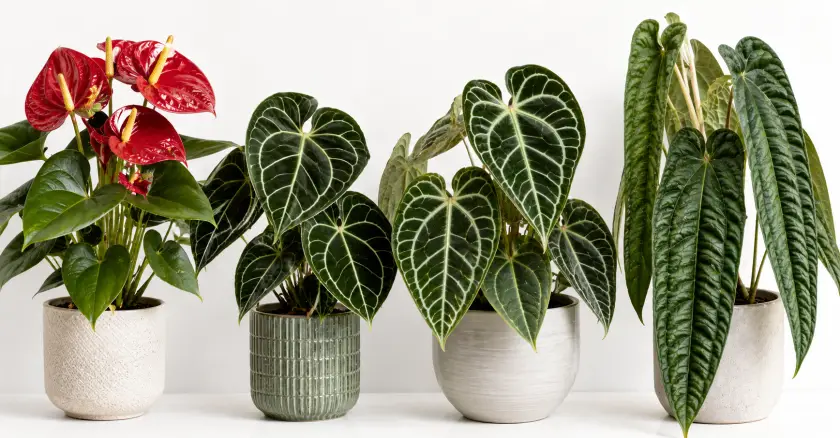
  • Popular anthurium varieties include Anthurium andraeanum (flamingo lily, red spathes), Anthurium clarinervium (velvet leaves), Anthurium crystallinum (silver veining), and Anthurium veitchii (king anthurium)
  • Anthurium propagation by division at repotting time is reliable and straightforward — divide the root ball at natural separation points and pot each section individually
  • Anthurium is one of the most rewarding tropical houseplants available — its glossy foliage, dramatic spathe flowers in red, pink, white, and purple, and long flowering period make it one of the most visually spectacular indoor plants

Introduction

Anthurium — known commonly as the flamingo flower or flamingo lily — is one of the most visually striking tropical houseplants available. Its waxy, heart-shaped spathe flowers in vivid red, pink, white, and purple, combined with glossy deep green foliage, make it an immediate statement plant in any indoor space. When cared for correctly, anthurium flowers continuously — producing new blooms every three to four months throughout the year.

Anthurium care has a reputation for being demanding, but the reality is more straightforward than the reputation suggests. Anthurium plants need bright indirect light, moderately frequent watering with good drainage, high humidity, and a chunky well-draining growing medium. Get these fundamentals right and anthurium rewards you with some of the most spectacular and long-lasting flowers of any houseplant available.

This complete anthurium care guide covers everything — light, watering, soil, humidity, temperature, feeding, repotting, propagation, popular varieties, and full troubleshooting of the most common anthurium care problems. Whether you are caring for your first anthurium or trying to revive one that has stopped flowering or developed brown leaves, this guide provides everything you need.

Anthurium is one of the finest flowering houseplants available alongside orchids and African violets. For more flowering indoor plant inspiration, our 23 blooming indoor plants guide covers a wide range of indoor flowering varieties. For dramatic statement plants including anthurium in large spaces, our 20 oversized indoor plants guide covers the most impactful indoor plant choices.

Anthurium Plant Overview

Anthurium is a genus of over 1,000 species native to the tropical rainforests of Central and South America — primarily Colombia, Ecuador, and surrounding countries. In their natural habitat they grow as epiphytes on the trunks and branches of trees, or as terrestrial plants on the forest floor, in conditions of dappled shade, consistently high humidity, excellent air circulation around the roots, and regular rainfall with fast drainage.

The flowers that anthurium is known for are not true flowers in the conventional sense. The brightly coloured structure (spathe) is a modified leaf — a bract — that surrounds the spadix, the finger-like central spike that carries the actual tiny flowers. The spathe is the part that provides colour and visual impact; the spadix produces pollen and, in the right conditions, seeds.

Modern cultivated anthurium for indoor growing divides broadly into two groups: flowering anthuriums (primarily Anthurium andraeanum and its hybrids — grown for spectacular spathe flowers) and foliage anthuriums (including Anthurium clarinervium, crystallinum, and veitchii — grown for extraordinary large, velvety or glossy leaves with dramatic venation). Both groups share broadly similar care requirements with some differences in humidity and light preferences.

For context on how anthurium fits into the broader category of impressive tropical houseplants, our colourful foliage indoor plants guide covers dramatic foliage plants including several anthurium varieties alongside other tropical statement plants.

Anthurium Care: Light Requirements

Light is one of the most important factors in anthurium care — it determines whether the plant flowers freely, produces healthy glossy foliage, or declines toward poor growth and no blooms.

Best Light Position for Anthurium

Anthurium thrives in bright indirect light — the kind found near an east or west-facing window where it receives plenty of light without direct midday sun rays. An east-facing window provides ideal morning light with bright indirect light through the remainder of the day. A west-facing window provides similar conditions with afternoon sun — ensure anthurium is positioned slightly back from the glass if afternoon sun is intense.

Anthurium tolerates lower light levels better than many tropical plants — it can survive in medium indirect light — but flowering reduces significantly and eventually stops altogether in positions with insufficient light. The glossy spathe flowers of anthurium andraeanum require good light levels to develop and maintain their colour intensity.

For a complete guide to assessing light levels in different indoor positions, our complete guide to indoor light covers light measurement, window orientation, and seasonal light variation in detail. For low-light indoor plant alternatives if your space cannot provide anthurium’s light requirements, our low light plants guide covers the best options.

Light Problems in Anthurium Care

Too much direct sun: Direct sunlight scorches anthurium’s glossy leaves — causing pale yellow bleaching, brown crispy patches, and curled leaf edges. Move away from the window or filter with a sheer curtain. Our leaf curl, browning and droop guide covers all light-related leaf damage symptoms.

Too little light: The plant produces dark green foliage but no flowers, or produces flowers that open slowly, stay small, and fade quickly. Leaves stretch toward the nearest light source. Move to a position closer to a window with better indirect light.

Anthurium Care: Watering

Correct watering is critical to anthurium care — anthurium roots need moisture but are highly susceptible to root rot in consistently wet conditions. The correct approach balances adequate moisture with essential drying between waterings.

How to Water Anthurium

Water anthurium when the top 2–3cm of soil feels dry to the touch — push a finger into the soil to the first or second knuckle to check. When watering, water thoroughly until water drains freely from the drainage holes, ensuring the entire root zone is moistened. Allow the soil to dry partially — but not completely — before the next watering.

Never allow anthurium to sit in a saucer of standing water after watering — remove any water that collects within 30 minutes of watering. Persistent standing water creates the anaerobic conditions that trigger root rot rapidly. Our root rot guide covers identification and treatment — anthurium is one of the most commonly affected plants given its tropical origin and the over-enthusiasm of many plant owners.

How Often to Water Anthurium

In normal indoor conditions during the growing season, most anthuriums need watering every 7–10 days. In summer heat or very bright light, this may shorten to every 5–7 days. In winter when growth slows, extend to every 10–14 days. The soil moisture check is always more reliable than a fixed schedule — anthurium’s watering needs vary with season, light level, pot size, and room temperature.

Anthurium tolerates underwatering significantly better than overwatering. A plant that is slightly dry will droop and recover quickly when watered. A plant that has been consistently overwatered develops root rot that progresses irreversibly without intervention. Our signs you are overwatering guide covers the specific symptoms of overwatered anthurium and how to distinguish them from underwatering. For comprehensive watering principles across all plant types, our complete watering guide provides the full framework.

Water Quality for Anthurium

Anthurium is sensitive to fluoride and chlorine in tap water — both cause brown leaf tip damage over time in susceptible specimens. Use filtered water, rainwater, or allow tap water to stand overnight before use to allow chlorine to dissipate. If using tap water and noticing progressive brown tips despite adequate humidity, water quality is likely the cause.

Anthurium Care: Humidity

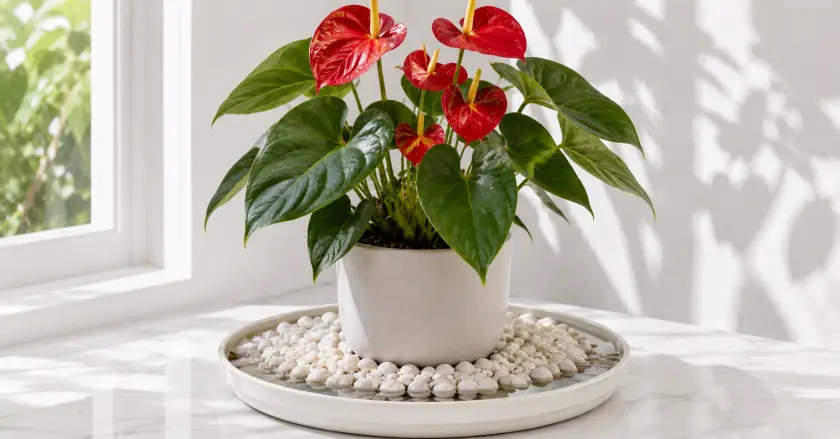
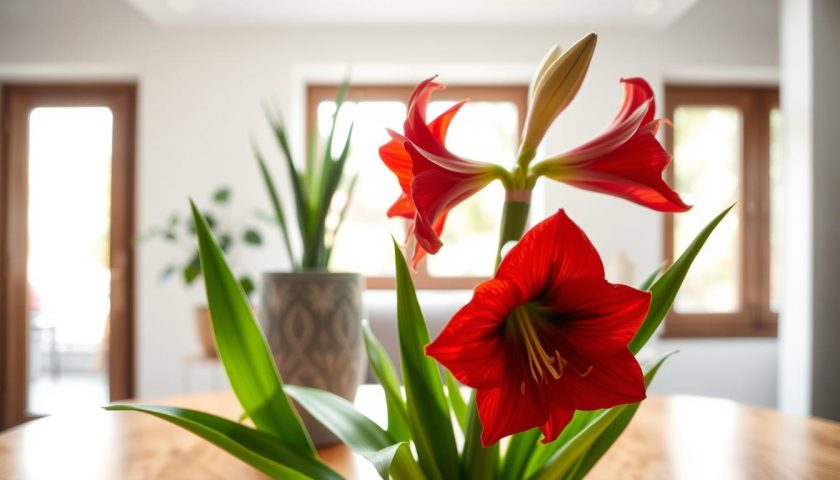
Serene indoor anthurium still-life

High humidity is one of the most important and most commonly neglected aspects of anthurium care. As tropical rainforest plants, anthuriums have evolved in environments with consistently high humidity — typically 70–90% in their native habitat. Indoor environments, particularly in centrally heated homes in winter, commonly provide only 30–40% humidity — significantly below what anthurium needs to thrive.

Ideal Humidity for Anthurium

Anthurium performs best at humidity levels of 60–80%. At this level, the foliage develops cleanly without brown tips, the spathe flowers hold their colour and texture longer, and growth rate is at its healthiest. Below 50% humidity, anthurium progressively develops brown leaf tips, loses flower colour quickly, and grows more slowly.

How to Increase Humidity for Anthurium

The most effective methods for raising humidity around anthurium without excessive effort or cost:

Pebble humidity tray: The most practical solution for most homes — a shallow tray of pebbles filled with water placed under or near the anthurium. As water evaporates it raises local humidity without water contacting the root zone. Our DIY humidity tray guide covers construction in detail.

Humidifier: The most effective method for maintaining consistent humidity — particularly valuable in winter when central heating drops indoor humidity most severely. A small ultrasonic humidifier near your anthurium maintains ideal conditions year-round.

Grouping plants: Plants release moisture through transpiration — grouping anthurium with other humidity-loving plants naturally raises local humidity as all plants contribute to the shared microclimate. Our humidity hacks guide covers the full range of effective and low-cost humidity management approaches for indoor plant collections.

Do not mist anthurium leaves directly — water sitting on the large smooth leaves in poor air circulation can encourage fungal issues. A humidifier or pebble tray is always preferable to direct misting for anthurium care.

Anthurium Care: Temperature

Anthurium is a tropical plant that needs consistent warmth — it performs best at temperatures between 18–27°C and struggles significantly outside this range. Most comfortable home temperatures suit anthurium naturally during the day, but several specific temperature risks require attention.

Cold draughts: Even brief exposure to cold air from open windows, exterior doors, or air conditioning vents causes immediate cold damage — dark patches on leaves, flower drop, and stopped growth. Site anthurium away from all sources of cold air movement.

Cold windowpanes in winter: Anthurium placed directly against a single-glazed window in winter can experience cold damage from the glass surface even while the room temperature is adequate. Ensure a few centimetres of clearance between the plant and any cold glass surface.

Minimum temperature: Anthurium suffers visible damage below 15°C and should never be exposed to temperatures below 10°C. Do not move anthurium outdoors in temperate climates except in the warmest summer conditions.

Anthurium Care: Soil and Potting Mix

Anthurium roots are adapted to the chunky, fast-draining conditions of an epiphytic existence on tree bark — they need excellent aeration and drainage alongside adequate moisture retention. Standard potting compost alone retains far too much moisture for healthy anthurium root development and is one of the most common causes of root rot in anthurium plants.

Best Soil Mix for Anthurium

The ideal anthurium growing medium is a chunky, well-draining aroid mix that provides excellent aeration alongside adequate moisture retention. The most effective home mix combines equal parts standard potting compost, perlite, and orchid bark or coco chips. This creates a mix that drains rapidly after watering while retaining enough moisture for the roots to absorb between waterings.

Purpose-formulated aroid potting mix (widely available from specialist plant shops and online) provides the correct structure without mixing your own. For guidance on growing medium selection for different plant types, our best soil mix guide covers aroid mixes alongside mixes for succulents, ferns, and other plant categories.

Pot Selection for Anthurium

Choose a pot with drainage holes — this is non-negotiable for anthurium care. Without drainage, thorough watering creates a waterlogged base that causes root rot regardless of how carefully you water. Terracotta pots suit anthurium well — their porous walls allow some evaporation from the sides, improving aeration and reducing the risk of persistent moisture. Plastic pots retain moisture longer — suit anthurium care if you tend to underwater but require more careful watering frequency monitoring if you tend to overwater.

For guidance on self-watering pot use with anthurium — which requires careful implementation to avoid overwatering — our self-watering pots guide covers the considerations for tropical plants including anthurium.

Anthurium Care: Feeding

Regular feeding is essential for anthurium flowering — a plant that is not fed will eventually exhaust the nutrients in its potting mix and significantly reduce or stop flower production.

What Fertiliser to Use for Anthurium

Anthurium benefits from a balanced liquid fertiliser or a fertiliser with slightly elevated phosphorus during the flowering season — phosphorus drives flower production. A standard houseplant liquid fertiliser at half the recommended dose works well. Specialist anthurium or flowering plant fertilisers with NPK ratios emphasising phosphorus (the middle number) are the most effective for maximising flowering frequency and spathe colour intensity.

For guidance on fertiliser selection and application for indoor plants, our fertilising indoor vs outdoor plants guide covers fertiliser types, NPK ratios, and seasonal feeding schedules for tropical houseplants including anthurium.

Anthurium Feeding Schedule

During the active growing season (spring through early autumn), feed anthurium every four to six weeks with a liquid fertiliser at half strength. Reduce to every six to eight weeks or stop feeding entirely in winter when growth naturally slows. Always water before feeding — never apply fertiliser to dry soil as this causes root burn.

Every three to four months, flush the potting mix thoroughly with plain water — pour several volumes of water slowly through the soil and allow to drain completely. This removes accumulated fertiliser salts that build up in the root zone over time and can cause brown leaf tips that mimic humidity damage.

Anthurium Care: Repotting

Anthurium needs repotting periodically as it grows — but performs well when slightly rootbound and should not be repotted unnecessarily. Repot when roots are visibly circling the base of the pot, emerging from drainage holes, or when the plant appears to dry out within days of watering regardless of conditions.

Spring is the best time to repot anthurium — the plant recovers most quickly from any root disturbance when active growth is beginning. Choose a pot one size larger than the current container — never jump several sizes as excess potting mix around a small root ball retains moisture that the roots cannot absorb, increasing root rot risk. Our how to repot a plant guide covers the full repotting process step by step. Our repotting mistakes guide covers the most common errors including overpotting and repotting at the wrong time of year.

Anthurium Propagation

The most practical method of propagating anthurium at home is division — separating an established plant into two or more sections at repotting time. This is most successful when the parent plant has developed multiple stems and an established root system that divides naturally.

How to Propagate Anthurium by Division

  1. Remove the anthurium from its pot and gently loosen the root ball
  2. Identify natural separation points where stems arise from different sections of the root system
  3. Tease the roots apart gently — use clean scissors or a clean knife to separate sections if roots are tightly intertwined
  4. Ensure each division has at least two to three leaves and a healthy section of root
  5. Pot each division individually into fresh aroid mix in appropriately sized pots
  6. Water gently and place in bright indirect light — maintain high humidity during the establishment period
  7. New growth typically appears within four to six weeks as the division establishes

For broader propagation guidance covering stem cutting and other methods applicable to tropical houseplants, our how to propagate houseplants guide covers all common propagation approaches.

Popular Anthurium Varieties and Their Care

Popular Anthurium Varieties and Their Care

The anthurium genus offers extraordinary variety — from the classic flamingo flower to velvet-leaved collectors’ plants with dramatic veining. Understanding which variety you have helps tailor anthurium care to its specific needs.

Anthurium Andraeanum (Flamingo Lily / Flamingo Flower)

The most widely available anthurium — the classic houseplant with waxy heart-shaped spathe flowers in red, pink, white, coral, and purple. Anthurium andraeanum is the most floriferous variety, producing new spathes continuously when given good light and regular feeding. Red anthurium care is identical to standard anthurium andraeanum care — the red colouration does not change care requirements. Pink anthurium care is similarly identical. It is the most beginner-friendly anthurium variety and the best starting point for new anthurium growers. Our best indoor plants for beginners guide covers anthurium andraeanum alongside other accessible tropical plants.

Anthurium Clarinervium (Velvet Cardboard Anthurium)

A foliage anthurium prized for its large, heart-shaped, dark green velvet leaves with striking white venation. Anthurium clarinervium care requires slightly higher humidity than andraeanum — ideally above 70% — and bright indirect light to develop its characteristic leaf texture and venation contrast. It is slower-growing than andraeanum but produces extraordinarily beautiful leaves that make it one of the most desirable collector’s plants available.

Anthurium Crystallinum

Similar to clarinervium but with larger, elongated heart-shaped leaves and even more dramatic silver-white venation against deep velvety green. Anthurium crystallinum care requires the same high humidity and indirect light as clarinervium, with careful attention to watering — its large leaves transpire significantly and it appreciates consistent moisture without waterlogging.

Anthurium Veitchii (King Anthurium)

One of the most spectacular foliage anthuriums — producing enormous elongated pendant leaves up to 150cm long in mature specimens, with pronounced corrugated ribbing. Anthurium veitchii care requires the highest humidity of common anthurium varieties — above 70% consistently — and excellent drainage. It grows more slowly than other varieties but produces leaves of extraordinary dramatic impact when conditions are right.

Anthurium Warocqueanum (Queen Anthurium)

The queen anthurium produces very long, narrow, dark velvety leaves with pale venation — a dramatic counterpart to the king anthurium. Anthurium warocqueanum care is the most demanding of common varieties — requiring very high humidity (above 80% ideally), warm and stable temperatures, and fast-draining aroid mix. Best suited to experienced plant keepers who can provide consistently tropical conditions.

Anthurium Pallidiflorum

A pendant-leaved foliage anthurium producing extraordinarily long, narrow, strap-shaped leaves with a velvety texture. Anthurium pallidiflorum care suits a hanging display position where the leaves can trail freely. It requires the same high humidity as other velvet anthuriums but is somewhat more tolerant of fluctuating conditions than warocqueanum.

Anthurium Care Problems: Complete Troubleshooting Guide

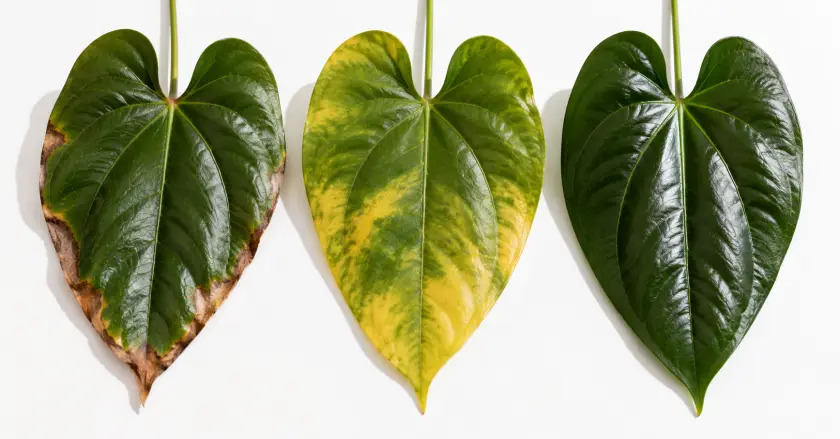
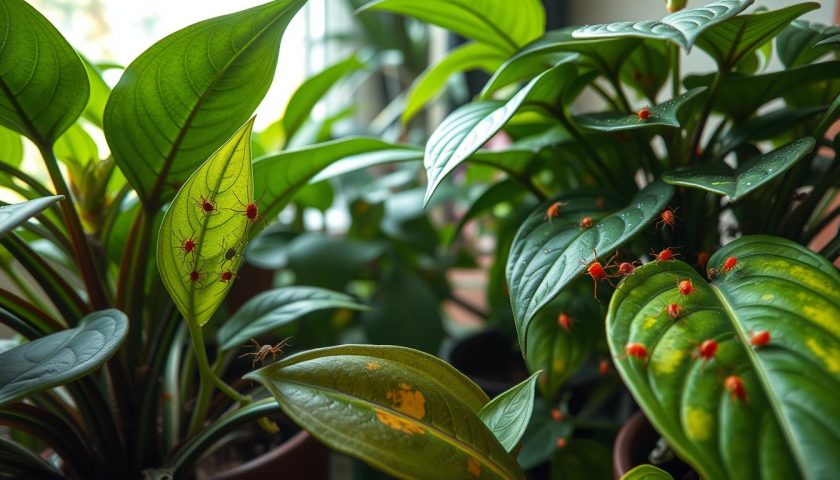
Heart-shaped leaves with varying health

Most anthurium care problems are caused by identifiable and correctable issues. Correct diagnosis is the key to effective treatment.

Anthurium Leaves Turning Brown

Brown tips or edges on anthurium leaves are the most common anthurium care problem and have several distinct causes:

  • Brown leaf tips: Low humidity — the most common cause. Raise humidity with a pebble tray or humidifier. Check water quality — fluoride in tap water causes identical brown tip damage
  • Brown patches on leaf surface: Direct sun scorch — move away from direct sunlight to bright indirect light position
  • Brown leaf edges with yellowing: Overwatering or root rot — reduce watering frequency and check roots for rot
  • Brown spadix (flower spike): Normal — the spadix naturally browns and dries after flowering. Remove the spent spathe and spadix at the base when fully brown

Our leaf curl, browning and droop guide covers full diagnosis of all browning types across houseplant species including anthurium.

Anthurium Leaves Turning Yellow

Yellow anthurium leaves indicate overwatering, insufficient light, or nutrient deficiency. Check soil moisture first — if consistently wet, reduce watering frequency immediately and ensure excellent drainage. If watering appears correct, assess light — insufficient light causes progressive yellowing before leaf drop. If both are adequate, begin a regular feeding programme as nutrient depletion causes yellowing in long-established plants in old potting mix. Our why plant leaves turn yellow guide covers the full diagnosis framework.

Anthurium Not Flowering

When anthurium stops producing spathes, the most common causes in order of likelihood:

  • Insufficient light: Move to a brighter indirect light position — this resolves most non-flowering issues within six to eight weeks
  • Wrong fertiliser: High-nitrogen feeding produces leaves not flowers — switch to balanced or high-phosphorus fertiliser
  • Temperature too low: Consistent temperatures below 18°C reduce or stop flowering — ensure stable warmth
  • Severely rootbound: Very potbound plants sometimes redirect energy — repot into a slightly larger container
  • Winter rest: Some anthuriums naturally reduce flowering in winter — this is normal and resolves with increasing spring light

For flowering plant care principles that apply to anthurium alongside other blooming houseplants, our 23 blooming indoor plants guide covers the flowering requirements of the most popular indoor bloomers.

Anthurium Root Rot

Root rot in anthurium presents as limp, soft stems at the base, yellowing and dropping leaves, and a plant that wilts despite moist soil. It is caused by consistently overwatered conditions or a potting mix that does not drain adequately. Remove from the pot, cut away all brown mushy roots with clean scissors, dust cut surfaces with cinnamon, allow to dry for 24 hours, then repot in fresh aroid mix. Significantly reduce watering frequency going forward. Our root rot guide covers the full treatment process and prevention.

Anthurium Pests

Anthurium is susceptible to spider mites (particularly in low humidity conditions), mealybugs (white cottony deposits at leaf joints), scale insects (brown bumps on stems), and thrips (silvery streaking on leaves and spathes). Regular leaf cleaning — covered in our how to clean plant leaves guide — is one of the most effective pest prevention strategies for anthurium. For treatment of established infestations, our plants that keep bugs away guide and pest management guide cover the most effective non-chemical approaches.

Anthurium Leaves Curling

Downward-curling anthurium leaves indicate underwatering, cold draughts, or excessively low humidity. Upward-curling leaves suggest direct sun exposure or heat stress. Check the most likely cause from context — water if the soil is dry, move if positioned near a draught or in direct sun. Our leaf curl guide covers all curling scenarios in detail.

Anthurium Toxicity: Is Anthurium Toxic to Cats and Dogs?

Anthurium plants are toxic to cats, dogs, and humans. All parts of the plant — leaves, stems, roots, and flowers — contain calcium oxalate crystals that cause oral irritation, intense burning sensation in the mouth and throat, drooling, vomiting, and difficulty swallowing if chewed or ingested. Skin contact with the sap can cause irritation in sensitive individuals.

Keep anthurium completely out of reach of pets and children at all times. If a pet ingests any part of an anthurium plant, contact your veterinarian immediately. For households with cats, our cat-friendly plants guide covers safe plant alternatives. For households with dogs, our dog-friendly plants guide provides safe non-toxic alternatives to anthurium for pet-friendly homes.

Anthurium Care: Seasonal Adjustments

Anthurium care requires minor seasonal adjustments to maintain year-round health and flowering performance.

Spring: Increase watering frequency as temperatures rise and growth accelerates. Begin feeding every four to six weeks. Check whether repotting is needed — spring is the optimal time. Watch for early pest activity. Our garden calendar 2026 covers seasonal houseplant care tasks month by month.

Summer: Monitor humidity closely — higher temperatures increase transpiration and anthurium’s humidity requirement. Ensure the plant does not receive direct intense sun through south or west-facing windows. Water more frequently as the potting mix dries faster in warmth.

Autumn: Begin reducing feeding frequency as growth slows. Continue regular watering but extend intervals slightly. Monitor for pest outbreaks — spider mites become more active as indoor conditions dry out with heating season beginning.

Winter: Central heating reduces humidity dramatically — ensure the pebble tray or humidifier is functioning and maintained. Reduce feeding to every six to eight weeks or stop entirely. Reduce watering frequency — cold temperatures slow evaporation and the potting mix takes longer to dry. Keep well away from cold windowpanes and draughts. Our humidity hacks guide covers winter humidity management for tropical plants like anthurium.

Anthurium Display and Styling

Anthurium suits a wide range of indoor display positions — its glossy foliage and dramatic spathe flowers make it one of the most visually impactful houseplants available for any room.

Flowering anthurium (andraeanum varieties) works beautifully on bright windowsills, on plant shelves near east or west-facing windows, as a desk plant in home offices with adequate light, and as a statement plant on a side table in a well-lit living room. Our how to style indoor plants by room guide covers plant display strategies for every room type including positions that suit anthurium’s light requirements. For home office display specifically, our improve home office with plants guide covers the best statement plants for workplace environments.

For bedroom display, anthurium’s dramatic flower colour and glossy foliage suit contemporary bedroom styling. Our bedroom plants guide covers the best plants for bedroom environments including anthurium. For living room and hallway display using anthurium as a statement plant alongside other indoor plants, our rare houseplants guide covers collector anthurium varieties alongside other statement plants.

Foliage anthurium varieties — particularly clarinervium, crystallinum, and veitchii — suit display as specimens in their own right, where their extraordinary leaf forms are given space to be fully appreciated. Our colourful foliage plants guide covers foliage anthurium alongside other dramatic-leaved tropical plants for impressive indoor displays.

Article Summary

Care Factor Anthurium Requirements
Light Bright indirect — east or west-facing window; never direct sun
Watering Every 7–10 days when top 2–3cm is dry; water thoroughly then drain
Humidity Above 60% — pebble tray or humidifier; do not mist leaves
Temperature 18–27°C — no cold draughts, minimum 15°C
Soil Chunky aroid mix — potting compost + perlite + orchid bark
Feeding Balanced or high-phosphorus fertiliser every 4–6 weeks spring–autumn
Repotting Every 18–24 months in spring — one pot size up only
Propagation Division at repotting — each section needs 2–3 leaves and roots
Common problems Brown tips (humidity/water quality), yellow leaves (overwatering/light), not flowering (light/feeding)
Toxicity Toxic to cats, dogs, and humans — keep completely out of reach

Related Guides

Final Thoughts

Anthurium care rewards understanding over effort. Once you know what this remarkable plant actually needs — the chunky draining soil, the bright indirect light, the consistent humidity, the patient approach to watering — it becomes one of the most rewarding houseplants you can grow. The combination of near-continuous flowering in spectacular red, pink, and white, and the extraordinary range of foliage forms available in collector varieties, makes anthurium uniquely versatile across different plant keeping styles and interior aesthetics.

Whether you start with a classic red anthurium andraeanum from a supermarket shelf or build a collection of velvet-leaved foliage anthuriums over time, the core care principles remain the same. Bright indirect light. Chunky draining soil. Consistent but not excessive moisture. High humidity. Regular feeding during the growing season. These five fundamentals cover the vast majority of anthurium care and prevent the vast majority of problems before they develop.

According to the Royal Horticultural Society, anthurium is among the most popular tropical flowering houseplants in the UK — consistently ranked alongside orchids and peace lilies as one of the most widely grown and most sought-after indoor plants due to its extraordinary flower longevity and dramatic visual impact.

Grow it well. Give it humidity. Keep it out of direct sun. And enjoy one of the most genuinely spectacular flowering plants available for indoor growing.

Frequently Asked Questions

How do you care for anthurium plants indoors?

Anthurium care indoors requires bright indirect light near an east or west-facing window, watering every 7–10 days when the top 2–3cm of soil is dry, humidity above 60% from a pebble tray or humidifier, temperatures of 18–27°C, chunky aroid potting mix with excellent drainage, and feeding every 4–6 weeks with balanced fertiliser during the growing season. Avoid direct sun, cold draughts, and standing water after watering.

Why are my anthurium leaves turning brown?

Brown anthurium leaf tips indicate low humidity or fluoride in tap water — raise humidity with a pebble tray and switch to filtered or rainwater. Brown patches on leaves indicate direct sun scorch — move to bright indirect light. Brown edges with yellowing indicate overwatering — reduce watering frequency and check drainage. Our leaf curl, browning and droop guide covers all browning scenarios in full.

How often should I water anthurium?

Water anthurium every 7–10 days when the top 2–3cm of soil feels dry — always water thoroughly until water drains from the drainage holes, then allow partial drying before the next watering. Reduce to every 10–14 days in winter. Never allow anthurium to sit in standing water. Our signs you are overwatering guide helps identify watering issues before they cause root rot.

Why is my anthurium not flowering?

Anthurium stops flowering most commonly due to insufficient light, incorrect high-nitrogen feeding, temperatures below 18°C, or being severely rootbound. Move to a brighter indirect light position, switch to balanced or high-phosphorus fertiliser, ensure temperatures stay above 18°C, and check whether repotting is needed. Anthurium flowers every 3–4 months in good conditions. Our 23 blooming indoor plants guide covers flowering requirements in detail.

Are anthuriums toxic to cats and dogs?

Yes — all parts of anthurium are toxic to cats, dogs, and humans. They contain calcium oxalate crystals causing oral irritation, drooling, vomiting, and difficulty swallowing if ingested. Keep anthurium completely out of reach of pets and children. Contact your veterinarian immediately if a pet ingests any part of an anthurium. For pet-safe plant alternatives, our cat-friendly plants guide and dog-friendly plants guide cover safe non-toxic options for pet households.

Related posts