Key Takeaways
- First-time plant parents should start with forgiving plants that tolerate normal indoor light, missed watering, and beginner mistakes.
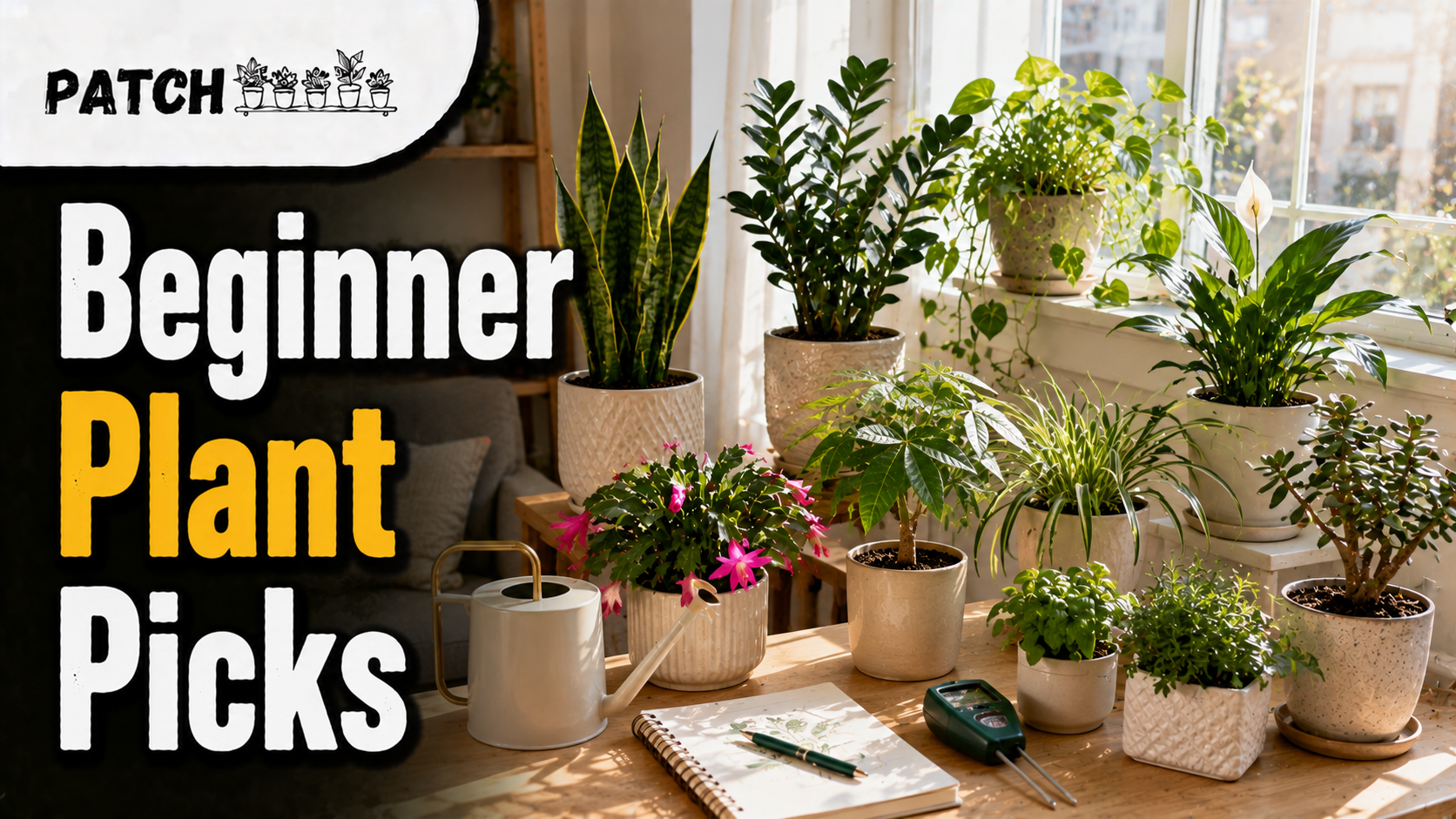
- The best indoor plants for beginners include snake plant, ZZ plant, pothos, peace lily, spider plant, philodendron, jade plant, and Christmas cactus.
- The easiest indoor plants are not always the trendiest plants. They are the ones that fit your light, space, watering habits, and lifestyle.
- Easiest houseplants to grow usually have simple watering needs, clear warning signs, and strong tolerance for average home conditions.
- Easy beginner plants work well in apartments, small pots, shelves, desks, containers, and bright windowsills.
Introduction
Becoming a plant parent sounds simple until you stand in front of dozens of houseplants and wonder which one you will accidentally kill first. That is why first-time plant parents need a realistic starter list, not just a list of trendy plants that look good in photos.
The best indoor plants for beginners are forgiving. They do not panic if you miss one watering. They do not need rare soil, daily misting, or perfect humidity. They can handle normal homes, apartments, offices, shelves, windowsills, and small pots.
This guide covers the easiest indoor plants, easiest houseplants to grow, good beginner plants, good houseplants for apartments, easy flowers to grow indoors, plants for apartments, and simple care tips that make your first few months easier.
For extra help, read best indoor plants for beginners, 35 low-maintenance plants, and complete guide to indoor light.
What Makes a Plant Beginner-Friendly?
Not every plant is right for a beginner. Some plants are beautiful but dramatic. Some need high humidity. Some hate tap water. Some need a perfect window. For first-time plant parents, that can become stressful fast.
Good beginner plants usually have these qualities:
- Simple watering: They do not need daily care.
- Light flexibility: They can handle average indoor light.
- Clear signs: They show when something is wrong.
- Slow to moderate growth: They do not outgrow the room too quickly.
- Easy recovery: They can bounce back from small mistakes.
- Common availability: They are easy to find and usually not too expensive.
Do not choose a plant only because it is the cheapest plant in the shop. A cheap plant is only a good deal if it is healthy, suitable for your room, and easy enough for your routine.
21 Best Indoor Plants for First-Time Plant Parents
1. Snake Plant
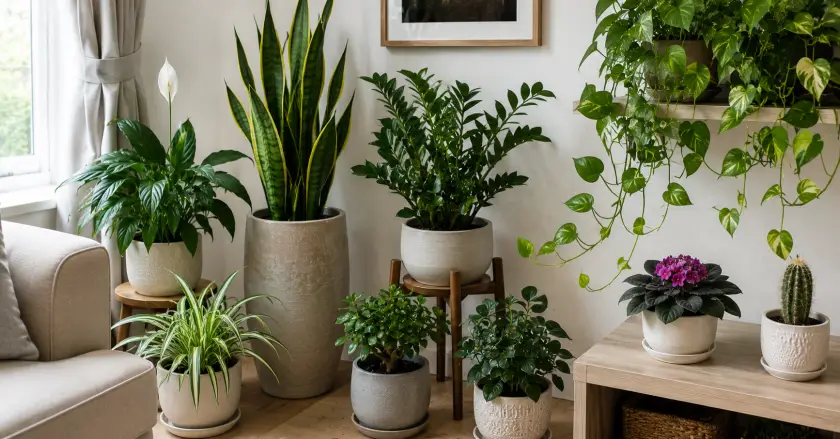
Snake plant is one of the safest choices for first-time plant parents. It grows upright, takes little space, tolerates lower light, and prefers drying between waterings.
This makes it one of the easiest indoor plants for bedrooms, offices, apartments, and busy homes. It also works well in small pots, tall planters, and narrow corners.
For full care, read the snake plant care guide.
2. ZZ Plant
ZZ plant is another excellent starter plant. Its glossy leaves look polished, but the plant itself is not demanding. It tolerates low light better than many houseplants and does not need constant watering.
If you want easy house plants for a living room, bedroom, hallway, or apartment, ZZ plant is a strong pick. It also works as one of the best plants for beginner gardeners moving from outdoor gardening into houseplants.
Read the ZZ plant care guide.
3. Pothos
Pothos is one of the easiest houseplants to grow. It can trail from shelves, sit on a desk, climb a support, or grow in a hanging planter.
It is also one of the best indoor houseplants for beginners because you can prune it easily, propagate cuttings, and place it in many parts of the home.
For care and styling, read the pothos care guide and trailing plants for shelves.
4. Peace Lily
Peace lily is useful for beginners because it communicates clearly. When it needs water, the leaves often droop. After watering, it usually perks back up.
It is one of the easiest flowering plants to grow indoors if you want glossy leaves and white blooms without choosing something too complicated. Keep it away from pets, and avoid letting the soil stay soggy.
Read the peace lily care guide.
5. Spider Plant
Spider plant is cheerful, forgiving, and ideal for new plant owners. It grows arching leaves and may produce baby plants that can be potted separately.
It is one of the best indoor plants for beginners because it gives visible progress. New leaves, baby plants, and strong roots make it rewarding without being difficult.
For care, read the spider plant care guide.
6. Philodendron
Philodendron is a beginner-friendly houseplant with soft green leaves and flexible growth. Some types trail, while others climb or stay bushier.
If you are searching for easy beginner plants that work in apartments, a philodendron is a good choice. It fits shelves, plant stands, desks, and hanging pots.
Read the philodendron care guide.
7. Jade Plant
Jade plant is one of the best plants to grow in pots if you have a bright window. It grows slowly, stores water in thick leaves, and suits small containers.
It is not a plant for dark corners, but it is one of the best easy pot plants to grow for sunny apartments, desks, and windowsills. Let the soil dry before watering.
Read the jade plant care guide.
8. Christmas Cactus
Christmas cactus is a good beginner plant if you want seasonal flowers. Unlike desert cacti, it prefers a little more moisture and bright indirect light.
It is one of the easy flowers to grow indoors because it can bloom beautifully with the right seasonal rhythm. It also stays compact, which makes it suitable for apartments and shelves.
Read the Christmas cactus care guide.
9. Money Tree
Money tree is a popular plant for apartments because it has a tidy tree-like shape without needing a huge footprint. Its braided trunk also adds a decorative look.
For first-time plant parents, a small money tree can be easier than many larger indoor trees. Give it bright indirect light and avoid overwatering.
Read the money tree care guide.
10. Rubber Plant
Rubber plant is a good choice if you want something bold but still manageable. Its glossy leaves make a room feel styled without needing many plants.
It works well for good plants for an apartment, especially if you have bright indirect light. Start with a small rubber plant rather than a huge one if you are new to indoor plant care.
For care, read the rubber plant care guide.
11. Peperomia
Peperomia is compact, neat, and perfect for small rooms. It comes in many leaf shapes and usually stays small enough for desks, shelves, and bedside tables.
This is one of the best plants for small pots because it does not need a huge container. It is also a good choice for plants for apartment styling where every inch matters.
12. African Violet
African violet is one of the easiest flowering plants to grow indoors if you have bright indirect light and a little patience. It stays small and produces pretty flowers in purple, pink, white, or blue tones.
If you want easy indoor flowers to grow from seed, African violet is possible but not the easiest route for beginners. Buying a healthy starter plant is usually simpler.
Read the African violet care guide.
13. Aloe Vera
Aloe vera is a useful beginner plant for bright windows. It stores water in its leaves and does not need frequent watering.
It is one of the easiest plants to grow indoors if your apartment gets enough light. In dark rooms, it may stretch or weaken, so place it close to a sunny window.
14. Haworthia
Haworthia is a small succulent that works well in tiny pots, desks, shelves, and windowsills. It is slower-growing and usually easier to manage than many larger succulents.
It is one of the best plants to grow in pots for beginners who want something compact and sculptural. Give it bright light and do not water too often.
For succulent basics, read the succulent care guide.
15. Kalanchoe
Kalanchoe is a compact flowering plant with bright blooms. It is a good option if you want easy flowers to grow indoors without choosing a difficult plant.
It also works well in small containers, making it one of the easiest flowers to grow in pots for bright indoor spaces. Let the soil dry between waterings.
16. Mini Herbs
Growing herbs indoors for beginners can be rewarding because herbs are both decorative and useful. Basil, chives, parsley, mint, thyme, and coriander can work indoors if they get enough light.
A small herb pot near the kitchen is one of the most useful easy plants to grow in containers. Herbs need more light than many foliage houseplants, so use a sunny windowsill or grow light.
17. Cast Iron Plant
Cast iron plant is one of the toughest indoor plants for beginners. It grows slowly and tolerates lower light better than many houseplants.
It is a good option for houseplants for apartments where light is not perfect. It is not flashy, but it is dependable.
18. Dracaena
Dracaena gives height without needing a huge pot. Many varieties grow upright, which makes them good plants for apartments and small living rooms.
It is a good beginner plant if you want a plant that looks more like a small indoor tree. Avoid overwatering, and keep it in bright indirect light where possible.
Read the dracaena care guide.
19. Hoya
Hoya is a stylish trailing or climbing plant with waxy leaves. It grows more slowly than pothos, which can be helpful in small spaces.
It is one of the good beginner plants for people who want something interesting but not too dramatic. Give it bright indirect light and avoid soggy soil.
Read the hoya care guide.
20. Mini Cactus
A mini cactus is one of the easiest plants to grow indoors if you have a sunny windowsill and a light hand with watering.
It is also one of the cheapest plant options in many shops, but check that the cactus is healthy, firm, and not sitting in wet soil. Bright light is essential.
For care, read the cactus care guide.
21. Paperwhite Bulbs
If you are curious about the best grow bulbs for beginners, paperwhite bulbs are a good indoor option. They are often grown indoors in winter and can flower without complicated care.
Bulbs are useful for first-time plant parents because they show clear progress. You plant them, watch roots form, see shoots rise, and then enjoy flowers.
Best Indoor Plants for Beginners by Room
Living Room
Good living room plants include snake plant, rubber plant, money tree, pothos, ZZ plant, and peace lily. These plants add shape without needing constant attention.
Bedroom
Good bedroom plants include snake plant, pothos, peace lily, ZZ plant, and spider plant. Keep plants away from radiators, cold drafts, and cramped corners.
Kitchen
Good kitchen plants include herbs, pothos, spider plant, peperomia, and small succulents if there is bright light. A kitchen windowsill is ideal for growing herbs indoors for beginners.
Bathroom
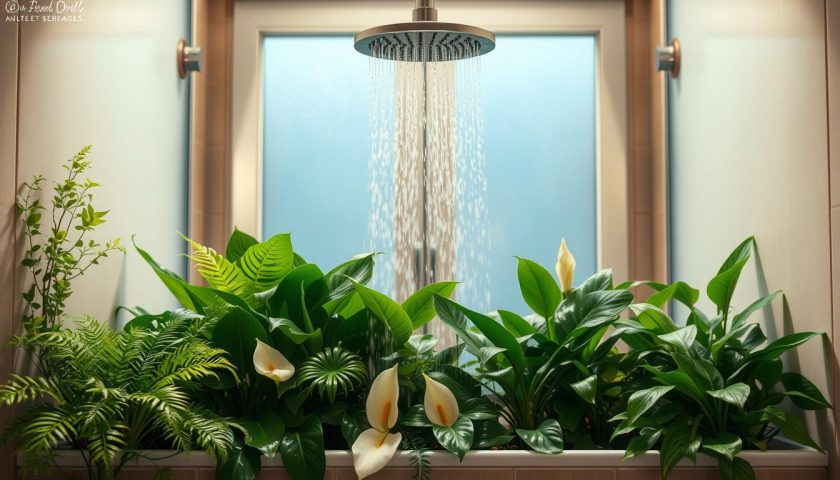
Good bathroom plants include pothos, peace lily, ferns, spider plant, and some orchids if the light is strong enough. For more ideas, read best bathroom plants.
Home Office
Good office plants include ZZ plant, snake plant, pothos, peperomia, jade plant, and small philodendron. For more options, read best office plants.
Good Houseplants for Apartments
Good houseplants for apartments should be compact, tolerant, and easy to move. Apartment plants often deal with limited light, small rooms, dry air, and awkward windows.
Good plants for apartments include snake plant, ZZ plant, pothos, peace lily, peperomia, spider plant, philodendron, jade plant, rubber plant, and money tree.
If you live in a small flat, read best indoor plants for tiny apartments and indoor plants as natural room dividers.
Best Plants to Grow in Pots
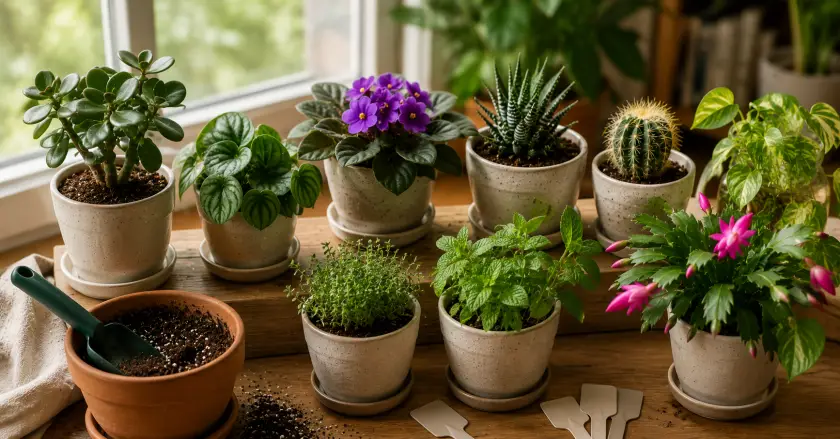
The best plants to grow in pots are plants that handle container life well. Indoors, that includes snake plant, ZZ plant, pothos, jade plant, peperomia, African violet, peace lily, spider plant, Christmas cactus, and herbs.
If you are wondering what are good plants to grow in pots, start with your light level. Bright windows suit herbs, jade, cactus, aloe, and haworthia. Lower-light rooms suit snake plant, ZZ plant, pothos, and peace lily.
Good drainage matters. Easy pot plants to grow can still fail in pots without drainage holes.
Easy Plants to Grow in Containers
Easy plants to grow in containers are useful because they fit shelves, desks, windowsills, balconies, and rental spaces. Containers also let you move plants as light changes through the year.
For indoor containers, try pothos, snake plant, spider plant, ZZ plant, jade plant, peperomia, African violet, and herbs. For outdoor containers, beginners can try pansies, herbs, marigolds, nasturtiums, and hardy patio plants.
For outdoor help, read container gardening on patios and how to keep outdoor plants alive.
Easiest Flowers to Grow Indoors
The easiest flowers to grow indoors are usually compact flowering houseplants or bulbs. Good options include peace lily, African violet, Christmas cactus, kalanchoe, anthurium, and paperwhite bulbs.
The easiest flowering plants to grow indoors still need enough light. Most flowering plants need brighter conditions than simple foliage plants.
If you want easy flowers to grow indoors, start with one flowering plant and learn its rhythm before buying several at once.
Easy Indoor Flowers to Grow From Seed
Easy indoor flowers to grow from seed can be fun, but seeds need patience, light, warmth, and steady moisture. Beginners often do better with starter plants first.
If you want to try seeds indoors, start with simple annuals for pots, herbs that flower later, or edible flowers near a grow light. For true houseplants, buying small starter plants is usually easier than growing from seed.
For edible and flowering ideas, read edible flowers and blooming indoor plants.
Best Garden Plants for Beginners
Even though this guide focuses on indoor plants, many first-time plant parents also want a few outdoor options. The best garden plants for beginners are hardy, easy to water, and suited to your local weather.
Good beginner outdoor plants include herbs, pansies, marigolds, lavender, nasturtiums, hardy geraniums, sedum, and low-maintenance shrubs. If you are growing in pots, choose easy plants to grow in containers first.
For outdoor options, read best low-maintenance outdoor plants, hardy outdoor plants, and garden calendar.
Best Plants for Beginner Gardeners
The best plants for beginner gardeners are plants that teach clear lessons. A snake plant teaches restraint with watering. A peace lily teaches observation. Pothos teaches pruning and propagation. Herbs teach light and regular harvesting.
Do not start with rare plants. Start with common, forgiving plants, then expand once you understand your home’s light and watering rhythm.
How to Start Plants Indoors
How to start plants indoors depends on whether you are starting houseplants, seeds, herbs, or bulbs.
- Choose one easy plant: Start with snake plant, pothos, ZZ plant, or spider plant.
- Check your light: Bright, medium, and low light all suit different plants.
- Use a pot with drainage: This prevents soggy roots.
- Use suitable soil: Most starter houseplants do well in quality indoor potting mix.
- Water only when needed: Check soil before watering.
- Watch the plant: Leaves, stems, and soil tell you what is happening.
For basic care, read complete watering guide, best soil mix for every plant, and how to repot a plant.
When to Start Plants Indoors
When to start plants indoors depends on what you are growing. Houseplants can be started any time, but spring and early summer are easiest because natural light is stronger.
Herbs can be started indoors year-round if you have enough light. Seeds need timing based on the plant type. Bulbs like paperwhites are often started indoors during cooler months for seasonal flowers.
If your home is dark in winter, wait for brighter months or use a grow light. This helps prevent weak, stretched growth.
Cheapest Plant Choices for Beginners
The cheapest plant is not always the best beginner plant. A discounted plant with root rot, pests, or weak growth can cost more in stress than it saves in money.
Better budget choices include small pothos, spider plant babies, mini snake plants, jade cuttings, small herbs, baby ZZ plants, and plant swaps with friends.
Look for firm stems, healthy roots, clean leaves, and no pests before buying. A small healthy plant is better than a large struggling one.
Common Mistakes First-Time Plant Parents Make
- Overwatering: Most beginners water too often. Check soil first.
- Choosing the wrong light: A sunny plant will struggle in a dark room.
- Using pots without drainage: This increases root rot risk.
- Moving plants constantly: Give plants time to adjust.
- Buying too many plants at once: Start with two or three.
- Ignoring pests: Check new plants before placing them near others.
- Repotting immediately without reason: Many plants need time to settle.
If something goes wrong, use how to revive a dying plant, signs you are overwatering, root rot guide, and leaf curl, browning, and droop.
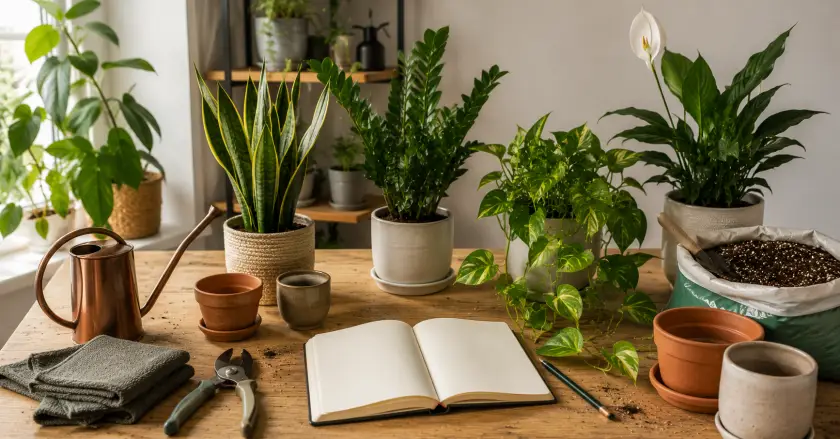
Beginner Plant Care Checklist
| Care Task | What to Do | Why It Matters |
|---|---|---|
| Light check | Match plant to window and room brightness | Prevents weak growth and leaf stress |
| Watering | Check soil before watering | Prevents overwatering and underwatering |
| Drainage | Use pots with drainage holes | Protects roots from sitting in water |
| Leaf cleaning | Wipe dusty leaves gently | Helps plants use available light |
| Rotation | Turn pots every couple of weeks | Encourages even growth |
| Pest check | Inspect leaf undersides and stems | Catches problems early |
| Repotting | Repot only when roots need space | Avoids unnecessary stress |
Expert Tips from Sawera Shahid
Start with three plants at most. Choose one upright plant, one trailing plant, and one small tabletop plant. For example, a snake plant, pothos, and peperomia will teach you more than ten random plants ever could.
Do not water because the calendar says so. Water because the soil and plant show you they need it. This one habit solves many beginner problems.
Finally, choose plants for your actual home, not your dream home. If you have low light, choose low light indoor plants. If you have a sunny window, try herbs, jade, aloe, or cactus. If you travel often, choose forgiving plants.
Future Trends
In 2026, beginner plant care is becoming simpler and more practical. New plant parents want low-maintenance houseplants, compact apartment plants, grow lights for dark rooms, self-watering pots, and clear care guides.
Expect more interest in easy beginner plants, indoor houseplants for beginners, good houseplants for apartments, easy indoor flowers, and small edible herbs that grow indoors.
The biggest trend is not rare plants. It is confidence. First-time plant parents want plants that help them build good habits without feeling overwhelmed.
Frequently Asked Questions
What are the best indoor plants for first-time plant parents?
The best plants for first-time plant parents include snake plant, ZZ plant, pothos, peace lily, spider plant, philodendron, jade plant, Christmas cactus, money tree, and peperomia.
What are the best indoor plants for beginners?
The best indoor plants for beginners are forgiving plants that tolerate normal indoor conditions. Snake plant, pothos, ZZ plant, spider plant, and peace lily are strong choices.
What are the easiest indoor plants?
The easiest indoor plants include snake plant, ZZ plant, pothos, jade plant, spider plant, cast iron plant, philodendron, and rubber plant.
What are the easiest houseplants to grow?
The easiest houseplants to grow are usually low-maintenance plants with simple watering needs, such as snake plant, ZZ plant, pothos, spider plant, jade plant, and philodendron.
What are good beginner plants for apartments?
Good beginner plants for apartments include pothos, snake plant, ZZ plant, peace lily, peperomia, spider plant, money tree, and small herbs.
What are good plants for an apartment?
Good plants for an apartment include compact, low-maintenance plants such as ZZ plant, pothos, snake plant, peperomia, spider plant, philodendron, jade plant, and peace lily.
What are good plants to grow in pots?
If you are asking what are good plants to grow in pots, try snake plant, ZZ plant, pothos, jade plant, peperomia, African violet, spider plant, Christmas cactus, and herbs.
When should I start plants indoors?
When to start plants indoors depends on the plant. Houseplants can start anytime, but spring and early summer are easiest. Herbs and seeds need strong light or a grow light.
Related Guides
- PATCH Plants homepage
- PATCH Plants blog
- Indoor Plants hub
- Plant Care hub
- Outdoor Plants hub
- Best indoor plants for beginners
- 35 low-maintenance plants
- Best indoor plants for tiny apartments
- Indoor plants as natural room dividers
- Air-purifying indoor plants
- Blooming indoor plants
- How to style indoor plants by room
- Bedroom plants for style and calm
- Indoor jungle without overcrowding
- Trailing plants for shelves
- Low-light hanging plants
- Indoor plants that smell amazing
- Colorful foliage indoor plants
- Rare houseplants worth the hunt
- Best office plants
- Office plants for fluorescent lighting
- Oversized indoor plants
- Statement plants for minimalist interiors
- Indoor gardening systems
- Complete guide to indoor light
- Complete watering guide
- Worst times to water plants
- Signs you are overwatering
- Root rot guide
- How to revive a dying plant
- Leaf curl, browning, and droop
- Why plant leaves turn yellow
- How to clean plant leaves
- Best soil mix for every plant
- Repotting mistakes to avoid
- How to repot a plant
- Fertilizing indoor vs outdoor plants
- Self-watering pots guide
- DIY indoor humidity tray
- Humidity hacks for plants
- Cat-friendly plant guide
- Dog-friendly plant guide
- Snake plant care guide
- Peace lily care guide
- Christmas cactus care guide
- Money tree care guide
- Best bathroom plants
- Succulent care guide
- Cactus care guide
- Boston fern care guide
- Bird of paradise care guide
- Pothos care guide
- Philodendron care guide
- Monstera care guide
- Hoya care guide
- Orchid care guide
- Rubber plant care guide
- Fiddle leaf fig care guide
- Spider plant care guide
- ZZ plant care guide
- Jade plant care guide
- Dracaena care guide
- Anthurium care guide
- African violet care guide
- String of pearls care
- Calathea care guide
- Garden calendar
- Pruning basics
- Best low-maintenance outdoor plants
- Container gardening on patios
- How to keep outdoor plants alive
Final Thoughts
First-time plant parents do not need rare plants, complicated tools, or a perfect home. They need easy beginner plants that match their light, space, and routine. Start with one or two forgiving choices, such as snake plant, pothos, ZZ plant, peace lily, or spider plant, then build confidence slowly.
University of Minnesota Extension explains that light is one of the most important factors for growing houseplants because plants need light for photosynthesis, so beginners should match each plant to the right indoor light before worrying about advanced care: University of Minnesota Extension indoor plant lighting guide.
The best plant parent habit is simple: observe before you act. Check the soil before watering. Look at the leaves before moving the pot. Learn one plant well before buying ten more. That is how beginners become confident plant people.
Final Recap
This guide covers first-time plant parents, best indoor plants for beginners, easiest indoor plants, easiest houseplants to grow, easy beginner plants, best garden plants for beginners, best grow bulbs, best plants for beginner gardeners, best plants to grow in pots, cheapest plant choices, easiest flowering plants to grow indoors, easiest flowers to grow in pots, easiest flowers to grow indoors, easy house plants, easy indoor flowers to grow from seed, easy plants to grow in containers, easy pot plants to grow, good beginner plants, good houseplants for apartments, good plants for an apartment, good plants for apartments, growing herbs indoors for beginners, houseplants for apartments, how to start plants indoors, indoor houseplants for beginners, plants for apartment, plants for apartments, what are good plants to grow in pots, and when to start plants indoors. Start small, choose forgiving plants, match the light, and water only when the soil actually needs it.