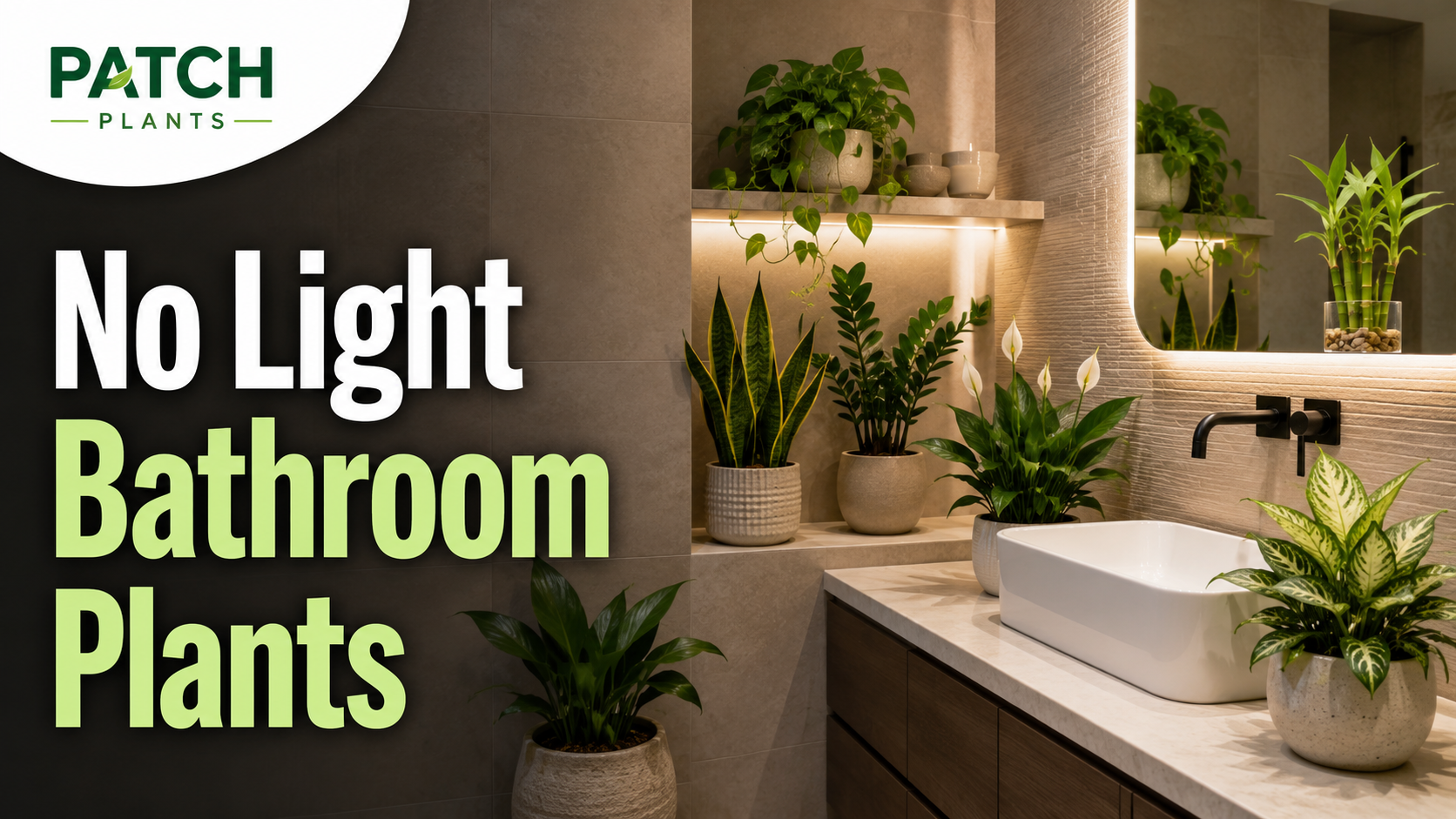
Plants for bathroom no light spaces can bring greenery into a windowless room, but there is one important rule: no living houseplant can grow indefinitely without light. Snake plants, ZZ plants, cast iron plants, and several other foliage plants tolerate shade, yet they still need enough natural or artificial light for photosynthesis.
If your bathroom has no window, a suitable LED grow light is usually the most reliable way to keep real plants healthy. Choose a shade-tolerant plant, provide appropriate daily illumination, use a container with drainage, and adjust watering because plants in lower light often use less water.
This guide compares 12 low-light-tolerant bathroom plants, explains which are best for beginners, and shows how to grow them in rooms without windows. It also covers grow lights, watering, plant rotation, humidity, mold prevention, pet safety, bathroom layouts, and troubleshooting.
Can Plants Survive in a Bathroom With No Light?
No plant can survive indefinitely in complete darkness, but a bathroom without natural light can support houseplants when adequate artificial lighting is provided.
Plants need light to make carbohydrates through photosynthesis. When light is insufficient for too long, stored energy is depleted. New growth may become weak, leaves can yellow, and the plant eventually declines.
There is an important difference between a room without sunlight and a room without usable light. A windowless bathroom with a properly positioned grow light may be a reasonable growing space. A bathroom where a dim ceiling bulb operates for a few minutes at a time usually is not.
The University of Minnesota Extension’s indoor plant lighting guide explains that artificial lighting can compensate for inadequate natural sunlight when plants receive suitable intensity, quality, and duration.
If you cannot provide sufficient lighting, realistic artificial plants are a practical decorative alternative.
Key Takeaways
- There are no true zero-light houseplants. Windowless bathroom plants need adequate artificial lighting for long-term growth.
- Snake plant, ZZ plant, cast iron plant, and green Chinese evergreen are among the most practical choices for relatively low-light conditions.
- Pothos, heartleaf philodendron, and suitable Dracaena varieties are useful when you want trailing or upright foliage.
- Peace lily, bird’s nest fern, and prayer plant usually appreciate more light and more consistent moisture than the toughest beginner plants.
- A suitable LED grow light on a timer is more dependable than relying on a bathroom ceiling bulb that is switched on only briefly.
- Temporary plant rotation can be used for decoration, but it should not replace a reliable lighting plan for permanent plant displays.
- Low light can slow growth and reduce water use, increasing the risk of overwatering.
- Bathroom ventilation remains essential. Houseplants do not prevent mold or replace an exhaust fan.
- Pet safety varies: cast iron plant and parlor palm are listed as non-toxic to cats and dogs by the ASPCA, while several other popular bathroom plants are harmful if chewed.
Low Light vs. No Natural Light vs. Total Darkness
These terms are often used interchangeably in online plant guides, but they describe different growing environments.
| Bathroom Condition | What It Means | Best Approach |
|---|---|---|
| Low natural light | Small window, shaded window, or some usable indirect daylight | Choose shade-tolerant plants and check actual light levels |
| No windows | No direct natural daylight source inside the room | Provide sufficient artificial plant lighting |
| Artificial light only | Plants depend on grow lights or sufficiently bright installed lighting | Check intensity, duration, distance, and coverage |
| Occasional ceiling light | Bathroom light operates only during short visits | Do not assume it supports long-term plant growth |
| Complete darkness | No meaningful natural or artificial illumination | Install plant lighting or use artificial decorative plants |
Does a Bathroom Vanity Light Count as a Grow Light?
Some ordinary LED or fluorescent lights can contribute usable light for photosynthesis. However, whether they provide enough light depends on their output, spectrum, distance from the leaves, and operating hours.
A bright fixture used consistently may contribute more than a dim decorative bulb. Still, a vanity bulb that operates only during brief morning and evening visits should not be assumed sufficient for permanent plant growth.
Use a light meter where practical, or select a grow light with suitable manufacturer guidance for foliage houseplants.
Do Plants Need Direct Sunlight?
No. Many shade-tolerant houseplants grow well without direct sunshine.
They still need sufficient indirect or artificial illumination. This is why a snake plant may tolerate a shaded window, while the same plant can gradually decline in a completely dark bathroom.
For a broader explanation, see our low light house plants guide.
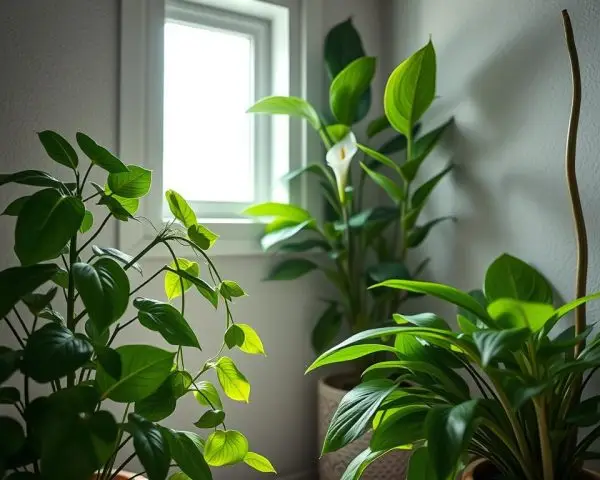
12 Best Plants for Bathroom No Light Spaces With Artificial Lighting
The following plants differ in their shade tolerance and maintenance requirements. The first group is generally more forgiving of low-light conditions. Others are better suited to brighter artificial lighting, especially if you want strong foliage growth.
Quick Comparison of 12 Bathroom Plants
| Plant | Low-Light Suitability | Watering Preference | Best Use |
|---|---|---|---|
| 1. Snake Plant | Excellent tolerance | Allow substantial drying | Narrow floor corners |
| 2. ZZ Plant | Excellent tolerance | Allow substantial drying | Beginner display |
| 3. Pothos | Good tolerance | Allow upper soil to dry | Hanging shelf |
| 4. Cast Iron Plant | Excellent tolerance | Allow partial drying | Shaded floor area |
| 5. Heartleaf Philodendron | Good tolerance | Allow upper soil to dry | Trailing planter |
| 6. Peace Lily | Good foliage tolerance; brighter for flowers | Maintain balanced moisture | Leafy display |
| 7. Chinese Evergreen | Good, especially green varieties | Allow some drying | Compact upright display |
| 8. Lucky Bamboo | Good tolerance | Clean water or suitable soil moisture | Small counter display |
| 9. Parlor Palm | Good tolerance | Moderate moisture | Soft tropical foliage |
| 10. Dracaena | Varies by species; some tolerate lower light | Allow partial drying | Upright floor plant |
| 11. Bird’s Nest Fern | Medium to bright filtered light preferred | Consistent moderate moisture | Humid shelf |
| 12. Prayer Plant | Medium indirect light preferred | Consistent moisture | Patterned foliage |
For a beginner with a windowless bathroom: Start with snake plant, ZZ plant, or cast iron plant under suitable artificial lighting. Add more demanding tropical plants only after you know that the light and watering arrangement works.
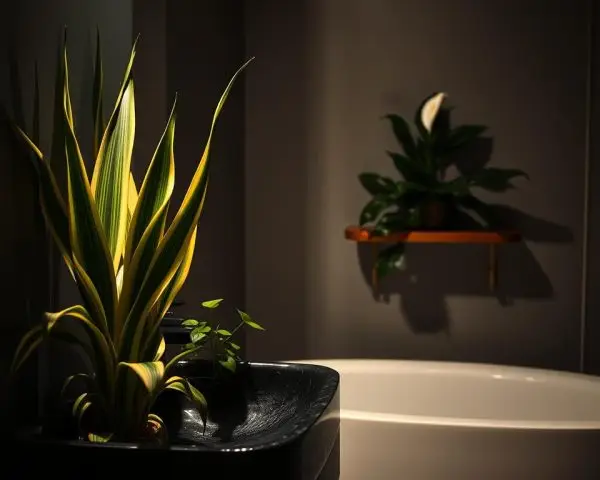
1. Snake Plant — Best Low-Maintenance Bathroom Plant
Botanical name: Dracaena trifasciata, formerly Sansevieria trifasciata.
Snake plant is one of the easiest plants for bathroom no light setups when artificial lighting is available. Its upright leaves make it useful in narrow spaces where a wide, spreading plant would be inconvenient.
Snake plants tolerate comparatively low light and extended periods between waterings. However, they do not thrive in permanently dark rooms, and excessively wet soil can damage their roots.
- Light: Low to bright indirect light, including sufficient artificial illumination.
- Water: Allow the potting medium to dry well between waterings.
- Best placement: Bathroom floor, stable shelf, or narrow corner.
- Warning: Toxic to cats and dogs if ingested.
In a windowless bathroom, watch for extremely slow growth and wet soil that persists for long periods. These can indicate that the plant is receiving too little light for its current care routine.
Read our snake plant care guide for more details.
2. ZZ Plant — Best for Beginners Who Water Infrequently
Botanical name: Zamioculcas zamiifolia.
ZZ plant has glossy leaves and thick underground rhizomes that store water. These adaptations make it tolerant of some drying and relatively low indoor light.
It is an attractive choice for a windowless bathroom with suitable artificial lighting, although strong new growth may be slow when available light is limited.
- Light: Low to bright indirect light.
- Water: Allow substantial drying between waterings.
- Best placement: Floor pot, side table, or sturdy vanity shelf.
- Warning: Plant material can cause irritation if chewed.
Do not water a ZZ plant automatically every week. Check the root-zone moisture, especially in a cool bathroom where the potting medium dries slowly.
Our ZZ plant care guide covers watering, yellow leaves, and root health.
3. Pothos — Best Trailing Plant for Bathroom Shelves
Botanical name: Epipremnum aureum.
Pothos produces attractive trailing vines with green or variegated heart-shaped leaves. Its growth habit makes it popular for shelves, hanging baskets, and elevated bathroom planters.
Green varieties generally tolerate lower light better than heavily white-variegated selections. Under very weak light, new growth may become sparse or produce smaller leaves.
- Light: Low to bright indirect light; suitable grow lighting in a windowless bathroom.
- Water: Water after the upper growing medium begins drying.
- Best placement: Hanging planter or shelf outside direct shower spray.
- Warning: Toxic if chewed by pets.
A pothos can be a beautiful choice, but do not assume it needs no light just because it tolerates shade.
For more growing advice, visit our pothos plant care guide.
4. Cast Iron Plant — Best for Lower-Light Corners
Botanical name: Aspidistra elatior.
Cast iron plant is known for its tolerance of shaded indoor conditions and relatively slow growth.
Its broad, dark green leaves can look attractive in a minimalist bathroom where brighter-light foliage plants would struggle.
Even so, a cast iron plant still requires some usable illumination. The best approach for a windowless bathroom is to provide appropriate plant lighting instead of relying on occasional ceiling light.
- Light: Low to medium indirect light.
- Water: Allow part of the potting medium to dry.
- Best placement: Stable floor pot or shaded shelf with artificial lighting.
- Pet safety: The ASPCA lists cast iron plant as non-toxic to cats and dogs.
This is one of the better choices if you want an understated plant that does not need frequent pruning.
5. Heartleaf Philodendron — Best for Soft Trailing Foliage
Botanical name: Philodendron hederaceum.
Heartleaf philodendron produces trailing or climbing stems with attractive green leaves.
It is useful for bathroom shelves, hanging planters, and vertical displays where you want foliage without using much floor space.
It tolerates lower light but generally produces healthier, fuller growth with adequate indirect or artificial illumination.
- Light: Low to medium indirect light, with brighter conditions supporting stronger growth.
- Water: Allow the upper growing medium to start drying.
- Best placement: Elevated shelf or hanging planter.
- Warning: Contains irritating calcium oxalate crystals.
Keep trailing vines away from shower fittings and areas where people may accidentally pull them down.
Read our Philodendron care guide for detailed advice.
6. Peace Lily — Best for Lush Leaves With Additional Lighting
Botanical name: Spathiphyllum species and cultivars.
Peace lily has glossy green leaves and distinctive white spathes. It tolerates lower light than many flowering houseplants, but it generally needs brighter indirect light to bloom consistently.
Warm, humid bathrooms may suit its foliage when the room also provides sufficient light and balanced soil moisture.
- Light: Low to bright indirect light; brighter light for flowering.
- Water: Maintain suitable moisture without leaving roots saturated.
- Best placement: Shelf or floor area near an appropriately positioned grow light.
- Warning: Contains irritating calcium oxalate crystals.
A drooping peace lily does not automatically need more water. Check whether the soil is dry or whether waterlogged roots may be contributing to the problem.
Our peace lily care guide explains flowering and common problems.
7. Chinese Evergreen — Best for Decorative Leaves
Botanical name: Aglaonema species and cultivars.
Chinese evergreen is valued for attractive green, silver, cream, pink, or red leaf patterns.
Green and silver-green forms generally tolerate lower light better than highly colorful cultivars. This makes them more suitable for darker bathroom displays with supplementary lighting.
- Light: Low to medium indirect light for many green varieties.
- Water: Allow the upper growing medium to begin drying.
- Best placement: Countertop or floor pot with adequate illumination.
- Warning: Toxic if chewed.
Protect Chinese evergreen from cold drafts and do not let the growing medium remain saturated for long periods.
For additional low-light varieties, read our best low light house plants guide.
8. Lucky Bamboo — Best for Minimalist Bathroom Styling
Botanical name: Dracaena sanderiana.
Lucky bamboo is commonly sold as upright stems arranged in water-filled containers or pots. Despite its name, it is not a true bamboo.
Its compact shape makes it attractive on bathroom shelves, but it still needs sufficient indirect or artificial lighting.
- Light: Low to medium indirect light.
- Water: Maintain clean water if grown without soil, or appropriate moisture if potted.
- Best placement: Stable counter or shelf with usable light.
- Warning: Lucky bamboo is a Dracaena and is toxic to cats and dogs.
Keep water containers clean and do not use excessive fertilizer. Cloudy water, yellowing stems, and unpleasant odors can signal maintenance problems.
For the plant’s cultural symbolism, see our Feng Shui indoor plants guide.
9. Parlor Palm — Best Pet-Safer Tropical Foliage
Botanical name: Chamaedorea elegans.
Parlor palm has soft, arching fronds and adapts to lower indirect light better than many other indoor palms.
It creates a tropical appearance in bathrooms with enough space for its foliage. It can also benefit from suitable humidity, provided its roots are not constantly wet.
- Light: Low to medium indirect light.
- Water: Maintain balanced moisture with proper drainage.
- Best placement: Floor pot or plant stand.
- Pet safety: The ASPCA lists parlor palm as non-toxic to cats and dogs.
Parlor palm is a practical option when you want a softer shape than snake plant. Keep it away from strong heating or cooling airflow.
10. Dracaena — Best Tall Plant for a Narrow Bathroom
Botanical name: Various Dracaena species and cultivars.
Dracaena includes several popular upright houseplants. Some darker green forms adapt to lower indoor illumination, while heavily variegated varieties often prefer more light.
These plants can create height in narrow spaces without spreading as widely as large tropical foliage plants.
- Light: Low to medium or bright indirect light, depending on species.
- Water: Allow suitable partial drying between waterings.
- Best placement: Narrow floor area away from traffic.
- Warning: Dracaena species are listed as toxic to cats and dogs by the ASPCA.
Dracaena may develop brown leaf tips because of several possible factors, including inconsistent moisture, environmental stress, and sensitivity to water chemistry in some varieties.
For species-specific information, see our Dracaena plant care guide.
11. Bird’s Nest Fern — Best for Humidity With Better Artificial Light
Botanical name: Asplenium nidus and closely related cultivated forms.
Bird’s nest fern has broad, glossy fronds arranged around a central rosette. It appreciates the humidity often found in bathrooms.
However, it generally needs more light than a cast iron plant or ZZ plant to produce healthy growth. A windowless bathroom should therefore have sufficiently bright artificial lighting.
- Light: Medium to bright indirect light.
- Water: Maintain appropriate moderate moisture.
- Best placement: Brightly illuminated shelf with suitable airflow.
- Pet safety: Verify the botanical species when buying a plant for a pet-accessible room.
Avoid repeatedly pouring water into the central crown, especially in poorly ventilated conditions. Water the potting medium and avoid persistent saturation.
For more humidity-loving choices, visit our 33 best bathroom plants guide.
12. Prayer Plant — Best for Patterned Leaves and Humid Rooms
Botanical name: Maranta leuconeura.
Prayer plant is known for its decorative leaf patterns and movements that change the position of the foliage between day and night.
It generally prefers medium indirect light, warmth, and relatively consistent moisture. That makes it less suitable for a very dark bathroom without carefully planned artificial lighting.
- Light: Medium indirect or suitably bright filtered light.
- Water: Maintain balanced, consistent moisture without saturation.
- Best placement: Warm bathroom shelf under suitable grow lighting.
- Pet safety: Common prayer plants are generally regarded as non-toxic; confirm the exact species.
Brown leaf edges can be caused by several factors, including moisture stress, dry air, water quality, or root problems.
Prayer plant is more demanding than snake plant or ZZ plant, so it is a better second-stage choice after you have established a reliable bathroom lighting routine.
Best Bathroom Plants by Your Setup
Choosing plants according to their location makes the selection process easier than treating every windowless bathroom as identical.
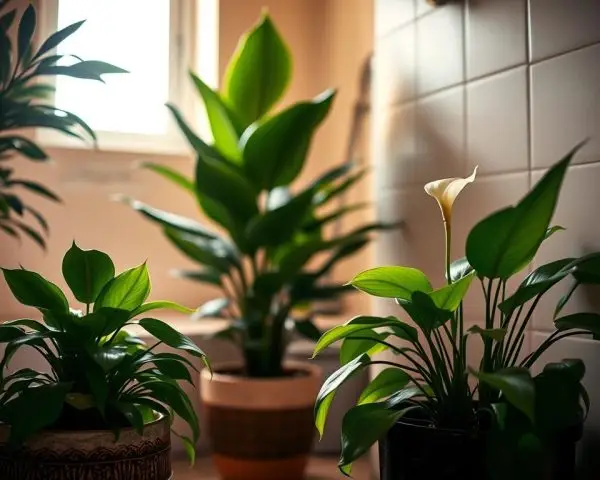
Best Plants for a Small Windowless Bathroom
Choose one compact snake plant, ZZ plant, or Chinese evergreen with an appropriately positioned grow light.
Keep the arrangement simple. One healthy plant is often more practical than several containers competing for limited light and counter space.
Best Plants for Bathroom Shelves
Pothos, heartleaf philodendron, and compact Chinese evergreen varieties can work well on shelves with adequate artificial light.
Choose secure containers that cannot easily fall or spill water onto bathroom fixtures.
Best Hanging Plants for Bathrooms Without Windows
Pothos and heartleaf philodendron are among the easiest trailing choices. They generally require less attention than moisture-sensitive ferns, but still need suitable light and drainage.
Avoid hanging heavy planters from ordinary shower curtain rods or unsupported fixtures.
Our low-light hanging plants guide provides more ideas.
Best Floor Plants for Dark Bathrooms
Snake plant, ZZ plant, cast iron plant, parlor palm, and suitable Dracaena varieties can create attractive floor displays when artificial lighting reaches their leaves.
Do not place plants where they block access to the sink, toilet, shower, or bathroom door.
Best Plants for a Humid Bathroom
Peace lily, parlor palm, bird’s nest fern, prayer plant, pothos, and heartleaf philodendron may appreciate humidity.
However, a humid room does not eliminate the need for correct watering, good airflow, and adequate illumination.
How to Set Up Grow Lights in a Windowless Bathroom
A suitable LED grow light is usually the most dependable solution for plants in a bathroom with no natural light.
The goal is not simply to install a bright-looking bulb. The plant needs enough usable light reaching its leaves for a sufficient period each day.
Step 1: Choose a Plant With Lower Light Requirements
Start with a snake plant, ZZ plant, cast iron plant, or green Chinese evergreen.
These species are more forgiving than high-light succulents and flowering plants, although they still require adequate artificial illumination.
Step 2: Select a Suitable LED Grow Light
Choose a fixture with manufacturer information about light intensity, coverage area, and recommended distance from the plant.
White or balanced-spectrum LED grow lights can be useful for decorative foliage displays.
Do not assume a light’s wattage alone determines how much plant-usable light reaches the foliage. Efficiency and distance matter.
Step 3: Position the Light Correctly
Follow the grow-light manufacturer’s placement guidance. A fixture placed too far away may deliver insufficient light even if it appears bright to your eyes.
The University of Minnesota Extension suggests approximately 12–24 inches between lighting and foliage houseplants as a general reference, although the correct distance varies considerably by fixture and species.
Adjust the setup when signs of weak growth, stretching, or light damage appear.
Step 4: Use a Consistent Daily Light Period
For foliage houseplants grown under artificial lighting, the University of Minnesota Extension recommends approximately 12–14 hours of light per day as a general starting point.
This is not a guarantee for every plant or every bulb. A weaker light may deliver insufficient energy despite operating for many hours, while an excessively intense light may need different positioning or duration.
Use a timer to maintain a consistent schedule and allow a regular dark period.
Step 5: Follow Bathroom Electrical Safety Requirements
Bathrooms are wet environments, so electrical safety is especially important.
- Choose fixtures specifically suitable for their intended moisture exposure and installation location.
- Keep ordinary indoor lamps, plug connections, and cords away from showers, bathtubs, sinks, and direct splashes.
- Do not install or modify a light fixture inside a wet area unless it is appropriately rated and installed for that location.
- Use electrical outlets and protection that meet applicable bathroom electrical codes, including GFCI protection where required.
- Consult a qualified electrician for hardwired installations or uncertain locations.
- Do not overload outlets or leave loose extension cords across wet bathroom floors.
Plant lighting should never compromise household electrical safety.
Step 6: Monitor Plant Growth and Soil Drying
After placing the plant under a new light, check the leaves and soil regularly.
Healthy new foliage suggests that the plant is adjusting reasonably well. Progressively smaller leaves, elongated stems, or repeated yellowing may indicate that conditions still need improvement.
For additional lighting guidance, read our complete indoor plant lighting guide.
Grow-Light Options for Different Bathroom Layouts
| Lighting Option | Best Use | Important Consideration |
|---|---|---|
| Moisture-suitable grow bulb in an appropriate fixture | Single plant near a vanity or shelf | Confirm compatibility, intensity, and fixture safety |
| Suitable under-shelf LED grow light | Small trailing or foliage plants | Check coverage and moisture exposure |
| Purpose-built plant light mounted outside wet zones | One or two compact floor plants | Keep cords and fittings safely away from water |
| Dedicated grow-light shelf outside the bathroom | Temporary decorative plant rotation | Provides a controlled brighter growing environment |
| Ordinary vanity lighting | Possible supplementary illumination | May be inadequate without sufficient brightness and operating hours |
Can You Rotate Plants Between a Bathroom and a Bright Room?
Rotating plants can be used as a temporary decorative strategy when you do not want permanent artificial lighting in the bathroom.
However, rotation is less reliable than providing consistent adequate light because different plants have different energy requirements and responses to low-light periods.
How a Temporary Rotation Arrangement Works
- Keep the plant primarily in a location where it receives enough light.
- Move it into the bathroom temporarily for decoration.
- Return it to a suitable growing location before prolonged low-light stress develops.
- Monitor new leaves, stem growth, soil moisture, and overall condition.
- Shorten the dark-display period if the plant shows signs of decline.
A fixed schedule such as one week in darkness followed by one week near a window cannot be guaranteed to maintain plant health.
Do not wait until a plant becomes severely pale or starts dropping many leaves before improving its lighting conditions.
When Artificial Plants Are the Better Choice
If the bathroom is permanently dark, frequently splashed, difficult to ventilate, or lacks a safe way to install suitable lighting, artificial greenery may be the most practical decorating solution.
Real plants are rewarding, but they should not be forced into unsuitable conditions simply to preserve a decorative theme.
How Often Should You Water Plants in a Dark Bathroom?
Watering requirements vary by plant species, container size, potting mix, temperature, and the amount of light available.
Plants growing in lower light often use water more slowly. As a result, potting mix may remain wet for longer than it would in a bright living room.
This makes overwatering an important risk in windowless bathrooms, especially for ZZ plants and snake plants.
Watering Guide by Plant Type
| Plant Group | General Watering Approach |
|---|---|
| Snake Plant and ZZ Plant | Allow substantial drying between waterings |
| Cast Iron Plant and Dracaena | Allow suitable partial drying |
| Pothos, Heartleaf Philodendron, and Chinese Evergreen | Water after upper soil starts drying |
| Peace Lily and Parlor Palm | Maintain balanced moisture without waterlogging |
| Bird’s Nest Fern and Prayer Plant | Provide more consistent moisture while retaining root aeration |
| Lucky Bamboo in Water | Refresh water and maintain a clean container |
Five Practical Watering Rules
- Check the soil before adding water.
- For larger pots, assess moisture below the surface as well.
- Use a container with effective drainage holes.
- Allow excess water to leave the pot completely.
- Do not maintain the same watering frequency when light and temperature conditions change.
For detailed advice, see our plant watering guide and overwatering troubleshooting guide.
Bathroom Humidity, Mold and Ventilation
Bathrooms can experience high humidity after showers, but the amount and duration vary considerably.
Some tropical plants may benefit from humid air. However, a humid atmosphere cannot replace light or compensate for unhealthy root conditions.
Do Bathroom Plants Prevent Mold?
No. Ordinary potted houseplants are not a reliable method of reducing bathroom humidity or preventing mold.
Some plants absorb atmospheric moisture, but plants also release water vapor through transpiration. Excessive moisture on bathroom surfaces still needs to be managed through ventilation and maintenance.
The US Environmental Protection Agency recommends using bathroom fans or ventilation to control moisture.
How to Reduce Moisture Problems
- Run the bathroom exhaust fan during and after showers as appropriate.
- Repair plumbing leaks and dripping fixtures.
- Remove water from surfaces that remain wet.
- Do not crowd too many plants into one damp corner.
- Keep saucers and decorative containers free of standing water.
- Check the potting medium for signs of prolonged saturation.
- Maintain appropriate airflow around foliage.
If visible mold is growing on walls, ceilings, or fixtures, address the building moisture problem directly rather than relying on plants.
Best Potting Mix and Containers for Windowless Bathroom Plants
Low-light plants still need oxygen around their roots. A dense growing medium that remains saturated for extended periods can damage the root system.
For Snake Plant and ZZ Plant
Use an appropriately well-drained indoor potting mix that allows the root zone to dry between waterings.
Extra mineral amendments such as perlite or pumice may be useful in a moisture-retentive mix, although the proportions should match the container and plant.
For Pothos and Philodendron
Use an airy potting medium that retains some moisture but drains effectively. Avoid leaving the pot submerged in water.
For Ferns and Prayer Plants
Use a mix that retains enough moisture for these more sensitive plants while allowing air to reach the roots.
A potting mix suitable for a snake plant is not automatically suitable for a bird’s nest fern.
Choose the Right Container
- Select a pot with drainage holes.
- Avoid a container dramatically larger than the current root system.
- Use a stable pot that cannot fall from a narrow shelf.
- Do not leave water collected in a decorative outer pot.
- Repot only when root crowding, soil deterioration, or other genuine problems justify it.
For more guidance, read our best soil mix guide and how to repot a plant guide.
If you are changing pot sizes, the Patch Plants Soil Calculator can help estimate potting-mix volume.
Which Plants Should You Avoid in a Windowless Bathroom?
Some plants are poorly suited to naturally dark bathrooms unless you can provide sufficiently strong artificial lighting.
- Desert cacti: Many species require strong light and well-drained conditions.
- Echeveria and other sun-loving succulents: Insufficient light can cause stretched, weak growth.
- Lavender: Prefers strong sunlight and good airflow.
- Most culinary herbs: Often need substantially more light than shade-tolerant foliage plants.
- Fiddle Leaf Fig: Generally prefers bright, stable indoor light.
- Bird of Paradise: Needs abundant light and considerable space.
- Many flowering houseplants: May maintain foliage in weaker light but produce few flowers.
If you want flowers in a bathroom without windows, choose species suited to grow-light cultivation and make sure the lighting system provides sufficient intensity for flowering.
For broader plant choices, browse our blooming indoor plants guide.
Are Low-Light Bathroom Plants Safe for Cats and Dogs?
Pet safety matters if cats or dogs have access to your bathroom. Shade tolerance does not determine whether a plant is safe to chew.
Commonly Grown Non-Toxic Choices
- Cast Iron Plant: Listed as non-toxic to cats and dogs by the ASPCA.
- Parlor Palm: Listed as non-toxic to cats and dogs by the ASPCA.
- Prayer Plant: Common Maranta-type prayer plants are generally considered non-toxic; confirm the botanical species.
Plants That Need Pet Precautions
- Snake Plant: Harmful if ingested.
- ZZ Plant: Can cause irritation if chewed.
- Pothos: Contains irritating calcium oxalate crystals.
- Heartleaf Philodendron: Contains irritating calcium oxalate crystals.
- Peace Lily: Contains irritating calcium oxalate crystals.
- Chinese Evergreen: Contains irritating calcium oxalate crystals.
- Lucky Bamboo: A Dracaena species that is toxic to cats and dogs.
- Dracaena: Listed as toxic to cats and dogs by the ASPCA.
Botanical names are important because common names such as bamboo, palm, or prayer plant may be used for different species.
You can check the ASPCA Cast Iron Plant profile, Parlor Palm profile, and Dracaena toxicity profile.
Even non-toxic plants can cause gastrointestinal upset if eaten. If a pet chews an unfamiliar plant or develops symptoms, contact a veterinarian promptly.
For additional home planning ideas, read our cat-friendly plant guide and dog-friendly plant guide.
Common Problems With Bathroom Plants Without Natural Light
| Problem | Possible Cause | What to Check First |
|---|---|---|
| Yellow leaves | Overwatering, insufficient light, root stress, or aging | Soil moisture and actual lighting |
| Long, stretched stems | Insufficient usable light | Grow-light intensity and distance |
| Progressively smaller leaves | Low light, poor roots, or other growing stress | New growth and available illumination |
| Brown leaf tips | Moisture stress, water quality, dry air, or fertilizer salts | Watering history and environment |
| Soft stems and declining foliage | Possible root or stem rot | Root-zone moisture and drainage |
| Fungal growth on potting mix | Persistently damp surface and organic material | Watering, airflow, and decaying debris |
| Small flies around pots | Possible fungus gnats | Wet organic growing medium |
| Fewer flowers | Insufficient light or other stress | Species requirements and lighting |
Why Are My Bathroom Plants Turning Yellow?
Yellow leaves may result from waterlogged soil, poor drainage, insufficient light, root damage, or natural leaf aging.
If several leaves yellow while the soil remains very wet, inspect drainage and roots before watering again.
Read our yellow leaves troubleshooting guide for further help.
Why Are the Stems Growing Long and Thin?
Weak, stretched stems are often a response to insufficient light.
Move the light closer if permitted by the manufacturer, improve its output or coverage, or move the plant to a better growing location.
Pruning can improve appearance, but it will not correct inadequate lighting.
Why Does the Soil Stay Wet for So Long?
Slow growth, low light, an oversized pot, a dense growing medium, or cool temperatures can reduce the speed at which soil dries.
Check drainage and roots, and review the light level before simply changing the watering schedule.
What Should I Do About Mold on the Soil?
Small amounts of surface fungal growth may occur where organic material remains damp. Remove decaying debris, check drainage, and improve airflow.
Do not assume all surface growth means the roots have rotted. Persistent decline, wet soil, or unhealthy roots may require more investigation.
Visible bathroom building mold should be addressed as a separate moisture-control problem.
How Can I Control Fungus Gnats?
Fungus gnats often breed in damp organic potting media. Reduce unnecessary watering, remove decaying plant debris, and use appropriately labeled control methods when needed.
Do not let moisture-loving plants become severely dry simply to eliminate gnats. Adjust the approach to the species.
Windowless Bathroom Plant Care Checklist
| Task | When to Check | What to Look For |
|---|---|---|
| Artificial lighting | At setup and after changes | Sufficient output, correct distance, consistent daily hours |
| Electrical safety | At installation and periodically | Suitable fixture, protected connections, no water exposure |
| Soil moisture | Before every watering | Dryness appropriate to the plant |
| Drainage | After watering | No standing water beneath the pot |
| Ventilation | During and after showers | Excess condensation and stagnant moisture |
| New growth | During active growth | Healthy leaves without repeated stretching |
| Leaf condition | Regularly | Yellowing, pests, brown tips, damaged tissue |
| Pet safety | At plant selection | Botanical identification and possible pet access |
Common Mistakes With Plants for Bathroom No Light Spaces
- Assuming low light means zero light: All living houseplants need enough light for photosynthesis.
- Depending on a briefly used vanity bulb: An ordinary light may be too dim or operate for too little time.
- Using a fixed weekly rotation as a guarantee: Temporary displays may not provide sufficient light for every species.
- Ignoring bathroom electrical safety: Fixtures and connections must be suitable for the location.
- Watering too frequently: Lower light can slow growth and soil drying.
- Using containers without drainage: Waterlogged roots can decline quickly.
- Choosing highly variegated plants for very low light: Many need brighter conditions to maintain healthy foliage.
- Trying to grow sun-loving succulents in darkness: Plants such as many cacti and Echeveria require stronger light.
- Assuming bathroom humidity prevents all leaf problems: Soil moisture, temperature, and root health still matter.
- Using plants as mold-control equipment: Proper ventilation and moisture management are essential.
- Ignoring pets: Pothos, snake plant, lucky bamboo, and several other popular choices may be harmful if chewed.
Frequently Asked Questions About Plants for Bathroom No Light
What are the best plants for bathroom no light conditions?
Snake plant, ZZ plant, cast iron plant, green Chinese evergreen, and pothos are practical choices because they tolerate relatively low illumination. However, no plant can grow indefinitely without usable light. A bathroom with no windows needs sufficiently strong artificial plant lighting for long-term growth.
Can bathroom plants survive without windows or sunlight?
Yes. Many indoor plants can grow without natural sunlight if suitable artificial lighting supplies enough energy for photosynthesis. Ordinary bathroom ceiling lights may or may not be adequate, depending on intensity, distance from the foliage, and daily operating time.
How long should grow lights stay on in a windowless bathroom?
For foliage houseplants, approximately 12–14 hours of suitable artificial light per day is a useful general starting point based on University of Minnesota Extension guidance. The exact requirements depend on the plant, grow-light intensity, distance, and coverage. Provide a regular dark period as well.
What is the easiest low-light bathroom plant for beginners?
Snake plant and ZZ plant are among the easiest choices. Both tolerate periods of drying and lower light better than many tropical houseplants. Cast iron plant is another reliable option, but all three still require adequate artificial illumination in a windowless bathroom.
Which windowless bathroom plants are safe for cats and dogs?
Cast iron plant and parlor palm are listed as non-toxic to cats and dogs by the ASPCA. Common prayer plants may also be suitable when the exact botanical species is confirmed. Keep snake plant, pothos, philodendron, Dracaena, and lucky bamboo away from pets that chew foliage.
Final Thoughts: Can You Grow Real Plants in a Windowless Bathroom?
Plants for bathroom no light spaces can be a realistic decorating choice when you address lighting first. Snake plant, ZZ plant, cast iron plant, pothos, and green Chinese evergreen are sensible starting options because they tolerate lower light better than many popular houseplants.
However, shade tolerance does not mean a plant can survive permanently in darkness. For a bathroom without windows, provide suitable artificial lighting, check soil moisture before watering, and maintain appropriate ventilation.
If the room cannot accommodate safe, adequate lighting, consider using artificial greenery instead of keeping a living plant in unsuitable conditions.
For broader recommendations, continue with our 33 best plants for your bathroom guide, low light house plants guide, and complete indoor lighting guide.

About the author
Sawera Shahid is a botanist with an MPhil in Botany and 5+ years of writing about plants. As founder and lead writer of Patch Plants, she writes practical, science-backed guides on indoor plants, outdoor gardens and plant problems, checked against RHS and university extension advice.