Last Updated: September 28, 2026
Quick Answer: Should you talk to your plants? You certainly can, but science does not show that plants understand human words or conversations. What researchers have found is more interesting: plants can respond to mechanical stimuli, including certain sound vibrations under controlled conditions. Talking to your plants may also have a practical benefit because it encourages you to look closely at leaves, soil, new growth, pests, and other signs of plant health.
Key Takeaways
- Should you talk to your plants? Yes, if you enjoy it, but do not treat conversation as a substitute for proper plant care.
- Plants do not understand human language in the way people do.
- Sound is a physical vibration, and controlled studies show that plants can respond to some sound and mechanical stimuli.
- The biological effect depends on factors such as frequency, intensity, duration, species, and experimental conditions.
- Current evidence does not prove that ordinary conversation reliably makes every houseplant grow faster.
- Plants use sophisticated chemical, electrical, hormonal, and mechanical signalling systems even though they do not have brains or animal-style nervous systems.
- Light, watering, soil, drainage, nutrition, temperature, humidity, and pest management remain much more important for plant health.
Should You Talk to Your Plants? What Science Actually Says
Should you talk to your plants if your goal is healthier growth? This simple question sits at the intersection of a popular gardening habit and a fascinating area of plant biology.
People have talked, sung, and played music to plants for generations. Some gardeners are convinced their plants respond, while others see the practice as little more than a relaxing ritual.
The scientific explanation is more nuanced.
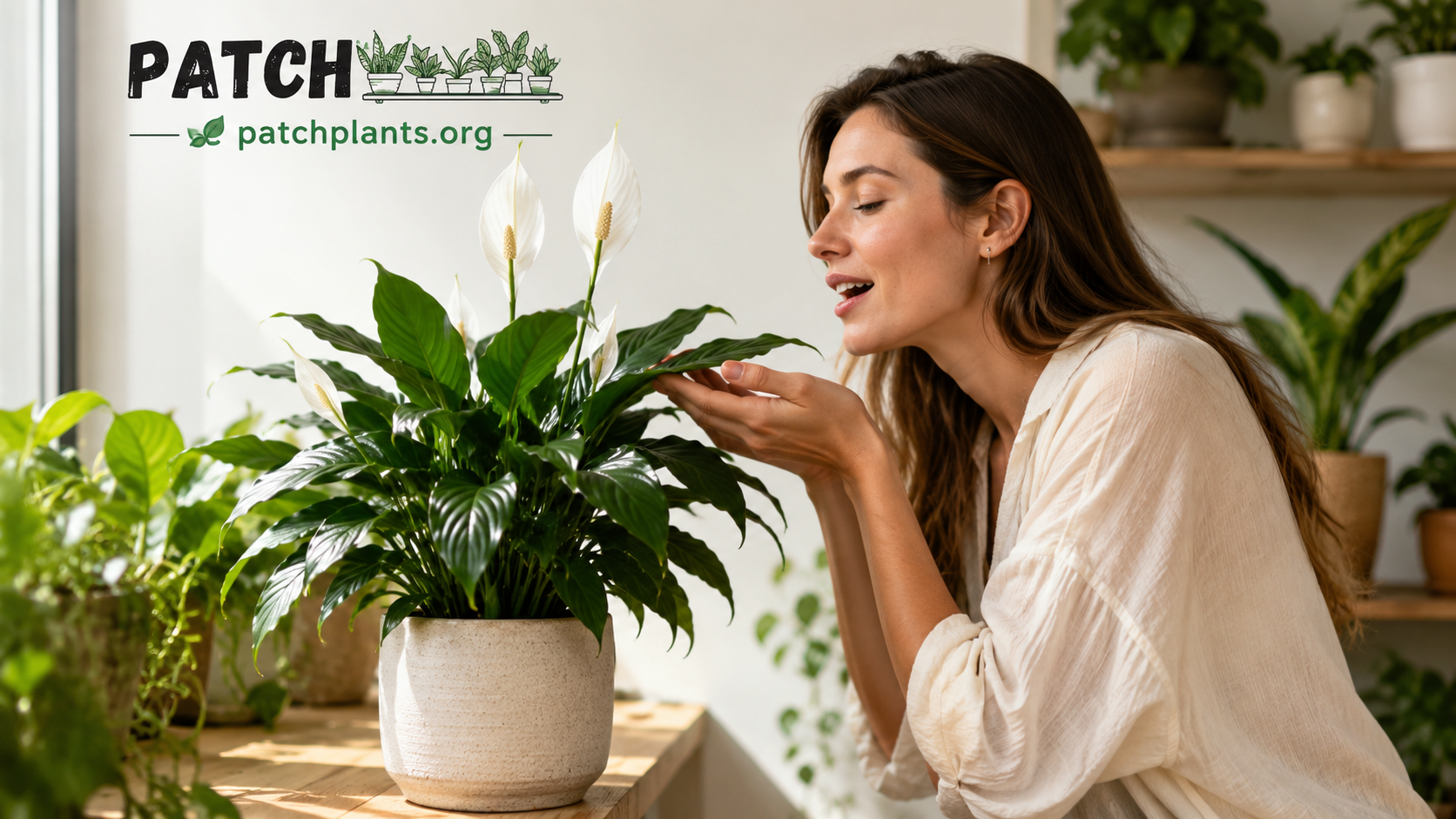
Plants do not have ears, brains, or the neural systems humans use to interpret speech. There is no established evidence that your pothos understands praise or that your peace lily knows what your words mean.
However, speech produces sound waves, and sound waves are physical vibrations.
Plants already respond to many physical and environmental stimuli, including gravity, light, touch, wind, water availability, temperature, and mechanical forces. Researchers are therefore investigating whether sound-related vibration can also influence plant physiology.
So when scientists investigate should you talk to your plants, the meaningful biological question is not whether plants understand language. It is whether plant tissues can detect and respond to the physical vibrations associated with sound.
1. Plants Cannot Understand Human Words
The first of our seven science facts is important because it separates plant biology from popular mythology.
There is no evidence that plants understand the semantic meaning of human speech.
A plant does not know that “you look beautiful today” is a compliment. Likewise, there is no established evidence that a plant interprets an angry sentence as an insult.
Plants lack the brain structures and auditory organs that animals use to hear and interpret language.
What reaches a plant when you speak is physical energy.
Your vocal cords vibrate. Those vibrations create pressure waves that travel through the surrounding air. When they reach leaves, stems, soil, pots, or other surfaces, they may produce very small mechanical effects.
That distinction is essential when answering should you talk to your plants. Scientists studying plant responses to sound are primarily studying vibration and mechanosensing, not language comprehension.
2. Sound Is a Physical Stimulus
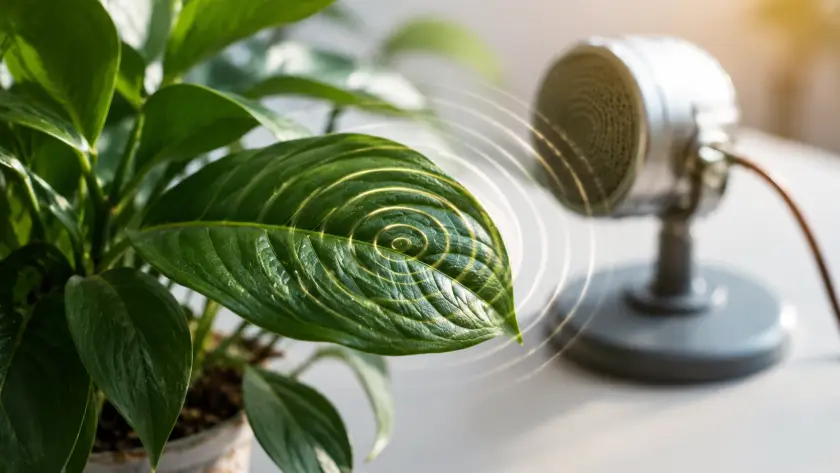
Sound is produced by vibration and travels through a medium as waves. Frequency, intensity, duration, and the medium through which those waves travel can all affect how a sound behaves.
Plants live in mechanically active environments.
Leaves move in wind. Rain strikes foliage. Roots push through soil. Stems bend. Flowers experience vibrations from visiting insects. Plants therefore have biological systems capable of responding to mechanical stimulation.
This makes the question should you talk to your plants more scientifically interesting than it initially appears.
Researchers have investigated plant responses to different frequencies and intensities of sound. Depending on the experimental conditions and species, studies have reported changes involving germination, cellular signalling, gene expression, stress responses, growth, and other physiological processes.
But those results must be interpreted carefully.
A controlled laboratory sound treatment is not the same thing as standing beside a houseplant and having a conversation.
3. Research Shows Plants Can Respond to Sound-Related Vibration
Scientific interest in plant acoustics has increased as researchers have investigated how plants perceive mechanical stimuli.
A peer-reviewed review of plant sound research available through the National Library of Medicine summarizes experiments in which sound treatments were associated with changes in plant growth, germination, gene expression, stress responses, and other physiological processes.
Importantly, the results depend heavily on variables such as sound frequency, sound pressure, exposure duration, experimental setup, and plant species.
This means research does not support a simple claim such as “all sound makes plants grow better.”
Instead, the evidence suggests that particular acoustic or vibrational treatments can function as mechanical stimuli under particular conditions.
Therefore, if you are asking should you talk to your plants, the scientifically cautious answer is that plants can respond to sound-related mechanical stimulation, but this does not prove that normal human conversation universally increases plant growth.
4. How Can Plants Detect Mechanical Stimulation?
Plants are stationary organisms, so detecting changes in their environment is essential for survival.
They have evolved sophisticated systems that allow cells and tissues to respond to physical forces.
Mechanosensitive Responses
Plant cells can react to pressure, touch, vibration, bending, and other mechanical forces.
Mechanical stimulation can alter cell membranes and activate signalling pathways. This broader ability to sense physical forces provides a plausible biological framework for studying responses to sound vibration.
Calcium Signalling
Calcium ions play an important role in plant cellular signalling.
When plant cells encounter certain environmental stimuli, changes in calcium concentrations can help transmit information within cells and tissues.
Experimental research has investigated whether sound-related mechanical stimulation can influence these signalling processes.
Gene Expression
Some controlled sound experiments have reported changes in the expression of particular plant genes.
That does not mean a plant is “listening” in the human sense. Instead, it suggests that a physical stimulus can sometimes be converted into a molecular response.
Stress Responses
Plants constantly respond to environmental stressors such as drought, heat, cold, pests, and physical disturbance.
Some experimental sound treatments have been associated with changes in stress-related processes. However, the results are highly dependent on treatment conditions.
This is another reason the answer to should you talk to your plants cannot simply be reduced to “talking makes plants grow.”
5. Does Talking to Plants Make Them Grow Faster?
This is probably the question most gardeners really want answered.
If should you talk to your plants means “will ordinary conversation reliably make my houseplants grow faster?”, current evidence does not establish that.
There are several reasons to be cautious.
Research experiments may expose plants to controlled frequencies, defined sound intensities, specific durations, or specialized equipment. Different plant species can also respond differently.
Human speech, by contrast, changes constantly in frequency, volume, distance, and duration.
It would therefore be inaccurate to take a result from a controlled acoustic experiment and automatically conclude that ten minutes of daily conversation will produce the same effect.
The better conclusion is:
- Plants can respond to mechanical stimulation.
- Sound is a form of mechanical vibration.
- Some controlled sound treatments produce measurable plant responses.
- The response depends strongly on the stimulus and plant involved.
- Ordinary human conversation has not been established as a universal plant-growth treatment.
So, should you talk to your plants for faster growth? You can enjoy the habit, but prioritize proven growing requirements first.
6. Plants Can Communicate Without Human-Style Language
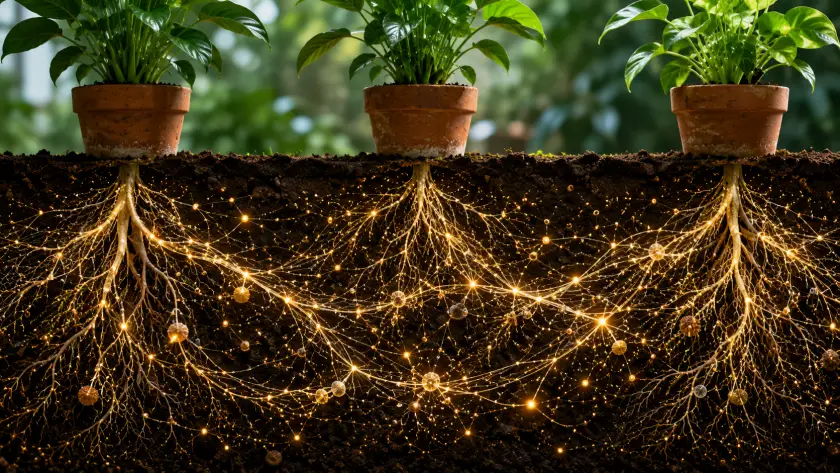
Another reason this topic becomes confusing is that scientists genuinely study plant communication.
But “communication” in biology does not necessarily mean conscious conversation.
Plants can release chemicals, respond to signals in their environment, interact with microorganisms, and coordinate responses across their own tissues.
Airborne Chemical Signals
Plants can release volatile organic compounds into the surrounding air.
Damage from herbivores, for example, can alter the chemicals released by a plant. These compounds may affect insects, microorganisms, and nearby plants.
This is a genuine biological interaction, but it is very different from two people talking.
Root-Zone Interactions
Roots release compounds into the soil around them.
These root exudates interact with microorganisms and contribute to the complex biological environment known as the rhizosphere.
Mycorrhizal Relationships
Mycorrhizal fungi form associations with plant roots. Fungal networks can connect multiple plants and participate in nutrient and carbon movement within ecosystems.
These networks are sometimes described using the popular phrase “wood wide web.”
The phrase is useful as an analogy, but it should not be interpreted as proof that plants consciously exchange thoughts or messages.
Understanding this distinction helps when considering should you talk to your plants: plant signalling is sophisticated, but sophistication does not automatically mean human-like awareness or language.
7. Talking to Plants Can Encourage Better Plant Care
This may be the most practical reason to answer should you talk to your plants with a qualified yes.
Imagine two plant owners.
One waters every Sunday because Sunday is “watering day.” They barely inspect the plant.
The other regularly approaches the plant, looks at the leaves, checks the soil, notices new growth, watches for pests, and perhaps talks to the plant during the process.
The second person is more likely to notice:
- yellow leaves;
- curling foliage;
- brown tips;
- drooping;
- pest activity;
- soil remaining wet too long;
- very dry soil;
- new growth;
- changes in light exposure;
- root crowding;
- early signs of stress.
The words themselves may not be responsible for better growth. The increased observation can still improve care.
If your plant’s foliage begins changing color, our guide to yellow leaves on plants can help you investigate possible causes.
Should You Talk to Your Plants Every Day?
Should you talk to your plants every day? There is no scientifically established conversation schedule for plants.
You do not need to speak to a houseplant for five, ten, or twenty minutes each day to keep it healthy.
If talking becomes part of your normal plant-care routine, that is perfectly reasonable. Use the opportunity to observe rather than creating another gardening chore.
For example, talk while checking the soil, rotating a pot where appropriate, inspecting foliage, or looking for new growth.
That turns the habit into a useful observation routine regardless of whether ordinary speech directly affects growth.
How to Make Talking to Your Plants Actually Useful
Check the Soil First
If you approach a plant to talk to it, check whether the soil actually needs water.
Avoid watering simply because a certain number of days have passed.
Plant species, pot size, soil composition, light, temperature, humidity, season, and root development can all influence how quickly growing medium dries.
Our complete guide to watering plants explains how to make watering decisions based on conditions rather than a rigid calendar.
Look at New Growth
New foliage can provide useful clues about current growing conditions.
Notice its size, color, spacing, and overall appearance.
Repeatedly weak or unusually small new growth may indicate that you need to investigate light, nutrition, roots, pests, or another growing condition.
Inspect Both Sides of Leaves
Many plant pests are easier to spot when you look underneath foliage.
Check for webbing, insects, sticky residue, discoloration, stippling, or unusual marks.
Observe Light Conditions
Indoor light changes throughout the year.
A position that worked during summer may receive very different light in another season.
Use our indoor light guide if you are unsure how to evaluate your plant’s position.
What Matters More Than Talking to Plants?
Even when discussing should you talk to your plants, it is important to keep the major drivers of plant health in perspective.
Light
Plants require light for photosynthesis, although the amount and intensity required differ greatly among species.
A plant receiving unsuitable light cannot be rescued simply by talking to it.
If you have a bright space, explore our guide to house plants that like direct sunlight.
For darker areas, see our small low-light indoor plants.
Water
Watering problems are among the most common causes of houseplant decline.
Both prolonged waterlogging and excessive dryness can create problems, depending on the species and circumstances.
Learn more in our guide to overwatering and correct watering.
Soil and Drainage
Potting medium affects root aeration, moisture retention, drainage, and nutrient availability.
Our guide to soil mixes for different plants explains why one mix is not ideal for every species.
If you are repotting and need to estimate how much growing medium to prepare, use the Patch Plants Soil Calculator.
Root Health
Healthy foliage depends on functioning roots.
When soil remains excessively wet and root health deteriorates, the plant may develop yellow leaves, wilting, or other symptoms.
If you suspect a root problem, read our guide to root rot identification, prevention, and treatment.
Humidity
Humidity requirements vary considerably between plants.
Some tropical houseplants benefit from moderately humid conditions, while many other species tolerate ordinary indoor humidity.
See our humidity hacks for houseplants for practical options.
Can Talking Save a Dying Plant?
No. If should you talk to your plants is being asked because a plant is already declining, conversation should not replace diagnosis.
Check the actual growing conditions.
- Is the soil excessively wet?
- Has the soil become extremely dry?
- Are roots healthy?
- Does the container drain?
- Is the plant receiving appropriate light?
- Are pests present?
- Has the temperature changed?
- Was the plant recently moved or repotted?
- Has fertilizer been overused?
Our step-by-step guide to reviving a dying plant can help you investigate those problems systematically.
Talking can accompany the rescue process, but it is not the treatment.
Does It Matter What You Say to Your Plants?
There is no established evidence that plants understand whether your words are encouraging, critical, funny, or boring.
From the plant’s perspective, the physically relevant properties of speech would be characteristics such as vibration, frequency, intensity, and duration rather than linguistic meaning.
So if you are wondering should you talk to your plants using only positive words, there is no scientific reason to create a special script.
Speak naturally if you enjoy doing it.
The useful part is that you are spending enough time near the plant to notice what is happening.
Do Plants Like Music?
This question is closely related to talking.
Various experiments have exposed plants to music, tones, frequencies, noise, or other acoustic treatments. However, the experimental designs and results vary substantially.
It is therefore too simplistic to say that plants universally “like” one musical genre or that classical music automatically improves growth.
Plants do not experience music in the same sensory way humans do.
Researchers are instead interested in the physical properties of acoustic stimulation and how those properties may affect plant tissues.
Do Plants Have a Nervous System?
No. Plants do not have an animal-style nervous system composed of neurons, nerves, and a brain.
They nevertheless have sophisticated signalling systems.
Plant responses can involve:
- electrical signalling;
- calcium signalling;
- plant hormones;
- chemical signalling;
- mechanical responses;
- cell-to-cell communication;
- responses to light;
- responses to gravity;
- responses to water availability;
- responses to temperature.
These systems allow plants to coordinate responses across tissues without possessing a brain.
This is another important distinction when exploring should you talk to your plants: complex plant behaviour does not automatically imply human-like thought or consciousness.
Do Plants Talk to Each Other?
Not in the human sense.
Plants participate in complex signalling interactions involving chemicals, roots, microorganisms, fungi, insects, and environmental stimuli.
For example, volatile compounds released after damage can influence ecological interactions. Root exudates alter the rhizosphere. Mycorrhizal relationships can connect plants within below-ground ecological networks.
These processes are scientifically fascinating without needing to describe them as literal conversations.
Common Myths About Talking to Plants
Myth 1: Plants Understand Compliments
There is no evidence that plants interpret the linguistic meaning of compliments.
Myth 2: Talking Is a Substitute for Fertilizer
No. Plants need appropriate nutrients and growing conditions. Sound cannot replace essential mineral nutrition.
Myth 3: Talking Can Cure Root Rot
No. Root problems require correction of their underlying cause.
Myth 4: Any Sound Makes Plants Grow Faster
Research does not support such a broad conclusion. Plant responses depend on the physical characteristics of the stimulus, species, duration, and experimental conditions.
Myth 5: Plants Have Human-Like Emotions
Plants have complex signalling and response systems, but current plant biology does not establish that they experience emotions in the same way humans do.
Should Beginners Talk to Their Plants?
For a beginner asking should you talk to your plants, the habit can actually be useful if it encourages regular observation.
New plant owners sometimes pay attention only when it is time to water. A short daily or occasional look at the plant can help you learn what healthy foliage, new growth, normal soil drying, and early stress look like.
If you are just starting your collection, our guide to the best indoor plants for first-time plant parents can help you choose manageable species.
Should You Talk to Indoor Plants?
Should you talk to your plants when they are grown indoors? There is no special requirement for indoor plants, but indoor gardening makes the habit especially convenient.
Houseplants are part of your everyday environment. You may pass them while working, cooking, relaxing, or getting ready in the morning.
Those frequent encounters provide opportunities to detect small changes before they become larger problems.
For more species-specific information, explore our Indoor Plants guides.
Talking to Plants in Different Rooms
Home Office
A desk plant is easy to inspect during short breaks. Talking to it is optional, but checking its leaves and soil can help you catch problems early.
Living Room
Living-room plants are usually highly visible, making regular observation easy.
If you keep a large collection, our guide to creating an indoor jungle without overcrowding can help you balance appearance with plant needs.
Bathroom
Some plants appreciate higher humidity, but bathroom conditions vary dramatically.
A humid room with almost no usable light is not automatically a good plant location.
Bedroom
Plants in bedrooms can become part of your morning or evening routine. Use those moments to observe them without assuming they need daily watering.
A Simple 60-Second Plant Check
If you want the question should you talk to your plants to lead to genuinely better care, combine conversation with this quick inspection.
- Check new growth. Look at its color, size, and shape.
- Check older leaves. Notice yellowing, browning, curling, or unusual leaf loss.
- Inspect underneath leaves. Look for pests, webbing, residue, or damage.
- Check soil moisture. Water according to the plant’s needs rather than automatically.
- Look at the light. Consider whether seasonal changes have altered exposure.
- Check drainage. Make sure excess water can escape where appropriate.
- Notice changes. Compare the plant with how it looked during previous checks.
After that, keep talking if you enjoy it. You have already turned the habit into a useful plant-health check.
Should You Talk to Your Plants or Focus on Care?
You do not have to choose between them.
If should you talk to your plants is part of a relaxing routine, continue doing it. Just remember the order of importance.
A suitable environment comes first.
Light drives photosynthesis. Water supports physiological processes. Roots need appropriate moisture and aeration. Nutrients support growth. Temperature affects metabolism. Pest management prevents damage.
Conversation is optional.
For broader help with these fundamentals, browse the Patch Plants plant care guides.
Frequently Asked Questions
Should You Talk to Your Plants?
Yes, if you enjoy doing it. Plants do not understand human language, but speech creates physical vibrations. Research shows that plants can respond to certain sound and mechanical stimuli under controlled conditions. Talking can also encourage you to inspect your plants more regularly.
Do Plants Grow Better If You Talk to Them?
Current research does not establish that ordinary human conversation reliably makes all plants grow faster. Some controlled sound treatments have produced measurable physiological or growth responses, but results depend on frequency, intensity, duration, species, and experimental conditions.
Do Plants Respond to Talking?
Plants do not interpret spoken language, but speech produces sound vibrations. Plants are capable of responding to mechanical stimuli, and researchers continue studying how different acoustic treatments affect plant physiology.
Does Talking to Plants Help?
It may help indirectly by encouraging closer observation. A gardener who regularly interacts with plants may notice pests, moisture problems, yellow leaves, poor light, or other stress sooner.
Do Plants Like Being Talked To?
Science cannot establish that plants “like” conversation in the emotional sense. A more precise question is whether plant tissues respond to sound-related mechanical stimulation, which has been observed under some experimental conditions.
Should You Talk to Your Plants Every Day?
No daily schedule is necessary. Talk to them whenever you enjoy doing so, and use the interaction as an opportunity to check their growing conditions.
Can Plants Hear Music?
Plants do not hear music with ears or an auditory nervous system. They can nevertheless be exposed to the physical vibrations produced by sound, and researchers have studied responses to different acoustic treatments.
Does It Matter What You Say to Plants?
There is no evidence that plants understand whether your words are positive or negative. The physical characteristics of the sound are more biologically relevant than the linguistic meaning.
Do Plants Communicate With Each Other?
Plants participate in chemical, ecological, root-zone, and other signalling interactions. These processes can transmit biologically relevant information, but they should not be confused with human-style conscious conversation.
Do Plants Have a Nervous System?
No. Plants lack an animal-style brain and nervous system. They do have complex electrical, chemical, hormonal, calcium-based, and mechanical signalling mechanisms.
Can Talking Save a Dying Plant?
No. A declining plant requires diagnosis of its actual problem, such as inappropriate watering, poor drainage, unsuitable light, unhealthy roots, pests, temperature stress, or another environmental issue.
Is Talking to Plants Harmful?
Normal conversation around houseplants is not generally considered a plant-care problem. However, research on controlled sound treatments should not be interpreted as a reason to expose plants to unnecessarily intense or continuous noise.
Related Plant Care Guides
- Complete Guide to Watering Plants
- Complete Guide to Indoor Light
- Best Soil Mix for Different Types of Plants
- How to Identify, Prevent and Treat Root Rot
- Why Plant Leaves Turn Yellow
- How to Revive a Dying Plant
- Humidity Hacks for Indoor Plants
- Best Indoor Plants for Beginners
- Tropical House Plants Guide
- Indoor Plants
- Plant Care Guides
Final Thoughts: Should You Talk to Your Plants?
So, should you talk to your plants? If you enjoy it, yes.
Just keep the reason grounded in what science currently supports.
Plants are highly responsive organisms. They detect and respond to light, gravity, moisture, chemicals, temperature, touch, and other mechanical forces. Scientific research also shows that certain sound and vibration treatments can trigger measurable responses under controlled conditions.
That is fascinating, but it is not the same as proving that plants understand human conversations or that a daily chat universally accelerates plant growth.
The most reliable benefit may be much simpler.
When you stop beside a plant and talk to it, you also tend to look at it. You notice the newest leaf. You see that the soil is still wet. You spot an insect underneath a leaf. You realize the plant is leaning toward the window. You catch a problem earlier.
That makes the answer to should you talk to your plants surprisingly practical: enjoy the conversation, but let attentive, evidence-based care do the important work.
Continue learning through our plant care library for practical guidance on watering, soil, light, roots, pruning, humidity, and common plant problems.