
Key Takeaways
- Self-watering pots use a built-in reservoir and wicking system to deliver steady moisture to plant roots — the plant controls its own water uptake through capillary action
- Self-watering pots work well for moisture-loving plants including peace lily, pothos, philodendron, herbs, calathea, and Boston fern
- Do not use self-watering pots for succulents, cacti, snake plants, or ZZ plants — these plants need soil to dry completely between waterings and will develop root rot in a constantly moist environment
- The main benefits of self-watering pots are consistent hydration, reduced watering frequency, and lower risk of overwatering for suitable plant types
- Common problems with self-watering pots include mineral build-up, fungal growth, root penetration into the reservoir, and algae in neglected reservoirs — all preventable with basic maintenance
- Refill the reservoir every one to two weeks for most indoor plants — check before refilling and allow occasional complete dry-outs to prevent salt accumulation
- Self-watering pots are particularly valuable for busy plant owners, frequent travellers, herb growers, and anyone who struggles with consistent watering routines
- Outdoor self-watering pots require more management than indoor ones — rain can overflow reservoirs and summer heat empties them faster than expected
- Self-watering hanging plant pots are excellent for trailing moisture-loving plants like pothos and spider plant where regular watering is physically inconvenient
- Self-watering pots are worth buying for the right plants and the right gardener — they are a genuinely useful tool, not a gimmick, when matched correctly
Introduction
A pot that waters itself sounds almost too good to be true. And like most things that sound too good to be true, the reality is more nuanced than the marketing suggests. Self-watering pots are not magic. They are not suitable for every plant. They do require occasional maintenance. But for the right plants in the right hands, they are genuinely one of the most useful innovations in everyday plant care.
This guide cuts through the confusion and gives you the honest truth about self-watering pots — how the system actually works, which plants thrive in them, which plants will suffer, what problems to expect and how to prevent them, and whether they are worth buying for your specific situation.
Whether you are a busy professional who forgets to water, a frequent traveller trying to keep plants alive between trips, or simply someone who wants a more consistent watering routine without daily effort, this guide will help you decide whether self-watering pots belong in your plant care setup. For a broader overview of watering principles that apply across all pot types, our complete guide to watering tips is an essential companion to this article.
How Do Self-Watering Pots Work?
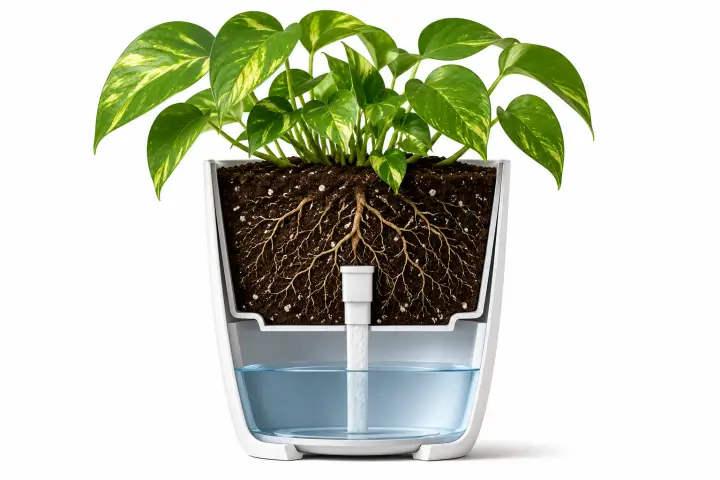
Understanding how self-watering pots work is the foundation for using them effectively. The mechanism is simple once you understand it, and it explains both why they are so effective for certain plants and why they fail completely for others.
The Two-Chamber System
A self-watering pot consists of two chambers. The upper chamber holds the plant and its growing medium — soil, potting mix, or compost. The lower chamber is a sealed water reservoir that holds a supply of water separate from the root zone.
The two chambers are connected by a wicking system. In most designs, this is either a fabric wick that runs from the reservoir up into the soil, a specially designed soil column or insert that bridges the gap, or in some designs, the pot base itself acts as a wick through its material properties.
The Wicking Mechanism
Water moves from the reservoir into the soil through capillary action — the same physical process that makes a paper towel absorb water from a surface. As the soil around the wick dries slightly, capillary tension draws more water upward from the reservoir to replace it.
This means the plant is effectively in control of its own water supply. When roots are actively absorbing water and the soil around the wick dries, more water is drawn up. When the soil is adequately moist, uptake slows or stops. The plant dictates the pace rather than the gardener guessing from above.
The Fill Indicator and Overflow
Most self-watering pots include a fill tube or window that shows the reservoir water level. Some have a simple overflow hole that prevents the reservoir from overfilling during rain or over-enthusiastic refilling. Understanding these components makes using self-watering planters significantly more effective.
The critical design principle: the pot base must sit above the reservoir waterline. The growing medium should be moist from wicking but never sitting in standing water — that distinction is what separates a well-functioning self-watering system from a root rot risk.
The Benefits of Self-Watering Pots
Self-watering pots offer a specific set of genuine advantages for the right user. These are not marketing claims — they are practical benefits that experienced plant keepers consistently report.
Consistent Hydration Without Daily Attention
The most significant benefit of self-watering pots is the elimination of the wet-dry watering rollercoaster that most houseplants experience under conventional care. Instead of alternating between waterlogged soil after watering and parched soil before the next scheduled water, moisture-loving plants maintain a consistently appropriate level of hydration.
This consistency has a measurable effect on plant growth. Herbs grow faster and more robustly. Tropical plants produce larger leaves and more vigorous new growth. Flowering plants bloom more reliably. The stress of erratic watering — one of the most common limiting factors in houseplant performance — is largely removed.
Significant Reduction in Overwatering Risk
Overwatering is the leading cause of houseplant death. Our signs you are overwatering guide identifies it as the primary cause of root rot in the vast majority of cases. Self-watering pots fundamentally change this dynamic — water is delivered from below at the rate the plant requires, not from above at the rate the gardener guesses.
For moisture-loving plants, the risk of overwatering is substantially lower in a correctly set up self-watering container than in a conventional pot with traditional top watering. The plant draws what it needs; the rest stays in the reservoir waiting.
Reduced Watering Frequency
A well-sized self-watering pot reservoir typically requires refilling every one to two weeks for most indoor plants in normal conditions — compared to watering every few days with conventional pots. This makes a practical and significant difference to the time demand of plant keeping, particularly for large plant collections.
Ideal for Busy Schedules and Travel
Self-watering pots are arguably the best solution available for plant owners who travel regularly, work long hours, or simply have unreliable watering routines. A full reservoir can keep most moisture-loving houseplants adequately hydrated for one to two weeks without any intervention — long enough to cover most short trips or busy periods.
Water Efficiency and Sustainability
Self-watering planters use water more efficiently than conventional top watering because water is delivered directly to the root zone with minimal evaporation loss from the soil surface. Less water is wasted on runoff or evaporation. This makes self-watering containers an appealing choice for environmentally conscious gardeners focused on sustainable plant care.
Which Plants Do Well in Self-Watering Pots
The single most important factor in determining whether self-watering pots will work for you is plant selection. The right plants in self-watering containers thrive noticeably better than in conventional pots. The wrong plants will struggle and may die.
Excellent Candidates for Self-Watering Pots
The peace lily is perhaps the ideal self-watering pot plant — it loves consistent moisture, shows immediate visible distress when underwatered (dramatic drooping), and recovers beautifully when moisture is restored. Self-watering pots essentially eliminate the underwatering problem for peace lilies entirely.
The pothos is another excellent candidate — fast-growing, moisture-appreciating, and visibly responsive to consistent hydration. Self-watering pots produce noticeably larger leaves and faster growth in pothos compared to conventional watering. Our philodendron similarly thrives with consistent moisture and is an excellent self-watering pot plant.
The money tree benefits from the steady hydration a self-watering container provides — it prefers consistent moisture without waterlogging, which is exactly what a correctly functioning self-watering system delivers. The spider plant is tolerant of a wide range of conditions and performs well in self-watering pots, producing more offsets and healthier foliage with consistent moisture.
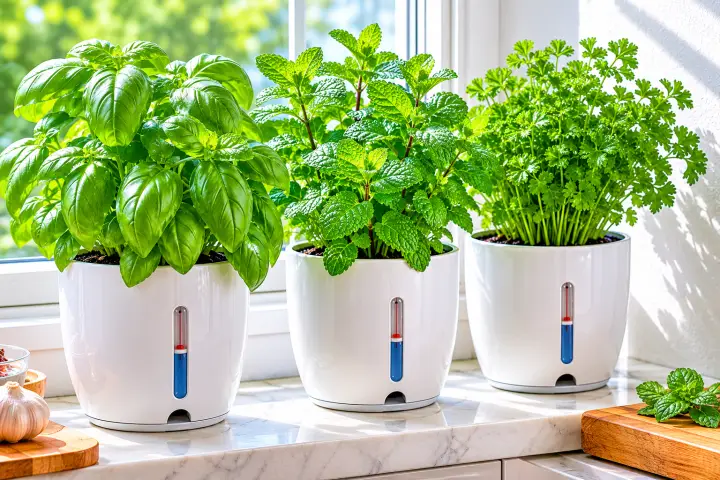
Herbs are among the biggest beneficiaries of self-watering planters. Basil, mint, parsley, coriander, and chives all prefer consistently moist soil and sulk dramatically when allowed to dry out. Self-watering herb pots produce noticeably lusher, more productive plants than conventionally watered herbs, particularly in warm kitchens where soil dries quickly.
The calathea — notoriously demanding about consistent moisture — is an excellent self-watering pot plant. Combined with a humidity tray (our DIY humidity tray guide covers this), a self-watering calathea setup removes two of the most common calathea care failures simultaneously. The Boston fern is similarly well-suited — its constant moisture requirement is met without the daily attention conventional fern care demands.
Plants to Avoid in Self-Watering Pots
The plants that fail in self-watering containers are almost universally those that need the soil to dry out completely between waterings. The constantly moist environment a self-watering pot maintains is the opposite of what these plants evolved to handle.
Succulents and cacti should never be placed in self-watering pots. Their root systems have no tolerance for sustained moisture and will develop root rot rapidly. Our succulent care guide and cactus care guide both emphasise the need for soil to dry completely — a requirement fundamentally incompatible with self-watering systems.
The snake plant and ZZ plant are both drought-adapted succulents in practice, storing water in their roots and rhizomes. They perform poorly in self-watering pots and are much better suited to conventional pots with infrequent deep watering. The jade plant similarly needs dry periods and is not a good self-watering pot candidate.
Orchids should not be used in standard self-watering pots — they need their roots to dry between waterings and require the air circulation that bark-based medium in a transparent pot provides. Our orchid care guide explains the specific watering approach orchids require.
Common Problems with Self-Watering Pots
Self-watering pots reduce certain problems significantly but introduce or risk others. Understanding these in advance allows you to prevent them entirely.
Mineral and Salt Build-Up
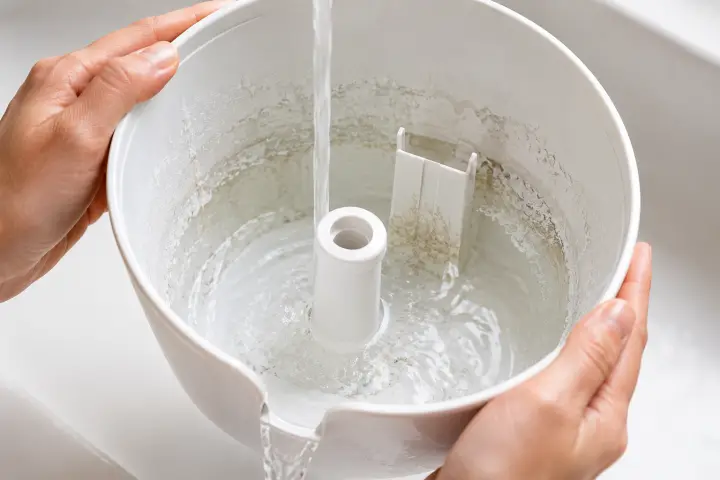
The most common problem with self-watering pots over time is the accumulation of mineral deposits and fertiliser salts in the growing medium. Because water is drawn upward through the soil continuously, any dissolved minerals in the water are left behind as the water is absorbed by roots or evaporates. Over months, these deposits can accumulate to levels that inhibit root function and cause leaf tip browning.
The solution is to flush the growing medium thoroughly with plain water every two to three months. Remove the pot from the reservoir, water generously from the top until water runs freely from drainage holes, and allow to drain completely before replacing on the reservoir. This flushes accumulated salts from the soil. Our leaf curl, browning and droop guide covers brown tip diagnosis for cases where salt build-up may be the cause.
Root Penetration into the Reservoir
In plants grown long-term in self-watering containers, roots sometimes grow down through the wicking system and into the water reservoir itself. While the plant is alive this is not immediately harmful, but it makes repotting very difficult and can cause root damage when the reservoir is emptied for cleaning.
Prevent this by periodically allowing the reservoir to empty completely and remain dry for two to three days — this encourages roots to grow upward into the soil rather than downward toward the water source. Check for roots in the reservoir during monthly cleaning. Our repotting mistakes to avoid guide covers what to do when repotting plants that have root systems growing in unexpected directions.
Algae and Fungal Growth
Algae can develop in the water reservoir if the pot is placed in bright direct sunlight and the reservoir is transparent or semi-transparent. Green algae in the reservoir does not directly harm the plant but indicates the system needs cleaning. Use an opaque pot or cover the reservoir from light exposure to prevent algae establishment.
Fungal growth in the growing medium occurs most commonly when the soil stays excessively moist — usually because the plant is not absorbing water at the rate the wicking system is delivering it. This typically means the plant is too small for the pot or the reservoir level is too high. Reduce the water level slightly and ensure the plant is actively growing.
Mosquito Larvae in Outdoor Reservoirs
Outdoor self-watering pots left with standing water in the reservoir for extended periods can attract mosquitoes for egg laying. Prevent this by keeping the reservoir filled and regularly refreshed rather than allowing water to sit stagnant for weeks. Adding a small piece of mosquito dunk (a biological larvicide) to outdoor reservoirs eliminates any larvae without harming plants.
Overflow in Heavy Rain
Outdoor self-watering pots during rainy periods can have their reservoirs overfill if drainage is not designed adequately. Most quality outdoor self-watering containers have an overflow hole at the correct level — check this is unblocked and functioning before placing outdoors. For outdoor plant care more broadly, our best low-maintenance outdoor plants guide covers container selection and placement for outdoor growing.
How to Use Self-Watering Pots Correctly
Getting the most from self-watering plant pots requires understanding a few key operational principles that most instructions gloss over.
Setting Up a Self-Watering Pot for the First Time
When setting up a self-watering planter for the first time, do not fill the reservoir immediately. Instead, water the plant from the top for the first two to three weeks while the root system establishes contact with the wicking system. Once roots have grown into the zone that interacts with the wick, the self-watering system becomes effective. Starting with a full reservoir before roots have reached the wicking zone often results in wet soil at the bottom and dry soil at the top — the opposite of what you want.
Choosing the Right Soil
Standard potting compost works in self-watering pots but is not optimal. A mix with good wicking properties — one that draws water upward effectively — produces the best results. Adding perlite (twenty to thirty percent) improves drainage and aeration without significantly reducing wicking efficiency. Our best soil mix guide explains how different soil compositions affect water movement and plant health.
Managing the Reservoir Level
Maintain the reservoir at approximately half to two-thirds full for most plants. Keeping the reservoir completely full at all times raises the waterline too close to the base of the growing medium, potentially keeping soil wetter than optimal. Allowing occasional complete empty periods — perhaps once every one to two months — prevents mineral build-up and discourages root penetration into the reservoir.
Always check the reservoir before refilling. Refilling a reservoir that is still half-full wastes water and prevents the natural dry-out cycle that helps prevent some of the common problems described above.
Repotting Plants from Self-Watering Pots
Repotting a plant that has been in a self-watering pot for a year or more requires extra care. The root system may have grown toward the reservoir and the wick. Remove carefully, inspect roots, and trim any that have penetrated the reservoir zone. Our how to repot a plant guide covers the process in full detail.
Indoor vs Outdoor Self-Watering Pots
Indoor Self-Watering Pots
Indoor self-watering pots are where this technology performs most consistently and reliably. Controlled temperature, stable light levels, and predictable evaporation rates make indoor reservoirs easy to manage. The benefits — reduced watering frequency, consistent hydration, lower overwatering risk — are realised most completely indoors.
Self-watering hanging plant pots are particularly useful indoors for trailing moisture-lovers like pothos, philodendron, and spider plant where the height of the hanging position makes regular watering physically inconvenient. Our low light hanging plants guide covers excellent candidates for hanging self-watering planters.
For home office plant care specifically, indoor self-watering pots are one of the most practical solutions available. Our office-friendly plants guide and improve home office with plants guide cover the best plants for office self-watering pot setups.
Outdoor Self-Watering Pots
Outdoor self-watering pots introduce more variables. Summer heat empties reservoirs faster than expected — sometimes within days rather than weeks. Heavy rain can overflow reservoirs and waterlog soil in pots without adequate overflow drainage. Wind increases evaporation from soil surfaces, affecting how the wicking system functions.
Despite these complications, outdoor self-watering containers work well for tomatoes, peppers, herbs, and ornamental flowering plants on patios, balconies, and terraces — particularly during summer when consistent moisture is critical for fruiting plants. Monitor reservoirs more frequently in outdoor positions and adjust refill frequency seasonally. For balcony plant care, our year-round balcony plants guide covers the best container plants for exposed outdoor positions.
Are Self-Watering Pots Worth Buying?
The honest answer: it depends entirely on who you are and what you are growing.
Self-watering pots are worth buying if you grow moisture-loving plants and struggle with consistent watering. If you travel regularly and worry about plants dying between trips, a self-watering pot with a full reservoir gives most moisture-loving houseplants two weeks of reliable hydration with no intervention. If you grow herbs and find they dry out too quickly on a kitchen windowsill, a self-watering herb planter will produce noticeably better results than a conventional pot.
Self-watering pots are not worth buying if your primary collection consists of succulents, cacti, snake plants, or other drought-adapted species. They are also unnecessary if you have a small, manageable collection you can easily monitor and water manually with good habits — our complete guide to watering tips and signs you are overwatering guide can address most watering challenges in conventional pots.
For those building a larger plant collection that includes many moisture-loving tropical plants, investing in self-watering containers for the thirstiest, most moisture-sensitive plants while keeping drought-adapted plants in conventional pots is probably the most effective mixed approach. Our 35 low-maintenance plants guide and best indoor plants for beginners guide can help identify which plants in a collection are best suited to self-watering containers.
Self-Watering Pots and Root Rot
One of the most common concerns about self-watering pots is whether the constantly moist environment they maintain increases root rot risk. The answer depends entirely on plant selection.
For moisture-loving plants, self-watering pots actually reduce root rot risk compared to conventional top watering — because the system prevents the extreme wet periods immediately after top watering that are actually more dangerous than consistent moderate moisture. The wicking action maintains a balanced moisture level rather than the wet-then-dry cycle of conventional watering.
For drought-adapted plants, self-watering pots absolutely increase root rot risk — and should not be used. Our root rot guide explains in detail why consistent moisture is dangerous for these plant types and how to identify and treat root rot if it does occur.
Article Summary
| Topic | Key Points |
|---|---|
| How self-watering pots work | Two-chamber system — reservoir below, wicking draws water up as needed |
| Best plants for self-watering pots | Peace lily, pothos, philodendron, money tree, herbs, calathea, Boston fern |
| Plants to avoid | Succulents, cacti, snake plant, ZZ plant, jade plant, orchids |
| Main benefits | Consistent hydration, reduced watering frequency, lower overwatering risk |
| Common problems | Mineral build-up, root penetration, algae, mosquito larvae, outdoor overflow |
| How to set up correctly | Top water first 2–3 weeks, use wicking-friendly soil, manage reservoir level |
| Refill frequency | Every 1–2 weeks indoors, more often outdoors in summer |
| Root rot risk | Lower for moisture-lovers, higher for drought-adapted plants |
| Worth buying? | Yes for busy owners, travellers, herb growers, moisture-loving plant collections |
| Outdoor use | Works well but needs more monitoring — heat empties reservoirs, rain overflows |
Related Guides
- Complete Guide to Watering Tips
- Signs You Are Overwatering
- What Is Root Rot?
- How to Revive a Dying Plant
- Best Soil Mix for Every Plant Type
- How to Repot a Plant
- Repotting Mistakes to Avoid
- Peace Lily Care Guide
- Pothos Care Guide
- Succulent Care Guide
- 35 Low-Maintenance Plants That Will Thrive
- Best Indoor Plants for Beginners
Final Thoughts
Self-watering pots are not a gimmick and they are not a universal solution. They are a specific tool that solves a specific problem — the challenge of maintaining consistent moisture for plants that need it — and they solve that problem very well when matched correctly.
The key decisions are simple: know which plants in your collection prefer consistent moisture, use self-watering containers for those plants, and keep drought-adapted plants in conventional pots with infrequent deep watering. Clean the reservoir monthly, flush the soil quarterly, and allow occasional complete dry-out periods. Done correctly, self-watering pots produce noticeably healthier, faster-growing plants with significantly less daily effort.
According to the Royal Horticultural Society, consistent moisture management is one of the most significant factors in houseplant health and longevity — with erratic watering cited as a primary cause of preventable plant death in UK homes. Self-watering containers are one of the most practical available tools for achieving that consistency reliably and efficiently.
Match the right plant to the right pot. Water less but smarter. That is the truth about self-watering pots.
Frequently Asked Questions
Do self-watering pots work?
Yes — self-watering pots work well for plants that prefer consistent moisture, including tropical houseplants, herbs, peace lilies, pothos, and leafy greens. They do not work well for drought-adapted plants like succulents, cacti, and snake plants that need the soil to dry out completely between waterings. Matching the right plant to the system is what determines success.
How do self-watering pots work?
Self-watering pots work using a two-chamber system. The upper chamber holds the plant and growing medium. The lower chamber is a water reservoir. A wicking system draws water upward from the reservoir into the soil as the plant’s roots require it through capillary action. The plant controls its own water uptake — it sips steadily rather than receiving irregular top waterings.
Which plants do well in self-watering pots?
Plants that thrive in self-watering pots include peace lily, pothos, philodendron, money tree, spider plant, herbs, calathea, and Boston fern. Avoid using self-watering pots for succulents, cacti, snake plants, ZZ plants, and any drought-adapted plant.
How often should I refill a self-watering pot reservoir?
Refill the reservoir every one to two weeks for most indoor plants. In summer or warm bright rooms, more frequently. In winter, less often. Always check before refilling — do not top up if water remains. Allow the reservoir to empty completely once every one to two months to prevent mineral build-up and discourage root penetration into the water chamber.
Can self-watering pots cause root rot?
Self-watering pots can cause root rot if used with drought-adapted plants that need dry periods — succulents, cacti, and snake plants will develop root rot in the consistently moist environment a self-watering system maintains. For moisture-loving plants used correctly, self-watering pots actually reduce root rot risk. Our root rot guide covers identification and treatment in detail.
Are self-watering pots worth buying?
Self-watering pots are worth buying for busy plant owners, frequent travellers, herb growers, and anyone growing moisture-loving tropical plants. They are not necessary for small collections or drought-adapted plants. For the right plants and the right gardener, they are genuinely one of the most useful tools in indoor plant care — not a gimmick, but a practical solution to one of the most common plant care challenges.


Thanks for sharing. I read many of your blog posts, cool, your blog is very good.
[…] Self-watering pots guide […]
Thanks for sharing. I read many of your blog posts, cool, your blog is very good. https://www.binance.bh/register?ref=IHJUI7TF
[…] Self-watering pots guide […]