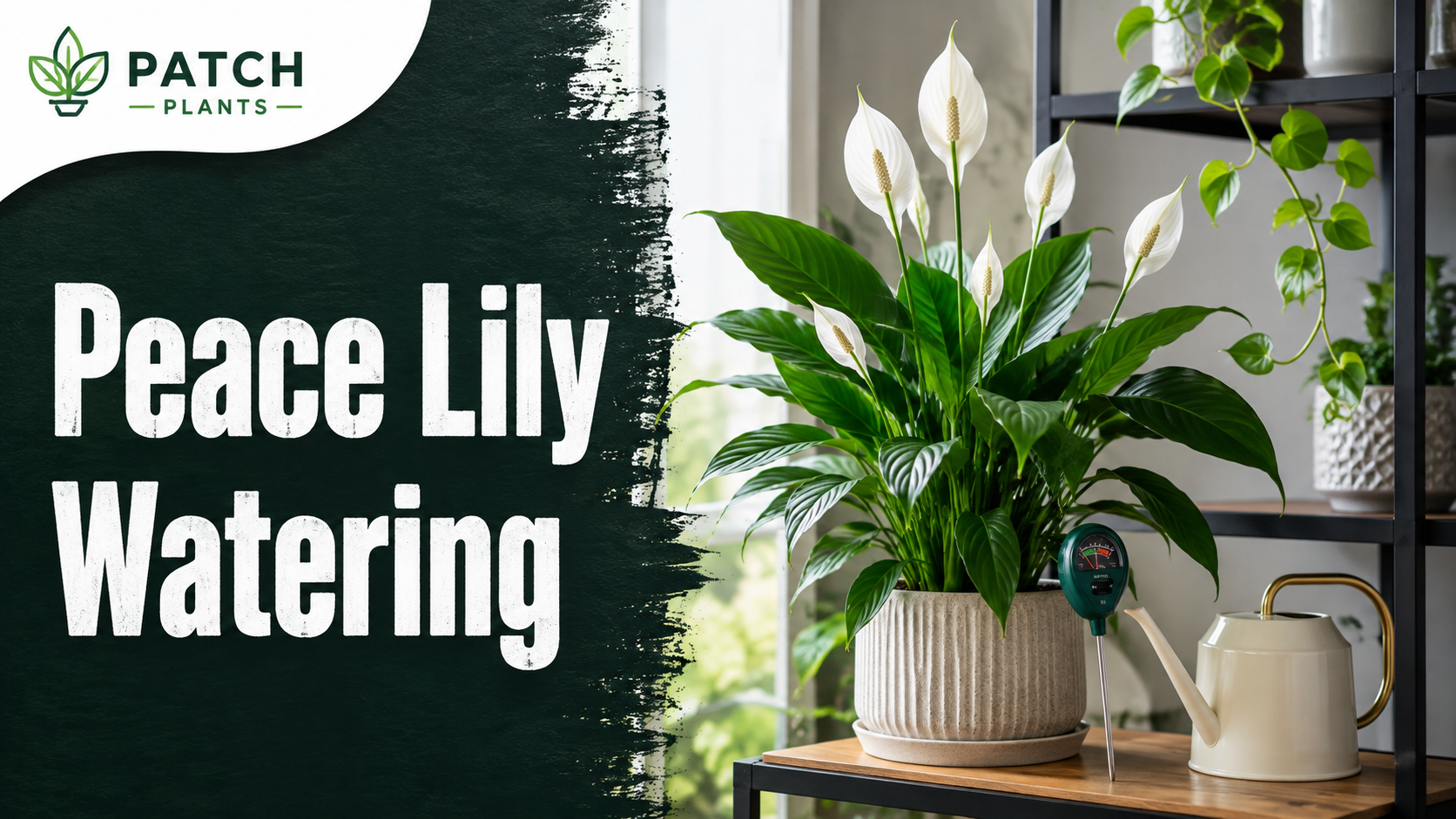
How often to water peace lily plants is one of the most common questions new plant owners ask. The simple answer is this: water when the top inch of soil feels slightly dry, then water deeply until excess drains out. For many indoor homes, that means checking about once a week, but the real schedule depends on light, temperature, pot size, soil, humidity, and season.
A peace lily is not a cactus, so it does not want to dry out completely for long periods. It also does not want soggy roots. The best routine is steady moisture with drainage. Once you learn the soil test and leaf signs, peace lily watering becomes much easier.
The Simple Schedule
Most peace lilies need water about every 7 days in average indoor conditions. In bright warm rooms, check every 4 to 6 days. In low light, cool rooms, or winter, check every 10 to 14 days. Do not water only by calendar. Always check the soil first because a peace lily can droop from both underwatering and overwatering.
Key Takeaways
- How often to water peace lily depends on soil moisture, not a fixed weekly rule.
- Water when the top inch of soil feels slightly dry.
- Peace lilies like moist soil, but they should never sit in standing water.
- Bright rooms and warm weather make the plant dry faster.
- Low light, winter, large pots, and heavy soil slow drying.
- Drooping can mean the plant is thirsty, but drooping in wet soil can mean root stress.
- For more support, use the full Peace Lily care guide, complete watering tips, and overwatering guide.
Peace Lily Watering Schedule at a Glance
| Growing Condition | When to Check Soil | Watering Note |
|---|---|---|
| Bright warm room | Every 4 to 6 days | May dry faster, especially in small pots |
| Average indoor room | About once a week | Water when top inch feels slightly dry |
| Low-light room | Every 10 to 14 days | Soil dries slowly, so avoid routine watering |
| Winter | Every 10 to 14 days or longer | Growth slows and water use drops |
| After repotting | Check every few days | Roots may need time to settle |
| Large mature plant | Every 5 to 10 days | Depends on pot size, light, and room warmth |
Understanding Peace Lily Moisture Needs
Peace lilies, or Spathiphyllum, naturally prefer consistent moisture and warm indoor conditions. They do not like drying out hard, but they are also sensitive to waterlogged soil. This is why a “water every Sunday” routine can work in one home and fail in another.
The right peace lily watering schedule should keep the root zone lightly moist without leaving water trapped at the bottom of the pot. A plant in bright indirect light will use water faster than one in a dim corner. A plant in a small nursery pot will dry faster than one in a large decorative planter.
Why peace lilies droop
Peace lilies are famous for drooping when thirsty. This can be helpful because the plant gives a clear signal. But do not rely on drooping alone. A peace lily can also droop when roots are damaged from too much water. Always check the soil before adding more.
Why peace lilies hate standing water
Moist soil is good. Standing water is not. If water sits in the saucer or outer pot, the lower roots stay wet and oxygen drops. That can lead to yellow leaves, soft stems, fungus gnats, and root rot.
Why one schedule does not fit every plant
A peace lily near an east-facing window may need water sooner than one in a hallway. A plant in winter may need half as much water as it did in summer. A compacted soil mix can stay wet for too long even if you water carefully.
How to Know When a Peace Lily Needs Water
The best way to know when to water peace lily plants is to combine the soil test with leaf signals. Soil tells you what the roots are experiencing. Leaves tell you how the plant is reacting.
The finger test
- Push your finger about one inch into the potting mix.
- If the soil feels slightly dry at that depth, water.
- If it still feels wet or cool, wait.
- If the top is dry but the lower soil is wet, wait longer.
- Check again in a few days.
The pot weight test
Lift the pot after watering so you know how heavy it feels when moist. Then lift it again before watering next time. A dry pot feels much lighter. This method is useful for peace lilies in nursery pots or lightweight containers.
The leaf test
Slight drooping with slightly dry soil usually means the plant needs water. Drooping with wet soil is different. That can mean poor drainage, overwatering, or root rot.
The moisture meter test
A moisture meter can help if you struggle with guessing. Use it as a guide, not as the only decision. Check different parts of the pot because moisture can vary from one side to another.
How Much Water Does a Peace Lily Need?
A peace lily needs enough water to moisten the root ball evenly. Give water slowly until it flows out of the drainage holes, then empty the saucer. This makes sure the roots are watered properly instead of only wetting the top layer.
| Pot Size | Watering Style | Important Note |
|---|---|---|
| Small pot | Water slowly until drainage begins | Small pots dry faster |
| Medium pot | Water evenly around the soil | Check top inch before watering |
| Large pot | Water in stages so soil absorbs evenly | Lower soil may stay wet longer |
| Decorative outer pot | Remove inner pot to drain if possible | Do not let water collect inside |
Do not give tiny sips
Tiny daily sips often wet only the top layer and leave deeper roots dry. It is better to water thoroughly, then wait until the soil reaches the right dryness level again.
Do not leave water in the saucer
After watering, wait a few minutes, then empty the saucer or outer pot. Peace lilies need drainage even though they enjoy moisture.
Top Watering vs Bottom Watering Peace Lily
Both methods can work, but they are useful in different situations. Top watering is best for normal care. Bottom watering is helpful when soil has become very dry and is pulling away from the pot edges.
| Method | Best For | Watch Out For |
|---|---|---|
| Top watering | Regular peace lily watering | Water slowly so the mix absorbs evenly |
| Bottom watering | Very dry soil that repels water | Do not leave the pot soaking too long |
| Shower rinse | Dusty foliage and full soil soak | Let the pot drain fully afterward |
How to top water
- Check the soil first.
- Pour water slowly around the soil surface.
- Keep watering until water drains from the bottom.
- Let the pot drain fully.
- Empty the saucer.
How to bottom water
- Place the pot in a shallow container of water.
- Let the soil absorb water from the drainage holes.
- Remove the pot after about 15 to 30 minutes.
- Let it drain fully.
- Do not use bottom watering as an excuse to keep roots sitting in water.
Seasonal Peace Lily Watering Schedule
Peace lily watering frequency changes through the year. The same plant can need more water in summer and much less in winter.
Spring
Growth usually increases in spring as light improves. Start checking soil more often. Water when the top inch feels slightly dry, and watch for new leaves and blooms.
Summer
Warm rooms and bright light can dry the pot faster. You may need to check every 4 to 6 days, especially if the plant is in a small pot or near a bright window.
Autumn
As daylight drops, the plant may slow down. Keep checking soil before watering instead of following the summer routine.
Winter
Peace lilies usually need less water in winter. Soil dries more slowly, and overwatering becomes easier. Move the plant away from cold windows and avoid watering if the soil still feels damp.
How Light Changes Peace Lily Watering
Light affects how quickly a peace lily uses water. A brighter plant grows more actively and dries faster. A low-light plant grows slowly and keeps moisture in the soil longer.
| Light Level | Watering Effect | Care Tip |
|---|---|---|
| Bright indirect light | Soil dries faster | Check more often |
| Medium light | Moderate drying | Weekly check often works |
| Low light | Soil dries slowly | Water less often |
| Direct hot sun | Leaves can scorch and wilt | Use filtered light instead |
For placement help, read complete guide to indoor light, low light house plants, and office-friendly plants for artificial light.
Water Quality for Peace Lilies
Peace lilies can be sensitive to water quality, especially if your tap water is hard or treated. Brown tips can come from underwatering, overwatering, dry air, fertilizer buildup, or water minerals. So water quality is one clue, not the only answer.
Tap water
Tap water works for many peace lilies, but some plants show brown tips or salt buildup over time. If your plant is sensitive, try filtered water.
Filtered water
Filtered water is a good everyday option if your peace lily gets brown tips or if your local water is hard.
Distilled water
Distilled water can help sensitive peace lilies, especially when leaf tips keep browning despite correct watering and humidity.
Room-temperature water
Use room-temperature water. Very cold water can shock roots, especially in winter.
Best Soil and Pot for Peace Lily Watering
A good watering routine only works if the soil and pot support it. Heavy compacted soil stays wet too long. A pot without drainage traps water. Both can make a peace lily look overwatered even if you are not watering often.
Best soil mix
- Indoor potting mix with good moisture retention.
- Perlite or pumice for drainage.
- Fine bark or coco coir for structure.
- A mix that stays lightly moist but not muddy.
Best pot
- Use a pot with drainage holes.
- Avoid pots that are much larger than the root ball.
- Use an inner nursery pot inside decorative pots if needed.
- Always empty water from the outer pot after watering.
For more help, read best soil mix guide, how to repot a plant, and repotting mistakes to avoid.
Overwatered Peace Lily: Signs and Fixes
An overwatered peace lily often looks sad even though the soil is wet. This is because damaged roots cannot absorb water properly. Adding more water makes the problem worse.
Signs of overwatering
- Yellow leaves.
- Soft or mushy stems.
- Drooping while soil is wet.
- Fungus gnats around the pot.
- Musty or sour soil smell.
- Brown or black mushy roots.
How to fix it
- Stop watering until the soil begins to dry.
- Check that the pot has drainage holes.
- Empty the saucer or outer pot.
- Move the plant to bright indirect light.
- Inspect roots if the plant keeps drooping in wet soil.
- Repot into fresh draining mix if root rot is present.
For related help, read signs you are overwatering, root rot guide, and why plant leaves turn yellow.
Underwatered Peace Lily: Signs and Fixes
An underwatered peace lily usually droops dramatically. The leaves may look limp, soft, or curled. If the soil is dry and the pot feels light, the plant likely needs a deep drink.
Signs of underwatering
- Leaves droop with dry soil.
- Pot feels very light.
- Soil pulls away from the pot edge.
- Leaf edges turn crispy.
- The plant perks up after watering.
How to fix it
- Water slowly until the soil absorbs moisture.
- If water runs straight through, repeat slowly or bottom water briefly.
- Let the pot drain fully.
- Move the plant away from harsh sun or heat vents.
- Check again in a few days.
Why Peace Lily Droops After Watering
If your peace lily droops after watering, check the soil and roots. A thirsty plant should usually perk up within a few hours after a deep watering. If it stays limp while the soil is wet, the problem may be root stress, poor drainage, compacted soil, or overwatering.
Possible causes
- The soil is waterlogged.
- The roots are damaged or rotting.
- The pot has no drainage.
- The plant was watered with very cold water.
- The soil dried so hard that water did not soak evenly.
Peace Lily Yellow Leaves and Watering
Yellow leaves are one of the most common signs of watering trouble. But yellow leaves do not always mean the same thing. Look at the soil before deciding what to do.
| Yellow Leaf Pattern | Likely Cause | What to Check |
|---|---|---|
| Soft yellow lower leaves | Overwatering or old leaf aging | Soil moisture and drainage |
| Yellow leaves with wet soil | Root stress | Roots and pot drainage |
| Yellow leaves with crispy edges | Underwatering or dry air | Soil dryness and humidity |
| Yellow leaves after repotting | Transplant stress or soil staying wet | Pot size and root condition |
For a full guide, read yellow leaves on plants and leaf curl, browning and droop.
Peace Lily Crispy Edges and Brown Tips
Crispy edges and brown tips can happen when the plant dries too much, sits in dry air, receives too much fertilizer, gets mineral-heavy water, or suffers from root stress. Watering is part of the answer, but not the only part.
What to check
- Is the soil drying completely for too long?
- Is the plant near a heater or AC vent?
- Is the room very dry?
- Are you using too much fertilizer?
- Does your tap water leave white residue?
For humidity support, read humidity hacks without a humidifier, DIY humidity tray, and misting for plants.
Should You Mist a Peace Lily?
Misting can freshen leaves briefly, but it is not the best way to water a peace lily or raise humidity long term. Water the soil properly first. If the air is dry, use a humidifier, pebble tray, or plant grouping instead of relying on misting.
Better humidity options
- Use a small humidifier.
- Group peace lily with other tropical houseplants.
- Use a pebble tray without letting the pot sit in water.
- Keep it in a bright bathroom with a real window.
- Keep it away from dry heat vents.
Peace Lily Watering After Repotting
After repotting, peace lilies need careful watering. The roots may be disturbed, and the new potting mix may hold water differently from the old mix.
After-repot watering tips
- Water lightly after repotting if the mix is dry.
- Do not keep the new pot soggy.
- Use a pot only slightly larger than the old one.
- Keep the plant in bright indirect light while it settles.
- Wait before fertilizing if the plant looks stressed.
For repotting help, use how to repot a plant and repotting mistakes to avoid.
Peace Lily Watering Mistakes to Avoid
| Mistake | What Happens | Better Choice |
|---|---|---|
| Watering every week without checking soil | Can cause overwatering in low light | Check top inch first |
| Letting the pot sit in water | Roots stay soggy | Empty saucer after watering |
| Giving tiny daily sips | Roots may not get evenly watered | Water deeply, then wait |
| Using a pot without drainage | Water collects at the bottom | Use drainage holes |
| Ignoring low winter light | Soil stays wet too long | Water less often in winter |
| Watering a drooping plant without checking soil | May worsen root rot | Check if soil is dry or wet first |
Simple Peace Lily Watering Routine
- Check the top inch of soil every few days.
- Water only when it feels slightly dry.
- Use room-temperature water.
- Water evenly until water drains out.
- Empty the saucer or outer pot.
- Keep the plant in bright indirect light.
- Reduce watering in winter and low light.
- Watch for yellow leaves, drooping, crispy tips, and fungus gnats.
Peace Lily Watering Checklist
| Check | Good Sign | Warning Sign |
|---|---|---|
| Soil moisture | Top inch slightly dry before watering | Always wet or bone dry |
| Leaves | Firm, upright, glossy | Drooping, yellowing, crispy |
| Drainage | Water exits bottom holes | Water trapped in saucer |
| Roots | Firm and healthy | Brown, black, mushy, smelly |
| Light | Bright indirect light | Dark corner or harsh direct sun |
| Season | Routine changes with growth | Same watering schedule all year |
Helpful PATCH Guides for Peace Lily Watering
Use these related PATCH guides to improve watering, drainage, light, humidity, yellow leaves, and indoor plant care.
Peace Lily and Watering Guides
- Peace Lily care guide
- Complete watering guide
- Worst times to water plants
- Signs you are overwatering
- Self-watering pots guide
- Misting for plants
Problem-Solving Guides
- Yellow leaves on plants
- Why plant leaves turn yellow
- Root rot guide
- How to revive a dying plant
- Leaf curl, browning and droop
- How to clean plant leaves
- Pruning basics
Soil, Repotting and Feeding Guides
- Best soil mix guide
- How to repot a plant
- Repotting mistakes to avoid
- Fertilizing indoor vs outdoor plants
Light and Humidity Guides
- Complete guide to indoor light
- Low light house plants
- Office-friendly plants for artificial light
- Humidity hacks without a humidifier
- DIY indoor humidity tray
- Best bathroom plants
Indoor Plant Guides
- Indoor Plants hub
- Best indoor plants for beginners
- Best indoor plants for first-time plant parents
- Low-maintenance plants that thrive
- Best indoor plants for tiny apartments
- Oversized indoor plants
- Blooming indoor plants
- Colorful foliage indoor plants
Specific Indoor Plant Guides
- Pothos care guide
- Snake Plant care guide
- ZZ Plant care guide
- Spider Plant care guide
- Boston Fern care guide
- Calathea care guide
- Monstera care guide
- Philodendron care guide
- Rubber Plant care guide
- Fiddle Leaf Fig care guide
- Orchid care guide
- Goldfish Plant care
Frequently Asked Questions
How often should I water peace lily plants?
Water peace lily plants when the top inch of soil feels slightly dry. In many average indoor rooms, this is about once a week, but warmer, brighter rooms may need more frequent checks.
Should I water my peace lily every day?
No. Daily watering is usually too much for a peace lily indoors. Check the soil first and water only when the top inch begins to dry.
How do I know if my peace lily needs water?
Check the soil and leaves. If the top inch feels slightly dry and the leaves are starting to droop softly, the plant likely needs water.
Why is my peace lily drooping even after watering?
If the soil is wet and the plant still droops, it may be overwatered, root-stressed, or sitting in poor drainage. Check the roots and make sure the pot is not holding standing water.
Can peace lily recover from underwatering?
Yes. A thirsty peace lily often perks up within a few hours after deep watering. If it has been dry for too long, recovery may take longer and some leaves may stay damaged.
What are the signs of overwatering a peace lily?
Overwatering signs include yellow leaves, drooping in wet soil, soft stems, fungus gnats, musty soil smell, and mushy roots.
Should I use tap water for peace lily?
Many peace lilies tolerate tap water, but sensitive plants may develop brown tips from hard water or mineral buildup. Filtered or distilled water can help if browning continues.
Is bottom watering good for peace lily?
Bottom watering can help when soil is very dry and repelling water. For regular care, top watering is usually better because it flushes the potting mix. Always drain the pot afterward.
Should I water peace lily less in winter?
Yes. Peace lilies usually need less water in winter because light is lower and growth slows. Check soil moisture before watering instead of following a summer schedule.
How much water does a peace lily need?
Give enough water to moisten the root ball evenly until water drains from the bottom of the pot. Then empty the saucer so roots do not sit in standing water.
Final Thoughts
How often to water peace lily plants depends on the plant’s real conditions, not a fixed calendar. A weekly check is a good starting point, but the soil should make the final decision. Water when the top inch begins to dry, drain the pot fully, and adjust the routine for light, temperature, season, and pot size.
UF/IFAS notes that Spathiphyllum, commonly called peace lily, needs bright indirect light, moist soil, and should not be allowed to sit in water: UF/IFAS Spathiphyllum care guide.
If your peace lily droops, check the soil before reacting. Dry soil usually means it needs water. Wet soil with drooping usually means the roots need help. This one habit can prevent most peace lily watering problems.
Final Recap
Water a peace lily when the top inch of soil feels slightly dry. In average indoor conditions, this often means checking about once a week, but bright rooms may need checks every 4 to 6 days, while low light or winter may stretch watering to 10 to 14 days or more. Water deeply until excess drains out, then empty the saucer. Avoid daily watering, standing water, and fixed schedules that ignore soil moisture. If leaves droop, yellow, or crisp, check soil, drainage, roots, light, humidity, and season before changing the routine. With steady moisture and good drainage, peace lilies stay fuller, greener, and easier to manage indoors.