Seasonal plant care in autumn means helping plants slow down safely: water less often and only when the soil is dry, stop heavy feeding, tidy away diseased growth but leave healthy seed heads, plant hardy perennials, shrubs and bulbs while the soil is still warm, mulch beds, and move tender pots into shelter before the first frost. Indoors, give houseplants more light and keep them away from cold glass and radiators.
As days shorten and soil cools, plants change what they do. Many slow their growth, some go dormant, and others put energy into roots ready for spring. A good autumn routine follows that rhythm instead of treating plants as if it were still summer. The 17 tips below cover watering, feeding, pruning, garden clean-up, autumn containers, flowers for pollinators, planting, indoor plants and winter protection.
Every Patch Plants guide is researched and written by Sawera Shahid, a botanist with an MPhil in Botany and more than five years of gardening and plant-care writing. We base our advice on plant science and trusted horticultural guidance, so it works in real gardens and homes.
Autumn Seasonal Plant Care Checklist
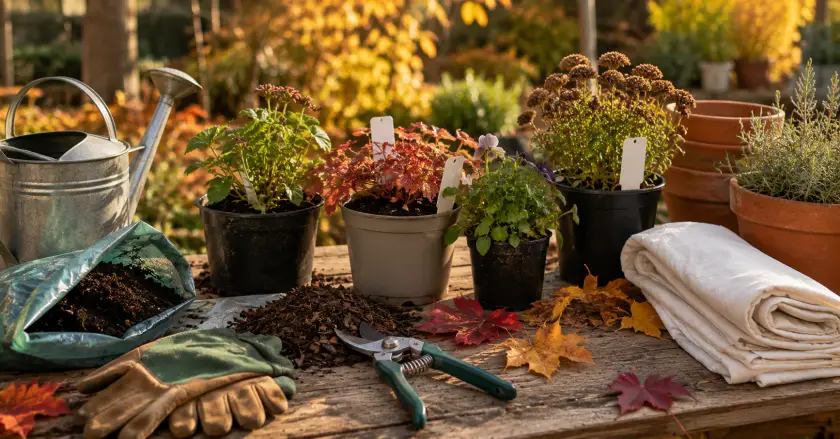
- Check soil moisture before watering, indoors and out
- Stop feeding houseplants and avoid high-nitrogen feeds outdoors
- Remove dead, damaged and diseased leaves and stems
- Leave healthy seed heads and some leaf litter for wildlife
- Plant hardy perennials, shrubs, trees and spring bulbs
- Refresh containers with autumn and winter plants
- Raise pots onto feet and check drainage
- Mulch beds and the roots of borderline-hardy plants
- Bring tender plants indoors before frost
- Move houseplants closer to windows and away from heaters
1. Water Less as Growth Slows
Stop watering by habit. Cooler soil holds moisture longer, autumn rain often does much of the work, and slower-growing plants use less water. Check the soil before watering: push a finger into the top inch or two, and water only if it is dry.
Containers still need checking, because windy days dry them out quickly while heavy rain can leave them waterlogged. Indoors, most houseplants need noticeably less water from autumn into winter. Our guides to the signs you’re overwatering, the worst times to water your plants and our root rot guide explain more.
2. Feed Perennials Gently
Autumn is not the time to push soft, leafy growth that frost will damage. Rather than strong fertilizer, spread a layer of compost or leaf mold over perennial beds. It feeds the soil slowly and improves its structure over winter. Avoid high-nitrogen feeds late in the season.
3. Go Easy on Feeding Shrubs
Established shrubs rarely need feeding in autumn. For newly planted shrubs, steady moisture and a mulch around (not against) the stems matter far more than fertilizer while the roots settle. Our guide to fertilizing indoor vs outdoor plants explains seasonal feeding.
4. Prune Lightly
Keep autumn pruning light. Remove dead, damaged, diseased and crossing stems, but avoid heavy cutting, which can trigger tender new growth just before frost. Leave major pruning of most shrubs until late winter or spring, depending on the plant. Our pruning basics guide explains timing and clean cuts.
5. Clean Up Selectively
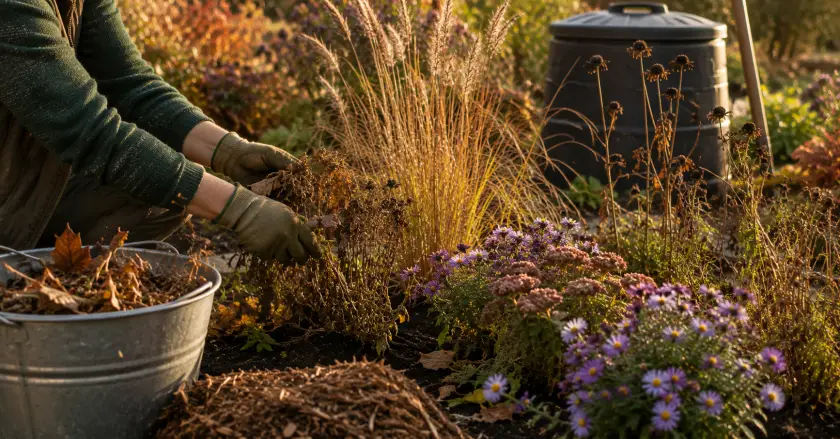
A fall garden clean up should leave beds healthier, not bare. Remove diseased leaves, rotting fruit and slimy stems that could carry problems into next year, and keep paths clear and safe. But leave healthy seed heads, hollow stems and some leaf litter in quieter corners. They feed birds and give overwintering insects shelter. Our guide to a wildlife-friendly garden explains why.
6. Refresh Flower Beds for Autumn Color
Autumn beds look best when they mix late flowers, colored leaves, grasses, berries and evergreen structure. Good choices include asters, sedum, chrysanthemums, heuchera, ornamental grasses, cyclamen, heather and compact evergreens. For more color planning, see our guides to a colorful garden for all seasons and shade-loving outdoor plants.
7. Plant Late Flowers for Bees
Pollinators still need nectar late in the season, after summer bedding fades. Asters, sedum, single-flowered chrysanthemums, heleniums, rudbeckia and ivy flowers are all valuable. Native plants that match your local insects are especially useful. See our pollinator-friendly plants for more.
8. Choose Tough Plants for Autumn Containers
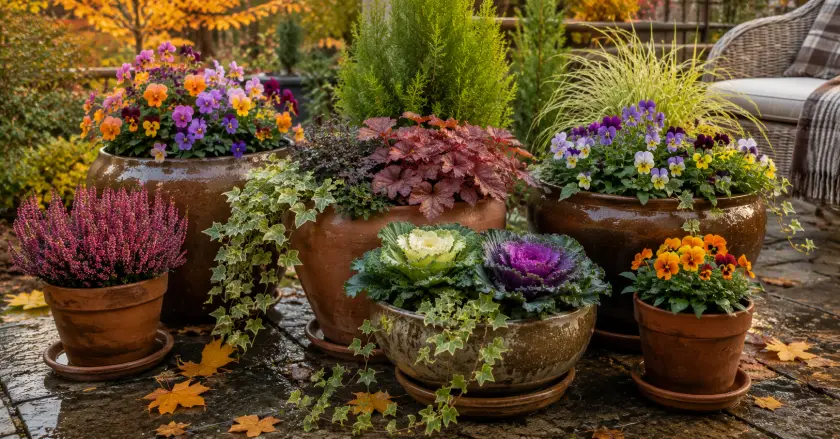
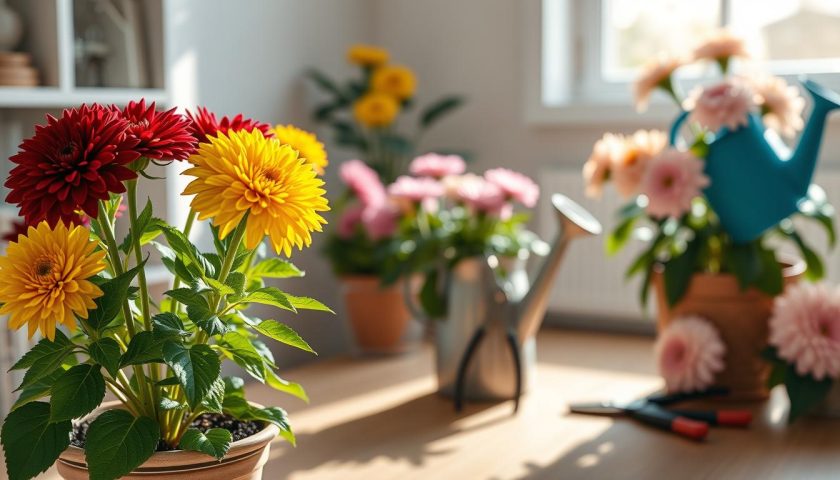
Pots are more exposed than beds, so choose plants that cope with cool nights and changing weather: pansies, violas, heuchera, heather, cyclamen, ornamental cabbage, ivy, small grasses, sedum, dwarf conifers and compact evergreen shrubs. Potted chrysanthemums add instant color; our guide to mums potted plant care explains how to keep them blooming. Our guide to container gardening on patios covers general pot care.
9. Layer Your Autumn Pots
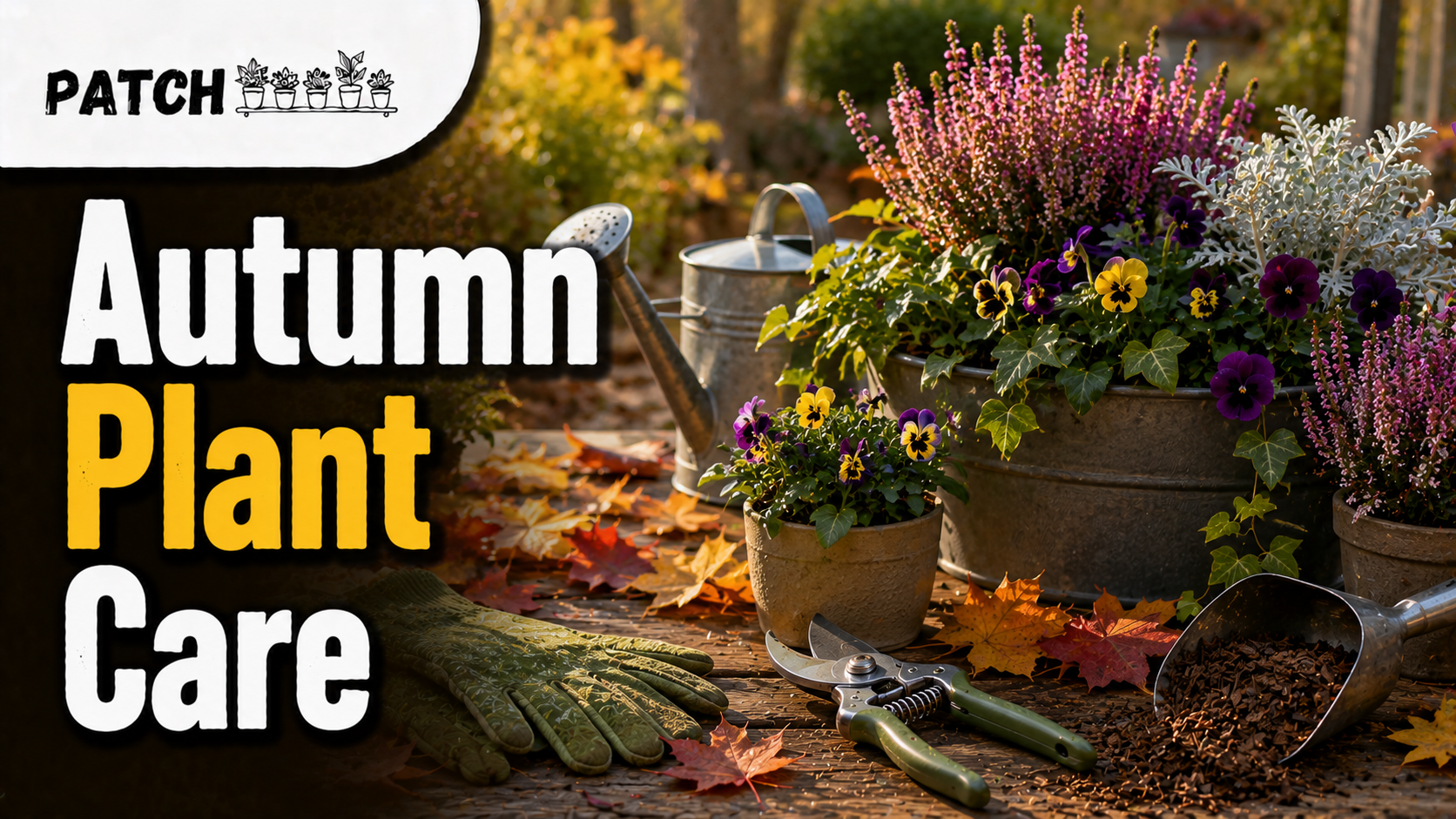
Put an upright plant in the center or back, mounding color around it, and trailing plants at the edge. Try these combinations:
- Heather, heuchera, pansies and trailing ivy
- Ornamental cabbage, violas and a compact grass
- Dwarf conifer, hardy cyclamen and ivy
- Sedum, heuchera and evergreen herbs such as thyme
10. Keep Pot Drainage Clear
Cold, wet compost kills more container plants in winter than cold alone. Make sure every pot has open drainage holes, and lift pots onto pot feet or bricks so water drains freely and pots do not sit in puddles or freeze to the ground. Our guides to year-round balcony plants and plants for small outdoor spaces suit exposed spots.
11. Plan Your Patio for Winter
Patios are seen up close and from inside, so choose plants with strong leaf color and neat shape that last beyond autumn. Mixing evergreen structure, such as small conifers, heuchera and grasses, with seasonal flowers means the patio still looks good after the flowers fade. Place pots where you can see them from your windows.
12. Add Structure with Winter-Hardy Plants
When tender summer plants disappear, evergreens, hardy perennials, grasses, berries and interesting stems carry the garden through winter. Strong choices include hellebores, heather, skimmia, carex and other sedges, ivy and winter pansies. For exposed or stormy gardens, see our guides to plants for coastal and windy gardens and outdoor plants that survive winter.
13. Grow Flowers for Autumn and Winter
Pansies, violas, cyclamen, heather, hellebores and winter jasmine can keep color going through the cold months in many climates. Plant them early enough in autumn for roots to settle before the hardest weather.
14. Plant Spring Bulbs, Shrubs and Perennials
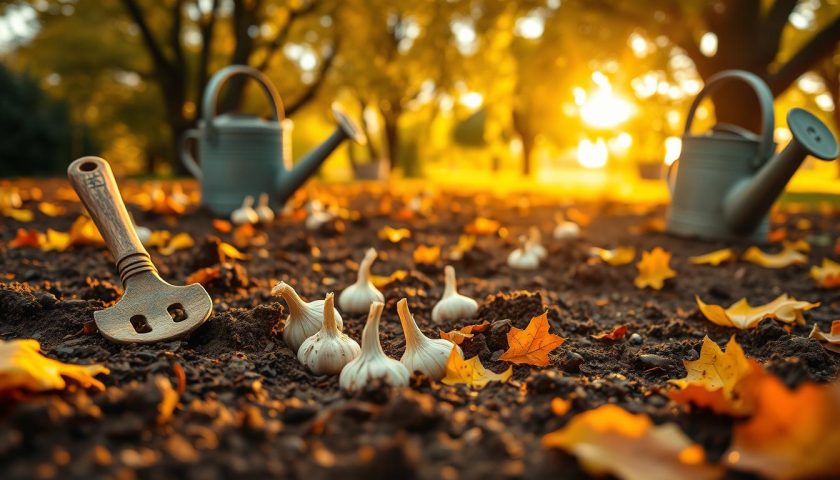
Autumn is one of the best planting seasons, because the soil is still warm while the air is cool. That helps roots establish with less stress than summer planting.
- Plant spring bulbs such as daffodils, crocus, alliums and tulips
- Plant hardy shrubs, trees and perennials while the soil is workable
- Avoid planting into frozen, waterlogged or bone-dry soil
- Water new plants well, then let autumn rain take over
- Mulch lightly, keeping mulch away from stems and crowns
Timing depends on your climate. In colder areas, such as USDA zone 5, plant earlier in autumn so roots have several weeks before the ground freezes. In milder areas, such as zone 7, the planting window often runs much later. Our month-by-month garden calendar helps you plan.
15. Choose Plants Deer Tend to Avoid
If deer visit your garden, choose plants they usually leave alone, often because of strong scent or tough texture: lavender, rosemary, ornamental grasses, hellebores, yarrow, catmint and ferns. No plant is completely deer-proof, so combine plant choice with fencing where browsing is heavy.
16. Move Tender Plants Indoors
Bring tender plants inside before the first frost. That includes houseplants that summered outdoors, citrus, tender herbs and patio geraniums. Check them for pests before bringing them in. Our guide to overwintering geraniums explains three ways to save them, and our guide to growing rosemary indoors helps with tender herbs.
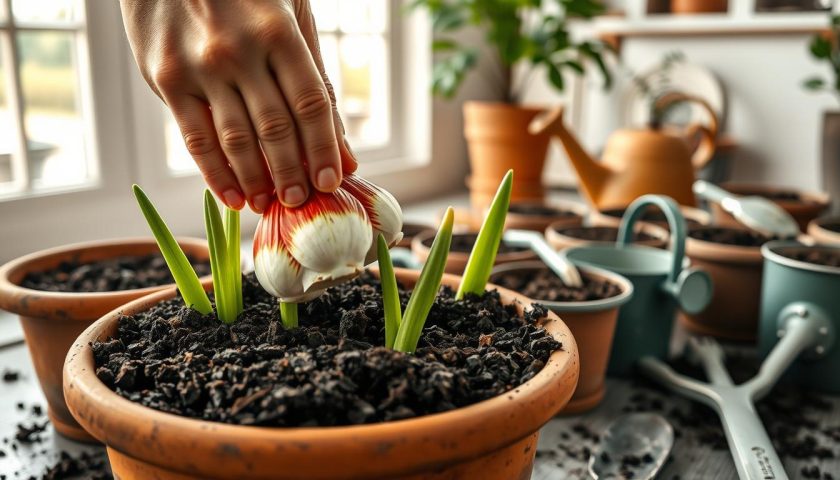
17. Adjust Indoor Plant Care for Autumn
Indoor light drops sharply in autumn, rooms cool at night, and heating dries the air.
- Move plants closer to windows, but keep leaves off cold glass
- Keep them away from radiators, heating vents and drafty doors
- Water less often and stop feeding most houseplants until spring
- Rotate pots and wipe dust from leaves so they catch more light
- Add a grow light for plants that start to stretch
Our complete guide to indoor light and guide to grow lights for indoor plants help in darker months, and our humidity hacks counter dry, heated air. For seasonal indoor color, see our guides to poinsettia care, amaryllis care, Christmas cactus care and the Norfolk Island pine.
Protect Plants from Winter Damage
Much of winter plant care starts in autumn. The Royal Horticultural Society’s advice on preventing winter damage includes:
- Protect container roots: wrap pots in bubble wrap or straw, or group them together in a dry, sheltered spot
- Protect tender plants: lift and store them, or mulch and wrap those left in the ground
- Fix drainage: waterlogged soil damages roots and makes young trees more likely to blow over
- Choose sheltered spots: use walls, hedges and windbreaks to protect vulnerable plants
- Shake off heavy snow from branches to prevent breakage
Common Autumn Plant Care Mistakes
- Watering like it is still summer: cooler soil dries slowly, so check first
- Feeding too late: strong fertilizer pushes soft growth just before frost
- Cleaning up too much: healthy seed heads and stems support wildlife
- Ignoring drainage: cold, wet compost rots roots
- Leaving tender pots out: containers freeze faster than ground soil
- Moving houseplants too late: cold windows and sudden heating changes shock plants
Expert Tip from Sawera Shahid
My best autumn advice is to do less than in summer, but pay closer attention. Check soil before watering, feed only when there is a clear reason, keep containers draining, clean up disease but leave some natural structure for wildlife, and move tender pots before frost rather than after the damage shows. Indoors, a plant that was happy in July may need a brighter spot by October.
Frequently Asked Questions
What is seasonal plant care in autumn?
It means adjusting watering, feeding, pruning, cleaning and protection as plants slow down after summer: watering less, stopping heavy feeding, tidying disease, planting hardy plants and protecting tender ones before frost.
Should I fertilize plants in autumn?
Mostly no. Stop feeding houseplants, and avoid high-nitrogen fertilizer outdoors, which pushes soft growth before frost. A layer of compost or leaf mold over beds is a gentler choice.
What are good plants for autumn pots?
Pansies, violas, heather, heuchera, cyclamen, ornamental cabbage, ivy, sedum, small grasses, dwarf conifers and potted chrysanthemums all cope well with cooler weather.
Should I clean up my garden in autumn?
Yes, but selectively. Remove diseased leaves, rotting fruit and dead stems that could spread problems, but leave healthy seed heads and some leaf litter for birds and insects.
When should I bring plants indoors for winter?
Before the first frost, ideally while nights are still above about 50°F (10°C) for tropical houseplants. Check plants for pests before bringing them inside.
Final Thoughts
Seasonal plant care in autumn is about working with the season, not against it. Water less often, feed gently, prune lightly, clean up selectively, protect roots and pots, and give houseplants more light. Your garden does not need to look perfect in autumn. It needs to be healthy, protected and ready for spring.
Explore more seasonal advice in our outdoor plants and plant care collections.