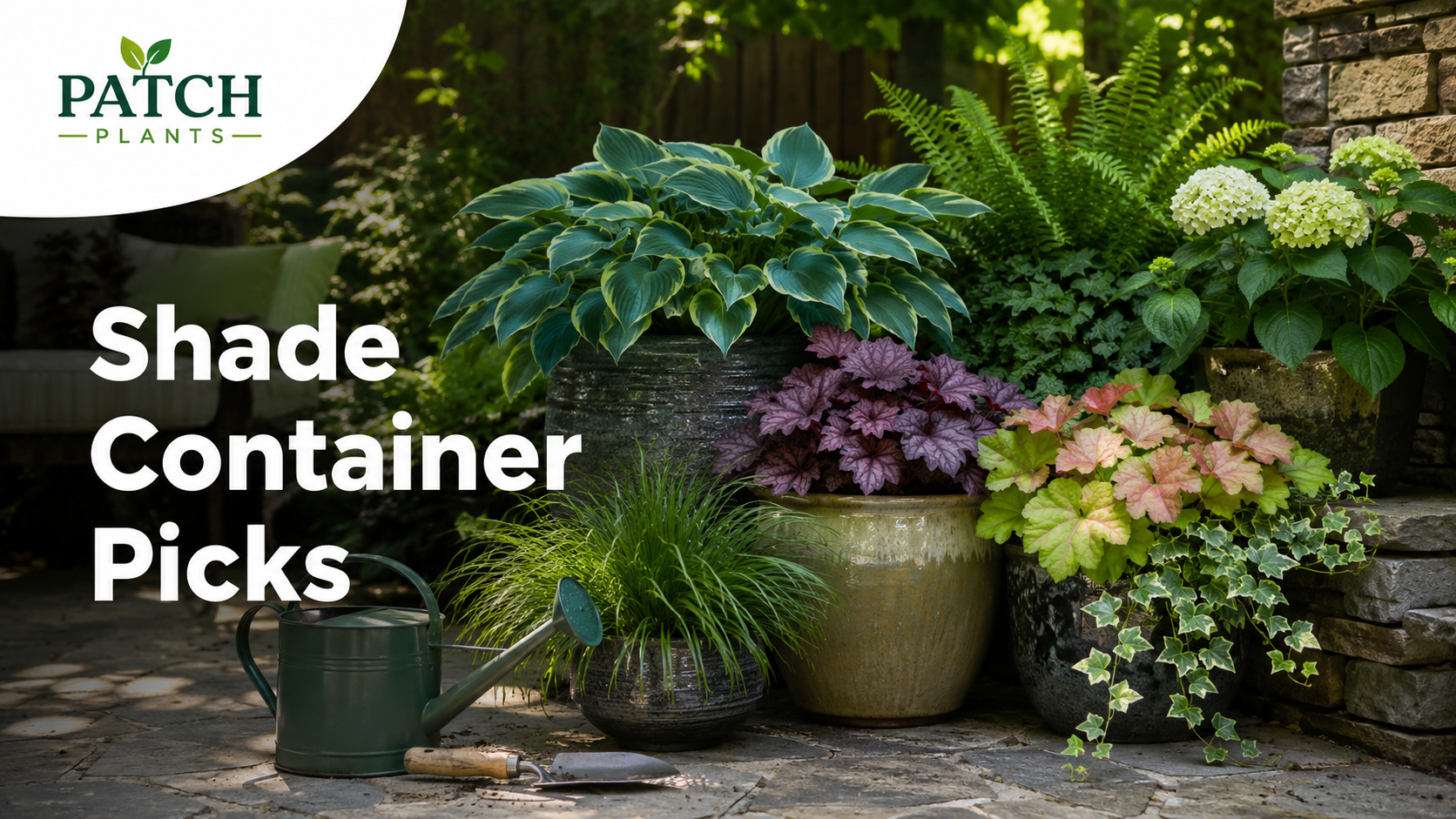
Container garden plants for shade can turn a dim patio, balcony, doorway, side yard, or north-facing corner into a calm, leafy display. Shade does not have to mean bare pots or dull greenery. The right plants can bring texture, flowers, colour, trailing edges, evergreen structure, and seasonal interest.
The key is matching the plant to the shade. Light shade can support many flowers and colourful foliage plants. Deep shade needs tougher foliage choices. Dry shade under trees or roof overhangs needs plants that can cope with root competition and less moisture. This guide gives you 19 strong options for shaded containers, plus care tips that help them last.
Best Picks at a Glance
The best container garden plants for shade include hosta, heuchera, ferns, begonias, impatiens, fuchsia, coleus, caladium, torenia, Japanese forest grass, carex, lamium, creeping Jenny, ajuga, skimmia, sarcococca, camellia, hydrangea, and ivy. Use flowers for light shade, foliage for deeper shade, trailers for soft pot edges, and shrubs for year-round structure.
Key Takeaways
- Container garden plants for shade need the right match between shade level, pot size, soil moisture, and season.
- Light shade and partial shade usually allow more flowers than deep shade.
- Ferns, hostas, heucheras, ivy, lamium, ajuga, and carex are useful foliage choices.
- Begonias, impatiens, fuchsias, torenia, and hydrangeas add colour to shaded pots.
- Shade containers still need watering because pots hold limited compost.
- Dry shade near walls, trees, and roof overhangs is harder than cool moist shade.
- Use this guide with plants in pots in shade, small plants that like shade, and container gardening on patios.
Container Garden Plants for Shade at a Glance
| Plant | Best Use | Shade Level |
|---|---|---|
| Hosta | Bold foliage | Partial to full shade |
| Heuchera | Colourful leaves | Light to partial shade |
| Ferns | Soft texture | Dappled to full shade |
| Begonia | Flowers and foliage | Light shade |
| Impatiens | Bright flowers | Light to partial shade |
| Fuchsia | Hanging flowers | Light shade |
| Coleus | Colourful foliage | Light to partial shade |
| Caladium | Tropical leaves | Light to partial shade |
| Torenia | Shade flowers | Light shade |
| Japanese Forest Grass | Soft movement | Partial shade |
| Carex | Grass-like texture | Light to partial shade |
| Lamium | Silver trailing foliage | Partial to full shade |
| Creeping Jenny | Trailing edge | Light shade |
| Ajuga | Low foliage and spring flowers | Partial shade |
| Skimmia | Evergreen structure | Partial shade |
| Sarcococca | Evergreen scent | Partial to full shade |
| Camellia | Evergreen flowers | Partial shade |
| Hydrangea | Large summer flowers | Partial shade |
| Ivy | Evergreen trailing foliage | Partial to full shade |
Understand Your Shade Before Choosing Plants
Shade is not one condition. A bright courtyard with no direct midday sun is very different from a dark corner under dense evergreen trees. Before buying plants, check how much light reaches the pot during the day.
Light shade
Light shade means the area is bright but screened from strong direct sun. This is often the easiest shade for container gardening because many flowering and foliage plants still perform well.
Partial shade
Partial shade usually means a few hours of direct sun and shade for the rest of the day. Morning sun with afternoon shade is especially useful for many container plants.
Dappled shade
Dappled shade comes through tree branches or open canopies. It can be excellent for ferns, hostas, heucheras, and woodland-style containers if the pots do not dry out too much.
Moderate or full shade
Moderate to full shade gets very little direct sun. Choose plants mainly for foliage, texture, and evergreen structure rather than heavy flowering.
Dry shade
Dry shade is one of the hardest container spots. It often happens under trees, beside walls, below balconies, or under roof overhangs. Use larger pots, moisture-retentive compost, mulch, and regular watering.
How to Build a Strong Shade Container
A good shade container needs more than one pretty plant. Think about shape, height, leaf texture, colour, trailing edges, and the season you want it to look best.
Use the simple container formula
- Thriller: A taller plant for height, such as skimmia, hydrangea, camellia, fern, or Japanese forest grass.
- Filler: A middle plant for fullness, such as heuchera, begonia, hosta, coleus, or impatiens.
- Spiller: A trailing plant for the edge, such as ivy, lamium, creeping Jenny, or trailing fuchsia.
Match moisture needs
Do not mix a moisture-loving fern with a plant that wants to dry hard between watering. Containers work best when all plants in the pot want similar light and moisture.
Use fewer plants in long-term containers
Seasonal summer pots can be planted more densely. Long-term containers with shrubs and perennials need room for roots to grow.
19 Strong Container Garden Plants for Shade
These plants cover flowers, foliage, evergreen structure, grasses, shrubs, and trailers. Use them alone in statement pots or combine them carefully for layered shade displays.
1. Hosta
Hostas are classic shade container plants because their bold leaves bring instant structure. They come in blue-green, lime, variegated, ribbed, and large-leaf forms.
- Best for: Cool foliage, shaded patios, woodland pots.
- Light: Partial shade to full shade.
- Care tip: Keep evenly moist and protect from slugs and snails.
2. Heuchera
Heuchera, also called coral bells, is ideal when you want colour without relying on flowers. Leaves can be lime, amber, caramel, burgundy, silver, purple, or almost black.
- Best for: Colourful foliage and mixed containers.
- Light: Light shade to partial shade.
- Care tip: Avoid waterlogged compost in winter.
3. Ferns
Ferns soften shade containers with fine texture and natural woodland style. Japanese painted fern, hart’s tongue fern, lady fern, and soft shield fern are good starting points.
- Best for: Cool, leafy shade displays.
- Light: Dappled shade to full shade.
- Care tip: Most ferns dislike drying out hard.
4. Begonia
Begonias are reliable for shaded pots because many types flower well without full sun. Tuberous begonias, wax begonias, and foliage begonias all work in containers.
- Best for: Bright flowers and compact shade colour.
- Light: Light shade or filtered sun.
- Care tip: Keep soil moist but not soggy.
5. Impatiens
Impatiens bring strong colour to shaded containers, especially where you want a soft mound of flowers. They are useful for seasonal displays on shaded patios and balconies.
- Best for: Summer colour in light shade.
- Light: Light shade to partial shade.
- Care tip: Choose healthy, disease-resistant plants and avoid overcrowding.
6. Fuchsia
Fuchsia is excellent for shaded hanging baskets and tall pots. The flowers hang like little lanterns and work beautifully with ivy, ferns, and heuchera.
- Best for: Hanging baskets, tall pots, cottage-style shade.
- Light: Light shade with protection from hot sun.
- Care tip: Keep watering steady in warm weather.
7. Coleus
Coleus gives vivid foliage in colours from lime and pink to burgundy, bronze, and red. It is grown mostly for leaves, not flowers, so it is useful in shady spots where blooms are limited.
- Best for: Bold seasonal foliage.
- Light: Light shade to partial shade.
- Care tip: Pinch tips to keep plants bushy.
8. Caladium
Caladium has heart-shaped leaves in white, pink, red, green, and patterned combinations. It gives containers a tropical look without needing strong direct sun.
- Best for: Tropical summer containers.
- Light: Light shade to partial shade.
- Care tip: Treat as tender in cold climates and protect from chill.
9. Torenia
Torenia, often called wishbone flower, is a cheerful flowering plant for light shade. It is useful in smaller pots, window boxes, and mixed summer containers.
- Best for: Small flowers in shaded summer pots.
- Light: Light shade.
- Care tip: Keep evenly moist during flowering.
10. Japanese Forest Grass
Japanese forest grass, or Hakonechloa, adds soft movement to shaded containers. Its arching leaves look especially good beside hostas, ferns, and heucheras.
- Best for: Texture, movement, and elegant shade pots.
- Light: Partial shade.
- Care tip: Use a wide enough pot so the grass can spread naturally.
11. Carex
Carex is a grass-like sedge that works well in containers where you want fine texture and year-round shape. Many varieties tolerate shade better than true ornamental grasses.
- Best for: Evergreen or semi-evergreen texture.
- Light: Light shade to partial shade.
- Care tip: Trim tired leaves in spring if needed.
12. Lamium
Lamium is useful for shaded pot edges because it has silver-marked leaves and a soft trailing habit. It brightens darker containers without needing bright flowers.
- Best for: Trailing silver foliage.
- Light: Partial shade to full shade.
- Care tip: Trim back if it becomes too long or untidy.
13. Creeping Jenny
Creeping Jenny, especially golden forms, spills beautifully over pot edges. It glows in light shade and works well with begonias, coleus, and dark-leaved heucheras.
- Best for: Bright trailing foliage.
- Light: Light shade to partial shade.
- Care tip: Keep watered in containers because trailing stems can dry quickly.
14. Ajuga
Ajuga is a low-growing perennial with glossy leaves and spring flower spikes. Bronze and purple forms are useful for contrast in shaded pots.
- Best for: Low filler, edge planting, and foliage contrast.
- Light: Partial shade.
- Care tip: Trim runners if it spreads beyond the pot.
15. Skimmia
Skimmia is a strong evergreen shrub for shaded containers. It gives structure, glossy leaves, flower buds, and berries on suitable male and female varieties.
- Best for: Year-round structure.
- Light: Partial shade.
- Care tip: Use a good container compost and avoid harsh midday sun.
16. Sarcococca
Sarcococca, or sweet box, is a compact evergreen shrub that handles shade and gives winter fragrance. It is quiet most of the year, then valuable when little else is scented.
- Best for: Evergreen shade, winter scent, doorways.
- Light: Partial shade to full shade.
- Care tip: Use a deeper pot for long-term root room.
17. Camellia
Camellias can grow well in containers if they have partial shade, shelter, and acidic compost. Their glossy evergreen leaves and spring flowers make them excellent feature plants.
- Best for: Evergreen flowers and statement shade pots.
- Light: Partial shade, protected from harsh morning frost after cold nights.
- Care tip: Use ericaceous compost and rainwater where tap water is hard.
18. Hydrangea
Hydrangeas work well in larger shaded containers, especially where they receive morning sun and afternoon shade. Compact varieties are best for pots.
- Best for: Large summer flowers.
- Light: Partial shade.
- Care tip: Use a large pot and do not let the compost dry out.
19. Ivy
Ivy is a tough trailing or climbing plant for shaded containers. It gives evergreen foliage, softens pot edges, and works well in winter displays.
- Best for: Evergreen trailing foliage.
- Light: Partial shade to full shade.
- Care tip: Trim regularly so it does not overwhelm smaller plants.
Best Shade Container Plants by Use
| Use | Best Plants | Care Note |
|---|---|---|
| Flowers | Begonia, impatiens, fuchsia, torenia, hydrangea, camellia | Best flowering is usually in light or partial shade |
| Bold foliage | Hosta, heuchera, caladium, coleus | Use colour and leaf shape where flowers are limited |
| Trailing edges | Ivy, lamium, creeping Jenny, fuchsia | Trim as needed to keep the display tidy |
| Evergreen structure | Skimmia, sarcococca, ivy, some carex | Good for winter and front-door containers |
| Soft texture | Ferns, Japanese forest grass, carex | Useful for calm, natural shade displays |
Best Plants for Light Shade Containers
Light shade gives you the most options. The area is bright enough for colourful leaves and many seasonal flowers, but protected from the harshest sun.
Strong choices for light shade
- Begonia.
- Impatiens.
- Fuchsia.
- Coleus.
- Caladium.
- Torenia.
- Creeping Jenny.
- Heuchera.
Best Plants for Full Shade Containers
Full shade containers usually need plants chosen for leaf shape, texture, and toughness. Heavy flowering is less likely in deep shade, so foliage becomes the main feature.
Strong choices for fuller shade
- Ferns.
- Hosta.
- Ivy.
- Lamium.
- Sarcococca.
- Ajuga.
- Some carex varieties.
Best Plants for Dry Shade Containers
Dry shade is tricky because the plant receives less light and less moisture. Containers can help because you control the compost, but they still need regular water checks.
Better dry shade options
- Epimedium in larger containers.
- Ivy.
- Lamium.
- Ajuga.
- Carex.
- Sarcococca once established.
- Heuchera in light dry shade with careful watering.
For more shade-specific ideas, read shade-loving plants for outdoor spaces, plants in pots in shade, and small plants that like shade.
Shade Container Combinations
Good combinations repeat one idea instead of mixing every plant you like. Choose one main colour, one bold leaf, one fine-textured plant, and one trailer.
Cool green container
- Thriller: Fern.
- Filler: Hosta.
- Filler: Heuchera.
- Spiller: Ivy.
Colourful summer shade pot
- Thriller: Coleus.
- Filler: Begonia.
- Filler: Impatiens.
- Spiller: Creeping Jenny.
Evergreen doorway shade pot
- Thriller: Skimmia or sarcococca.
- Filler: Heuchera.
- Filler: Carex.
- Spiller: Ivy.
Tropical shade container
- Thriller: Caladium.
- Filler: Coleus.
- Filler: Begonia.
- Spiller: Lamium or creeping Jenny.
Choosing the Right Pot for Shade Plants
A shade container needs drainage, root room, and enough stability for the plants you choose. Large pots are easier to manage than tiny pots because they hold more compost and moisture.
Pot tips
- Use drainage holes every time.
- Choose larger pots for shrubs, hydrangeas, camellias, and long-term perennials.
- Use frost-resistant containers for year-round displays.
- Avoid narrow top-heavy pots for tall plants.
- Use saucers carefully, and do not let winter pots sit in water.
Best Soil for Shade Containers
Use fresh container compost or potting mix rather than heavy garden soil. Shade containers need a mix that holds moisture but still drains well.
Simple potting mix approach
- Use quality peat-free container compost for seasonal pots.
- Use a loam-based compost for long-term shrubs where suitable.
- Add fine bark, grit, or perlite if the mix feels too dense.
- Use ericaceous compost for camellias.
- Refresh the top layer of compost in long-term containers each year.
For soil and potting help, read best soil mix guide, how to repot a plant, and repotting mistakes to avoid.
Watering Container Garden Plants for Shade
Shade containers dry more slowly than sunny pots, but they still need regular checks. A pot under a tree, balcony, or roof edge may receive very little rain even when the garden looks wet.
| Container Situation | Watering Need | Watch Out For |
|---|---|---|
| Light shade summer pot | Check often in warm weather | Wilting flowers and dry edges |
| Full shade foliage pot | Water when the top layer begins to dry | Overwatering and fungus gnats |
| Under trees | Check moisture below the surface | Dry compost despite shade |
| Under eaves | Water manually | Rain may not reach the pot |
| Winter container | Water less often | Waterlogging and frozen roots |
Watering tips
- Check soil moisture before watering.
- Water deeply until water drains from the bottom.
- Mulch the surface to slow drying.
- Do not let long-term shrubs dry hard in summer.
- Reduce watering in cool months when growth slows.
For deeper watering support, read complete watering guide, worst times to water plants, and signs you are overwatering.
Feeding and Maintenance
Container plants cannot spread roots into garden soil for more nutrients, so they need feeding during active growth. Seasonal flowering pots often need more feeding than slow evergreen shrubs.
Feeding tips
- Use slow-release fertilizer for easy seasonal care.
- Use liquid feed for hungry annuals during flowering.
- Do not overfeed plants in deep shade because growth is slower.
- Top-dress long-term pots in spring.
- Use the correct feed for acid-loving plants such as camellias.
Maintenance tips
- Deadhead begonias, impatiens, fuchsias, and other flowering plants.
- Trim ivy, lamium, and creeping Jenny before they swamp the pot.
- Remove yellow leaves from hostas, ferns, and caladiums.
- Lift tender plants before frost where needed.
- Refresh tired seasonal containers when plants stop performing.
For feeding basics, read fertilizing indoor vs outdoor plants and pruning basics.
Common Problems With Shade Containers
Most shade container problems come from the wrong plant for the shade level, soggy compost, dry root balls, pests, or poor airflow.
| Problem | Likely Cause | First Fix |
|---|---|---|
| Few flowers | Too much shade or not enough feeding | Move to brighter shade and feed lightly |
| Yellow leaves | Overwatering, old leaves, low nutrients, root stress | Check drainage and moisture |
| Wilting in shade | Dry compost or root-bound pot | Water deeply and check roots |
| Rotting stems | Wet compost and poor airflow | Improve drainage and reduce overcrowding |
| Slug damage | Hostas, begonias, and soft growth attracting slugs | Inspect at dusk and protect young leaves |
| Leggy growth | Too little usable light | Move closer to light shade |
Slugs and snails
Slugs and snails love cool shaded containers, especially hostas and tender new growth. Check under pot rims and around the base of pots.
Vine weevil
Vine weevil larvae can damage roots in containers. If a plant suddenly collapses despite moist compost, check the root ball for larvae.
Fungus gnats
Fungus gnats are more common when compost stays too wet. Let the surface dry slightly where the plant allows, and avoid overwatering.
For more problem help, read yellow leaves on plants, leaf curl, browning and droop, root rot guide, and how to keep pests away from outdoor plants.
Seasonal Care for Shade Containers
Shade containers change through the year. A summer begonia pot will not behave like a winter skimmia pot. Plan for the season you care about most.
| Season | Main Focus | Care Move |
|---|---|---|
| Spring | Refresh containers | Top-dress, divide perennials, plant new displays |
| Summer | Water and flowering | Check moisture, feed, deadhead, trim trailers |
| Autumn | Clear tired annuals | Replace tender plants or move them under cover |
| Winter | Protect roots | Raise pots on feet and prevent waterlogging |
For seasonal planning, read garden calendar, seasonal plant care in autumn, and outdoor plants that survive British winters.
Container Garden Plants for Shade Checklist
| Task | Best Choice | Avoid |
|---|---|---|
| Shade check | Match plant to light shade, partial shade, or full shade | Putting flowering plants in deep shade |
| Pot choice | Use drainage holes and enough root space | Closed pots with standing water |
| Compost | Use fresh container compost | Heavy compacted garden soil |
| Plant mix | Combine plants with similar moisture needs | Mixing dry-shade plants with thirsty ferns |
| Watering | Check regularly, even in shade | Assuming shade pots never dry out |
| Feeding | Feed during active growth | Overfeeding slow plants in deep shade |
| Winter | Raise pots and protect roots | Leaving tender plants exposed to frost |
Common Mistakes With Shade Container Gardening
| Mistake | What Happens | Better Choice |
|---|---|---|
| Choosing sun-loving plants | Weak growth and few flowers | Choose true shade-tolerant plants |
| Using tiny pots | Roots dry fast and plants struggle | Use larger containers where possible |
| Ignoring drainage | Root rot and sour compost | Use drainage holes and free-draining mix |
| Forgetting dry shade | Plants wilt even without sun | Water deeply and mulch |
| Overcrowding the pot | Poor airflow and weak growth | Leave room for plants to spread |
| Expecting heavy blooms in deep shade | Disappointment | Use foliage, texture, and evergreen structure |
Helpful PATCH Guides for Shade Containers
Use these related PATCH guides to plan shaded pots, choose outdoor plants, improve watering, and manage container care through the year.
Shade and Container Guides
- Plants in pots in shade
- Small plants that like shade
- Shade-loving plants for outdoor spaces
- Container gardening on patios
- How to keep outdoor plants alive
- Outdoor Plants hub
Outdoor Plant Guides
- Hardy outdoor plants
- Outdoor plants for British winters
- Low-maintenance outdoor plants
- Garden calendar
- Seasonal plant care in autumn
- Color themes for your outdoor garden
Watering, Soil and Problem Guides
- Plant Care hub
- Complete watering guide
- Worst times to water plants
- Signs you are overwatering
- Best soil mix guide
- How to repot a plant
- Yellow leaves on plants
- Root rot guide
Frequently Asked Questions
What are the best container garden plants for shade?
The best container garden plants for shade include hosta, heuchera, ferns, begonias, impatiens, fuchsia, coleus, caladium, torenia, Japanese forest grass, carex, lamium, creeping Jenny, ajuga, skimmia, sarcococca, camellia, hydrangea, and ivy.
Can container plants grow in full shade?
Yes, some plants can grow in full shade containers, especially foliage plants such as ferns, hostas, ivy, lamium, ajuga, carex, and sarcococca. Deep shade usually means slower growth and fewer flowers.
What flowers grow well in shaded pots?
Begonias, impatiens, fuchsias, torenia, camellias, and hydrangeas can work well in shaded pots. Most flowering shade containers perform best in light shade or partial shade rather than deep shade.
Do shade containers still need watering?
Yes. Shade containers still need watering, especially under trees, near walls, or under roof overhangs where rain may not reach the pot. Check the compost before watering.
What plants are best for dry shade containers?
Ivy, lamium, ajuga, carex, sarcococca, and some heucheras can be useful in dry shade containers. Use larger pots, mulch, and steady watering to reduce stress.
What is the best potting mix for shade containers?
Use fresh container compost that holds some moisture but drains well. For camellias and other acid-loving plants, use ericaceous compost.
Can I grow hostas in pots in shade?
Yes. Hostas grow well in shaded pots if the container has enough root space, the compost stays evenly moist, and you protect the leaves from slugs and snails.
What evergreen plants grow in shaded containers?
Skimmia, sarcococca, ivy, camellia, some carex varieties, and some ferns can provide evergreen or semi-evergreen interest in shaded containers.
How do I make a shade container look full?
Use a mix of plant shapes. Add a tall or bold plant, a few mounding fillers, and a trailing plant at the edge. Repeat leaf colours so the pot looks planned rather than crowded.
Why are my shade container plants turning yellow?
Yellow leaves can come from overwatering, poor drainage, lack of nutrients, old leaves, root crowding, pests, or too little usable light. Check moisture and drainage first.
Final Thoughts
Container garden plants for shade work best when you stop thinking of shade as one single condition. Light shade can support flowers and colour. Partial shade suits many mixed containers. Full shade is better for ferns, hostas, ivy, and foliage. Dry shade needs tougher plants, larger pots, and better watering habits.
RHS explains that containers are versatile, suitable for many plants, and need good drainage plus regular watering during the growing season: RHS guide to growing plants in containers.
For the best results, start with the shade level, then build the pot around texture, moisture needs, and seasonal interest. A shaded container can look just as strong as a sunny one when the plant choices are right.
Final Recap
Container garden plants for shade can bring flowers, foliage, evergreen structure, and trailing texture to patios, balconies, doorways, courtyards, and shaded garden corners. Strong options include hosta, heuchera, ferns, begonias, impatiens, fuchsia, coleus, caladium, torenia, Japanese forest grass, carex, lamium, creeping Jenny, ajuga, skimmia, sarcococca, camellia, hydrangea, and ivy. Use flowering plants in light or partial shade, foliage plants in deeper shade, and evergreen shrubs for year-round structure. Choose pots with drainage holes, use fresh container compost, match plants with similar moisture needs, water regularly, feed during active growth, and protect long-term containers from winter waterlogging. With the right mix, even a shaded pot can look full, colourful, and healthy.