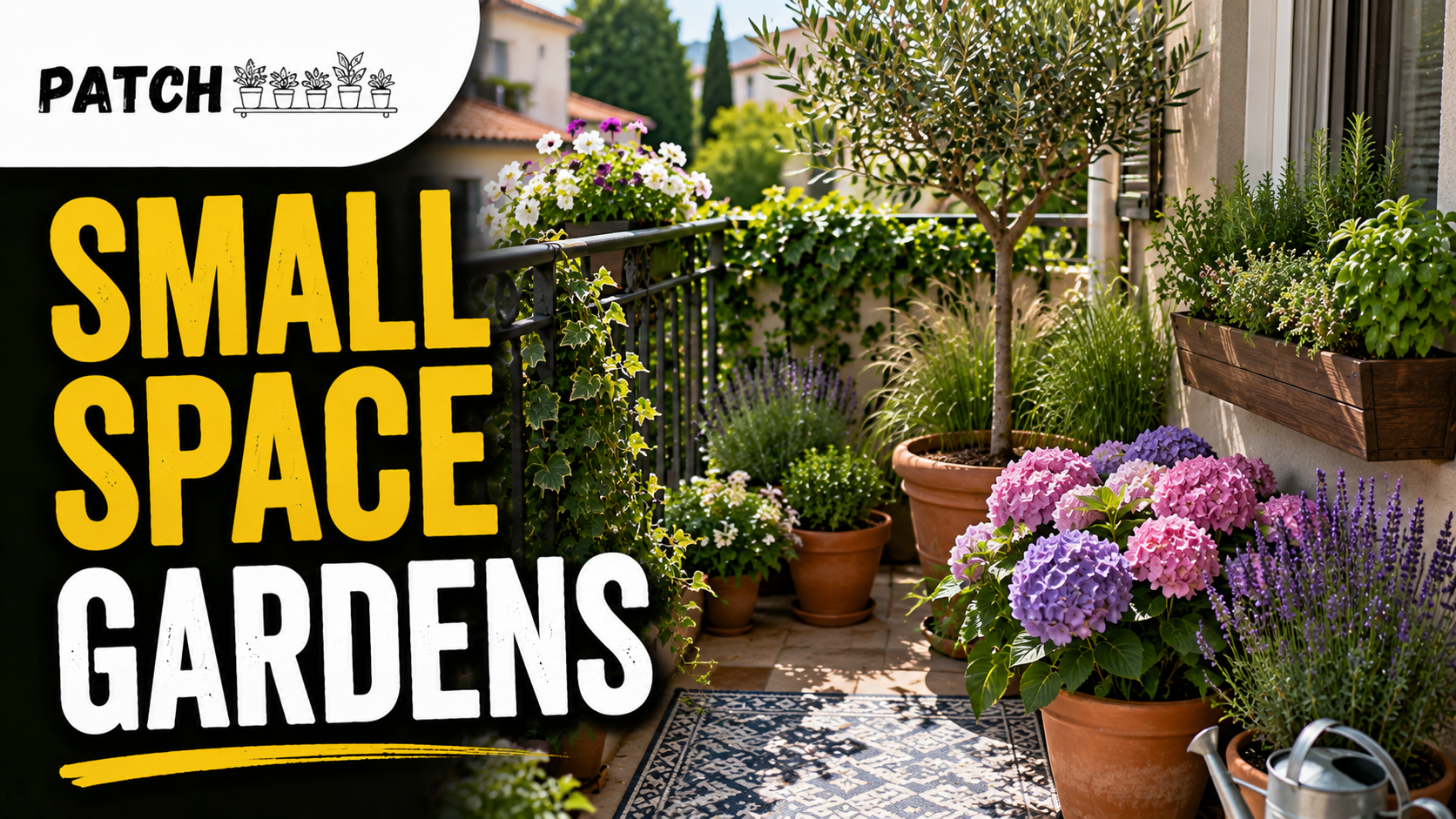
The best plants for small outdoor spaces are compact, happy in containers, and matched to your light and wind. Herbs, lavender, heuchera, climbers on a wall or railing, and one statement tree in a large pot give a balcony, patio or doorstep the most impact for the least floor space.
I am Sawera Shahid, a botanist at Patch Plants. This guide covers plants for small outdoor spaces by situation, from window boxes to shaded courtyards, with care advice checked against the Royal Horticultural Society (RHS). Where my earlier advice did not match the RHS, I have corrected it.
Plants for Small Outdoor Spaces at a Glance
| Space | Good Plants (RHS-checked) | Key Point |
|---|---|---|
| Sunny windowsill or window box | Thyme, rosemary, sedum, lavender | Check compost daily in warm or windy weather |
| Shaded window box | Ivy, skimmia, begonia, impatiens | Choose shade-tolerant plants only |
| Sunny balcony | Lavender, rosemary, ornamental grasses | Wind and sun are the main limits |
| Shaded balcony or courtyard | Hostas, Japanese painted fern, heuchera, skimmia | Keep moisture steady |
| Wall or fence | Clematis, ivy, jasmine, climbing hydrangea | Needs sturdy support |
| Doorstep focal point | Bay, olive, Japanese maple, camellia, compact hydrangea | Large pot with drainage |
Assess Your Small Outdoor Space First
Light
Light decides everything. South and west-facing spaces suit sun lovers such as lavender, rosemary and thyme, while north and east-facing spaces suit shade-tolerant plants such as ivy, skimmia, heuchera and hostas. Our guide to light explains how to judge it.
Wind and Weight
The RHS says the main limitations of roof gardens and balconies are strong winds and sunshine. Plants with reduced leaf surface, such as grasses and hairy grey-leaved lavender, cope best. Check your balcony’s weight limit before adding containers, and place heavy pots near load-bearing walls. Our guides to year-round balcony plants and coastal and windy plants cover exposed spots.
Floor and Vertical Space
Most small spaces have more wall than floor. Climbers, hanging baskets and rail planters multiply your planting area without using floor.
Window Box Plants for Small Outdoor Spaces
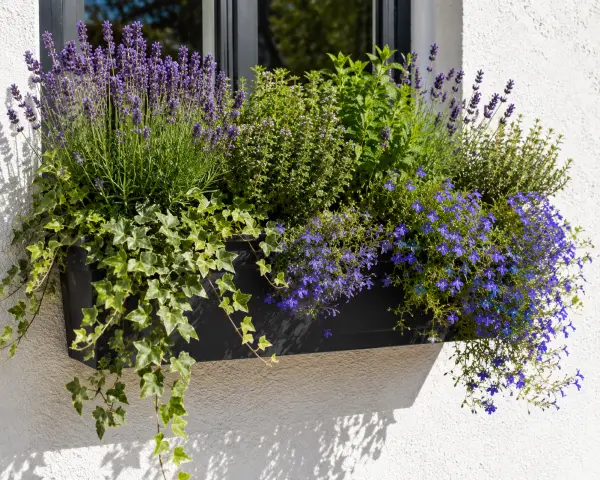
Plant a window box in layers: upright plants at the back, mounding plants in the middle and trailing plants at the front. Summer boxes in sun suit thyme, rosemary and lavender, which the RHS lists among herbs and sun-lovers for containers. Shaded boxes suit trailing ivy, begonias and impatiens, which the RHS says grow in partial shade (begonias) and part to full shade (impatiens). For winter, skimmia gives evergreen foliage, and the RHS says female plants carry red berries when a male plant is nearby.
Containers dry out fast. The RHS says to check them daily in warm or windy weather and twice daily in hot weather, and to keep compost moist but never soggy. See our watering guide.
Climbing Plants for Small Outdoor Spaces

Climbers are the most space-efficient plants for small outdoor spaces, because they use walls, fences and railings instead of floor.
Clematis
The RHS says smaller-growing clematis suit containers, especially on an obelisk or small trellis. Use a pot at least 45cm deep and wide with peat-free soil-based compost such as John Innes No. 2. Clematis need cool, moist roots, so shade the base with other plants or pebbles, and water container plants most days from April to October. Check which pruning group yours belongs to before you cut.
Ivy
The RHS says ivies tolerate shade well and grow in full sun, and variegated types can lighten dark areas. Trim excess growth in mid-spring. Ivy can irritate skin, so wear gloves. See our English ivy care guide.
Jasmine
The RHS describes common jasmine (Jasminum officinale) as very fragrant, with white flowers in summer and early autumn. It wants a warm, sunny, sheltered, south- or west-facing spot, and it is vigorous, reaching 4 to 8m. That makes it better for a sunny wall than for a tiny pot.
Climbing Hydrangea
The RHS says climbing hydrangeas suit north- or east-facing walls, are self-clinging but need wires or trellis to start, and can eventually cover a house wall. Young plants often take three to five years to flower. Use it only where you have a wall and patience, not on a tiny balcony.
Small Trees for Pots
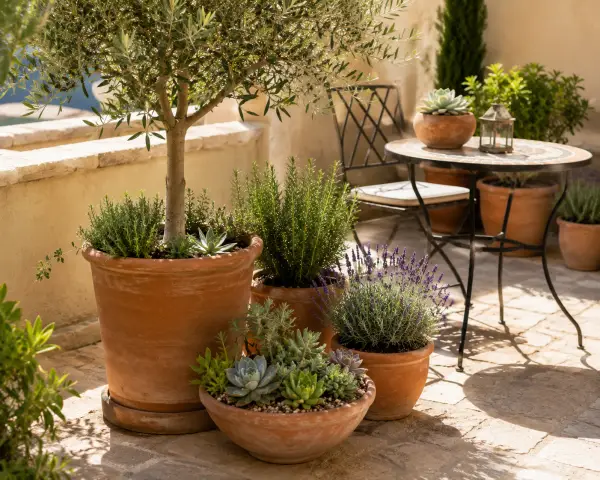
Among plants for small outdoor spaces, one tree in a bold pot can anchor a small space. The RHS lists Japanese maple, olive and bay among trees that suit containers, and notes that tender trees such as olives and citrus can be moved to a frost-free place in winter. It advises avoiding fast-growing or vigorous trees, which become leggy in a small root space.
- Bay: Suits clipped shapes in a pot. It also supplies leaves for cooking.
- Olive: Tender, so move it to a frost-free place in winter.
- Lemon (citrus): Also tender; the RHS suggests a frost-free space with a night minimum of about 4°C.
- Japanese maple: Prefers a sheltered spot with partial shade, because afternoon sun can scorch the foliage.
The RHS suggests a final pot of around 45cm, loam-based compost such as John Innes No. 3, plenty of drainage holes and a feed each spring. Water thoroughly and keep compost moist but not wet, including in winter. In exposed spots, heavy frost-proof terracotta adds stability, while lightweight plastic is easier to move. Wrap pots in bubble wrap or hessian in winter.
Flowering Plants for Small Outdoor Spaces
Flowering plants for small outdoor spaces should stay compact and cope with pots.
Hydrangea
The RHS recommends light shade, and compact cultivars such as ‘Red Hot Violet’ and ‘Altona’ for pots. Raise pots on feet for drainage, check them regularly, and move containers to a shadier spot in summer to reduce drying out.
Lavender
The RHS says lavender thrives in full sun and is drought tolerant, and that containers need regular summer water but should be kept fairly dry in winter. Use a pot 30 to 40cm across with up to 25% coarse grit. The flowers are very attractive to bees.
Camellia
The RHS says camellias prefer partial or dappled shade, a sheltered site away from cold winds and early morning sun, and acidic (ericaceous) soil. In pots, use peat-free ericaceous compost.
Coneflower
The RHS says coneflowers need full sun, tolerate dry soil, and attract bees and butterflies. Container plants need regular watering.
Herbs for Small Outdoor Spaces
The RHS advises a deep root run for herbs, a gritty well-drained compost (for example John Innes No. 1 with up to 25% coarse grit), and compost that is moist but never soggy. It also advises avoiding overpotting, because herbs can rot in oversized pots.
- Rosemary: A larger perennial that can stay in a container for several years. The RHS says established plants survive about -8°C, and to watch for rosemary beetle.
- Thyme: Once established, thyme can live outdoors all year.
- Mint: The RHS says mint likes moist, fertile soil and is not the happiest of herbs in a pot, so replant it often. Mint is vigorous, so many growers keep it in its own pot.
- Basil: Tender, so plant it out after the risk of frost has passed.
See our mosquito repellent plants guide for herb ideas near seating.
Shade-Tolerant Plants for Small Outdoor Spaces
A north-facing balcony or enclosed courtyard needs different plants.
- Japanese painted fern: The RHS lists light to full shade, consistently moist but not waterlogged soil, and it is deciduous.
- Skimmia: Prefers partial to deeper shade, suits containers (compact cultivars of 40 to 70cm), and does not need acidic compost.
- Heuchera: Prefers partial or dappled shade and well-drained soil.
- Hostas: Thrive in light to medium shade in moist soil. Slugs and snails are the main problem.
See our shade-loving plants, plants in pots in shade and shade garden pots guides.
Drought-Tolerant Plants for Sunny Small Spaces
Small containers in full sun dry out quickly. The RHS says sedums (Hylotelephium) need full sun and tolerate dry soil once established, and that grasses are fairly drought tolerant once established. Lavender, rosemary and thyme suit the same conditions. Cool-climate grasses such as Festuca are planted in autumn. See our guides to drought-resistant plants and hardy plants that survive on minimal watering.
Pick a Theme for Your Small Outdoor Space
A single theme makes plants for small outdoor spaces look intentional rather than cluttered.
| Theme | Plants |
|---|---|
| Mediterranean | Olive, lemon, lavender, rosemary, thyme |
| Cottage | Clematis, hydrangea, lavender, coneflower, herbs |
| Modern | Ornamental grasses, sedum, clipped evergreens in dark pots |
| Shade garden | Ferns, hostas, heuchera, ivy, skimmia |
Container Care for Plants in Small Outdoor Spaces
Drainage comes first: use pots with drainage holes and raise them off the ground. The RHS says non-porous materials such as plastic, metal and fibreglass lose less moisture than terracotta in small containers. Container plants need watering year-round except in freezing conditions. Feed with a general-purpose liquid feed from April to the end of August, and not in winter. Roots eventually fill pots, so move plants to a larger pot or refresh the compost every few years. In winter, group containers near a house wall to protect roots.
See our root rot guide, self-watering pots guide, fertilizing guide and how to repot a plant. For pests, read how to keep pests away from outdoor plants, and for pet-safe options see our cat-friendly and dog-friendly plant guides.
Quick Reference: What to Plant Where
| Space Type | Best Plants | Key Consideration |
|---|---|---|
| Sunny windowsill | Thyme, rosemary, lavender, sedum | Water often; dries fast |
| Shaded windowsill | Ivy, skimmia, begonia, impatiens | Shade-tolerant plants only |
| Sunny balcony | Lavender, rosemary, grasses | Wind and weight limits |
| Shaded balcony | Hostas, heuchera, Japanese painted fern | Keep moisture steady |
| Small sunny patio | Bay, olive, lavender, clematis | Large pots for trees |
| Shaded courtyard | Hostas, ferns, ivy, skimmia, camellia | Enrich with organic matter |
| Wall or fence | Clematis, ivy, jasmine, climbing hydrangea | Sturdy support; RHS says mature plants are heavy |
| Doorstep | Bay, Japanese maple, camellia, compact hydrangea | Large pot, drainage |
Frequently Asked Questions
What are the best plants for small outdoor spaces?
Lavender, rosemary, thyme, heuchera, ivy, skimmia and compact hydrangeas, plus a climber on a wall and one tree in a large pot. Match each to your light and wind.
What plants grow well in small pots outdoors?
Thyme, rosemary, sedum, heuchera, skimmia and compact hydrangeas all suit pots. Use drainage holes and the right compost, and avoid overpotting herbs.
Which climbing plants suit small outdoor spaces?
Clematis (in a pot of at least 45cm), ivy, jasmine and climbing hydrangea. Jasmine and climbing hydrangea are vigorous and need sturdy support and a wall.
Can I grow trees in a small outdoor space?
Yes. The RHS lists Japanese maple, olive and bay for containers. Use a large pot with loam-based compost, water regularly and protect tender trees such as olive and citrus from frost.
What plants work best in window boxes?
For sun, thyme, rosemary and lavender. For shade, trailing ivy, begonias, impatiens and skimmia. Check the compost daily in warm weather.
Final Thoughts
As a botanist, I think plants for small outdoor spaces work best when you choose one bold plant first and then support it with a few reliable ones. At Patch Plants, I write practical guides for small gardens, so pair this with our best low-maintenance outdoor plants, container gardening on patios and hardy outdoor plants guides. Start with your light, choose containers that drain, and add vertical growth, and even a tiny space will feel full.
Sources: RHS, Roof gardens and balconies; RHS, Container maintenance; RHS, Trees: growing in containers; RHS, Herbs in containers; RHS, How to grow clematis; RHS, How to grow climbing hydrangeas; RHS, How to grow shrubby hydrangeas; RHS, Jasminum officinale; RHS, How to grow skimmias; RHS, How to grow ivy; RHS, How to grow lavender; RHS, How to grow rosemary; RHS, How to grow camellias; RHS, How to grow heuchera; RHS, How to grow hostas; RHS, Begonias outdoors; RHS, How to grow impatiens; RHS, How to grow hylotelephium; RHS, How to grow ornamental grasses; RHS, Echinacea.