Key Takeaways
- Cactus care is straightforward once you understand the core needs: bright light, infrequent watering, and well-draining soil
- Overwatering is the number one cause of cactus death — always let soil dry completely between waterings
- Most indoor cactus varieties need at least four to six hours of bright light daily for healthy cactus plant care
- The best soil for cactus plants is a gritty, fast-draining mix — never use standard potting compost alone
- Cactus fertilizer should be applied once a month during the growing season only, never in winter
- Repotting a cactus is needed every two to three years — handle with thick gloves or folded newspaper
- Cactus growth stages are naturally slow — winter stillness is dormancy, not decline
- Common cactus problems include root rot, shrivelling, etiolation, and pest infestations — all preventable with correct cactus maintenance
- Potted cactus care indoors differs from outdoor growing mainly in light management and seasonal watering adjustments
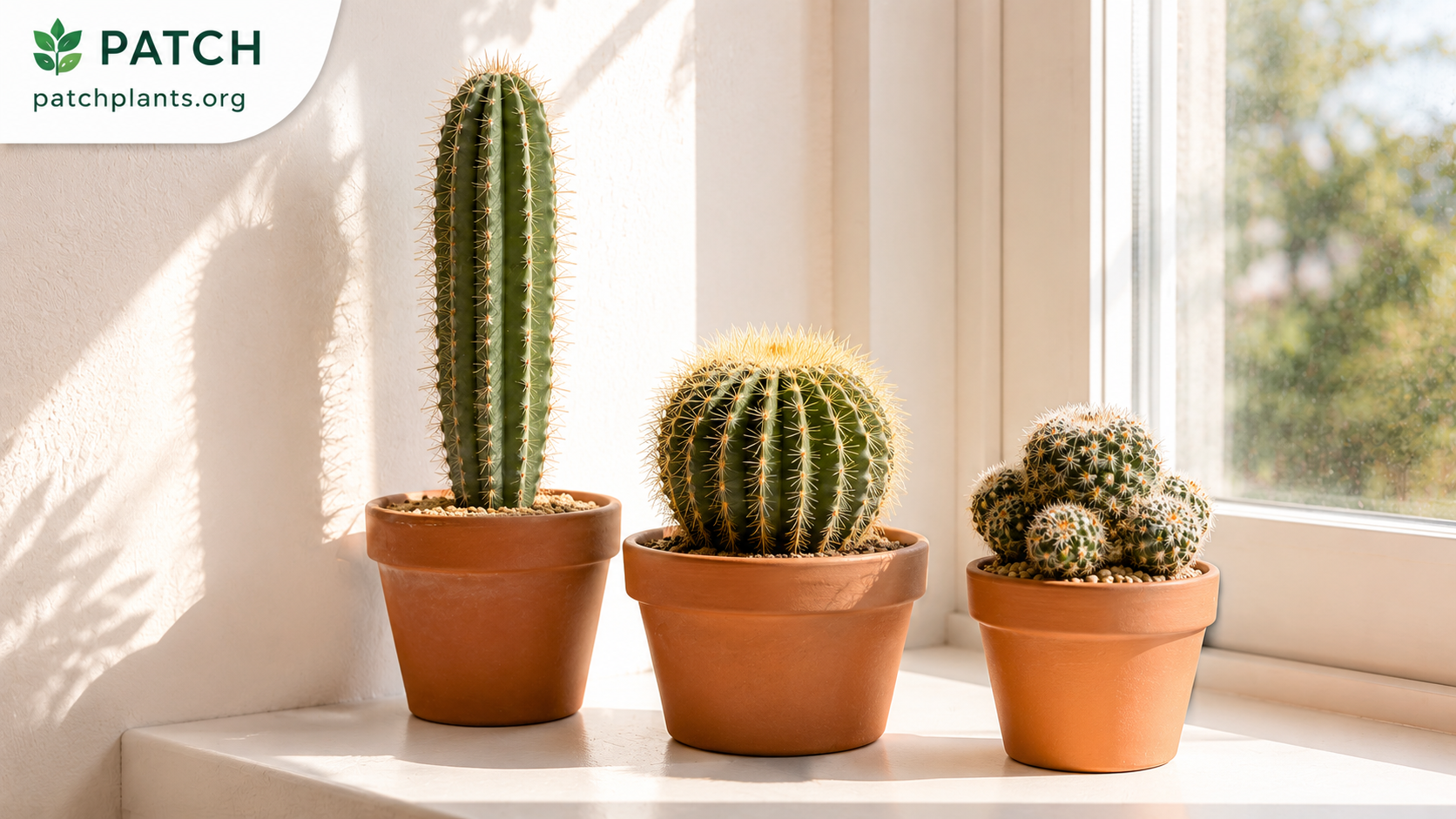
- Cactus care tips for beginners: start with golden barrel, mammillaria, or Christmas cactus for the best results
Introduction
Few plants are as misunderstood as the cactus. Most people assume they are impossible to kill — and then promptly kill one by overwatering. Others assume they need full desert sun at all times and give up when their windowsill specimen starts to lean awkwardly toward the light.
The truth is that cactus plant care is genuinely simple, but it requires understanding a small number of non-negotiable principles. Get these right and your cactus will thrive for years — potentially decades. Get them wrong and even the toughest desert plant will struggle.
This cactus care guide covers everything: watering, light, soil, fertilising, repotting, common problems, and specific guidance for growing cactus indoors. Whether you are a complete beginner or you have been keeping succulents and cacti for years, this guide gives you everything you need for a healthy cactus plant.
Why Cactus Care Is Worth Understanding Properly
Cacti are the world’s most recognisable drought-adapted plants. They have evolved over millions of years to survive in extreme conditions — storing water in thick stems, minimising moisture loss through modified leaves (spines), and sending deep roots in search of scarce water. Understanding this biology is the foundation of good cactus maintenance.
When we bring cacti indoors or into temperate gardens, we are asking them to adapt to conditions that differ significantly from their natural desert habitat. The key is replicating the essential conditions — bright light, sharp drainage, and dry periods — while protecting them from excess moisture and cold wet winters.
For context on how cactus care compares to other succulent plants, our succulent care guide covers the broader succulent family. Many cactus plant care principles overlap, but cacti have specific needs worth understanding separately.
You might also find our 35 low-maintenance plants guide useful — cacti consistently rank among the easiest plants to keep alive with the right approach.
Cactus Sunlight Requirements: Light Is Non-Negotiable
Light is the single most important factor in cactus plant care. Cacti are desert plants — they evolved under intense, unfiltered sun for most of the year. Replicating this indoors requires deliberate placement and an honest assessment of your available light.
How Much Light Does a Cactus Need
Most cactus varieties need a minimum of four to six hours of direct or very bright indirect sunlight daily. South or west-facing windowsills are the best positions for indoor cactus care. East-facing windows work for less demanding varieties but may result in slower growth.
North-facing windows are generally unsuitable for most cacti. If your home lacks strong natural light, a dedicated grow light positioned close to the plant for eight to ten hours daily is a practical alternative for growing cactus indoors successfully.
Signs of Insufficient Light
The most common sign of inadequate light is etiolation — the cactus stretches and elongates toward the light source, becoming pale, thin, and structurally weak. This is particularly common in columnar cacti kept too far from a window.
Other signs of insufficient light include:
- Colour fading from deep green to pale yellow-green
- Soft, spongy texture despite correct watering
- No growth during the spring and summer growing season
- Leaning persistently in one direction
Outdoor Cactus Sunlight
Cacti grown outdoors in temperate climates benefit from full sun positions. However, if moving a cactus from indoors to outdoors in spring, acclimatise it gradually over one to two weeks to prevent sunscorch — even cacti can burn when moved suddenly from lower indoor light to intense outdoor sun.
For a broader understanding of how light affects all indoor plants, our complete guide to indoor light is worth reading alongside this cactus care guide.
Cactus Watering Guide: Less Is Almost Always More
Overwatering kills more cacti than any other cause. This is the single most critical point in any cactus care guide. When in doubt, do not water.
How Often to Water a Cactus
How often to water a cactus depends on season, pot size, soil type, and light levels — but a practical framework applies to all situations:
- Spring and summer (growing season): Water thoroughly when the top two inches of soil are completely dry — typically every seven to fourteen days in warm bright conditions
- Autumn: Reduce watering frequency as temperatures drop and cactus growth slows naturally
- Winter (dormancy): Water very sparingly — once a month or less. Many experienced growers stop watering established cacti entirely in winter
The critical cactus watering rule: always let the soil dry out completely between waterings. Cacti roots begin to rot far faster than most houseplants because they have no evolutionary defence against sustained moisture.
How to Water a Cactus Correctly
When you do water, water thoroughly. Pour water slowly and evenly around the base until it drains freely from the drainage holes. Then leave completely alone until the soil is dry again.
Never mist a cactus. Never use a spray bottle on the stems or soil surface. Never let the pot sit in a saucer of standing water. All of these introduce the kind of persistent surface moisture that triggers root and stem rot in an otherwise healthy cactus plant.
Overwatered Cactus: Signs and Recovery
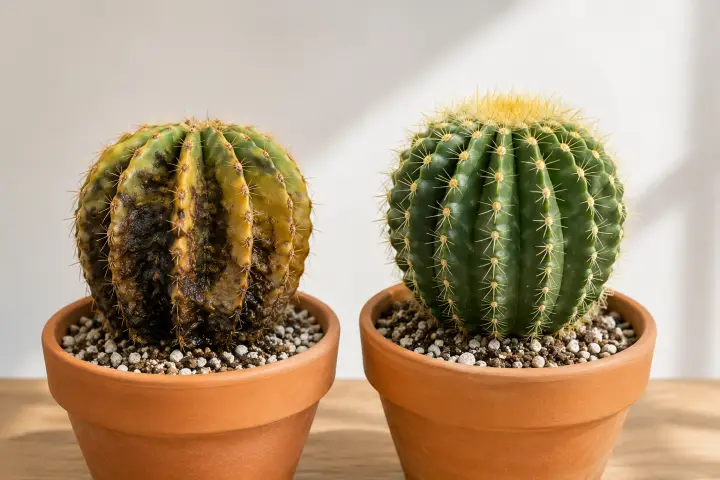
An overwatered cactus shows these specific symptoms:
- Soft, mushy base or lower stem
- Brown or black discolouration at or near soil level
- Yellowing or translucent patches on the stem body
- Foul smell rising from the soil
If caught early, an overwatered cactus can be saved. Remove from its pot, shake off all soil, inspect the roots carefully, and cut away any black or mushy sections with clean scissors. Leave the cactus bare-rooted for two to three days to dry before repotting in fresh dry cactus mix. Do not water for at least a week after repotting.
Our how to revive a dying plant guide covers plant recovery in detail, and our signs you are overwatering guide helps you identify the problem earlier next time.
For general watering principles across all houseplants, our complete guide to watering tips provides a solid foundation alongside this cactus watering guide.
Best Soil for Cactus Plants: Drainage Is Everything
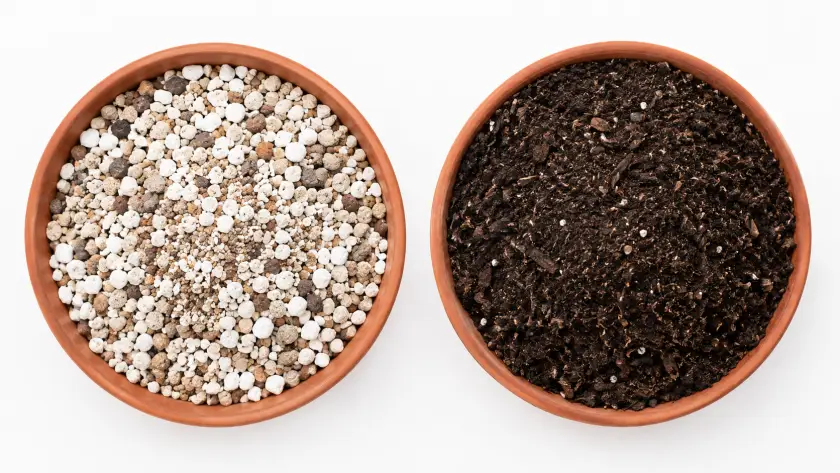
Standard potting compost retains far too much moisture for healthy cactus plant care. The best soil for cactus plants is fast-draining, gritty, and low in organic matter — the opposite of what most other houseplants prefer.
What to Use
A purpose-made cactus and succulent compost is the easiest starting point. These are widely available and formulated specifically for desert plants. Many experienced growers improve even purpose-made mixes by adding:
- Perlite (20–30% of the mix) — improves drainage and root aeration significantly
- Horticultural grit or coarse sand (20%) — adds weight and further improves water movement through the mix
- Pumice — excellent for drainage, widely used by specialist cactus gardening enthusiasts
Avoid mixes containing large amounts of peat or coir — these retain moisture and compact over time, creating exactly the conditions that cause cactus root rot.
Pot Choice Matters Too
Terracotta pots are strongly recommended for potted cactus care. They are porous and allow moisture to evaporate through the sides, naturally reducing overwatering risk. Plastic pots retain moisture longer — not ideal unless you are in a very dry climate or have a tendency to underwater.
Always use a pot with drainage holes. No exceptions in cactus plant care. A cactus in a pot without drainage will almost certainly develop root rot regardless of how carefully you water.
Our best soil mix guide covers soil selection for all plant types including succulents and cacti in detail.
Cactus Fertilizer: Feed Sparingly and Seasonally
Cacti are not heavy feeders. In their natural desert habitat, soil nutrients are scarce — they have adapted to grow slowly and efficiently with minimal input. In potted cactus care, overfeeding is actually a more common problem than underfeeding.
When and How to Fertilise a Cactus
- Growing season only: Apply cactus fertilizer once a month from April through September
- Winter: Do not feed at all — cacti are dormant and cannot use nutrients effectively, and feeding encourages soft weak growth vulnerable to rot and cold damage
- Formulation: Use a low-nitrogen, high-potassium fertiliser formulated for cacti and succulents — high-nitrogen feeds encourage lush leafy growth, the opposite of what a healthy cactus needs
- Dilute to half strength: Even during the growing season, apply at half the recommended dose to avoid damaging salt build-up in the soil
New Cacti and Recently Repotted Plants
Do not feed a newly purchased or recently repotted cactus for at least six to eight weeks. Allow it to settle and establish roots in its new environment before introducing any nutrients as part of your cactus maintenance routine.
For a broader comparison of indoor versus outdoor feeding approaches, our fertilising indoor vs outdoor plants guide provides useful context for cactus plant care and beyond.
Repotting a Cactus: When and How
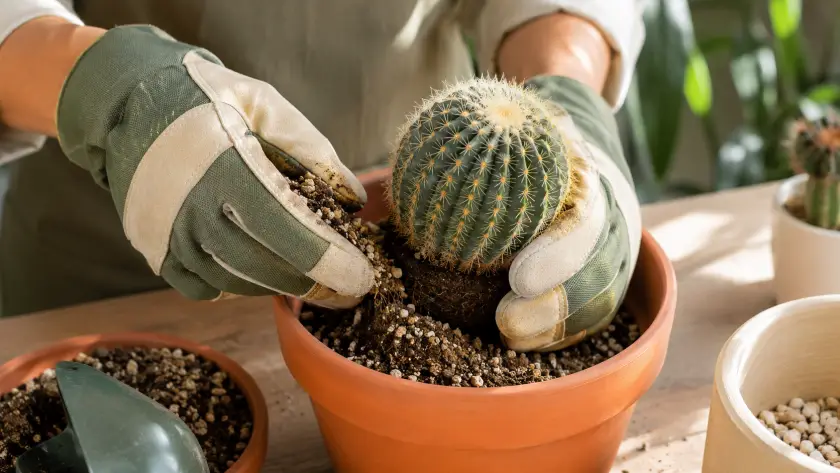
Repotting a cactus is necessary every two to three years as the plant outgrows its container, or when soil becomes compacted and drainage deteriorates. It is also the best opportunity to inspect roots and refresh the growing medium entirely.
When to Repot
The best time for repotting a cactus is in spring, at the start of the growing season. Clear signs that repotting is needed:
- Roots emerging visibly from drainage holes
- Cactus visibly too large for its pot and beginning to topple
- Water pooling on the surface and draining very slowly
- No growth for more than one full season in the same container
- Soil has become hard and compacted despite correct cactus care
How to Repot a Cactus Safely
Cacti require careful handling during repotting. Use thick leather gloves, or fold several layers of newspaper into a thick band and wrap it around the cactus stem to grip it safely without contact with spines.
Step-by-step process for repotting a cactus:
- Choose a new pot one size larger than the current one — not significantly larger, as excess soil volume retains unwanted moisture
- Add a layer of fresh cactus mix to the base of the new pot
- Remove the cactus from its old pot, shaking away as much old soil as possible from the roots
- Inspect roots carefully — trim any dead or rotten sections cleanly with sterilised scissors
- Allow the plant to sit bare-rooted for twenty-four hours if any roots were cut, letting cut ends callous over
- Place in the new pot and fill around with fresh cactus mix, firming gently without compacting
- Do not water for five to seven days after repotting a cactus
Our how to repot a plant guide covers the general repotting process in full detail, and our repotting mistakes to avoid guide is essential reading before you begin.
Growing Cactus Indoors: Specific Considerations
Indoor cactus care differs from outdoor growing in several important ways. Understanding these differences is what separates thriving indoor cacti from struggling ones.
Light Management Indoors
The biggest challenge of growing cactus indoors is light. Even a bright south-facing windowsill provides significantly less light than full outdoor conditions. Rotate your cactus a quarter turn every two to three weeks to ensure even growth and prevent persistent leaning toward the light source.
In winter, move cacti as close to the brightest available window as possible. Clean the glass if necessary — dust on windows reduces light transmission more than most plant owners realise and directly impacts cactus plant care quality.
Temperature and Dormancy
Most cacti benefit from a cool, dry winter dormancy period — temperatures around 10°C to 13°C are ideal for healthy cactus growth stages. This is not always achievable in centrally heated homes, but reducing watering dramatically in winter partially compensates for warmer indoor temperatures.
Avoid placing cacti near radiators, which create hot dry air at soil level and can desiccate roots, or near draughty windows in winter, which expose them to cold damage inconsistent with good cactus maintenance.
Humidity
Standard indoor humidity levels are perfectly fine for most cacti. They are desert plants and genuinely prefer dry air. Avoid placing them in bathrooms or kitchens where humidity is consistently high. If you grow humidity-loving plants nearby, keep cacti in a separate area of your home.
For humidity management tips relevant to moisture-loving plant types, our humidity hacks guide provides useful contrast to cactus care requirements.
Potted Cactus Care: Container Placement
A rotating plant caddy is useful for heavier potted cacti — it makes quarterly rotation simple and protects surfaces from drainage water. Place terracotta saucers with a thin layer of grit at the base under pots to keep drainage water away from the bottom of the pot and prevent any root contact with standing moisture.
Cactus Care Tips for Beginners: Best Varieties to Start With
If you are new to cactus plant care, variety selection matters significantly. Some cacti are far more forgiving of beginner mistakes than others. These are the best starting points for anyone learning how to care for a cactus:
Golden Barrel Cactus (Echinocactus grusonii)
Spherical, slow-growing, and architecturally striking. The golden barrel is one of the most widely kept indoor cacti and among the most tolerant of variable conditions. It needs bright light but handles occasional cactus watering mistakes reasonably well, making it ideal for beginners.
Bunny Ear Cactus (Opuntia microdasys)
Distinctive flat pad form with soft-looking but irritating glochids rather than traditional spines. The bunny ear is compact, slow-growing, and very hardy — one of the best potted cactus choices for windowsill growing in any home.
Christmas Cactus (Schlumbergera)
Different from most desert cacti — the Christmas cactus is a forest cactus that prefers slightly more moisture and indirect light. It rewards correct cactus care with spectacular seasonal blooms. Our Christmas cactus care guide covers this variety in full detail.
Prickly Pear (Opuntia)
Fast-growing and bold. Prickly pear is excellent for outdoor cactus gardening in temperate climates and handles neglect very well. Not ideal for small indoor spaces due to its eventual size, but a rewarding choice for gardens.
Mammillaria
A large genus of small, clustering cacti — most varieties stay compact and produce rings of small flowers even in indoor conditions. Mammillaria are among the easiest cacti for beginners to care for and suit small pots on windowsills perfectly.
For comparison with other easy-care houseplants, our best indoor plants for beginners guide puts cactus care tips for beginners in context alongside other low-maintenance options.
Common Cactus Problems and Solutions
Even with correct cactus care, problems occasionally arise. Knowing how to identify and address them quickly is essential for maintaining a healthy cactus plant long-term.
Root Rot
The most serious and common cactus problem. Caused almost exclusively by overwatering or poor drainage. Symptoms include a soft dark base, foul smell from the soil, and a collapsing stem. Remove from pot immediately, cut away all affected roots, dry bare-rooted for two to three days, repot in fresh dry mix. Our root rot guide explains identification and full treatment.
Shrivelling and Wrinkling
A shrivelling cactus stem indicates underwatering or dehydration — the opposite problem to root rot. Water thoroughly and the stem should plump back up within a few days. If shrivelling persists despite adequate watering, check for root damage preventing water uptake.
Etiolation (Stretching)
Caused entirely by insufficient light. The cactus elongates toward the light source, becoming pale and structurally weak. The stretched growth cannot be reversed, but moving to a brighter position stops further etiolation. In severe cases the elongated section can be cut off and the cut end allowed to callous before propagating.
Pest Problems
Common cactus pests and their solutions:
- Mealybugs — white cottony clusters at the base of spines. Treat with isopropyl alcohol applied with a cotton bud, or neem oil spray
- Scale insects — brown bumps on the stem surface. Scrape off manually then treat with neem oil
- Spider mites — fine webbing in hot dry conditions. Increase air circulation and treat with neem oil
- Fungus gnats — larvae in soil, attracted by moist growing medium. Allow soil to dry completely between waterings and use sticky yellow traps
Our plants that keep bugs away guide and how to keep pests away from outdoor plants guide offer broader pest management context for cactus gardening.
Yellowing
Yellow patches on a cactus indicate overwatering, sunscorch, or nutrient deficiency. Check watering frequency and soil drainage first, then consider whether the plant has been moved suddenly to significantly brighter conditions. Our why plant leaves turn yellow guide covers diagnosis across all plant types.
Corking
Brown bark-like tissue appearing at the base of older cacti is entirely normal — this is corking, a natural ageing process where the lower stem hardens and turns woody with maturity. It is not a disease or a cactus plant care problem. No action is needed.
Cactus Growth Stages: What to Expect
Understanding cactus growth stages helps set realistic expectations and prevents unnecessary concern about slow progress. Cacti are among the slowest-growing plants in cultivation — this is not a sign of poor cactus care but a fundamental biological characteristic of the species.
Seedling stage (year one to three): Very slow growth, small and delicate. Seedlings require careful watering and consistent bright light. Most beginners purchase established cacti rather than growing from seed for this reason.
Juvenile stage (year three to ten): Gradual but visible growth, characteristic form begins to develop fully. This is where most indoor cacti spend the majority of their cultivated life.
Mature stage (ten years and beyond): Some species begin to flower only after many years of growth. Mature cacti are highly drought-resistant and require minimal intervention beyond basic cactus maintenance.
The practical implication: do not panic if your cactus shows little visible growth month to month. Measure cactus growth stages annually rather than weekly, and trust that correct cactus care will eventually be rewarded.
Succulent and Cactus Care: Key Differences
Cacti are technically succulents, but not all succulents are cacti. The key practical differences for day-to-day cactus plant care:
| Cacti | Other Succulents | |
|---|---|---|
| Watering frequency | Less frequent | Slightly more frequent |
| Light requirement | Higher — direct sun preferred | Variable by species |
| Humidity tolerance | Very low preferred | Low to moderate |
| Soil composition | Very gritty, minimal organic matter | Gritty but slightly more organic |
| Fertiliser need | Minimal | Moderate |
| Winter dormancy | Important — withhold water | Less critical |
For full guidance on the broader succulent family and how succulent and cactus care overlaps, our succulent care guide is the natural companion to this cactus care guide.
Article Summary
| Topic | Key Points |
|---|---|
| Cactus sunlight requirements | 4–6 hours bright light daily, south or west windowsill best |
| Cactus watering guide | Let soil dry completely, water thoroughly, reduce sharply in winter |
| Best soil for cactus plants | Gritty cactus mix with perlite, terracotta pot with drainage holes |
| Cactus fertilizer | Once monthly in growing season, half strength, none in winter |
| Repotting a cactus | Every 2–3 years in spring, one size up, dry 24hrs after root trimming |
| Indoor cactus care | Bright window, cool winter dormancy, avoid radiators and high humidity |
| Cactus care tips for beginners | Start with golden barrel, mammillaria, or Christmas cactus |
| Overwatered cactus | Soft dark base, foul smell — remove, dry bare-rooted, repot fresh |
| Common cactus problems | Root rot, etiolation, pests, yellowing, shrivelling, corking |
| Cactus growth stages | Naturally very slow — measure annually, winter dormancy is normal |
Related Guides
- Succulent Care Guide
- Christmas Cactus Care Guide
- Best Soil Mix for Every Type of Plant
- How to Repot a Plant
- Repotting Mistakes to Avoid
- Signs You Are Overwatering
- What Is Root Rot?
- How to Revive a Dying Plant
- 35 Low-Maintenance Plants That Will Thrive
- Best Indoor Plants for Beginners
- Complete Guide to Watering Tips
- Complete Guide to Indoor Light
Final Thoughts
Cactus care is one of the most rewarding areas of indoor gardening precisely because the plants ask so little yet give so much in return. A well-placed, correctly watered cactus can live for decades — outlasting furniture, moving house with you, and becoming a genuinely long-term living feature of your home.
The rules of cactus plant care are few: bright light, infrequent deep watering, sharp drainage, seasonal feeding, and cool dry winters. Master these and your cactus maintenance routine will take minutes per month.
According to the Royal Horticultural Society, cacti are among the most adaptable plants for indoor cultivation, tolerating the dry air of centrally heated homes better than most tropical houseplants — making them an ideal choice for both beginners and experienced plant keepers alike.
Start with one hardy variety, learn its rhythm, and build from there. Cactus gardening rewards patience and restraint — two qualities that, once applied to plants, tend to spill over productively into everything else.
Frequently Asked Questions
How often should I water a cactus?
During the growing season, water your cactus thoroughly when the top two inches of soil are completely dry — typically every seven to fourteen days. In winter, reduce to once a month or less. How often to water a cactus depends on your specific light and temperature conditions, but less is almost always more.
What is the best soil for cactus plants?
The best soil for cactus plants is a purpose-made cactus and succulent compost improved with perlite and horticultural grit for extra drainage. Never use standard potting compost alone — it retains too much moisture for healthy cactus plant care.
Why is my cactus going soft?
A soft cactus stem is almost always a sign of overwatering and the onset of root rot. Remove from its pot immediately, inspect and trim rotten roots, allow to dry bare-rooted for two to three days, then repot in fresh dry cactus mix. Do not water for at least one week.
How much light does a cactus need indoors?
Most cacti need four to six hours of direct or bright indirect light daily for healthy indoor cactus care. South or west-facing windowsills are ideal. Insufficient light causes etiolation — the cactus stretches, weakens, and loses colour.
When should I repot my cactus?
Repot your cactus every two to three years, ideally in spring at the start of the growing season. Signs repotting is needed include roots emerging from drainage holes, very slow drainage, and the plant becoming visibly too large for its container.
Can I grow a cactus in a room with no direct sunlight?
Growing cactus indoors without direct sunlight is very difficult for most varieties. North-facing rooms are generally unsuitable unless you supplement with a dedicated grow light positioned close to the plant for eight to ten hours daily.
What is cactus fertilizer and how do I use it?
Cactus fertilizer is a low-nitrogen, high-potassium feed formulated for cacti and succulents. Apply at half the recommended strength once a month during spring and summer only. Never feed in autumn or winter when the plant is in dormancy.