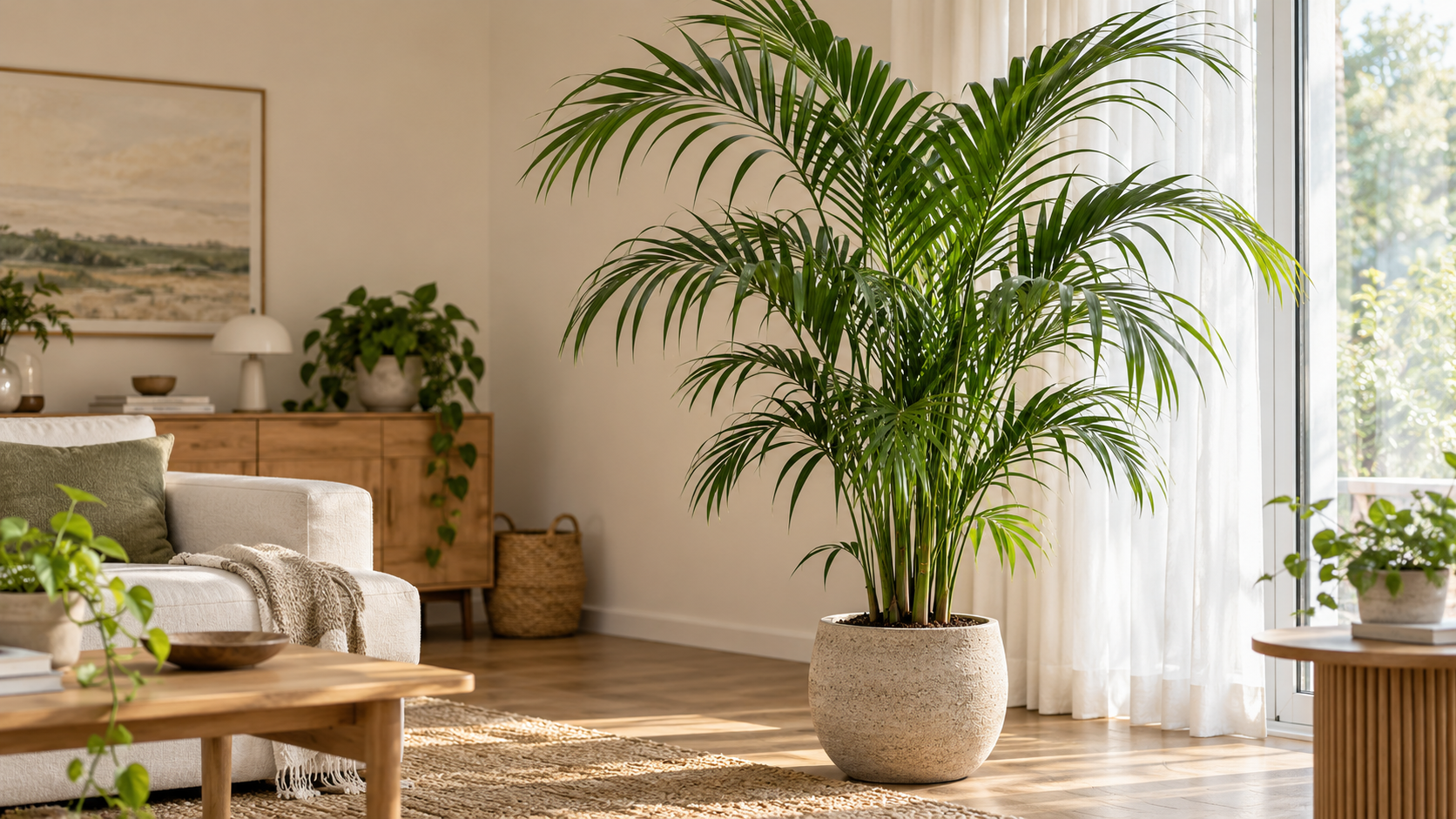
Kentia palm indoor care is simple: keep it out of direct sun through glass, water when the top of the compost dries a little, keep it away from radiators and draughts, and feed it every two weeks from spring to early autumn. The Kentia palm (Howea forsteriana) is one of the most tolerant houseplant palms, coping with lower light, cooler rooms and drier air better than most. It is also slow growing, so patience matters more than extra fertiliser.
I am Sawera Shahid, a botanist at Patch Plants. Below I cover light, watering, compost, humidity, temperature, feeding, repotting, cleaning, pests and fixes for yellow leaves, brown tips and slow growth.
What Is a Kentia Palm?
The Kentia palm is native to Lord Howe Island and has long been grown as an elegant indoor palm. The RHS describes Kentia palms as tolerant of cooler temperatures and drier atmospheres, which makes them good house plants. They grow slowly, and a healthy plant does not need to produce new fronds constantly.
A healthy plant has long, arching, deep green fronds. Occasional yellowing of the oldest lower leaves is normal ageing, but widespread discolouration deserves a closer look. To compare it with other palms, see parlor palm care and our list of tropical house plants.
Light for Kentia Palm Indoor Care
The RHS says Kentia palms tolerate low light and can manage quite low light levels away from windows, but they still grow best in a reasonably bright room. Keep the fronds out of direct sun through glass, which the RHS warns will scorch them. In winter, when daylight is weak, move the plant to a brighter spot, such as near a south- or west-facing window.
- Best: bright room with filtered light, such as near an east window or behind a sheer curtain.
- Acceptable: lower light away from windows, with slower growth.
- Avoid: hot, direct summer sun through glass, and very dark windowless rooms.
See our indoor light guide, and for darker homes, small low-light indoor plants. If you do have a sunny window, see house plants that like direct sunlight for better matches.
Watering a Kentia Palm Indoors
The RHS advises letting the compost surface dry slightly before watering in winter, and in summer keeping the compost from drying out without letting the plant stand in excess water. In practice, check the upper layer with your finger before watering, then water thoroughly until it drains from the holes. Empty any water that collects in a saucer or decorative outer pot.
If the compost stays wet for long periods, look at drainage, pot size and watering frequency. See our watering guide, signs you are overwatering and our root rot guide.
Compost and Pots for a Kentia Palm
The RHS suggests a peat-free John Innes No 2 or a multipurpose compost, with coarse sand added if you want to improve drainage. Whatever you choose, use a pot with drainage holes. Decorative cachepots can hide standing water, so lift the inner pot out after watering. Our soil mix guide explains drainage and aeration. For large planters, the soil calculator estimates how much compost to buy.
Humidity and Temperature
Kentia palms cope with drier air than many palms, but very dry, centrally heated rooms can dull the leaves. The RHS suggests misting regularly in a centrally heated or very hot room, or standing the pot on a tray of gravel or clay granules with the water level kept below the surface of the gravel. Sponging the leaves also removes dust. See misting plants and humidity hacks.
For temperature, the RHS gives a winter night minimum of about 16°C (61°F) for Howea, with summer day temperatures somewhat higher if the room is ventilated. Keep the palm away from radiators and draughts.
Feeding Kentia Palm Indoor Plants
The RHS advises not feeding for six to eight weeks after potting, then feeding fortnightly from April to mid-September with a general-purpose liquid fertiliser. Follow the label, skip feeding in winter, and do not use fertiliser to fix yellow leaves before checking light, water and roots. See fertilizing indoor vs outdoor plants.
Repotting a Kentia Palm
Kentia palms do not like unnecessary disturbance. The RHS recommends repotting every two years in early spring if the plant is pot-bound, up to pots of 20 to 30cm, and in other years replacing the top 5cm of compost. Go up only one pot size, and see repotting mistakes to avoid.
Cleaning, Pruning and Pests
Remove old fronds by cutting, not pulling, as the RHS advises, and only once they have died or are badly damaged. Wipe dusty fronds gently, supporting the leaflets. See pruning basics.
Check stems and leaf undersides for scale insects, mealybugs and occasionally red spider mite, the pests the RHS lists for palms. Isolate any affected plant while you treat it, and use a product labelled for that pest.
Kentia Palm Indoor Problems
| Symptom | Likely Cause (RHS) | What to Do |
|---|---|---|
| Brown tips | Underwatering or dry air | Check the compost and room humidity |
| Brown spots | Overwatering, sudden chilling or very hard water | Check drainage and draughts |
| Dull leaves | Low humidity | Sponge leaves, raise humidity |
| Yellow lower leaves | Normal ageing if only a few | Remove once dead, watch for spread |
| Slow growth | Normal, or too little light | Move to a brighter spot |
For more help, see our yellow leaves guide and how to revive a dying plant.
Are Kentia Palms Safe for Pets?
The ASPCA lists Kentia palm (Howea forsteriana) as non-toxic to dogs and cats. Pets may still chew the leaves and cause a mess, so keep young plants out of reach. See our cat-friendly and dog-friendly plant guides.
Frequently Asked Questions
Is a Kentia palm a good indoor plant?
Yes. The RHS describes it as tolerant of cooler temperatures and drier air, and it copes with lower light than most palms. It is slow growing, so choose a size you are happy with.
How often should I water a Kentia palm indoors?
Check the compost rather than following a calendar. In summer keep it from drying out, and in winter let the surface dry slightly first. Never leave the pot standing in water.
Can Kentia palms take direct sun?
No. The RHS warns that leaves in direct sun through glass will be scorched. Bright filtered light is best, and low light is tolerated.
Why does my Kentia palm have brown tips?
The RHS links brown tips to underwatering or dry air. Check the compost, avoid radiators and consider misting or a pebble tray.
When should I repot a Kentia palm?
Every two years in early spring if it is pot-bound. In other years, replace the top 5cm of compost instead of repotting.
Final Thoughts
Good Kentia palm indoor care is mostly about leaving the plant alone: steady light, sensible watering, no draughts and no rushing. As a botanist, my advice is to resist overfeeding and constant repotting, because a slow-growing palm rewards patience. For more ideas, explore Patch Plants and our indoor plants section.
Sources: RHS, Palms indoors; ASPCA, Kentia palm.