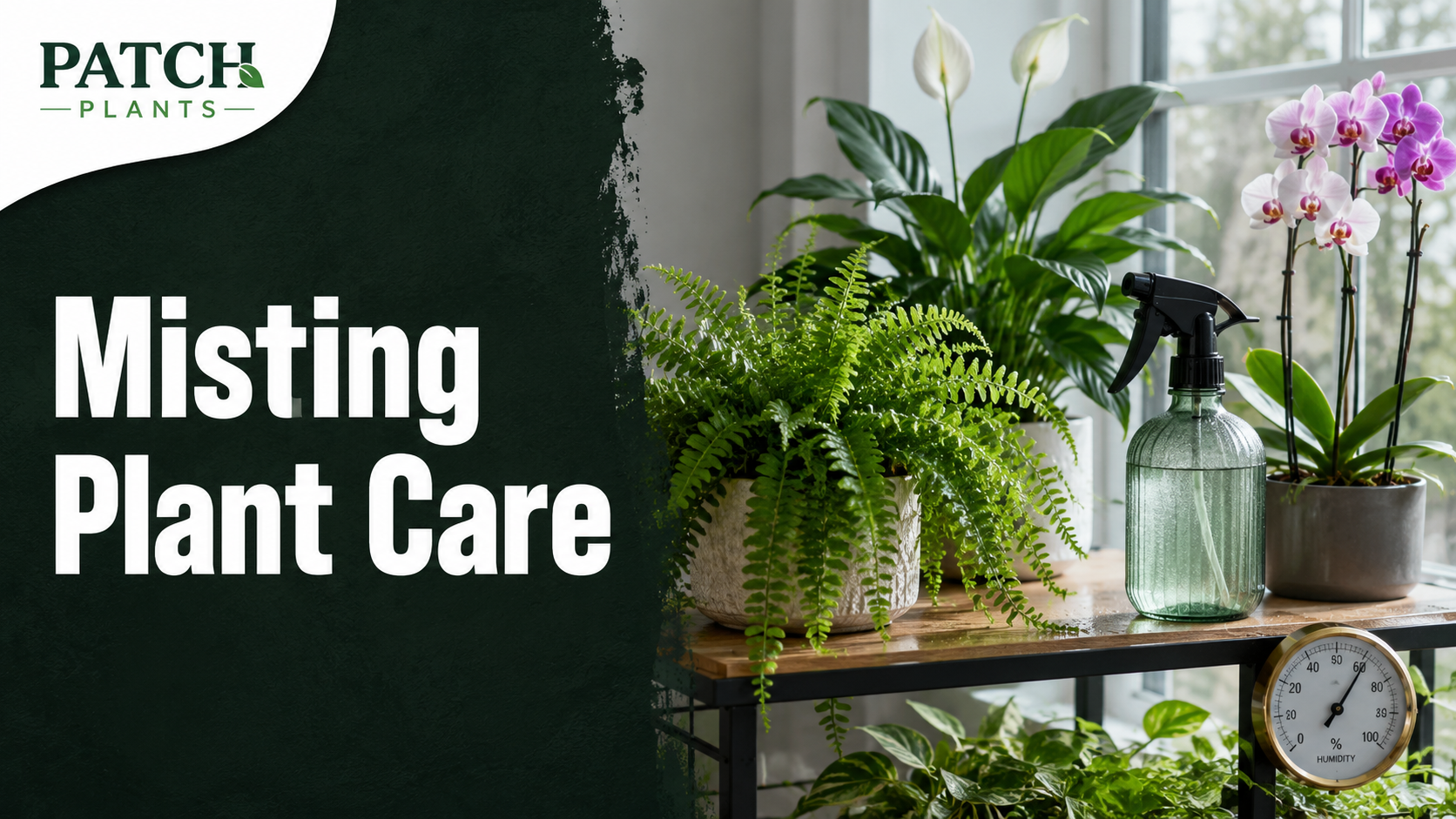
Misting for plants is not the humidity fix many people think it is. Iowa State University Extension says misting is not an effective way to raise humidity, and Penn State Extension says the boost lasts only until the water evaporates, often just minutes. It can still be useful for a few specific jobs, so the real question is when it helps and when to skip it.
I am Sawera Shahid, a botanist at Patch Plants. This guide explains what misting for plants does, which plants tolerate it, and what works better when your houseplants need more moisture in the air, using advice from Iowa State and Penn State Extension and the Royal Horticultural Society (RHS).
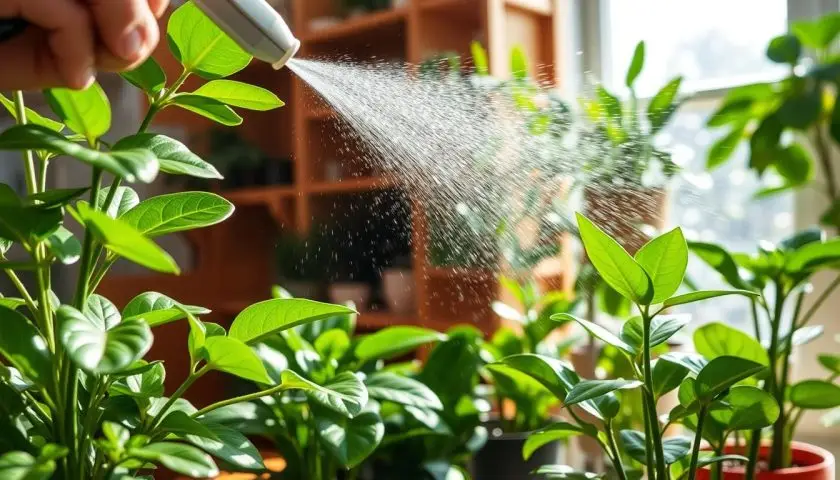
Misting for Plants: What It Actually Does
Misting adds water droplets to leaf surfaces and briefly raises the moisture around the plant. Iowa State says foliage dries quickly after misting, so it would need repeating several times a day, which is impractical for most people. Penn State agrees that daily misting does little to raise humidity.
The sources do not fully agree. The RHS says spraying can be helpful if done frequently, and lists it as one way to meet the needs of tropical plants. Weighing all three, misting gives at best a short, local effect, and it should not be your only humidity tool.
| Misting Can Help With | Misting Does Not Fix | Better Long-Term Option |
|---|---|---|
| Short moisture boost | Dry room air all day | Humidifier or plant grouping |
| Air plants (Penn State) | Dry compost around the roots | Proper watering |
| Rinsing dust from leaves | Chronic brown leaf tips | Steady humidity support |
Why Humidity Matters for Houseplants
Iowa State says many houseplants do best at roughly 40 to 50 percent relative humidity, while winter indoor levels can drop to about 10 to 20 percent. Low humidity can cause slow growth, dried-out flower buds and browning at leaf tips and edges. The RHS says that in low humidity, plants lose water faster than roots can replace it, and that central heating lowers humidity and dries pots faster in winter.
Penn State notes there is no single best level for all plants, but that most indoor plants benefit from more humidity than a home heated in winter usually provides. Cacti and succulents are exceptions. Humidity means moisture in the air, while misting only wets the leaf surface, so they are not the same thing.
Which Plants Can Be Misted?
Penn State says misting is accepted for air plants (Tillandsia). For other plants, the sources give no species list, so treat misting as an optional extra for thin-leaved tropical plants that like humid air, and check each plant’s needs first. The RHS says many tropical houseplants need high humidity, and suggests a steamy bathroom as one option.
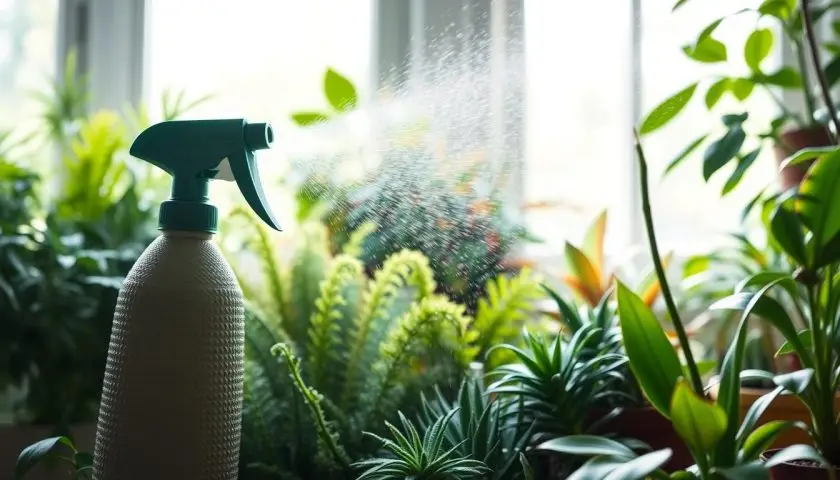
- Air plants: Misting is a recognised way to water them, but let them dry fully afterwards.
- Ferns, calatheas and similar tropical foliage: They like humid air, but a humidifier or grouping gives steadier results. See our Boston Fern care guide and Calathea care guide.
- Orchids: Avoid letting water collect in crowns or leaf joints, which is a general growing precaution. See our Orchid care guide.
Plants You Should Not Mist
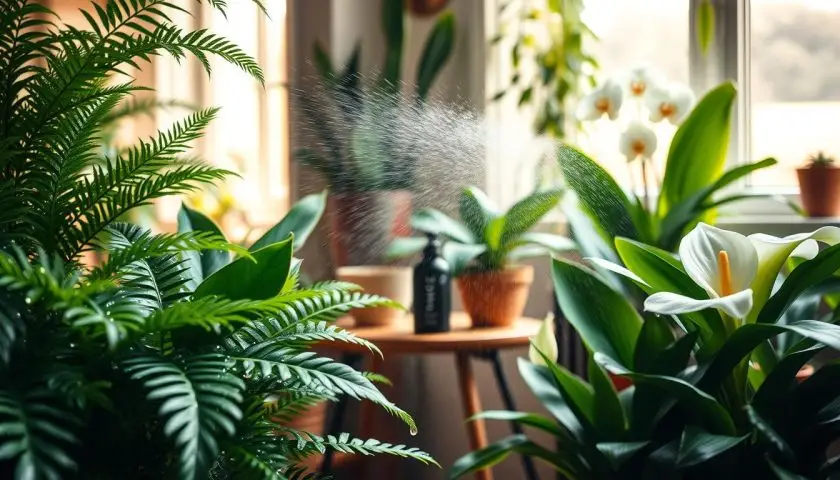
Penn State says cacti and succulents are exceptions to the general advice that indoor plants benefit from extra humidity. Water trapped in rosettes can encourage rot, which is a general horticultural understanding rather than a point stated by these sources. Fuzzy-leaved plants such as African violets and purple passion plant are also commonly kept dry, because droplets cling to the hairs. Water them at the soil level instead.
| Plant Type | Why Misting Is Risky | Better Care |
|---|---|---|
| Cacti and succulents | They do not need extra humidity (Penn State) | Bright light and dry cycles; see cactus care guide and succulent care guide |
| Fuzzy-leaved plants | Droplets cling to hairs | Water at soil level; see African violet care guide and purple passion plant care |
| Plants with leaf spot or rot | Wet leaves can worsen the problem | Keep leaves dry and improve airflow |
| Plants in cold, dim rooms | Leaves stay wet longer | Improve light and warmth first |
Check light before adding moisture. Our complete guide to indoor light will help with placement.
How to Do Misting for Plants Safely
If you decide to mist, keep it light and occasional. These are practical precautions rather than rules from the sources.
- Check the plant first. Skip succulents, cacti, fuzzy leaves and any plant with spots or rot.
- Mist in the morning. Leaves then have the day to dry, and wet leaves overnight in a cool room are best avoided.
- Use room-temperature water. The RHS says to bring water to room temperature, because cold water can kill.
- Use a fine spray bottle, and apply a light cloud rather than soaking the leaves.
- Keep airflow comfortable so leaves dry quickly.
- Stop if marks appear, as the habit is not working in that spot.
On water quality, the RHS says chlorine in tap water can be toxic to plants, so let it stand in an open container for at least 24 hours, and notes that tap water often contains fluoride that can build up. Do not use water from a domestic water softener, as the RHS says its salts are highly toxic to plants.
Misting for Plants: How Often?
There is no universal schedule. Because the effect lasts only minutes, misting for plants cannot replace steady humidity. If a plant needs higher humidity every day, use a method that works all day. Misting does not replace watering either, and the RHS advises watering when the surface of the compost becomes dry, so water the roots properly. See our watering guide.
Better Alternatives to Misting for Plants
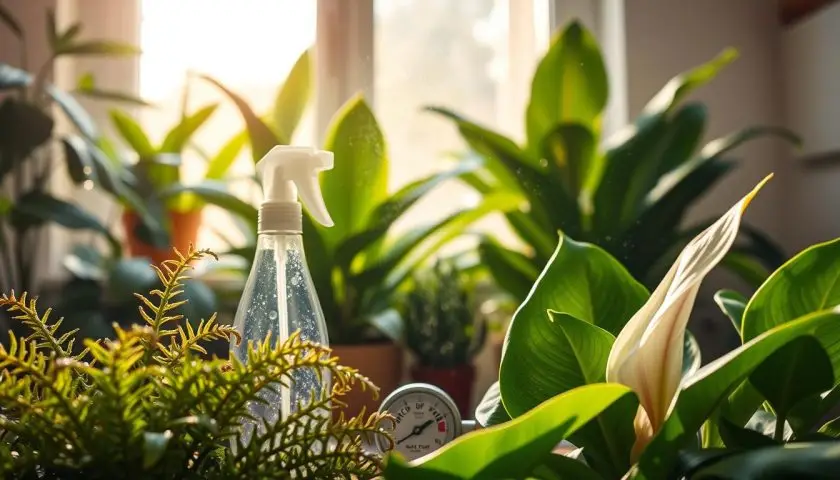
Iowa State and Penn State both point to the same practical options.
| Method | What the Sources Say | Weak Point |
|---|---|---|
| Humidifier | Iowa State calls it an excellent way to raise humidity | Needs cleaning; a whole-house unit may not reach ideal levels (Penn State) |
| Grouping plants | Moisture from soil and leaves raises humidity around the group (Iowa State, RHS) | Effect depends on plant numbers and room size |
| Pebble or damp gravel tray | Iowa State and the RHS suggest it, keeping pots above the water | Penn State says its effect on whole-room humidity is almost nil |
| Terrarium | Suits smaller plants (Iowa State) | Needs ventilation |
| Steamy, bright bathroom | The RHS suggests it for tropical plants | Needs real light |
For more ideas, read humidity hacks without a humidifier, our DIY humidity tray guide and best bathroom plants.
Check These Before Blaming Humidity
Brown, crispy tips can look like a humidity problem but also come from watering, root or heat problems. The RHS says plants placed close to radiators can dry out, causing brown margins. Check the whole plant first.
- Is the plant close to a heater or vent?
- Is the compost too dry or too wet?
- Are the roots healthy? See healthy roots vs root rot.
- Are pests present?
For symptoms, read yellow leaves on plants and leaf curl, browning and droop. To clean dusty leaves, see how to clean plant leaves, since wiping with a soft cloth works better than spraying alone.
Frequently Asked Questions
Is misting for plants good?
It helps only in small ways, such as watering air plants or giving a short boost. Iowa State and Penn State say it does not raise humidity for long.
Does misting increase humidity?
Only briefly. Penn State says the boost lasts until the water evaporates, often minutes, and Iowa State says it is not an effective way to raise humidity.
Which plants should not be misted?
Skip cacti, succulents, fuzzy-leaved plants, and any plant with leaf spot or rot. Penn State notes cacti and succulents do not need extra humidity.
What is better than misting for humidity?
A humidifier and grouping plants are the most reliable options according to the sources. A pebble tray helps locally, but its effect on the whole room is small.
When is the best time to mist?
If you mist, morning is the safest time because leaves can dry during the day. Avoid evening misting in cool rooms.
Final Thoughts
As a botanist, I treat misting for plants as a small optional tool, not a humidity strategy. A light morning mist can suit air plants, but real humidity comes from a humidifier, grouped plants or a better room. At Patch Plants, I write practical care guides, so use this one with our overwatering guide to keep roots and leaves in balance.
Sources: Iowa State University Extension, Should I mist the houseplants?; Iowa State University Extension, Raising humidity; Penn State Extension, Humidity and houseplants; RHS, How to grow houseplants.