Key Takeaways
- Root rot is the decay of plant roots caused by waterlogged soil, poor drainage, and fungal pathogens — it is the most common cause of houseplant death
- Root rot symptoms above soil include yellowing leaves, wilting despite wet soil, stunted growth, and a sour smell from the growing medium
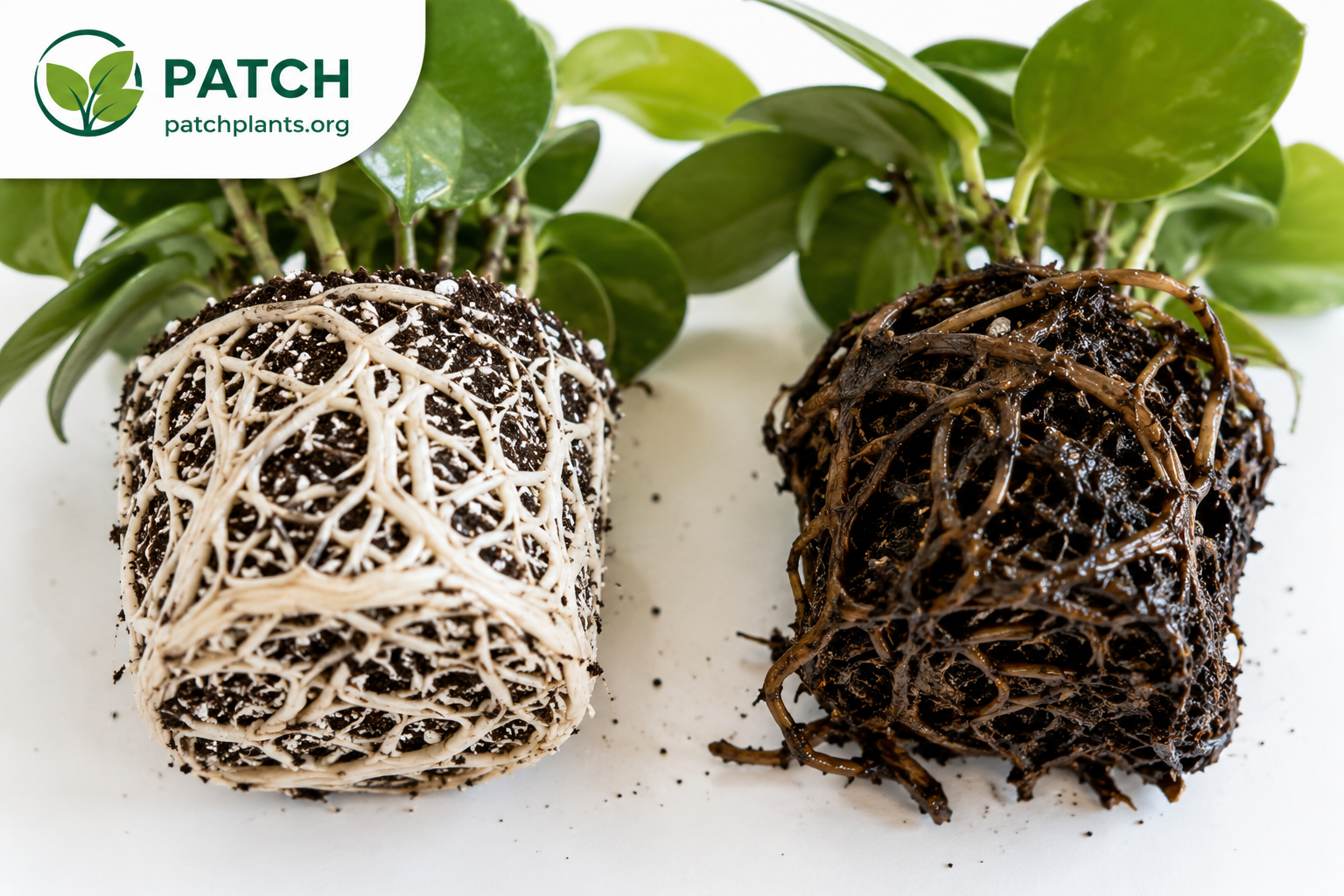
- Healthy roots are firm and white — root rot roots are brown or black, soft, and break apart easily when touched
- Root rot can be reversed if caught early — remove, trim, rinse, and repot in fresh well-draining soil immediately
- Hydrogen peroxide for root rot is an effective treatment — a diluted solution kills anaerobic fungal pathogens in the soil and on roots
- Root rot fungicide can be used for severe fungal infections, particularly phytophthora and pythium root rot in outdoor plants
- Overwatering is the number one cause of root rot in houseplants — always check soil moisture before watering
- Prevention is simpler than treatment — correct soil, drainage holes, and watering only when soil is dry eliminates most root rot risk
- Common houseplants affected include snake plant, pothos, monstera, peace lily, orchid, and money tree — all can develop root rot if overwatered
- If more than two thirds of the root system is rotten, the plant is unlikely to recover — knowing when to let go is part of good plant care
Introduction
There is a moment every plant keeper dreads. You water your plant carefully, and yet something feels wrong. Leaves begin to yellow. Growth slows. The soil stays damp longer than it should. And when you finally remove the plant from its pot, the roots you find are not the firm white ones you were hoping for — they are brown, soft, and break apart in your hands.
That is root rot. And while it sounds like a death sentence, it is one of the most preventable and — if caught early enough — most treatable problems in plant care.
This guide explains exactly what root rot is, what causes it, how to identify the symptoms above and below the soil, how to treat it step by step including the use of hydrogen peroxide for root rot, and how to prevent it from happening again. Whether you are dealing with root rot in a peace lily, a monstera, a snake plant, or an outdoor shrub, this guide gives you the complete picture.
If you want to understand the broader context of plant health problems that often occur alongside root rot, our why plant leaves turn yellow guide and leaf curl, browning and droop guide cover the above-soil symptoms in detail.
What Is Root Rot?
Root rot is the breakdown and decay of plant roots caused by prolonged exposure to waterlogged soil, oxygen deprivation, and opportunistic fungal pathogens. It is both a symptom and a condition — the roots are rotting, and the rot is actively spreading if the underlying cause is not addressed.
Roots need two things simultaneously: water and oxygen. In healthy, well-draining soil, water passes through quickly and air fills the spaces between soil particles, keeping roots oxygenated. When soil stays wet for extended periods, oxygen is displaced and roots begin to suffocate. Weakened, oxygen-starved roots become easy targets for fungal organisms that thrive in damp, anaerobic conditions.
The primary fungal culprits in root rot are Pythium and Phytophthora — two of the most widespread and destructive plant pathogens in both indoor and outdoor settings. These organisms spread rapidly through waterlogged soil, moving from rotten roots to healthy ones and accelerating decay throughout the root system.
Root rot is the leading cause of houseplant death and one of the most common problems in outdoor container gardening. Understanding what it is and why it happens is the foundation of both treating and preventing it effectively.
What Causes Root Rot? The Main Contributing Factors
Root rot rarely has a single cause — most cases involve several contributing factors stacking on top of each other. Understanding what causes root rot in your specific situation is essential for preventing recurrence after treatment.
Overwatering Plants
Overwatering is by far the most common cause of root rot, particularly in houseplants. The problem is not usually a single excessive watering — it is the cumulative effect of watering too frequently, not allowing the soil to dry adequately between waterings.
Many plant owners water on a fixed schedule regardless of actual soil moisture. Different plants, pot sizes, soil types, temperatures, and light levels all affect how quickly soil dries — a schedule that works in summer may cause root rot in winter when plants dry out more slowly. Our signs you are overwatering guide covers this in detail and helps you identify the problem before root rot develops.
Poor Soil Drainage
Heavy, compacted soil that retains water is a direct contributor to root rot. Standard potting compost, particularly when it has been in use for more than a year, compacts over time and loses its drainage properties. Using the wrong soil type for a plant — dense compost for a cactus or succulent, for example — creates waterlogged conditions regardless of how carefully you water.
Our best soil mix guide explains how to choose the correct growing medium for every plant type — one of the most effective root rot prevention steps available.
Pots Without Drainage Holes
A pot without drainage holes is one of the most reliable ways to cause root rot regardless of how carefully you water. Water accumulates at the base of the pot with nowhere to go, creating a permanently saturated zone at the roots. Decorative pots and cachepots without drainage holes are a common culprit — always keep plants in nursery pots with drainage holes inside decorative outer containers.
Fungal Root Rot Pathogens
Even with correct watering, fungal pathogens like Pythium and Phytophthora can cause root rot if introduced through contaminated soil, tools, or water. These pathogens are opportunistic — they move rapidly through soil once waterlogged conditions create the right environment. Root rot fungicide treatments are most relevant when fungal pathogens are the primary driver rather than overwatering alone.
Environmental Stress
Cold temperatures, low light, and sudden environmental changes all slow a plant’s metabolic processes — meaning it uses water more slowly, soil stays wet longer, and root rot risk increases significantly. A plant that handles weekly watering in summer may develop root rot on the same schedule in a cold, dark winter. Our complete guide to indoor light and complete guide to watering tips cover seasonal adjustments in detail.
Signs of Root Rot: How to Identify It Early
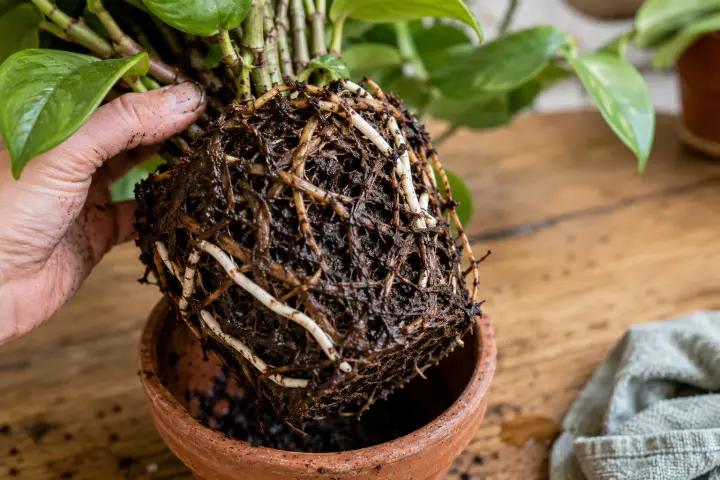
Early identification is the most important factor in successfully treating root rot. The challenge is that the primary damage happens underground — but root rot symptoms above the soil appear reliably before the situation becomes critical.
Above-Soil Root Rot Symptoms
These are the warning signs to watch for in any houseplant or outdoor container plant:
- Yellowing leaves: Not the natural fade of old foliage, but widespread yellowing across multiple leaves simultaneously. Often starts at the base of the plant and moves upward as root function deteriorates
- Wilting despite wet soil: One of the most distinctive root rot signs — the plant looks drought-stressed and drooping, but the soil is clearly damp. The roots are too damaged to transport water effectively, causing wilting regardless of soil moisture
- Stunted or stopped growth: New leaves are unusually small, or growth stops entirely during what should be an active growing season
- Leaf drop: Leaves dropping without yellowing first, particularly lower leaves, can indicate root system failure
- Soft or discoloured stem base: Brown, black, or mushy tissue at the base of the stem where it meets the soil indicates rot has spread beyond the roots
- Foul smell from the soil: Root rot has a distinctive sour, unpleasant odour — a smell of decay rising from the pot is one of the clearest root rot signs available without removing the plant
What Does Root Rot Look Like Below the Soil
When you remove a plant from its pot and inspect the roots directly, root rot is unmistakable. Healthy roots are firm, white or cream-coloured, and flexible. Root rot roots are brown or black, soft and mushy, with a slimy texture, and break apart easily when touched. In advanced cases, the entire root ball may disintegrate when handled.
Root rot vs healthy roots comparison: press a root between your fingers. A healthy root resists pressure and springs back. A rotten root compresses immediately, feels wet, and may leave residue on your fingers. The smell test also applies underground — rotten roots have the same sour odour as the soil above them.
Root Rot in Specific Plants
Different plants show root rot symptoms at different rates. Fast-growing plants like pothos and peace lily may show yellowing leaves within days of root rot developing. Succulents and cacti — which store water in their leaves — often hide root rot for weeks before suddenly collapsing. Our succulent care guide and cactus care guide both cover early detection in these drought-adapted plants specifically.
The monstera, snake plant, money tree, and fiddle leaf fig are among the most commonly affected houseplants. The ZZ plant and philodendron are also frequently affected. Each shows root rot symptoms slightly differently — knowing your plant’s normal behaviour is the best baseline for catching problems early.
How to Treat Root Rot: Step-by-Step
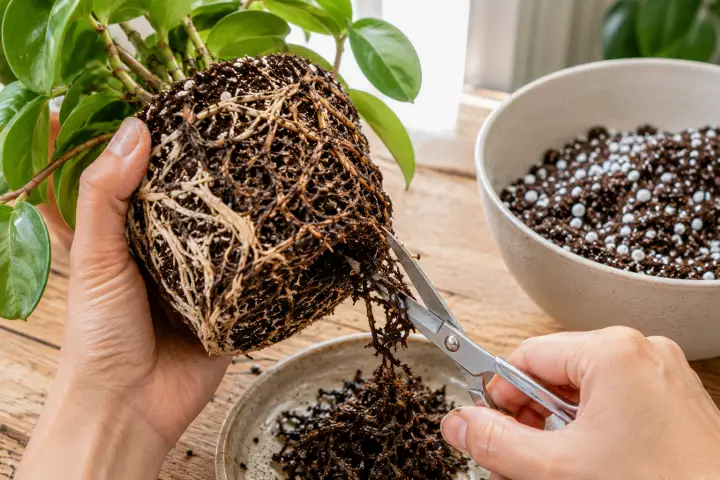
The moment you suspect root rot, act immediately. Every day of delay allows rot to spread further through the root system. Here is the complete root rot treatment process:
Step 1 — Remove the Plant from Its Pot
Remove the plant from its pot immediately — do not wait to see if it improves on its own. Gently tip the pot and ease the root ball out. If the plant is firmly stuck, run a thin tool around the inside edge of the pot to loosen it. Never pull the plant out by its stem.
Step 2 — Remove All Old Soil
Shake away as much old soil from the roots as possible. For heavily compacted root balls, rinse under room temperature water to remove remaining soil and expose the full root system for inspection. Old contaminated soil carries fungal spores — removing it entirely is an important part of root rot treatment.
Step 3 — Inspect and Identify the Extent of Damage
Examine the entire root system carefully. Identify which roots are healthy (firm, white, flexible) and which are rotten (brown or black, soft, mushy). Assess the proportion of healthy to rotten roots — if less than one third of the root system remains healthy, recovery is unlikely but still worth attempting for valued plants.
Step 4 — Trim All Rotten Roots
Using scissors or pruning shears sterilised with isopropyl alcohol, cut away every brown, black, or mushy root. Cut back to firm, healthy white tissue. Be completely thorough — leaving any rotten root material behind allows the fungal pathogen to spread to healthy roots after repotting. When in doubt, cut it out.
After trimming roots, sterilise your tools again before using them on other plants to prevent spreading fungal pathogens.
Step 5 — Rinse Healthy Roots
Rinse the remaining healthy roots gently under room temperature water to remove fungal spores, old soil particles, and any residue from decayed roots. This step reduces the fungal load on the root system before repotting.
Step 6 — Treat with Hydrogen Peroxide for Root Rot
Hydrogen peroxide for root rot is one of the most effective treatments available and works by releasing oxygen into the root zone, killing the anaerobic fungal pathogens responsible for root decay.
To use hydrogen peroxide for root rot: mix one part 3% hydrogen peroxide (standard pharmacy concentration) with two parts water. Soak the trimmed root system in this solution for thirty minutes, or apply it as a soil drench after repotting. The fizzing reaction you see indicates the peroxide is oxidising organic matter and killing pathogens.
Root rot fungicide is an alternative treatment for severe cases involving identified fungal pathogens like Phytophthora — copper-based fungicides and specialist root rot fungicide products are available at garden centres. However, for most houseplant root rot cases, hydrogen peroxide treatment combined with correct repotting and watering adjustment is sufficient.
Step 7 — Allow Roots to Dry Before Repotting
Leave the plant bare-rooted for one to two hours after trimming and rinsing. This allows cut root ends to begin callousing over, reducing the entry points available to fungal pathogens after repotting.
Step 8 — Repot in Fresh Well-Draining Soil
Choose a clean pot — ideally a new one, or one thoroughly washed with diluted bleach solution to kill any remaining pathogens. The pot must have drainage holes. Choose a pot appropriately sized for the reduced root system — a pot much larger than the remaining roots retains excess moisture and increases root rot risk again.
Use fresh, appropriate growing medium — never reuse old soil from a root rot-affected plant. Our best soil mix guide explains which mix to use for each plant type. Our how to repot a plant guide covers the full repotting process in detail, and our repotting mistakes to avoid guide prevents common errors during this critical step.
Step 9 — Water Carefully and Monitor Recovery
After repotting, give the plant a small amount of water and place in appropriate light conditions. Do not water again until the soil is fully dry — the plant’s reduced root system cannot absorb water as effectively as before, and overwatering at this stage will cause the problem to recur immediately.
Monitor closely over the following two to four weeks. New leaf growth is the clearest sign of successful recovery. If the plant continues to decline despite correct treatment, the rot may have been too advanced to reverse. Our how to revive a dying plant guide covers the broader recovery process for plants that need additional support after root rot treatment.
Hydrogen Peroxide for Root Rot: A Closer Look
Hydrogen peroxide has become one of the most widely recommended root rot remedies for good reason. It is inexpensive, widely available, effective against fungal pathogens, and safe for plants when used at the correct dilution.
How Hydrogen Peroxide Treats Root Rot
When hydrogen peroxide (H2O2) contacts organic matter and fungal organisms in the soil, it breaks down into water and oxygen. This release of oxygen does two important things: it kills the anaerobic fungal pathogens responsible for root rot, and it aerates the soil, creating conditions that discourage fungal regrowth.
The correct dilution for root rot treatment is one part 3% hydrogen peroxide to two parts water. Higher concentrations can damage remaining healthy roots. Never use industrial-strength hydrogen peroxide on plants.
When to Use Hydrogen Peroxide for Root Rot
- As a root soak during treatment — thirty minutes in diluted solution before repotting
- As a soil drench after repotting — applied once to the fresh growing medium
- As a preventative measure — a very dilute application (one part H2O2 to four parts water) every few weeks in plants prone to overwatering
Hydrogen peroxide for root rot is most effective when combined with physical removal of rotten roots and repotting in fresh soil — it is not a standalone cure if the underlying causes of overwatering and poor drainage are not addressed.
Root Rot in Specific Houseplants
Root rot presents slightly differently in different plant types, and the recovery approach varies accordingly.
Snake Plant Root Rot
Snake plant root rot often goes undetected for weeks because snake plants are so tolerant of neglect. The first visible sign is usually yellowing or browning at the base of the leaves rather than general leaf yellowing. Check the base carefully if a snake plant looks unhealthy despite good above-soil conditions. Our snake plant care guide covers correct watering to prevent this.
Pothos Root Rot
Pothos root rot develops quickly — this fast-growing plant responds rapidly to root damage and shows yellowing leaves within days. The good news is that pothos recovers well from root rot if treated promptly, and healthy stem cuttings can be propagated in water even if the root system is too damaged to save. Our pothos care guide explains correct watering frequency.
Monstera Root Rot
Monstera root rot is common because monsteras are frequently overwatered by enthusiastic owners. The large leaves continue to look healthy for some time while root damage accumulates below. By the time leaf symptoms appear, root rot may already be advanced. Our monstera care guide covers the correct watering approach for this popular plant.
Peace Lily Root Rot
Peace lily root rot is extremely common — peace lilies are often kept too wet because their drooping indicates thirst, and owners respond by watering more frequently. The peace lily’s visible wilt is a useful watering signal, but checking soil moisture before responding prevents overwatering cycles. Our peace lily care guide explains this balance clearly.
Orchid Root Rot
Orchid root rot is visible through transparent pots — brown, hollow roots rather than plump green or silver ones indicate rot. The advantage of orchid care in transparent pots is that root health can be monitored without disturbing the plant. Our orchid care guide covers root inspection and treatment in detail.
Succulent and Cactus Root Rot
Succulent root rot and cactus root rot are particularly deceptive because these plants store water in their leaves and stems — they can appear healthy while their roots are completely rotten. The first visible sign is usually sudden collapse or a soft, discoloured stem base. Our succulent care guide and cactus care guide both cover root rot prevention as a primary care principle.
Money Tree Root Rot
Money tree root rot shows as rapid yellowing of leaves and soft, discoloured stems at the base. Money trees are tropical plants that prefer drying out between waterings — they are frequently overwatered by owners who assume tropical means constantly moist. Our money tree care guide explains the correct watering balance.
Root Rot Prevention: The Most Important Section
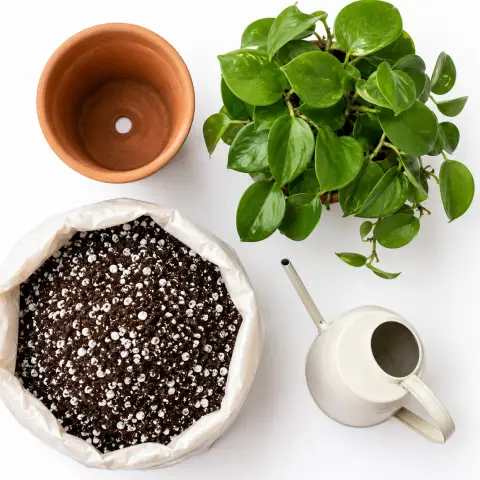
Root rot prevention is simpler than treatment and far more effective. The majority of root rot cases are entirely preventable with three consistent habits: correct soil, correct drainage, and correct watering.
Always Use Pots with Drainage Holes
This single rule eliminates a significant proportion of all houseplant root rot. Every pot that holds a living plant must have at least one drainage hole at the base. Decorative cachepots without drainage holes should only be used as outer sleeves, with the plant kept in a well-draining nursery pot inside. Never plant directly into a decorative pot without drainage.
Choose the Right Soil for Each Plant
Using soil that drains appropriately for your specific plant type is one of the most effective root rot prevention measures. Succulents and cacti need extremely gritty, fast-draining mixes. Tropical plants need looser mixes with perlite. Orchids need bark-based medium, not soil at all. Our best soil mix guide is the definitive reference for this. Refresh soil every one to two years as it compacts and loses drainage over time — our how to repot a plant guide covers when and how to do this.
Water Only When the Soil Is Dry
Replace fixed watering schedules with soil moisture checks. Push a finger two to three centimetres into the soil before every watering — if it feels damp, wait. If it is completely dry, water thoroughly. This simple habit adjustment prevents overwatering across all plant types regardless of season or conditions. Our complete guide to watering tips explains this methodology in full detail.
Reduce Watering in Winter
Most houseplants use significantly less water in winter due to lower light levels, cooler temperatures, and slower growth. A watering frequency that works in summer will almost certainly cause root rot if maintained through winter. Reduce watering by thirty to fifty percent as temperatures drop and natural light decreases.
Improve Soil Aeration
Adding perlite, horticultural grit, or orchid bark to standard potting mixes significantly improves drainage and aeration. Even a twenty percent addition of perlite to a standard mix dramatically reduces root rot risk for most houseplants. For plants in particularly dense or compacted soil, repotting with a refreshed mix is often the most effective single root rot prevention step available.
Avoid Letting Pots Sit in Standing Water
Saucers and trays under pots collect drainage water. If pots sit in this water for more than thirty minutes after watering, the drainage holes become submerged and the soil begins reabsorbing the water from below — exactly the waterlogged conditions that cause root rot. Empty saucers after watering or place a layer of pebbles in the saucer to keep the pot above the waterline.
Root Rot in Outdoor Plants
Root rot in outdoor plants follows the same principles as houseplant root rot but occurs in different contexts. Heavy rainfall, clay-heavy soil, poor garden drainage, and overuse of irrigation systems are the most common outdoor causes.
Outdoor plants in containers face the same drainage and overwatering risks as houseplants. In-ground plants are more affected by soil type and weather — clay soils retain water for much longer than sandy or loam soils, creating naturally higher root rot risk during wet seasons.
Improving outdoor drainage by incorporating organic matter, creating raised beds, or installing drainage channels significantly reduces root rot risk for garden plants. For outdoor plant care more broadly, our best low-maintenance outdoor plants guide, 15 hardy outdoor plants guide, and top drought-resistant plants guide focus on varieties naturally resistant to waterlogging and root rot.
When Root Rot Cannot Be Saved
Not every plant affected by root rot can be rescued. If more than two thirds of the root system is rotten, if rot has spread extensively up the stem, or if the plant has been declining for several weeks without visible cause, recovery is unlikely despite treatment.
Knowing when to let go is part of good plant keeping. Composting a plant that cannot be saved is not failure — it is a practical decision that frees the pot and space for a healthy new plant. The experience of diagnosing and treating root rot, even unsuccessfully, makes every future diagnosis faster and more effective.
If stem cuttings are available on an otherwise unsaveable plant, propagation offers a way to preserve the plant before the root system fails entirely. Our houseplant propagation guide explains how to take and root stem cuttings from common houseplants.
Article Summary
| Topic | Key Points |
|---|---|
| What is root rot | Decay of roots caused by waterlogged soil, oxygen deprivation, and fungal pathogens |
| What does root rot look like | Brown or black, soft, mushy roots that break apart — healthy roots are firm and white |
| Root rot symptoms above soil | Yellow leaves, wilting despite wet soil, foul smell, soft stem base, stopped growth |
| What causes root rot | Overwatering, poor drainage, no drainage holes, compacted soil, fungal pathogens |
| How to treat root rot | Remove, inspect, trim rotten roots, rinse, hydrogen peroxide soak, repot in fresh soil |
| Hydrogen peroxide for root rot | 1 part 3% H2O2 to 2 parts water — kills anaerobic fungal pathogens, aerates soil |
| Root rot prevention | Drainage holes always, correct soil, water only when dry, reduce in winter |
| Most affected houseplants | Peace lily, pothos, monstera, snake plant, orchid, money tree, succulents |
| Root rot fungicide | Copper-based or specialist fungicide for severe Phytophthora or Pythium infections |
| When to give up | More than two thirds of roots rotten — propagate cuttings if possible before composting |
Related Guides
- How to Revive a Dying Plant
- Signs You Are Overwatering
- Complete Guide to Watering Tips
- Best Soil Mix for Every Plant Type
- How to Repot a Plant
- Repotting Mistakes to Avoid
- Why Plant Leaves Turn Yellow
- Leaf Curl, Browning and Droop Guide
- Houseplant Propagation Guide
- Succulent Care Guide
- Cactus Care Guide
- Snake Plant Care Guide
Final Thoughts
Root rot is discouraging — particularly when it affects a plant you have cared for carefully for months. But it is also one of the most instructive problems in plant keeping. It teaches the single most important lesson in growing healthy plants: roots need both water and air, and the balance between the two is everything.
Most root rot is entirely preventable. Correct soil, drainage holes, and watering only when the soil is genuinely dry eliminates the vast majority of cases before they start. And when root rot does occur, acting immediately — removing, trimming, treating, and repotting — gives even severely affected plants a real chance of recovery.
According to the Royal Horticultural Society, overwatering and poor drainage are the leading causes of avoidable plant death in UK homes and gardens — with root rot identified as the primary mechanism through which excess moisture ultimately kills plants. The solution, in almost every case, is simpler than most plant owners expect: water less, drain better, and check before you water.
Frequently Asked Questions
What is root rot?
Root rot is the decay of plant roots caused by prolonged exposure to waterlogged soil, oxygen deprivation, and fungal pathogens such as Pythium and Phytophthora. Roots suffocate without oxygen, become soft and brown, and begin to break down — eventually killing the plant if untreated. It is the most common cause of houseplant death and one of the most preventable.
What does root rot look like?
Root rot looks like brown or black mushy roots that break apart easily when touched. Healthy roots are firm and white or cream-coloured. Above soil, root rot symptoms include yellowing leaves, wilting despite wet soil, stunted growth, soft discoloured stem base, and a foul sour smell from the growing medium. Our leaf curl, browning and droop guide covers above-soil symptoms in detail.
Can root rot be reversed?
Yes — root rot can be reversed if caught early. Remove the plant from its pot, trim all rotten roots with sterilised scissors, rinse healthy roots, treat with diluted hydrogen peroxide, and repot in fresh well-draining soil. Adjust watering habits to prevent recurrence. If more than two thirds of the root system is affected, recovery is unlikely. Our how to revive a dying plant guide covers the full recovery process.
How does hydrogen peroxide treat root rot?
Hydrogen peroxide treats root rot by releasing oxygen into the soil, killing the anaerobic fungal pathogens responsible for root decay. Use one part 3% hydrogen peroxide to two parts water. Apply as a root soak for thirty minutes during treatment, or as a soil drench after repotting. Never use industrial-strength concentrations — they will damage healthy roots.
What causes root rot in houseplants?
The most common causes of root rot in houseplants are overwatering, pots without drainage holes, and compacted soil that retains moisture. Fungal pathogens like Pythium thrive in waterlogged conditions and accelerate the decay process. Using the wrong soil type for a particular plant also significantly increases root rot risk. Our signs you are overwatering guide helps identify the primary cause.
How do I prevent root rot?
Prevent root rot by always using pots with drainage holes, choosing well-draining soil appropriate for your plant type, watering only when the soil is completely dry, and never letting pots sit in standing water. Reduce watering by thirty to fifty percent in winter when plants use water more slowly. Our complete guide to watering tips covers the full prevention methodology.
What does root rot smell like?
Root rot has a distinctive sour, unpleasant smell — similar to rotting vegetation or stagnant water. If you notice a foul odour coming from the soil of a houseplant, combined with yellowing leaves or wilting, root rot is a likely cause. The smell test is one of the earliest available indicators, often detectable before above-soil symptoms become pronounced.