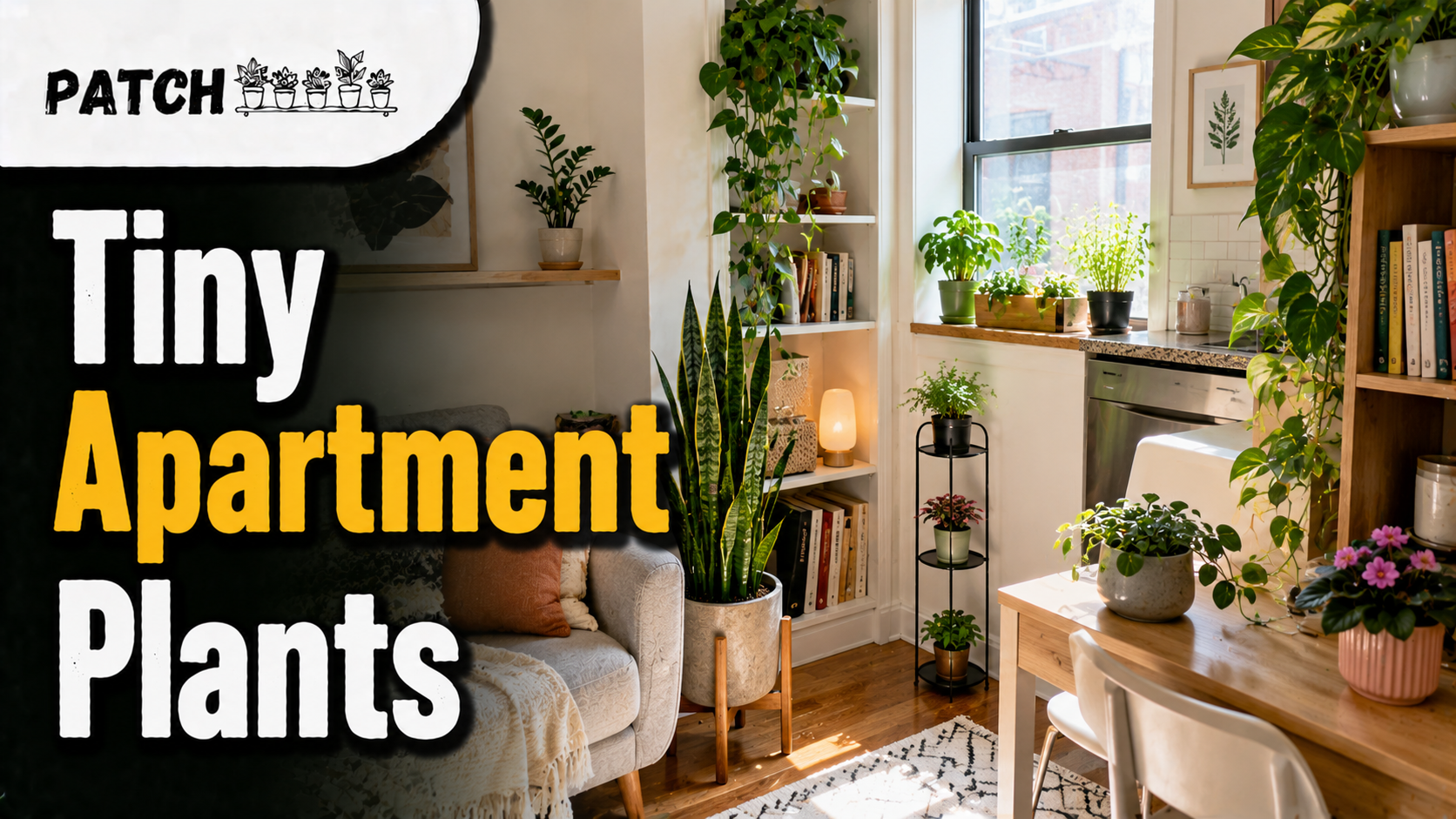
The best indoor plants for tiny apartments are compact, upright or trailing plants that fit a shelf, desk or windowsill and suit the light you actually have. Snake plant, peperomia, haworthia, pothos and African violet are good starting points because they stay manageable in small pots.
I am Sawera Shahid, a botanist at Patch Plants. This guide gives 21 picks, shows where each one fits, and explains light, pot size, grow lights and pet safety. Care advice comes from the Royal Horticultural Society (RHS), University of Minnesota Extension, Penn State Extension and the ASPCA. For easy first plants, see our guide to the best indoor plants for beginners.
Best Indoor Plants for Tiny Apartments at a Glance
| Spot in Your Apartment | Good Picks |
|---|---|
| Dark corner or north window | Snake plant, ZZ plant, philodendron |
| Bright windowsill | Haworthia, jade plant, mini cactus, kalanchoe, herbs |
| Shelf or hanging planter | Pothos, hoya, string of pearls, spider plant |
| Desk or bedside table | Peperomia, fittonia, African violet, pilea |
| Narrow corner | Small dracaena, young rubber plant, mini money tree |
These are starting points for the best indoor plants for tiny apartments, not rules. Always match a plant to the light in your own room first.
How to Choose the Best Indoor Plants for Tiny Apartments
Start with light. University of Minnesota Extension describes low light as a north-facing window or a fairly dark corner, medium light as an east-facing window or near a west-facing window out of direct sun, and high light as a south or southwest window. It lists pale or yellow leaves, long thin stems leaning toward the light and dropped older leaves as signs of too little light.
Then think about size and habit, which matter as much as light when choosing the best indoor plants for tiny apartments. Upright plants take little floor space, trailing plants use shelves and hanging pots, and compact plants suit desks. If you travel often or forget to water, choose tougher plants first. Our guide to indoor light helps you judge each room.
21 Best Indoor Plants for Tiny Apartments
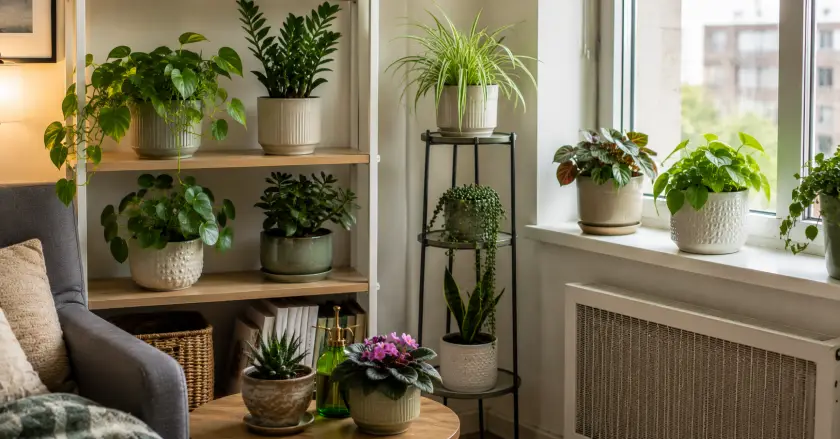
Here are 21 of the best indoor plants for tiny apartments, with notes on light and size.
1. Snake Plant
Snake plant grows upright, so it suits a narrow corner or the side of a bed. The RHS says sansevierias like a bright, lightly shaded position but tolerate lower light, and that they are slow growing. Dwarf varieties suit desks and windowsills. Water sparingly, only once the compost is dry. See our snake plant care guide.
2. ZZ Plant
The ZZ plant has glossy, upright stems and a tidy shape that works on a side table or plant stand. Read our ZZ plant care guide for light and watering.
3. Pothos
Pothos lets you add greenery without losing floor space, because it can trail from a shelf or hanging pot. The RHS says to give it bright, indirect light and to water only once the compost is nearly dry. If stems get too long, cut them back to just above a leaf. See our pothos care guide.
4. Peperomia
The RHS says the compact size of peperomias makes them suitable for even the smallest living spaces. It recommends bright but indirect or filtered light, and letting the compost partially dry out between waterings. It suits desks, shelves and bedside tables.
5. Haworthia
Haworthias form small rosettes of thick leaves. The RHS says to position them in bright, indirect light and to water sparingly, only once the compost is nearly dry. Most listed types stay small, though zebra haworthia can reach 10 to 50cm.
6. Jade Plant
Jade plant suits a sunny windowsill. The RHS says succulents like bright light and free-draining, gritty compost. Jade plant is toxic to pets (see the pet safety section below).
7. African Violet
African violet fits a small shelf or desk. University of Minnesota Extension says to give it a bright, cool spot, with north, northwest or northeast windows working well, and to avoid getting water on the leaves, which can cause leaf spots. It says plants need 14 to 16 hours of light and 8 to 10 hours of darkness daily to flower.
8. Fittonia
The RHS describes fittonias as low, compact plants that spread slowly outwards. It says to keep the compost moist, give bright light out of direct sun, and provide moist air, because dry air turns the leaves brown. It suits bathrooms, kitchens and terrariums.
9. Spider Plant
Spider plant has arching leaves that look good on a shelf or in a hanging planter. See our spider plant care guide for details. The ASPCA lists it as non-toxic to dogs and cats.
10. Peace Lily
Peace lily gives glossy leaves and white blooms, but it is not the smallest plant here, so use it as one calm focal plant rather than many small pots. If yours wilts, our guide to why peace lilies droop helps. The ASPCA lists it as harmful to dogs and cats.
11. Mini Money Tree
Money trees are sold small, but they can grow large over time. A young plant in a narrow pot gives height without much width. See our money tree care guide.
12. Compact Rubber Plant
Buy a young rubber plant and treat it as one statement plant on a small stand, rather than adding many other plants around it. The ASPCA lists Indian rubber plant as toxic to dogs and cats.
13. Small Hoya
The RHS says hoyas like a bright position out of hot summer sun and can trail from a hanging planter. Some species grow quite large, but they can be pruned each year to keep them smaller. It warns that damp conditions in winter can rot the roots. See our hoya plant care guide.
14. Kalanchoe
Kalanchoe is a compact flowering succulent that is sold in several flower colours, including orange. Give it bright light and avoid soggy compost. The ASPCA lists it as toxic to dogs and cats.
15. Small Herb Garden Indoors
Penn State Extension says most herbs need about 6 hours of direct sunlight, and that chives, basil and cilantro are good indoor choices. Chives and cilantro tolerate less light than bay, rosemary or thyme. Under-lit herbs become leggy, with smaller leaves and weaker aroma. Use pots with drainage holes. The same source warns that tarragon is toxic to dogs and cats.
16. Pilea
Pilea, often called Chinese money plant, has round leaves and a clean shape. The RHS recommends bright but indirect light and turning bushy plants a quarter turn each time you water so they do not lean toward the light. It says pileas are generally fast growing, so plan to repot every couple of years.
17. String of Pearls
The RHS says string of beads plants look great cascading from a shelf or hanging basket, with stems reaching about 90cm. Give a warm, bright position, water lightly and let the compost dry out between waterings. Overwatering can cause stem rot.
18. Mini Cactus
Mini cacti suit bright windowsills and narrow ledges. The RHS says cacti and succulents like bright light and should be watered only once the compost is dry. In winter it advises a cool rest with very little water. If your room is dim, add a grow light or choose another plant.
19. Compact Philodendron
The RHS says smaller-leaved climbers such as Philodendron hederaceum suit high shelves or hanging baskets, where the stems trail downward. Give bright, indirect light, because too little light makes plants leggy. Philodendrons are poisonous, and the sap can irritate skin.
20. Small Dracaena
A young dracaena adds height in a narrow corner. The RHS says the main stem can reach 2m (6½ft) or more over time, but pruning can keep it compact. It recommends bright but indirect light and watering only once the top 5cm (2in) feels dry. It notes that dracaenas are poisonous to cats and dogs.
21. Miniature Indoor Garden
A miniature indoor garden groups several tiny plants in one tray or planter, so a shelf looks tidy instead of cluttered. The RHS says fittonias suit terrariums and sealed containers. Group plants with similar needs: fittonia likes moist compost, while haworthia and cacti prefer to dry out, so do not plant them together.
Best Plants for Small Pots
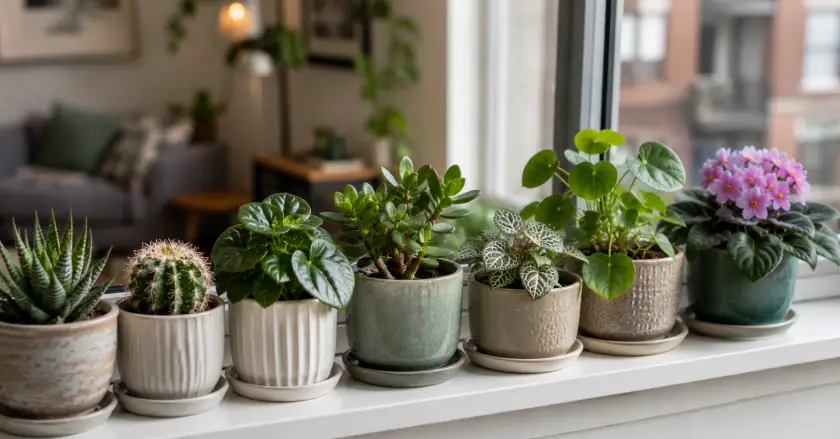
Small pots suit many of the best indoor plants for tiny apartments. Peperomia, haworthia, fittonia, mini cactus and small succulents are the best plants for small pots because they stay compact. Do not leave them in the same pot forever, though. The RHS says to repot into a pot only a few centimetres larger than the rootball, because a much bigger pot keeps the compost wet for longer and can cause root rot. See our guides on how to repot a plant and repotting mistakes to avoid.
Houseplants That Stay Small
Indoor plants that stay small are the easiest of the best indoor plants for tiny apartments to style in a tiny apartment, and they are easy to move if you rent. Good choices include peperomia, haworthia, fittonia, African violet, dwarf snake plant and spider plant. Pilea, dracaena, hoya and philodendron can all grow larger, so keep an eye on them and prune when needed.
Flowering Plants for Small Spaces
Flowers are a welcome extra among the best indoor plants for tiny apartments, and you can add colour without many pots. African violet and kalanchoe are compact flowering choices. Christmas cactus is another option: the RHS says tropical types such as Christmas cactus tolerate more shade than desert cacti, so an east or west window suits them better. See our Christmas cactus care guide and blooming indoor plants for more.
Grow Lights for Small Spaces
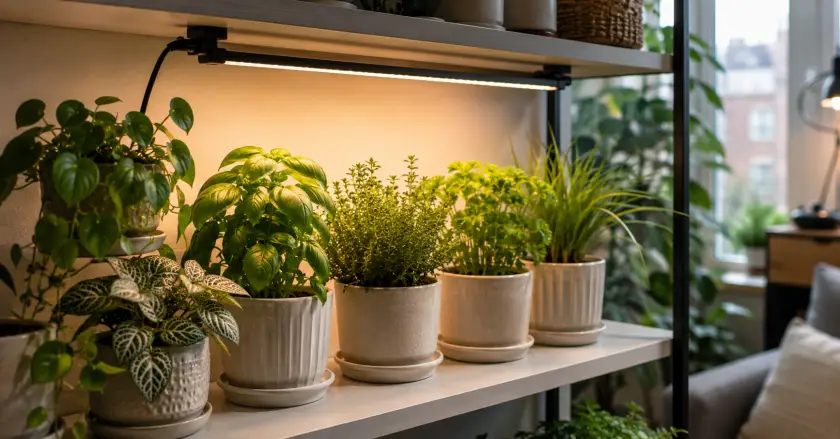
Grow lights widen the choice of the best indoor plants for tiny apartments in dim rooms. Many tiny apartments have one window or a shaded room. University of Minnesota Extension suggests keeping a grow light 12 to 24 inches from foliage houseplants for 12 to 14 hours a day, and 6 to 12 inches from flowering houseplants for 14 to 16 hours a day. For herbs, it gives 6 to 12 inches and 12 to 14 hours. Penn State Extension also suggests 6 to 12 inches from two 40-watt cool white fluorescent bulbs for 14 to 16 hours. A timer keeps the light consistent. See our list of indoor gardening systems if you want a ready-made setup.
Styling Small Plants in a Tiny Apartment
Styling the best indoor plants for tiny apartments is mostly about restraint.
- Use vertical space: shelves, hanging planters, windowsills and narrow plant stands save floor space. Keep heavier pots low.
- Keep pots consistent: one colour family, such as white or terracotta, stops a small room looking cluttered.
- Group in threes: vary the height, and put the largest plant lowest.
- Leave space: airflow and empty space make a small room feel calmer.
For more ideas, see our guides to styling indoor plants by room and decorating a bedroom with plants.
Pet Safety for Tiny Apartment Plants
In a small home, pets can reach most of the best indoor plants for tiny apartments. The ASPCA lists these as follows, and I have not verified every plant above, so check the ASPCA plant list for any that are missing.
| Plant | ASPCA Listing |
|---|---|
| African violet | Non-toxic to dogs, cats and horses |
| Peperomia (baby rubber plant, Peperomia obtusifolia) | Non-toxic to dogs and cats |
| Spider plant | Non-toxic to dogs and cats |
| Snake plant | Toxic to dogs and cats (saponins; nausea, vomiting, diarrhoea) |
| Pothos | Toxic to dogs and cats (calcium oxalates; mouth irritation, drooling, vomiting) |
| Peace lily | Harmful to dogs and cats (calcium oxalates) |
| Jade plant | Toxic to dogs, cats and horses (vomiting, depression, incoordination) |
| Kalanchoe | Toxic to dogs and cats (vomiting, diarrhoea) |
| Indian rubber plant | Toxic to dogs and cats |
The RHS also says dracaenas and philodendrons are poisonous. If your pet chews a plant, call your vet or the ASPCA Animal Poison Control Center on (888) 426-4435. A consultation fee may apply. Our guides to cat-friendly plants and dog-friendly plants help you plan.
Common Mistakes in Tiny Apartments
Avoid these mistakes when growing the best indoor plants for tiny apartments.
- Buying plants that grow too big: choose compact plants, or one carefully chosen statement plant.
- Ignoring light: a plant needing bright light will struggle in a dark room without a grow light.
- Pots without drainage or oversized pots: both keep roots wet and can cause rot. See our guides to overwatering signs and root rot.
- Crowding shelves: plants need room and airflow.
- Too many high-care plants: keep most of your collection low-maintenance, and see our plant rescue guide if one struggles.
Frequently Asked Questions
What are the best indoor plants for tiny apartments?
Snake plant, peperomia, haworthia, pothos, African violet, fittonia, spider plant and small herbs all suit small spaces. Match each to your light, and see the table at the top for placement.
Which houseplants stay small?
Peperomia, haworthia, fittonia, African violet and dwarf snake plant stay compact. The RHS says peperomias suit even the smallest living spaces, while dracaena, philodendron and hoya can be pruned to keep them smaller.
Can I grow herbs in a tiny apartment?
Yes. Penn State Extension says most herbs need about 6 hours of direct sun, and that chives, basil and cilantro are good indoor choices. Use a sunny window or a grow light.
Do grow lights help in small apartments?
Yes. University of Minnesota Extension gives grow light distances and hours for foliage houseplants, flowering houseplants and herbs, which can help in a dark room or shaded window.
Which small indoor plants are safe for pets?
The ASPCA lists African violet, peperomia (Peperomia obtusifolia) and spider plant as non-toxic to dogs and cats. Snake plant, pothos, peace lily, jade plant and kalanchoe are listed as toxic or harmful.
Final Thoughts
The best indoor plants for tiny apartments are the ones that fit your light, furniture and routine, not the rarest or biggest. As a botanist, my advice is to start with three plants: one upright, one trailing and one small tabletop plant. That gives height, softness and detail without crowding the room. At Patch Plants, I write our indoor plant guides to help you pick plants that suit real homes, so browse the indoor plants section when you are ready for more.
Sources: University of Minnesota Extension, Lighting for indoor plants and starting seeds; University of Minnesota Extension, African violets; Penn State Extension, Growing Herbs Indoors; RHS, How to grow cacti and succulents; RHS, How to grow epipremnum; RHS, How to grow peperomia; RHS, How to grow hoya; RHS, How to grow fittonia; RHS, How to grow dracaena; RHS, How to grow philodendrons; RHS, How to grow pilea; RHS, String of beads; RHS, Haworthia; ASPCA, Toxic and Non-Toxic Plants.