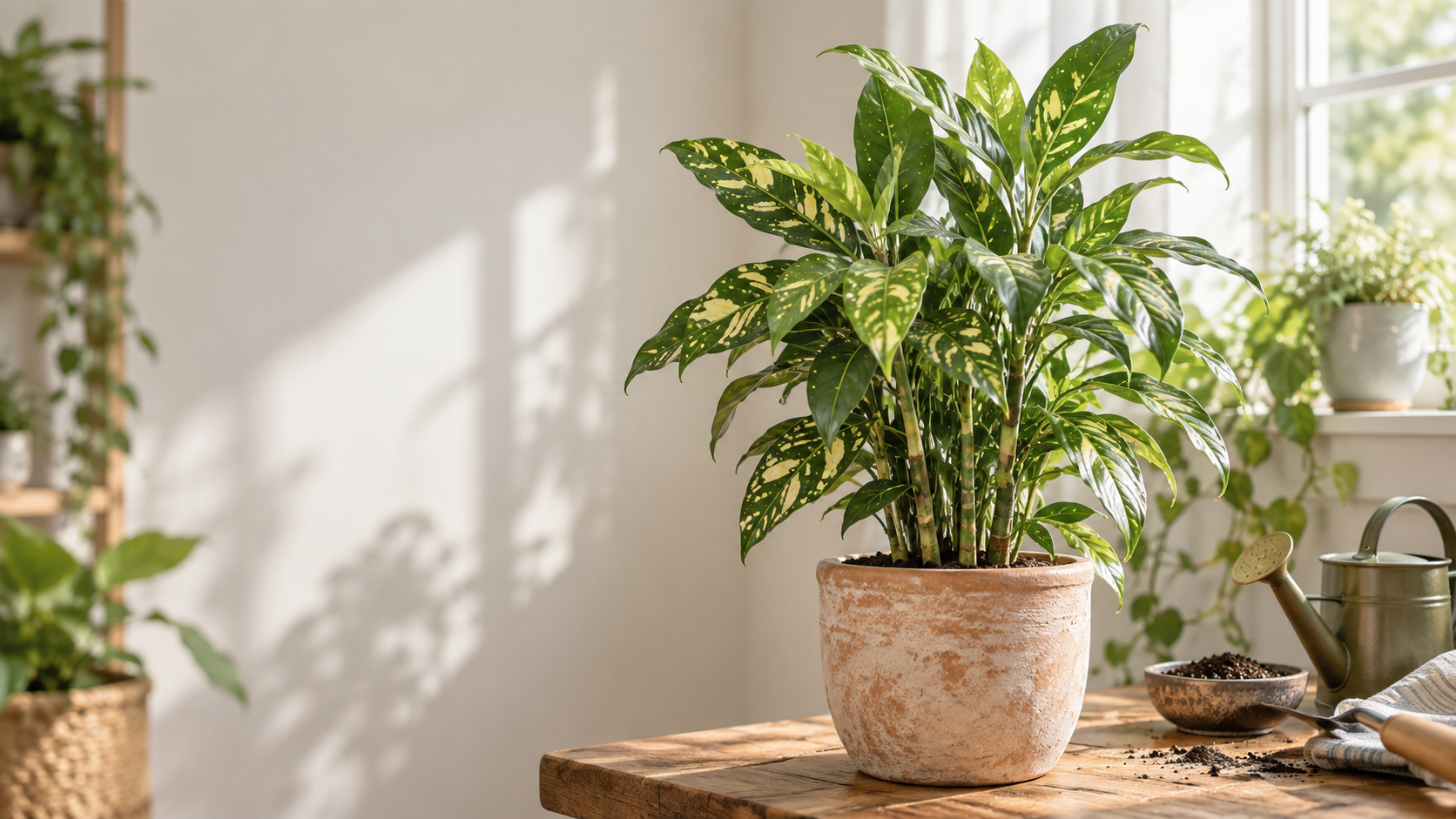
A Florida beauty plant can bring bold tropical color indoors with its attractive green foliage and contrasting cream-to-yellow markings. When the plant receives suitable light, balanced moisture, good drainage, warmth, and consistent care, its patterned foliage can remain one of the most eye-catching features in an indoor plant collection.
However, Florida Beauty care becomes more difficult when the plant sits in harsh direct sun, remains in wet soil for too long, experiences cold drafts, or grows in a dense potting mix. Problems such as yellow leaves, brown tips, leaf drop, weak growth, and fading variegation are often signals that something in the growing environment needs attention.
This guide explains Florida Beauty plant care through 11 practical tips covering light, watering, humidity, temperature, soil, repotting, feeding, pruning, pests, troubleshooting, and seasonal maintenance. If you are building a larger houseplant collection, you can also explore our Indoor Plants guides and Plant Care guides.
QUICK ANSWER
How Do You Care for a Florida Beauty Plant?
Grow a Florida Beauty plant in bright, indirect light, a loose and well-draining potting mix, and a container with drainage holes. Check the potting mix before watering rather than following a fixed weekly schedule. Keep the plant comfortably warm and away from cold drafts and sudden environmental changes.
Moderate-to-higher indoor humidity can support attractive foliage, while consistently wet soil should be avoided. During active growth, feed conservatively according to the fertilizer label and the plant’s response.
If you are repotting, first review our plant soil mix guide and use the Patch Plants Soil Calculator to estimate how much potting mix your new container needs.
PATCH PLANTS SUMMARY
Key Takeaways
- Provide bright, indirect light to support attractive variegated foliage.
- Check the potting mix before watering instead of using a rigid calendar.
- Use a container with functional drainage holes.
- Choose an airy, well-draining growing medium.
- Keep the plant away from cold drafts and extreme temperature changes.
- A humidifier can provide more consistent humidity than occasional misting.
- Feed conservatively during active growth and avoid excessive fertilizer.
- Use clean pruning tools to remove damaged foliage and manage shape.
- Inspect leaf undersides and stems regularly for common houseplant pests.
- Repot when the root system or deteriorating potting medium makes it necessary.
- Troubleshoot yellow leaves and brown tips by checking several possible causes rather than relying on one symptom.
What Is a Florida Beauty Plant?
The plant commonly sold as Florida Beauty is valued primarily for its decorative foliage. Its patterned leaves make it useful as a statement plant or as part of a mixed tropical houseplant display.
Because common plant names can sometimes be used inconsistently in retail settings, checking the botanical name on your nursery label is useful. That gives you a more reliable reference when researching mature size and specific care requirements.
Regardless of labeling differences, the central goal of Florida Beauty plant care is to create a stable indoor environment rather than repeatedly moving the plant or changing its routine.
If you enjoy foliage-focused plants, browse our tropical house plants guide, pink and green foliage plants, and complete Indoor Plants collection.
| Care Factor | General Preference |
|---|---|
| Light | Bright, indirect light |
| Water | Water according to potting-mix moisture |
| Soil | Loose, moisture-balanced and well-draining |
| Humidity | Moderate to higher indoor humidity |
| Temperature | Warm and reasonably stable |
| Difficulty | Suitable for attentive beginners |
Tip 1: Give Your Florida Beauty Plant Bright, Indirect Light
Light is one of the biggest influences on the appearance of a Florida Beauty plant. Variegated foliage contains less chlorophyll in its pale sections than completely green foliage, so finding an appropriate light level matters.
Bright, indirect light is a useful starting point. Position the plant close enough to a bright window to receive useful illumination without exposing the leaves to prolonged harsh sunlight.
If you’re unsure how different exposures work, our complete indoor light guide explains bright light, indirect light, low light, and practical window placement.
Signs the Plant May Need More Light
Very slow or stretched growth can indicate that the location is too dim. New foliage may also appear less impressive when the plant consistently receives inadequate light.
Do not automatically classify Florida Beauty as a small low-light indoor plant. Tolerating a dim location and growing attractively there are not necessarily the same thing.
Signs of Excessive Direct Sun
Bleached areas, dry patches, or scorched-looking foliage may develop when leaves receive more intense direct sunlight than they can tolerate.
For comparison, some houseplants tolerate direct sunlight much better. Florida Beauty generally benefits from a more protected position.
Rotate the Container
If most light comes from one direction, periodically rotating the pot can encourage more balanced growth. Make gradual adjustments rather than repeatedly moving the plant between dramatically different conditions.
Tip 2: Protect the Plant From Temperature Extremes
A warm room with relatively stable conditions is preferable to a location that repeatedly swings between hot and cold.
Avoid placing the plant directly beside air-conditioning vents, cold exterior doors, heaters, or other sources of extreme temperature change.
Watch Cold Windows During Winter
A room may feel comfortable while the area immediately beside cold glass is considerably cooler. Move foliage away from very cold windows when necessary.
Avoid Sudden Environmental Changes
Plants need time to adjust when moved from one environment to another. Sudden changes in light, temperature, humidity, and moisture can overlap, making it difficult to determine why foliage is declining.
If your plant begins deteriorating after a move, use our step-by-step plant rescue guide rather than changing every care variable at once.
Tip 3: Check the Soil Before Watering
One of the most useful habits in Florida Beauty plant care is abandoning rigid watering calendars.
A statement such as “water every seven days” ignores pot size, growing medium, temperature, humidity, light, season, and plant size. These factors influence how quickly the root zone dries.
Instead, check the potting mix before watering. Our complete guide to watering plants explains how to judge moisture more reliably.
Check Below the Surface
The surface can become dry while the root zone remains moist. Check slightly deeper into the potting mix before deciding whether more water is necessary.
This is especially important if you have previously dealt with signs of overwatering.
Water Thoroughly When Needed
When the plant genuinely needs water, moisten the growing medium thoroughly and allow excess water to leave through the drainage holes.
Then empty standing water from the saucer or decorative outer container.
Do Not Confuse Wilting With Dryness
Wilting can occur when a plant is dry, but unhealthy roots in persistently saturated soil can also leave foliage limp.
Always inspect moisture before adding more water. If the root zone smells unpleasant or roots appear dark and unhealthy, compare what you see with our root rot identification and treatment guide.
Tip 4: Use a Pot With Reliable Drainage
Drainage is closely connected to watering. Even careful watering becomes more difficult when excess moisture has nowhere to escape.
A container used for your Florida Beauty plant should have functional drainage holes.
Be Careful With Decorative Cachepots
If the plant remains inside a nursery pot placed inside a decorative container, remove it for watering or check the outer pot afterward.
Do not allow the nursery container to remain submerged in accumulated water.
Watch for Slow Drainage
If water remains on the surface for an unusually long time, the growing medium may have become compacted or the drainage openings may be blocked.
Our soil mix guide explains why root aeration and drainage are important alongside moisture retention.
Tip 5: Maintain Useful Humidity Without Keeping Leaves Wet
Florida Beauty is a tropical-style foliage plant, so excessively dry indoor air can contribute to unattractive foliage, particularly when combined with inconsistent watering or other stress.
However, humidity and wet leaves are not the same thing.
A Humidifier Provides Better Control
If your home is consistently dry, a humidifier is one of the more reliable ways to increase relative humidity around a plant collection.
Our guide to humidity hacks for houseplants also covers practical alternatives when a humidifier is not available.
Grouping Plants Can Help
Grouping compatible plants together may create a slightly more humid local environment as water moves through their leaves.
You could combine Florida Beauty with other tropical houseplants that prefer broadly similar conditions.
Do Not Depend on Misting
Occasional misting does not provide the same sustained control as managing room humidity. Our guide to misting plants explains its limitations and when it may or may not be useful.
Constantly wet foliage can also create unnecessary disease risk, particularly where airflow is poor.
Tip 6: Keep Your Florida Beauty Plant Warm
Stable warmth supports active tropical growth. More important than chasing one exact temperature number is protecting the plant from prolonged cold and abrupt fluctuations.
Keep It Away From HVAC Vents
Air-conditioning can combine cooler temperatures with dry moving air. Heating vents can create the opposite temperature problem while still drying foliage rapidly.
Adjust Care as Growth Slows
A plant growing more slowly generally uses water and nutrients more slowly. Therefore, seasonal care should respond to actual growth and environmental conditions.
This is one reason our broader plant care guides emphasize observation rather than rigid schedules.
Tip 7: Choose a Loose, Well-Draining Potting Mix
Healthy foliage starts below the soil line. Roots need access to both moisture and oxygen, so the growing medium should not remain dense and saturated for long periods.
A suitable Florida Beauty plant soil should hold useful moisture while allowing excess water to drain.
Think About Structure, Not Just Ingredients
There is no need to chase one magical recipe. Instead, think about what each component contributes.
Our best soil mix for every type of plant explains the roles of moisture retention, drainage, and aeration in greater detail.
Avoid Heavy Garden Soil in Indoor Pots
Garden soil can behave very differently inside a container, where drainage and airflow are restricted. A purpose-made potting medium is generally easier to manage.
Check the Existing Mix Before Repotting
If the plant is growing well and water moves through the pot appropriately, repotting simply because a calendar says so may cause unnecessary disturbance.
FREE PATCH PLANTS TOOL
Repotting Your Florida Beauty Plant?
Before purchasing potting mix, use the free Patch Plants Soil Calculator.
Enter the dimensions of your rectangular planter or container to estimate soil volume and get results in useful volume units.
You can use it as a potting mix calculator, soil calculator for pots, or simply to calculate how much soil you need.
Once you know the volume, use our potting mix guide to think about the type of medium your plant actually needs.
When Should You Repot a Florida Beauty Plant?
Repot when there is a practical reason rather than automatically moving the plant into a larger container every year.
Possible signs include a severely crowded root system, roots emerging extensively from drainage holes, rapidly declining soil structure, or a container that no longer supports the plant adequately.
Increase Pot Size Gradually
An unnecessarily oversized container holds a larger volume of wet growing medium around a relatively small root system.
A modest increase in size is usually easier to manage.
Calculate Potting Mix Before Starting
If you already know the dimensions of the new container, use our potting soil calculator before opening bags of mix.
The same soil volume calculator is useful for other containers and planters throughout your home or garden.
Tip 8: Feed During Active Growth Without Overfertilizing
Fertilizer supports growth when nutrients are needed, but it cannot compensate for poor light, unhealthy roots, unsuitable soil, or chronic watering problems.
Follow the Fertilizer Label
Use a suitable houseplant fertilizer according to its instructions rather than assuming a stronger concentration produces faster growth.
Respond to Plant Growth
Feeding is most relevant while the plant is actively producing growth. When growth slows significantly, nutrient demand can also decline.
Watch for Excess Fertilizer
Too much fertilizer can contribute to salt accumulation and root stress. Brown leaf edges have multiple possible causes, so do not assume fertilizer is responsible without considering moisture, humidity, water quality, and roots as well.
If foliage begins deteriorating, our yellow leaves guide and plant rescue guide can help with broader diagnosis.
Tip 9: Prune Damaged and Unwanted Growth Carefully
Pruning a Florida Beauty plant can improve appearance, remove damaged foliage, and help manage its shape.
You do not need to aggressively cut back a healthy plant simply because pruning season has arrived.
Remove Damaged Leaves
Leaves that are completely dead or badly damaged can be removed with clean, sharp tools.
Our Pruning Basics guide explains clean cuts, tool hygiene, and other fundamental techniques.
Control Leggy Growth
If stems become long and sparse, first check the light conditions. Pruning without correcting inadequate light may only temporarily hide the underlying problem.
Review our indoor plant light guide before repeatedly cutting back stretched growth.
Clean Your Tools
Clean pruning equipment helps reduce the chance of transferring pests or pathogens between plants.
This becomes especially important when maintaining several plants in the same indoor plant collection.
Tip 10: Inspect Regularly for Common Houseplant Pests
Regular inspection makes pest problems easier to notice while they are still localized.
Look at new growth, stems, leaf undersides, and the places where leaves connect to stems.
Watch for Spider Mites
Very fine webbing, stippled foliage, or tiny moving pests can indicate spider mites.
Watch for Mealybugs
Mealybugs often appear as small white cottony clusters around stems and sheltered areas.
Watch for Scale
Scale insects can appear as attached brown or tan bumps on stems or leaves.
Isolate an Affected Plant
If you discover an infestation, moving the plant away from the rest of your collection can reduce opportunities for pests to spread while you identify and manage the problem.
Continue inspecting neighboring houseplants rather than assuming only one plant is affected.
Tip 11: Adjust Florida Beauty Plant Care With the Seasons
The final tip is to let the plant and its environment guide your routine.
Indoor conditions change through the year. Day length, sun angle, heating, air-conditioning, humidity, and temperature can all affect how quickly a plant grows and how quickly its potting mix dries.
Spring and Active Growth
As light and growth increase, inspect the root system, resume appropriate feeding if needed, and consider whether repotting is actually necessary.
If you are repotting several plants, our free Soil Calculator can help you estimate potting mix requirements before purchasing supplies.
Summer
Check moisture more frequently when conditions become hotter or brighter, but continue testing the growing medium rather than watering automatically.
Refer back to our plant watering guide whenever seasonal changes make moisture management difficult.
Autumn and Winter
If growth slows, the plant may use water more slowly. Reduce watering frequency naturally by waiting until the potting mix reaches the appropriate level of dryness.
Keep the plant away from cold drafts while still providing useful light.
Common Florida Beauty Plant Problems
Symptoms are clues rather than diagnoses. A single symptom can have several possible causes, so inspect the whole plant and its environment before making major changes.
Florida Beauty Plant Leaves Turning Yellow
Yellow foliage can develop because of excessive moisture, root stress, natural aging, environmental changes, or other problems.
Start by checking moisture. Our yellow leaves on plants guide covers common causes in greater detail.
If the soil remains wet for a long period, also review the signs of overwatering and compare the roots with our root rot guide.
Brown Leaf Tips
Brown tips may be associated with dry air, inconsistent moisture, fertilizer salts, water quality, root stress, or physical damage.
Check the broader environment rather than assuming low humidity is always responsible. If the room is very dry, compare your setup with our houseplant humidity guide.
Leaves Losing Their Attractive Pattern
If new growth becomes less attractively patterned, review the plant’s light first.
Use the indoor light guide to evaluate whether the plant receives enough usable light without harsh direct exposure.
Florida Beauty Plant Is Drooping
Check soil moisture before reaching for the watering can. Both a dry root zone and unhealthy roots in overly wet soil can contribute to drooping.
Follow the diagnostic sequence in our guide to reviving a dying plant if several symptoms appear together.
Plant Is Growing Leggy
Weak, stretched growth can develop when available light is inadequate.
Before pruning heavily, compare your location with the recommendations in our indoor lighting guide.
| Symptom | Check First | Helpful Guide |
|---|---|---|
| Yellow leaves | Moisture and roots | Yellow Leaves Guide |
| Wet soil and decline | Drainage and roots | Root Rot Guide |
| Leggy growth | Available light | Indoor Light Guide |
| Brown tips | Moisture, humidity, salts | Humidity Guide |
| General decline | Whole growing environment | Plant Rescue Guide |
A Simple Florida Beauty Plant Care Routine
You do not need to perform every care task every week. A short inspection is usually more useful than unnecessary intervention.
Check the Potting Mix
Use the same moisture-checking approach described in our watering guide.
Inspect the Leaves
Look at upper and lower leaf surfaces for discoloration, pests, webbing, unusual spots, or physical damage.
Look at New Growth
New foliage can reveal whether the current light and general growing conditions are supporting healthy development.
Check the Growing Location
Make sure seasonal sunlight changes have not suddenly exposed the plant to harsh direct sun or left it in a much darker location.
Remove Dead Material
Use the techniques from our basic pruning guide when damaged leaves or stems need removal.
RELATED PATCH PLANTS GUIDES
Build a Healthier Indoor Plant Collection
If you are growing a Florida Beauty plant, these Patch Plants resources can help you understand the same light, moisture, soil, humidity, and root-care principles across your collection.
- Browse the complete Indoor Plants library.
- Explore our Plant Care guides.
- Discover more tropical house plants.
- Learn about small low-light indoor plants.
- Compare houseplants that like direct sunlight.
- Understand indoor plant light requirements.
- Learn how to water plants correctly.
- Recognize signs of overwatering.
- Understand root rot symptoms and treatment.
- Compare potting soil mixes.
- Use the free Soil Calculator.
- Learn practical pruning basics.
- Explore humidity hacks for houseplants.
- Understand the limitations of misting plants.
- Diagnose yellow leaves on plants.
- Follow our dying plant rescue plan.
- Explore plants with pink and green leaves.
- Learn about Spider Plant light requirements.
- Compare care with a tall Snake Plant.
- Learn why a Parlor Palm may be dying.
- Read our complete Calathea care guide.
- Return to Patch Plants for more practical plant-growing resources.
Florida Beauty Plant Care and Reliable Plant Identification
Because common names can be inconsistent between nurseries and regions, confirm the botanical name on your plant label whenever possible. For broader horticultural guidance on identifying and growing ornamental plants, the Royal Horticultural Society plant database is a useful reference.
Frequently Asked Questions About Florida Beauty Plant Care
How much light does a Florida Beauty plant need?
Bright, indirect light is a useful starting point for a Florida Beauty plant. Protect foliage from prolonged harsh direct sun while avoiding an excessively dark location. Use our indoor light guide to compare different exposures.
How often should I water a Florida Beauty plant?
Do not rely on a fixed number of days. Check the potting mix and water according to actual moisture conditions. Pot size, season, temperature, light, humidity, and soil structure all affect drying speed. See our watering guide for more help.
Why are my Florida Beauty plant leaves turning yellow?
Yellow leaves can have several causes, including excessive moisture, unhealthy roots, environmental stress, or natural leaf aging. Check soil moisture and drainage first, then use our yellow leaves guide to investigate other possibilities.
What soil is best for a Florida Beauty plant?
Use a loose potting medium that retains useful moisture while still allowing excess water to drain and air to reach the roots. Read our plant soil mix guide for more information.
Does a Florida Beauty plant need high humidity?
It generally appreciates moderate-to-higher humidity, but leaves do not need to remain constantly wet. If indoor air is very dry, a humidifier provides more consistent control than occasional misting. Our humidity guide provides additional options.
Why does my Florida Beauty plant have brown tips?
Brown tips can result from several factors, including dry air, inconsistent watering, salt buildup, water quality, or root stress. Review the entire growing environment instead of assuming humidity is always responsible.
When should I repot a Florida Beauty plant?
Consider repotting when roots have become significantly crowded, the growing medium has deteriorated, or the container is no longer suitable. If moving to a larger pot, use the Soil Calculator to estimate the amount of potting mix required.
Can I prune a Florida Beauty plant?
Yes. Remove dead or badly damaged foliage with clean tools, and trim unwanted growth when necessary. Avoid unnecessary aggressive pruning of a healthy plant. Review our Pruning Basics before making larger cuts.
Why is my Florida Beauty plant drooping?
Check soil moisture first. Drooping can occur when a plant is too dry, but unhealthy roots in persistently wet soil can create a similar symptom. If several symptoms appear together, use our plant rescue guide.
Is Florida Beauty suitable for beginners?
It can be suitable for an attentive beginner who is willing to monitor light, moisture, drainage, and temperature rather than following rigid schedules. New plant owners can also explore our indoor plants for first-time plant parents.
Final Thoughts on Florida Beauty Plant Care
Successful Florida Beauty plant care is mostly about consistency. Give the plant useful indirect light, check the soil before watering, maintain good drainage, provide a suitable potting mix, and protect it from abrupt environmental changes.
When a problem appears, resist the temptation to change watering, fertilizer, light, soil, and humidity all at once. Start with the most likely causes and observe how the plant responds.
If watering is difficult to judge, return to our complete watering guide. If you are repotting, combine the Patch Plants Soil Calculator with our soil mix guide.
For unexplained decline, work through the symptoms with our plant rescue guide, yellow leaves guide, and root rot guide.
Continue exploring Indoor Plants, visit our Plant Care library, or return to Patch Plants for more practical growing guides and tools.