Key Takeaways
- Natural room dividers help separate living, dining, sleeping, and work areas without building walls.
- Plants as room dividers work best when you combine height, texture, planters, and good light.
- Plant room dividers can be made with tall plants, plant stands, open shelving, planter walls, climbing plants, or grouped pots.
- A room divider with plants is ideal for apartments, studios, open-plan rooms, and home offices because it keeps the space bright and flexible.
- A greenery room divider should look good from both sides, stay stable, and be easy to water, prune, and rotate.
Introduction
Natural room dividers are one of the easiest ways to make an open room feel more organized without closing it off. Instead of using a heavy screen, bulky bookcase, or permanent wall, you can use living greenery to create privacy, softness, and structure.
This idea works especially well in an apartment with plants, where one room often has to do many jobs. Your living room might also be your office, dining area, reading corner, and bedroom zone. A smart room divider with plants can help each area feel separate while keeping the space open.
In this guide, you will learn how to use plants as room dividers, which tall plants work best, how to style planters as room dividers, when to use a plant stand room divider, and how to care for a plant wall divider so it stays healthy instead of messy.
For related styling help, read best indoor plants for tiny apartments, how to style indoor plants by room, and how to create an indoor jungle without overcrowding.
Why Use Plants as Room Dividers?
Plants as room dividers give you privacy without making a room feel boxed in. A solid divider can block light and make a small room feel smaller. Plants create a softer boundary because light, air, and movement can still pass through.
A greenery room divider also makes a room feel calmer. Leaves soften sharp furniture lines, reduce the empty feeling of blank corners, and make an open-plan area feel more lived in.
The biggest benefit is flexibility. You can move a room divider planter when your layout changes. You can add more height with a plant stand room divider. You can create a plant divider wall indoor setup without drilling into permanent walls. For renters, that matters.
Best Places to Use Natural Room Dividers
Natural room dividers can work in almost any indoor area, but they are most useful where one room has several functions.
- Studio apartment: Separate the bed from the living area.
- Living room: Create a reading corner, work zone, or dining boundary.
- Home office: Add privacy behind a desk or video call background.
- Bedroom: Divide a dressing area from a sleeping area.
- Entryway: Screen shoes, storage, or a hallway view.
- Open-plan kitchen: Separate cooking, dining, and lounging zones.
- Bathroom: Use humidity-loving plants if light allows.
If you are planning an apartment plant divider, start with the view you want to improve first. A room with plants should feel intentional, not like random pots were pushed against a wall.
17 Best Natural Room Dividers With Indoor Plants

1. Snake Plant Divider
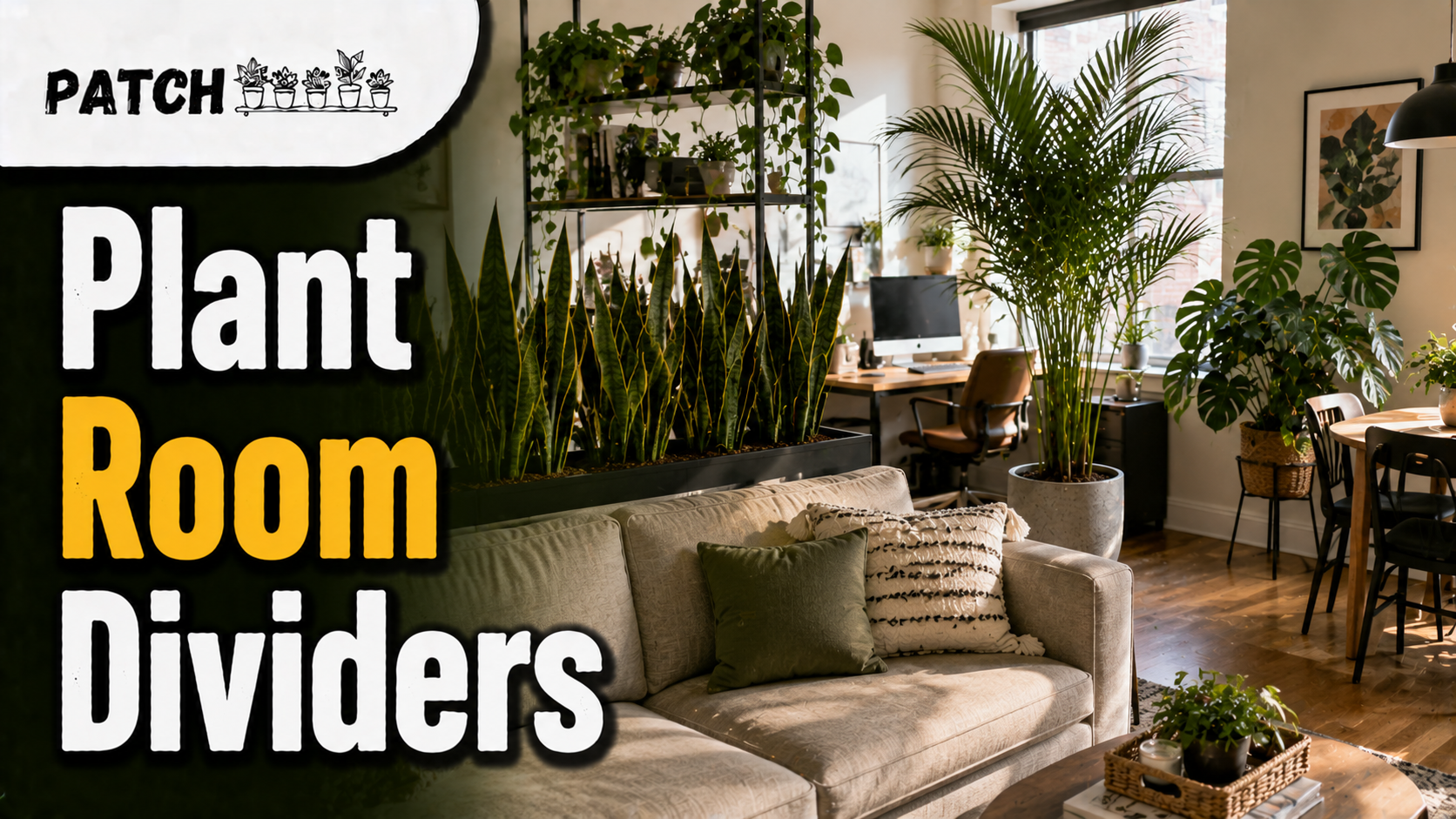
Snake plants are one of the best plant room dividers because they grow upright and narrow. Their sword-like leaves create strong vertical lines, almost like a soft architectural screen.
Line three to five snake plants in matching pots to create a simple divider for plants between a sofa and dining table. This works well in a small apartment because snake plants add height without spreading wide.
For care, read the snake plant care guide.
2. Areca Palm Greenery Room Divider
An areca palm creates a light, airy greenery room divider. Its soft fronds add privacy without feeling heavy. It is especially good for a bright living room where you want separation but not a solid wall.
Use one large palm beside a sofa, or place two palms in matching planters to frame a walkway. The leaves move gently and make the room feel more relaxed.
3. Bamboo Palm Room Divider With Plants
Bamboo palm works well as a room divider with plants because it has height, fullness, and a softer look than many upright plants. It can help separate a work corner from a living area.
It suits bright indirect light and looks best in a tall planter. Use it where you need privacy but still want an easy, natural look.
4. Monstera Living Room Divider
Monstera is bold, sculptural, and perfect for a stylish living room plant divider. Its large split leaves create visual separation without needing many pots.
A monstera can divide a seating area from a dining corner or soften the edge of an open-plan room. Keep it supported if it starts leaning, and rotate the pot so growth stays balanced.
Read the monstera plant care guide for more help.
5. Rubber Plant for a Modern Divider
A rubber plant works beautifully as a room plant that also gives structure. Its glossy leaves look clean, bold, and modern, which makes it useful for minimalist interiors.
Use one tall rubber plant beside a chair, console table, or desk to create a soft boundary. It is also a good tall plant for corner of room styling because it adds height without needing a huge footprint.
For care, read the rubber plant care guide.
6. Money Tree Apartment Divider
A money tree is a good choice for an apartment with plants because it has a tree-like shape without becoming too wide. It can sit between a desk and living space or beside a sofa to mark a new zone.
If you want trees for interior styling but do not have space for a huge plant, a money tree is a softer option. It gives height, a braided trunk, and a tidy canopy.
Read the money tree care guide.
7. Dracaena for Narrow Room Dividers
Dracaena is useful when you need a tall plant living room setup but the space is narrow. Many varieties grow upright and can fit beside shelves, desks, doors, or sofas.
Use dracaena in a tall planter to create a clean vertical divider. It is a strong option for a plant stand room divider or a corner that needs height.
Read the dracaena care guide.
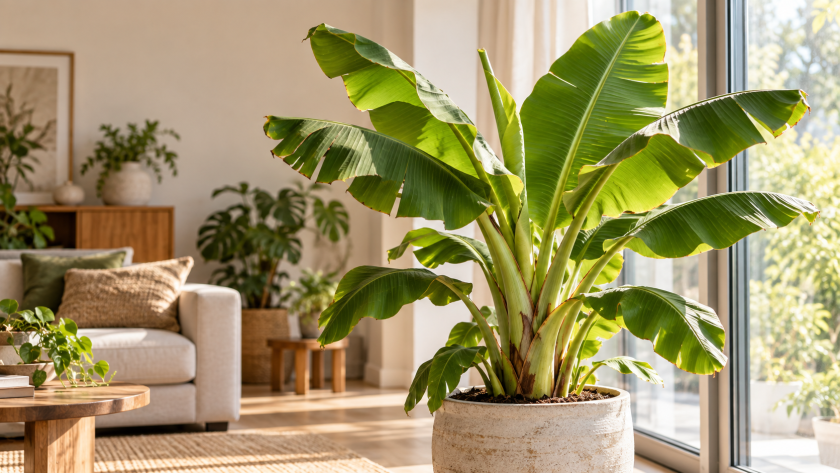
8. Bird of Paradise Statement Divider
Bird of paradise is one of the best trees for interior impact when you want a statement plant. It works in bright rooms and open-plan spaces where a smaller plant would disappear.
Use it as a tall plant for corner of room styling, or place it near a sofa to divide the lounge from another area. It needs space, so choose this only if the room can handle large leaves.
For care, read the bird of paradise care guide.
9. Fiddle Leaf Fig for Interior Zoning
Fiddle leaf fig can work as a natural room divider when used carefully. Its large leaves create strong visual impact and make the plant feel almost like furniture.
It is best for bright rooms where it will not be brushed constantly by people walking past. Place it near a window, beside a chair, or behind a sofa for a clean interior plant design look.
Read the fiddle leaf fig care guide.
10. Pothos Shelf Divider
Pothos is ideal if you want plants as room dividers but do not want large pots on the floor. Place pothos on an open shelf, bookcase, or high plant stand and let the vines trail down.
This creates a soft plant wall divider effect without needing a full living wall. It works well between a work-from-home desk and living area.
For care and styling, read the pothos care guide and trailing plants for shelves.
11. Philodendron Climbing Divider
Philodendron can be used as an indoor climbing plants wall when trained on a moss pole, trellis, or vertical support. This makes it useful for a plant divider wall indoor setup.
A climbing philodendron adds height and greenery without needing a wide plant. Use it in a tall pot with a stable support so it grows upward instead of spreading across the floor.
Read the philodendron care guide.
12. Peace Lily Soft Divider
Peace lily is useful when you want natural room partition plants that feel soft and calm. It does not create a very tall wall, but grouped peace lilies can divide a bedroom corner, bathroom shelf, or reading area.
Its white blooms also brighten darker spaces. Keep it away from pets, and avoid overwatering.
For care, read the peace lily care guide.
13. ZZ Plant Low-Maintenance Divider
ZZ plant works well for people who want plant room dividers but do not want high maintenance. It has glossy leaves, upright growth, and a tidy shape.
Use several ZZ plants in matching pots along a low console, shelf, or plant stand. It is a practical choice for offices, rented apartments, and low-light rooms.
Read the ZZ plant care guide.
14. Hoya Hanging Divider
Hoya is a good option for a hanging greenery room divider. It grows slowly, has waxy leaves, and can trail beautifully from shelves or ceiling planters.
Use hoya where you want visual separation above eye level, such as between a kitchen and dining area or above a desk nook.
For care, read the hoya care guide.
15. Spider Plant Tiered Divider
Spider plants are great for a plant stand room divider because they produce arching leaves and baby plants that spill over the sides.
Place several spider plants on a tiered stand to create a light divider. This is useful if you want room plants that feel fresh but not too formal.
Read the spider plant care guide.
16. String of Pearls Shelf Divider
String of pearls can create a delicate plant wall divider look when placed on a shelf or high planter. Its trailing stems give separation without bulk.
It is best for bright spaces and careful owners because it does not like soggy soil. Use it as part of a shelf divider rather than as the only divider.
Read the string of pearls care guide.
17. Mixed Plant Divider Wall Indoor
A mixed plant divider wall indoor setup combines tall plants, trailing plants, shelves, and planters. This is the best choice if you want a fuller indoor greenery divider.
Use a tall plant at each end, trailing plants on shelves, and compact plants in the middle. This creates depth and makes the divider look designed from both sides.
Good combinations include snake plant, pothos, ZZ plant, philodendron, spider plant, peace lily, and a small rubber plant.
Planters as Room Dividers
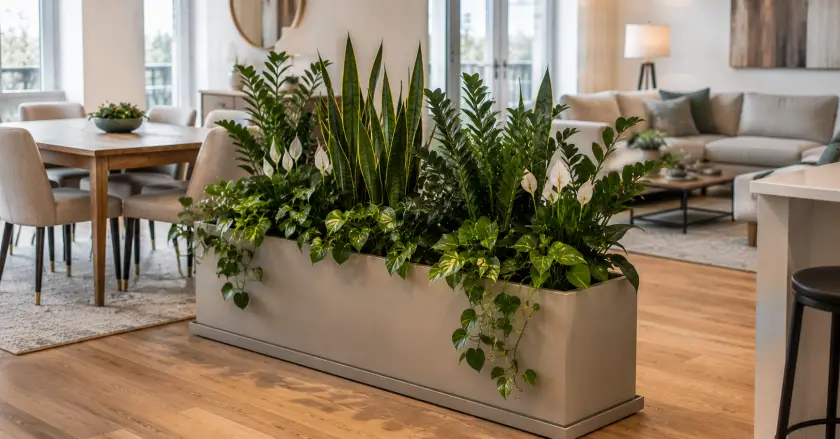
Planters as room dividers work well because they give structure before the plants even grow large. A long rectangular planter can divide a dining area from a living area. Tall planters can frame a walkway. Low planters can mark the edge of a workspace.
A room divider planter should be stable, wide enough to avoid tipping, and easy to water. If you are using several planters, choose matching materials so the setup feels intentional.
Good plants for planters as room dividers include snake plant, ZZ plant, peace lily, small palms, pothos, philodendron, and compact dracaena.
Plant Stand Room Divider Ideas
A plant stand room divider is perfect for renters and apartments because it is flexible. You can move it, rearrange it, and change plants without altering the room.
Use a tiered stand if you want height. Use a long narrow stand if you want a low boundary behind a sofa. Use an open shelf if you want storage and plants together.
For a balanced plant stand room divider, place taller plants at the bottom, trailing plants near the top, and compact plants in the middle. This keeps the whole divider from looking top-heavy.
Plant Wall Divider vs Planter Wall Divider
A plant wall divider usually means a vertical green wall, trellis, or shelf system filled with plants. A planter wall divider usually means planters arranged in a wall-like shape to separate space.
A plant wall divider can look dramatic, but it needs strong light, regular watering, pruning, and access for maintenance. A planter wall divider is easier because you can remove individual pots when plants need care.
If you are new to indoor plants, start with a planter wall divider before trying a full living plant wall indoor system.
Indoor Climbing Plants Wall

An indoor climbing plants wall is a smart way to use vertical space. It works well behind a sofa, beside a desk, near a bright window, or between two zones in an open room.
Use pothos, philodendron, hoya, monstera adansonii, or other suitable climbing plants on a trellis, moss pole, wire grid, or wall-mounted support.
Keep the structure accessible. If you cannot reach the plants to water, prune, or clean leaves, the wall will become difficult to maintain.
Natural Room Partition Plants for Apartments
Natural room partition plants are especially useful in apartments because they divide space without permanent changes. This makes them ideal for renters, studios, and open-plan flats.
For an apartment with plants, try these setups:
- A row of snake plants behind a sofa
- A plant shelf between bed and desk
- A tall palm beside the dining area
- A pothos shelf divider near the work corner
- A room divider planter near the entryway
Plants apartment styling should always leave enough walking space. A divider is helpful only if the room still feels easy to move through.
Tall Plant Living Room Ideas
A tall plant living room setup can anchor a space better than several small pots. If your living room feels unfinished, one tall plant can create height and help define the seating zone.
Good choices include bird of paradise, rubber plant, dracaena, fiddle leaf fig, areca palm, bamboo palm, monstera, and money tree.
Use a tall plant for corner of room styling if the corner feels empty. Use two tall plants if you want a stronger room divider with plants between zones.
Using Plants to Divide Rooms
Using plants to divide rooms works best when you think like a designer. Do not just line up random pots. Decide what you want the divider to do.
Ask yourself:
- Do I need privacy?
- Do I need to hide a desk or bed?
- Do I want to reduce visual clutter?
- Do I need a video call background?
- Do I want a soft boundary rather than a wall?
If you need privacy, choose tall dense plants. If you need style, choose sculptural plants. If you need flexibility, use a plant stand room divider or rolling planters.
Real Plants vs Fake Plants for Room Dividers
Real plants bring movement, growth, texture, and seasonal change. They make a room with plants feel alive. But they also need light, water, pruning, and care.
Fake plants for room dividers can be useful where real plants cannot survive, such as dark hallways, windowless offices, rental spaces with poor light, or areas that are hard to water.
A fake plant floor screen or artificial greenery panel can soften a room, but choose high-quality materials. Cheap fake plants can make the whole room look less polished. A good compromise is to use real plants where light is good and fake greenery where light is impossible.
How to Style a Room Full of Plants Without Clutter
A room full of plants can feel peaceful, but it can also become crowded if every surface is filled. The difference is spacing and repetition.
Use fewer pot styles. Repeat plant heights. Keep walkways clear. Leave negative space around large plants. Group plants with similar care needs together.
A good room plant should have a clear job. It might add height, trail from a shelf, soften a corner, or help divide a space. When every plant has a purpose, the room looks styled instead of crowded.
Care Tips for Plant Room Dividers
Plant room dividers need slightly more planning than normal houseplants because they are part of the room layout. If one plant fails, the whole divider can look uneven.
- Check light from both sides: Plants near dividers may lean toward windows.
- Rotate pots: Turn plants every couple of weeks for even growth.
- Water carefully: Use saucers or trays to protect floors.
- Prune regularly: Keep plants from blocking walkways.
- Clean leaves: Large divider plants collect dust.
- Watch for pests: Grouped plants can spread pests faster.
- Keep stability in mind: Tall planters should not tip easily.
Helpful care guides include complete watering guide, signs you are overwatering, how to clean plant leaves, and root rot guide.
Best Layouts for a Room Divider With Plants
Layout 1: Sofa Back Divider
Place a row of tall planters behind a sofa to separate the living area from dining or office space. Snake plant, ZZ plant, dracaena, and palms work well.
Layout 2: Open Shelf Divider
Use an open bookcase filled with pothos, spider plant, hoya, small ferns, and compact plants. This creates a plant wall divider that still lets light pass through.
Layout 3: Bedroom Studio Divider
Use a plant stand room divider between the bed and living area. Add trailing plants higher up and taller plants near the floor.
Layout 4: Desk Privacy Divider
Use planters as room dividers around a desk to reduce visual clutter. This works well for work-from-home spaces and video call backgrounds.
Layout 5: Corner Tree Divider
Use one tall plant for corner of room zoning. A rubber plant, money tree, dracaena, or bird of paradise can make one corner feel like its own area.
Common Mistakes to Avoid
- Blocking all the light: A divider should separate space, not make one side dark.
- Using unstable pots: Tall plants need secure planters, especially in walkways.
- Choosing plants that grow too wide: Wide leaves can block paths in small rooms.
- Forgetting access: You need to reach every plant for watering and pruning.
- Mixing too many pot styles: Matching planters make plant dividers look cleaner.
- Using thirsty and dry-loving plants together: Group plants with similar care needs.
- Ignoring pets: Some popular divider plants are not pet-safe if chewed.
For pet planning, read how to make plants cat friendly and how to make plants dog friendly.
Expert Tips from Sawera Shahid
Start with one divider zone, not the whole room. A simple row of three tall plants can teach you what works before you invest in a full planter wall divider.
Choose plants that look good from both sides. A plant divider wall indoor setup is visible from two areas, so avoid plants that have one attractive side and one bare side.
Also, think about daily movement. If leaves brush your face every time you walk past, the divider is too close. A natural room divider should make the room easier to live in, not harder.
Future Trends
Indoor plant design is moving toward flexible, renter-friendly, and multi-purpose styling. People want greenery that does more than decorate. They want privacy, better video call backgrounds, softer open-plan rooms, and healthier-looking homes.
Expect more interest in plant room dividers, indoor climbing plants wall systems, room divider planter setups, plant stand room divider ideas, and mixed real-and-fake greenery for low-light rooms.
As apartments get smaller and open-plan living stays popular, using plants to divide rooms will become one of the easiest ways to make interiors feel warmer and more personal.
Frequently Asked Questions
Can plants work as natural room dividers?
Yes. Natural room dividers made with plants can separate spaces, add privacy, soften open rooms, and create a living boundary without blocking light completely.
What are the best plants as room dividers?
The best plants as room dividers include snake plant, areca palm, bamboo palm, monstera, rubber plant, money tree, dracaena, bird of paradise, fiddle leaf fig, pothos, and philodendron.
What is the best room divider with plants for apartments?
The best room divider with plants for apartments is usually a narrow plant stand, open shelf, row of tall planters, or room divider planter that can move if the layout changes.
Can I use planters as room dividers?
Yes. Planters as room dividers work well when they are stable, easy to water, and filled with plants that match the room’s light.
What is a plant divider wall indoor setup?
A plant divider wall indoor setup is a vertical divider made from plants, shelves, trellises, or planters. It can separate zones while adding greenery.
Are fake plants for room dividers okay?
Yes, fake plants for room dividers can work in very dark spaces or low-maintenance interiors. Real plants are better where light and care are possible.
What tall plant works best for a corner of room?
A good tall plant for corner of room styling could be dracaena, rubber plant, bird of paradise, money tree, areca palm, bamboo palm, or fiddle leaf fig.
How do I avoid a room full of plants looking messy?
Use matching pots, repeat plant heights, keep walkways clear, group plants by care needs, and make sure every room plant has a clear purpose.
Related Guides
- PATCH Plants homepage
- PATCH Plants blog
- Indoor Plants hub
- Plant Care hub
- Best indoor plants for tiny apartments
- Best indoor plants for beginners
- Best indoor plants for first-time plant parents
- 35 low-maintenance plants
- Air-purifying indoor plants
- How to style indoor plants by room
- Bedroom plants for style and calm
- Indoor jungle without overcrowding
- Trailing plants for shelves
- Low-light hanging plants
- Indoor plants that smell amazing
- Colorful foliage indoor plants
- Rare houseplants worth the hunt
- Blooming indoor plants
- Best office plants
- Improve home office with plants
- Office plants for fluorescent lighting
- Oversized indoor plants
- Statement plants for minimalist interiors
- Indoor gardening systems
- Complete guide to indoor light
- Complete watering guide
- Signs you are overwatering
- Worst times to water plants
- Root rot guide
- How to revive a dying plant
- Leaf curl, browning, and droop
- Why plant leaves turn yellow
- How to clean plant leaves
- Best soil mix for every plant
- Repotting mistakes to avoid
- How to repot a plant
- Fertilizing indoor vs outdoor plants
- Self-watering pots guide
- DIY indoor humidity tray
- Humidity hacks for plants
- Cat-friendly plant guide
- Dog-friendly plant guide
- Snake plant care guide
- Peace lily care guide
- Christmas cactus care guide
- Money tree care guide
- Best bathroom plants
- Succulent care guide
- Cactus care guide
- Boston fern care guide
- Bird of paradise care guide
- Pothos care guide
- Philodendron care guide
- Monstera care guide
- Hoya care guide
- Orchid care guide
- Rubber plant care guide
- Fiddle leaf fig care guide
- Spider plant care guide
- ZZ plant care guide
- Jade plant care guide
- Dracaena care guide
- Anthurium care guide
- African violet care guide
- String of pearls care
- Calathea care guide
- Feng Shui indoor plants
- Unusual indoor plants
Final Thoughts
Natural room dividers are a smart way to make indoor spaces feel softer, greener, and more functional. Whether you use a tall plant living room setup, a plant stand room divider, a room divider planter, or an indoor climbing plants wall, the goal is the same: divide the room without making it feel closed.
University of Minnesota Extension explains that light is one of the most important factors for growing houseplants because plants need light for photosynthesis, which is why any plant divider wall indoor setup should be planned around real light conditions: University of Minnesota Extension indoor plant lighting guide.
Start small. Try one divider for plants behind a sofa, beside a desk, or near a bed. Once you see how the room feels, you can build a fuller greenery room divider with shelves, tall plants, hanging vines, or planters as room dividers.
Final Recap
This guide covers natural room dividers, plants as room dividers, plant room dividers, room divider with plants, greenery room divider, apartment with plants, divider for plants, fake plant floor options, fake plants for room styling, indoor climbing plants wall ideas, natural room partition plants, plant divider wall indoor setups, plant stand room divider ideas, plant wall divider designs, planter wall divider layouts, planters as room dividers, plants apartment styling, room divider planter setups, room full of plants styling, room plant placement, room plants, room with plants, tall plant for corner of room, tall plant living room ideas, trees for interior, and using plants to divide rooms.
The best approach is to choose the right plant height, match the divider to your light, keep access for care, and use matching planters so the setup looks intentional.