A Japanese cucumber plant is a brilliant choice if you want long, slender, crisp cucumbers from a small garden, raised bed, patio container, or trellised vegetable patch. These cucumbers are usually grown for their thin skin, fresh crunch, mild flavour, and straight fruit when trained vertically.
Success with growing Japanese cucumber comes down to warm weather, full sun, rich soil, steady moisture, strong support, and frequent harvesting. The vines grow quickly once settled, so it helps to prepare the site and trellis before the seedlings start running.
Growing Snapshot
The best way to grow a Japanese cucumber plant is to plant after frost risk has passed, use a sunny site, prepare fertile soil, add a sturdy trellis, water deeply, mulch the root zone, feed during active growth, and harvest fruit while it is young and slender. Keep the leaves dry when possible, protect pollinators, and check often for cucumber beetles, aphids, powdery mildew, and bacterial wilt.
Key Takeaways
- A Japanese cucumber plant needs warm soil, full sun, fertile soil, and steady moisture.
- Japanese cucumbers are usually long, slender, crisp, and best harvested young.
- A trellis helps save space, improve airflow, keep fruit cleaner, and produce straighter cucumbers.
- Water stress can lead to bitter, misshapen, or weak fruit.
- Pollination matters unless you are growing a parthenocarpic seedless variety.
- Cucumber beetles, bacterial wilt, powdery mildew, and aphids should be managed early.
- Use this guide with easy outdoor edible plants, container gardening on patios, and complete watering tips.
Japanese Cucumber Plant Care at a Glance
| Care Area | Best Practice | Common Mistake |
|---|---|---|
| Timing | Plant after frost risk has passed | Sowing into cold wet soil |
| Light | Full sun | Growing in too much shade |
| Soil | Rich, moist, well-draining soil | Poor soil with little organic matter |
| Water | Deep, consistent watering | Letting vines dry during fruiting |
| Support | Trellis, netting, cage, or A-frame | Adding support after vines are tangled |
| Feeding | Moderate feeding during growth and fruiting | Too much nitrogen and weak fruit set |
| Harvest | Pick young and often | Leaving oversized fruit on the vine |
What Makes a Japanese Cucumber Plant Different?
Japanese cucumbers are usually longer, narrower, and more delicate than many standard slicing cucumbers. They often have thin skin, small seeds, a crisp bite, and a clean flavour that works well in salads, quick pickles, sushi bowls, sandwiches, and cold summer dishes.
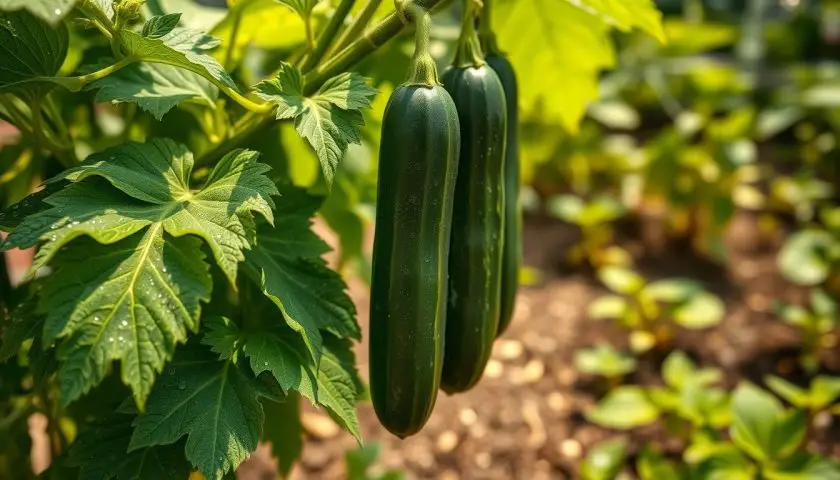
Many Japanese and Asian-style cucumbers are best grown on a trellis. Vertical growing supports straighter fruit, keeps cucumbers off wet soil, makes pests easier to spot, and helps airflow around the leaves.
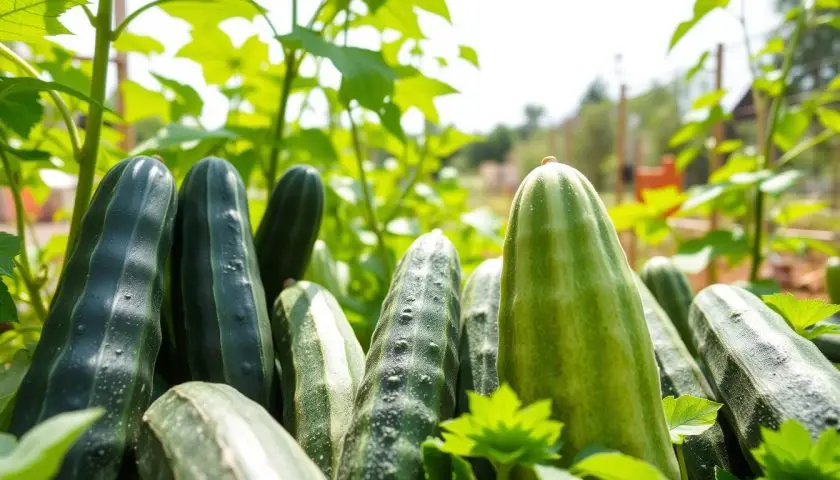
Typical fruit characteristics
- Long, slender shape.
- Thin, tender skin.
- Crisp texture.
- Mild fresh flavour.
- Best harvested before the fruit becomes thick, seedy, or yellowing.
How Japanese cucumbers compare with standard slicing cucumbers
| Feature | Japanese Cucumber | Standard Slicing Cucumber |
|---|---|---|
| Shape | Long and slender | Often shorter and thicker |
| Skin | Usually thin and tender | Can be thicker depending on variety |
| Texture | Very crisp | Crisp but often more watery |
| Best use | Fresh eating, salads, quick pickles | Fresh slicing and general kitchen use |
| Growing support | Trellis strongly recommended | Trellis helpful for vining types |
Choose Japanese Cucumber Varieties for Your Garden
Japanese cucumber varieties are often sold as Japanese, Asian, burpless, greenhouse, long, or trellis cucumbers. Seed names vary by supplier, so read the packet carefully before buying.
Traits to look for
- Long slender fruit.
- Thin skin.
- Good disease resistance.
- Trellis-friendly growth.
- Suitable days to maturity for your season.
- Open-pollinated or hybrid seed depending on your preference.
- Parthenocarpic types if you need seedless fruit or protected growing.
Open-pollinated vs hybrid seeds
| Seed Type | Best For | Watch Out For |
|---|---|---|
| Open-pollinated | Seed saving and traditional garden growing | Fruit may vary more if cross-pollinated nearby |
| Hybrid | Uniform fruit and selected disease resistance | Saved seed will not reliably match the parent |
| Parthenocarpic | Greenhouses, tunnels, or seedless fruit | May form seeds if pollinated by nearby cucumbers |
| Gynoecious | Earlier or heavier female-flower production | May need pollen support depending on packet instructions |
Best choice for beginners
Choose a disease-resistant, trellis-friendly Japanese or Asian slicing cucumber with a maturity date that fits your growing season. If you are new to cucumbers, avoid buying a variety only because the fruit looks unusual. Reliable growth matters more than novelty.
For more edible garden ideas, read patio tomato plants, planting potatoes in containers, and easy outdoor edible plants.
When to Plant Japanese Cucumber Seeds
Japanese cucumber seeds should go into warm soil. Cucumbers are warm-season plants and cold conditions can slow germination, stunt young plants, or cause seed rot. Direct sow outdoors after frost risk has passed, or start seeds indoors a few weeks earlier for a head start.
| Planting Method | Best Timing | Care Note |
|---|---|---|
| Direct sow outdoors | After frost risk has passed and soil is warm | Best for avoiding root disturbance |
| Start indoors | A few weeks before outdoor planting time | Use deep pots and transplant gently |
| Plant transplants | After nights are mild | Harden off before planting outside |
| Succession planting | Early to midsummer if your season allows | Useful for extending harvest |
Why warm soil matters
Cucumber roots dislike cold soil. If you plant too early, seeds may sit without sprouting, seedlings may yellow, or young plants may stall. Waiting for warmth often gives faster, stronger growth.
Starting seeds indoors
Start seeds indoors only if you can give bright light and handle the roots gently. Cucumbers dislike root disturbance, so use individual pots and transplant before seedlings become root-bound.
Hardening off seedlings
Before moving seedlings outdoors full-time, expose them gradually to outdoor light, wind, and temperature. Sudden movement from a sheltered room to strong sun can scorch or stress young plants.
For planning help, read garden calendar and seasonal plant care in autumn.
Best Site and Sunlight for Japanese Cucumbers
A Japanese cucumber plant grows best in full sun. More light usually means stronger vines, more flowers, better fruiting, and faster drying leaves after rain. Good airflow also helps reduce disease pressure.
Best site conditions
- Full sun for most of the day.
- Warm soil and sheltered roots.
- Good airflow without harsh wind exposure.
- Room for a trellis or vertical support.
- Access to water during dry weather.
- Crop rotation away from other cucurbits where possible.
Places to avoid
- Deep shade.
- Cold low spots where frost lingers.
- Waterlogged soil.
- Wind tunnels that tear leaves and flowers.
- Old cucumber or squash beds with repeated disease problems.
Prepare the Best Soil for Japanese Cucumber Plants
The best soil for Japanese cucumber plants is fertile, loose, moisture-retentive, and well-draining. Cucumbers need steady moisture, but they do not grow well in compacted or stagnant soil.
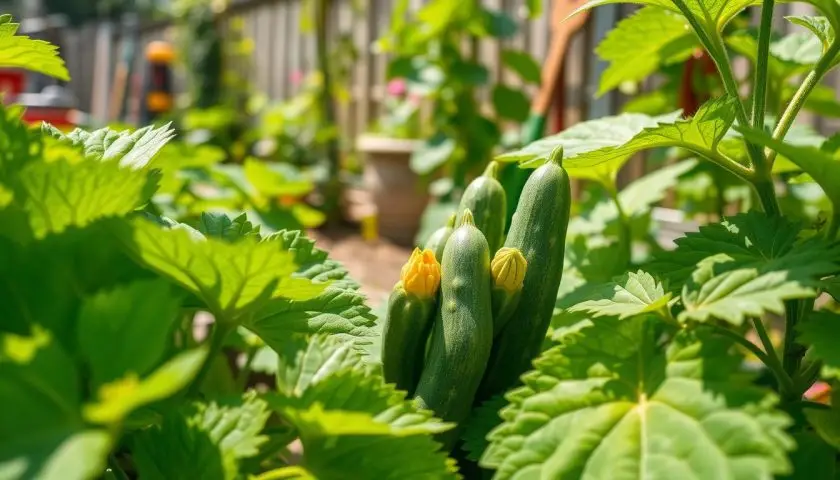
Garden bed soil preparation
- Loosen the soil before planting.
- Mix in compost or well-aged organic matter.
- Avoid fresh manure right before planting.
- Improve heavy clay with compost and drainage support.
- Improve sandy soil with compost to hold moisture.
- Mulch after planting once soil is warm.
Container potting mix
- Use a high-quality potting mix, not dense garden soil.
- Add compost for fertility if the mix is light.
- Add perlite or bark if the mix compacts easily.
- Choose a large container with drainage holes.
- Use a stable pot because trellised vines become top-heavy.
Soil problems and fixes
| Soil Problem | What Happens | Fix |
|---|---|---|
| Dry sandy soil | Fruit may become bitter or misshapen | Add compost and mulch |
| Heavy clay | Roots may struggle in wet conditions | Improve structure and drainage |
| Low fertility | Small vines and weak fruiting | Add compost and feed during growth |
| Compacted soil | Weak roots and poor water movement | Loosen before planting |
For deeper soil help, read best soil mix guide, how to repot a plant, and repotting mistakes to avoid.
How to Plant Japanese Cucumbers From Seed
Direct sowing works well because cucumbers grow quickly and dislike root disturbance. Follow the seed packet for exact depth and spacing, then thin to the strongest seedlings once they are established.
Direct sowing steps
- Prepare a sunny bed with compost-rich soil.
- Install the trellis before sowing or right after planting.
- Water the planting area before sowing if soil is dry.
- Sow seeds at the depth listed on the seed packet.
- Cover gently with soil.
- Keep the soil evenly moist until germination.
- Thin seedlings by cutting extras rather than pulling if roots are close.
- Guide young vines toward the trellis as they grow.
Transplanting steps
- Harden off seedlings gradually.
- Plant on a mild cloudy day or late afternoon.
- Keep the root ball intact.
- Plant at the same depth as the pot.
- Water immediately after planting.
- Protect from hot afternoon sun for the first day or two if needed.
Spacing Japanese Cucumber Plants
Spacing depends on whether the vines are trellised or allowed to sprawl. Trellising saves space and is usually the better choice for Japanese cucumbers because long fruit stays cleaner and straighter.
| Growing Method | Suggested Spacing | Best For |
|---|---|---|
| Trellised row | About 9 to 18 inches apart, depending on variety | Small gardens, straighter fruit, easier harvest |
| Raised bed with support | Space to allow airflow on both sides | Home gardens and compact plots |
| Container | Usually one strong plant per large pot | Patios, balconies, rented spaces |
| Ground-grown vines | More space needed for sprawling | Larger beds with room to spread |
Japanese Cucumber Trellis and Support
A Japanese cucumber trellis is one of the best upgrades you can make. Vines are easier to inspect, flowers are easier for pollinators to reach, and fruit is easier to harvest.
Good support options
- A-frame trellis.
- Cattle panel arch.
- Strong garden netting.
- Vertical strings tied to a top rail.
- Fence panel with good airflow.
- Large tomato cage for compact types.
How to train vines
- Install support before vines become long.
- Guide the main vine toward the trellis.
- Use soft ties if the vine needs help holding on.
- Do not tie stems tightly because they thicken as they grow.
- Check every few days during fast growth.
- Keep fruit hanging freely so it does not bend around support bars.
Why trellising helps
| Benefit | Why It Matters |
|---|---|
| Saves space | Vines grow upward instead of across the bed |
| Straighter fruit | Long cucumbers hang cleanly |
| Cleaner harvest | Fruit stays off wet soil |
| Better airflow | Leaves dry faster after rain |
| Easier pest checks | Leaf undersides and stems are more visible |
Growing Japanese Cucumbers in Containers
Japanese cucumbers can grow well in containers if the pot is large, the trellis is stable, and watering is consistent. Containers dry faster than garden beds, so daily checks may be needed during hot weather.
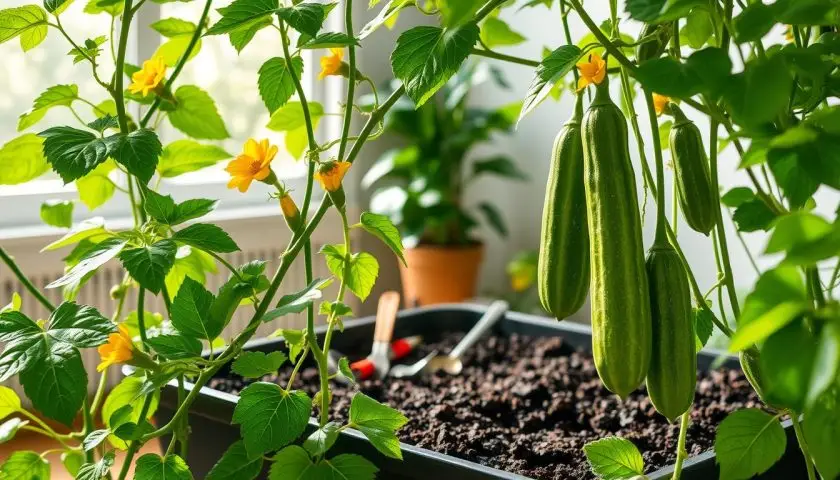
Container basics
- Use a large container with drainage holes.
- Choose a pot that can hold a strong trellis.
- Use rich potting mix with compost.
- Place in full sun outdoors.
- Water deeply and often during warm weather.
- Feed during active growth and fruiting.
- Keep balcony plants protected from harsh wind.
Container mistakes to avoid
- Using a tiny pot.
- Letting the vine dry hard during fruiting.
- Using a weak trellis that tips over.
- Planting too many vines in one pot.
- Leaving water trapped in a saucer.
For more pot-growing help, read container gardening on patios, patio tomato plants, and self-watering pots guide.
Japanese Cucumber Watering
Japanese cucumber watering should be steady. Cucumbers are mostly water, and the plant needs consistent soil moisture to make crisp fruit. Dry swings can cause bitterness, poor shape, aborted fruit, and stressed vines.
Watering best practices
- Water deeply at the root zone.
- Avoid frequent shallow sprinkling.
- Use drip irrigation or a soaker hose where possible.
- Water more often when fruit begins developing.
- Mulch to reduce evaporation.
- Check containers daily in hot weather.
- Avoid working around wet leaves if disease is present.
| Growth Stage | Watering Need | What to Watch |
|---|---|---|
| Germination | Evenly moist soil | Do not let the seed zone dry |
| Seedlings | Moist but not waterlogged | Weak roots in soggy soil |
| Vining growth | Deep regular watering | Fast growth uses water quickly |
| Flowering | Consistent moisture | Water stress can reduce fruit set |
| Fruiting | Most consistent watering | Bitterness and misshapen fruit |
For deeper watering support, read complete watering guide, worst times to water plants, and signs you are overwatering.
Feeding Japanese Cucumber Plants
Japanese cucumber vines need nutrients to produce leaves, flowers, and fruit, but too much nitrogen can create leafy vines with fewer cucumbers. Start with compost-rich soil, then feed when plants begin active growth and early fruiting.
Feeding tips
- Mix compost into the soil before planting.
- Use a balanced vegetable fertilizer during growth.
- Side-dress when vines begin flowering if growth is strong.
- Feed container plants more regularly because nutrients wash out.
- Avoid heavy nitrogen if vines are leafy but fruit is poor.
Nutrient problem signs
| Symptom | Possible Cause | Fix |
|---|---|---|
| Pale leaves | Low nutrients, water stress, or root problems | Check soil moisture and feed lightly |
| Lots of leaves, few fruit | Too much nitrogen or poor pollination | Reduce nitrogen and support pollinators |
| Small fruit | Low water, low nutrients, or heat stress | Water deeply and feed during fruiting |
| Burned leaf edges after feeding | Too much fertilizer | Water well and reduce feeding strength |
For feeding basics, read fertilizing indoor vs outdoor plants.
Pollination and Flowering
Most cucumber plants produce male and female flowers. Female flowers have a tiny cucumber-shaped ovary behind the bloom. If the flower is not pollinated well, fruit may be small, curved, misshapen, or may drop early.
Pollination tips
- Do not panic if the first flowers are mostly male.
- Encourage bees and other pollinators with nearby flowers.
- Avoid spraying pesticides when flowers are open.
- Water consistently during flowering and fruit set.
- Hand pollinate if growing under cover and fruit set is poor.
Hand pollination method
- Pick a fresh male flower.
- Remove the petals to expose the pollen.
- Touch the pollen to the centre of a female flower.
- Repeat with several female flowers in the morning.
- Keep soil moisture steady afterward.
Pruning Japanese Cucumber Plants
Japanese cucumber pruning should be light and practical. You want airflow and access, but you do not want to strip away too many energy-producing leaves.
What to prune
- Yellow or diseased leaves.
- Leaves touching wet soil.
- Dead or broken vines.
- Crowded lower growth that blocks airflow.
- Severely pest-infested leaves.
What not to prune heavily
- Healthy leaves shading fruit during hot weather.
- Flowering stems unless they are diseased or tangled.
- The main vine unless you are managing size carefully.
- Large amounts of foliage during heat stress.
Pruning tips
- Use clean sharp snips.
- Prune on a dry day if possible.
- Remove diseased leaves from the garden, not onto the compost pile if disease is severe.
- Do not work heavily in vines when foliage is wet.
- Wash hands and tools after handling diseased plants.
For general pruning support, read pruning basics and how to clean plant leaves.
Japanese Cucumber Plant Pests
Japanese cucumber plant pests can weaken vines quickly because cucumber leaves are tender and fast-growing. Check plants at least a few times a week once the weather warms.
Common pests
| Pest | Signs | First Response |
|---|---|---|
| Cucumber beetles | Chewed leaves, damaged flowers, wilt risk | Use row covers early and inspect often |
| Aphids | Sticky leaves, curled growth, clusters on stems | Rinse off or remove early colonies |
| Spider mites | Fine webbing, speckled leaves, dry stress | Improve watering and rinse leaf undersides |
| Squash bugs | Wilting leaves, eggs under leaves | Hand-remove eggs and insects early |
| Slugs and snails | Holes in seedlings or lower leaves | Use barriers and remove hiding places |
Prevention tips
- Use row covers while plants are young, then remove them when pollination is needed.
- Keep weeds down around the bed.
- Check leaf undersides for eggs and pests.
- Avoid broad pesticide use during bloom because pollinators are needed.
- Remove badly damaged leaves when needed.
For broader pest support, read how to keep pests away from outdoor plants.
Japanese Cucumber Plant Diseases
Japanese cucumber plant diseases are easier to prevent than fix. Good airflow, crop rotation, dry foliage, clean tools, and disease-resistant varieties all help.
Common diseases
| Disease | Signs | Prevention |
|---|---|---|
| Powdery mildew | White powdery patches on leaves | Improve airflow and avoid overcrowding |
| Downy mildew | Yellow patches and greyish growth under leaves | Keep leaves dry and monitor humid weather |
| Bacterial wilt | Sudden wilt, often linked with cucumber beetles | Control cucumber beetles early |
| Mosaic virus | Mottled leaves, distorted growth, poor fruit | Control aphids and remove infected plants |
| Leaf spots | Brown or yellow spotted leaves | Water at soil level and avoid wet foliage |
Japanese cucumber disease prevention
- Choose resistant varieties when possible.
- Grow on a trellis for better airflow.
- Water at soil level instead of overhead.
- Do not work with vines when leaves are wet.
- Remove infected leaves promptly.
- Rotate cucumbers away from squash, melons, and other cucurbits where possible.
- Clean tools after pruning diseased growth.
For more plant problem help, read yellow leaves on plants, leaf curl, browning and droop, and how to revive a dying plant.
Why Japanese Cucumbers Turn Bitter or Misshapen
Bitter or misshapen cucumbers usually mean the plant was stressed while fruit was developing. The most common causes are uneven watering, poor pollination, heat stress, low nutrients, or fruit left too long on the vine.
| Fruit Problem | Likely Cause | Fix |
|---|---|---|
| Bitter fruit | Water stress, heat, or overmaturity | Water consistently and harvest younger |
| Curved fruit | Poor pollination or obstruction | Support pollinators and trellis vines |
| Fat end, narrow end | Uneven pollination or water stress | Improve pollination and moisture |
| Yellowing fruit | Overripe cucumber | Harvest more frequently |
| Small fruit dropping | Poor pollination, heat, or plant stress | Water deeply and protect pollinators |
Harvesting Japanese Cucumbers
Harvesting Japanese cucumbers at the right time is the difference between crisp and seedy. Pick fruit when it is slender, firm, deep green, and still tender. Do not wait for the largest possible cucumber because oversized fruit reduces quality and can slow new production.
Harvesting tips
- Check vines daily or every other day during peak season.
- Use clean snips or gently snap fruit from the stem.
- Avoid pulling hard because vines are tender.
- Harvest before fruit turns yellow or puffy.
- Remove damaged or misshapen fruit so the plant keeps producing.
- Pick often to encourage more flowers and fruit.
Best harvest stage
| Fruit Stage | Quality | Action |
|---|---|---|
| Young, slender, firm | Best texture and flavour | Harvest now |
| Full size but still green | Usually usable | Harvest soon |
| Thick, puffy, or seedy | Lower eating quality | Remove from vine |
| Yellowing | Overripe | Remove to support new fruit |
Storing and Using Japanese Cucumbers
Japanese cucumbers are best used fresh, but short storage is possible. Handle them gently because thin-skinned fruit can lose moisture or bruise faster than thick-skinned cucumbers.
Storage tips
- Use fresh cucumbers quickly for best crunch.
- Keep harvested fruit cool and lightly humid.
- Do not leave fruit sitting in hot sun after picking.
- Avoid stacking heavy vegetables on top.
- Use slightly curved or misshapen fruit first.
Easy uses
- Fresh salads.
- Quick pickles.
- Sushi bowls.
- Cold noodle dishes.
- Sandwiches and wraps.
- Yogurt cucumber dips.
Japanese Cucumber Plant Care Checklist
| Task | How Often | What to Watch |
|---|---|---|
| Check soil moisture | Daily in heat, less often in mild weather | Dry root zone and wilting vines |
| Train vines | Every few days during fast growth | Loose vines and tangled stems |
| Inspect pests | Several times weekly | Cucumber beetles, aphids, mites, eggs |
| Check disease | Weekly or after humid weather | Powdery mildew, spots, wilting |
| Feed | During active growth and fruiting | Pale leaves and weak fruiting |
| Harvest | Daily or every other day at peak | Fruit becoming too large or yellow |
| Remove old leaves | As needed | Yellow, diseased, or soil-touching leaves |
Common Mistakes With Japanese Cucumber Plants
| Mistake | What Happens | Better Choice |
|---|---|---|
| Planting too early | Seeds rot or seedlings stall | Wait for warm soil |
| Skipping the trellis | Fruit lies on soil and vines crowd | Install support early |
| Watering unevenly | Bitter or misshapen fruit | Keep soil consistently moist |
| Overfeeding nitrogen | Leafy vines with fewer cucumbers | Use balanced feeding |
| Ignoring cucumber beetles | Chewed leaves and disease risk | Check early and protect seedlings |
| Harvesting too late | Seedy fruit and slower production | Pick young and often |
Helpful PATCH Guides for Japanese Cucumber Plant Care
Use these related PATCH guides to plan your edible garden, improve watering, grow in containers, prevent pests, and fix common plant problems.
Edible and Outdoor Growing Guides
- Outdoor Plants hub
- Easy outdoor edible plants
- Patio tomato plants
- Planting potatoes in containers
- How long does pineapple take to grow?
- Edible flowers to grow outdoors
Container and Garden Planning Guides
- Container gardening on patios
- How to keep outdoor plants alive
- Garden calendar
- Seasonal plant care in autumn
- Low-maintenance outdoor plants
Watering, Soil and Feeding Guides
- Complete watering guide
- Worst times to water plants
- Signs you are overwatering
- Best soil mix guide
- Fertilizing indoor vs outdoor plants
- Self-watering pots guide
Pest and Plant Problem Guides
- Plant Care hub
- How to keep pests away from outdoor plants
- Yellow leaves on plants
- Why plant leaves turn yellow
- Leaf curl, browning and droop
- Root rot guide
- How to clean plant leaves
- Pruning basics
Frequently Asked Questions
How do I grow a Japanese cucumber plant?
Grow a Japanese cucumber plant in full sun, warm soil, rich well-draining soil, and consistent moisture. Add a trellis early, feed during active growth, protect pollinators, and harvest young fruit often.
When should I plant Japanese cucumber seeds?
Plant Japanese cucumber seeds outdoors after frost risk has passed and the soil has warmed. In cooler areas, start seeds indoors a few weeks earlier and transplant gently after hardening off.
Do Japanese cucumber plants need a trellis?
Yes, a trellis is strongly recommended. It saves space, improves airflow, keeps fruit off the soil, helps fruit grow straighter, and makes harvesting easier.
What is the best soil for Japanese cucumber plants?
The best soil is fertile, loose, moisture-retentive, and well-draining. Mix compost into the planting area before sowing or transplanting.
How often should I water Japanese cucumbers?
Water deeply and regularly so the root zone stays evenly moist. Water more often during hot weather, flowering, and fruit development, especially in containers.
Why are my Japanese cucumbers bitter?
Bitter cucumbers often come from water stress, heat stress, or fruit left too long on the vine. Keep soil moisture steady and harvest while fruit is young and tender.
Why are my Japanese cucumbers curved or misshapen?
Curved or misshapen cucumbers can come from poor pollination, uneven watering, heat stress, low nutrients, or fruit pressing against the trellis or soil.
How do I prune Japanese cucumber plants?
Remove yellow, diseased, damaged, or soil-touching leaves with clean snips. Avoid heavy pruning because healthy leaves feed the developing cucumbers.
What pests attack Japanese cucumber plants?
Common pests include cucumber beetles, aphids, spider mites, squash bugs, slugs, and snails. Check early, especially under leaves and around flowers.
When should I harvest Japanese cucumbers?
Harvest when fruit is young, firm, slender, and deep green. Pick daily or every other day during peak season so the plant keeps producing.
Final Thoughts
A Japanese cucumber plant rewards steady care. Give it warm soil, full sun, a strong trellis, deep watering, and frequent harvesting, and it can produce crisp cucumbers through the warm season. Most problems come from planting too early, letting the roots dry out, skipping support, or missing early pests.
University of Maryland Extension explains that cucumbers should be planted after frost once soil has warmed, need full sun, benefit from trellising, require deep regular watering during dry periods, and are vulnerable to pests and diseases such as cucumber beetles, bacterial wilt, and powdery mildew: University of Maryland Extension cucumber growing guide.
For the best harvest, keep the routine simple. Train vines upward, keep the root zone moist, protect pollinators, and pick fruit before it becomes oversized. Young Japanese cucumbers have the best crunch.
Final Recap
Japanese cucumber plants are warm-season edible vines grown for long, slender, crisp fruit. Plant seeds after frost risk has passed and the soil has warmed, or start seedlings indoors a few weeks early if you can transplant gently. Choose full sun, rich soil, steady moisture, and a strong trellis. Water deeply during flowering and fruiting, mulch to protect soil moisture, feed during active growth, and prune only damaged or diseased leaves. Watch for cucumber beetles, aphids, spider mites, powdery mildew, bacterial wilt, and leaf spots. Harvest cucumbers while young, firm, and tender, and pick often to keep vines producing.