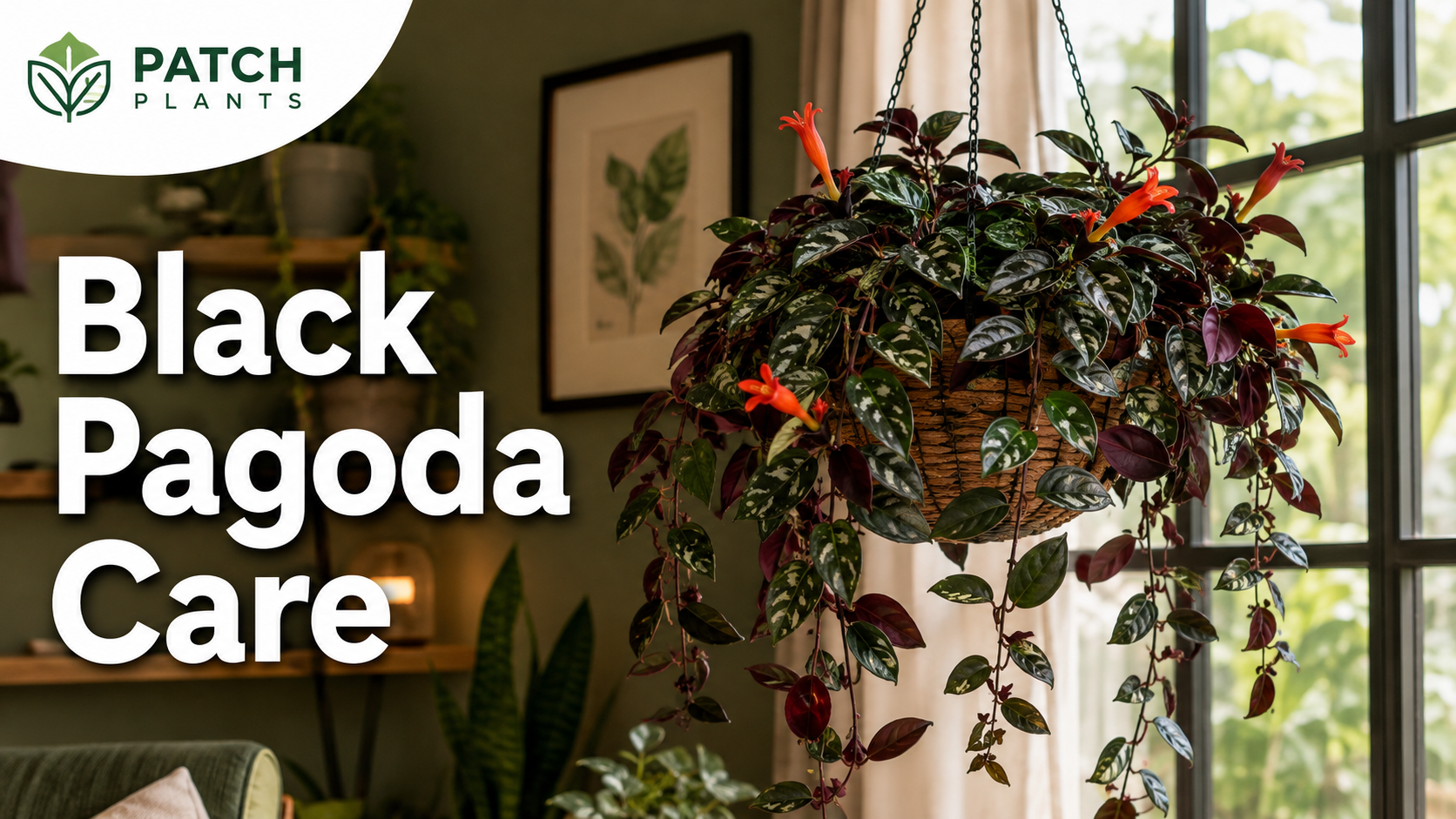
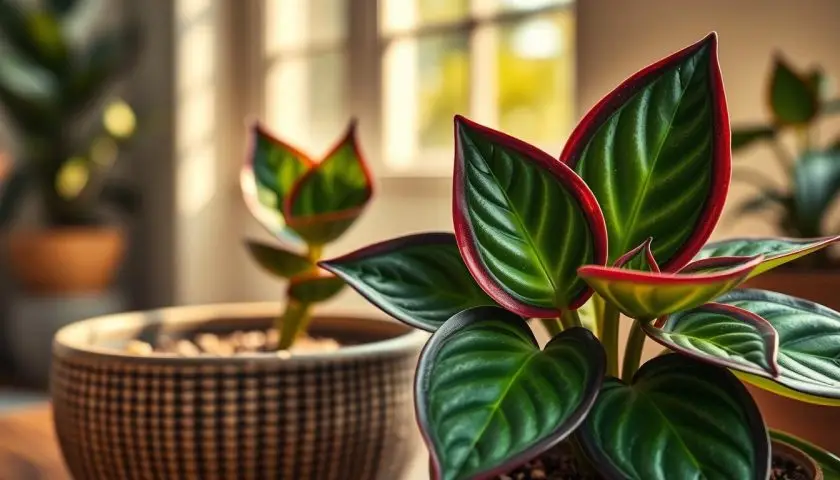
The black pagoda lipstick plant is one of the most striking trailing houseplants you can grow indoors. Its leaves have a dark marbled pattern on top and deep red-purple tones underneath, while mature plants can produce unusual tubular flowers in warm yellow, orange, and red shades.
This plant is often sold as Aeschynanthus longicaulis ‘Black Pagoda’ or by its older synonym Aeschynanthus marmoratus ‘Black Pagoda’. It is part of the lipstick plant group, but it is grown just as much for its patterned foliage as for its flowers. Give it bright filtered light, airy soil, careful watering, and a good trailing position, and it can become a standout plant on shelves, hanging baskets, and plant stands.
Care Snapshot
A black pagoda lipstick plant grows best in bright filtered light, warm indoor temperatures, a chunky well-draining potting mix, and a pot with drainage holes. Water when the upper mix begins to dry, feed lightly during active growth, prune long shoots when needed, and water less in winter. It can trail beautifully from a hanging basket, but it needs enough light to stay full and bloom well.
Key Takeaways
- The black pagoda lipstick plant is a trailing tropical houseplant grown for marbled leaves and tubular flowers.
- Bright filtered light is the best light level for strong foliage and better flowering.
- Use an airy potting mix because dense wet soil can lead to root rot.
- Water thoroughly, then let excess drain away instead of keeping the plant soggy.
- Feed monthly at half strength from mid-spring to late summer.
- Trim weak or overly long shoots to keep the plant fuller.
- Use this guide with Hoya plant care guide, trailing plants for shelves, and complete guide to indoor light.
Black Pagoda Lipstick Plant at a Glance
| Care Area | Best Choice | Common Mistake |
|---|---|---|
| Botanical name | Aeschynanthus longicaulis ‘Black Pagoda’ | Confusing it with every lipstick plant type |
| Light | Bright filtered or bright indirect light | Deep shade or harsh direct afternoon sun |
| Water | Water when upper mix begins to dry | Keeping soil constantly wet |
| Soil | Airy, moist but well-drained houseplant mix | Dense garden soil or compacted compost |
| Humidity | Moderate to higher indoor humidity | Wet leaves with poor airflow |
| Feeding | Half-strength monthly feed in active growth | Heavy fertilizer during winter or stress |
| Growth habit | Trailing stems for shelves and baskets | Placing it where stems get crushed |
What Makes the Black Pagoda Lipstick Plant Unique?
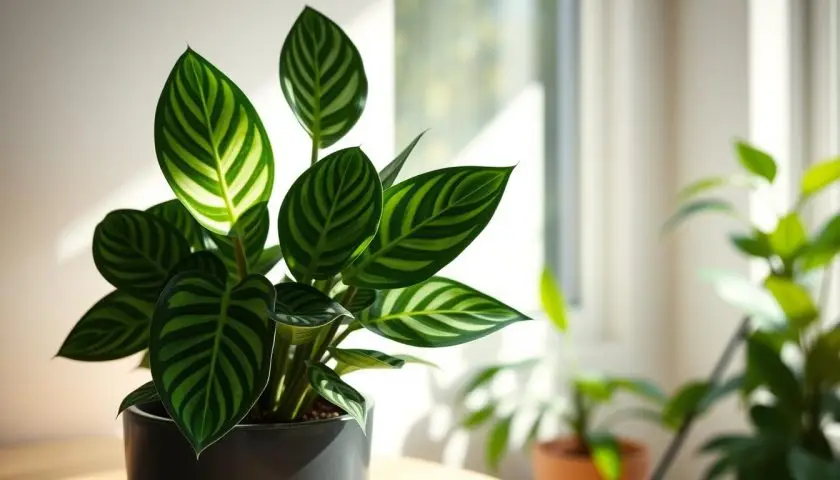
The black pagoda plant stands out because of its patterned foliage. The top of each leaf can show dark green, olive, and lighter marbling, while the underside often has red-purple tones. The contrast makes the plant look decorative even when it is not flowering.
Botanical identity
Black Pagoda is usually listed as Aeschynanthus longicaulis ‘Black Pagoda’. You may also see the older name Aeschynanthus marmoratus ‘Black Pagoda’. It is related to other lipstick plants, including Aeschynanthus radicans, but it has its own distinct patterned foliage.
Foliage and flowers
The leaves are the main attraction. Mature plants can also produce tubular flowers from the leaf axils. Blooming is more likely when the plant has enough bright filtered light, steady care, and a stable position.
Growth habit indoors
This is a trailing plant, so it looks best in a hanging basket, on a high shelf, or in a raised pot. The stems can arch and cascade, which makes it useful for adding movement to plant displays.
For more trailing indoor plant ideas, read trailing plants for shelves, low light hanging plants, and Hoya plant care guide.
Choose a Healthy Black Pagoda Lipstick Plant
Start with a healthy plant if possible. Black Pagoda can recover from small issues, but a plant with root rot, pests, or badly weakened stems will take longer to settle.
Healthy plant signs
- Firm trailing stems with active growing tips.
- Leaves that feel slightly firm, not limp or mushy.
- Clear marbling and healthy red-purple leaf undersides.
- No sticky residue, webbing, white cottony patches, or scale bumps.
- No sour smell from the potting mix.
- Roots that are pale or tan, not black and mushy.
Warning signs before buying
- Many yellow leaves in wet soil.
- Long bare stems with only a few leaves at the ends.
- Soft black stem sections near the soil.
- Mealybugs in leaf joints.
- Roots packed tightly in a soggy plastic pot.
- Leaves falling when the plant is lightly touched.
Should you repot right away?
Do not automatically repot on the first day. If the plant is healthy, let it adjust for a week or two. Repot sooner only if the soil is sour, the roots are rotting, the plant is badly root-bound, or the pot has no usable drainage.
For repotting basics, read how to repot a plant, repotting mistakes to avoid, and best soil mix guide.
Black Pagoda Lipstick Plant Light Requirements
Black pagoda lipstick plant light is the main factor behind strong colour, compact growth, and flowering. It can tolerate softer indoor light, but it usually looks and blooms better with bright filtered light.
Best indoor light
- Bright east-facing window.
- Bright north-facing window if the room is open and not dark.
- A few feet back from a south or west window with sheer filtering.
- Bright bathroom or kitchen with filtered light and warmth.
- Grow light setup during dark months.
Morning sun can help
Gentle morning sun is usually safer than strong afternoon sun. If you move the plant closer to direct light, do it gradually and watch the leaves for scorch marks.
Signs of too much sun
- Bleached patches on leaves.
- Dry brown spots on the sun-facing side.
- Leaves curling away from the window.
- Potting mix drying too fast.
- Faded foliage pattern.
Signs of too little light
- Long gaps between leaves.
- Small new leaves.
- Weak trailing stems.
- No flowers on a mature plant.
- Growth leaning strongly toward one side.
For more placement help, read complete guide to indoor light, house plants that like direct sunlight, and office-friendly plants for fluorescent lighting.
Best Soil and Pot for Black Pagoda Plant Care
Good black pagoda plant care depends on the roots. This plant likes moisture, but it does not like dense, stagnant soil. Think airy, chunky, and draining.
Simple potting mix
- 2 parts peat-free houseplant compost or indoor potting mix.
- 1 part orchid bark or fine bark.
- 1 part perlite, pumice, or coarse drainage material.
- Optional small amount of worm castings or compost for gentle nutrition.
What the mix should do
The mix should hold enough moisture for tropical roots but still let air move through the pot. If water sits on the surface for a long time, the mix is too dense.
Best pot type
- Use drainage holes every time.
- Choose a hanging basket, nursery pot, or lightweight container.
- Use a cover pot only if you empty it after watering.
- Avoid oversized pots because extra mix can stay wet too long.
- Repot only one size up when roots fill the current pot.
Hanging basket or shelf?
A hanging basket lets the stems trail naturally. A shelf also works if the stems have space to hang without rubbing against a wall or being caught by curtains.
For container help, read self-watering pots guide, moss pole for plants, and create an indoor jungle without overcrowding.
How to Water a Black Pagoda Lipstick Plant
Black pagoda lipstick plant watering should be steady but not heavy-handed. The plant does not want to dry out for weeks, but it also dislikes wet roots.
Simple watering rule
Water when the upper part of the mix begins to dry. Then water thoroughly until excess drains out. Do not let the plant sit in water inside a saucer or decorative pot.
| Season or Situation | Watering Need | Care Tip |
|---|---|---|
| Spring growth | Moderate, steady watering | Water when upper mix begins to dry |
| Summer warmth | Check more often | Hanging baskets can dry faster |
| Flowering period | Keep care consistent | Avoid dry-to-soaked swings |
| Winter | Water sparingly | Let more of the mix dry before watering |
| Low light room | Less frequent watering | Soil dries slower in low light |
Underwatering signs
- Leaves look dull or slightly wrinkled.
- Stems feel limp.
- Leaf edges turn dry and crisp.
- The pot feels very light.
- Flower buds may dry before opening.
Overwatering signs
- Yellow leaves while the mix is wet.
- Leaf drop after repeated watering.
- Soft stems near the soil.
- Black or mushy roots.
- Sour smell from the pot.
For more watering help, read complete watering guide, worst times to water plants, and signs you are overwatering.
Humidity, Temperature and Airflow
Black Pagoda is a tropical houseplant, so it appreciates warmth and moderate humidity. That said, humidity should not mean stale, wet leaves. Warmth, drainage, and airflow work together.
Best temperature range
Keep the plant in a warm indoor room away from cold drafts. Avoid cold windowsills in winter, open doors in cold weather, and sudden temperature swings.
Humidity support
- Group it with other tropical houseplants.
- Use a pebble tray without letting the pot sit in water.
- Use a humidifier if indoor air is very dry.
- Place it in a bright bathroom only if light is strong enough.
- Avoid misting heavily if airflow is poor.
Why airflow matters
Gentle airflow helps leaves dry normally and reduces stale damp conditions. Avoid sealing the plant into a dark, humid corner where the mix never dries.
For humidity support, read humidity hacks without a humidifier, DIY humidity tray, and misting for plants.
Feeding a Black Pagoda Lipstick Plant
Feed lightly during active growth. This plant does not need heavy fertilizer, and too much feeding can stress roots or encourage weak growth.
Simple feeding schedule
- Feed from mid-spring to late summer.
- Use a general liquid houseplant fertilizer at half strength.
- Feed about once a month during active growth.
- Do not feed heavily in winter.
- Do not feed a plant with root rot or dry stressed roots.
Signs of overfeeding
- Brown leaf tips after feeding.
- White crust on the soil surface.
- Sudden root stress in a small pot.
- Soft fast growth that becomes weak.
For feeding basics, read fertilizing indoor vs outdoor plants.
Support, Display and Training Tips
The Black Pagoda Lipstick Plant is naturally suited to trailing. It does not need a moss pole in the same way as a climbing monstera or philodendron, but it does need a display spot that supports its stems.
Best display spots
- Hanging basket near bright filtered light.
- High shelf where stems can trail freely.
- Plant stand near an east-facing window.
- Wall planter with drainage access.
- Bright bathroom shelf with good airflow.
Can you train it upward?
You can loosely guide young stems around a small hoop or trellis, but do not force stiff stems. Most plants look more natural when allowed to trail.
Keep stems safe
Do not place the plant where curtains, doors, pets, or people constantly brush against the vines. Repeated damage can cause leaf drop and broken stems.
For styling inspiration, read style indoor plants by room, create an indoor jungle without overcrowding, and indoor plants as room dividers.
Pruning Black Pagoda Lipstick Plant
Pruning keeps the plant tidy and fuller. It also gives you cuttings for propagation. The best time to prune is during active growth or after flowering.
What to prune
- Weak or thin stems.
- Overly long vines that look bare.
- Damaged leaves or broken stems.
- Dead flower stems.
- Growth that is rubbing against walls or shelves.
How to prune
- Use clean sharp scissors or pruning snips.
- Cut just above a leaf node.
- Remove only what is needed.
- Keep healthy cuttings for propagation.
- Do not strip the plant bare all at once.
How pruning helps
Cutting above nodes encourages branching, which can make the plant look fuller over time. A plant that is never pruned may become long, thin, and bare near the base.
For pruning basics, read pruning basics and how to clean plant leaves.
How to Encourage Black Pagoda Lipstick Plant Flowers
Black Pagoda can flower indoors, but blooms are not guaranteed in every room. The plant needs maturity, light, consistent care, and enough energy.
Flowering tips
- Give bright filtered light.
- Avoid moving the plant repeatedly once buds form.
- Water consistently during active growth.
- Feed lightly, not heavily.
- Keep the plant warm and away from cold drafts.
- Do not overpot into a large wet container.
- Prune lightly after flowering to shape the plant.
Why it has healthy leaves but no flowers
If the plant looks healthy but never blooms, the most likely reason is not enough light. Move it to brighter filtered light or use a grow light. Also check whether the plant is young, recently repotted, or recovering from stress.
Bud drop causes
- Dry soil followed by heavy watering.
- Cold drafts.
- Moving the plant after buds appear.
- Low light.
- Very dry air.
- Root stress from overwatering.
For more flowering houseplant support, read blooming indoor plants, house plants with white flowers, and indoor plants with orange flowers.
Propagating Black Pagoda Lipstick Plant
Black pagoda lipstick plant propagation is usually done from stem cuttings. Spring and summer are the easiest seasons because growth is active and warmth helps rooting.
How to take cuttings
- Choose a healthy non-rotting stem.
- Cut a section with several nodes.
- Remove the lowest leaves.
- Place the cutting in water or moist airy potting mix.
- Keep it warm with bright indirect light.
- Maintain light humidity without sealing it in stale wet air.
- Pot up once roots are established.
Water or soil propagation?
Water propagation lets you watch roots grow. Soil propagation avoids the transition from water roots to potting mix. Both can work if the cutting stays warm, bright, and not waterlogged.
When to pot rooted cuttings
Move cuttings into a small draining pot once roots are long enough to support the plant. Do not place small cuttings into a huge pot because excess mix can stay wet for too long.
For more propagation support, read how to propagate houseplants, Spider Plant care guide, and how to transplant a Spider Plant.
Common Black Pagoda Lipstick Plant Problems
Most problems come from light, watering, drainage, humidity, cold drafts, or pests. Check the basics before making big changes.
| Problem | Likely Cause | First Fix |
|---|---|---|
| Yellow leaves | Overwatering, poor drainage, low light, old leaves | Check soil moisture and roots |
| Brown crispy edges | Dry soil, low humidity, direct sun, fertilizer salts | Review watering, light, and feeding |
| Leaf drop | Stress, cold drafts, overwatering, recent move | Stabilize location and watering |
| Leggy growth | Too little light or no pruning | Move brighter and trim long stems |
| No flowers | Low light, immature plant, inconsistent care | Increase bright filtered light |
| Root rot | Wet dense mix or standing water | Repot into airy mix and cut rot away |
| Sticky leaves | Aphids, scale, or mealybugs | Inspect stems and leaf undersides |
Yellow leaves
One old yellow leaf is not a crisis. Many yellow leaves with wet soil usually point to overwatering, poor drainage, or roots staying too wet.
Brown leaf edges
Brown edges can come from dry air, underwatering, harsh sun, fertilizer buildup, or roots damaged by inconsistent care. Check both the leaves and the potting mix.
Leaf drop
Leaf drop often follows a sudden move, cold draft, repotting stress, or water swings. Keep the plant warm and stable while it recovers.
Leggy growth
Leggy stems mean the plant needs brighter filtered light or more regular pruning. Trim long vines and move the plant closer to suitable light.
For symptom support, read yellow leaves on plants, leaf curl, browning and droop, root rot guide, and how to revive a dying plant.
Pests on Black Pagoda Lipstick Plant
Black Pagoda can attract common houseplant pests, especially when growth is crowded or the plant is stressed. Check regularly because pests hide in leaf joints and along trailing stems.
Common pests
- Mealybugs: White cottony clusters at nodes and leaf joints.
- Aphids: Small soft insects on new growth and buds.
- Scale: Small brown bumps along stems and leaves.
- Spider mites: Fine webbing and speckled leaves, often in dry air.
- Fungus gnats: Small black flies around wet potting mix.
Simple pest routine
- Inspect new plants before placing them near your collection.
- Check leaf undersides, stem joints, and trailing vines weekly.
- Wipe leaves gently if dust or residue builds up.
- Remove small pest clusters early.
- Quarantine infested plants.
- Use houseplant-safe treatments only when needed and follow labels.
For more pest and hygiene help, read how to clean plant leaves and how to keep pests away from outdoor plants.
Seasonal Care Routine
Your Black Pagoda does not need the same care all year. Light, temperature, growth rate, and watering needs change through the seasons.
| Season | Main Care Focus | Helpful Tip |
|---|---|---|
| Spring | Growth, pruning, cuttings, light feeding | Start feeding when growth is active |
| Summer | Watering, humidity, bright filtered light | Watch hanging baskets because they dry faster |
| Autumn | Adjust light and reduce feeding | Move slightly brighter if days become dark |
| Winter | Sparing watering and warmth | Keep away from cold glass and drafts |
Black Pagoda Lipstick Plant Care Checklist
| Task | How Often | What to Watch |
|---|---|---|
| Check light | Seasonally | Leggy stems and no flowers |
| Check soil moisture | Before watering | Wet lower mix or dry shriveled leaves |
| Water thoroughly | When upper mix begins to dry | Water draining freely from the pot |
| Feed lightly | Monthly in active growth | Do not feed heavily in winter |
| Prune long shoots | As needed | Bare stems or uneven trailing growth |
| Inspect pests | Weekly | Mealybugs, aphids, scale, mites |
| Rotate plant | Every 1 to 2 weeks | One-sided growth toward light |
Common Mistakes With Black Pagoda Plant Care
| Mistake | What Happens | Better Choice |
|---|---|---|
| Placing it in deep shade | Leggy growth and fewer flowers | Use bright filtered light |
| Using dense soil | Roots stay wet too long | Use a chunky airy mix |
| Watering on a strict weekly schedule | Overwatering in low light or winter | Check the mix first |
| Leaving water in a cover pot | Root rot risk rises | Drain fully after watering |
| Never pruning | Long bare stems and thin growth | Trim weak or overly long shoots |
| Moving it often during bud formation | Bud drop and stress | Keep conditions stable |
| Ignoring pests in leaf joints | Pests spread along trailing stems | Inspect regularly |
Helpful PATCH Guides for Black Pagoda Lipstick Plant Care
Use these related PATCH guides to improve light, watering, humidity, trailing plant styling, pest checks, and general indoor plant care.
Trailing and Flowering Houseplant Guides
- Trailing plants for shelves
- Low light hanging plants
- Hoya plant care guide
- Goldfish Plant care
- Blooming indoor plants
- House plants with white flowers
- Indoor plants with orange flowers
- Indoor plants with red flowers
Light and Placement Guides
- Complete guide to indoor light
- House plants that like direct sunlight
- Low light house plants
- Small low light indoor plants
- Office-friendly plants
- Best office plants
- Low light plants for bathroom
- Best plants for your bathroom
Watering, Soil and Humidity Guides
- Complete watering guide
- Worst times to water plants
- Signs you are overwatering
- Best soil mix guide
- How to repot a plant
- Repotting mistakes to avoid
- Humidity hacks without a humidifier
- DIY humidity tray
- Misting for plants
- Fertilizing indoor vs outdoor plants
Indoor Plant Choice Guides
- Indoor Plants hub
- Tropical house plants
- Best indoor plants for beginners
- Best indoor plants for first-time plant parents
- Best indoor plants for tiny apartments
- Oversized indoor plants
- Colorful foliage indoor plants
- Plant with pink and green leaves
- Unusual indoor plants
- Rare houseplants
Plant Problem Guides
- Plant Care hub
- Yellow leaves on plants
- Why plant leaves turn yellow
- Leaf curl, browning and droop
- Root rot guide
- How to revive a dying plant
- How to clean plant leaves
- Pruning basics
Room Styling and Display Guides
- Style indoor plants by room
- Decorate your bedroom with plants
- Create an indoor jungle without overcrowding
- Indoor plants as room dividers
- Scandi home with plants
- Statement plants for minimalist interiors
- Improve your home office with plants
Specific Plant Care Guides
- Pothos plant care guide
- Philodendron care guide
- Monstera plant care guide
- Calathea care guide
- Rubber Plant care guide
- Fiddle Leaf Fig care guide
- Dracaena care guide
- ZZ Plant care guide
- Spider Plant care guide
- Spider Plant light requirements
- Boston Fern care guide
- Orchid care guide
- Anthurium care guide
- African Violet care guide
- Fishbone Cactus care
Frequently Asked Questions
Is Black Pagoda Lipstick Plant easy to care for?
Yes, it can be fairly easy if you provide bright filtered light, drainage, warm conditions, and careful watering. The main mistakes are too little light, soggy soil, and cold drafts.
How much light does a Black Pagoda Lipstick Plant need?
It grows and flowers best in bright filtered or bright indirect light. Gentle morning sun can work, but harsh afternoon sun can scorch the foliage.
Can Black Pagoda Lipstick Plant grow in low light?
It can survive softer indoor light for a while, but it may become leggy and bloom less. For best growth, give it bright filtered light or use a grow light.
How often should I water Black Pagoda Lipstick Plant?
Water when the upper potting mix begins to dry, then drain the pot fully. In winter, water more sparingly because growth slows and soil dries more slowly.
What soil is best for Black Pagoda Lipstick Plant?
Use an airy, well-draining indoor mix. A blend of houseplant compost, orchid bark, and perlite or pumice works better than dense soil.
Why are my Black Pagoda leaves turning yellow?
Yellow leaves often come from overwatering, poor drainage, low light, old leaves, or root stress. Check the soil and roots before watering again.
Why is my Black Pagoda Lipstick Plant not flowering?
The most common reason is not enough bright filtered light. Other causes include a young plant, recent stress, inconsistent watering, or lack of a stable growing routine.
Should I mist Black Pagoda Lipstick Plant?
Light misting is not necessary. It is usually better to raise humidity with a humidifier, pebble tray, or plant grouping while keeping good airflow.
How do I prune a Black Pagoda Lipstick Plant?
Use clean scissors to trim weak, bare, or overly long stems just above a leaf node. Pruning during active growth encourages a fuller shape.
Can I propagate Black Pagoda Lipstick Plant?
Yes. Take healthy stem cuttings in spring or summer and root them in water or a moist airy potting mix. Keep cuttings warm and in bright indirect light.
Final Thoughts
The black pagoda lipstick plant is a great choice if you want a trailing indoor plant that looks interesting even when it is not blooming. Its patterned leaves, warm-toned undersides, and cascading stems make it ideal for shelves, hanging baskets, and bright filtered windows.
RHS recommends growing Aeschynanthus longicaulis indoors as a house or conservatory plant in peat-free houseplant compost, placing it in bright filtered light for best growth and flowering, watering freely with half-strength monthly feed from mid-spring to late summer, watering sparingly in winter, and trimming weak or overly long shoots as needed: RHS guide to Aeschynanthus longicaulis.
For the best results, keep the plant warm, bright, and evenly cared for. Do not let it sit in water, do not hide it in a dark corner, and do not panic if it takes time to bloom. Strong foliage is the first sign that your care routine is working.
Final Recap
The Black Pagoda Lipstick Plant is a trailing tropical houseplant usually listed as Aeschynanthus longicaulis ‘Black Pagoda’ or Aeschynanthus marmoratus ‘Black Pagoda’. It is loved for dark marbled leaves, red-purple undersides, and tubular flowers on mature plants. Grow it in bright filtered light, warm temperatures, an airy well-draining potting mix, and a pot with drainage holes. Water when the upper mix begins to dry, drain fully, feed monthly at half strength during active growth, and water more sparingly in winter. Use a hanging basket, shelf, or raised pot so the stems can trail naturally. Prune weak or overly long shoots, propagate healthy stem cuttings in spring or summer, and watch for yellow leaves, leaf drop, root rot, aphids, mealybugs, scale, and spider mites. With stable care, this plant can become a bold foliage feature and occasional indoor bloomer.